An inline-six is one of the few engine layouts that is naturally balanced. With six cylinders in a row, the forces cancel each other out, so the engine runs smoothly without extra balance shafts. That’s why so many carmakers, from Coventry to Geelong, built their reputations on one.
The famous ones get all the praise, though. Everyone knows about the Supra’s 2JZ and BMW’s sixes. Meanwhile, plenty of other straight-sixes powered race winners, family sedans, military trucks and four-wheel-drive wagons without much fanfare.
So these 12 are our picks, and the ranking is our opinion. We skipped the usual suspects on purpose. Every engine here earns its place with a real story, from a wartime Jaguar design to an Australian six that made 325 kW from the factory.
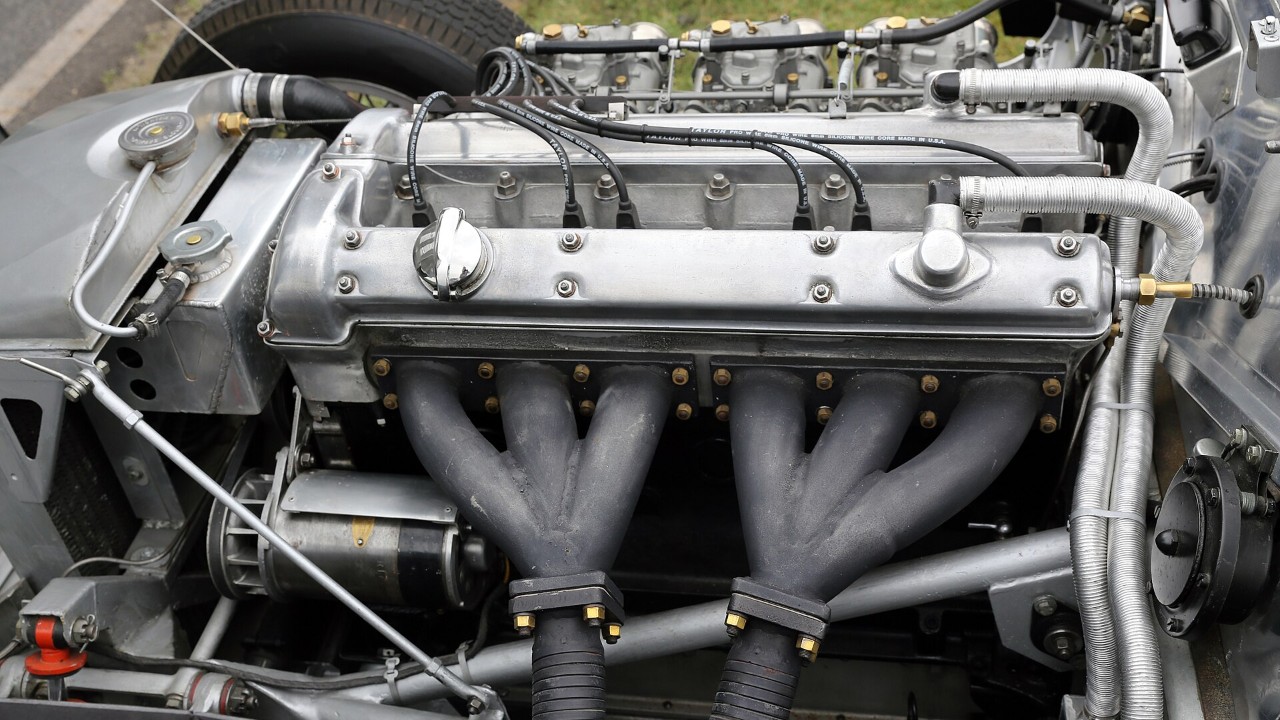
1. Jaguar XK 4.2-liter inline-six
Jaguar’s XK engine began as a wartime project. According to Hagerty UK’s history of the engine, William Heynes, Walter Hassan and Claude Bailey sketched it out during long nights on fire-watch duty at SS Cars in Coventry. It then debuted in the XK120 at the 1948 Earls Court Motor Show.
The 4.2-liter version arrived for the 1965 model year. To get there, Jaguar moved the cylinder spacing in a new block so it could open the bore from 87.0 to 92.1 mm. In the E-Type, Hagerty lists the 4.2 at 265 horsepower and 283 lb-ft of torque at 4,000 rpm. That extra torque made the later cars easier to drive in traffic.
The XK family also won Le Mans five times, in 1951, 1953, 1955, 1956 and 1957. Production ran so long that the last one went into a 1992 Daimler limousine, and Hagerty puts the total at nearly 700,000 engines. In our view, the 4.2 is the sweet spot of the whole run: the most usable torque, the same twin-cam look and a reputation that no spec sheet fully explains.
2. Toyota 1FZ-FE inline-six
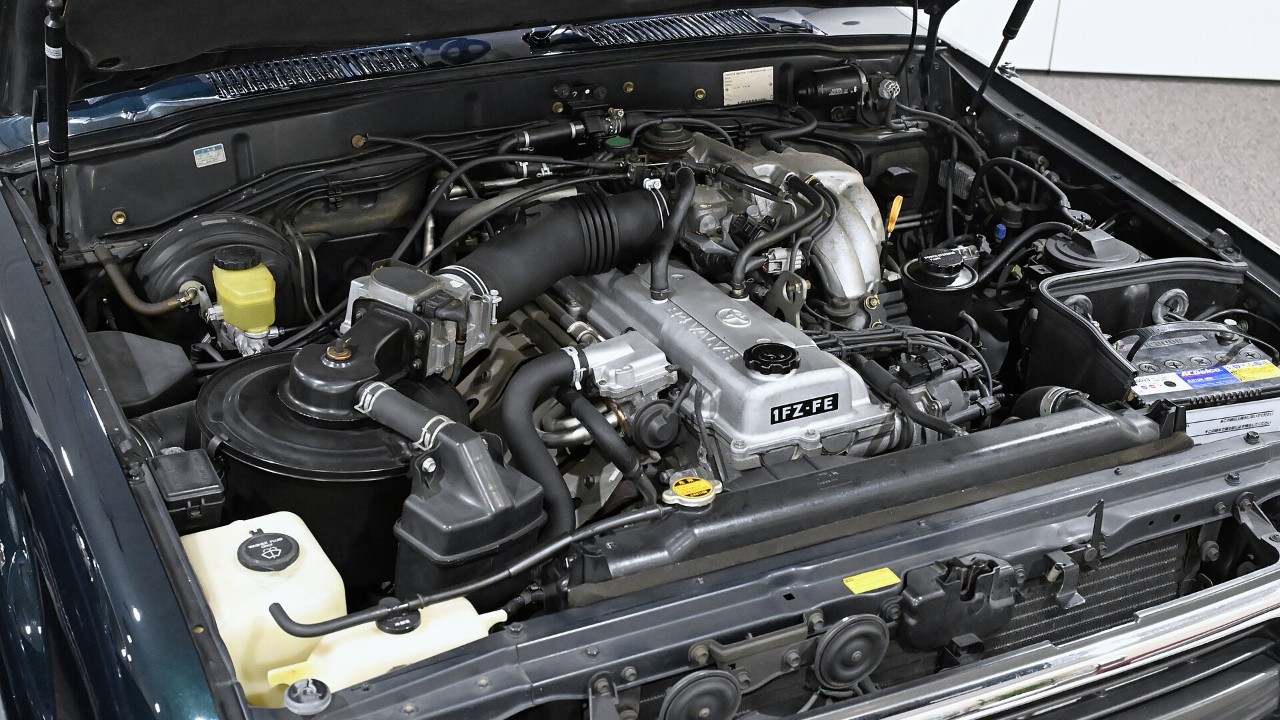
The 1FZ-FE is the engine behind the 80-series Land Cruiser’s reputation. It’s a 4.5-liter six, 4,476 cc to be exact, with a cast-iron block, an aluminum head, twin cams and 24 valves. American buyers got it in the Land Cruiser from 1993 to 1997, and in the Lexus LX450 from 1995 to 1997.
According to 80/20 Automotive’s guide to the engine, the U.S. versions made 212 horsepower and 275 lb-ft of torque. That’s not much for a heavy wagon. However, the torque comes in low, which suits crawling and towing. The same guide says these engines often pass 250,000 miles without a rebuild.
It isn’t flawless. The shop notes that early engines suffered head gasket failures, and that cooling hoses can leak before 100,000 miles. Fuel economy is also poor. On the other hand, Toyota also built an LPG-fueled 1FZ-E for its own forklifts, which says a lot about how tough the basic design is. Still, the 1FZ-FE is a big reason 1990s Land Cruisers have climbed in value. Our take: if you want an inline-six built for hard work over a long life, this one is near the top of our list.
3. Nissan TB48DE inline-six
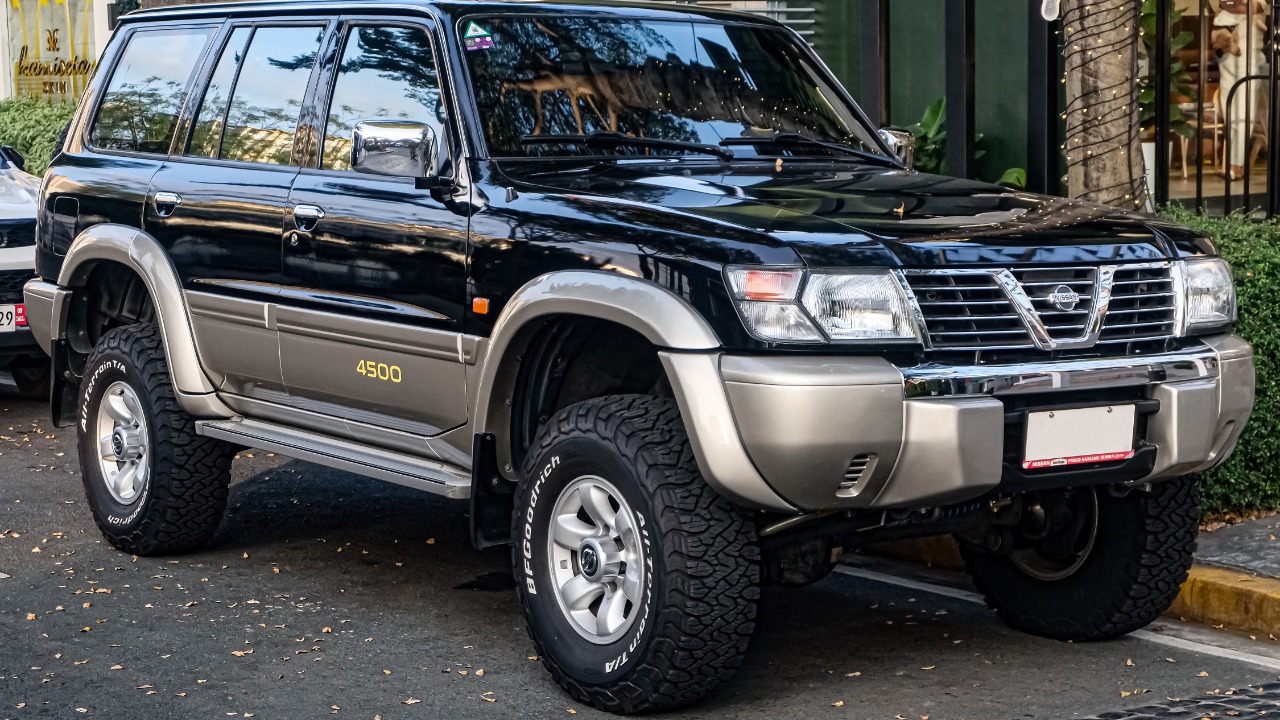
The TB48DE is Nissan’s big-bore answer for the Patrol, and most American drivers have never seen one. It surfaced in 2001 for the Y61 Patrol and the Japanese-market Safari. With a 99.5 mm bore and a 102 mm stroke, it displaces 4,759 cc.
Also, this was a modern inline-six design for a truck engine. It uses double overhead cams with variable valve timing. Output is 251 PS (248 bhp) at 4,800 rpm, with 420 Nm, or 310 lb-ft, at 3,600 rpm. That’s a lot of pull for a naturally aspirated six.
By comparison, the older TB42 that started the family in 1987 was an overhead-valve engine with a two-barrel carburetor. In other words, the TB48DE brought the Patrol’s six into the modern age without giving up its low-speed grunt.
In our view, the TB48DE ranks above plenty of better-known engines because it was built for places where a breakdown is a real problem: deserts, outback tracks and mountain passes. If you ever get the chance to drive a Y61 Patrol with this engine, take it. It shows how good a big, simple-feeling six can be.
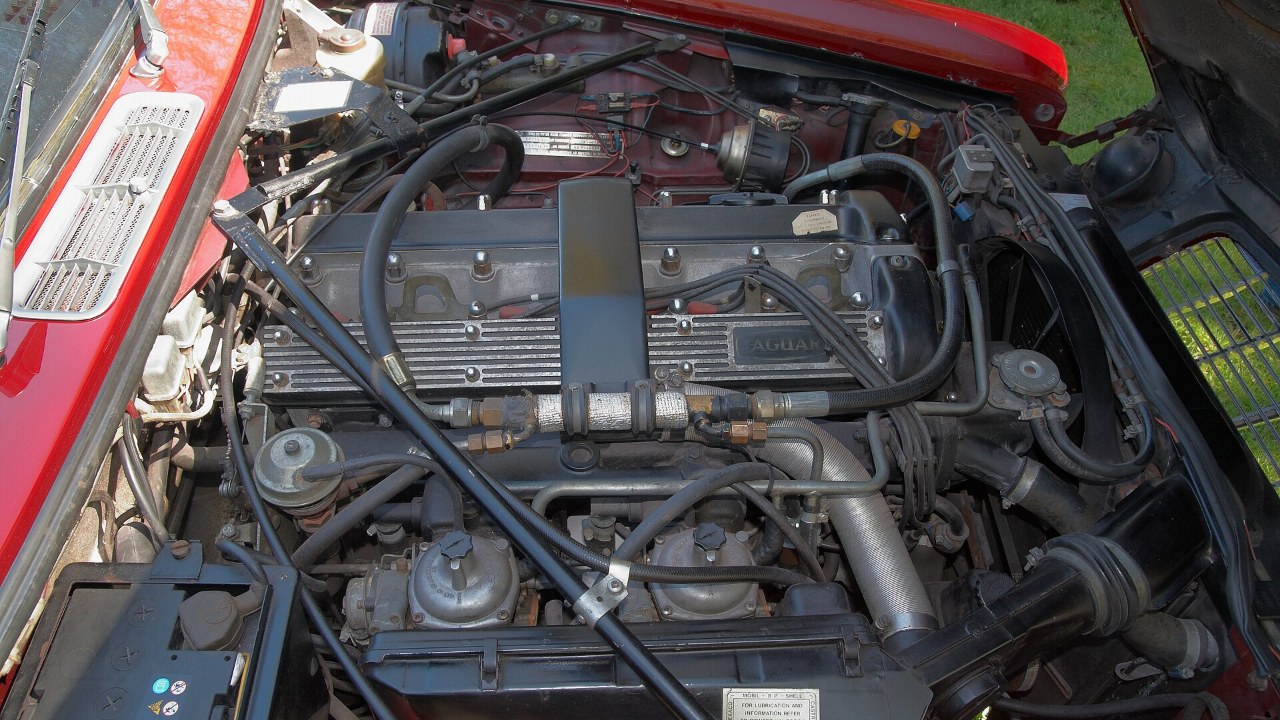
4. Jaguar AJ6 inline-six
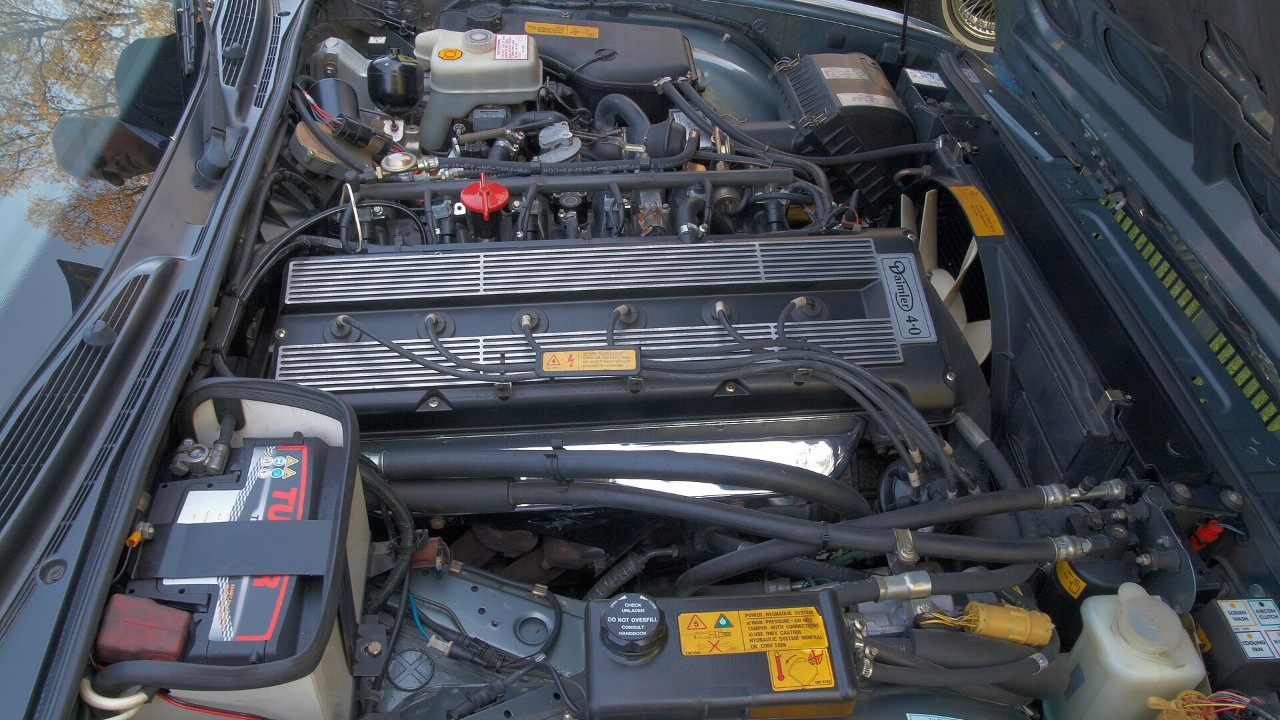
The AJ6 had an impossible job: replacing the XK. It arrived in 1984 in the Jaguar XJ-S as a 3.6-liter, and it was only the third all-new engine Jaguar had designed. It also used an aluminum block and head.
After that, the inline-six family grew over the next decade. Jaguar built it in 2.9-, 3.2-, 3.6- and 4.0-liter sizes, and the bigger versions used twin cams with four valves per cylinder. The 4.0-liter of 1989 made 245 horsepower, and a 24-valve 3.2 followed in 1990. Then, for the 1994 XJR, Jaguar added a supercharger and got 322 horsepower.
For 1995, a heavily revised version called the AJ16 went into the X300 XJ sedan with coil-on-plug ignition and new engine management. Finally, in 1996, Jaguar replaced it with the AJ-V8.
Our take: the AJ6 deserves a higher spot than it usually gets. It had to live in the XK’s shadow, and the V8 that followed got the headlines. Yet the supercharged XJR shows how much the design could take. For a buyer, we’d look hardest at a well-kept 4.0-liter car with a good service record.
5. Chrysler Hemi-6 265
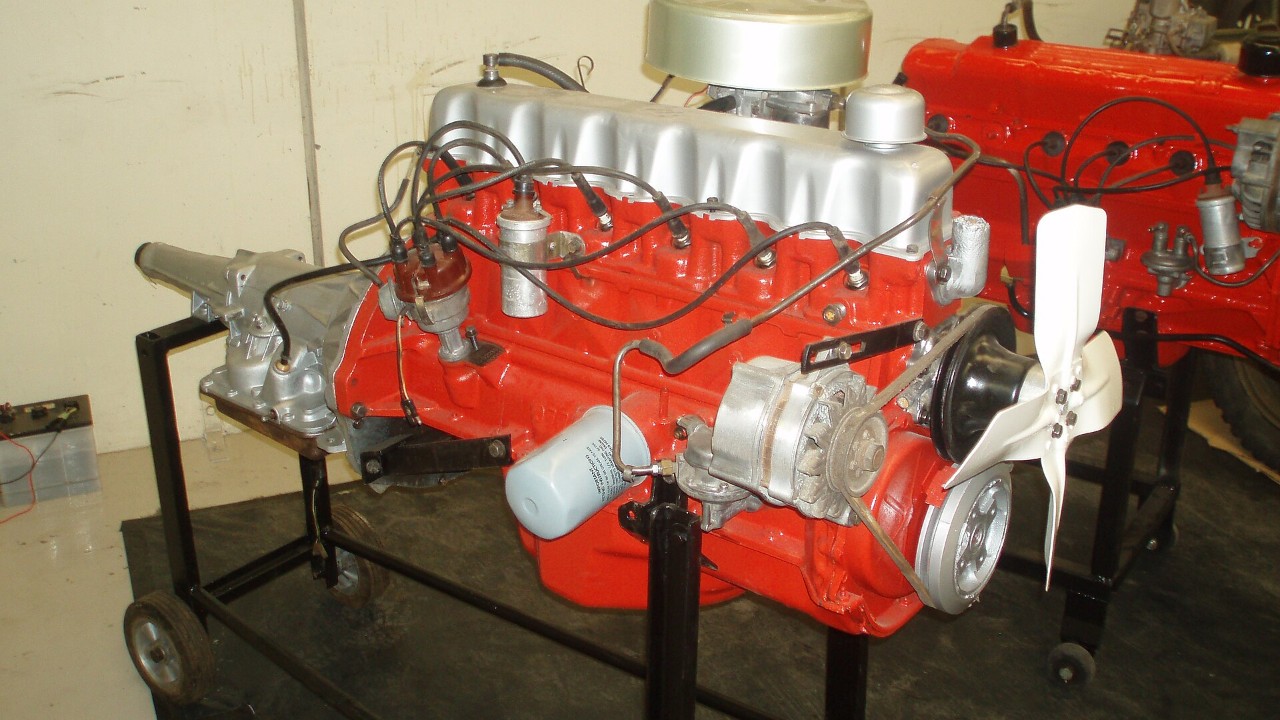
Australia’s Hemi-6 is a Chrysler engine most Americans have never heard of. Chrysler Australia built the family from 1970 to 1981 in 215, 245 and 265 cubic-inch sizes. The 265 arrived in 1971 in the VH Valiant, and the engine went into Valiants, the Valiant Charger and the smaller Centura.
As for the name, it came from the inline-six’s combustion chambers, which have a low hemispherical shape. In standard form, the 265 made 203 horsepower at 4,600 rpm and 262 lb-ft at 2,800 rpm. That gave a big Valiant sedan the kind of pull many rivals needed a V8 for.
Then there was the E49 Charger tune. It used triple 45 mm Weber DCOE sidedraught carburetors, a hotter camshaft, stronger valve springs and tuned headers. As a result, it made 302 horsepower at 5,600 rpm and 320 lb-ft of torque.
In our view, the Hemi-6 belongs on any serious inline-six list. It turned a family car engine into a high-performance one without adding cylinders. If you’re an American Mopar fan, it’s worth learning about, because it’s the Chrysler six that went its own way down under.
6. Mercedes-Benz M104
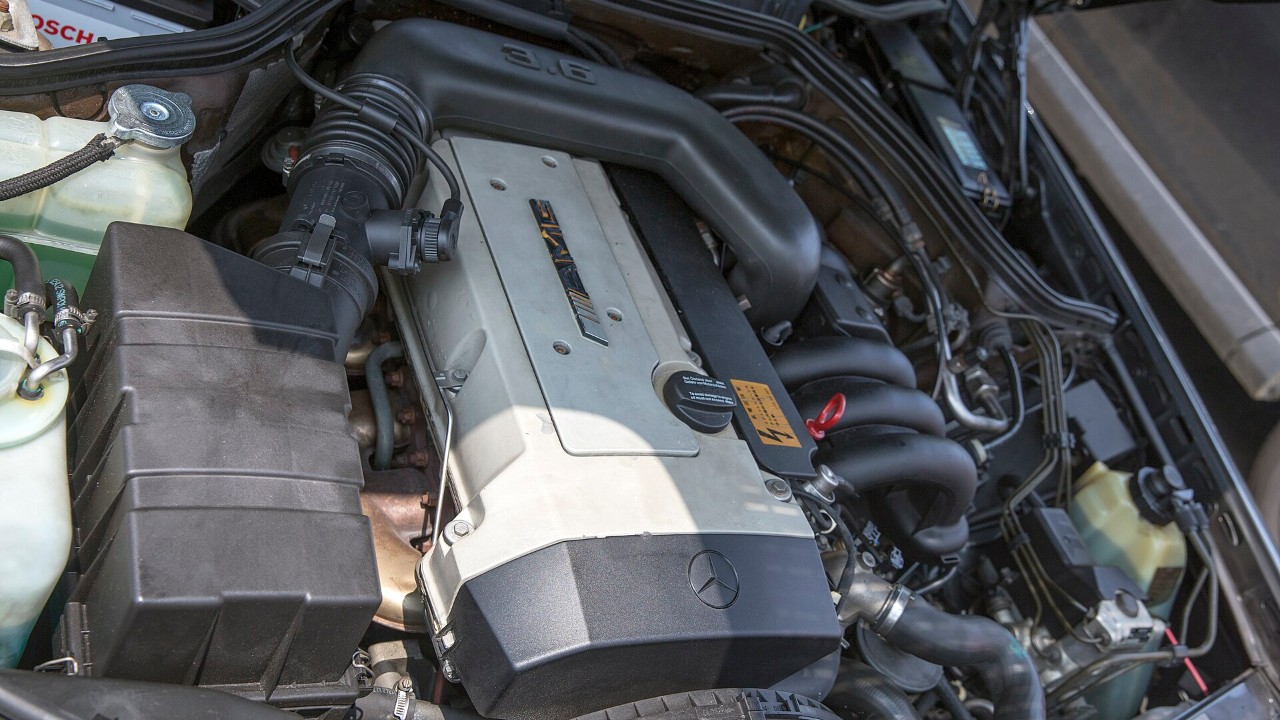
The M104 ran from 1989 to 1998, and Mercedes-Benz began replacing it with the M112 V6 in 1997. Over that decade, it went into a long list of sedans, wagons, coupes, roadsters and even the G-Class.
In fact, this inline-six was thoroughly modern for its time. It used twin overhead cams, four valves per cylinder and a crossflow head on a cast-iron block with an aluminum head. The 3.0-liter version went first into the 300 E-24 and the 300 SL-24, rated between 217 and 228 horsepower depending on the market.
Later came the 2.8- and 3.2-liter versions. Those powered cars such as the E320, S320, SL320 and the G320. At the top sat AMG’s 3.6-liter version, with 276 horsepower in the C36 AMG. To get there, AMG used a 91 mm bore, a 92.4 mm stroke and 10.5:1 compression.
Our take: the M104 earns its ranking because it did everything well, from a comfortable W124 wagon to a fast AMG sedan. It isn’t exotic, and that’s the point. If you’re shopping a 1990s Mercedes, an M104 car is the one we’d look for first, with a full service history as the deciding factor.
7. Datsun L28ET

Here’s an odd fact about the L28ET: Nissan never sold it at home. Japan’s transport ministry only allowed turbochargers on engines under 2 liters at the time, so this turbocharged 2.8 went to export 280ZX Turbos instead. It arrived in December 1980 and stayed in production through June 1983.
Even so, Nissan kept the setup simple. A single Garrett AiResearch TB03 turbo blew through Bosch L-Jetronic fuel injection, with no intercooler. Boost was limited to 6.8 psi, and the compression ratio dropped to 7.4:1. The result was 180 horsepower at 5,600 rpm and 203 lb-ft at 2,800 rpm.
It also used Nissan’s ECCS engine control system, which managed the fuel and ignition electronically. Early engines had adjustable mechanical rockers, and Nissan switched to hydraulic rockers after September 1982. Displacement stayed at 2,753 cc, from an 86 mm bore and a 79 mm stroke, just like the regular L28E.
In our view, the L28ET ranks high because it brought turbo power to an affordable sports car early in the 1980s and kept the L-series’ simple bones. For a buyer today, a stock engine that hasn’t been turned up too far is the one to find.
8. Ford Barra inline-six
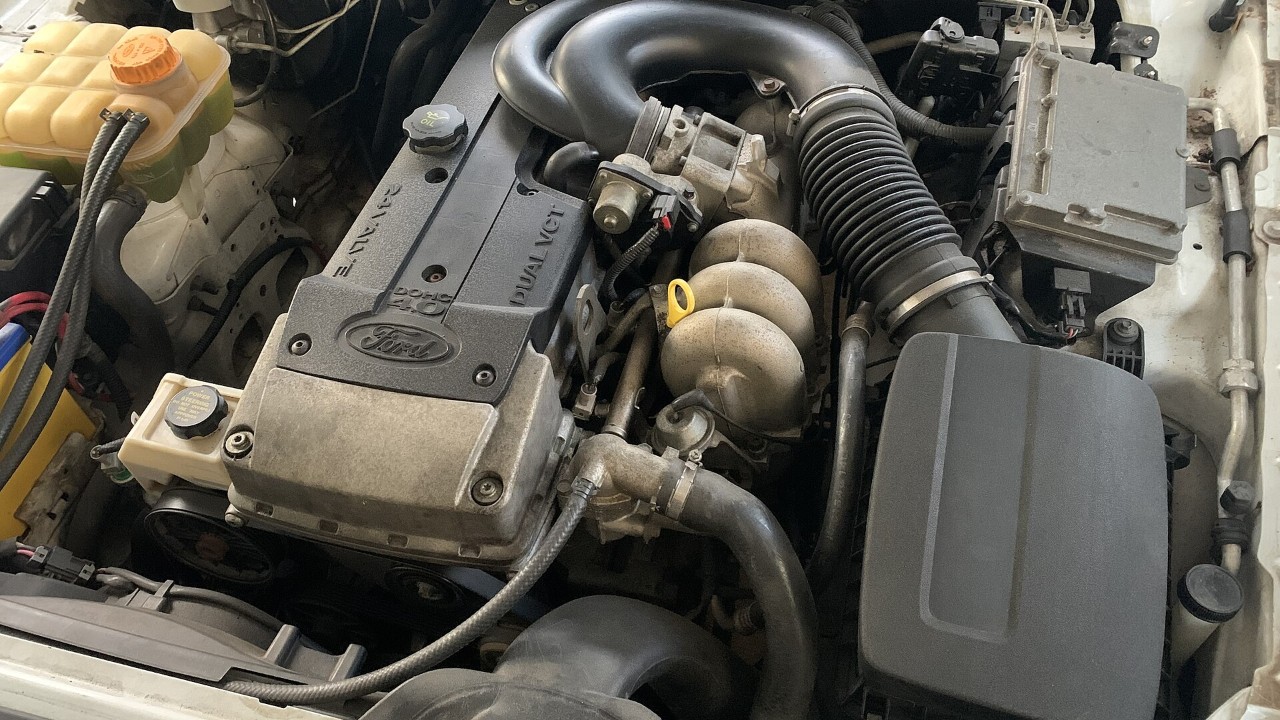
The Barra is the reason Australian Falcon fans don’t miss V8s as much as you’d expect. Ford Australia built the 4.0-liter (3,984 cc) six at its Geelong engine plant from 2002 to 2016. It debuted in the BA Falcon with twin cams, 24 valves and variable cam timing.
However, the turbo versions are where this inline-six gets wild. The first BA XR6 Turbo arrived in 2002, the same year as the regular Barra, and made 240 kW. By the end, the 2016 FG X XR6 Sprint made 325 kW, or 370 kW with overboost. Its roots go back further than most people realize, too, all the way to the 2.4-liter Thriftpower six of the 1960 American Falcon.
Production ended on September 26, 2016. Then, on October 7, the last Falcon rolled off the line, closing a story we touched on in why the Ford Falcon became so influential in Australia.
Our take: the Barra ranks this high because it took huge boost from the factory and kept asking for more. If you’re shopping a turbo Falcon, look for one that hasn’t been pushed too hard.
9. Pontiac OHC Six

In the mid-1960s, Pontiac built an American overhead-cam six with a rubber timing belt. According to Ate Up With Motor’s history of the engine, production began in the summer of 1965. Then it became the standard engine in the 1966 Tempest and Le Mans, and it went into the Firebird for 1967.
At Pontiac, John DeLorean drove the project, and the belt itself was a fiberglass-reinforced nylon design developed with Uniroyal. The engine started at 230 cubic inches and grew to 250 for 1968. The 1966 Sprint version made 207 gross horsepower, and by 1969 the Sprint with a manual reached 230 horsepower.
It didn’t last, though. The engine cost more to build than Chevrolet’s six, and camshaft wear raised warranty costs. It was also too tall for the second-generation Firebird’s hood. After DeLorean moved to Chevrolet in early 1969, Pontiac dropped the OHC six and used Chevrolet’s 250 from 1970.
In our view, the OHC six ranks above everything else in one area: ambition. Pontiac tried to bring European engineering to an American family car, and it nearly worked. If you want one, a Sprint Firebird or Le Mans is the car to find.
10. GMC 302 inline-six
The GMC 302 was a truck engine with military roots. Its actual displacement was 301.6 cubic inches, and it had a “square” design, with a 4-inch bore and a 4-inch stroke. GMC originally designed it for the M135 and M211 military trucks.
For example, those 2½-ton military versions were sealed so the trucks could ford deep water. They also had an electric fuel pump and a deep oil sump. By contrast, the civilian engine, built from 1952 to 1959, used a mechanical fuel pump and a regular oil pan. In 1959 form, it made 160 horsepower at 3,600 rpm and 268 lb-ft at only 1,600 rpm.
That low-rpm torque suited a working truck. Later, hot rodders liked it for its power, its heavy cast block and its durability. GMC replaced it with its own V6 in 1960.
Our take: the GMC 302 earns a spot because it delivered big torque in a design tough enough for the Army. A truck with a running 302 is a great find, and you should check that any spare parts match the civilian version.
11. Volvo B30 inline-six
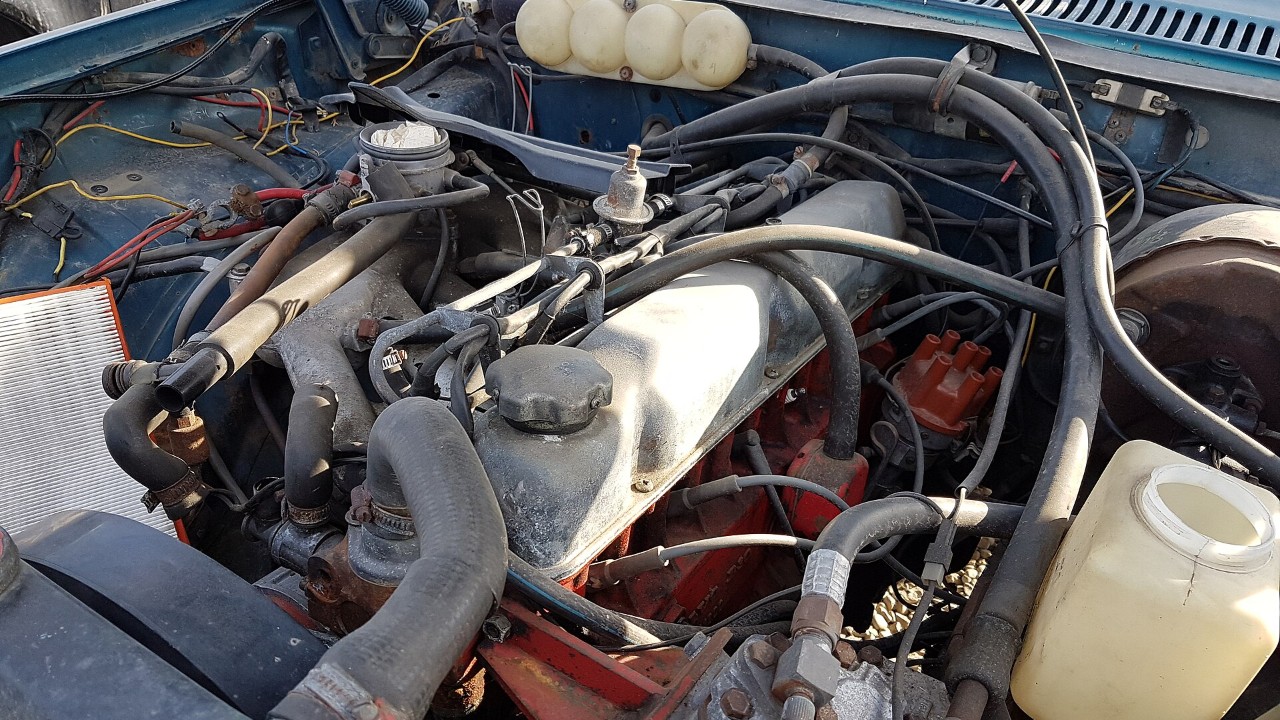
Originally, Volvo built the B30 by adding two cylinders to its tough four-cylinder design. The result was a 2,979 cc six with a cast-iron block and head, pushrods and two valves per cylinder. Many of its parts are shared with the B20 four.
The B30 arrived in 1968 and went mainly into the Volvo 164 sedan from 1969 to 1975. The first B30A made 145 horsepower. Then, in 1972, the fuel-injected B30E arrived with Bosch D-Jetronic and 175 horsepower. It also made 178 lb-ft at 2,500 rpm, so it pulled well at low speed. We covered the car it powered in why the 1969 Volvo 164 gave buyers a different kind of luxury.
This inline-six also had a long life beyond the sedan. The engine powered the Volvo C303 military off-road vehicle from 1974 to 1984, along with Volvo Penta marine engines and the Marcos GT.
In our view, the B30 is one of the most overlooked sixes of its era. It’s simple, strong and smooth, with a sound unlike the Volvo fours. If you find a 164 with a healthy fuel-injected B30E, you’re getting the strongest version.
12. Chevrolet Vortec 4200
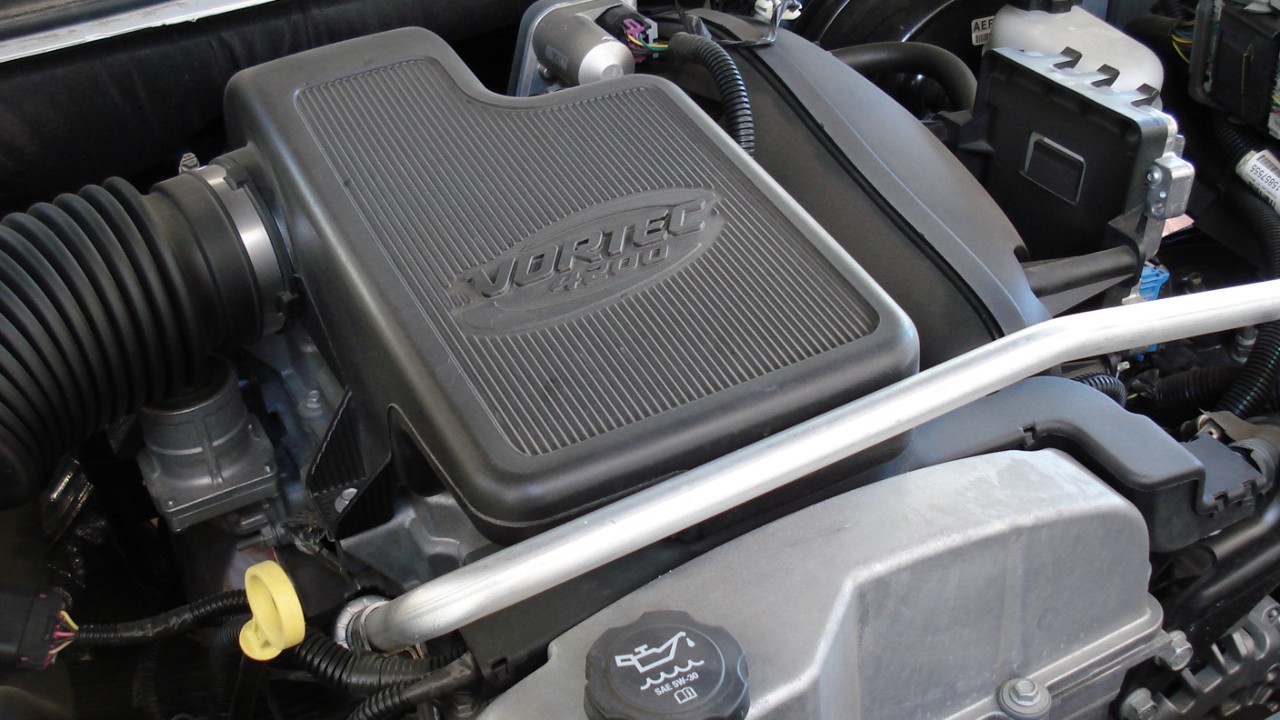
The Vortec 4200, known as the LL8, gave General Motors’ mid-size SUVs a modern straight-six. It was the first of GM’s Atlas engines and ran from 2002 to 2009. It used twin overhead cams, four valves per cylinder and variable valve timing on the exhaust cam.
For an inline-six in a mid-size SUV, power was strong. The 4.2-liter engine, with a 93 mm bore and a 102 mm stroke, made 270 horsepower at launch. For 2003, that rose to 275 horsepower. Then, by 2006, output had risen to 291 horsepower and 277 lb-ft. It also made Ward’s 10 Best Engines list from 2002 through 2005.
You’ll find it in the Chevrolet TrailBlazer, GMC Envoy, Oldsmobile Bravada, Buick Rainier, Isuzu Ascender and the Saab 9-7X. In other words, it carried a lot of ordinary families. To us, the Saab 9-7X, sold from 2005 to 2009, was the most unexpected home for it.
Our take: the Vortec 4200 belongs here because it was a sophisticated engine sold in plain-looking trucks. All Atlas engines came from Flint Engine South in Michigan, and the LL8 ended in 2009 with the closure of GM’s Moraine, Ohio plant.
More from Fast Lane Only