A fastback roof is one long line from the windshield to the tail. Detroit loved the shape in the late 1940s, walked away from it in the 1950s, then came back to it in the 1960s. Meanwhile, Europe and Japan used it to sell speed. Every era seems to have a fastback that defines it.
Collectors, however, don’t always agree on which ones matter. Some of these cars already trade at serious money. Others sit in the shadow of more famous badges, even though their rooflines were every bit as good.
So here are our picks: 12 fastbacks that, in our view, deserve to be the most collectible of their era. This is our opinion, not a price guide. Every fact behind it, though, comes from the record.
1. 1948 Buick Roadmaster Sedanet
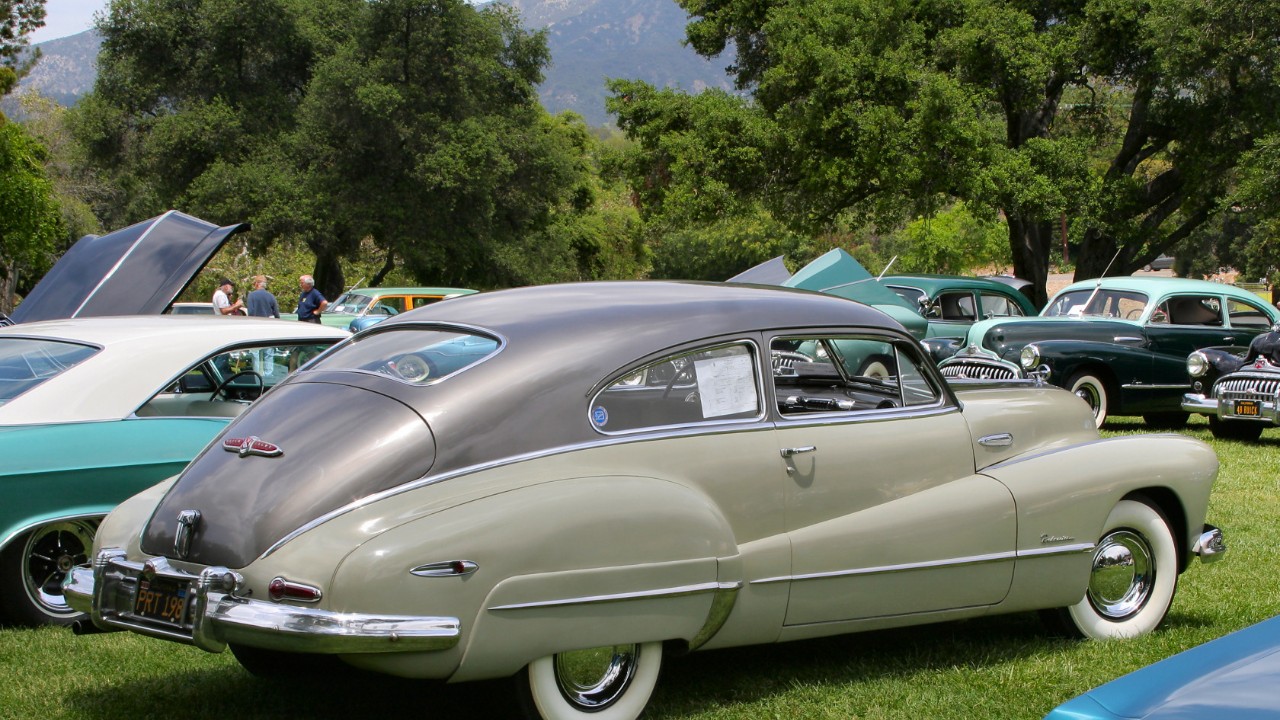
Buick’s Sedanet was the fastback that gave postwar America its swagger. The style first showed up on the 1941 Century and Special, and Roadmaster coupes adopted it for 1942. For 1948, Buick added another reason to look: Dynaflow arrived as an option on the Roadmaster, its first year in the line. Buick then kept the Sedanet in the Roadmaster lineup for 1949, when the straight eight rose to 150 hp.
The proportions are the real draw. RM Sotheby’s lot notes for a 1946 Roadmaster Sedanet describe “Airfoil” fenders first used in 1942. According to the auction house, this was the first time a major American car ran its front fenders the full length of the body to the rear fenders. That 1946 car carried a 144-hp, 320-cubic-inch Fireball straight eight. Buick built 8,226 Roadmaster Sedanets for domestic sale that model year, plus 66 for export.
Our take: the Sedanet is the purest version of the late-1940s fastback idea. Yet that 1946 car, with under 5,000 miles, sold for $38,500 at Hershey in 2017. For a car this handsome and this significant, that feels like a bargain.
2. 1949 Pontiac Streamliner Sedan Coupe
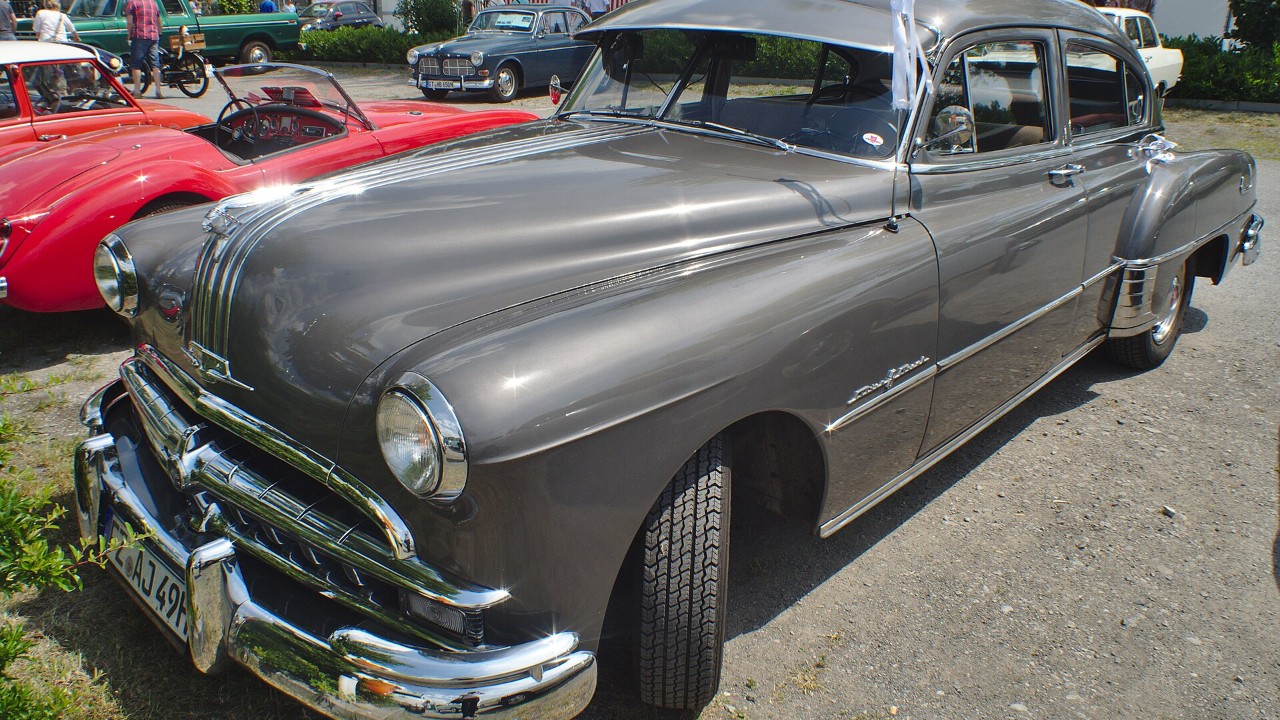
Pontiac went all in on the fastback. From 1947 on, every Streamliner coupe and sedan wore the sloping roof, and only the wagons broke ranks. The cars also carried Pontiac’s Silver Streak chrome down the hood. That trademark dated back to 1935 and stayed with the brand until 1960. Its details changed almost every year, too, from five chrome bands for 1947 to triple Silver Streaks for 1948.
The Streamliner was no niche model. Pontiac built 160,857 of them for 1948, close to two-thirds of its output. That was also the first year of Hydra-Matic in a Pontiac, and 122,327 Streamliners left the factory with it, about 76% of the line. Buyers could pick a 239-cubic-inch six or a 249-cubic-inch Silver-Streak straight eight.
In our view, that big production run works against the Streamliner today, because collectors tend to overlook what was once common. That’s a mistake. The long fastback roof and the chrome streaks make it one of the most photogenic cars of 1949, and a Sedan Coupe shows Pontiac’s styling at full stretch.
3. 1950 Chevrolet Fleetline Deluxe
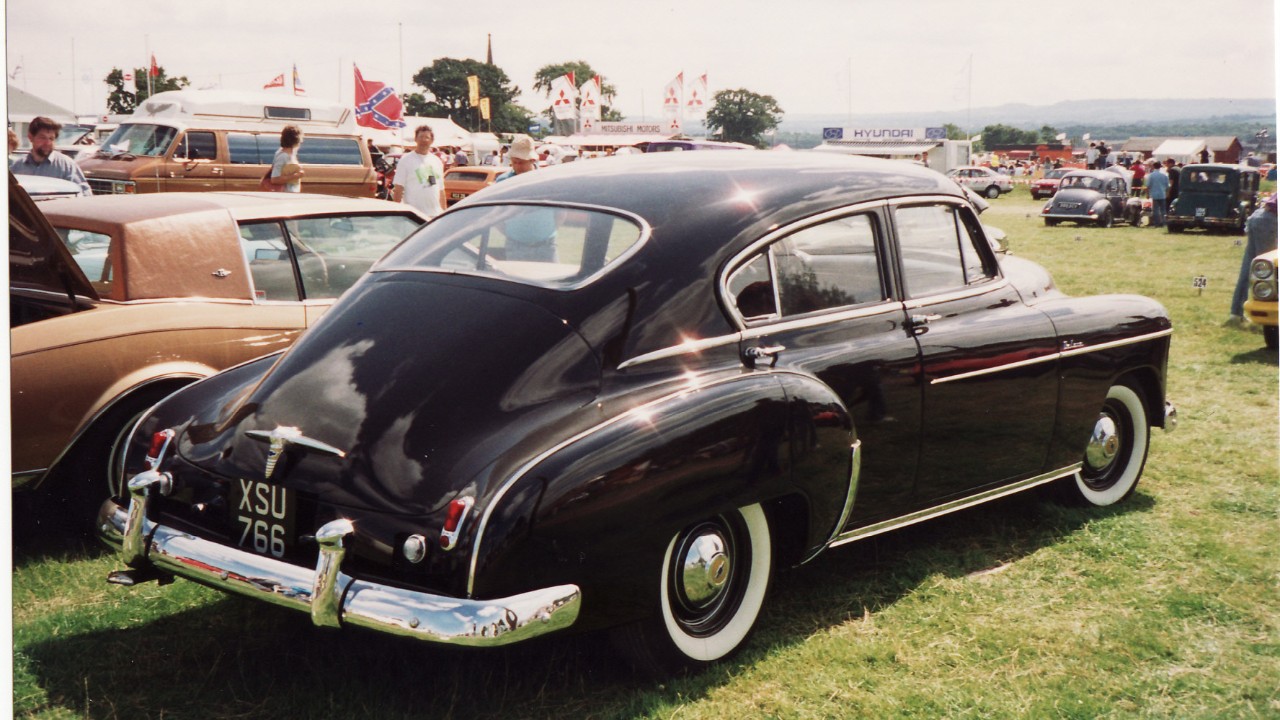
Chevrolet’s Fleetline was the fastback for working families. The redesigned version ran from 1949 to 1952, and Chevrolet dropped the Fleetline name for 1953. By the final year, only the Deluxe two-door remained, and Chevrolet built 37,164. Demand for the shape had been huge before that. In 1948 alone, Chevrolet built 211,861 of the earlier Aerosedan fastbacks.
The 1950 car is the one we’d hunt. That year, the base six rose to 92 hp, and a 235.5-cubic-inch six rated at 105 hp joined the range. An automatic transmission also appeared on the options list for the first time. Chevrolet built 189,509 Fleetline Deluxe two-doors for 1950, plus 124,287 four-doors.
Why should it be collectible? Because the Fleetline shows how far the fastback had spread by 1950. This was not a luxury coupe. Instead, it was a Chevy for ordinary buyers. We think the Deluxe two-door deserves a bigger place in collections, because its roof has more character than most of its 1950 rivals and it captures the fastback at its most democratic.
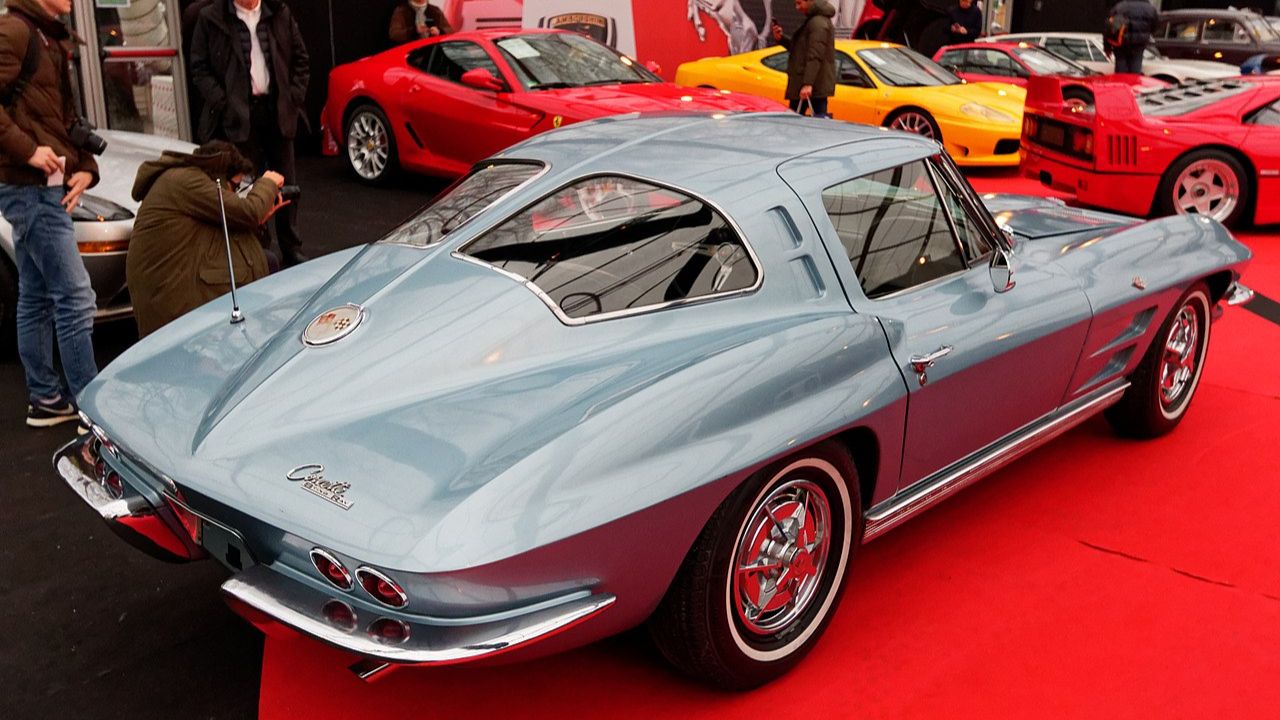
4. 1963 Chevrolet Corvette Sting Ray split-window
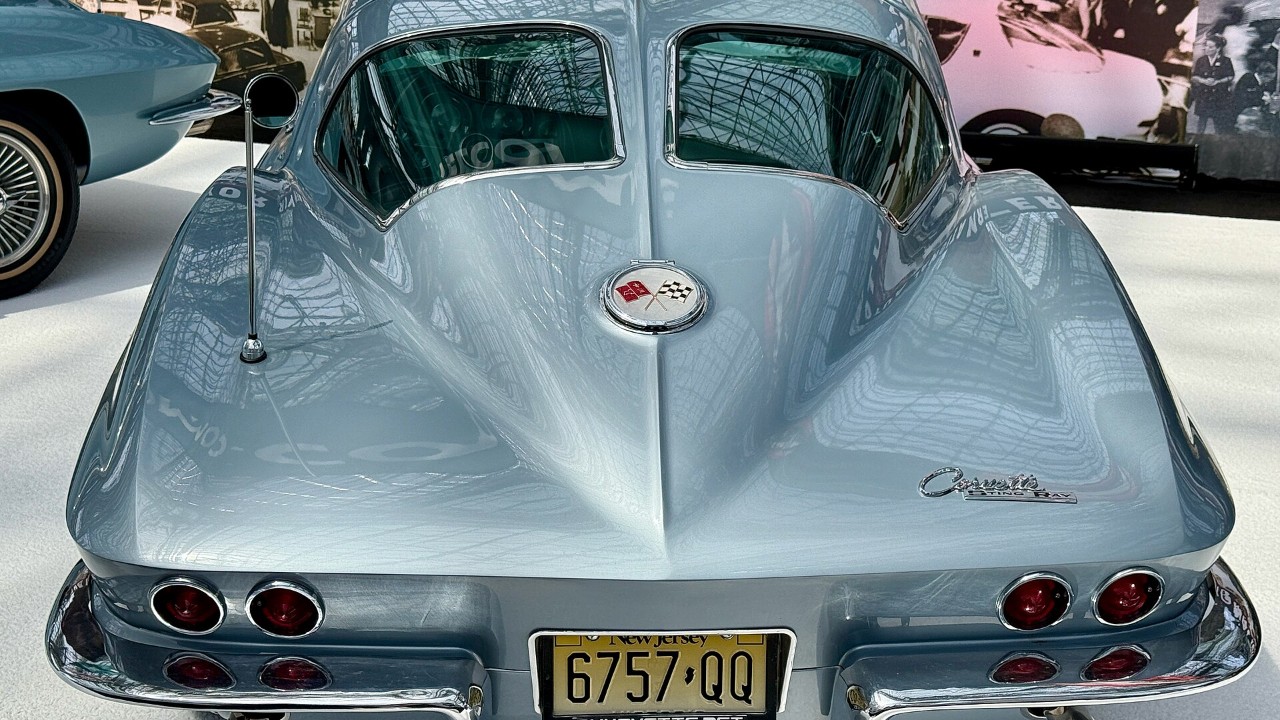
This one already commands respect, but its story explains why. Most histories credit GM design chief Bill Mitchell with the split rear window. Zora Arkus-Duntov, the Corvette’s chief engineer, disliked it because it hurt rear vision. As a result, Chevrolet replaced it with a single arched glass for 1964, which made 1963 the only split-window year.
Here’s a fact that surprises people. In 1963, Chevrolet built 10,594 coupes and 10,919 convertibles, so the fastback was the slightly rarer body. More than half of the convertibles left with the optional hardtop, yet the coupe’s roof is the one people remember. Every 1963 car used the 327-cubic-inch V8. Ratings ran from 250 hp up to a 360-hp fuel-injected version that cost an extra $430.40.
We’ve covered why the split-window lasted only one year before. For this list, the point is simpler. No other American fastback of the 1960s did so much with a single styling line. In our view, a fuel-injected 1963 coupe is the most complete expression of the C2 idea, and it deserves its place near the top of any collection.
5. 1966 Oldsmobile Toronado
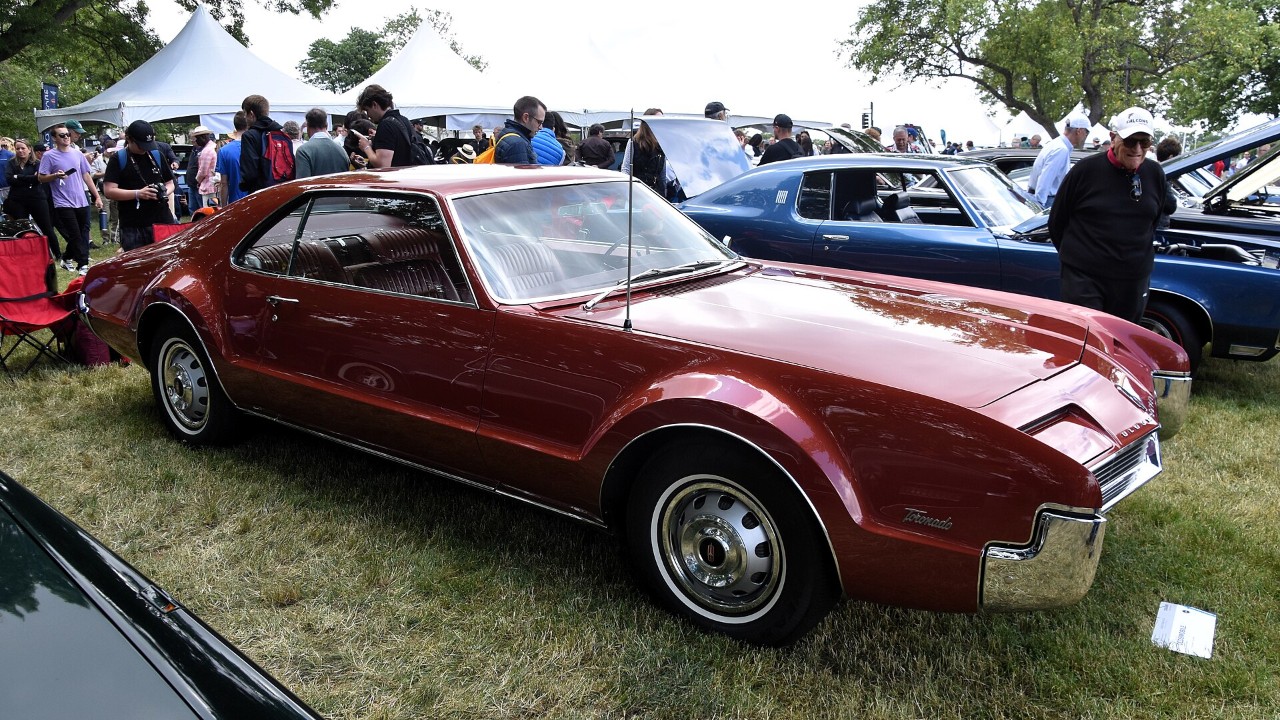
The Toronado looks like a sports coupe, but its engineering made it unique. Oldsmobile packed a 425-cubic-inch Super Rocket V8 and a transaxle version of the Turbo-Hydramatic into one Unitized Power Package. That unit drove the front wheels and fit in an engine bay no bigger than a rear-drive car’s. Output was 385 hp and 475 lb-ft. Power went through a three-speed TH425 automatic with a 3.21:1 final drive.
The front-drive layout put a lot of weight up front, about 60.3% of the car’s 4,496 pounds. Even so, the design won Motor Trend’s Car of the Year award. Oldsmobile built 40,963 Toronados for 1966. The shape traced back to a 1962 drawing by designer David North, known as the “Flame Red Car.”
We think the first-year car deserves more attention than it gets. Its long, sloping roof looks clean even today. More importantly, it proved front-wheel drive could work in a big American coupe. Few 1960s fastbacks can claim that kind of engineering legacy, and the 1966 is where it started.
6. 1967 Ford Mustang GT 2+2 fastback
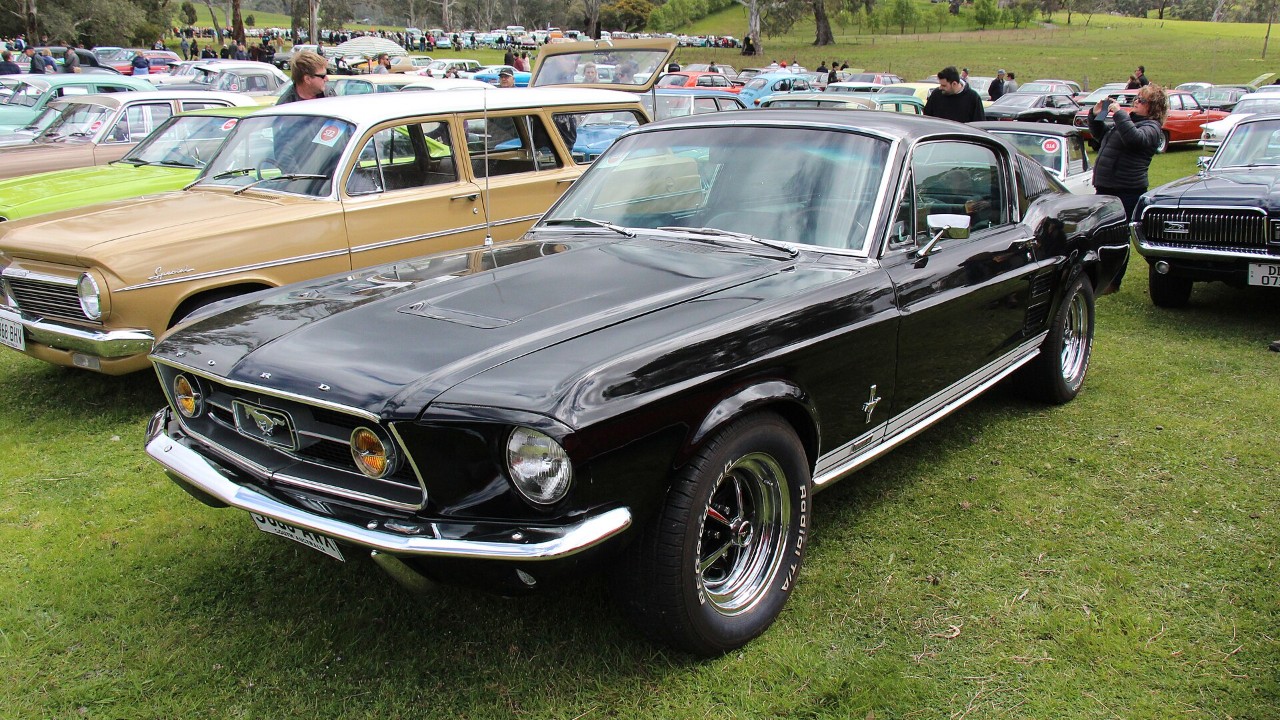
The 1967 Mustang grew in every direction, and the fastback benefited most. The roof now ran farther back than on the 1965 and 1966 cars, ending in a small ducktail. According to Mustang Specs’ review of the 1967 fastback, the car also carried twelve side louvers instead of five. Concave taillights and a side scoop finished the new look. Inside, the larger body also gave owners more room for people and cargo.
The bigger body made room for more engine. For 1967, the high-performance option was the 390-cubic-inch FE V8 borrowed from the Thunderbird. The GT Equipment Group, first offered in 1965, brought grille-mounted fog lamps, rocker stripes, disc brakes and a five-dial gauge cluster.
Our take: collectors often chase the 1965 and 1966 cars or the Shelbys. However, the 1967 GT fastback is the first Mustang whose roof runs all the way to the tail. We’ve written about how the 1965 fastback became a turning point, and the 1967 is where that turn paid off. A 390 GT in this body is the one we’d want.
7. 1968 Ford Torino GT fastback
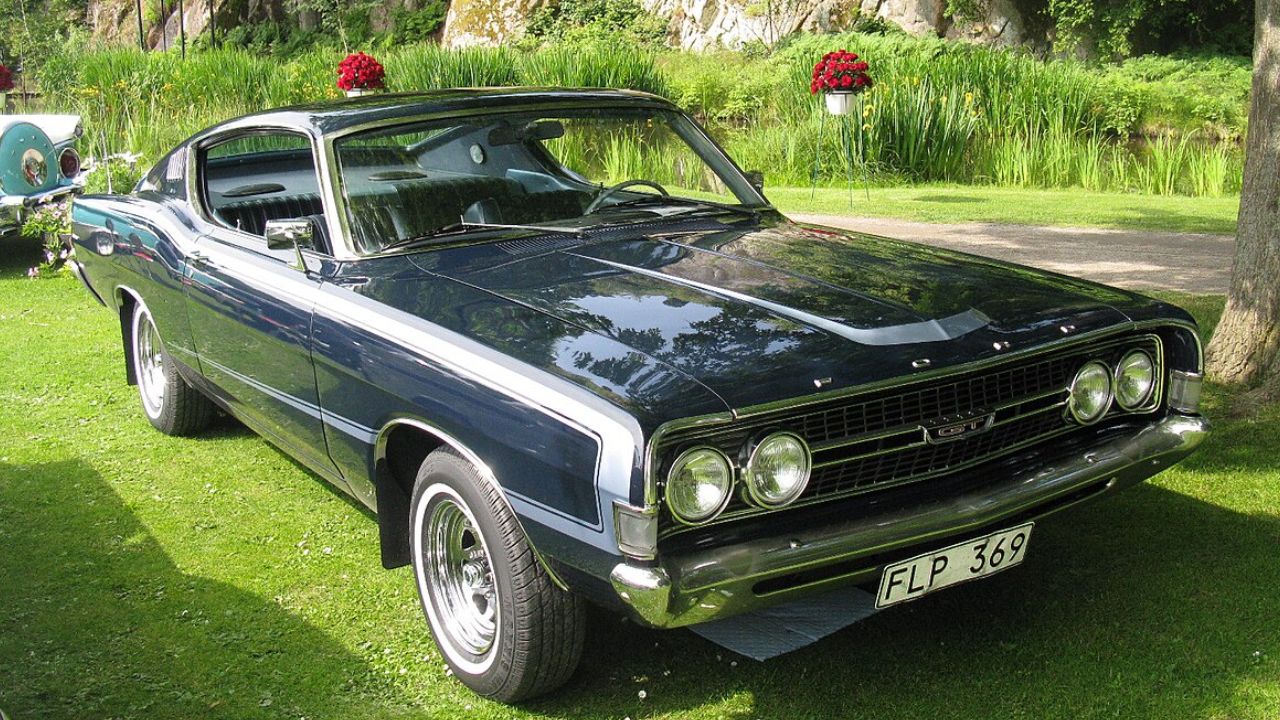
Ford’s mid-size Torino got a new SportsRoof hardtop for 1968, with a gentle slope that ran all the way to the trunk lid. That roof was more than styling. It helped Ford dominate NASCAR superspeedway racing in 1968 and 1969.
The street car’s engine story is messier. Ford intended a 302 V8 as the standard GT engine. Then a six-week UAW strike forced a switch to the 289, and Ford did not update its sales literature. Buyers could also order a 390. On April 1, 1968, the 428 Cobra Jet arrived, rated at 335 hp and widely believed to be underrated. Because it came so late in the year, the 1968 Cobra Jet Torino is very rare.
Ford built 172,083 Torinos for 1968 across all body styles, yet the GT fastback lives in the shadow of the Mustang. We think that’s unfair. The Torino GT offers the same era, the same big-block options and a roofline with real racing credentials. In our view, a 428 Cobra Jet fastback deserves to be one of the most collectible Fords of 1968. If you want a fastback whose roofline earned its keep on the track, this is it.
8. 1966 Jensen Interceptor
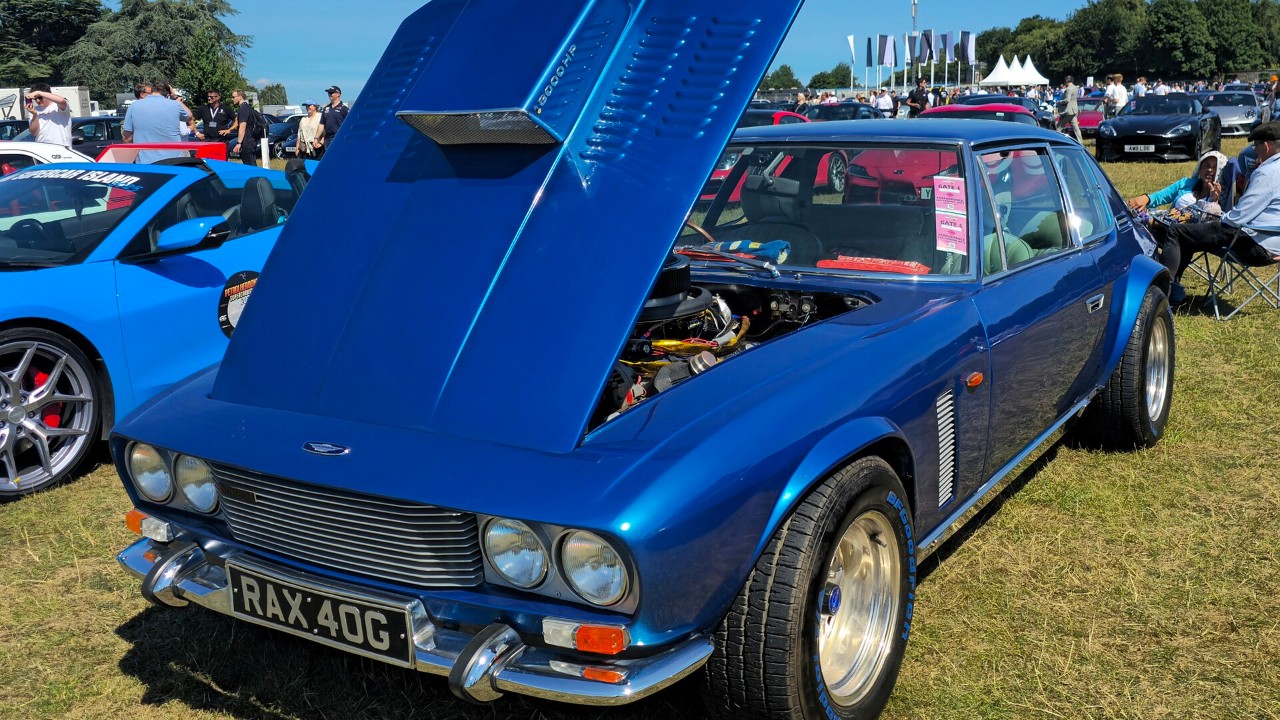
Jensen’s Interceptor mixed Italian design with American muscle. Carrozzeria Touring drew the body, and Vignale in Italy built the early shells before Jensen moved production in-house. Under the hood sat a Chrysler 383-cubic-inch V8. Most early cars used an automatic, and only 22 Mark I cars got the manual gearbox.
The signature detail is at the back. A huge, curving wraparound rear window doubles as the tailgate, so the fastback is also a practical hatch. Jensen built 6,408 Interceptors between 1966 and 1976. It also offered the related FF, one of the first production cars with four-wheel drive. The FF used the Ferguson Formula system and Dunlop Maxaret anti-lock brakes, and only 320 were made.
Why does it belong here? First, few cars of the 1960s blended two continents this well. Second, that glass hatch is one of the boldest fastback treatments of its time. In our view, an early car with the original Touring look is the one to own, and the FF is the prize for anyone who finds one.
9. 1969 Ferrari 365 GTB/4 Daytona
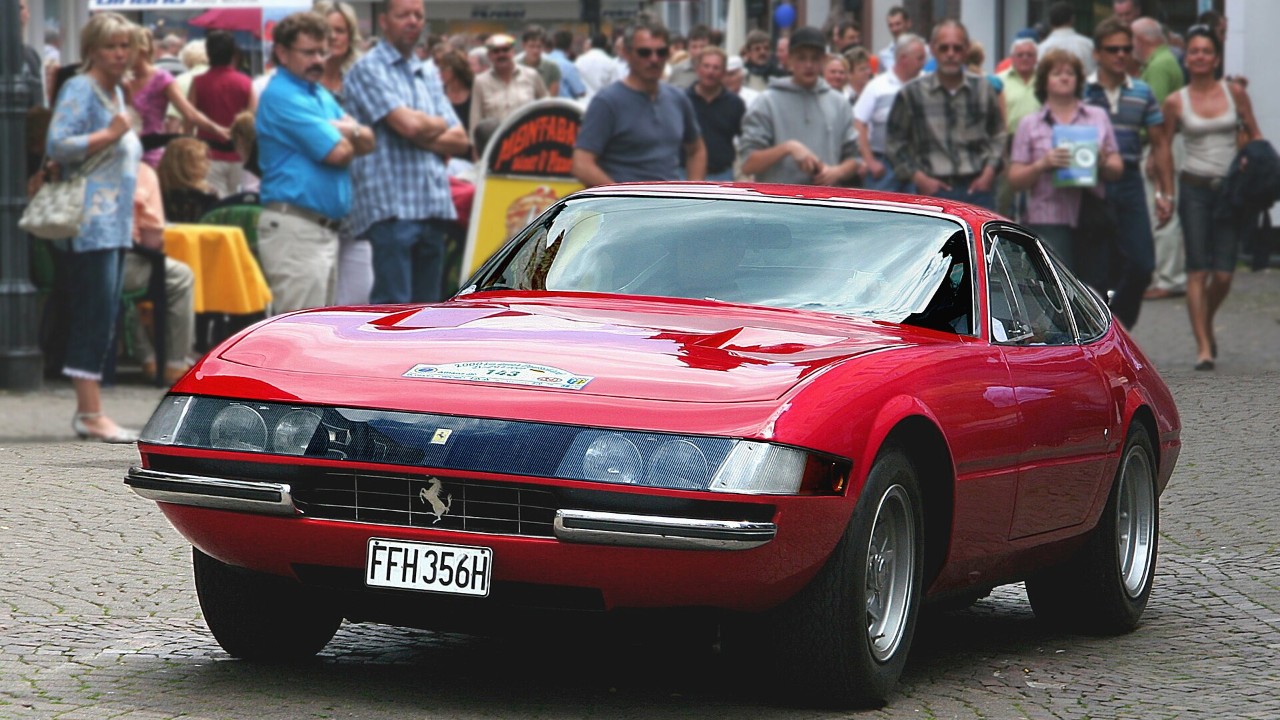
The Daytona made its debut at the 1968 Paris Auto Salon as the replacement for the 275 GTB/4. Leonardo Fioravanti of Pininfarina shaped it, and Scaglietti built the bodies. The name was never official. Instead, the media applied it to honor Ferrari’s 1-2-3 finish at the 24 Hours of Daytona in February 1967.
The numbers match the look. Its 4,390-cc V12 made 347 hp at 7,500 rpm, and the car topped out at 174 mph. Ferrari built 1,284 berlinettas and only 122 spiders. Total production, including 15 competition cars, came to 1,406. Early cars hid their fixed headlights under acrylic covers, which gave the nose an even smoother line.
Our take: the Daytona is already valuable, and we think it deserves to be. Nevertheless, the closed berlinetta, the true fastback, often gets less attention than the rare spider. For a pure expression of the long-nose, short-tail shape, we’d take the coupe with the acrylic nose every time.
10. 1965 Aston Martin DB6

Aston Martin’s DB6 is a fastback that wind tunnel testing changed for the better. Engineers found that the fastback shape created lift, which reduced rear traction at speed. So Aston added a Kamm tail, moved the rear axle and stretched the wheelbase 3.75 inches over the DB5, to 101.5 inches. Together, the changes made the car more stable at high speed.
The car debuted at the 1965 London Motor Show and stayed in production until January 1971. Its 3,995-cc straight six made 282 hp in standard form, while the Vantage made 325 hp. Aston built 1,788 DB6s in all, including 140 Volante convertibles.
We think the DB6 is the most overlooked of the classic DB cars. Its predecessor gets most of the headlines. Yet the DB6 has a longer wheelbase, a smarter tail and a six with up to 325 hp. For anyone who wants a DB fastback shaped by real aerodynamic testing, this is where we’d start. In our view, that mix of grand touring comfort and wind tunnel thinking was rare in 1965.
11. 1969 Fiat Dino 2400 Coupe
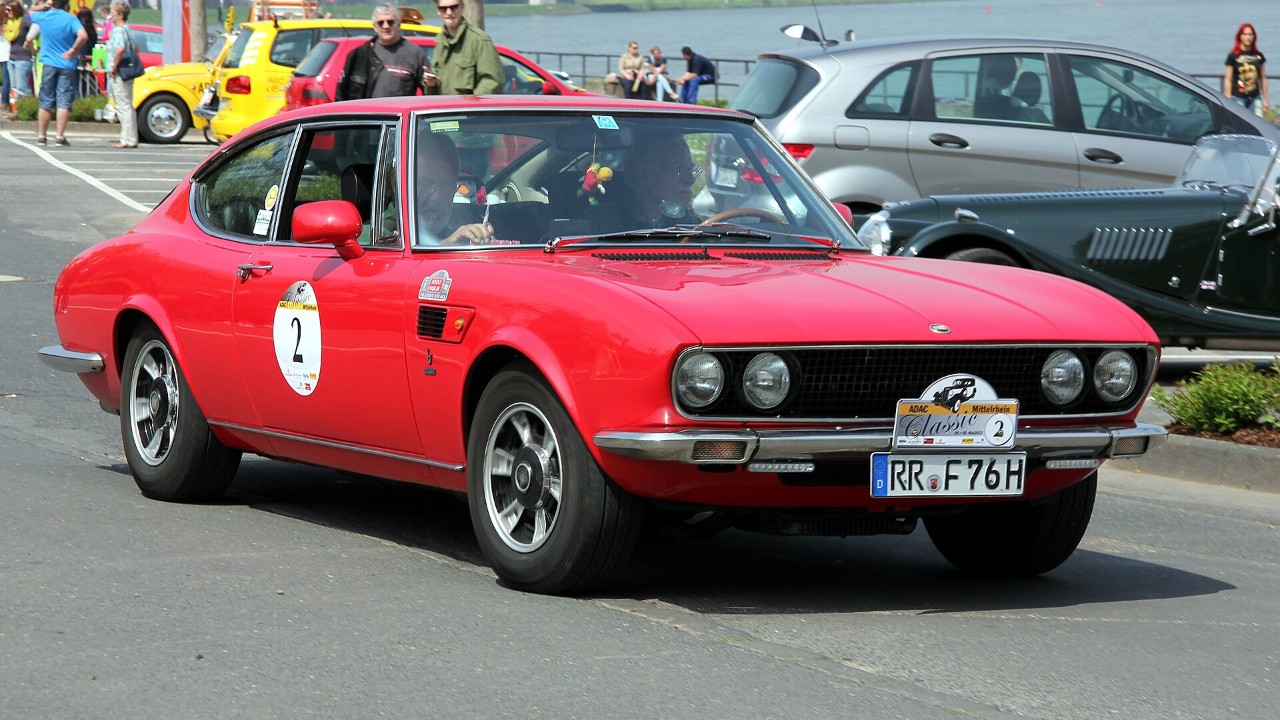
The Fiat Dino exists because of racing rules. New Formula 2 regulations for 1967 required engines derived from a road car, with at least 500 built in 12 months. Ferrari couldn’t build that many, so Fiat agreed in March 1965 to produce the engines in its own cars.
The Bertone coupe has a sleek fastback roof. Giorgetto Giugiaro sketched it in 1963, and Marcello Gandini finished it. The 2400 version brought a 2,418-cc V6 with 180 PS. It also added independent rear suspension, a ZF five-speed and an iron block. From December 1969, Ferrari built the cars in Maranello, on its own line. By comparison, the earlier 2.0-litre coupe made 160 PS, so the 2400 brought both more power and a better chassis.
In our view, this is one of the smartest buys on the list. You get a V6 born from Ferrari’s racing program, Bertone styling and, on later cars, Maranello assembly, all wearing a Fiat badge. We think the 2400 Coupe deserves far more collector attention than it gets, because few fastbacks of 1969 carry that much Ferrari DNA.
12. 1970 Datsun 240Z

The 240Z rewrote what Americans expected from a Japanese car. According to Hagerty’s 240Z valuation profile, most buyers before 1969 saw Japanese cars as “mainly cheap junk.” The Z changed that perception almost overnight.
Its 2,393-cc overhead-cam six made 151 hp, and Hagerty reports a 0-60 mph time of 7.8 seconds and a 125-mph top speed. Hagerty also says the Z competed with the Porsche 911T and Jaguar E-Type for about half the price. It outsold rivals from Alfa Romeo, Fiat, Opel, Triumph and MG. Datsun’s U.S. chief, Yutaka Katayama, made sure tall Americans could fit inside. Later, emissions rules dulled the performance after 1972, and the fuel-injected 280Z followed in 1975.
We’ve written about why the 1970 240Z changed sports cars in America. For this list, the case is about the shape. The long hood and sloping hatch defined the affordable sports fastback of the 1970s. One warning: rust claimed many cars, so Hagerty recommends shopping in drier regions. In our view, an early, rust-free 1970 car deserves to be the most collectible Japanese car of its era.
More from Fast Lane Only