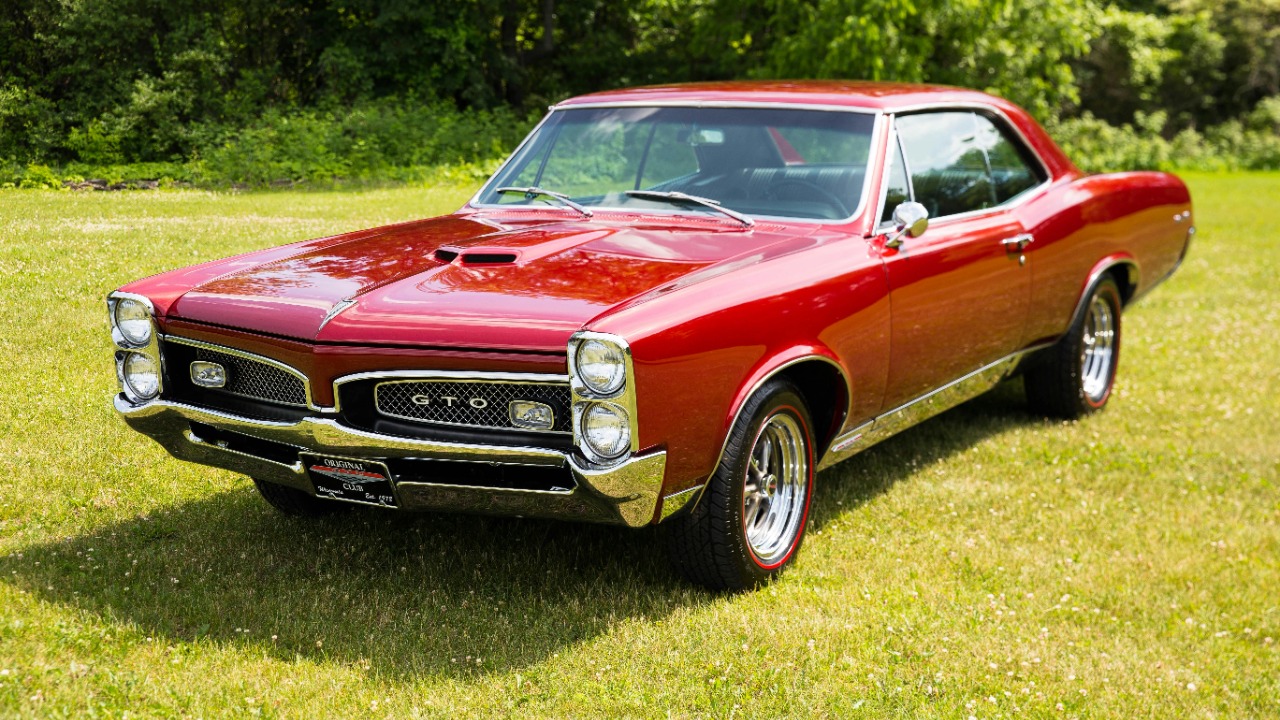
The 1965 GTO sits at the center of muscle car mythology, and its engine choice still fuels debate. Collectors weigh the bragging rights of the factory Tri-Power setup against the everyday usability of the single four-barrel. The question of which configuration is more desirable now blends performance history, production numbers, and changing tastes in the classic market.
Enthusiasts do not just compare horsepower figures, they also chase authenticity, rarity, and period-correct options. The Tri-Power package carries a halo effect, while the four-barrel often appeals to drivers who actually plan to rack up miles. The most sought after 1965 GTO examples usually combine mechanical specification with originality, documentation, and condition.
The Tri-Power mystique and what it actually is
Desirability for the 1965 GTO often starts with the name on the air cleaner lid. The Tri-Power label signals a factory arrangement of three two-barrel carburetors that transformed a strong street car into a headline muscle machine. Pontiac used this layout on large performance V8s, and period marketing turned the setup into a symbol of serious intent.
The configuration that fans call Tri-Power used three synchronized carburetors to deliver both drivability and top end punch, with the center unit handling light throttle and the outer pair opening under load. That layout appeared on big Pontia performance engines and enthusiasts still reference the system through the distinct term Tri Power. Community discussions continue to praise the 1965 Pontiac GTO as a legendary muscle car, and one enthusiast post from Feb 15, 2025 even framed the Tri-Power option as a coveted choice that helped secure the car’s place in automotive history, using phrases like Feb, You, Absolutely Right, Pontiac GTO, Tri, and Power to underline that status, as seen in a detailed thread on classic GTO admiration.
Four-barrel foundations and real-world performance
The four-barrel GTO built the foundation for the model’s reputation before the Tri-Power grabbed the spotlight. Pontiac paired the car with a 389 cubic inch V8 that delivered strong power and torque in standard form. That engine gave buyers a balanced package that mixed straight line speed with reasonable manners in traffic.
Reporting on a closely related 1966 model notes that the standard 389 cubic inch V8 with a four-barrel carburetor produced 335 bhp, which shows how much performance Pontiac baked into the base configuration and highlights the importance of the figure 389. That output already placed the GTO in serious company, even before any multi-carb upgrade entered the order sheet. Many drivers still prefer the simplicity of a single four-barrel, since tuning and maintenance often prove easier than synchronizing three separate carburetors over years of use.
Production numbers, rarity, and market perception
Collectors often treat rarity as a proxy for desirability, and the 1965 GTO production figures help frame that discussion. Total output reached 75,352 units, which confirmed strong demand for the model in its second full year. The breakdown included 55,722 hardtops, 11,311 convertibles, and 8,319 sport coupes, numbers that now guide valuations for different body styles.

Analysts who track surviving Tri-Power cars point to those totals to show how a relatively small slice of that 75,352 units carried the triple carburetor option, which magnifies interest in documented survivors. A detailed feature on a preserved Tri-Power example highlighted those same figures and described how enthusiasts still celebrate the car’s aggressive character, using the phrase Now the GTO when introducing the production breakdown and referring repeatedly to the GTO name. That context reinforces the idea that a factory Tri-Power setup on a 1965 GTO hardtop or convertible now carries a clear rarity premium over a comparable four-barrel car.
Period road tests, pricing, and the Tri-Power premium
Contemporary road tests played a major role in cementing the Tri-Power GTO as the enthusiast’s choice. Testers praised the way the triple carburetors sharpened throttle response and extended the engine’s pull toward the redline. Those impressions filtered into buyer lore and still influence how collectors talk about the 1965 model today.
One period evaluation of a 1965 GTO convertible with the 389 Tri-Power package described the car as carrying some of the most desirable options available at the time and listed a total sticker price of $3,643.79, a figure that now helps historians understand the original premium for that configuration. The same account credited the setup with strong acceleration right up to the engine’s 6,000 rpm redline, which supports the view that the Tri-Power option delivered more than just visual drama under the hood. Modern sellers still reference that Car Life test when marketing restored 1965 GTO convertibles, because it anchors the Tri-Power’s reputation in documented period performance rather than nostalgia alone.
Driving character, maintenance, and what buyers want now
Modern owners evaluate the 1965 GTO through a different lens than the original buyers who cross shopped new muscle cars. Many collectors today prioritize reliability, ease of tuning, and long distance drivability, especially if they plan to use the car on tours or club events. In that context, the single four-barrel version often looks like the more practical choice, even if it lacks the visual drama of three carburetors lined up on the intake.
Technical descriptions of the Tri-Power layout emphasize that the configuration used three two-barrel carburetors to deliver impressive horsepower and torque, and that combination helped secure the GTO’s place in automotive history. A detailed enthusiast post from Oct 13, 2025 described how that arrangement boosted Performance and underlined the way the triple carburetor setup shaped the car’s legend, while also acknowledging the tuning complexity that comes with multiple fuel circuits, as seen in a discussion of 1965 pontiac gto tri-power features. Some buyers now split the difference by seeking Tri-Power cars for their investment potential and show field impact, then detuning or carefully maintaining the system to keep the car usable on modern fuel.
So which 1965 GTO specification is more desirable
Market behavior suggests that the Tri-Power 1965 GTO usually commands a higher price and stronger attention at auctions. Collectors pay for the combination of rarity, period performance credentials, and the visual impact of three carburetors under the hood. The Tri-Power badge also carries cultural weight, since enthusiasts still treat it as shorthand for peak mid sixties muscle.
Desirability, however, does not always match suitability for every owner, and the four-barrel 389 GTO still offers compelling value. Drivers who want to enjoy regular road time often favor the simpler carburetion and slightly more relaxed character of the single four-barrel car, while still benefiting from the same basic engine architecture that powered the Tri-Power variants. For purists chasing the most iconic specification, the Tri-Power remains the target, but for enthusiasts who prioritize seat time over show points, a well sorted four-barrel 1965 GTO can represent the smarter and more livable choice.