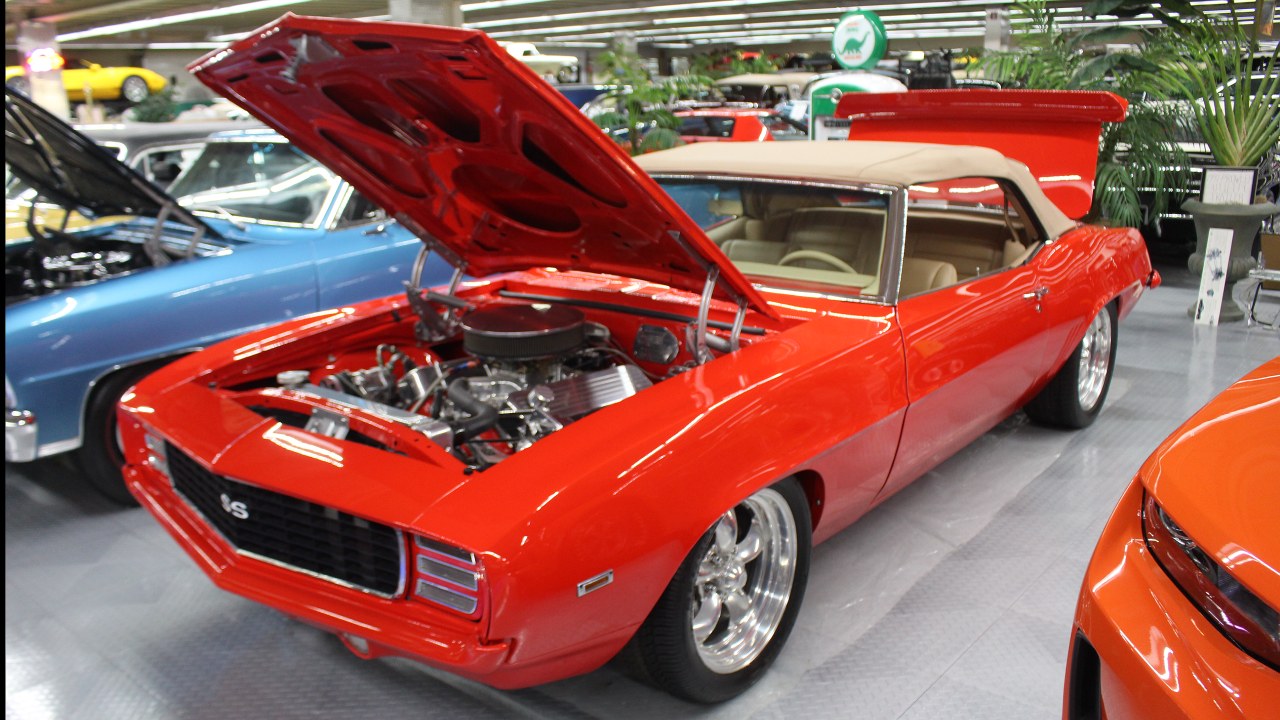
Among 1968 Camaro SS models, the big-block cars have pulled decisively ahead of their small-block counterparts in collector value, reflecting a broader market preference for maximum factory performance and rarity. While both versions share the same first-generation Camaro DNA, the cars built with Chevrolet’s 396 cubic inch V8 have become the benchmark for serious buyers, with pricing, auction results, and option data all tilting in favor of the larger engines.
As I look across pricing guides, auction archives, and period production figures, a consistent pattern emerges: the 1968 SS 396 is treated as a higher tier of the model line, and the market rewards it accordingly. The small-block SS 350 still commands respect, but the spread between the two has widened as collectors chase documented big-block cars with the right options, drivetrains, and provenance.
How the 1968 SS 396 and SS 350 differ on paper
The value gap starts with the mechanical hierarchy Chevrolet built into the Camaro lineup. In 1968, the SS package could be ordered with either the 350 cubic inch small-block or the 396 cubic inch big-block, but the 396 engines sat at the top of the performance ladder with higher advertised horsepower and torque. Factory ratings for the SS 350 centered on a 295 horsepower small-block, while the SS 396 range stepped up to 325, 350, or 375 horsepower depending on the specific L35, L34, or L78 configuration, giving the big-block cars a clear performance edge that still resonates with collectors who prize factory muscle.
Beyond raw output, the 396 cars typically received heavier duty components that signaled their status as serious performance machines. Big-block SS Camaros were commonly paired with stronger rear axles, upgraded cooling, and more robust driveline parts that were engineered to cope with the extra torque. Those hardware differences, combined with the visual impact of a 396 engine bay and the SS-specific trim, help explain why buyers scanning listings for a 1968 Camaro SS often filter first for big-block power before considering color, transmission, or cosmetic options.
Production rarity and how it shapes today’s pricing
Rarity is the second pillar that pushes 1968 SS 396 values ahead of SS 350 cars. Chevrolet built far fewer big-block SS Camaros than small-block versions, which means that every surviving, documented 396 car represents a smaller slice of the original production run. When I compare available production breakdowns, the SS 350 appears in significantly higher numbers, while the 396-equipped SS models, especially the higher output L34 and L78 variants, occupy a much narrower band of the total 1968 Camaro output.
That imbalance shows up clearly in price guides and market tracking tools that separate values by engine code. In many condition tiers, a 1968 SS 396 commands a noticeable premium over an otherwise similar SS 350, with the spread widening as condition and originality improve. Well-documented big-block cars with matching numbers and original drivetrains often sit at the top of the value charts, while small-block SS cars cluster in a lower band even when restored to comparable standards, a pattern that reflects how scarcity and specification combine to shape collector demand.
Auction and private-sale data favor the big-block

Recent auction results reinforce the idea that the market consistently pays more for 1968 SS 396 cars than for SS 350s. When I scan sales from major collector venues, the strongest prices for 1968 Camaro SS models almost always attach to big-block examples, particularly those with documented L78 engines, four-speed transmissions, and desirable cosmetic options. Even when the cars are not top-tier showpieces, the presence of a factory 396 tends to lift the hammer price above comparable small-block SS cars with similar restoration quality.
Private-sale data and dealer listings tell a similar story. Asking prices for driver-quality SS 396 cars often start where many SS 350s top out, and the gap widens as the cars move into higher condition categories. Dealers marketing 1968 SS 396 Camaros routinely highlight the engine code and factory documentation in their descriptions, using the big-block status as a primary value hook, while SS 350 listings lean more heavily on cosmetic condition, color combinations, and affordability to attract buyers who want the SS look without paying big-block money.
Option packages, documentation, and originality premiums
Within the 1968 SS 396 universe, certain combinations of options and documentation create an additional layer of value that small-block cars rarely match. Big-block SS Camaros ordered with four-speed Muncie transmissions, performance rear axle ratios, and high-impact colors tend to sit at the top of the market, especially when supported by original build sheets, Protect-O-Plate tags, or other factory paperwork. Collectors pay a premium for cars that can prove they left the factory as genuine SS 396 models rather than later engine swaps or tribute builds.
Originality amplifies that premium. A 1968 SS 396 retaining its matching-numbers engine, correct heads and intake, and factory-style exhaust will almost always outpace a similarly restored SS 350, even if the small-block car is cosmetically sharper. The same logic applies to survivor-grade examples, where an unrestored big-block SS with honest wear can bring more money than a fully repainted small-block SS. In both cases, the market is effectively paying extra for the combination of factory big-block specification and verifiable history, a combination that is inherently harder to find.
Why small-block SS cars still matter to the market
The dominance of big-block values does not mean the 1968 SS 350 has been sidelined. Instead, the small-block SS has carved out a role as the more accessible entry point into first-generation Camaro performance, attracting buyers who want the SS badge and period-correct V8 power without the higher acquisition and ownership costs of a 396 car. The 350’s lighter weight and more balanced front-end feel also appeal to drivers who prioritize handling and real-world drivability over maximum straight-line acceleration.
From a value perspective, the SS 350’s lower price ceiling can actually work in its favor by broadening the pool of potential buyers. Enthusiasts who are priced out of documented SS 396 cars often turn to small-block SS models, which helps support a healthy baseline for 1968 SS 350 values even as the big-blocks continue to climb. That dynamic keeps the entire SS segment relevant, but it also reinforces the hierarchy: as long as collectors view the 396 as the ultimate factory configuration, the market will continue to reward those cars with higher prices and stronger appreciation potential.
More from Fast Lane Only