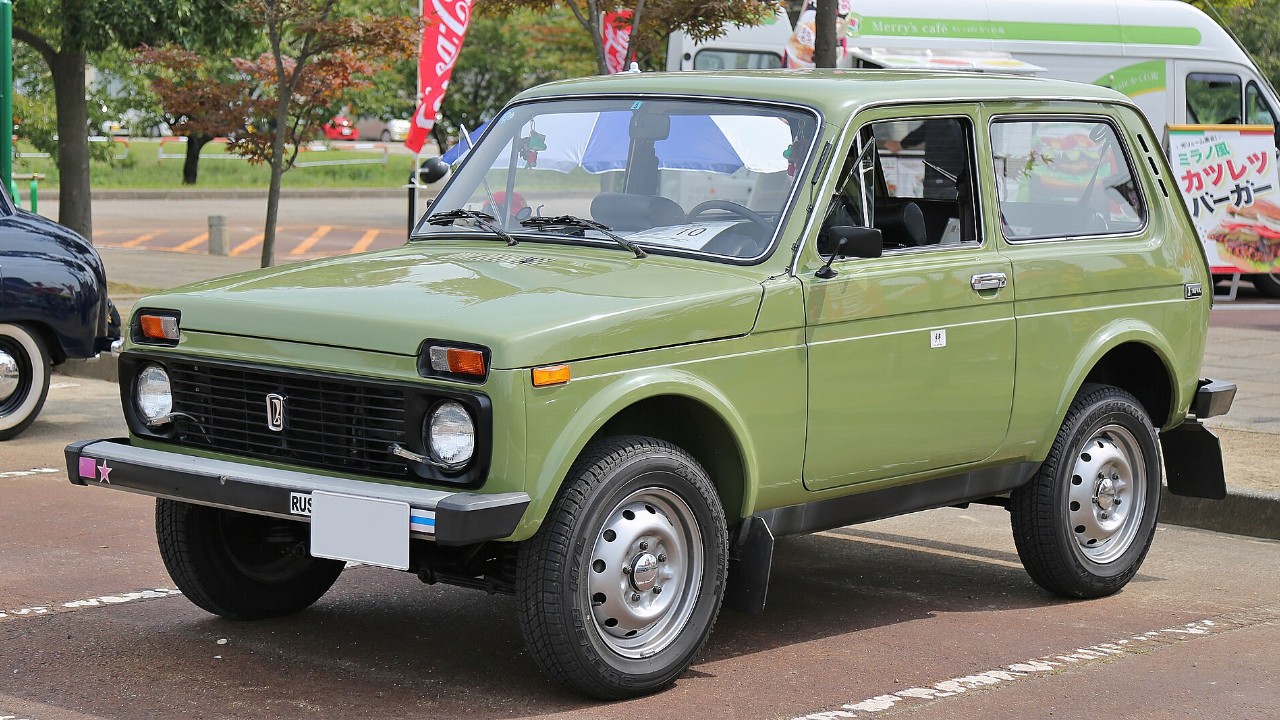
Some 4×4 designs simply refuse to leave the stage. Lada started building the Niva in April 1977, and the same basic truck is still sold new as the Niva Legend. Russia’s UAZ-469 has an even longer story, with production that began in 1971.
That kind of staying power usually comes from simple engineering. Armies, farmers and expedition crews want parts they can fix in a field, not features they have to send back to a dealer. However, toughness also comes in more refined packages, from a hand-built German wagon to a Japanese pickup that one country kept building for 15 years.
These are our picks, twelve 4x4s that seem nearly impossible to kill. The verdict is our opinion, and we make no mileage claims for any of them. Instead, each pick rests on how it was built, who used it and how long it stayed in production, using maker records, model histories and period reviews.
1. 1980 Lada Niva 1600
The Niva’s toughest test took place at the bottom of the world. From 1990 to 2001, the Soviet Antarctic Expedition used one for more than a decade. It covered over 40,000 km there and worked in temperatures as low as minus 54 degrees Celsius.
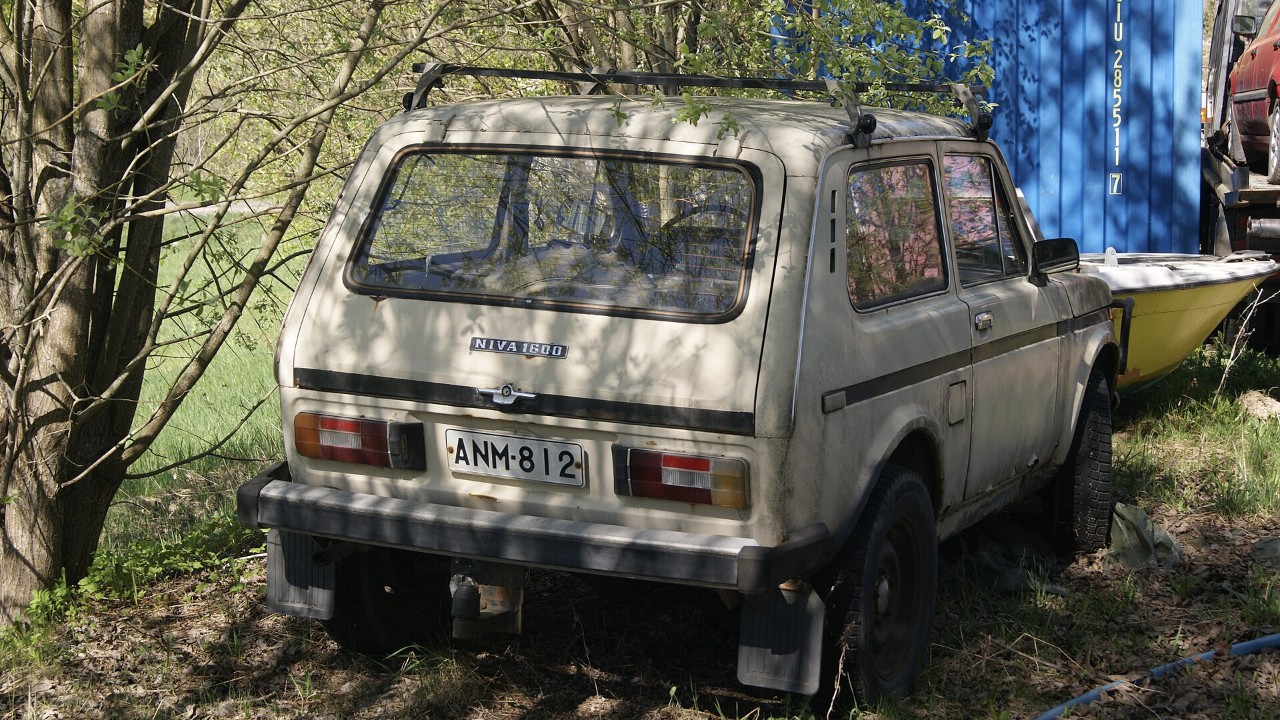
The layout explains a lot. The Niva paired a unibody shell with full-time four-wheel drive and three differentials. It also had coil springs at every corner, plus independent front suspension. In our view, that recipe was well ahead of its time for a 1970s 4×4. Lada also used the Niva 1600 name on export trucks, while home-market buyers knew it as the VAZ-2121. Export sales began in 1978, and the Niva soon claimed a big share of Europe’s four-wheel-drive market. The pictured 1980 car carries the export Niva 1600 name and was photographed in Finland.
Our take: the Niva is the definition of a survivor. Lada kept refining it instead of replacing it, so the newest Niva Legend still shares its basic shape with the 1977 original. If you find an early export car, check the sills and floors closely for rust.
2. Mercedes-Benz 300 GD (W463)
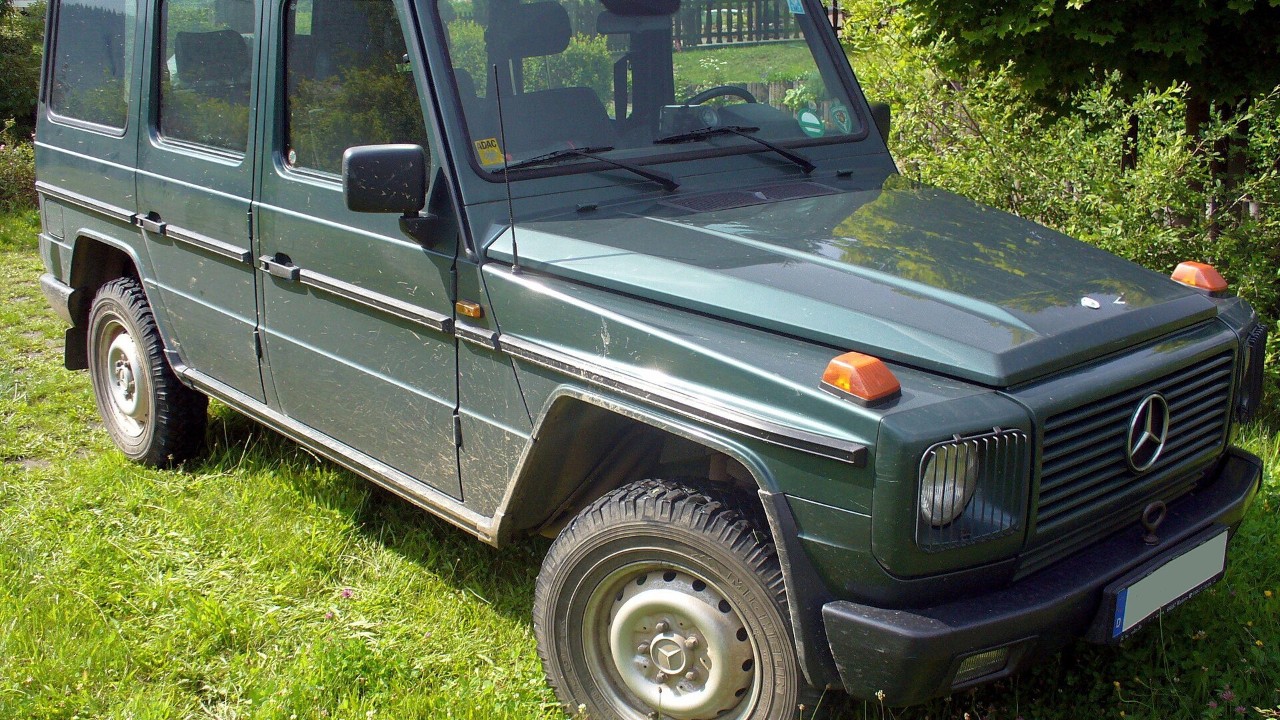
The G-Class began as a military project after the Shah of Iran suggested it to Mercedes. Then, in 1972, Daimler-Benz and Austria’s Steyr-Daimler-Puch agreed to build it together. The civilian version followed in 1979. According to the G-Class development timeline from Mercedes-Benz, early trucks were made by hand in Graz on a ladder frame with coil-sprung rigid axles. A 280 GE also won the car category of the 1983 Paris-Dakar Rally.
For 1990, Mercedes gave the G a deep revision and the new W463 code. The update brought full-time four-wheel drive and three locking differentials, which is rare for a passenger vehicle. In the W463, the 300 GD used a 3.0-liter diesel six rated at 113 PS.
In our view, the diesel W463 is the sweet spot for a G that will outlast its owner. It is slow but mechanically honest, and its locking differentials make it one of the most capable 4×4 wagons of its era in our book. Better yet, Graz has built the G for so long that the 400,000th one rolled out on December 4, 2020. Look for a rust-free frame and working locker controls before you buy.
3. UAZ-469
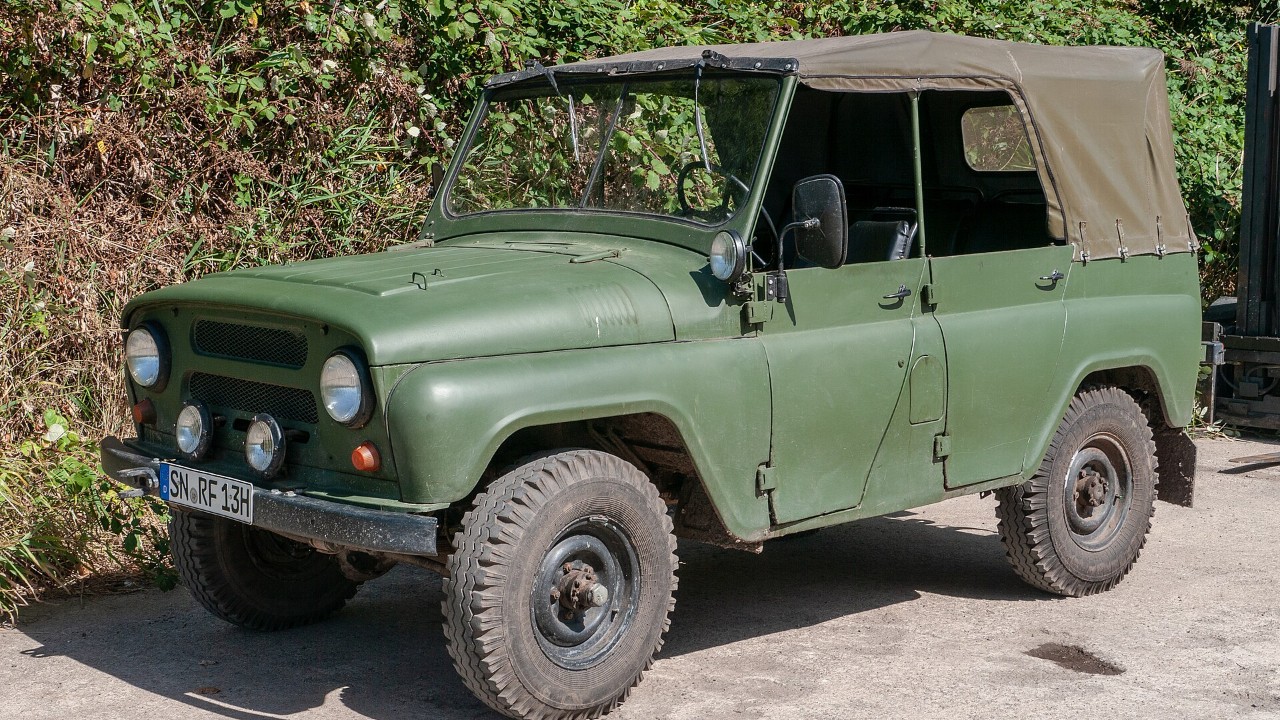
The UAZ-469 is what happens when an army writes the spec sheet. Soviet and other Warsaw Pact forces used it as their light utility vehicle. Paramilitary units across the Eastern Bloc ran it too.
Its numbers are modest but purposeful. The original 2.45-liter four made 75 horsepower, which is barely enough for a heavy box on wheels. However, the military version rode 300 mm off the ground, while the civilian 469B sat at 220 mm. That gap matters when the road turns into a rutted track. Later versions took the UAZ-3151 and Hunter names, but the basic 4×4 underneath stayed familiar. Civilian production of the old model ended in 2005, while the military version carried on until 2011. Even the Hunter took only a short break in 2015 before it returned.
Our take: the 469 makes our list because it has outlived the country that designed it. It is crude, loud and thirsty by modern standards. Still, almost everything on it can be repaired with basic tools. Before you import one, check your local rules, and budget for a careful look at the frame and axles.
4. 1996 Jeep Cherokee XJ two-door
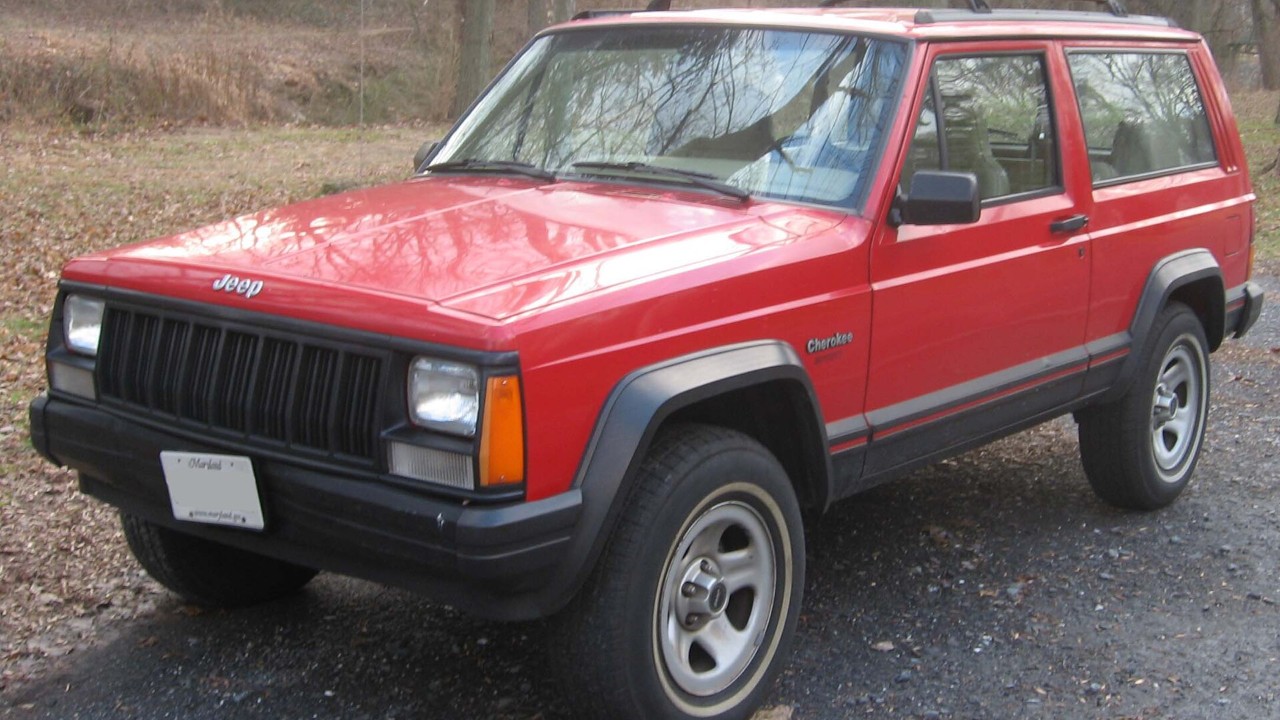
Jeep’s XJ took a risk in 1984. Instead of a separate frame, it built boxed frame rails into a single unibody shell. The gamble worked. Across several plants, about 3 million were built between 1983 and 2001. For the bigger story, see our feature on why the Jeep Cherokee transformed the modern SUV.
The two-door body stayed on sale for the XJ’s entire life. From 1994, it came only in SE trim, which makes a mid-1990s two-door a no-frills truck. The key part is the 4.0-liter inline-six. From 1991 to 1999, the high-output version made 190 horsepower. Buyers could also pick between part-time Command-Trac and the full-time-capable Selec-Trac transfer cases. Both used chain-driven, two-speed designs with aluminum housings, so low range came standard on every XJ 4×4. A year after our 1996 model, the 1997 facelift swapped the fiberglass liftgate for a steel one.
In our view, the 4.0 two-door is one of the best used 4×4 bargains ever built. The engine is simple, and aftermarket support is huge. However, unibody trucks suffer when the floors and rails rust. Check underneath first, especially the floors and frame rails.
5. 1987 Toyota Hilux 4×4 pickup
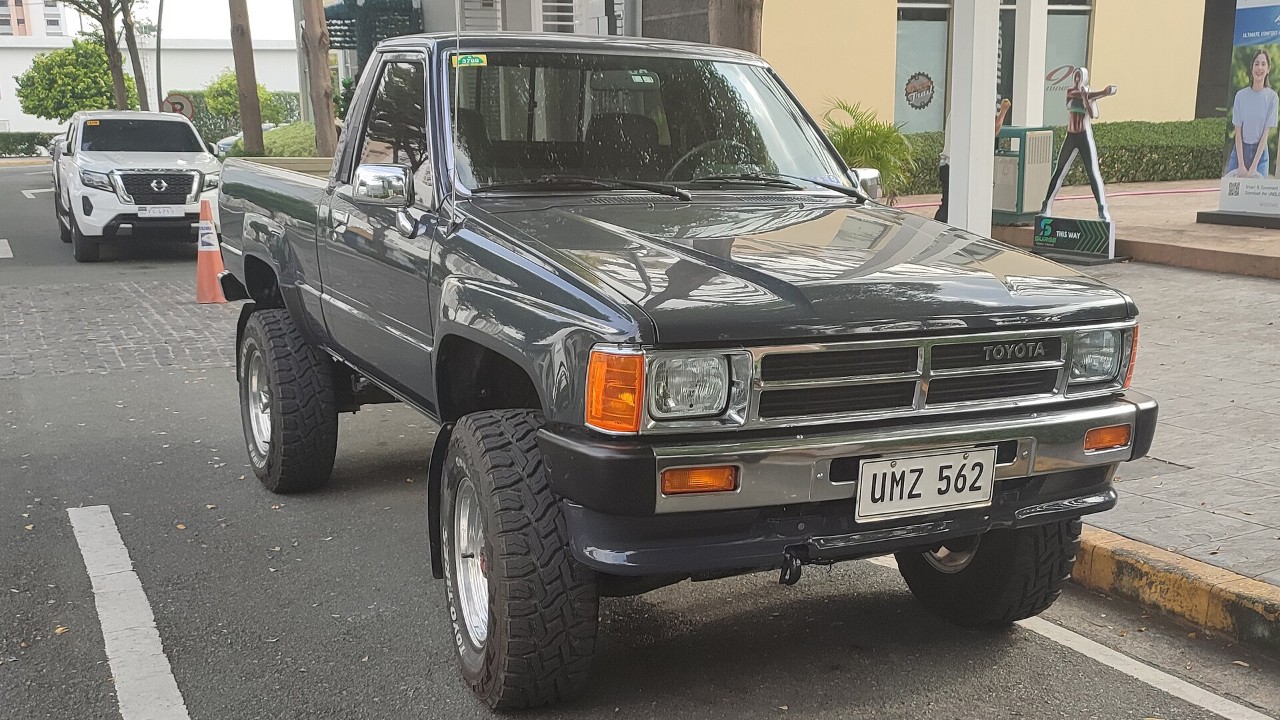
Toyota launched the fourth-generation Hilux in August 1983, and it stayed in Japanese production until August 1988. In South Africa, however, local content laws kept it rolling off the line until 1998. That alone says something about how well the basic design held up.
North American 4×4 models switched to independent front suspension for 1986, with double wishbones and torsion bars. Elsewhere, Toyota kept offering the old solid front axle on base trucks until 1997. The engines were plain and dependable. The carbureted 22R made 102 horsepower, while the fuel-injected 22R-E version sold in North America made 115. Toyota also offered the 2L diesel in many markets.
Our take: this generation built the Hilux reputation that every later truck inherited. It has little to break, and in our view the 22R is one of the easiest engines of its era to live with. For a deeper look at that reputation, read our story on classic 4x4s that outlived their own hype. If you shop for one, check the bed and frame for rust. Walk away from a rotten chassis, however clean the cab looks.
6. Toyota Hilux Surf (N180)
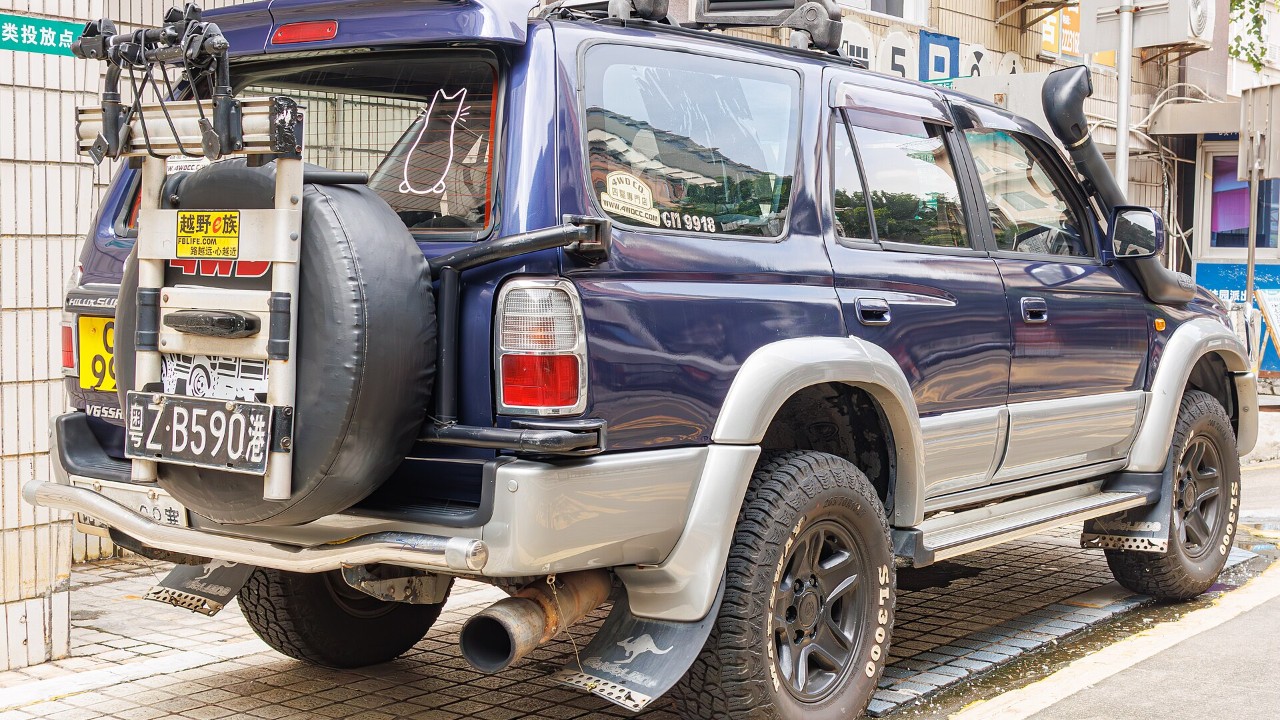
Most Americans know this truck as the third-generation 4Runner. In Japan, Toyota sold it as the Hilux Surf. It arrived in late 1995 for the 1996 model year, after a development program led by chief engineer Masaaki Ishiko.
The big change was underneath. The new truck shared its chassis with the Land Cruiser Prado, and it rode on coil springs at all four corners. Rack-and-pinion steering replaced the older setup, too. The 3.4-liter 5VZ-FE V6 made 183 horsepower. Meanwhile, Japanese buyers could also choose a 3.0-liter 1KZ-TE turbodiesel rated at 130 horsepower. The wheelbase also grew by 2.3 inches over the previous truck, and the track got an inch wider.
In our view, the N180 is where Toyota’s midsize SUV grew up without losing its toughness. It rides on a more modern chassis than the trucks before it, yet the hardware is still simple. That shared Prado foundation is a big part of why we rate it so highly. The Surf name itself ended in 2009, when Toyota Japan stopped building the model. Pick one with a full service history, and check the frame for rust before you buy.
7. Steyr-Puch Pinzgauer 710M
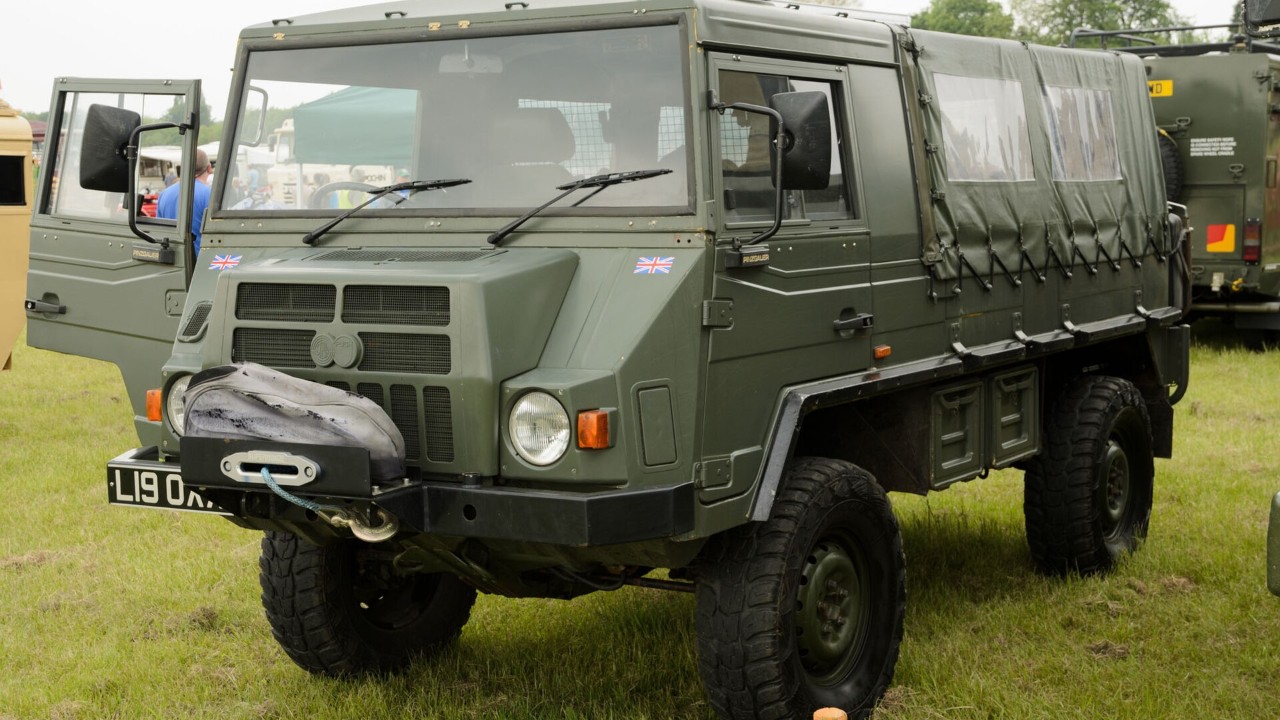
The Pinzgauer looks like a toolbox, and in a way that is the point. Steyr-Daimler-Puch began building it in Graz, Austria, in 1971. The 710 was the four-wheel-drive version, while the 712 had six driven wheels. The M on our pictured truck marks the soft-top body with rear seats, so the 710M carries ten people.
Underneath, the engineering is unusual. A central tube forms the backbone of the chassis, and portal axles lift the hubs for extra ground clearance. The engine is an air-cooled 2.5-liter four rated at 87 bhp, so there is no radiator to puncture. Between 1971 and 1985, Steyr built 18,349 first-generation 710 and 712 trucks. Armies in Austria, Switzerland, Britain and many other countries put them to work. Production later moved to Guildford, England, under BAE Systems.
Our take: few vehicles look this ready for the end of the world. It is slow and noisy, and it is not a highway cruiser. However, it will crawl through terrain that stops most SUVs. Buy from a seller who knows the portal hubs and the air-cooled engine, because specialist knowledge matters more than shiny paint.
8. 1992 Daihatsu Rocky 2.0
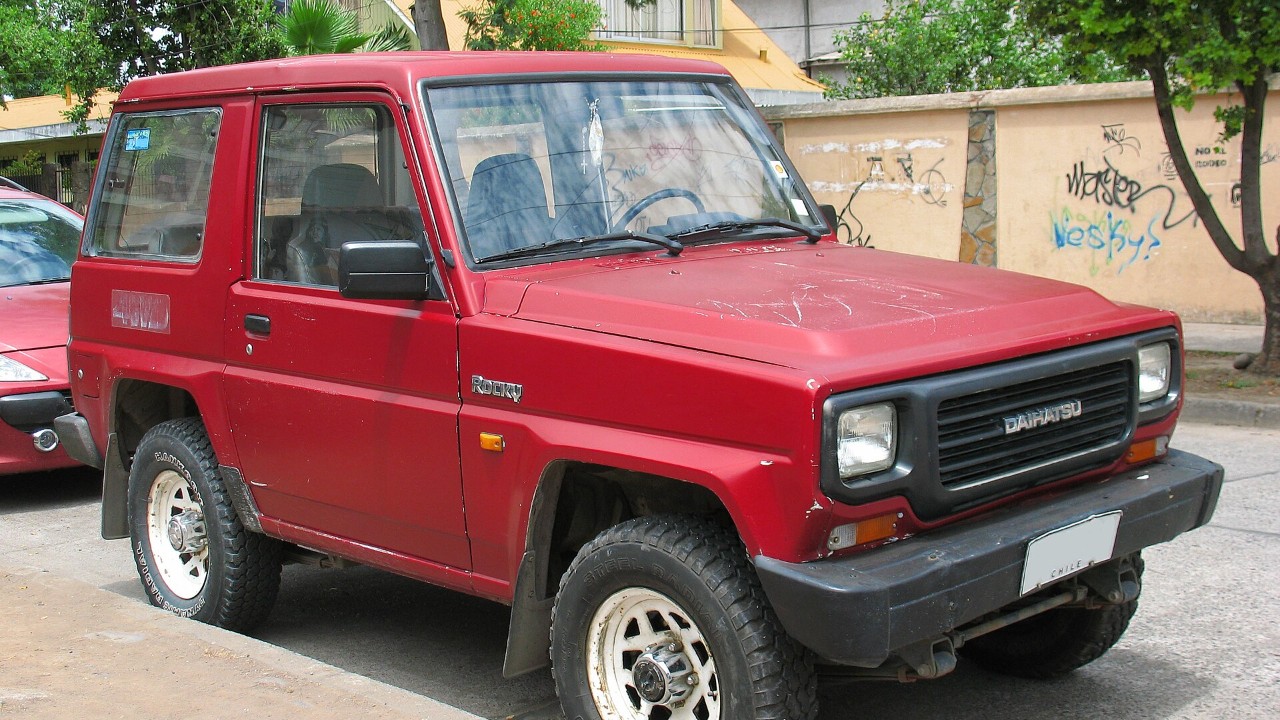
Daihatsu called this truck the Rugger at home, the Fourtrak in Britain and the Rocky in most other export markets. Japanese production ran from 1984 to 2002, and the Rocky was a popular 4×4 in Australia through the 1980s and 1990s. Underneath, it used a ladder frame and part-time four-wheel drive, with a transfer case that added low-range gearing for crawling.
The 2.0 in our pictured car’s name points to the Toyota-built 3Y petrol four, rated at 87 horsepower. Diesel versions used a 2.8-liter engine, with or without a turbo. Early trucks rode on leaf springs and needed the driver to lock the front hubs by hand. Then, from 1991, Daihatsu added independent front suspension, a coil-sprung rear axle and automatic locking hubs.
The RAC’s used-car review of the Fourtrak called it “as tough as old boots” and praised its off-road ability. We agree, and that’s why it earns a spot here. It is a small 4×4 with big-truck habits, and the turbodiesel versions could tow 3,500 kg, according to the RAC. Because many were worked hard off-road, check the chassis, axles and gearbox carefully before you buy.
9. 1985 Chevrolet K5 Blazer 6.2 diesel
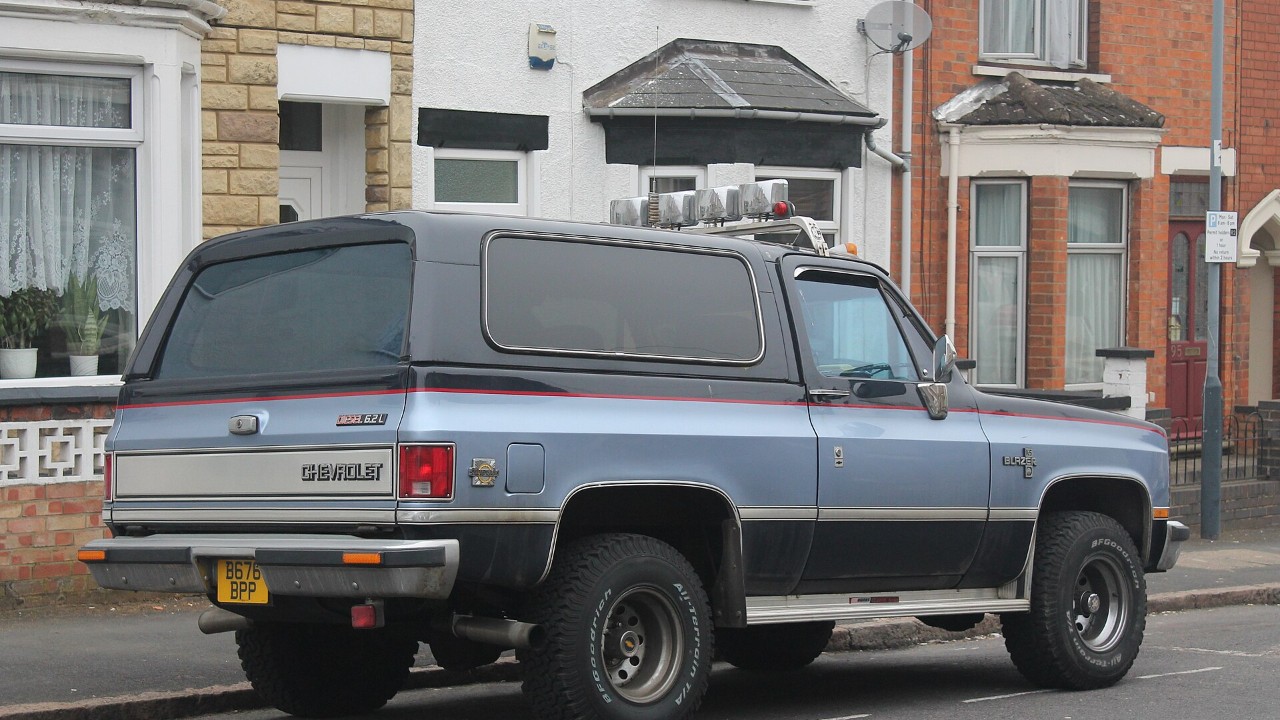
The K5 Blazer was Chevy’s full-size SUV, and the 6.2-liter diesel gave it a working-truck heart. GM’s Detroit Diesel V8 arrived for 1982 and stayed available through 1991. It came only on four-wheel-drive models, and it was rated at 135 horsepower and 240 lb-ft of torque. In practice, that torque figure mattered more than the horsepower for towing and crawling.
The military liked the combination, too. From 1983 to 1987, the M1009 CUCV served as the military’s version of the civilian K5, built on the same basic truck. Every one of them used the same 6.2 diesel, which says a lot about how the government saw the engine. On the civilian side, Chevy built 40,011 Blazers in 1985. That means a 1985 diesel K5 is not rare, which is good news if you need parts or a donor 4×4.
In our view, a diesel K5 is the slow-and-steady choice among Blazers. It is not quick, but it is easy to understand and to fix. When you shop, check for a healthy glow-plug system and clean starting, and inspect the frame and floors for rust.
10. Nissan Pathfinder (WD21) two-door
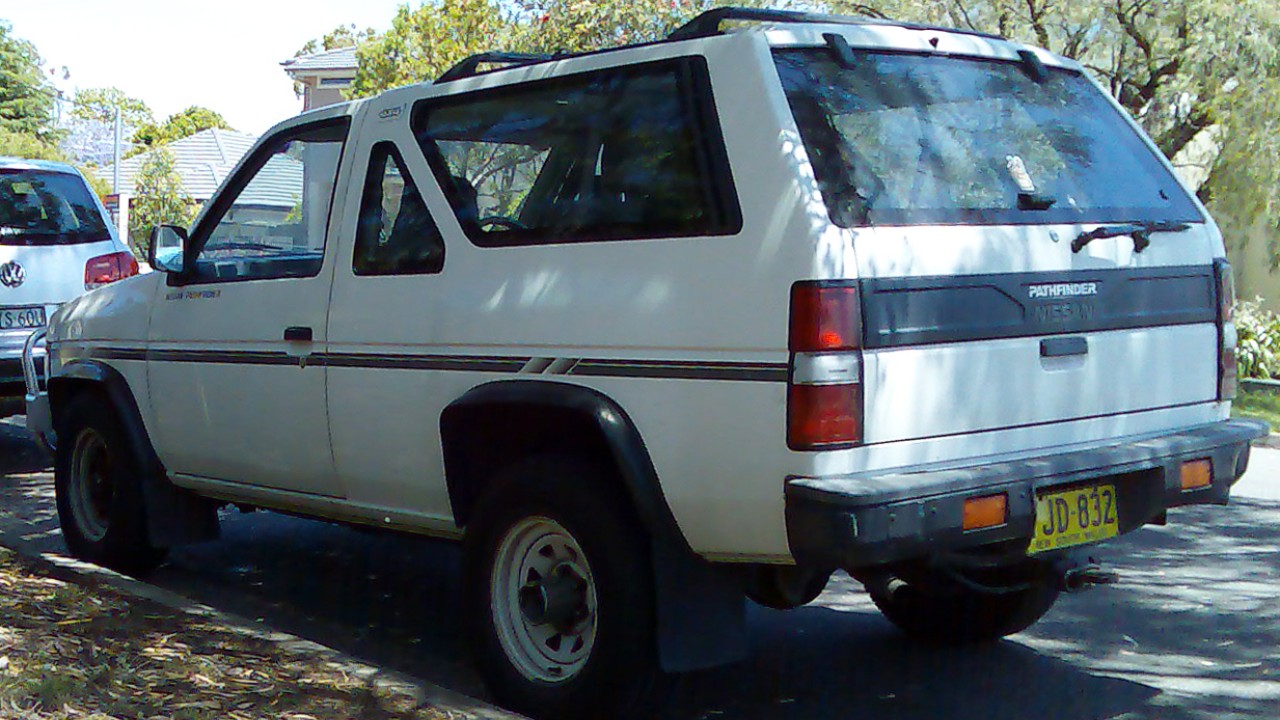
Nissan unveiled the first Pathfinder in May 1985, and it reached U.S. showrooms in July 1986 as a 1987 model. At first, it came only as a two-door. It shared its styling and most of its parts with the Nissan Hardbody pickup, and it rode on a ladder-type frame.
Buyers had two engines. The 3.0-liter V6 made 143 horsepower, while the 2.4-liter four made 106. For 1990, the V6 gained multi-point fuel injection. A four-door body arrived in October 1989, and North American Pathfinders went four-door-only from 1990. Outside North America, Nissan sold the same 4×4 as the Terrano. The first generation stayed in production until 1995.
Our take: the two-door Pathfinder is the forgotten tough guy of the 1980s SUV boom. It is a pickup truck underneath, with all the strength that implies, wrapped in a sharp, square body. That pickup basis gave it a proper frame, which is why we rate it alongside the Toyota trucks on this list. Because Nissan sold the two-door only briefly in North America, we’d snap up a clean one. Check the frame and rear wheel arches for rust before anything else.
11. 1970 Range Rover Classic
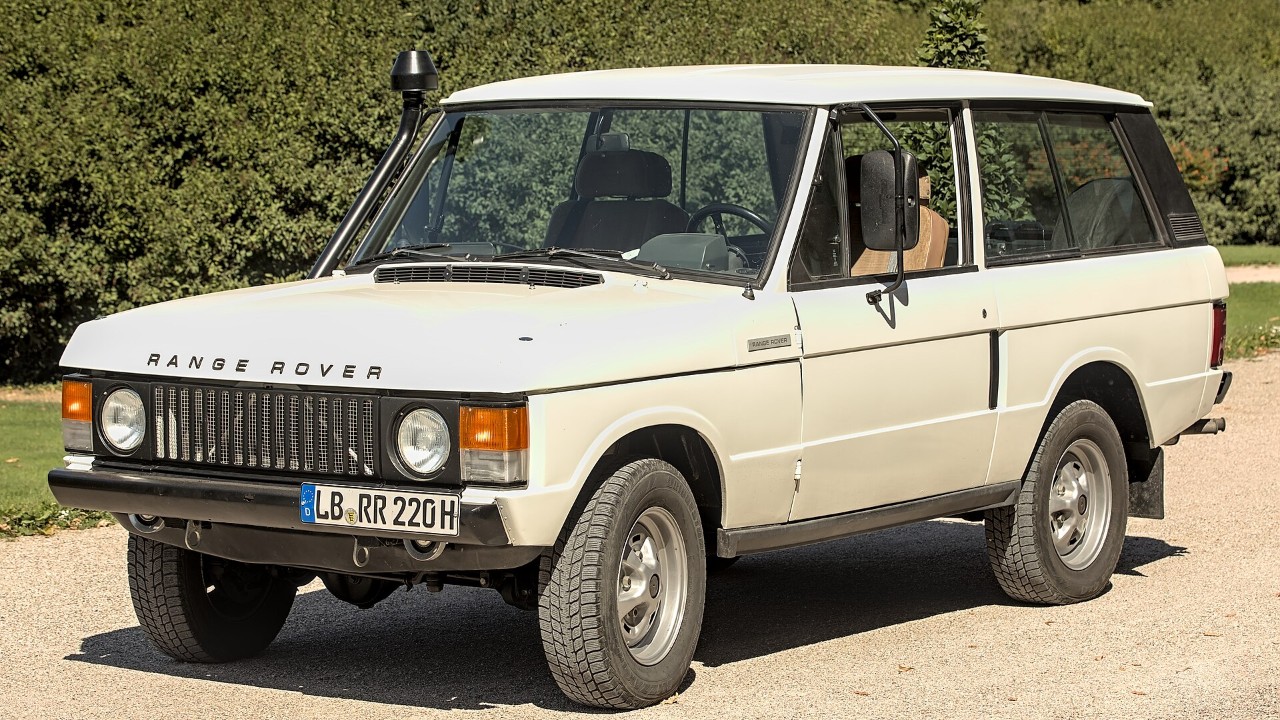
In 1971 and 1972, a Range Rover helped push through the Darién Gap from north to south, a stretch of jungle with no road at all. That trip showed the new luxury 4×4 was not just for country estates. Rover had introduced the Range Rover to the public in June 1970.
The original recipe was simple. Rover fitted a detuned 3.5-liter V8 with 135 horsepower and permanent four-wheel drive. Instead of leaf springs, it used coil springs. Auto Express’s look back at the first Range Rover also points to its locking differential and its split tailgate. Early cabins even had a rubber floor you could hose out. The two-door body ran alone until a four-door arrived in July 1981. By 1996, Rover had built 326,070 of these first-generation trucks.
In our view, the early V8 is the heart of this truck’s toughness. Auto Express calls the V8s robust and the early 3.5 the most reliable. Its aluminum body panels also help, because they resist rust better than steel. However, the steel chassis can still rot. Inspect the cross members and inner wings before you buy.
12. Volkswagen Iltis
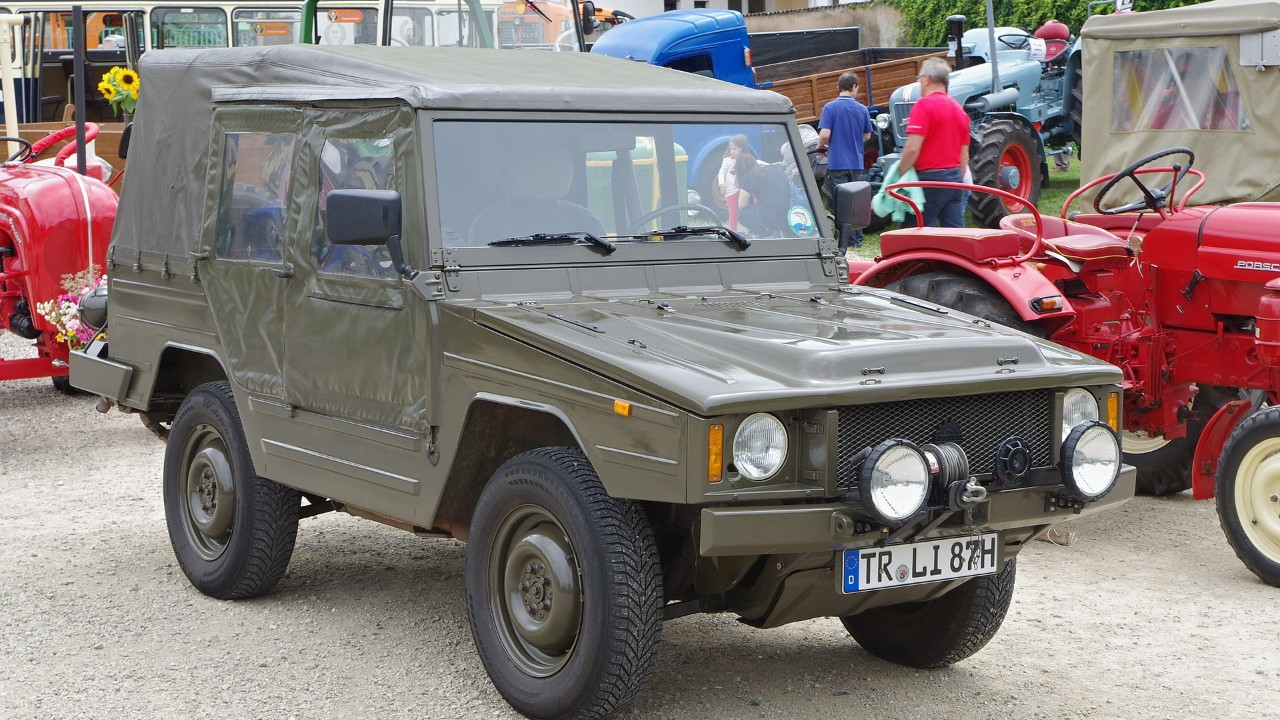
A small German army jeep won the 1980 Paris-Dakar Rally. Freddy Kottulinsky and Gerd Löffelmann drove an Audi-prepared Iltis to victory. The Iltis was developed by Audi and sold as a Volkswagen. The Bundeswehr picked it over the Mercedes G-Wagen, and by late 1979 it had about 2,000 of them.
Mechanically, the hardware was modest. A 1.7-liter four made 75 PS, and the four-wheel-drive system borrowed parts from the Audi 100. Remarkably, that drivetrain design laid the groundwork for Audi’s quattro system. Volkswagen built 9,547 Iltis trucks from 1978 to 1988. Meanwhile, Bombardier built more under licence in Valcourt, Quebec, for the Canadian and Belgian armed forces. Canada’s 1983 order alone covered 1,900 vehicles, and a 1985 contract added 600 more. Belgium took another 2,673 Bombardier-built trucks.
Our take: the Iltis is light, simple and far more capable than its size suggests. It was a true military 4×4, built for soldiers rather than suburbs. Its military service record and Dakar win prove the point. If you find an ex-military truck, check for hidden rust and missing parts, and budget for a careful mechanical refresh.
More from Fast Lane Only