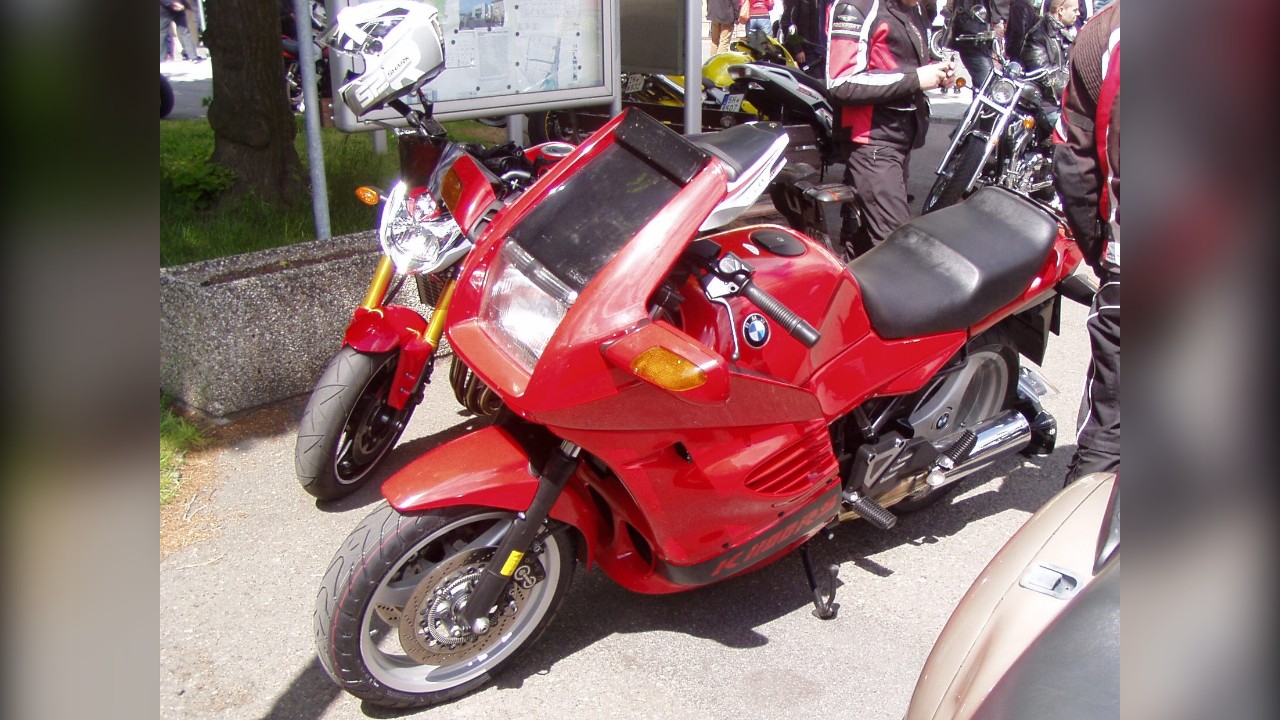
When Cycle World tested the BMW K1100RS in 1993, editor David Edwards admitted it was a four-cylinder BMW he would consider owning. He added that he never thought he’d say that. That surprise sums up the appeal of a good four-cylinder motorcycle. It’s smooth, it pulls hard at any speed, and it often lasts longer than its owners expect.
Four-cylinder bikes have filled showrooms since the 1970s, from tiny Hondas to big sport-tourers. Not all of them aged well. Some were too complex, too heavy or too hard to find parts for. Others still make perfect sense for a rider shopping today, whether that means a classic weekend bike or a used commuter.
These are our picks, twelve four-cylinder motorcycles we’d still recommend. The recommendations are our opinion. Even so, the engines, prices and road-test numbers below come from sources we checked, and we’ve left out figures we couldn’t confirm. One pick is a V4, which still counts as four cylinders.
1. BMW K1100RS
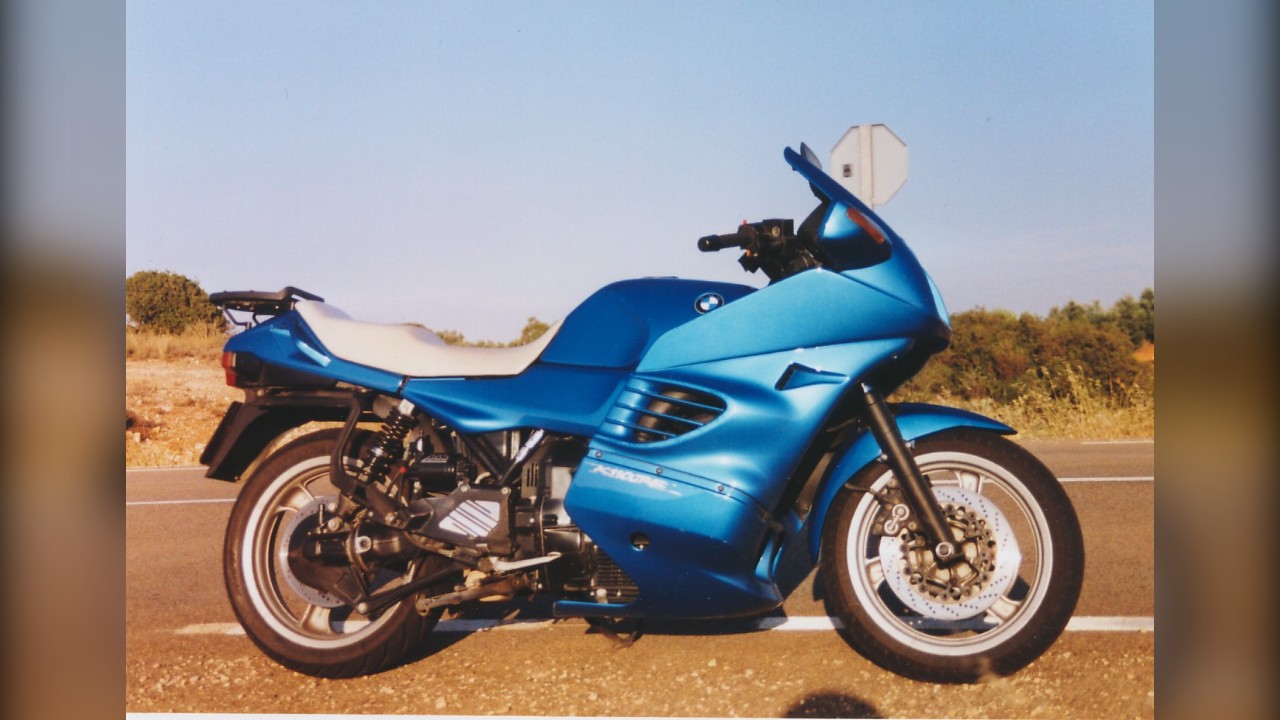
BMW built the K1100RS from 1992 to 1997 as a facelift of its sport-touring K-bike. According to BMW Group Classic, its 1,092 cc inline-four made 100 horsepower at 7,500 rpm, and top speed was 220 km/h, or about 138 mph. The upper fairing came from the K100RS, while a new lower section added leg protection. In Germany, it launched at 21,950 Deutschmarks.
The Cycle World road test found a bike that was fast and civilized at once. Their BMW K1100RS ran the quarter-mile in 11.71 seconds at 115.83 mph and topped out at 139 mph. It also came with ABS and a saddle the magazine judged “well up to 500-mile days.” The catch was weight, at 564 pounds, and a price of $13,990 without luggage.
Our take: the BMW K1100RS remains one of the most complete sport-tourers of its decade. It’s comfortable, quick and built for distance, and early ABS adds peace of mind. If you want one, look for full service records, since these bikes reward owners who keep up with maintenance.
2. Honda CB1300 Super Four
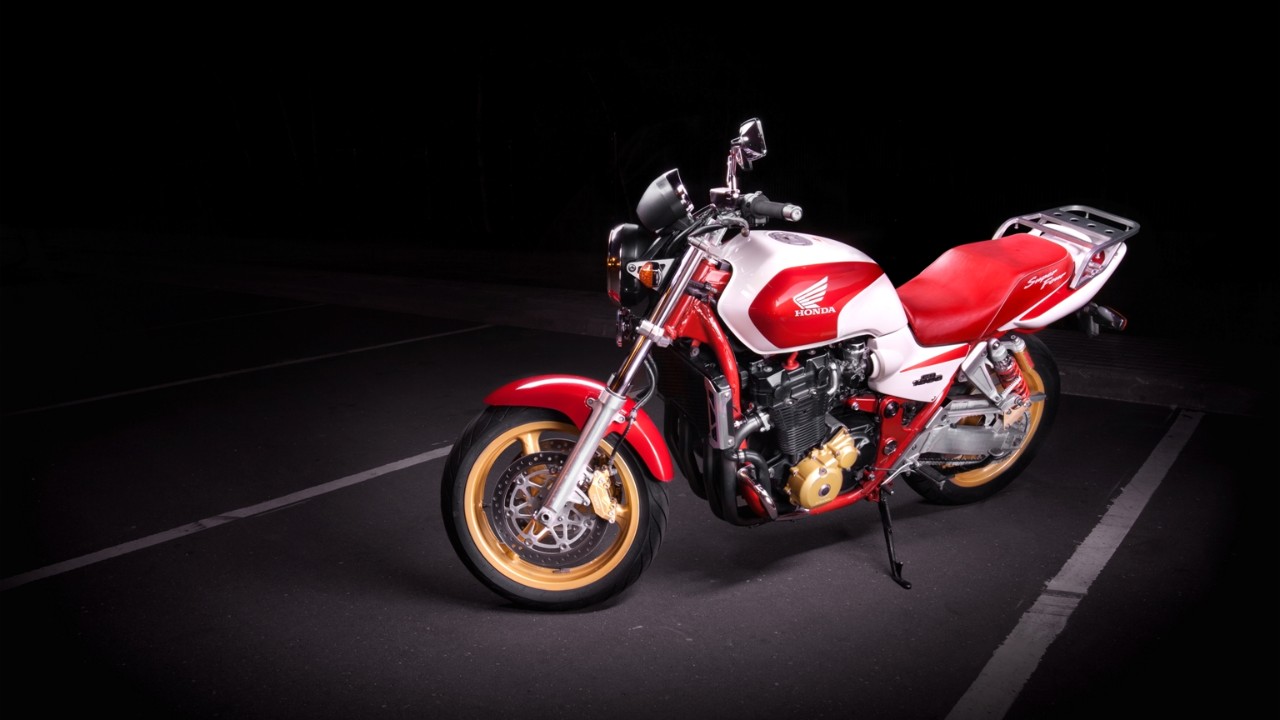
Honda released the first CB1300 in February 1998 and kept building it until 2025. Its 1,284 cc liquid-cooled inline-four uses double overhead cams and 16 valves. Early bikes made 100 horsepower at 7,500 rpm, and Honda kept refining the design. Models before 2003 carry the internal code SC40, while later ones are SC54.
The range grew over time. From 2005, Honda offered a naked bike and the half-faired Super Bol d’Or, sold in Europe as the CB1300S. A 2018 Japan-only update raised output to 109 horsepower. Later, the 2021 update brought throttle-by-wire, riding modes and cruise control. Japanese police also used a CB1300P version. However, authorized dealers in the United States and Canada never sold the CB1300, so American riders will need to import one.
We’d recommend the CB1300 to anyone who wants a big, old-school standard with modern manners. It has the classic look of a 1970s Honda four but none of the vintage fuss. Buyer advice: for North America, check import paperwork carefully before you buy, since every example arrived outside official channels.
3. Honda CB350F
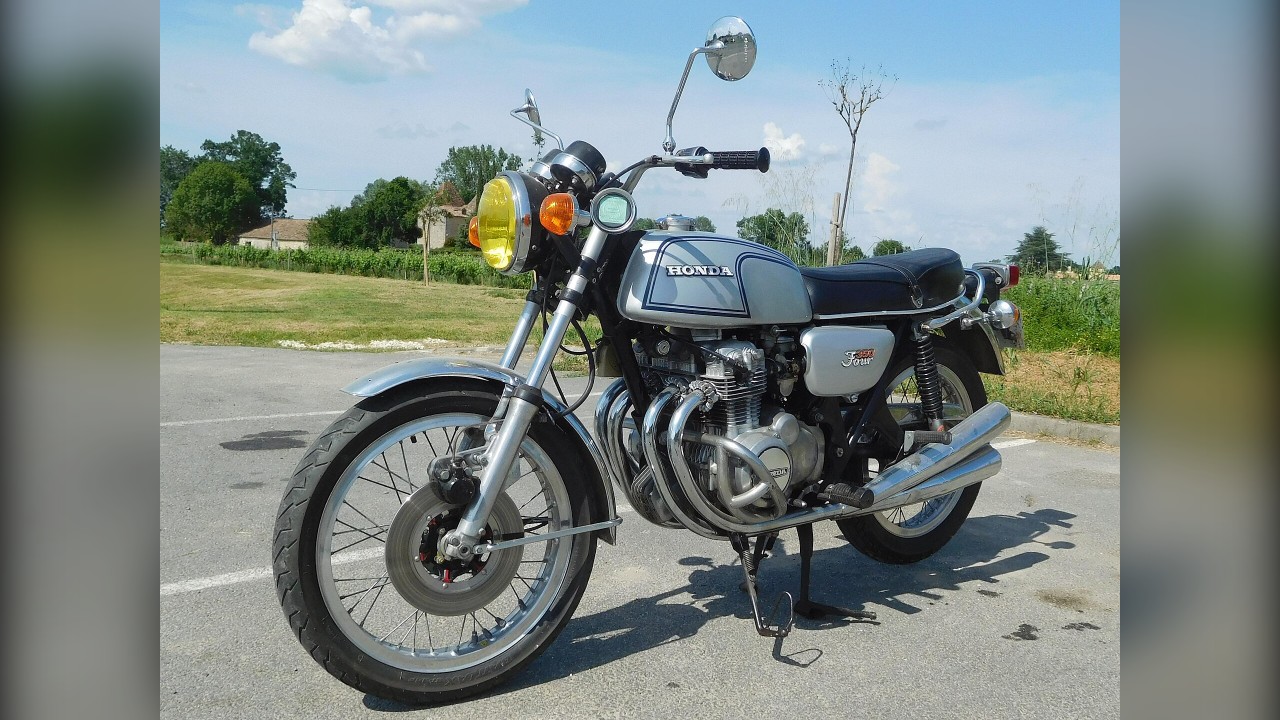
Honda built the CB350F from 1972 to 1974. When it arrived, it was the smallest four-cylinder motorcycle ever to go into full-scale production. Its 347 cc engine made 34 horsepower at 10,000 rpm. Dry weight came in at 373 pounds, and the CB400F followed as its successor after just three years.
In fact, those numbers tell you what kind of bike it is. The CB350F was never about outright speed. Instead, the appeal was the feel of a miniature four, smooth and eager to rev. It gave new riders a taste of the big CB750 experience in a lighter, friendlier package. We picked other gems from the decade in our list of 1970s Honda motorcycles worth collecting.
Our view: the CB350F is one of the most charming small classics you can buy. It’s easy to ride, simple to understand and a joy to listen to. Buyer advice: four small carburetors need to be in sync, so budget for a careful carb service on any bike that has been sitting.
4. Honda CB400 Super Four Hyper VTEC Revo
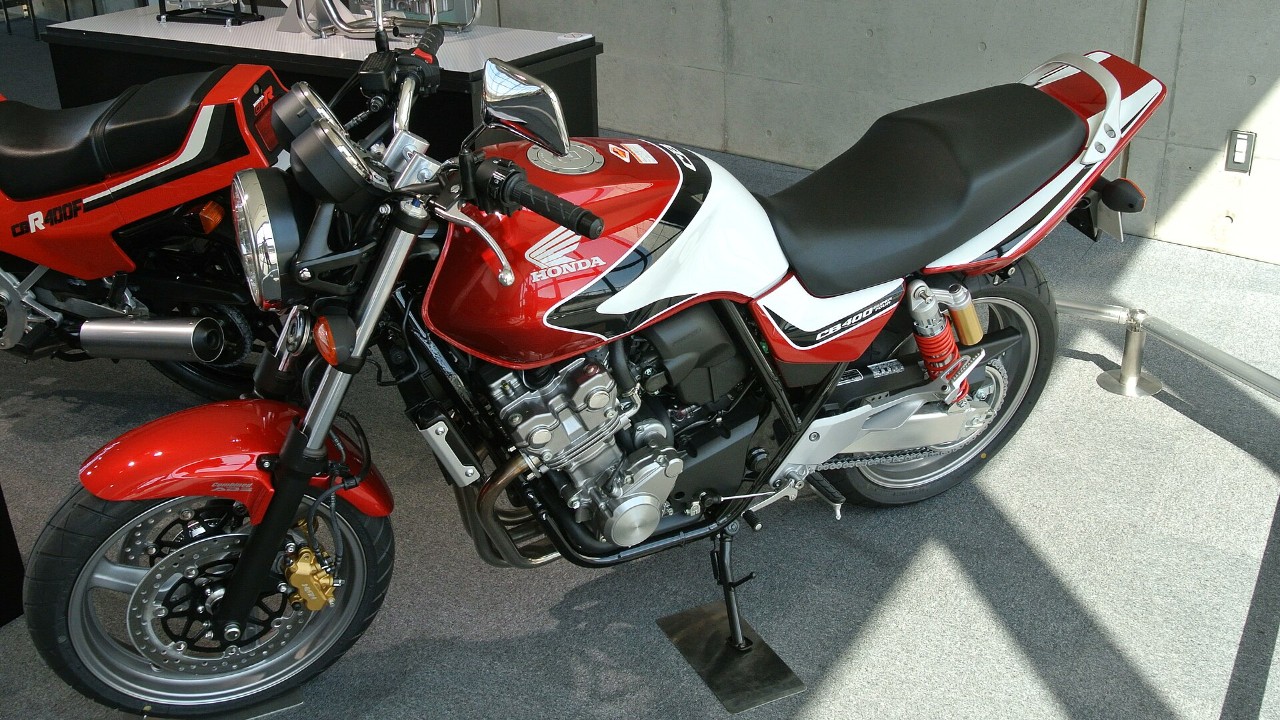
Honda built the CB400 Super Four at its Kumamoto plant from 1992 to 2022, then brought it back into production in 2026. The engine is a 399 cc liquid-cooled inline-four with double overhead cams and 16 valves. The clever part arrived in 1999 with Hyper VTEC, followed by Spec II in 2002, Spec III in 2004 and the Revo in 2008.
Hyper VTEC switches valves on the move. At lower revs, one intake and one exhaust valve per cylinder stay closed. Then, as the revs climb, all four valves open, which improves low- and mid-range power without losing top-end performance. The switch point moved around over the years. Spec II changed over at 6,300 rpm and Spec III at 6,750 rpm. On the Revo, the switch happens at 6,300 rpm at full throttle in gears one through five.
In our opinion, the Revo is the best version to chase. It brings a refined, rev-happy four to a size class that usually gets twins and singles. Buyer advice: check that the VTEC changeover happens cleanly on a test ride.
5. Honda CB900F
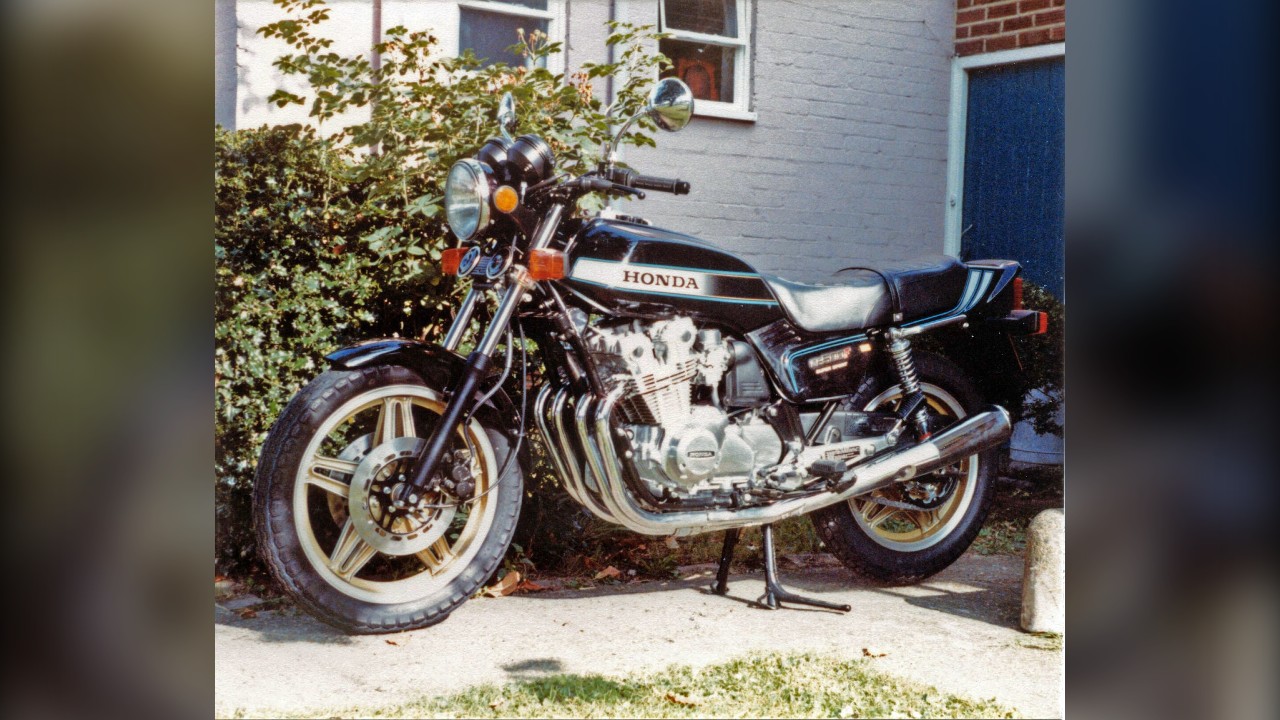
Honda built the CB900F from 1979 through 1983. Its 901 cc double-overhead-cam four made 95 horsepower at 9,000 rpm. In Europe, it was first called the Super Sport and later took the Bol d’Or name, after the famous endurance race. That link was deliberate, because Honda had been winning European endurance events with its RCB racers.
American riders got the CB900F for 1981 and 1982. Performance grew over the years. Top speed was listed at 120 mph for early bikes and 130 mph for the 1982 model. A five-speed gearbox handled the shifting. Weight also rose, from 514 pounds to 531 pounds after 1982. For more fast fours from the same era, see our list of four-cylinder motorcycles that were faster than anyone admitted.
Our take: the CB900F is the classic Honda superbike that still makes sense on a real ride. It has endurance-racing roots, plenty of power and a comfortable upright position. We’d look for a well-kept 1981 or 1982 U.S. model. Buyer advice: insist on a cold start, and listen for a smooth idle.
6. 1992 Honda Nighthawk 750
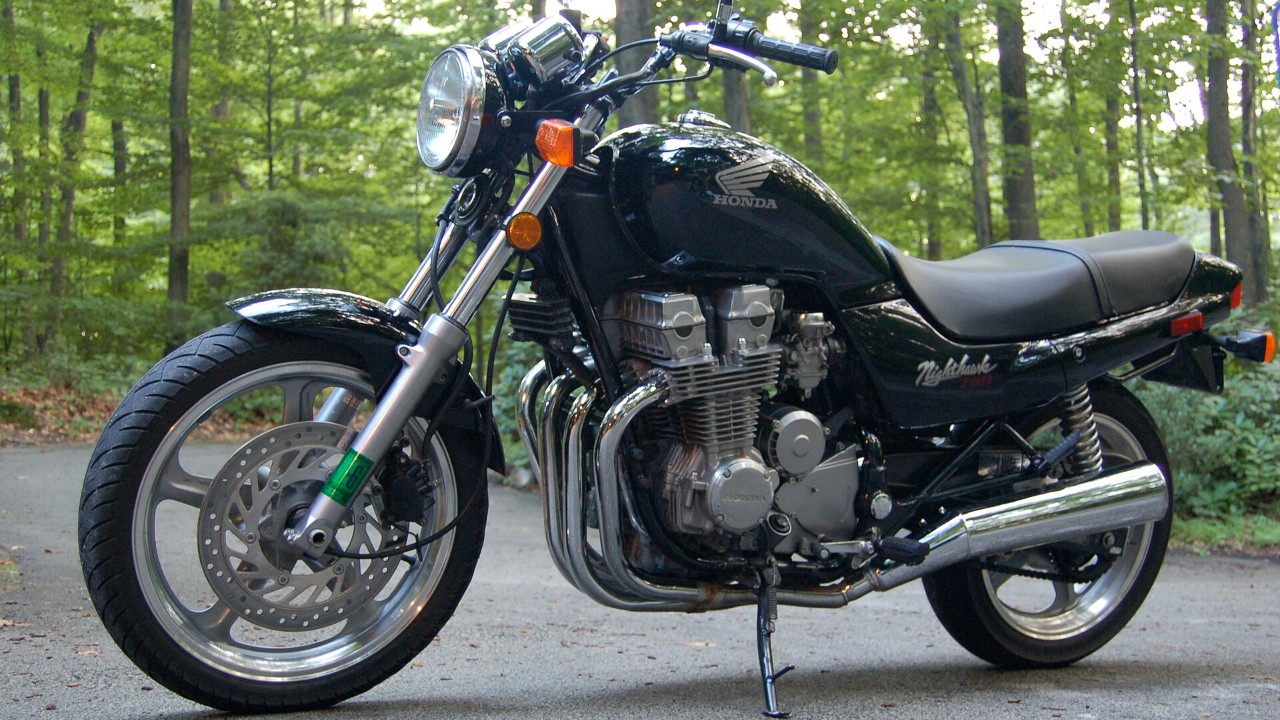
Honda sold the Nighthawk 750 from 1991 to 2003, and it kept the price under $4,000 for its whole run. The 747 cc air-cooled four used double overhead cams and four valves per cylinder. It drew on the CBX750, a bike built for Japan’s home market. Output was 75 horsepower, and the 67 mm by 53 mm bore and stroke made it a short-stroke engine that likes to rev.
Still, the best feature was hidden inside. As Motorcycle Classics points out, the engine used self-adjusting hydraulic valve lifters, so owners never had to schedule valve adjustments. Cycle World measured a 122-mph top speed and a 12.26-second quarter-mile at 109 mph, with the bike weighing 472 pounds. Iron Butt riders even crossed Siberia on stock Nighthawks.
We’d call the Nighthawk 750 the ideal budget four. It’s simple, tough and cheap to keep on the road, and that low maintenance matters more every year a bike ages. Buyer advice: a 1992 model is a strong choice, but condition and care count far more than the model year.
7. Honda VF500F Interceptor
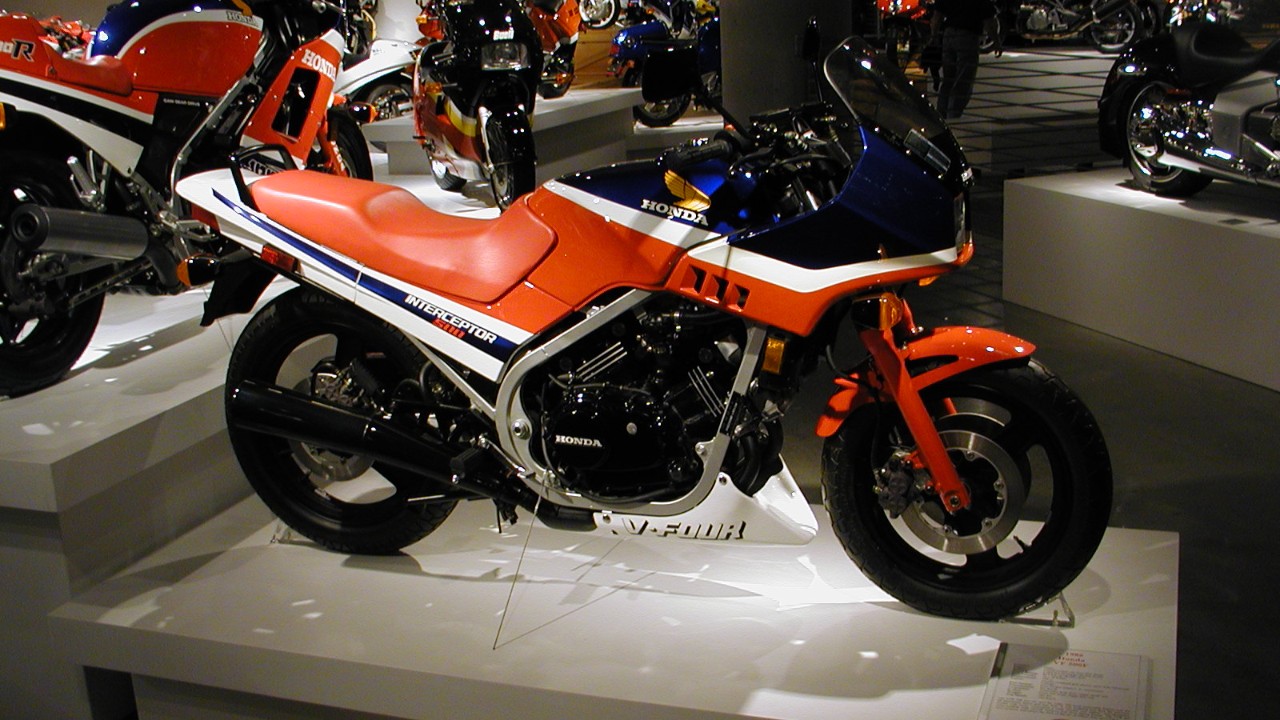
The VF500F proves a four-cylinder bike doesn’t have to be an inline-four. Honda built it from 1984 to 1986, and North American bikes carried the Interceptor badge. Its 498 cc liquid-cooled engine is a 90-degree V4 with 16 valves. A six-speed gearbox and chain drive sent power to the rear wheel. The double overhead cams work the valves through adjustable rocker arms, so valve checks are a job a home mechanic can tackle.
Honda also gave it a 16-inch front wheel, while the rear wheel stayed at 18 inches. As a result, the combination worked. Today, the VF500F has a reputation as one of the best-handling motorcycles of the 1980s, which is high praise for a decade full of sport bikes.
Our view: if you want a light, agile classic with a distinctive engine, the VF500F is a great pick. The V4 sounds unlike any inline-four on this list. Buyer advice: Honda built the bike for only three years, so check that hard-to-find fairing and trim pieces are present before you commit.
8. 1978 Kawasaki KZ650 Custom
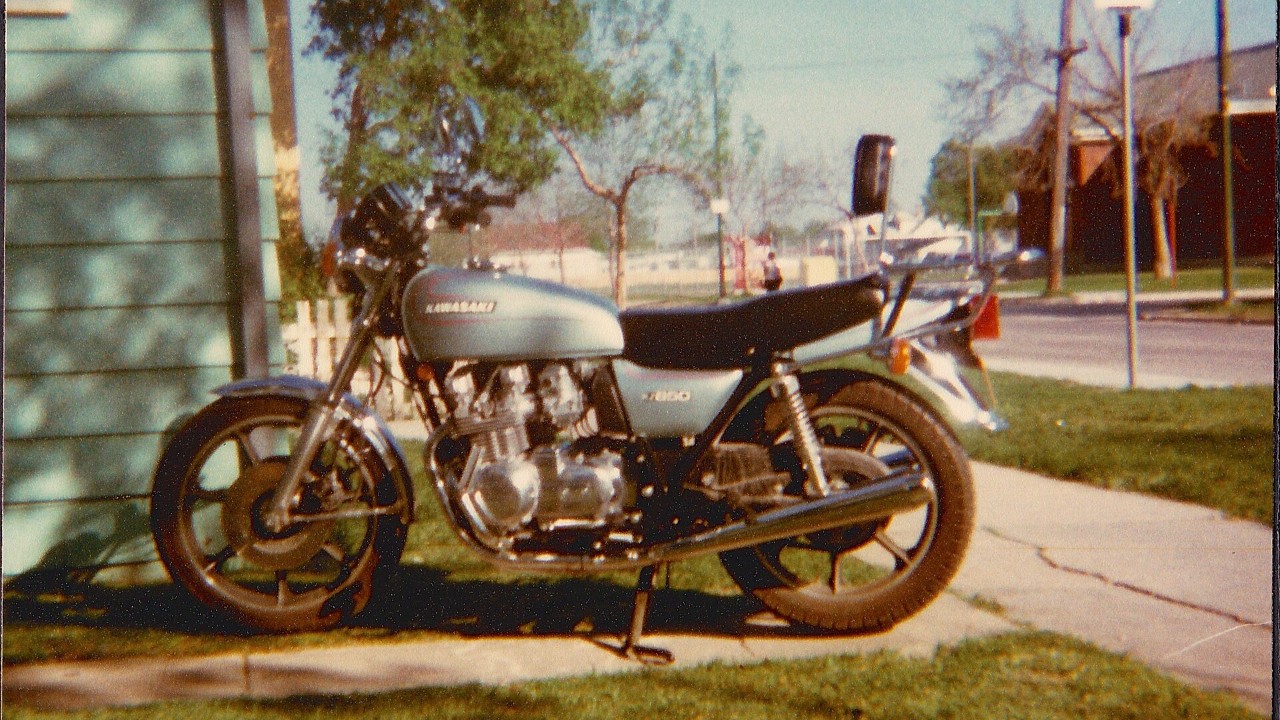
Kawasaki’s KZ650 Custom, model code C2 for 1978, wrapped a 652 cc air-cooled, double-overhead-cam four in a relaxed, easy package. Dual front discs and a single rear disc handled stopping. A 19-inch front wheel and an 18-inch rear finished the classic look, on 3.25-19 and 4.00-18 tires. The front discs measured 231 mm in effective diameter.
The 1978 bikes came in metallic stardust silver, and frame numbers began at KZ650C-010001. For collectors, that makes identification fairly straightforward. Meanwhile, the KZ650 family had already earned a strong name as a competent road bike, and the Custom kept the same engine with a more laid-back riding style.
In our view, the KZ650 Custom is an affordable way into the golden age of Japanese fours. It’s smaller and lighter than the big Z-bikes, yet it still feels like a proper four-cylinder machine. Buyer advice: check the frame number against the C2 range if originality matters to you, and inspect all three brake discs.
9. Kawasaki Zephyr 750
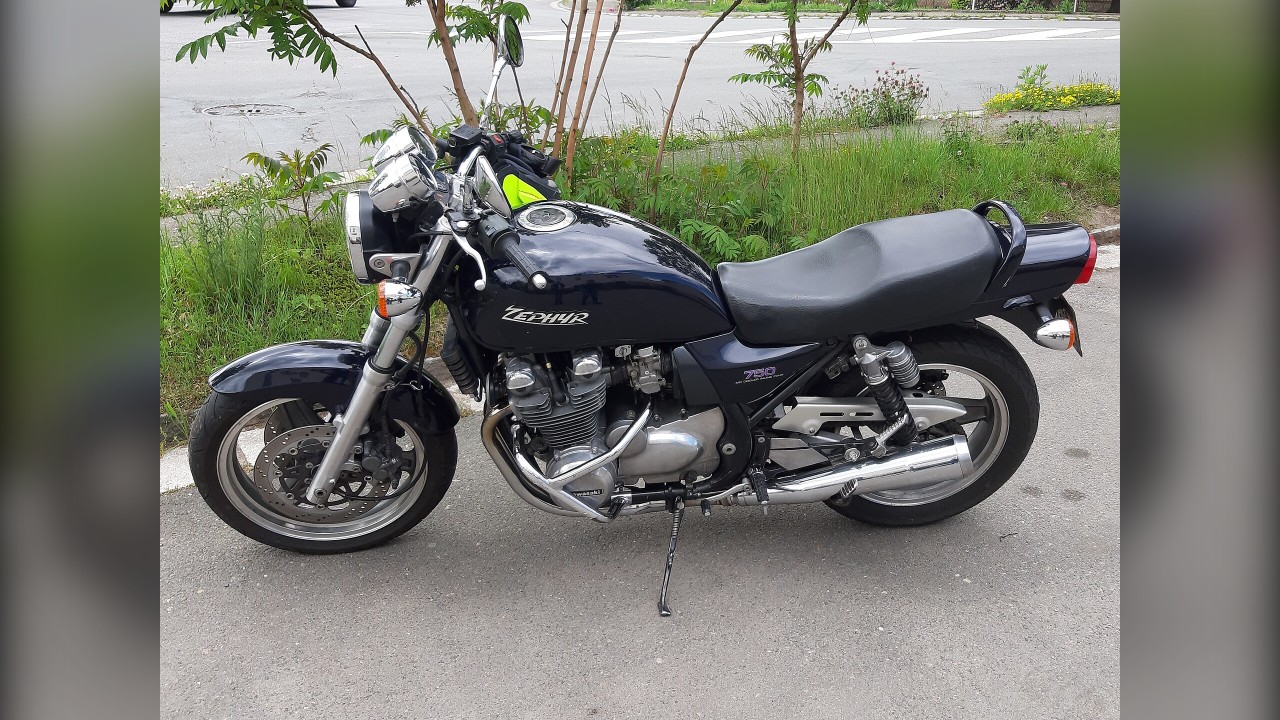
Kawasaki launched the Zephyr line as a deliberate step back in time. The bikes used air-cooled engines and twin rear shocks, just like the fours of the 1970s. The 750 engine traced its roots to Kawasaki’s older Z-series fours. In fact, the Zephyr helped start the retro bike boom in the UK and Europe in the early 1990s. Kawasaki also built smaller 400 and 550 versions, with engines developed from the same family.
Riders in the United States could buy the Zephyr 750 in 1991 and 1992. That short run means American examples are few. However, the formula didn’t need to be complicated. The bike offered simple maintenance, an upright seat and the look of a 1970s Kawasaki.
We’d recommend the Zephyr 750 to riders who want classic Kawasaki style without a classic Kawasaki’s age. Its air-cooled four is easy to work on, and its looks have aged better than most 1990s sport bikes. Buyer advice: check the twin shocks, because original units are often worn out by now.
10. Kawasaki ZR-7S
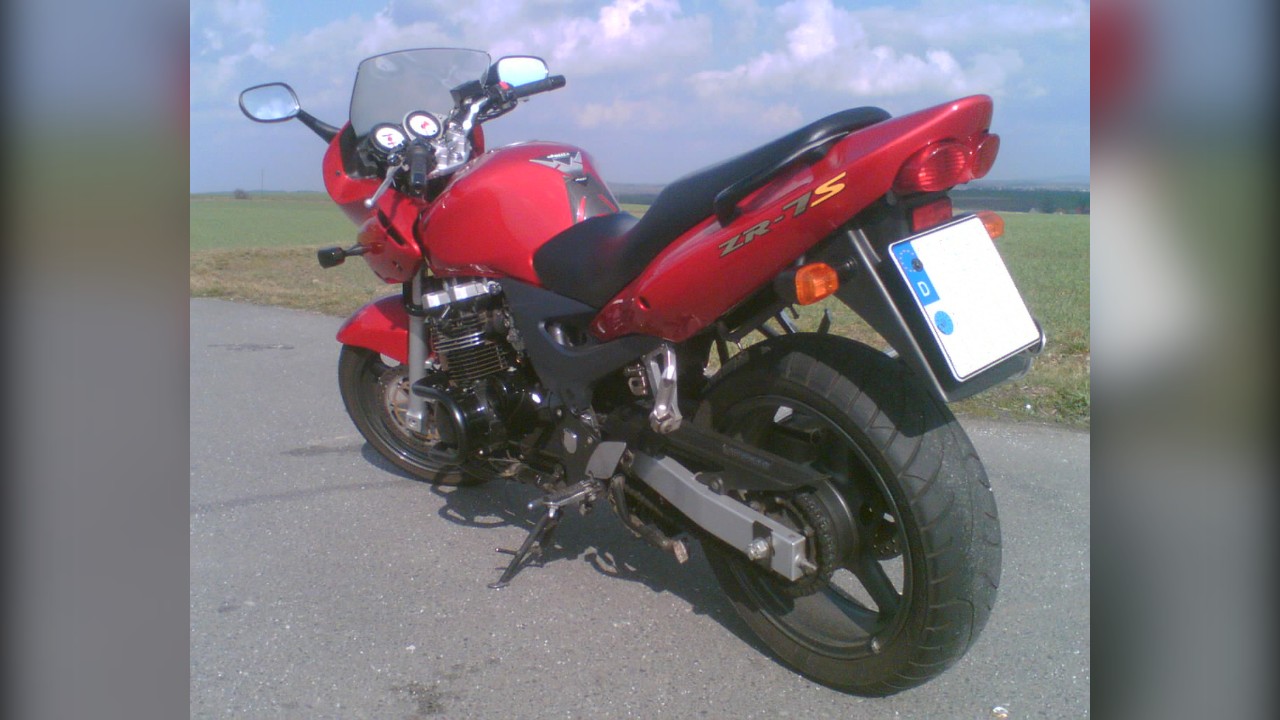
The Zephyr’s 750 engine got a second life in the late 1990s in the ZR-7. Then Kawasaki added a half fairing and a new gauge cluster to create the ZR-7S. According to Cycle World, the naked version was already a good motorcycle before the fairing arrived. In 2001, Cycle World called it “the accidental sport tourist”, and the base price was $5,999.
In short, the magazine liked what it found. The air-cooled, two-valve four made 69 horsepower and 44 lb-ft of torque. Cycle World noted the engine design had been around in some form for more than two decades, and it judged the bike comfortable enough for commuting. Optional Givi hard saddlebags cost $610. Its verdict: “a nice budget sport-tourer,” with one complaint about a wonky gauge.
Our take: the ZR-7S is one of the best-value used fours around. It does commuting, touring and weekend rides without drama. Buyer advice: since the fairing is the main difference from the naked ZR-7, check it for cracks, broken mounts and missing panels.
11. 1996 Suzuki GSF600 Bandit
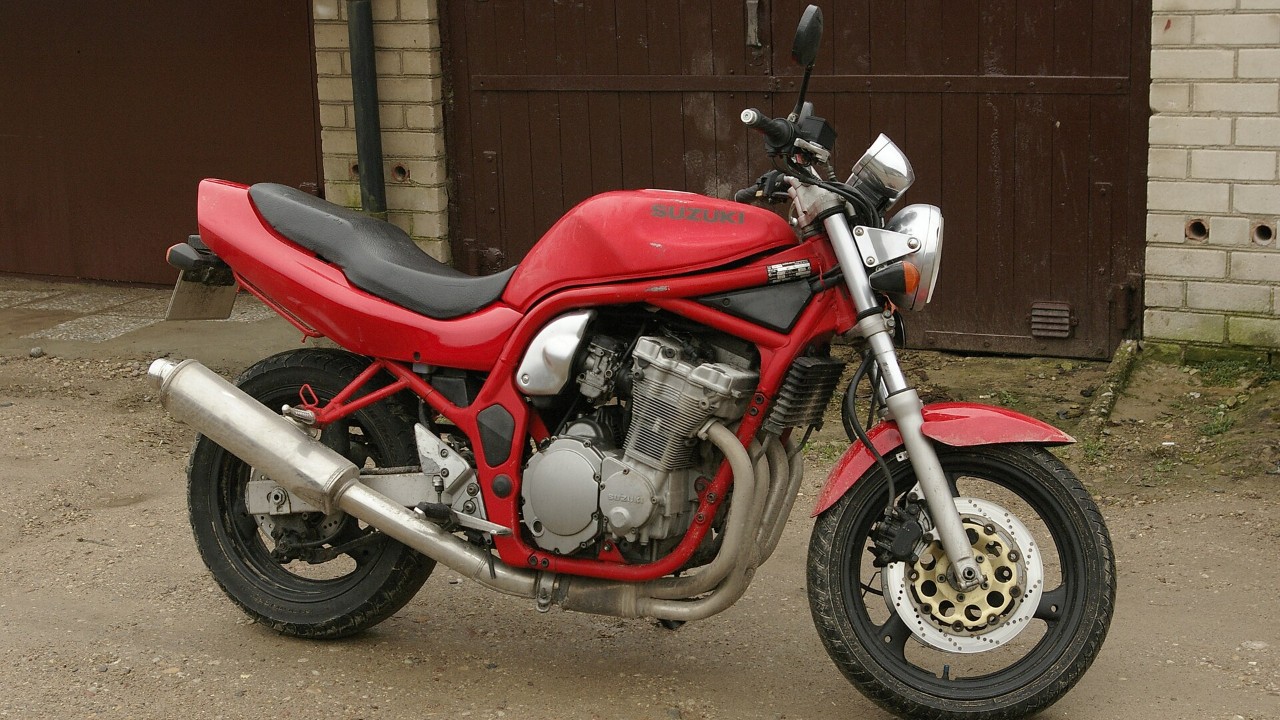
Suzuki released the naked GSF600 Bandit in February 1995, then added the faired GSF600S in 1996. The S introduced a small bikini half fairing. Its 599 cc four came from the GSX600F, but Suzuki retuned it for more mid-range torque. That suited a street bike far better than a peaky sport engine would. Because Suzuki sold the naked and faired versions side by side, the choice came down to wind protection and looks.
Suzuki kept the 600 in production until 2004. Over that time, the Bandit series earned a reputation as “hooligan bikes.” Yet the 600 was also an easy, friendly bike for newer riders who wanted four-cylinder smoothness without a big engine.
We think the GSF600 Bandit is still one of the smartest used buys in the class. It’s cheap, fun and straightforward to keep running. For riders shopping a 1996 model, decide whether you want the naked bike or the faired S. Buyer advice: look for crash damage and modified parts, since many Bandits lived hard lives.
12. 2011 Yamaha FZ1 Fazer GT
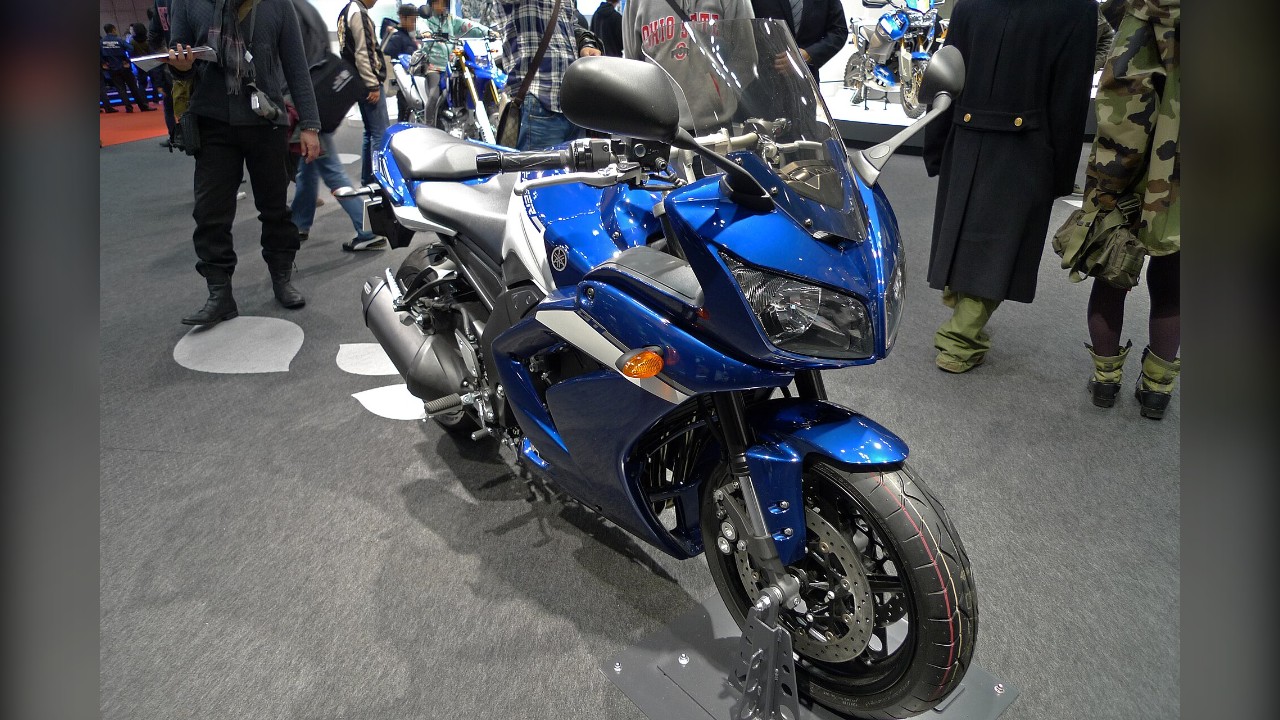
Yamaha sold the FZ1 Fazer from 2006 to 2015, and it built the bike around a 998 cc, 20-valve engine from the 2004–2006 YZF-R1. Yamaha retuned the superbike engine for better mid-range torque. At launch, it claimed 150 horsepower for the 2006 and 2007 models, which weighed 438 pounds dry. European bikes with the optional ABS weighed 226 kg with fluids.
Europe also got a GT version with a full fairing and side bags. That turned the sporty Fazer into a fast tourer. Yamaha showed this FZ1 Fazer GT at the 2011 Tokyo Motor Show. In the United States, 2015 was the FZ1’s final year, though the GT version stayed a European offering.
In our opinion, the Fazer GT is the best of both worlds, with superbike-based power and the bags for a long trip. It’s the most modern bike on this list and the one best suited to big miles. Buyer advice: if you can find one, check that the side bags, mounts and keys are all present.
More from Fast Lane Only