In 1968, a Dodge Dart GTS 340 hardtop cost $2,611 and came with a 275-horsepower V8. That’s the Dart most fans picture, but the name covers far more ground. Dodge put it on full-size family cars, drag-strip specials, compacts for young buyers and even a surf-themed coupe.
Over the years, the Dart became one of Dodge’s most familiar names. Some versions were fast, some were simply honest, and a few were wonderfully strange. Most owners bought the six-cylinder cars, which is exactly why the special ones stand out today. Some are fast, some are fun, and one is downright groovy.
These nine are our picks, the Darts we admire most. The choices are our opinion. However, every number and date in each entry comes from the sources linked below.
1. 1960 Dodge Dart Phoenix
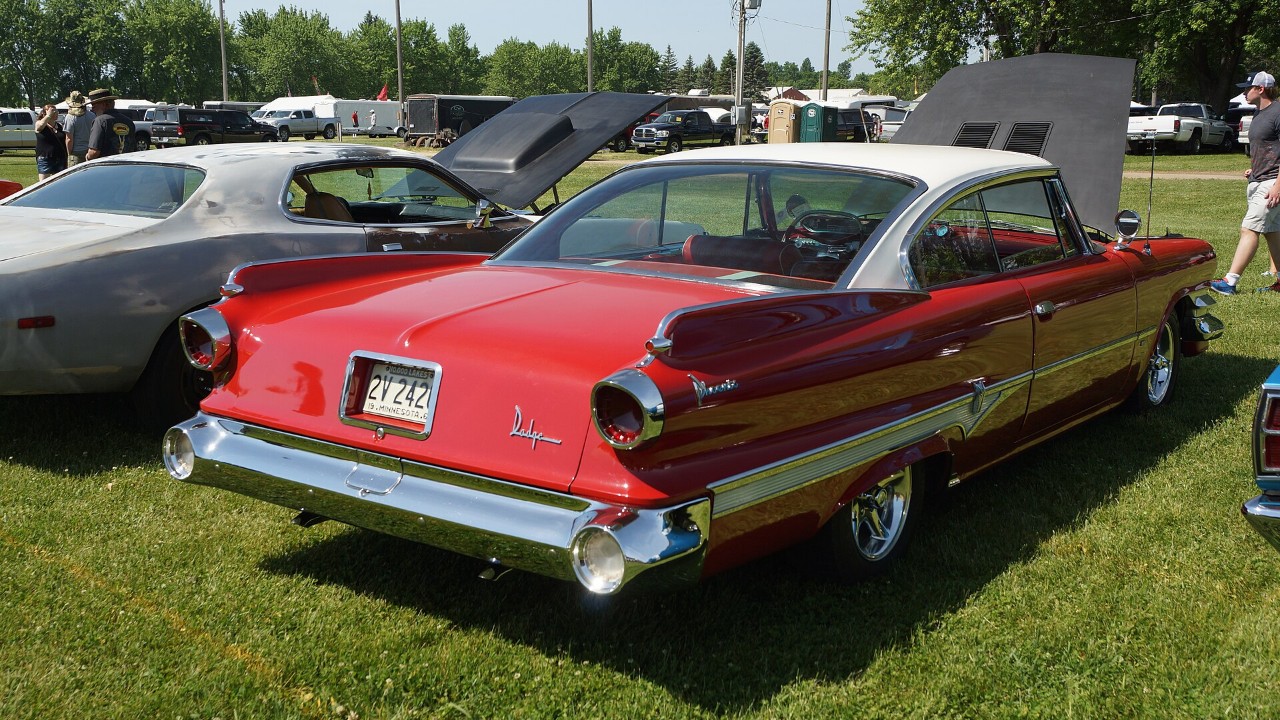
The first Dart was a full-size car, and the Phoenix sat at the top of the 1960 range above the Seneca and Pioneer. Sedans and coupes rode on a 118-inch wheelbase, while wagons used 122 inches. Buyers could start with the 225-cubic-inch slant six, or they could order a 318 or 361 V8. On some Phoenix and Pioneer body styles, the 318 was standard.
As a result, the car was a hit for Dodge. That year, Dodge built 367,804 cars, and Darts accounted for 87% of the brand’s volume. In other words, the Dart was the car that kept Dodge’s dealers busy in 1960. It’s also a reminder that the Dart name began on a big, comfortable car, not a compact.
Our take: the Phoenix is the Dart people forget because later cars got smaller and faster. We like it for its fins, its period chrome and its sheer size. In addition, a Phoenix with the 361 makes a relaxed cruiser for a summer evening. If you want one, look for a V8 car, since the extra torque suits a car this big.
2. 1962 Dodge Dart 413 Ramcharger

In the middle of the 1962 model year, Dodge gave the Dart a serious engine. The 413-cubic-inch Ramcharger V8 was rated at 415 horsepower. Dodge aimed it mainly at sanctioned drag racing, where it quickly started setting records. Because it arrived partway through the year, early 1962 buyers never had the option.
This was the car that turned a family Dodge into a drag strip threat. At the track, nobody cared about the looks once the lights turned green. For that reason, we see it as the moment Dodge learned that racing could sell cars. To us, it’s the Dart that proved the name could be fast. We’d rather own one with a known race history than a pristine car with none.
In our view, a real 413 Ramcharger Dart is the most important car on this list. It also comes with the most homework. Because the engine was built for racing, many cars lived hard lives. As a result, documentation matters more here than shine. If you’re shopping, pay for an expert inspection and confirm the paperwork before you pay a Ramcharger price.
3. 1964 Dodge Dart GT 273
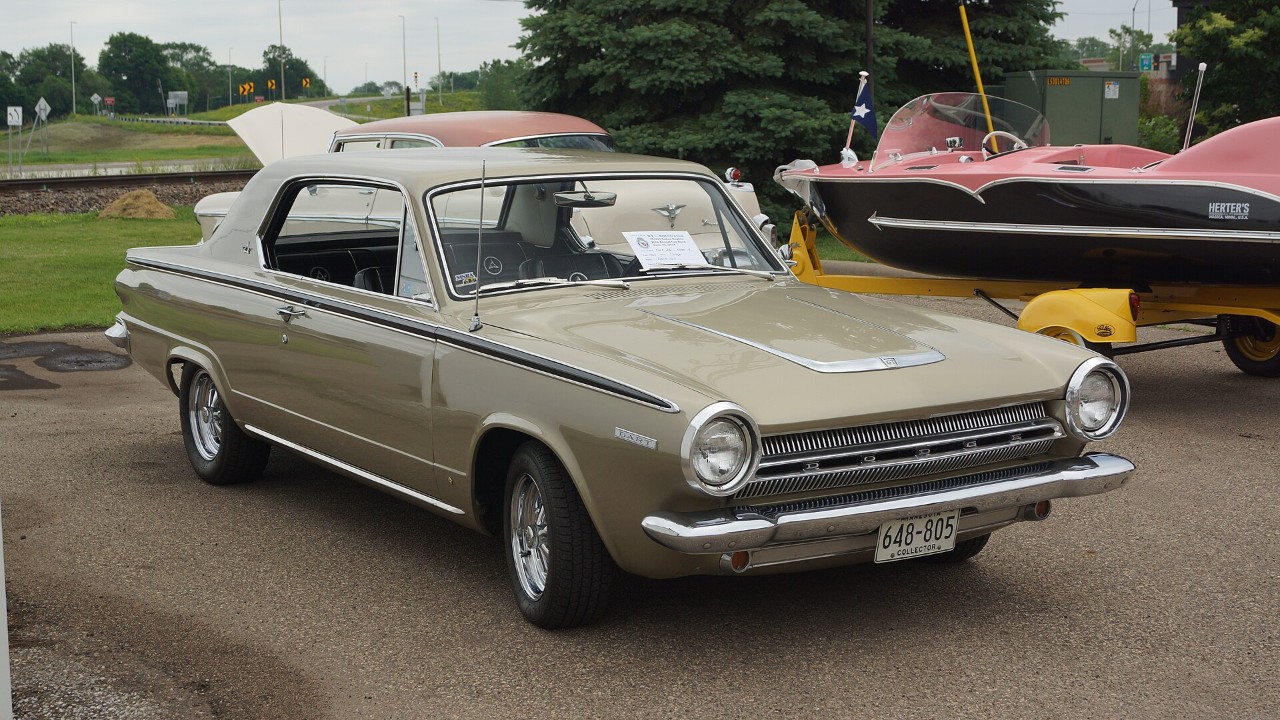
By 1963, the Dart had become a compact, and Dodge gave it a premium GT trim. The GT came only as a two-door hardtop or a convertible. Then, after the 1964 model year began, Dodge added a new 273-cubic-inch V8. It was rated at 180 bhp with a two-barrel carburetor, and it became the top engine in the Dart.
That 273 mattered more than its numbers suggest. It was Chrysler’s new LA-series small-block, and it gave the compact Dart a light, modern V8. A year later, for 1965, a four-barrel 273 rated at 235 bhp appeared in the Dart Charger.
Our take: the 1964 GT 273 is the quiet gentleman of the family. After all, it’s light, tidy and easy to live with. A GT with the V8 is the one we’d hunt for, since it pairs the dressier trim with the engine that set up everything after it. Since the GT came only as a hardtop or convertible, there are no GT sedans to confuse with the real thing. It’s the sort of car you can drive every weekend without worry.
4. 1967 Dodge Dart GT convertible
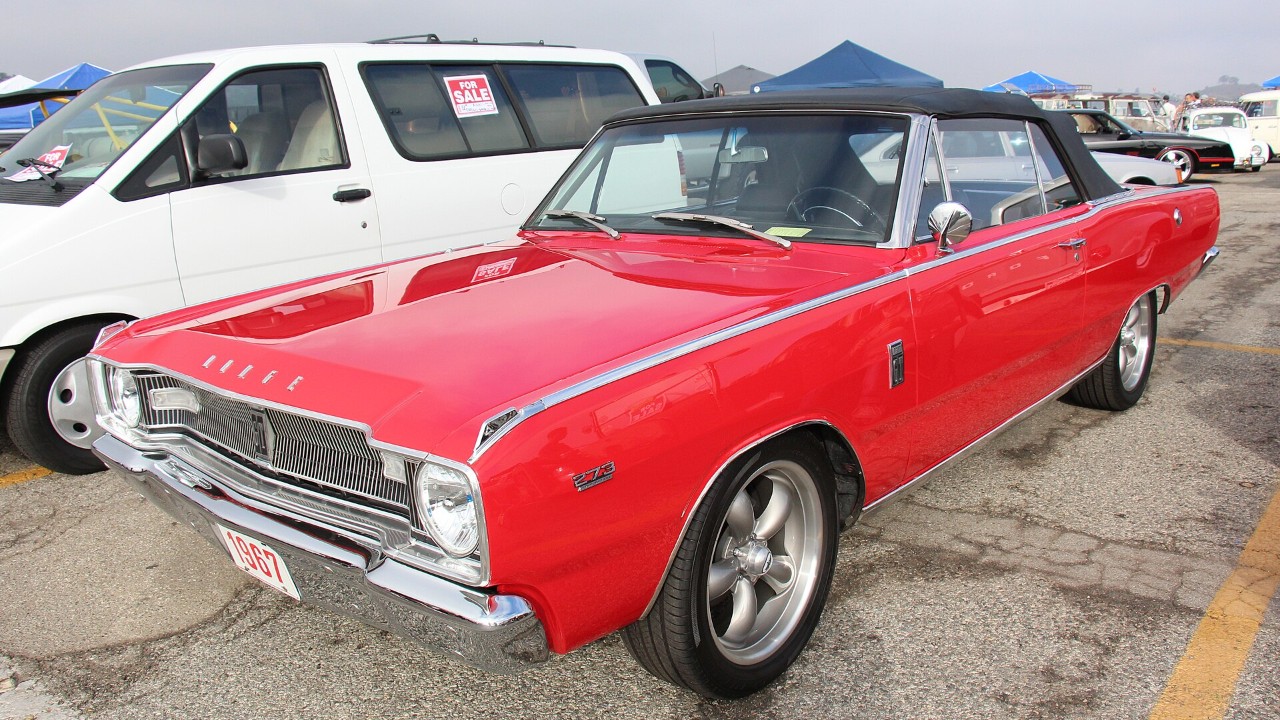
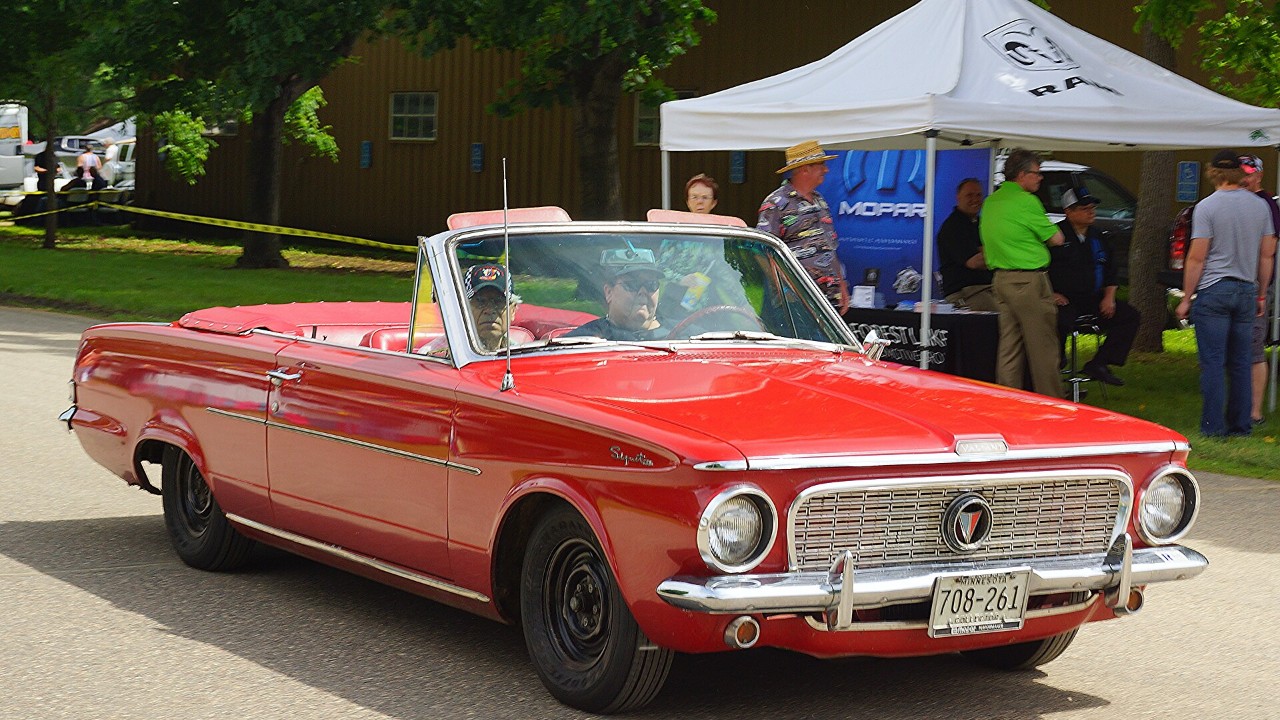
For 1967, Dodge redesigned the Dart with cleaner, more modern lines. The GT stayed at the top of the range, and the convertible gave buyers open-air motoring in a compact package. Even so, the Dart convertible didn’t last much longer. The same redesign gave the Dart’s hardtop a rear window with compound inverse curves.
Dodge dropped the Dart convertible after the 1970 model year, along with the optional 383 V8. That gives the 1967 to 1970 GT convertibles a short window. The 1967 car came first in that run, with the fresh shape and the GT’s nicer cabin.
In our view, this is the Dart to own if you just want to enjoy a nice day. You don’t need a big engine to have fun with the top down. However, convertible bodies rust in hidden places, so we’d check the floors, rocker panels and trunk before anything else. Buy the solid car first and worry about the engine later. We’d take a GT convertible in a bright period color. On a warm evening, few small Mopars are nicer places to sit.
5. 1968 Dodge Dart GTS 340
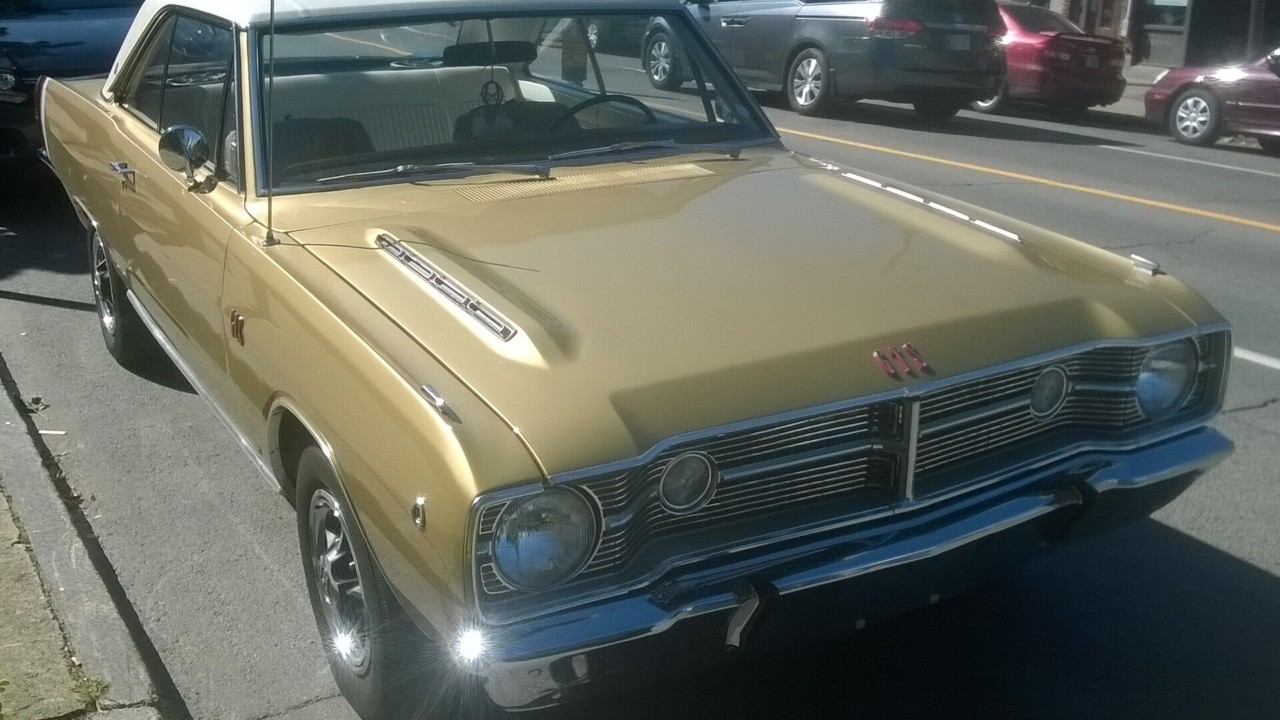
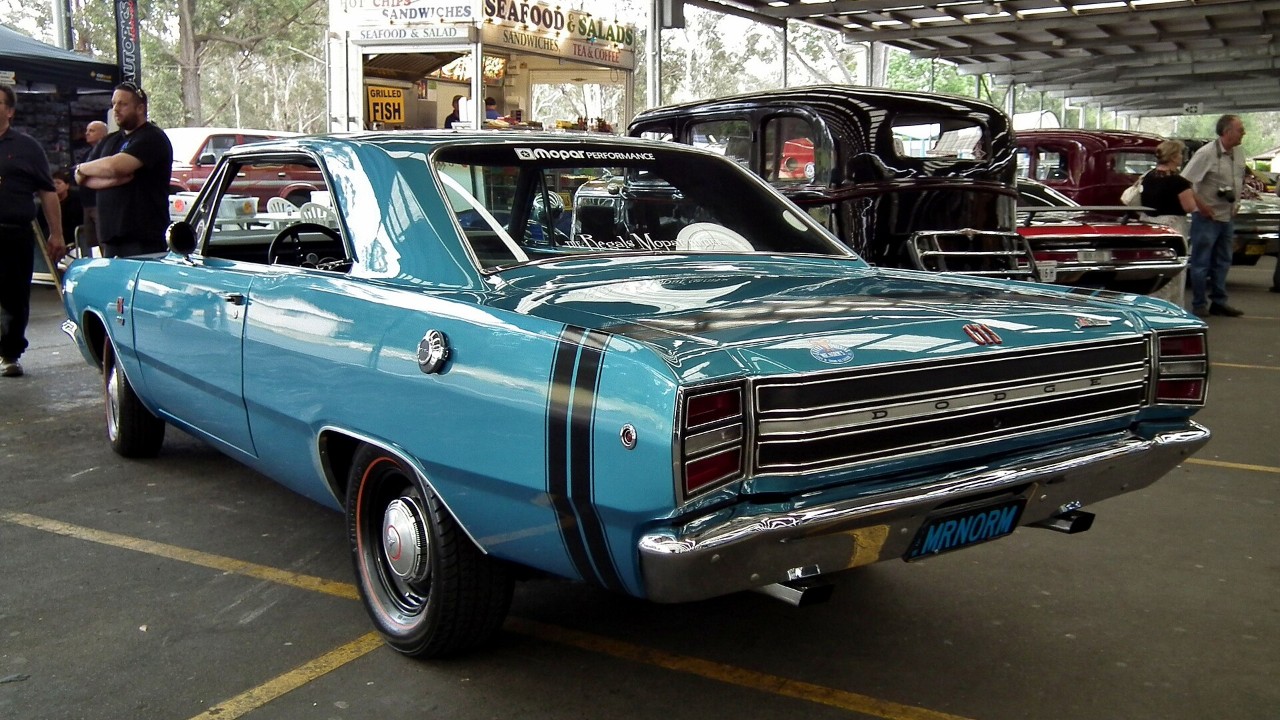
The GTS, short for GT Sport, was new for 1968, and the Dodge Dart GTS 340 was the heart of the line. According to Old Cars Weekly’s look at the 1968 GTS, its 340 V8 made 275 horsepower at 5,000 rpm and 340 lb-ft of torque. A 300-horsepower 383 was optional. Every GTS also got heavy-duty Rallye suspension and E70-14 Red Streak tires. Hood bulges with vents and body-side stripes finished the look, and a bumblebee stripe on the tail cost nothing extra.
In fact, the car was quick, too. Hot Rod ran a 340 with a TorqueFlite automatic through the quarter-mile in 14.38 seconds at 97 mph. Meanwhile, the hardtop listed at $2,611, and the convertible cost $3,383. Old Cars Weekly counts the GTS in a 1968 total of 24,100 Dart GT-series V8s.
Our take: this is the Dart we’d keep if we could only keep one. It balances small-block speed, compact weight and real comfort. Factory options make a big difference to value, as we explained in our look at how options affect 1968 Dart GTS collectibility. Buy the most documented car you can afford.
6. 1969 Dodge Dart Swinger 340

The Swinger arrived for 1969 with a clear job. According to SlashGear’s Swinger history, Dodge launched it to attract young buyers who wanted a muscle car for less money. The 340 version made 275 horsepower and 340 lb-ft of torque, and SlashGear puts its new price at about $2,836. SlashGear also estimates its 0-60 mph time at about 6.3 seconds.
Buyers could pick an A833 four-speed manual or an A727 TorqueFlite automatic. Better yet, the automatic didn’t cost extra. A Sure Grip limited-slip differential added $42.35. That made the Swinger 340 a budget performance car built around the same small-block that powered the GTS. Later, tougher emissions rules and the oil embargo sapped the Dart’s power and appeal, SlashGear notes.
In our view, the Swinger 340 is the smart buy among the 340 Darts. You get the engine that matters without paying for the GTS badge. Its plain hardtop shape also hides its speed, which we’ve always liked. If you’re shopping, confirm a real 340 car through its VIN, since plenty of slant-six Swingers have been dressed up over the years.
7. 1971 Dodge Demon 340
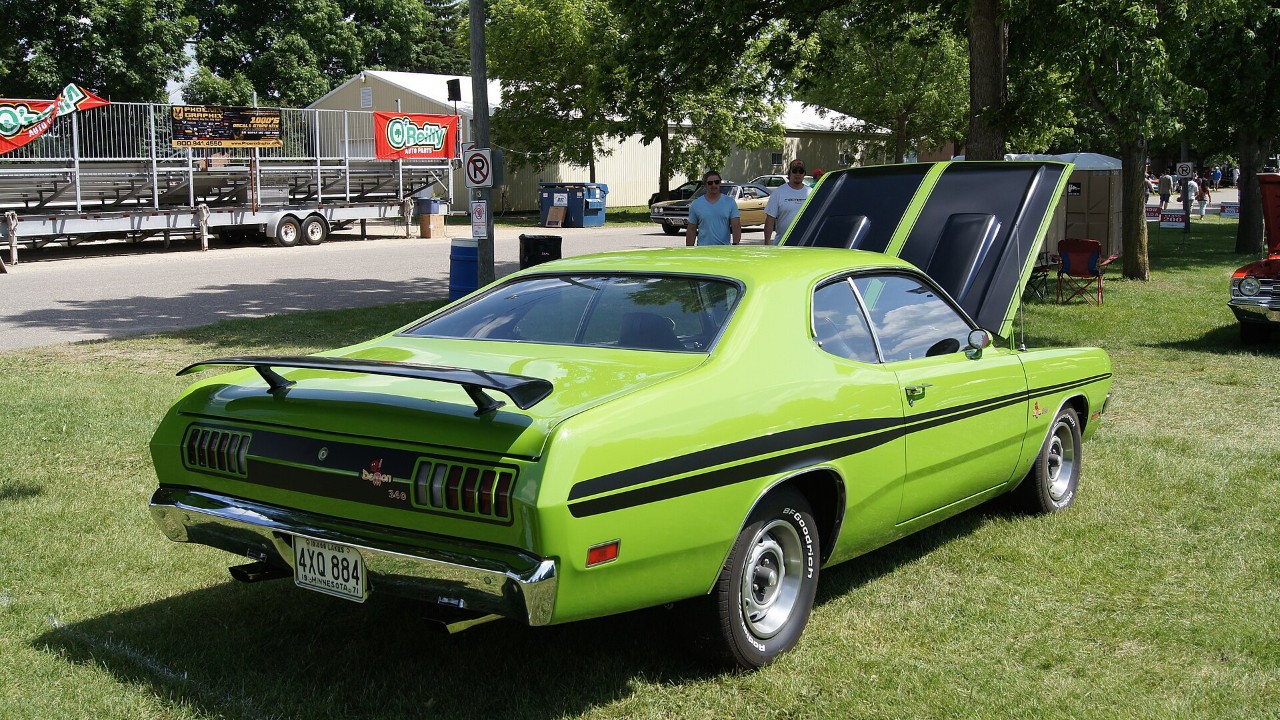
The Demon rode on the shorter wheelbase of Plymouth’s Duster. Chrysler first planned to call it the “Beaver,” then changed course when marketing learned what the word meant in CB slang. For 1973, the car became the Dart Sport, reportedly after objections to the Demon name and its devil logo.
The 1971 Demon 340 made 275 horsepower and 340 lb-ft. According to Horsepower Memories, Motor Trend timed one at 14.49 seconds at 98.25 mph in January 1971, with a 0-60 run of 6.5 seconds. Options included a dual-scoop hood, hood pins and a rear spoiler. A three-speed manual was standard, with a Hurst-shifted four-speed or a TorqueFlite automatic as options. Motor Trend compared it with the AMC Hornet SC 360 and the Chevrolet Nova SS 350. For 1972, the rating fell to 240 horsepower, partly because of the switch to net ratings.
Our take: the 1971 car is the one to have, because it got the full-strength rating before the drop. It’s also a lot of fun for the money. For the story of its Plymouth cousin, read why the 1970 Plymouth Duster surprised almost everyone.
8. 1974 Dodge Dart Sport 360

When the 340 went away, Dodge replaced it with a bigger small-block. For 1974, the Dart Sport 360 used a 360-cubic-inch V8 rated at 245 bhp. That rating came after the industry moved to net horsepower figures, so it isn’t directly comparable to the 1968 to 1971 numbers above.
The Dart Sport also offered one of the cleverest options of the era. The Convertriple package, offered for 1973 and 1974, combined a manually operated metal sunroof with a fold-down rear seat. Later, for 1975, the 360 was limited to the Dart Sport 360 model before Dodge dropped it as a separate model for 1976. Even then, the 360 stayed on the list as a $376 option on V8 Dart Sports.
In our view, the Dart Sport 360 is the most overlooked performance Dart. It came late, when muscle cars were out of fashion, so many people skipped it. That’s a mistake. If you want a usable V8 Dart that can still carry a weekend’s gear, this is a strong choice, and a Convertriple car is a bonus.
9. 1974 Dodge Dart Sport Hang 10
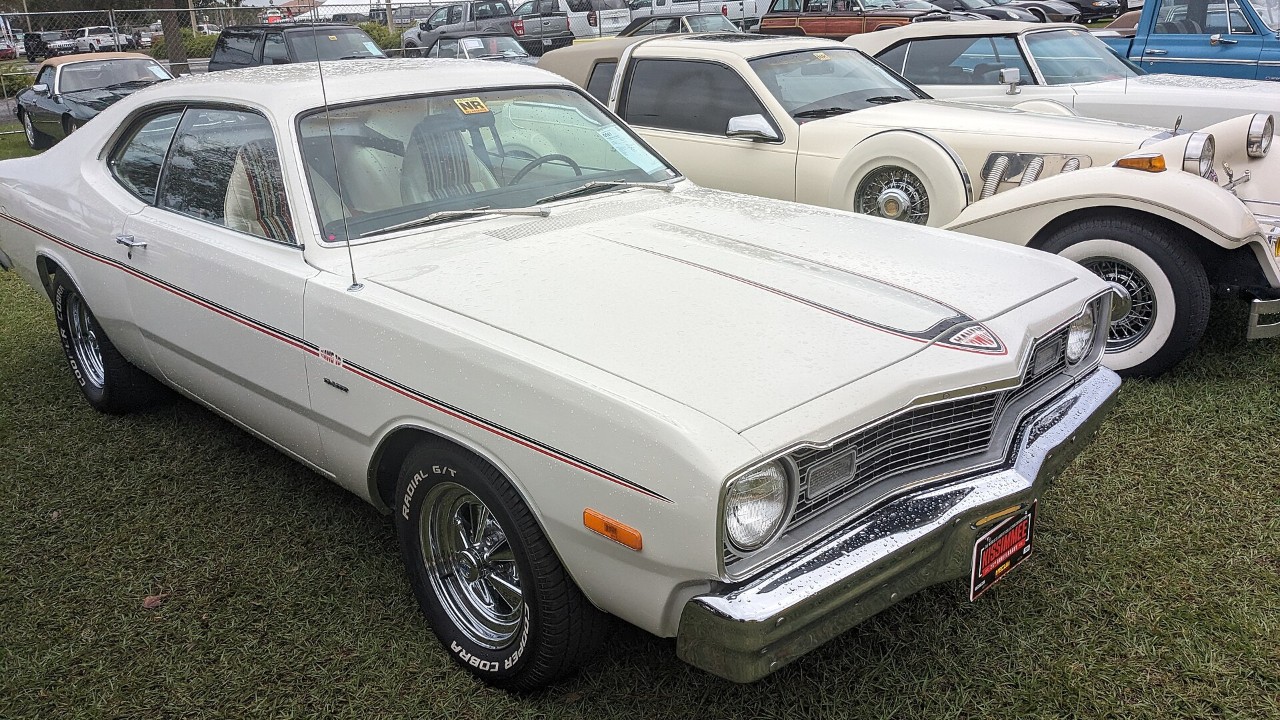
Finally, this is the oddball we love most. According to Old Cars Weekly’s Hang 10 feature, Dodge showed it at the 1973 Chicago Auto Show and put it on sale in the middle of the 1974 model year. It was a $254 option package, code A63, for the Dart Sport. A sunroof cost $178 extra, and a half-vinyl top added $88.
Meanwhile, the look was pure 1970s beach culture. The white body wore red and blue pinstripes, a stick-figure surfer on the tail stripes and surfboard decals on the hood. Inside, it had red, white and blue seats with red carpet. With the Convertriple rear seat folded, a surfboard fits in the car. Old Cars Weekly says only about 700 were built in 1974 and the first half of 1975.
Our take: the Hang 10 makes us smile every time. Most had a 225 slant six or a 318, but a 360 with dual exhaust was optional. If you find one, check the decals and trim first, because the graphics are the whole point. The Hang 10 Registry has listed 56 cars from 1974 and 39 from 1975.
More from Fast Lane Only