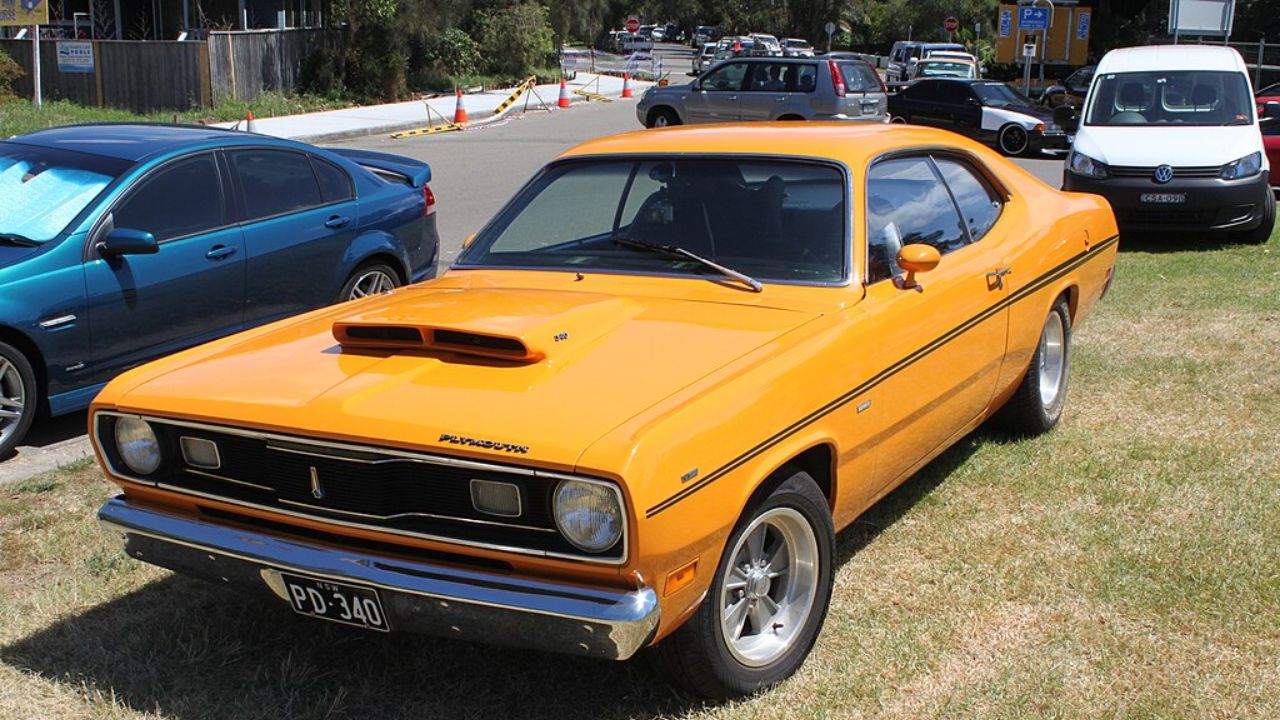
The 1970 Plymouth Duster arrived as a budget compact that looked like a parts-bin special on paper, yet it blindsided rivals and buyers alike. By wrapping real performance in a stripped, almost cheeky package, it turned a humble economy platform into one of the most memorable muscle-era street cars.
More than five decades later, that surprise factor has not faded. The Duster’s mix of simplicity, style, and speed keeps pulling new fans into the Mopar orbit, and it continues to shape how enthusiasts think about value, modification, and what a “starter” classic can be.
How Plymouth turned a basic Valiant into a street fighter
The Duster started life as a clever piece of cost-cutting. Plymouth engineers took the compact Valiant’s A-body platform and reshaped it into a fastback coupe with a short deck and long, sweeping roofline. The wheelbase and much of the chassis hardware stayed the same, which kept development costs low, but the new body gave the car a far more aggressive stance than its economy-car roots suggested.
Inside, the formula stayed intentionally simple. Bench seats, straightforward gauges, and minimal trim kept weight and price down. What caught buyers off guard was how much performance Plymouth was willing to bolt into such a modest shell. The Duster could be ordered with a slant-six for basic transportation, yet the real story began when buyers checked the boxes for V8 power and handling upgrades.
The headline package was the Duster 340. With its high-compression small-block, four-barrel carburetor, and free-breathing exhaust, the 340 turned the lightweight coupe into a genuine muscle car. Period testers found that a properly optioned Duster 340 could embarrass heavier intermediates that cost significantly more. The car’s compact size and relatively low curb weight gave it a nimble feel that contrasted with the big-block brutes of the same era.
Styling details reinforced the surprise. Bold side stripes, blackout hoods, and cartoon “Twister” graphics gave the Duster a youthful, almost subversive personality compared with more conservative Plymouth sedans. It looked like a car built for mischief, yet it remained accessible to younger buyers who could not stretch to a Road Runner or ’Cuda.
The lasting appeal of a simple, mod-friendly platform
Part of what made the Duster such a shock in 1970 is the same thing that keeps it relevant now. The car is mechanically straightforward, with a unibody structure, torsion bar front suspension, and leaf springs in the rear. That simplicity made it cheap to build, but it also made the Duster a blank canvas for hot-rodders then and now.
Modern survivors show how far owners are still willing to push the formula. One green 1971 example, found sitting neglected, hides an upgraded powerplant under the hood that transforms the once-humble compact into a far more serious street machine. The car’s unassuming appearance, combined with the stronger engine, captures exactly why the Duster platform has such a devoted following, and that sleeper quality is highlighted in coverage of an abandoned 1971 Duster that still carries surprising performance potential.
Because the chassis accepts a wide range of Mopar small-blocks and big-blocks with relative ease, owners can tailor their builds to taste. Some keep the original 340 or 318 and focus on mild upgrades, while others install later high-output engines, modern transmissions, and disc brake conversions. The car’s compact size and generous engine bay make these swaps more straightforward than on some contemporaries.
That mod-friendliness feeds into the Duster’s enduring image as a working-class hero. It was never meant as a luxury item, and the interior materials and trim levels reflect that. Yet the car’s honest, no-frills character has aged well. In an era when many classic muscle cars have become too expensive or fragile to modify heavily, the Duster still invites experimentation.
Why a budget compact from 1970 still resonates with enthusiasts
The Duster’s surprise factor in period came from its ability to deliver big performance numbers from a small, inexpensive package. Today, the car matters for a slightly different reason. It represents a bridge between traditional muscle and the modern idea of a lightweight, agile performance car that prioritizes power-to-weight ratio over sheer displacement.
Collectors and younger enthusiasts are increasingly drawn to cars that can be driven regularly without constant fear of damage or depreciation. The Duster fits that brief. Its parts availability, relatively modest purchase prices compared with headline-grabbing Hemi models, and straightforward maintenance make it attractive to those who want to wrench as much as they want to drive.
The design has also aged in a way that feels distinct from many other compacts of the era. The sweeping roofline and short rear deck give it a profile that stands apart from boxier rivals. That visual identity helps the Duster avoid being lumped in with generic economy cars, even though it shares much of their hardware.
For Mopar loyalists, the Duster carries additional weight. It showcases Chrysler’s willingness at the time to experiment with youth-oriented performance packages on existing platforms. The success of the Duster 340, combined with the popularity of stripe and graphics packages, proved that image and attitude could sell cars even when budgets were tight. That lesson still echoes in how manufacturers market performance trims on otherwise ordinary vehicles.
In the broader classic car market, the Duster illustrates how value can shift over time. Cars that were once considered entry-level or disposable have gained stature as survivors thin out and nostalgia grows. Enthusiasts who grew up seeing Dusters on neighborhood streets now have the means to buy and restore them, and that emotional connection is driving renewed interest.
How the Duster’s story shapes future builds and collecting
Looking ahead, the 1970 Duster and its immediate successors are likely to remain key players in the affordable end of the muscle-era hobby. As prices for top-tier models from the same period continue to climb, more builders are turning to cars like the Duster as foundations for creative projects.
Restomod approaches are already common. Owners blend original sheet metal and styling cues with modern drivetrains, electronic fuel injection, overdrive automatics, and updated suspension components. The goal is to preserve the car’s personality while making it comfortable and reliable enough for long-distance driving. The Duster’s light weight and compact footprint make it a natural candidate for this style of build.
At the same time, there is growing respect for well-preserved or accurately restored examples, especially early 340 cars with factory performance options. As documentation and originality gain importance among collectors, these cars are likely to see increased attention at shows and auctions. The tension between preservation and modification will continue to shape how the Duster is valued.
The surprise that greeted the Duster in 1970 still influences expectations today. Enthusiasts now look to compact, modestly priced cars and wonder which of them might become the next cult favorite once the spotlight moves on from headline-grabbing models. The Duster’s trajectory from budget coupe to beloved classic suggests that underdog cars with strong personalities and flexible platforms can eventually command real affection.
For Plymouth’s compact, that transformation is already well under way. The 1970 Duster started as a clever rebody of an economy sedan and evolved into a symbol of accessible performance. Its ability to shock, both on the street and in the marketplace, explains why it continues to matter to builders, collectors, and anyone drawn to the idea that a simple car can punch far above its weight.
More from Fast Lane Only
- Unboxing the WWII Jeep in a Crate
- 15 rare Chevys collectors are quietly buying
- 10 underrated V8s still worth hunting down
- Police notice this before you even roll window down
*Research for this article included AI assistance, with all final content reviewed by human editors