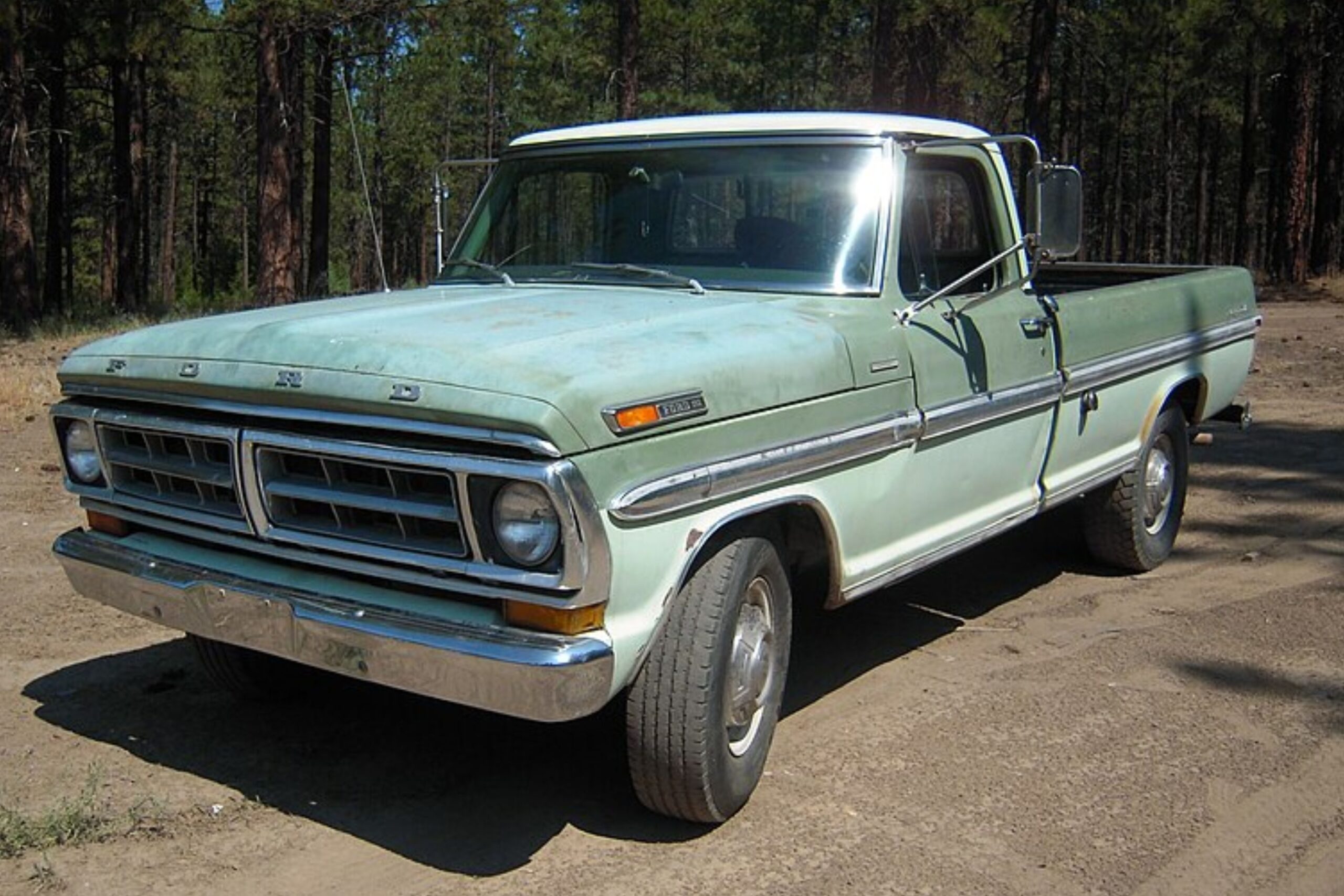
It started the way a lot of modern mysteries do: with a late-night scroll and a double-take. He says he’d tucked his 1971 Ford F-250 away for years—safe, out of sight, and supposedly out of reach—until a familiar shape popped up on an online listing. Same year, same trim, same little details that don’t usually line up by accident.
At first, he figured it had to be coincidence. Old trucks get restored, repainted, and photographed from flattering angles all the time. But the more he looked, the more it felt less like “similar” and more like “that’s my truck,” right down to a small mark he says he remembered from before it went into storage.
A truck put on pause
According to him, the F-250 wasn’t some random project he forgot about—it was a keeper. He says he parked it years ago with the plan to fix it up “someday,” the way people do with classic rigs that deserve more time than life usually allows. The truck stayed in storage while work, bills, and the normal chaos of adulthood took turns cutting the line.
He describes it as a solid old Ford with that squared-off, workhorse look that makes 1970s pickups feel timeless. Even if it wasn’t perfect, it was his. And in his mind, that meant it was waiting patiently for him, not starring in someone else’s online sales pitch.
The listing that didn’t feel random
He says he spotted the truck while browsing listings, not even hunting for his own. The ad showed a 1971 Ford F-250 with photos that looked recent and a description that read like a typical classic-truck sale: condition notes, a few highlights, and the kind of confident pricing that suggests the seller thinks it’ll move. Then came the little things—details he says matched too neatly to ignore.
He claims the photos showed identifiers that made his stomach drop. Maybe it was a unique dent, a specific accessory, or a worn spot that wouldn’t show up on another truck the same way. Whatever it was, he says it crossed the line from “similar model” to “I know that truck like an old friend.”
From disbelief to screenshots
He did what just about anyone would do: he started collecting receipts, digitally speaking. Screenshots of the listing, close-ups of details, and notes about what looked familiar. He says he also pulled up any old photos he had—phone pictures, old insurance documents, registration records, anything that could connect him to that exact F-250.
The weird part, he says, wasn’t just seeing it online. It was the feeling that the listing was happening in plain sight, like the internet had turned his private storage decision into a public “for sale” sign. It’s one thing to misplace a set of keys; it’s another to misplace a whole pickup.
How could it happen?
There are a few ways a stored vehicle can end up somewhere else, and most of them are messy. Storage unit auctions happen when bills go unpaid or contracts lapse, and vehicles can change hands quickly after that. Tow and impound processes can also lead to titles being reassigned, especially if paperwork gets tangled and timelines stretch out.
Then there’s the less paperwork-friendly possibility: theft. Classic trucks aren’t just cool, they’re valuable, and older vehicles can be easier to move if someone knows how to navigate the gray areas. He hasn’t publicly laid out every detail of how it might’ve left storage, but he says he never authorized a sale and didn’t expect it to be anywhere but where he left it.
What he did next
He says he reached out to the person behind the listing, trying to keep it calm at first. The goal, he explains, was to figure out whether the seller had bought it in good faith or whether something more suspicious was going on. Sometimes a vehicle has a complicated paper trail, and the person selling it may not know the full history.
At the same time, he says he started contacting the storage facility connected to where the truck had been kept. Questions like: Who accessed the unit? Were there records of a lien sale or auction? Was there video? It’s not glamorous detective work, but it’s the kind that matters when the difference between “misunderstanding” and “stolen” comes down to dates and signatures.
A familiar headache: title, VIN, and proof
Vehicles are basically paperwork with wheels, and in situations like this, the paperwork tends to decide the ending. He says he focused on the VIN—where it appears on the truck, what it should match, and how it lined up with his documents. If the VIN in the listing matched his records, that would be a big deal; if it didn’t, that would raise a different set of questions.
Experts often say the cleanest route is to verify the VIN directly from the vehicle rather than relying on a seller’s typed description. But that’s easier said than done when the truck is in someone else’s possession. He says he’s been trying to balance urgency with caution, because charging in too hot can spook a seller or complicate an investigation.
The online marketplace problem
This is also a reminder of how easy it’s become to buy and sell big-ticket items with minimal friction. Listings go up fast, photos can look convincing, and buyers are often eager to jump on a classic vehicle before someone else grabs it. That speed is great when everything’s legit—and a nightmare when it’s not.
Platforms vary in how they handle disputes, and many are structured more like bulletin boards than dealerships. They connect people, but they don’t necessarily verify ownership beyond basic rules. He says that’s part of what made the moment so surreal: a truck he believed was safely stored looked like just another clickable product.
Why a 1971 F-250 is worth the fuss
Even people who aren’t “truck people” tend to get why an early-’70s F-250 matters. It’s from an era when pickups were simpler, tougher, and built with that straight-line styling that screams vintage without trying. Depending on condition, originality, and options, these trucks can pull serious interest, especially as more buyers chase classic rigs they can actually drive.
He says the value isn’t just dollar signs, though. It’s memory value—time, effort, and that feeling of owning something with a story. Seeing it listed like a stranger’s property, he says, felt like watching someone else narrate his past in real time.
What people can learn from it
If there’s a practical takeaway, it’s that long-term storage deserves the same attention as a bank account. Keep your paperwork current, confirm your storage agreement is in good standing, and check on the vehicle periodically if you can. Photos of identifying marks, VIN locations, and any unique features can also help later, even if you hope you’ll never need them.
He says he’s sharing his experience because it’s the kind of thing people assume won’t happen—until it does. A stored truck feels “safe” because it’s not on the road, but safety depends on more than a locked door. Sometimes it also depends on a calendar reminder, a folder of documents, and the luck of never seeing your own vehicle for sale by someone you’ve never met.
As of now, he says he’s still working through the steps to prove what he believes is true: that the 1971 F-250 in the listing is the same one he parked years ago. Whether it ends with a clean handoff, a legal fight, or a plot twist nobody saw coming, the story has already hit a nerve. Because deep down, everyone understands the feeling: you don’t expect your old truck to go wandering off—and you definitely don’t expect it to come back as an internet ad.
More from Fast Lane Only