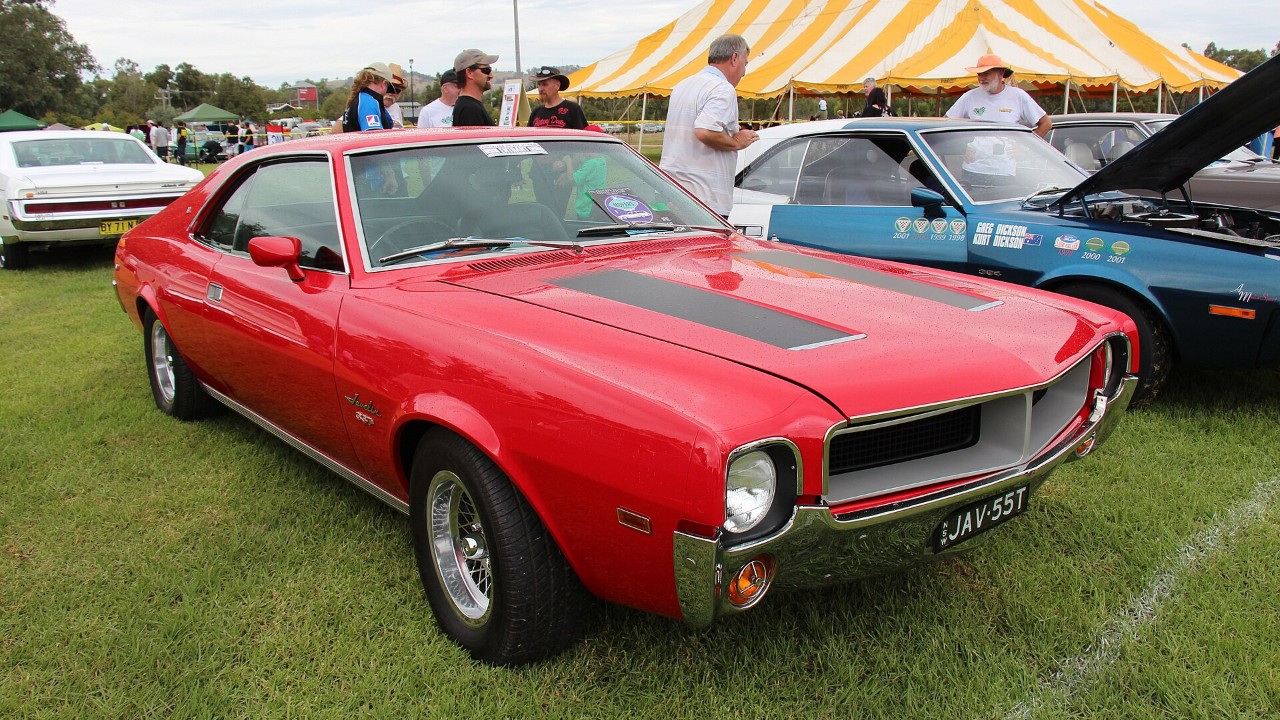
American Motors hoped to sell 35,000 to 40,000 copies of its new AMC Javelin pony car. Instead, the company built 55,125 of the 1968 cars, and the model ran for six more years. Dick Teague’s design gave American Motors a car that could stand next to a Mustang or a Camaro without apologizing.
That shape has aged well. Because AMC built far fewer Javelins than Ford built Mustangs, a clean one draws a crowd at almost any show. Meanwhile, the car’s Trans-Am record gives owners plenty to talk about when people wander over.
These are our picks, six Javelins that turn heads today, from a plain-trim 1968 car to a 401-powered AMX wearing designer upholstery. Each one is the exact car in its photo, and each earns its spot with a fact worth repeating. The verdicts are our opinion. The numbers come from the sources linked below.
1. 1968 AMC Javelin base model
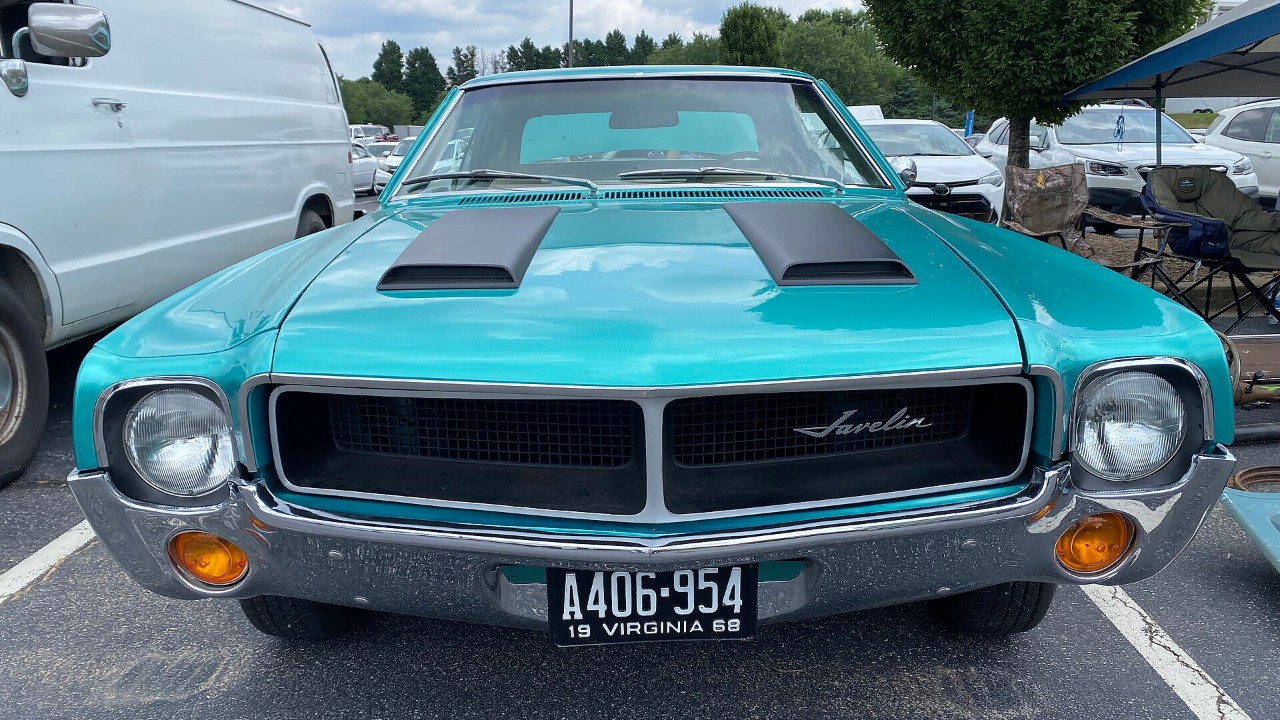
Start with the plainest version, because it shows how good the basic design was. The public got its first look at the Javelin on September 26, 1967. The standard car came with a 232-cubic-inch six rated at 145 horsepower. A 290 V8 rated at 225 horsepower sat on the option list for buyers who wanted more.
The base car was no rocket, of course. An automatic six-cylinder Javelin topped out around 80 mph, while the base 290 V8 could reach about 100 mph. Still, the 1968 AMC Javelin sold well enough that AMC raised production by more than 10% early in the run, according to Ate Up With Motor’s model history. The car measured 189.2 inches long on a 109-inch wheelbase.
In our view, a base car in a bright period color is the purest way to see Teague’s lines. After all, there are no stripes, scoops or spoilers to distract from the long hood and the clean, tapering roof. When one turns up at a meet, people often walk past the hotter versions to look at it. If you want an affordable way into Javelin ownership, the six-cylinder 1968 car is a fine place to begin.
2. 1969 AMC Javelin SST 390 four-speed
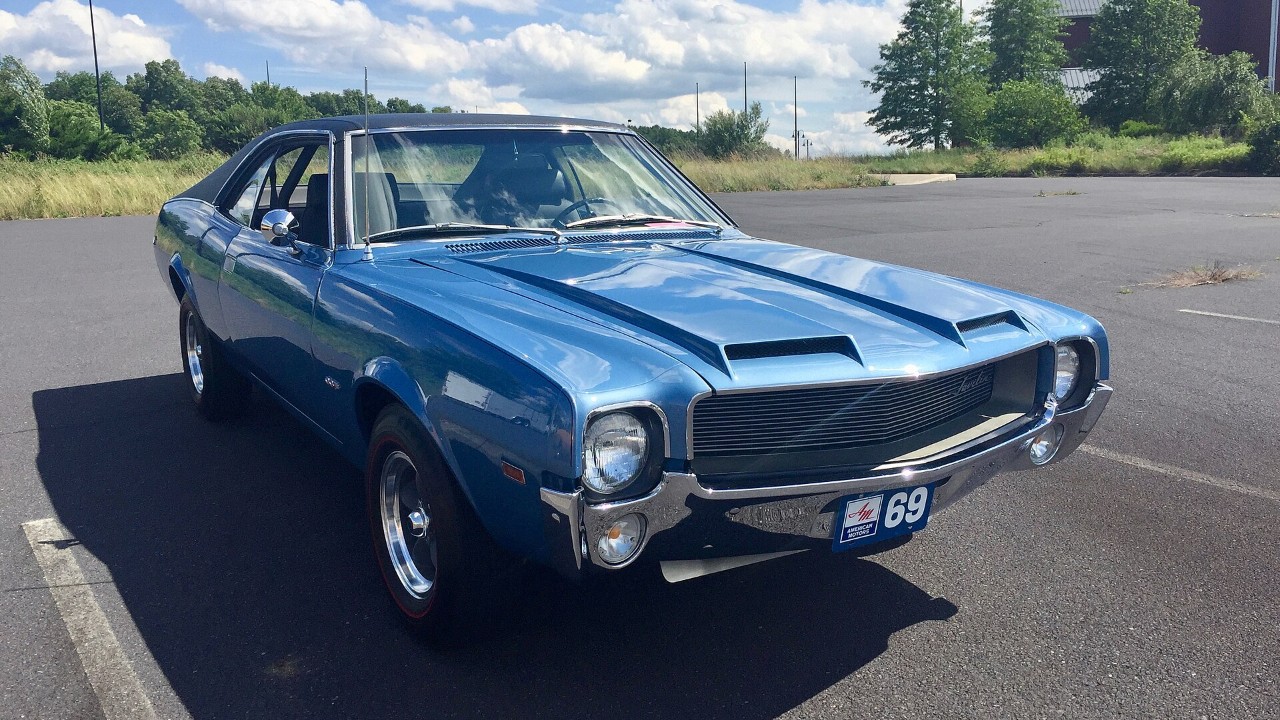
The SST was the dressier Javelin. It added reclining front seatbacks, better upholstery, simulated wood-grain door trim, a sports steering wheel and extra bright trim outside. Pair that with the 390 V8 and a four-speed, and you had a pony car that looked tidy and went hard.
AMC rated the 390 at 315 horsepower and 425 lb-ft of torque in 1968 and 1969. That was plenty for a car this size, and the four-speed let drivers use all of it. For 1969, AMC also offered “Big Bad” paint in orange, blue and green, which came with body-colored bumpers. The orange option cost $34. Meanwhile, Javelin output fell to 40,675 cars that year, so a 390 four-speed SST is a much rarer sight than a six-cylinder car.
Our take: the 1969 AMC Javelin SST with the big engine and a stick is the sweet spot of the first generation. In short, it has the luxury touches, the strongest engine of its era and the pedal that makes it fun. A blue one with a black top, like the car in our photo, looks smart without trying too hard. We think it earns every glance it gets.
3. 1970 AMC Javelin SST 360 Go Package
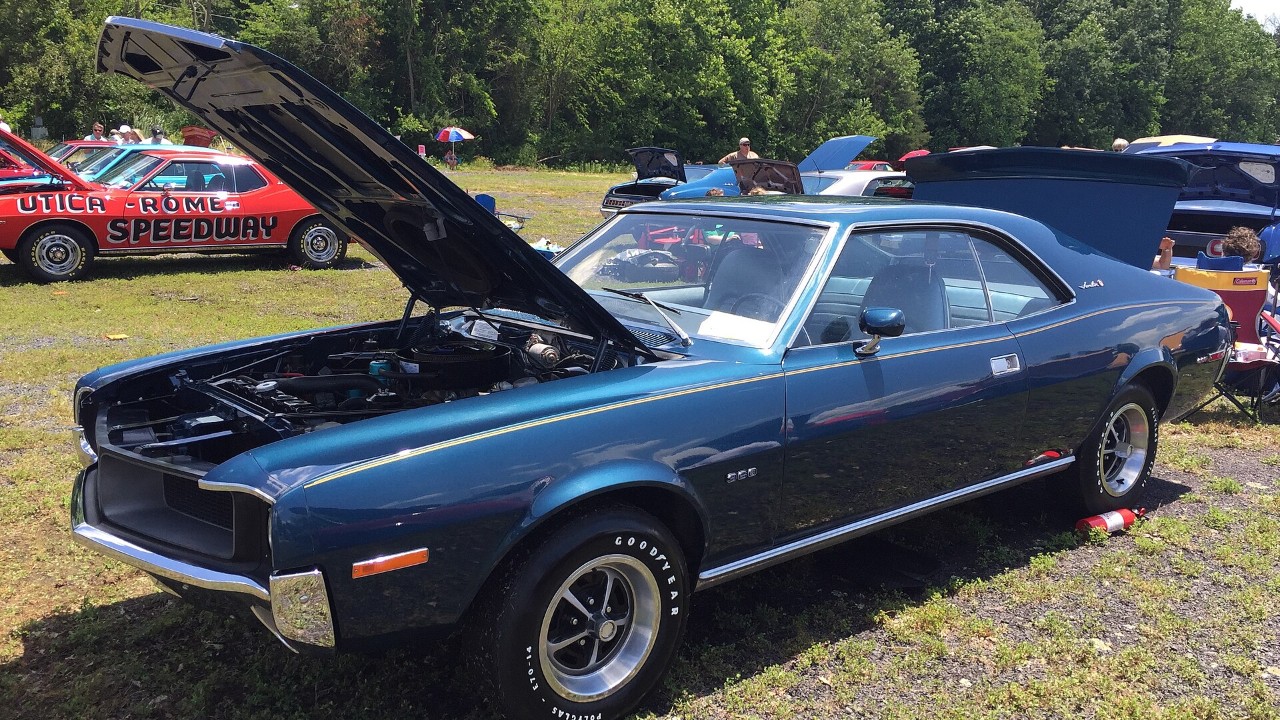
For 1970, AMC reworked its V8 lineup. The 343 gave way to a new 360, rated at 245 horsepower with a two-barrel or 285 with a four-barrel. Meanwhile, the 390 climbed to 325 horsepower. The Go Package, offered from 1968 through 1970, bundled a four-barrel V8 with front disc brakes, heavy-duty suspension, dual exhaust and Magnum 500 wheels.
The 1970 cars also carried racing glory onto the street. Penske Racing and Mark Donohue ran Javelins in Trans-Am that year and finished second in the over-2-liter class. AMC also built 2,501 SST-trim cars with a ducktail spoiler bearing Donohue’s signature. That spoiler appeared as a separate $58.30 option on the window sticker. However, nothing in the VIN or door tag marks those cars, so proving one is genuine takes paperwork.
In our view, a 360 Go Package SST with an automatic is the easy-living Javelin. It has the hardware that made the car handle and stop, yet it remains comfortable enough for a long drive to a show. That combination makes it one of the most usable classics AMC ever built.
4. 1971 AMC Javelin SST
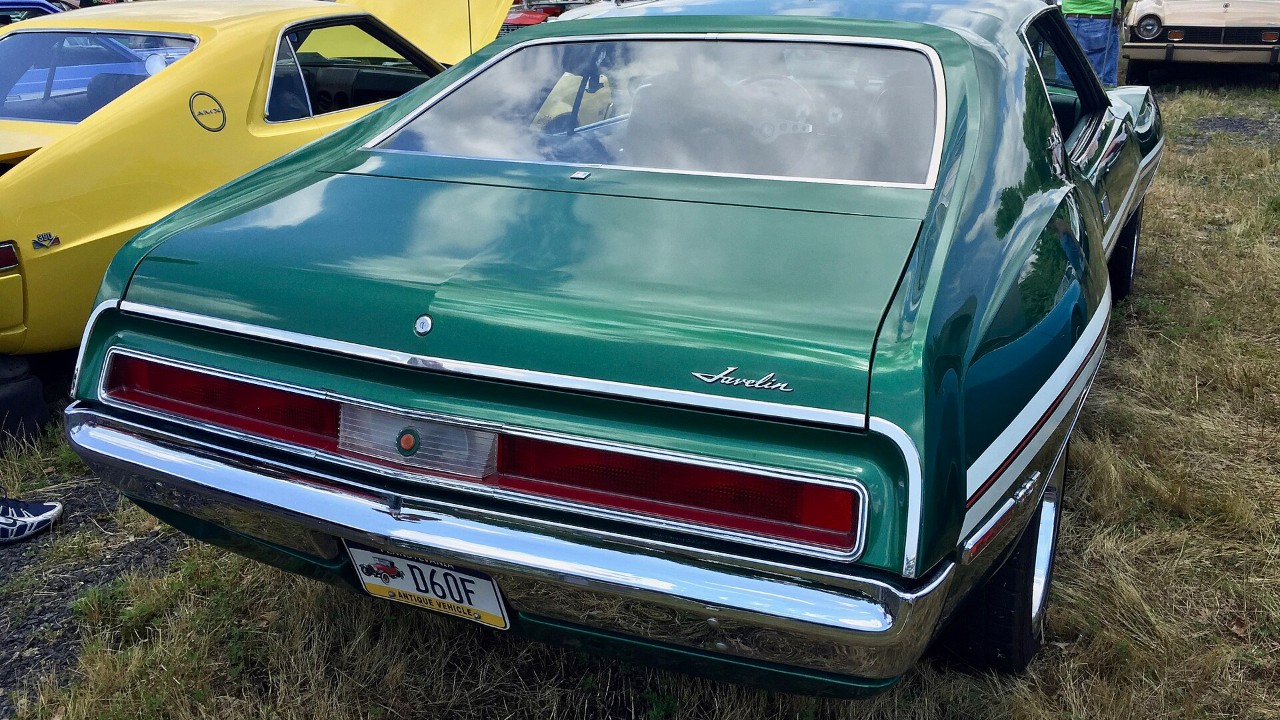
The second-generation Javelin arrived for 1971 with a bolder body. Jack Kenitz and Keith Goodnough styled the facelift, as Ate Up With Motor notes. The wheelbase grew by one inch to 110 inches, and the car got raised front fender blisters, flared rear fenders and a “twin canopy” roof with an integral spoiler. As a result, it looked nothing like a Mustang or a Camaro.
The new body also had a big new engine available. A longer-stroke 401 V8 replaced the 390 and made up to 330 gross horsepower in 1971. On the track, Donohue won seven of the 12 Trans-Am events that year, and AMC took the manufacturers’ championship, according to the same history’s racing chapter. Later, the Alabama Highway Patrol bought 132 Javelins in 1971 and 1972, and the 1971 cars ran 401 V8s with Borg-Warner automatics.
Our take: the green 1971 AMC Javelin SST in our photo shows why the fender bulges divided people at first and win them over now. From the front three-quarter view, nothing else from Detroit looks like it. Since the SST name disappeared after 1972, this trim is worth seeking out.
5. 1972 AMC Javelin AMX
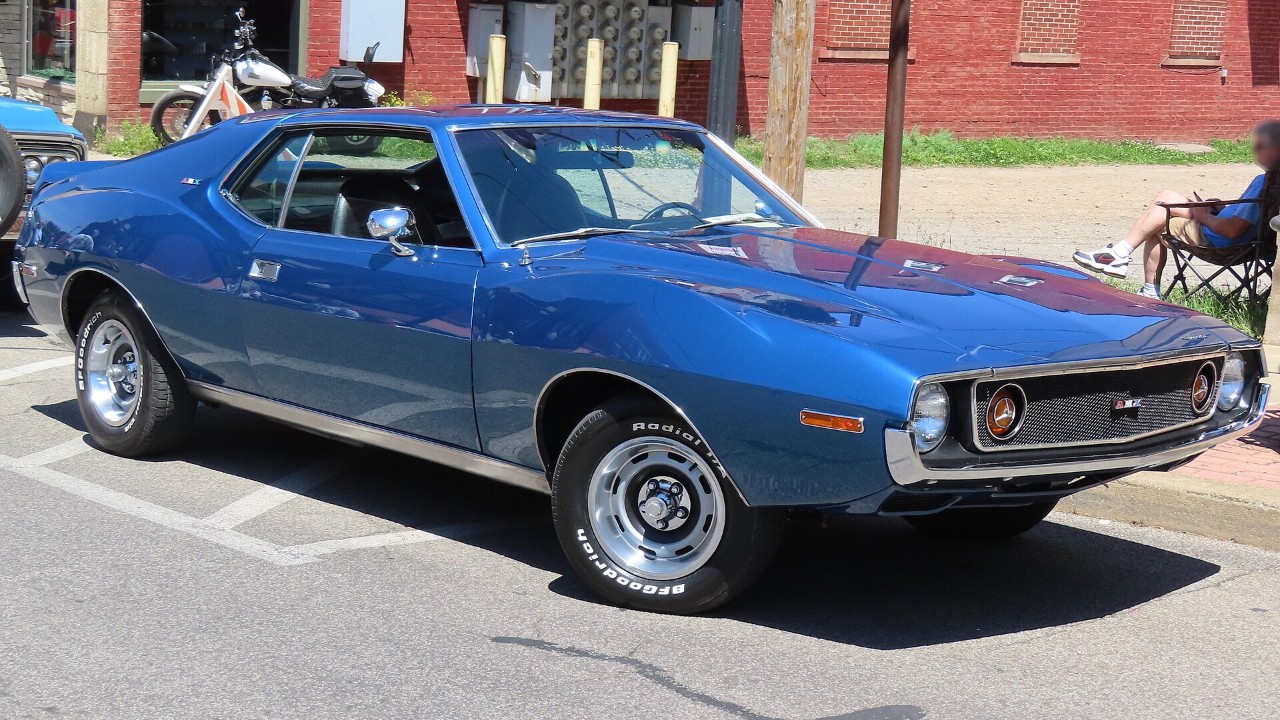
From 1971, the AMX name moved from a separate two-seater onto the top Javelin. It became a premium performance edition with a fiberglass cowl-induction hood, a rear spoiler and a 360 V8 as standard. Penske testing at Ontario Motor Speedway credited the 1971 AMX spoiler with about 100 pounds of downforce.
For 1972, AMC moved to net horsepower ratings. As a result, the 401 carried a listed 255 horsepower. AMC also cut its compression ratio to 8.5:1, down from 9.5:1. That year, AMC also introduced its “Buyer Protection Plan,” which covered the car for one year or 12,000 miles. Meanwhile, Roy Woods won AMC’s second and final Trans-Am manufacturers’ championship. For more on AMC’s hot cars, see our list of forgotten muscle cars that outran everything in their class.
In our view, the 1972 AMC Javelin AMX is the second generation at its most purposeful. The cowl hood and spoiler were functional parts, not stickers, and they give the car a race-bred stance. A well-kept one in a deep blue draws people across a parking lot.
6. 1973 AMC Javelin AMX 401 Go Package
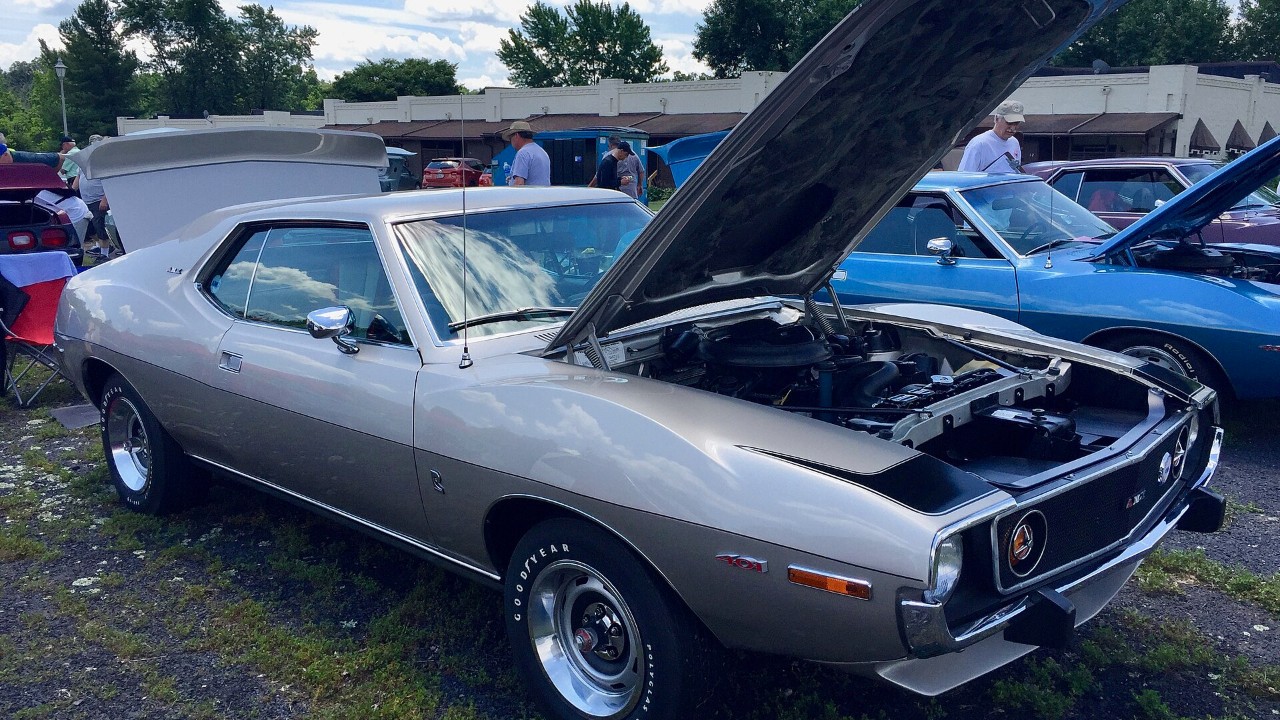
The car in our final photo adds two rare options to the AMX. First, it carries the 401 Go Package with a four-speed. Second, it wears the Pierre Cardin interior. AMC put the Cardin trim on sale on March 1, 1972, as an $84.95 option, and it fitted 4,152 cars across 1972 and 1973.
Meanwhile, total Javelin production for 1973 came to 30,902 cars, including 5,707 AMX models. That year, AMC also offered a Trans Am Victory package to mark the 1971 and 1972 titles. The 1973 AMX measured 192.3 inches overall, 3.1 inches longer than before. If fastbacks are your thing, our fastbacks that still define fun covers more of the era.
Our take: a Cardin AMX with the big engine and a manual is the Javelin we would most like to find in a barn. It mixes 1970s design flair with real muscle. AMC ended the Javelin after 1974 to free up factory capacity for the Pacer, which makes every surviving 1973 AMX a reminder of what came before.
More from Fast Lane Only