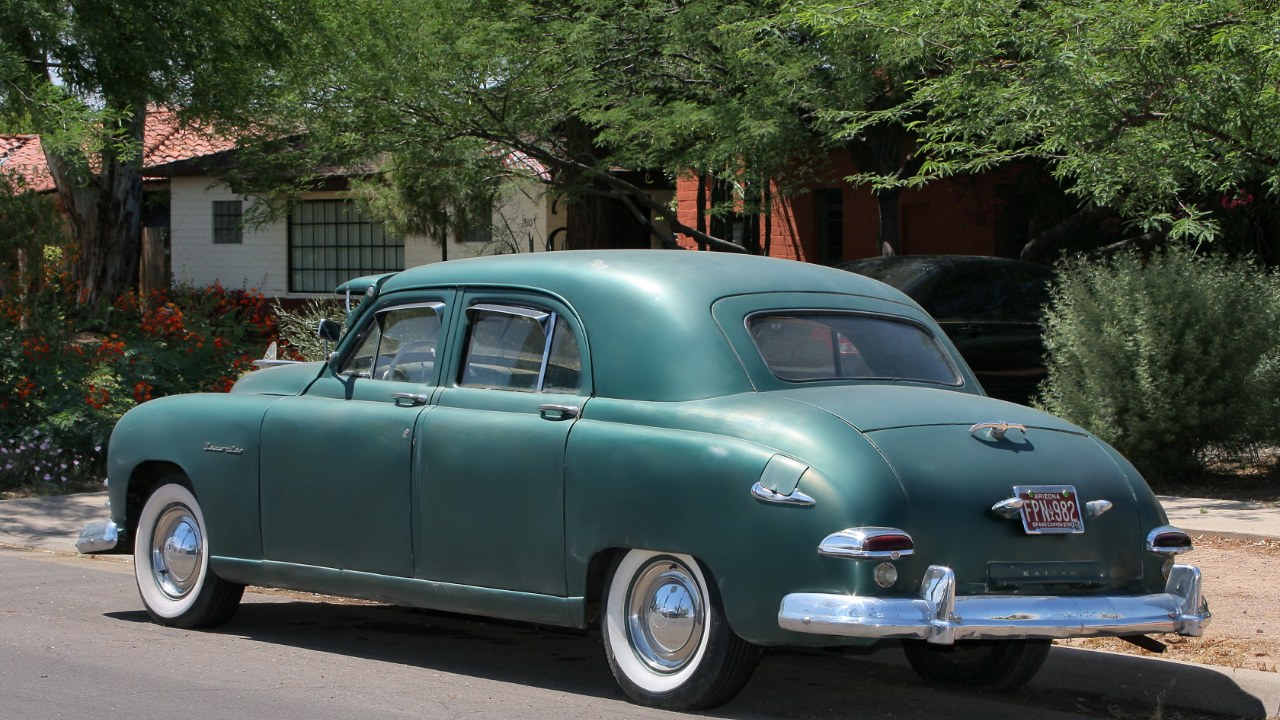
Kaiser-Frazer priced the base Kaiser Traveler at $2,088 when it arrived for 1949, and that money bought a sedan that could swallow cargo like a wagon. It was one of dozens of clever ideas that car makers rushed out after World War II. However, most of them never became household names.
After the war, the late 1940s and early 1950s were a strange, busy time for cars. Steel was scarce in Europe, so some makers built bodies from wood and fabric. Meanwhile, small American shops experimented with fiberglass, and Czech engineers drew new cars in secret during the occupation.
These are our picks for 10 postwar cars that only true enthusiasts tend to recognize. Some sold in the tens of thousands, while others barely reached double digits. Each one shows a different way the industry tried to get moving again.
1. 1950 Kaiser Traveler
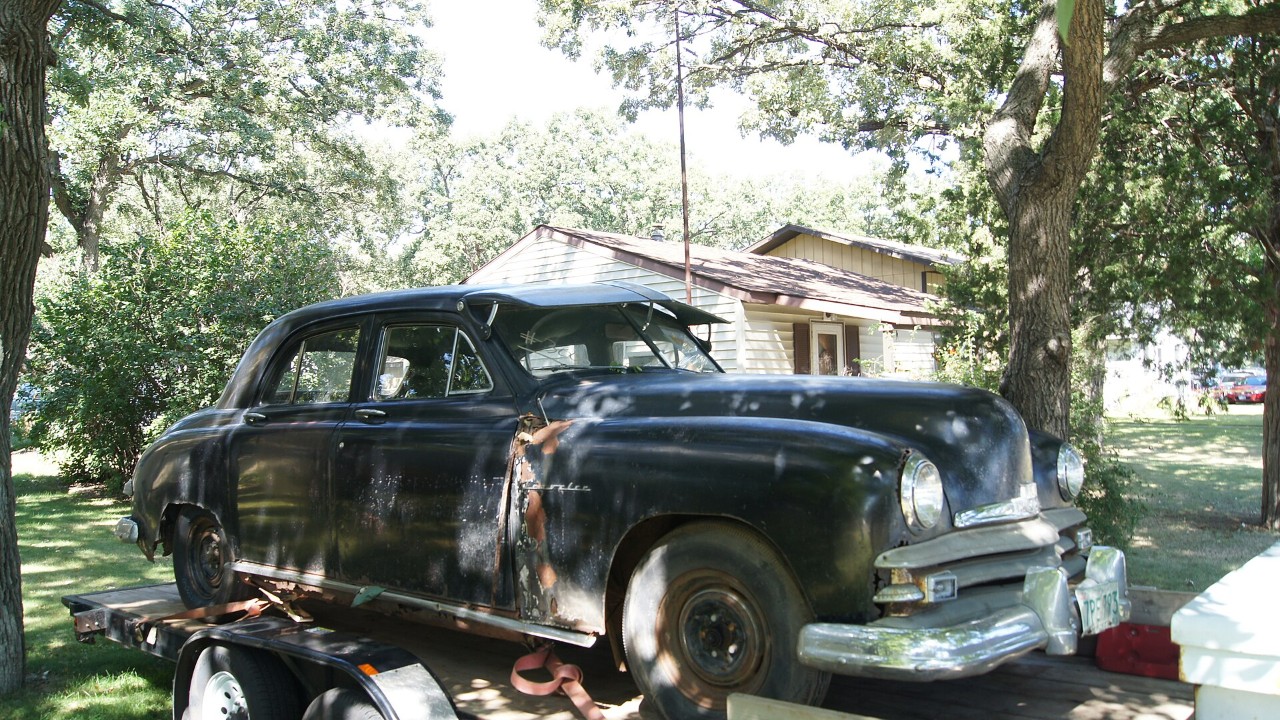
The Traveler started as a money problem. Dealers wanted more body styles, but Kaiser-Frazer couldn’t afford to tool a hardtop, a convertible or a real wagon. Instead, engineers took the existing four-door sedan shell and added a clamshell deck lid, a hinged rear window and a folding rear seat.
At first, the Traveler’s compromises showed. According to Mac’s Motor City Garage, the spare tire lived in the left rear door, which Kaiser welded shut and fitted with a dummy handle. Even so, the hybrids made up about a quarter of 1949 sales. Some unsold 1949 cars then received new serial numbers and went out as 1950 models.
That makes a 1950 Kaiser Traveler a car with two birthdays, which we love. Demand faded after the first rush, however. Kaiser built only 1,000 Travelers for 1953 and dropped the model for 1954. For more of the company’s oddballs, see our Kaiser-Frazer cars you’ve probably never seen in person.
2. 1954 Borgward Hansa 1500 Sportcoupe
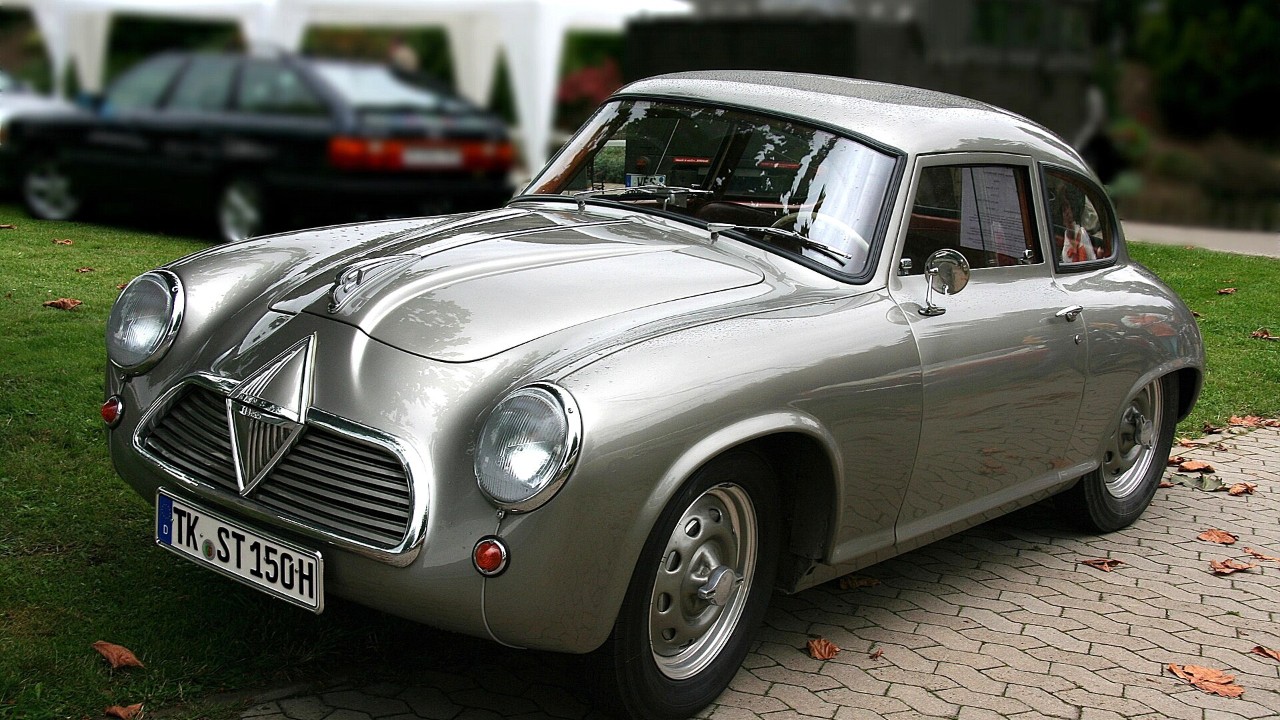
Borgward showed the Hansa 1500 at the Geneva Motor Show in March 1949 and began production that October. Historians often call it the first all-new postwar model from the German industry. In fact, its slab-sided three-box shape arrived about four years before Mercedes-Benz adopted the same “ponton” look.
The Sportcoupe is the deep cut. Borgward put a fastback two-door body on a shortened 2,400 mm wheelbase, with rear-hinged doors and a sloping tail. Buyers didn’t like the tall hood, and the coupe cost about twice as much as the sedan. As a result, only two were completed.
The whole Hansa line ended in 1954, when the Isabella took its place. So a Sportcoupe from that final year is about as obscure as a Borgward gets.
3. 1953 Glasspar G2
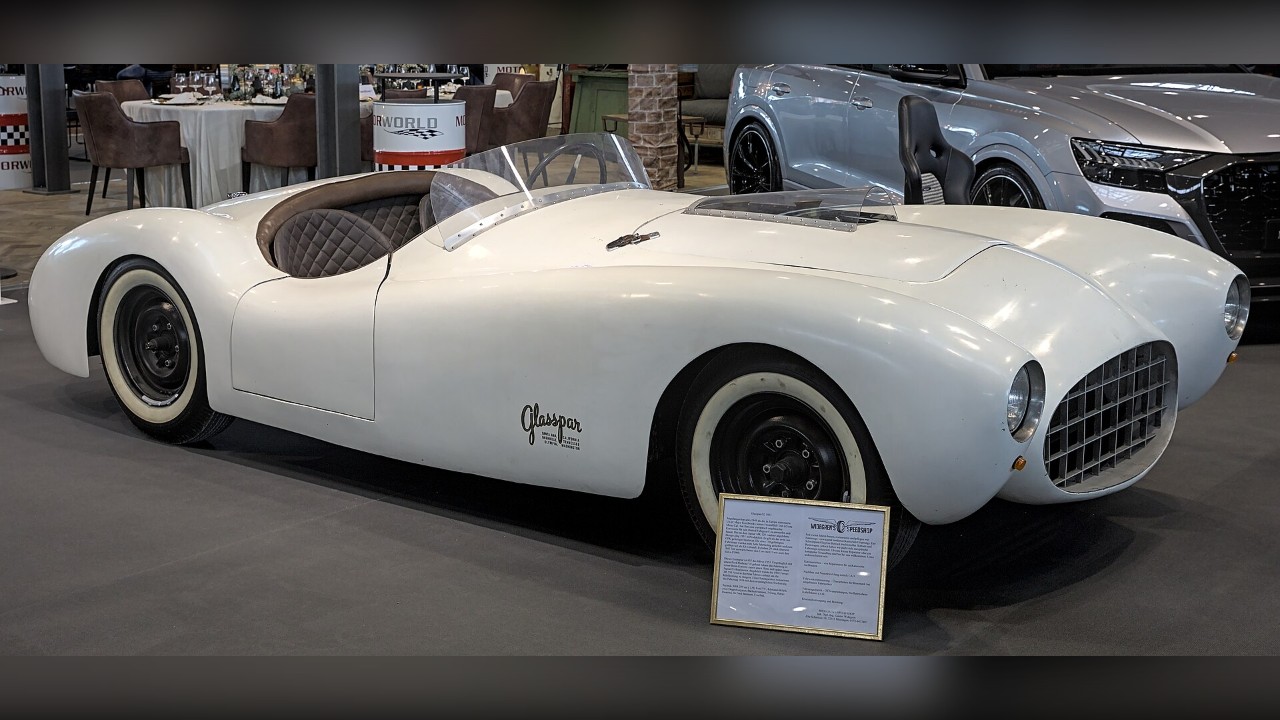
Bill Tritt built boats before he built cars. His fiberglass shop, Glasspar, first shaped a one-off body for Air Force Major Ken Brooks, who mounted it on a stripped Willys Jeep chassis with a modified V8. Brooks then named his car the Boxer.
Then Tritt turned the idea into a product. According to Undiscovered Classics, the G2 was one of the first four fiberglass sports cars shown at the 1951 Petersen Motorama in Los Angeles. Glasspar modified the Boxer’s mold to make it.
Most buyers got a body or a body-and-chassis kit rather than a finished car, because Glasspar sold only a few complete G2s. In 1952, Naugatuck Chemical ordered one and showed it as the Alembic I. For our money, every fiberglass Corvette owes something to cars like this one.
4. Lloyd 300
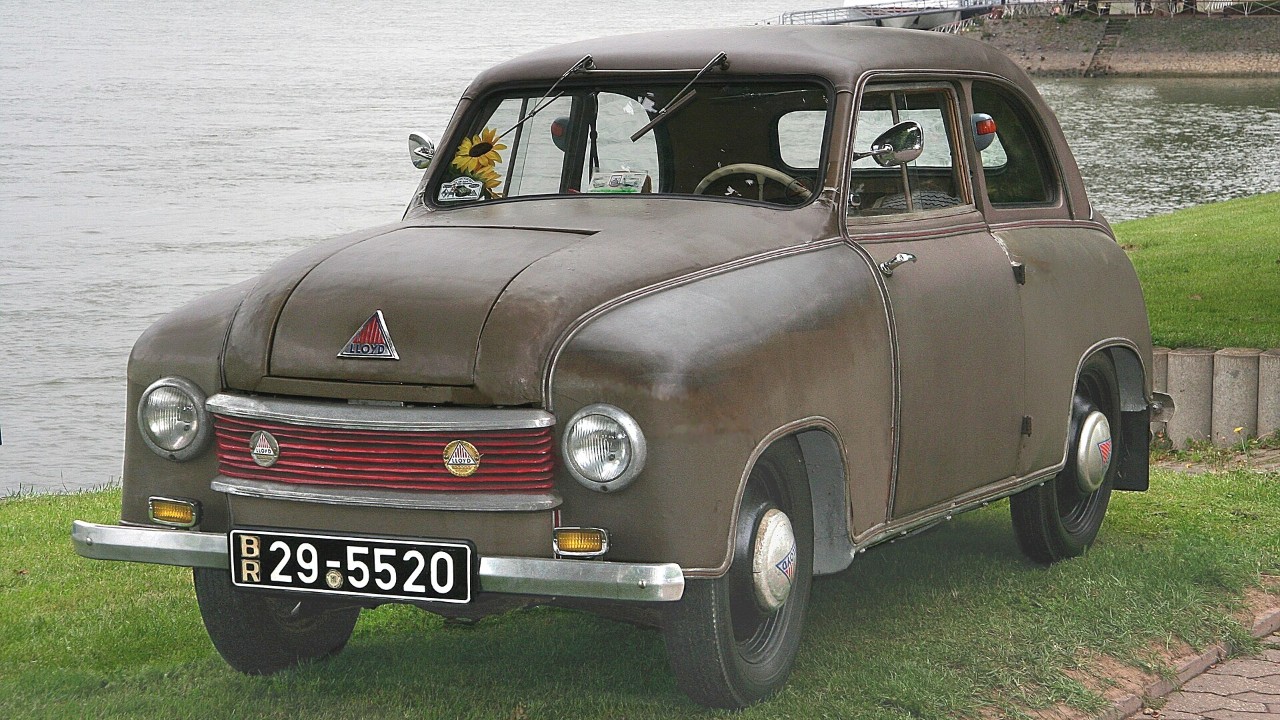
Steel body panels were expensive to press and hard to find in postwar West Germany. So Lloyd, part of Carl Borgward’s group in Bremen, skipped them. The Lloyd 300 used a timber and plywood frame on a tubular steel chassis, then covered the whole thing in synthetic leather.
Germans nicknamed it the “Leukoplastbomber,” a joke about Leukoplast surgical tape. Meanwhile, power came from a 293 cc air-cooled two-stroke twin, mounted sideways and driving the front wheels. Lloyd launched the LP300 in May 1950.
Buyers ignored the jokes. Lloyd built 18,087 of them, with output peaking at 9,981 in 1952. Early in 1953, the Lloyd 400 replaced it. Today, a surviving 300 with its leatherette skin intact is a real find.
5. DKW F89 Meisterklasse
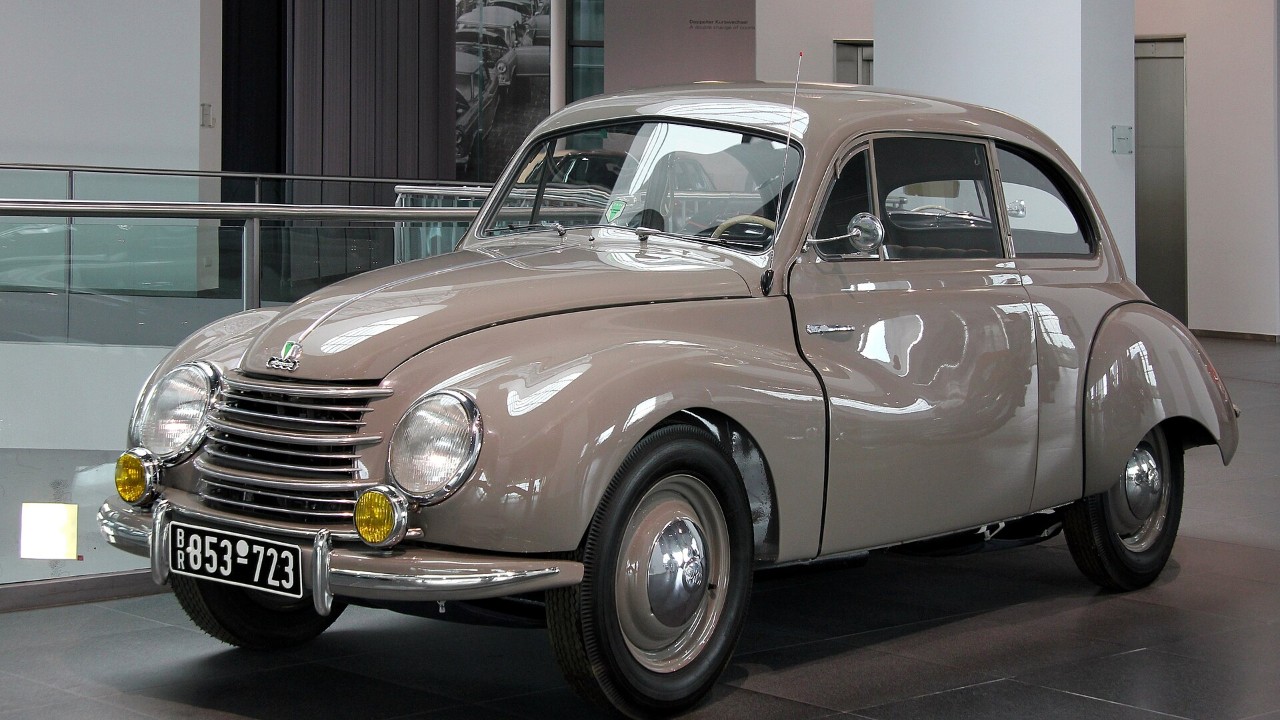
Auto Union lost its Saxony factories when they ended up in the Soviet zone. After the company re-formed in West Germany in 1949, its first passenger car was the Meisterklasse, or “Master Class.” Rheinmetall-Borsig built it under contract in Düsseldorf from 1950.
Underneath, though, it was a familiar design. The sedan body closely followed the prewar DKW F9, with extra streamlining. Power came from a 684 cc water-cooled two-stroke twin rated at 23 hp, and it drove the front wheels.
DKW kept improving it. A two-seat Hebmüller coupe and a three-door “Universal” wagon followed in 1951, and a four-speed manual arrived in 1953. Production ended in April 1954. In our view, it’s the car that put Auto Union back on the road in the West.
6. Škoda 1101 Tudor
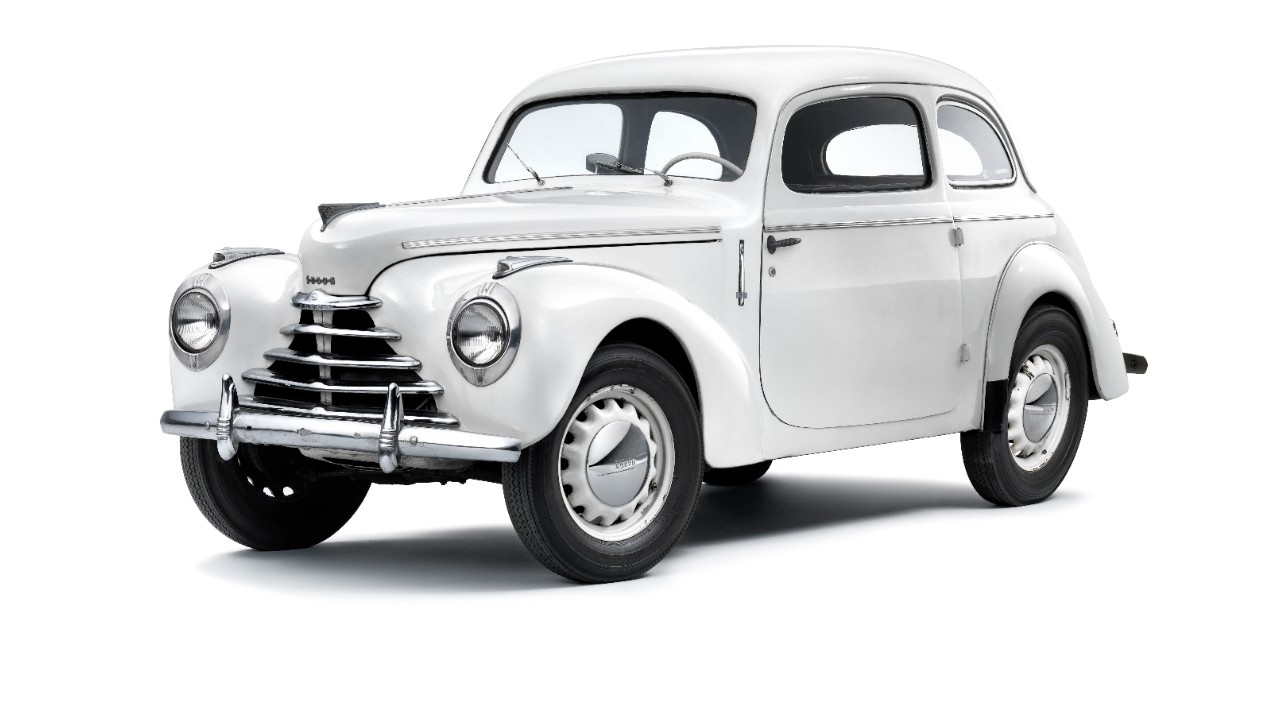
The first Škoda 1101 left the line in Mladá Boleslav on May 6, 1946. Its nickname came from the two-door sedan body, the first version built. “Tudor” simply meant two-door, and it later stuck to every 1101 and 1102.
The engine was a 1,089 cc four with overhead valves and 32 hp. Then, in 1948, the little car went racing. According to Škoda Storyboard, three privately entered Tudors took a class win at the Spa 24 Hours on July 11, 1948, after 1,972 km.
Škoda built 66,904 civilian Tudors plus 4,237 military versions through 1952. More than 65% of 1101 and 1102 output went abroad, reaching 76 countries by 1951. For a car few Americans know, it traveled the world.
7. 1946 Aero Minor
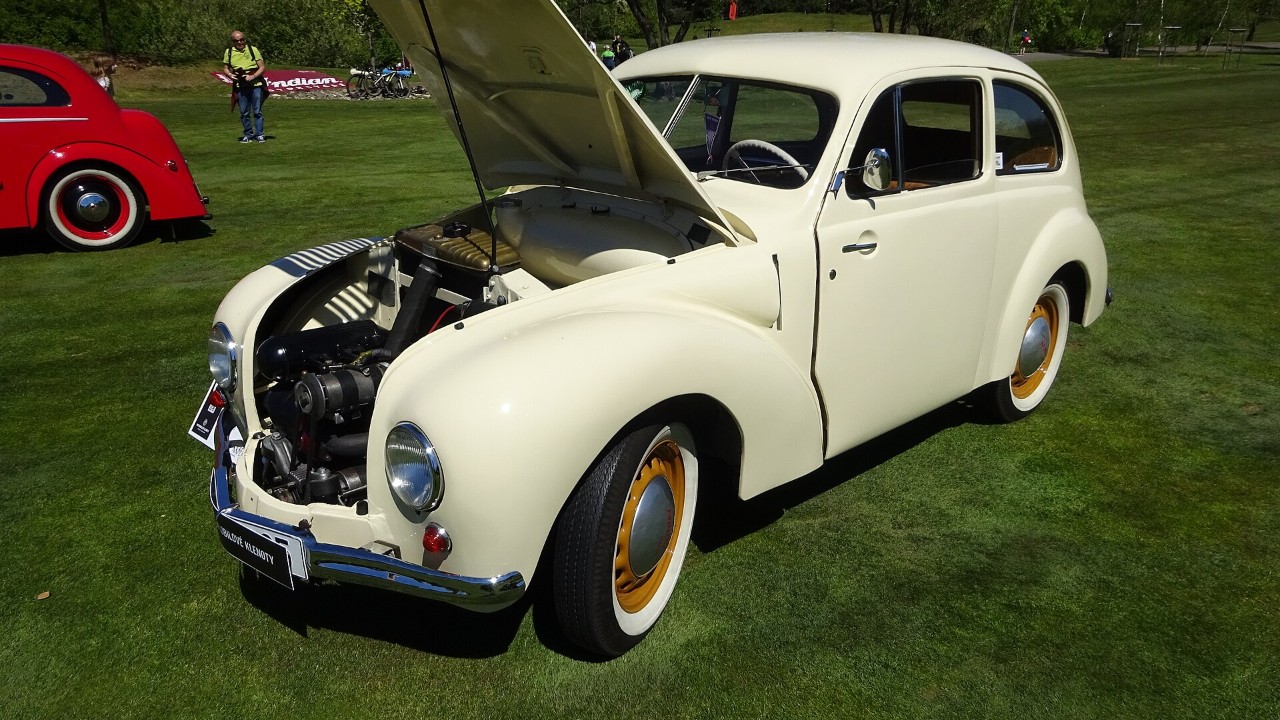
Engineers at Jawa designed this car in secret during the German occupation of Czechoslovakia. It built on their prewar Jawa Minor. After the war, Aero put it into production from 1946 to 1952.
The recipe was simple, too. A 615 cc two-stroke twin made 20 hp and drove the front wheels. Aero offered it as a sedan and a station wagon. Altogether, the company built 14,178, and about half went to 23 export markets, mainly in Western Europe.
Beyond that, the Minor also had a sporting side. An Aero Minor Sport, with its bore enlarged to 744 cc, finished second in its class at the 1949 24 Hours of Le Mans. That’s a lot of résumé for a car most people have never heard of.
8. 1951 Gutbrod Superior Sport Roadster
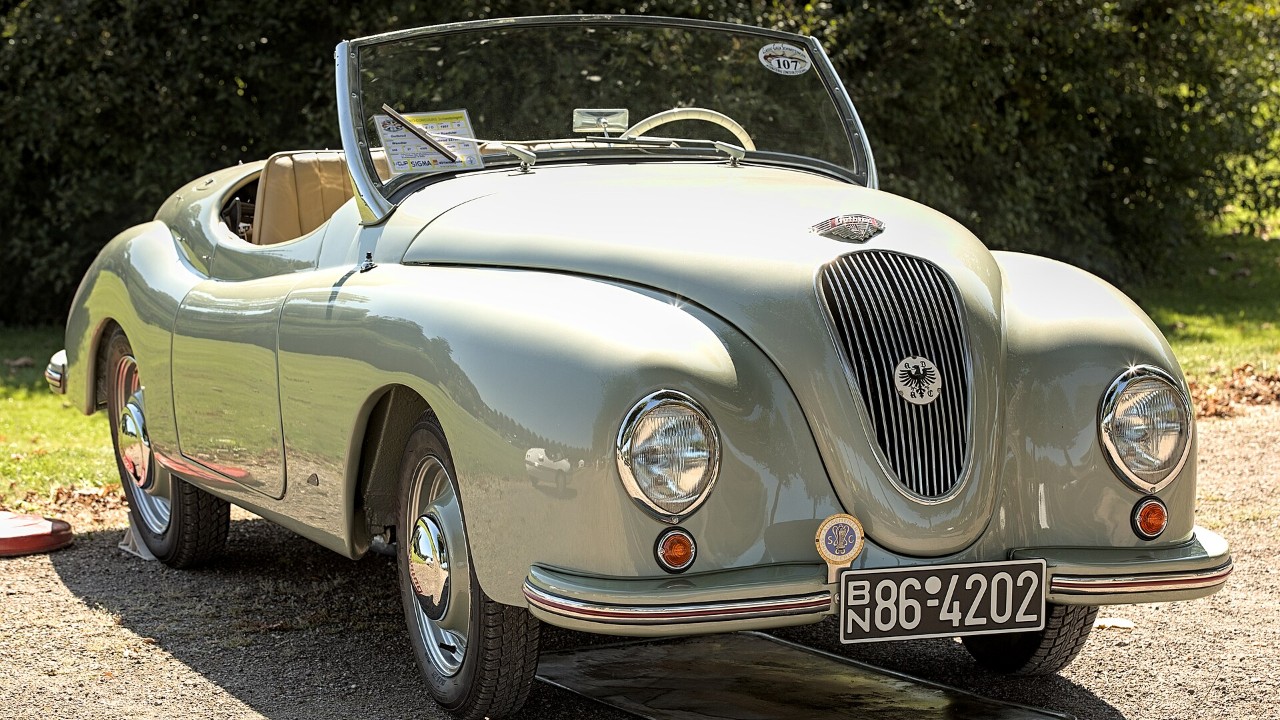
Wilhelm Gutbrod founded his company in Ludwigsburg in 1926, and it first built Standard motorcycles. After World War II, his son Walter took over in 1948. The firm then launched the postwar Gutbrod Superior, built from 1950 to 1954.
Early cars like this 1951 Sport Roadster used a front-mounted 593 cc two-stroke twin. Later, for 1953, the engine grew to 663 cc and gained an optional fuel-injected version. Dr. Hans Scherenberg developed the car at Gutbrod’s small factory in Plochingen.
Gutbrod built 7,726 cars before the factory had to close. A Gutbrod injection engine sits in the Deutsches Museum in Munich today. Meanwhile, the open Sport Roadster remains the version we’d most like to find.
9. 1954 Sunbeam-Talbot 90
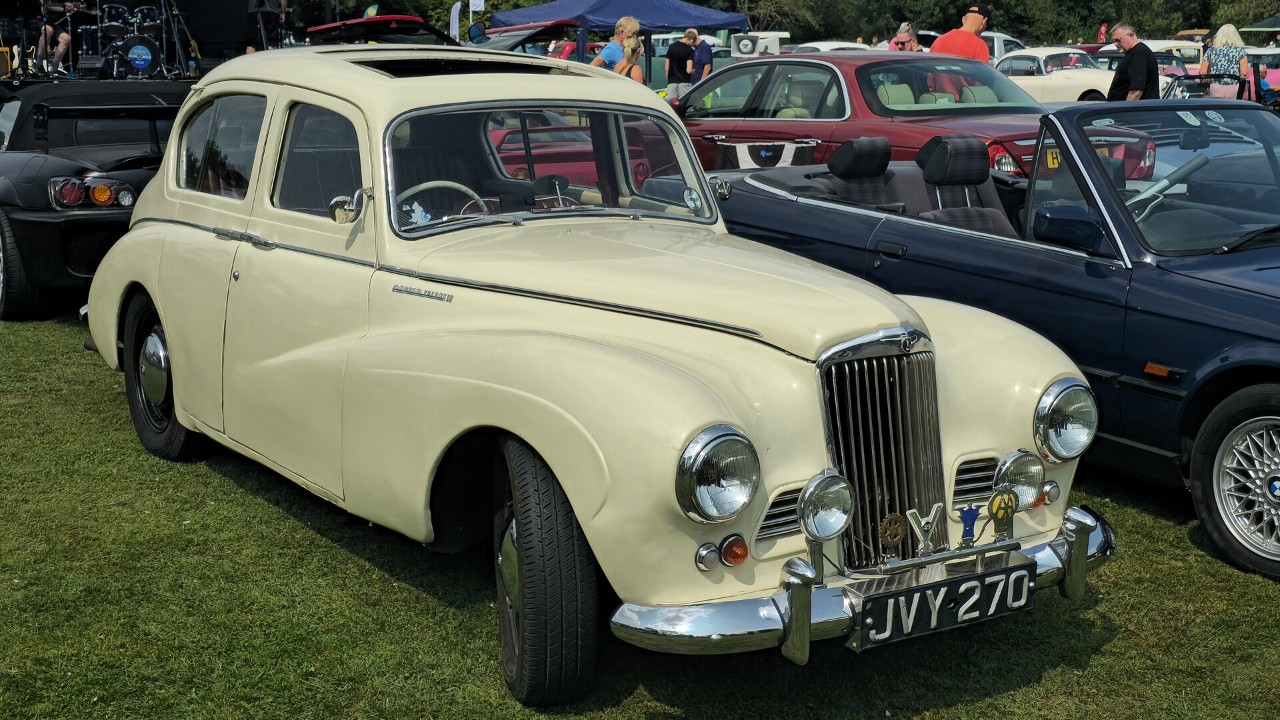
The year 1954 marked the end of a name. Rootes built the Sunbeam-Talbot 90 from 1948, and the Mk IIA, made from 1952 to 1954, was the last model to wear the Talbot badge. After that, the car carried on as the Sunbeam Mk III.
The Mk IIA got a higher-compression engine with 77 bhp, and Rootes built 10,888 of them. It also came with real rally credentials. Back in 1952, Stirling Moss shared a Mk II that finished second on the Monte Carlo Rally.
Also, buyers could choose a four-door sports saloon or a two-door drophead coupe. In our opinion, a late 90 is the sweet spot because it pairs the strongest pre-Mk III engine with the Talbot name that disappeared right after. If you like this era, our list of postwar cars that still feel relevant is a good next read.
10. 1948 Veritas RS
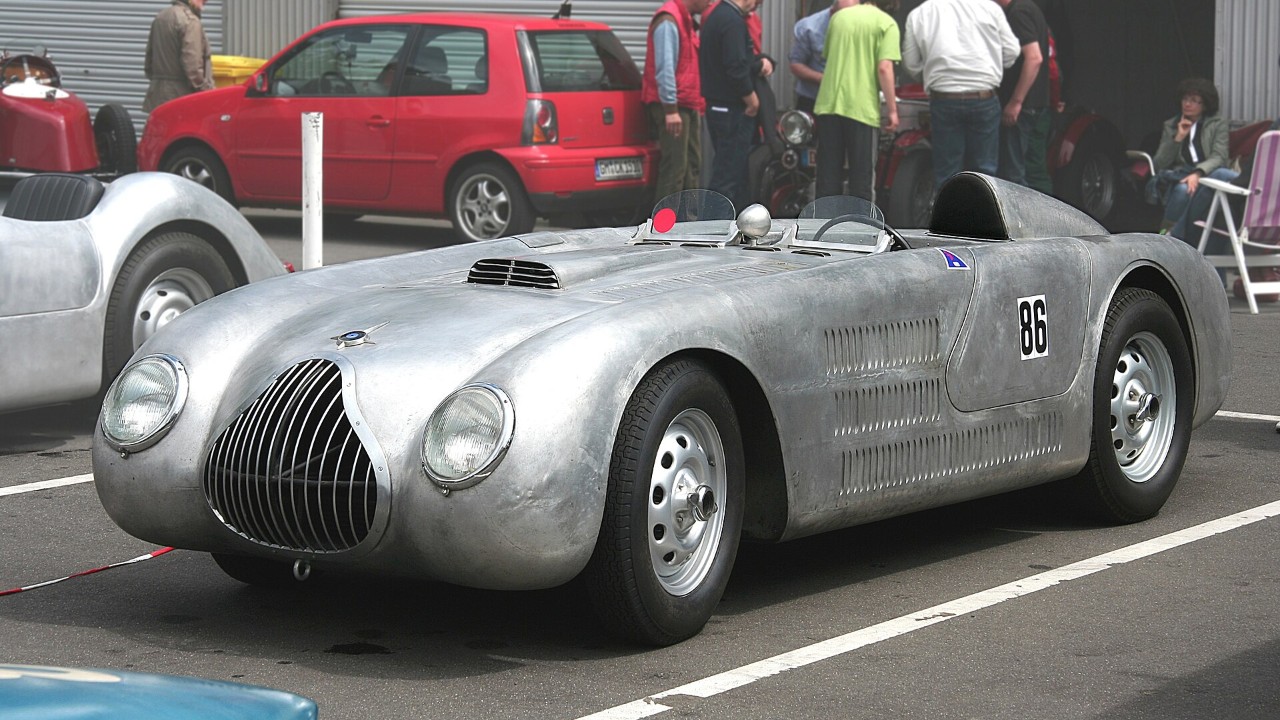
Ernst Loof, Georg Meier and Lorenz Dietrich started Veritas by rebuilding prewar BMW 328s for racing. Karl Kling won at Hockenheim in the first one and became the 1947 German 2-litre champion. Next, in 1948, the team built the Veritas RS racing sports car around the 328’s six-cylinder engine.
Money was always short, though. Veritas moved to Muggensturm in 1949 and launched its first road car, the Komet coupe. A year later, production stopped for lack of funds, and Loof set up a new company at the Nürburgring.
Still, the cars outlived the company. Privateers entered 17 Veritas cars in five Formula One World Championship races between 1951 and 1953.
More from Fast Lane Only