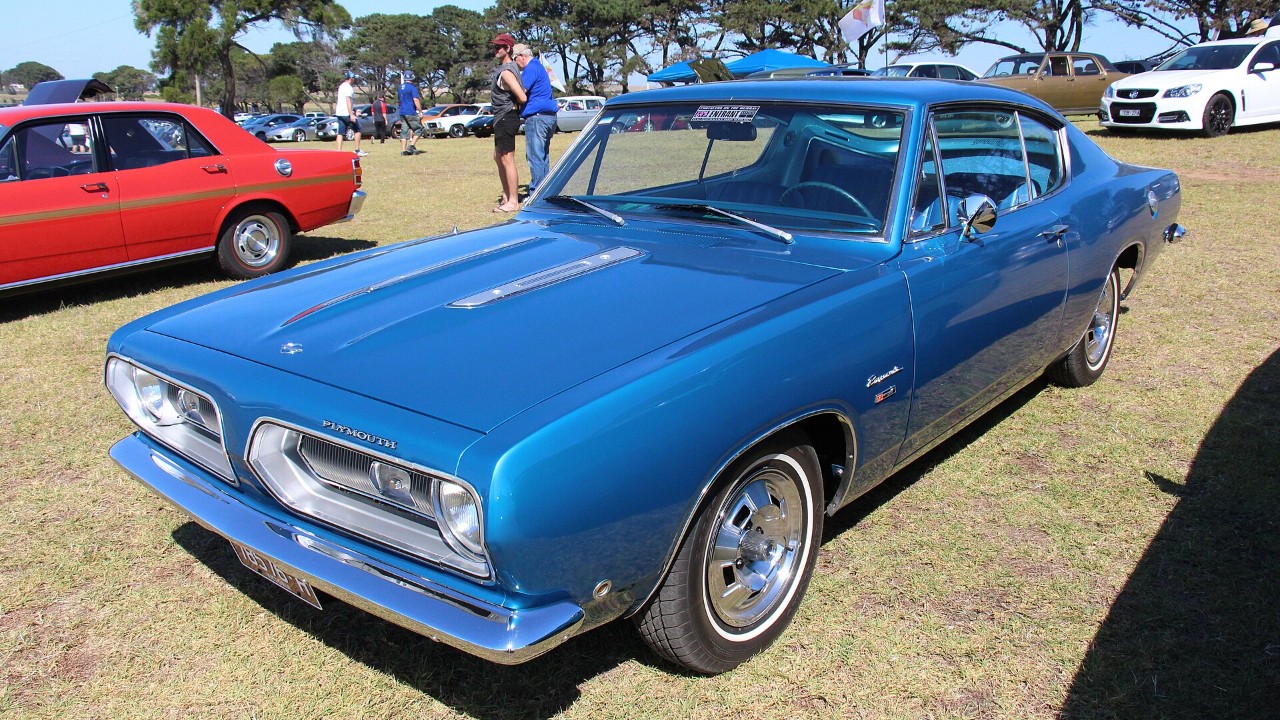
Plymouth sold the 1968 Barracuda notchback as the quiet one: a formal-roof coupe built alongside the fastback and convertible. Yet park one at a car show today, and people walk over to ask what it is. That’s the Barracuda’s gift, from the plainest coupe to the wildest Hemi.
The Barracuda name ran from 1964 to 1974, through three very different generations. Most people picture only one car, a 1970 or 1971 ‘Cuda in a loud color. However, the family also included floral roofs, a factory 440 squeezed into a compact, and a race car that won championships in France.
These are our picks, six Barracudas we think still stop traffic. That verdict is our opinion. The engines, ratings, production counts and racing records below, though, come from period histories, club records and marque references.
1. 1968 Plymouth Barracuda notchback
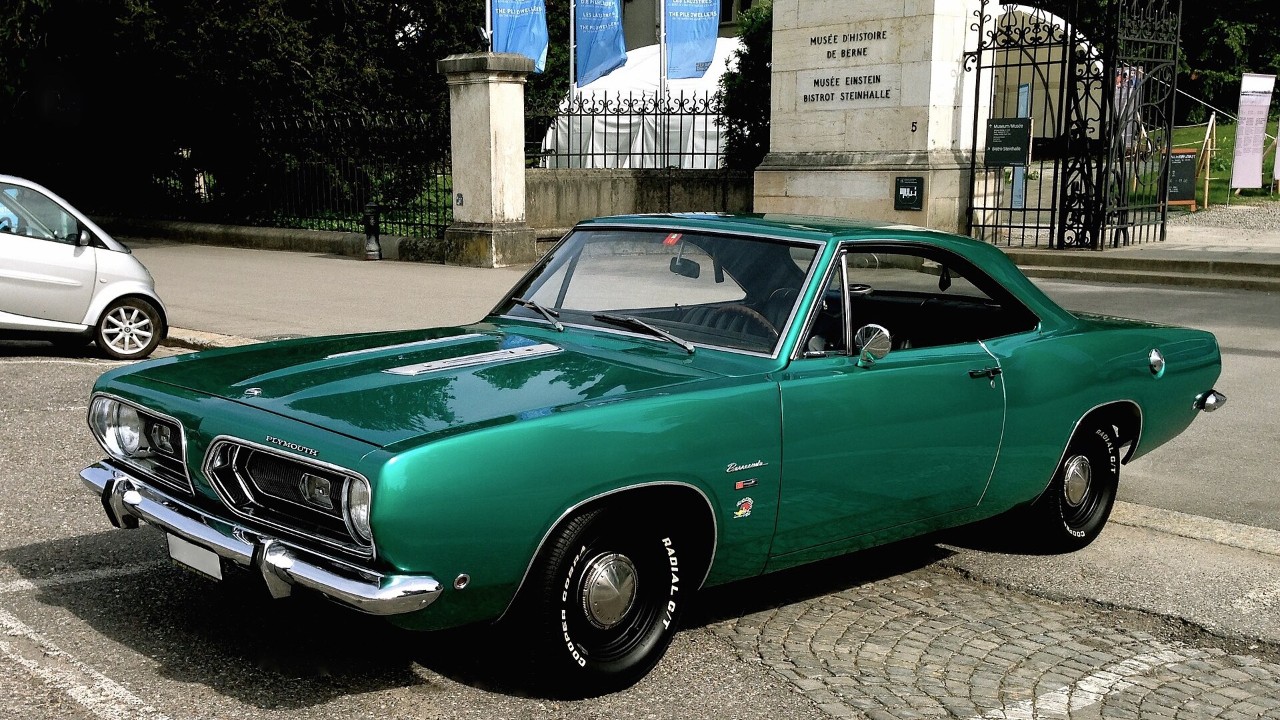
The second-generation Barracuda arrived for 1967 in three bodies: fastback, notchback coupe and convertible. Of those, the notchback is the one people forget, with a squared-off roofline over the same running gear as the sportier fastback. For 1968, Plymouth made the 318 its smallest V8 and added a 340 four-barrel. The 383 also gained Road Runner intake, cam and heads, although its exhaust held output to 300 bhp. This second-generation body stayed in production through 1969, before the E-body replaced it.
That same year, Plymouth’s racing side went much further. Hurst assembled about fifty 1968 Barracuda fastbacks with the 426 Hemi for Super Stock drag racing, using fiberglass fenders and a fiberglass hood. A sticker even warned that they weren’t for public roads. Those cars could run the quarter mile in the mid-tens.
The Barracuda notchback never got that glamour, and that’s exactly why it draws a crowd now. In our view, its clean profile looks more grown-up than any pony car of its year. The Barracuda’s story actually started earlier, when the 1964 car beat the Mustang to market, and the notchback carried that underdog spirit forward.
2. 1969 Plymouth Barracuda Mod Top
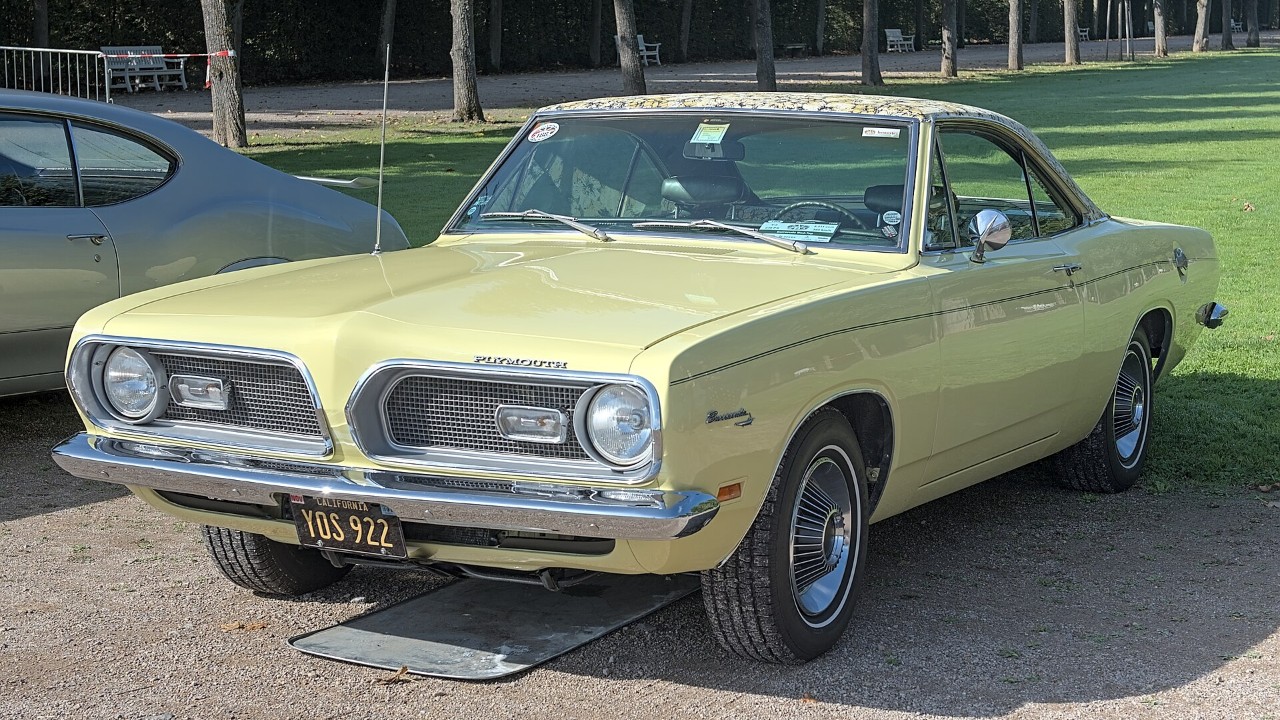
For 1969, Plymouth offered one of the strangest options of the muscle era: a vinyl roof covered in flowers. The Mod Top came as a package with matching floral seat and door-panel inserts. In 1969, the roofs came in a yellow and black pattern. Then, for 1970, a blue-green floral pattern joined it.
Very few buyers ticked the box. According to Old Cars Weekly, only 1,021 Mod Top Barracudas and ‘Cudas were made, and few had 340s. That includes 937 Barracudas in 1969, followed by just 52 Barracudas and 32 ‘Cudas in 1970. Those 1970 ‘Cudas split 17 blue and 15 yellow. The same article says about 88 of the 1969 cars are known to survive, along with 7 of the 1970 cars. Plymouth and Dodge also offered the option on other models, including the Satellite and the Dart Swinger.
In our opinion, no Barracuda gets a faster reaction at a show. People either love the flowers or can’t believe Chrysler built them, and either way they stop. With so few survivors, the Mod Top is also one of the rarest looks a Barracuda can wear.
3. 1969 Plymouth Barracuda 440
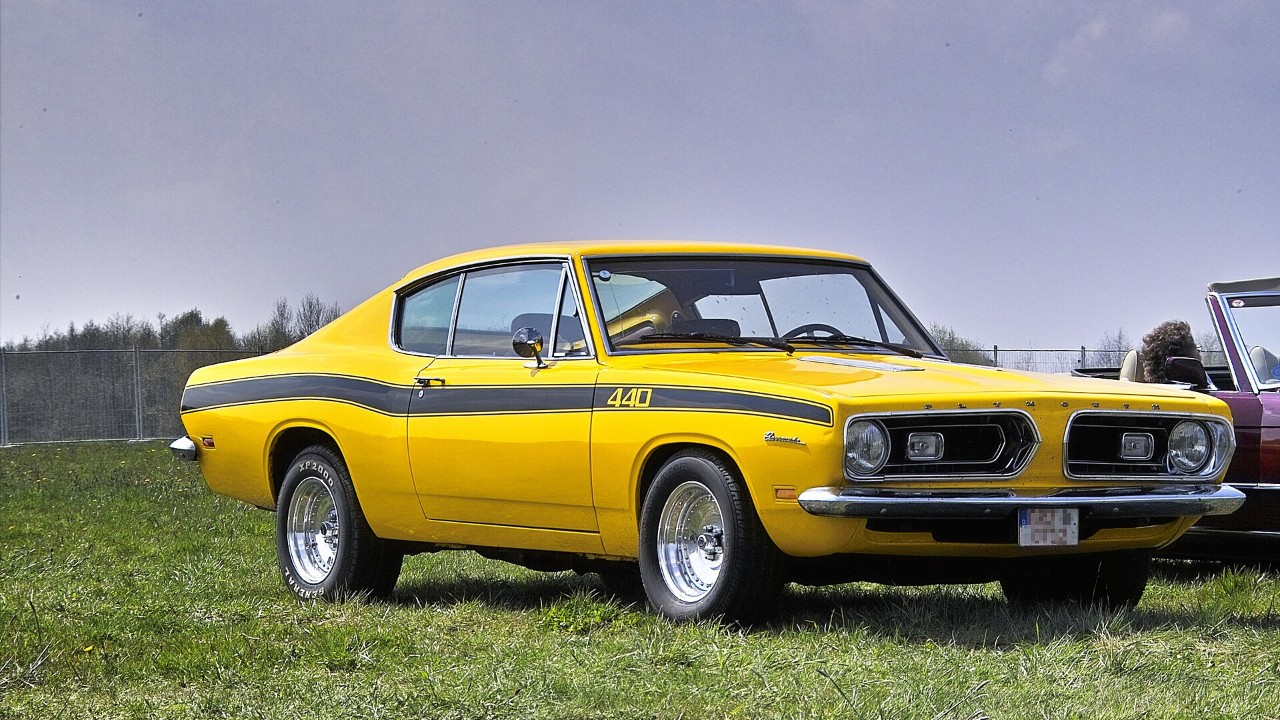
For 1969, Plymouth turned the Formula S into a new trim package called the ‘Cuda. Buyers could order it with the 340, the 383 or the new 440 Super Commando V8. That year, the 383 also rose to 330 bhp. The 440, though, was the headline, a full-size big-block squeezed into a compact. At this point, the ‘Cuda name was still a package rather than a separate model.
It came with strings attached. According to Old Cars Weekly, Plymouth built a total of 359 440 ‘Cudas, mostly fastbacks, and only 39 were notchbacks. The magazine says no power options were offered, so these cars had no power steering or power brakes. The warranty also dropped from the usual 3/36 to the Hemi-style 12/12, and every one used a 727 TorqueFlite automatic.
Our take: the 1969 440 car was Plymouth throwing every big part it had at the Barracuda before the new E-body arrived. With just 359 built, it’s one of the most surprising engine bays of the second-generation cars. Pop the hood at a show, and the crowd usually follows.
4. 1970 Plymouth Hemi ‘Cuda Chrysler France race car
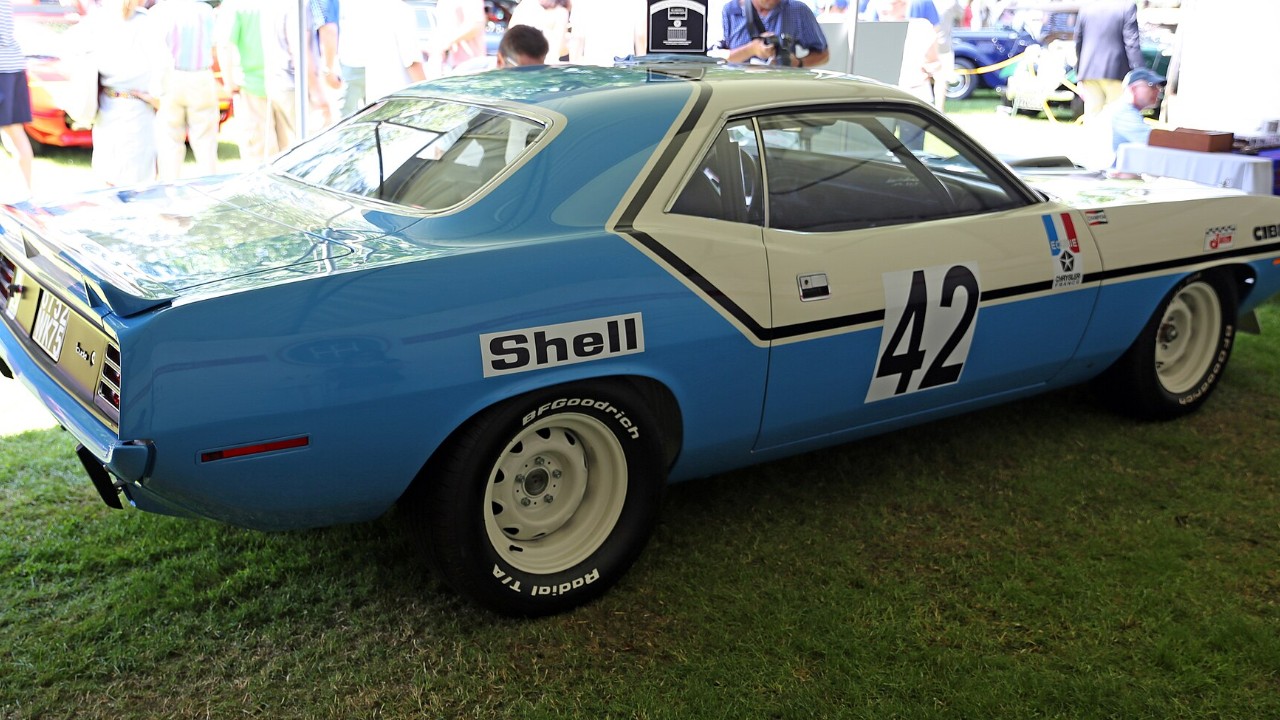
Not every Barracuda raced in America. Chrysler France ran 1970 Hemi ‘Cudas in French racing from 1970 to 1973. Henri Chemin drove the first car, then sold it to privateer J. F. Mas, who raced it for two more years. That car won four French Group 1 class championships, three on track and one in hill climbing.
The program had a longer history than many fans realize. According to Street Muscle, Ecurie Chrysler France campaigned five ‘Cudas from 1970 to 1973. The cars started with 440 six-barrel engines rated at 390 horsepower and later switched to Hemi power. They wore Plymouth blue and white at first, then red and white after 1971, and ran as Chryslers at Montlhéry, Mont Ventoux and Spa. When Street Muscle wrote its story in 2011, two of the cars were under restoration in France, and another had gone to Belgium.
The 426 Hemi itself was rated at 425 horsepower in 1970 road-car form. In our view, a French-liveried ‘Cuda is about the most unexpected Barracuda you could see. It’s American muscle with a European racing record, and it makes people stop and read the doors.
5. Plymouth ‘Cuda 383
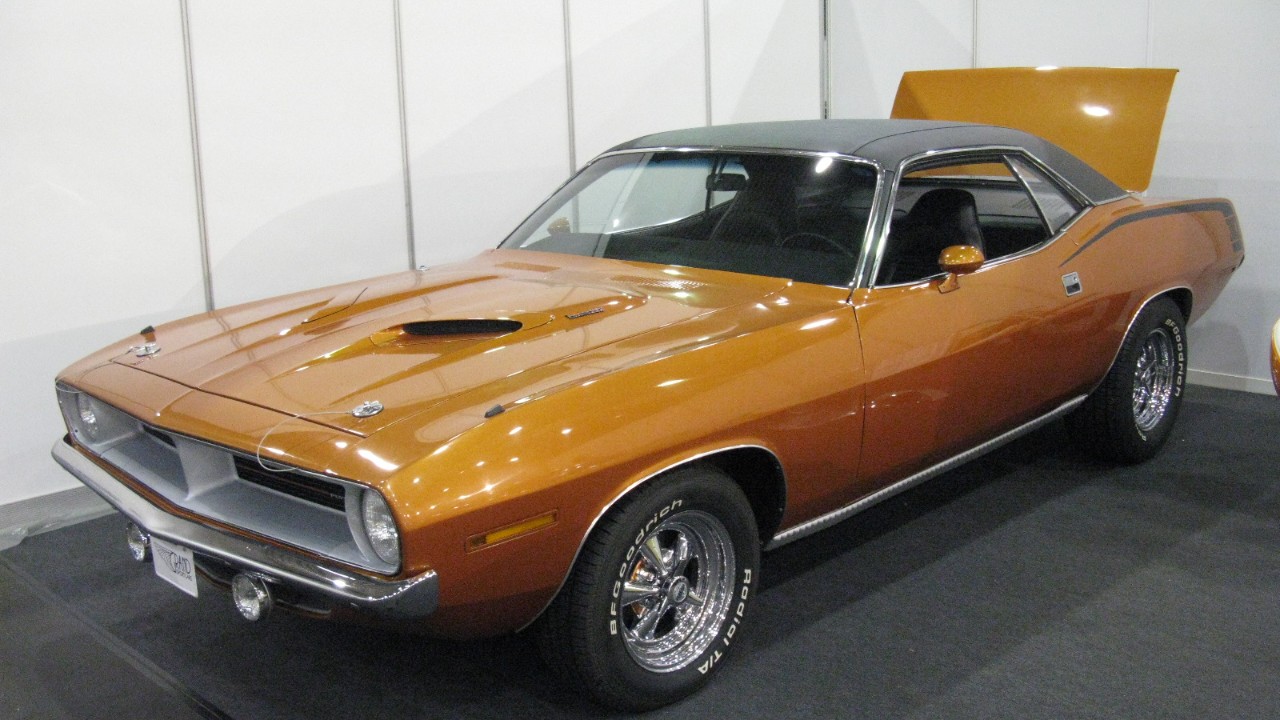
The 383 was the ‘Cuda’s everyday big-block. For 1969, the first year of the ‘Cuda package, Plymouth raised it to 330 horsepower. Then, for 1970, it became the standard ‘Cuda engine in the new E-body, rated at 335 horsepower gross. By 1971, the four-barrel 383 was down to 300 horsepower, and a two-barrel version made 275. Back in 1968, by comparison, the Barracuda’s 383 had been held to 300 bhp by its exhaust.
Above it sat bigger options. In 1970 and 1971, buyers could step up to the 440 four-barrel, the 440 six-barrel or the 426 Hemi. However, the Hemi was expensive, and the 1971 Hemi option cost an extra $1,228. Very few buyers paid it, so the 383 did most of the big-block work in the ‘Cuda lineup.
Here’s our case for the 383. It gave you the real ‘Cuda look and a big-block rumble without the Hemi’s extra cost. In our view, a clean 383 car turns just as many heads in a parking lot as a far rarer Hemi, and fewer owners are afraid to drive one. That’s exactly why the 383 belongs on a list about cars that stop traffic.
6. 1971 Plymouth ‘Cuda hardtop
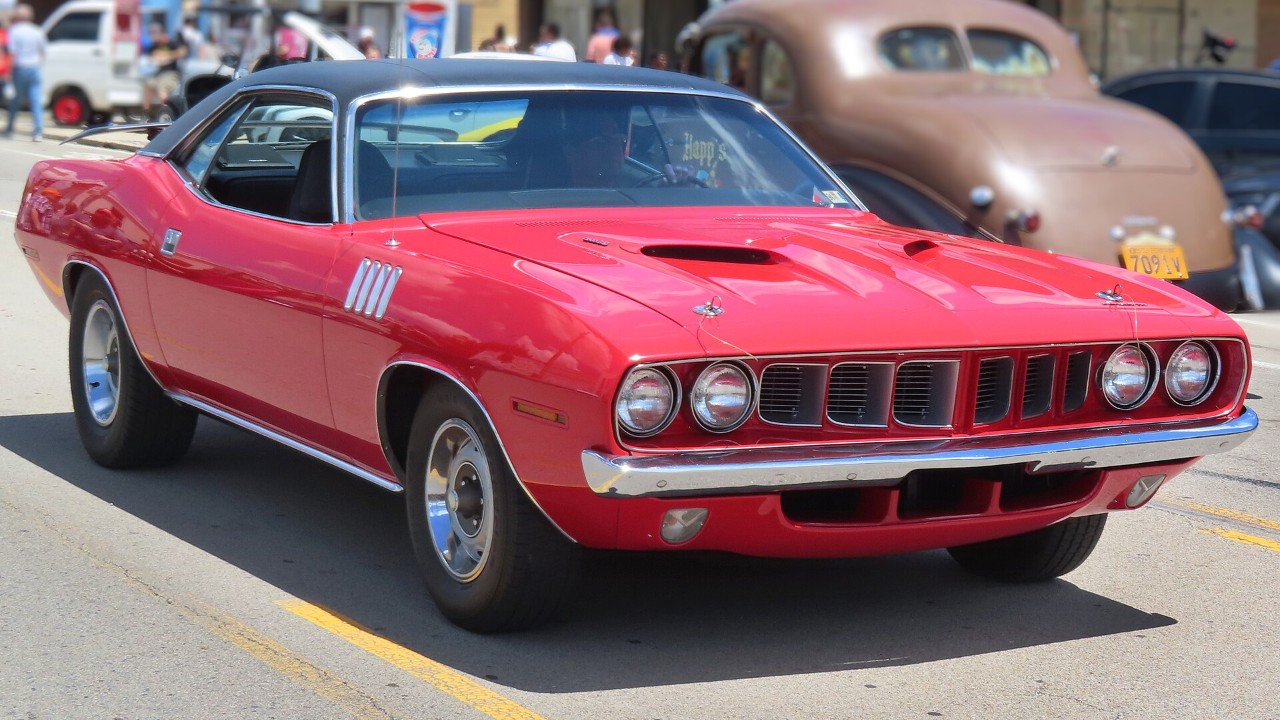
The 1971 ‘Cuda is the easiest Barracuda to spot. It was the only year with four headlights, and the only year with fender “gills” on the ‘Cuda. Those small details make the 1971 car look busier and more aggressive than the 1970 version it replaced.
The engine list still read like a muscle-car menu. For 1971, Plymouth offered a 383 two-barrel at 275 horsepower and a four-barrel at 300. Further up, the 440 six-barrel made 385 horsepower, and the 426 Hemi kept its 425 rating, all in SAE gross figures. That 385 rating for the six-barrel was down from 390 a year earlier. Still, the market was turning against big engines, and Hemi orders were scarce. We’ve covered that shift in how the 1971 Hemi ‘Cuda became one of muscle car history’s shortest stories.
In our opinion, the 1971 hardtop is the best-looking Barracuda of them all, and the gills seal it. Plymouth only gave the ‘Cuda that face for one year, so it never had time to become ordinary. For the bigger picture on Plymouth’s pony car, read why the Barracuda never caught the Mustang.
More from Fast Lane Only