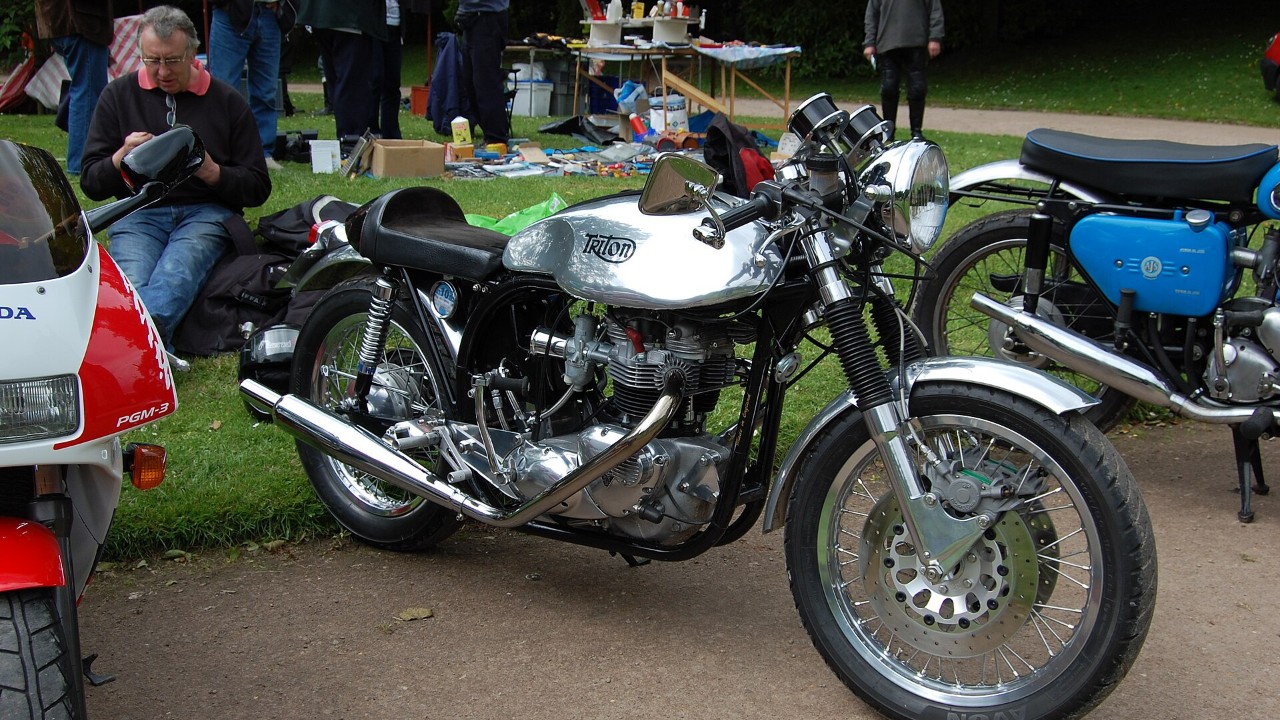
Nobody knows for sure who built the first Triton in the mid-1950s, and that mystery sums up the café racer. It began as a private hot rod on two wheels, put together in sheds from the best parts riders could find. Decades later, factories from Italy to Japan sold the same idea new, from the Moto Guzzi Le Mans to a modern Suzuki V-twin.
Very few of these bikes set out to be famous. Most were built for a few riders who wanted lower bars, a firmer chassis and a little more speed on a Sunday run. Even so, many of them ended up shaping how a fast road bike should look.
These are our picks for the café racers that grew into icons without much fuss. Calling them icons is our opinion. However, the dates, engines and numbers behind each one come from museum, magazine and maker sources, so you can judge the case for yourself.
1. 1960 Triton
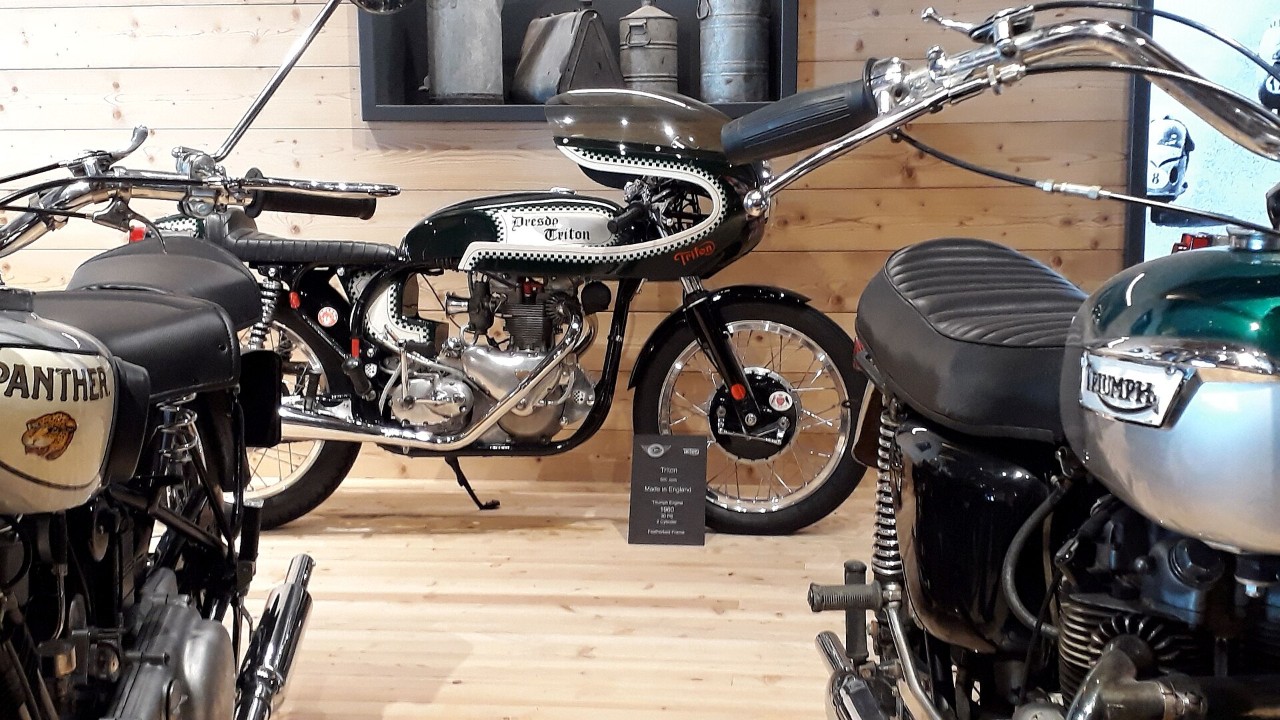
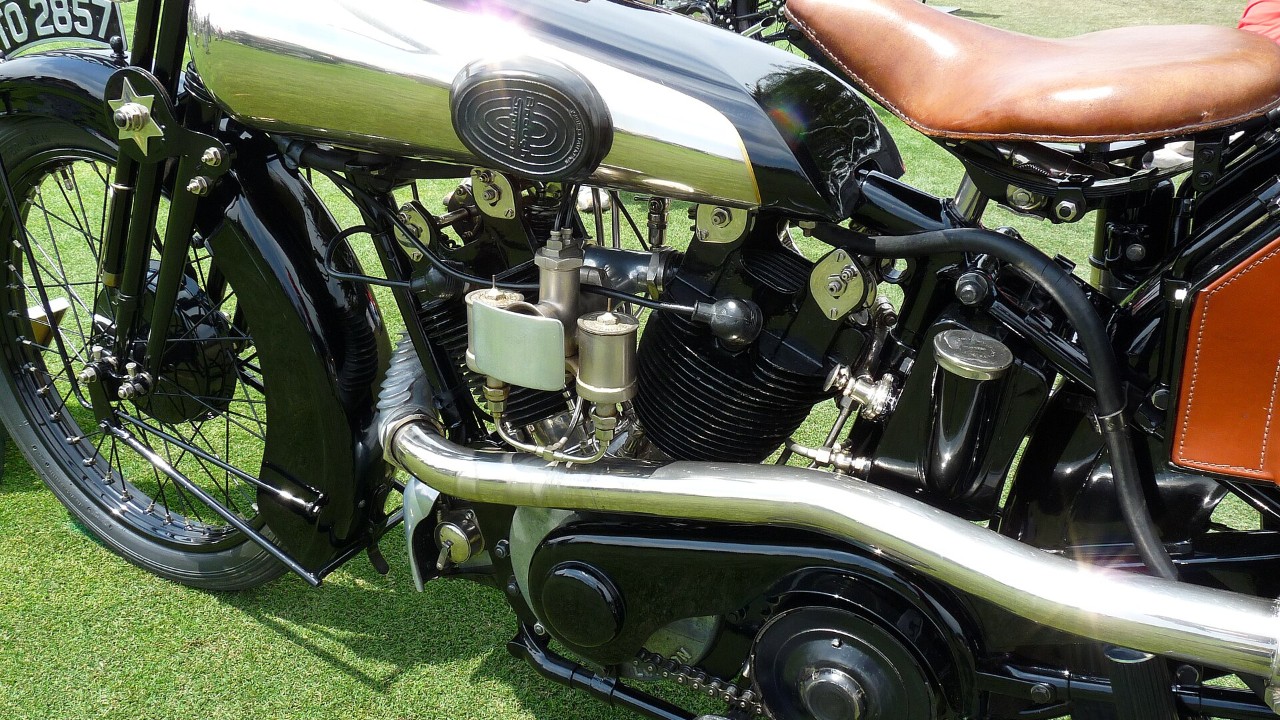
A Triton is a Triumph engine in a Norton frame, and its name simply joins the two. Builders wanted Norton’s Featherbed chassis, widely seen as the best-handling frame of its day. They paired it with Triumph’s parallel twin, often the twin-carburetor Bonneville engine, because it was easy to tune.
Triumph did not like the idea at first. According to Hagerty’s history of the original Dresda Triton, London rider Doug Clark raced a Triton at Silverstone, and Triumph then threatened legal action if he carried on. Later, Dave Degens of Dresda Autos won the 1965 Barcelona 24 Hour race on one at the Montjuïc street circuit. After that win, he built hundreds more. Later, in the 1970s, Dresda went on to build frames for Japanese bikes, including Honda’s CB750.
Our take: the Triton is the template for every café racer that followed. It was never a factory model, yet riders still recognize the formula on sight. Hagerty notes that Triton engines range from 500 cc pre-unit twins to 750 cc unit-construction twins. A 1960 bike like this one comes from the period when the mix of parts was still new, and that makes it the right place to start.
2. 1968 Norton Dominator 650SS
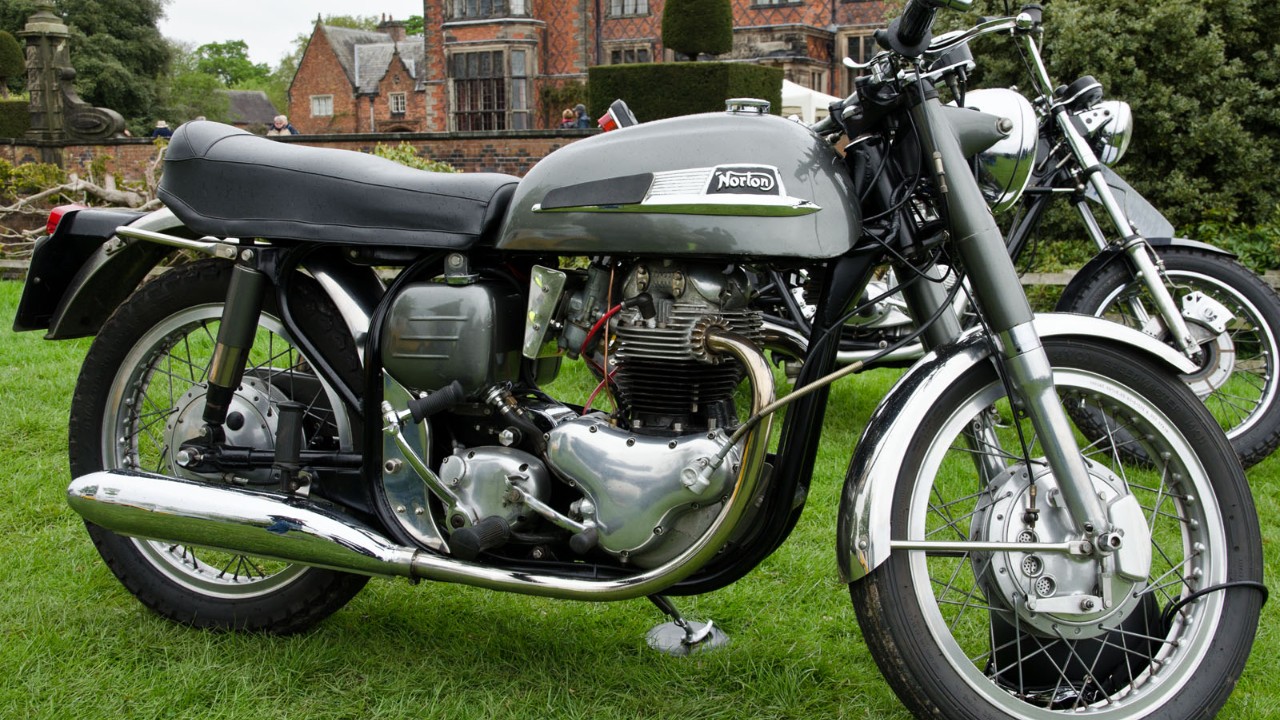
Norton launched the 650SS in September 1961, and it built the bike on its slimline Featherbed frame. The narrower frame pulled the top rails closer together near the seat, so the bike felt slimmer between a rider’s knees. It came with twin carburetors from the start. Earlier, Norton had also built a US-only 650 called the Manxman, from November 1960 to September 1961.
The engine was the star. Its parallel twin displaced 646.44 cc and made 49 bhp at 6,800 rpm. By comparison, Triumph’s T120 Bonneville engine was listed at 46 bhp. In fact, Norton later dropped its 600 cc twins to concentrate on building the 650SS.
In our view, the 650SS became an icon because it gave riders a Triton-style package straight from the factory. There was no swapping of engines and no hunting for frames. You bought it, fitted a set of low bars and rode to the café. For more of the bikes from this maker, see 8 Nortons that quietly became icons. A late 1968 example shows how long the formula lasted.
3. Rickman Enfield Interceptor
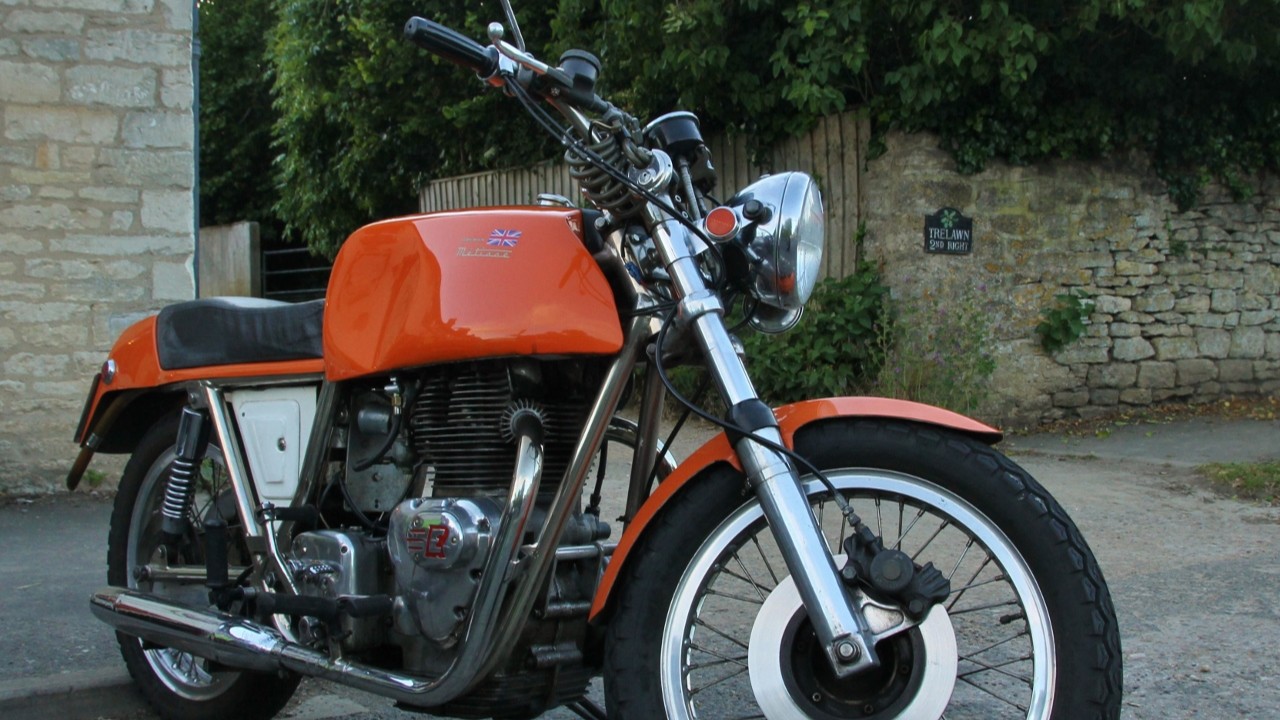
This bike exists because of a stranded batch of engines. In 1969, Floyd Clymer bought Royal Enfield Interceptor engines for Indian-badged motorcycles. Then Clymer died in 1970, after only a few of those bikes were made. Royal Enfield collapsed soon after, and the engines sat in an English warehouse. By then, the company had already closed its main Redditch factory in 1967 and moved Interceptor production to Bradford-on-Avon in Wiltshire.
Brothers Derek and Don Rickman got the job of building frames for them. According to Motorcycle Classics, each bike used a nickel-plated, bronze-welded chrome-moly Métisse frame and Ceriani forks. It also had disc brakes front and rear. The 736 cc twin was claimed at 60 hp, while dry weight was 365 pounds.
The magazine believes only about 137 were made between 1970 and 1972, at $2,100 each when new. Our take: the Rickman Interceptor is the best rescue story in café racing. A dying British engine met a modern race-bred chassis, and the result became one of the most admired specials of its time. If you see one, look at the bare plated frame first.
4. 1983 Moto Morini 3 1/2 Sport
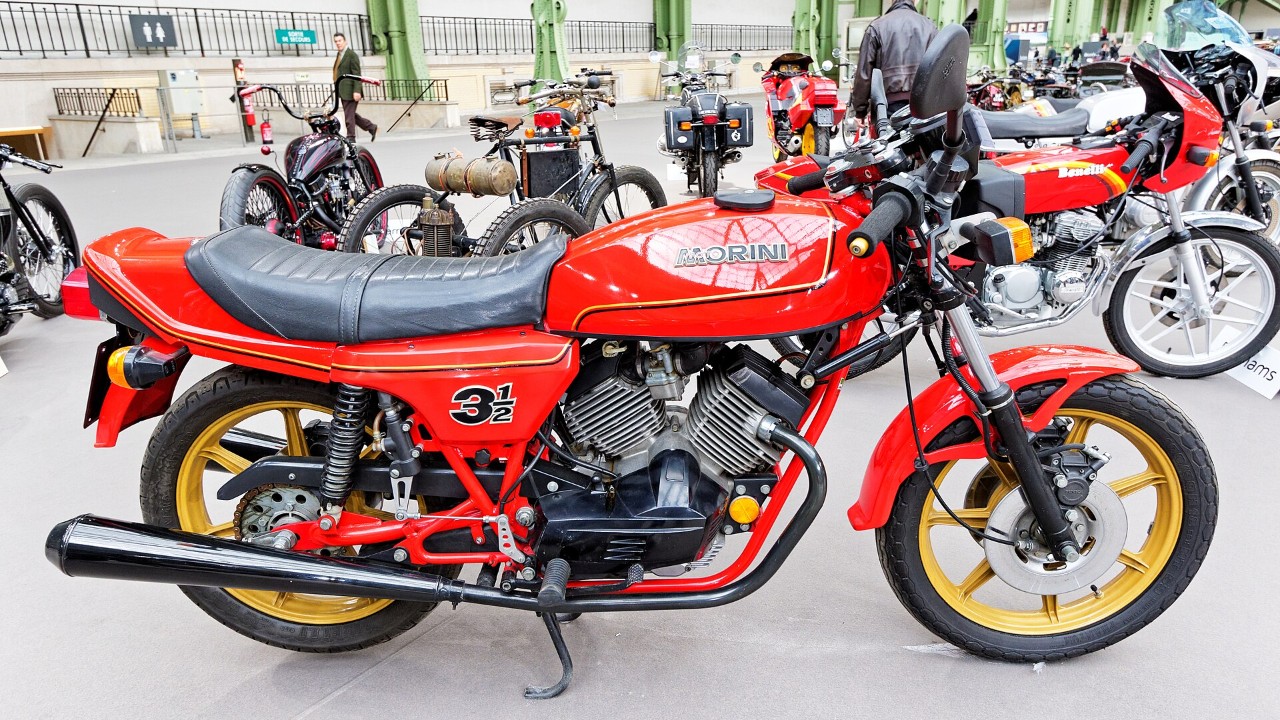
Moto Morini launched its first 72-degree V-twins in 1973. Franco Lambertini designed the engine, and it was clever in all the right places. A small toothed belt drove the camshaft, and Heron-type cylinder heads kept the combustion chamber in the piston crown. Behind it sat a six-speed gearbox.
The Sport version displaced 344 cc and made 39 hp at 8,500 rpm. Meanwhile, the bike weighed about 145 kg, or 319 pounds. Those figures sound modest. Yet a light, narrow V-twin with a good chassis was a joy on a twisting road, and the Sport was built for exactly that.
We think the 3½ Sport became an icon among riders who valued handling over headline numbers. It never had the fame of the bigger Italian twins, and that is part of its appeal. This 1983 bike shows how long Morini kept the design going. In fact, the 3½ Sport name is back in Morini’s current range, now with 349 cc. For more Italian machines worth a look, see 8 Italian motorcycles still worth collecting. Our verdict: a small café racer with a big reputation.
5. Moto Guzzi 850 Le Mans III
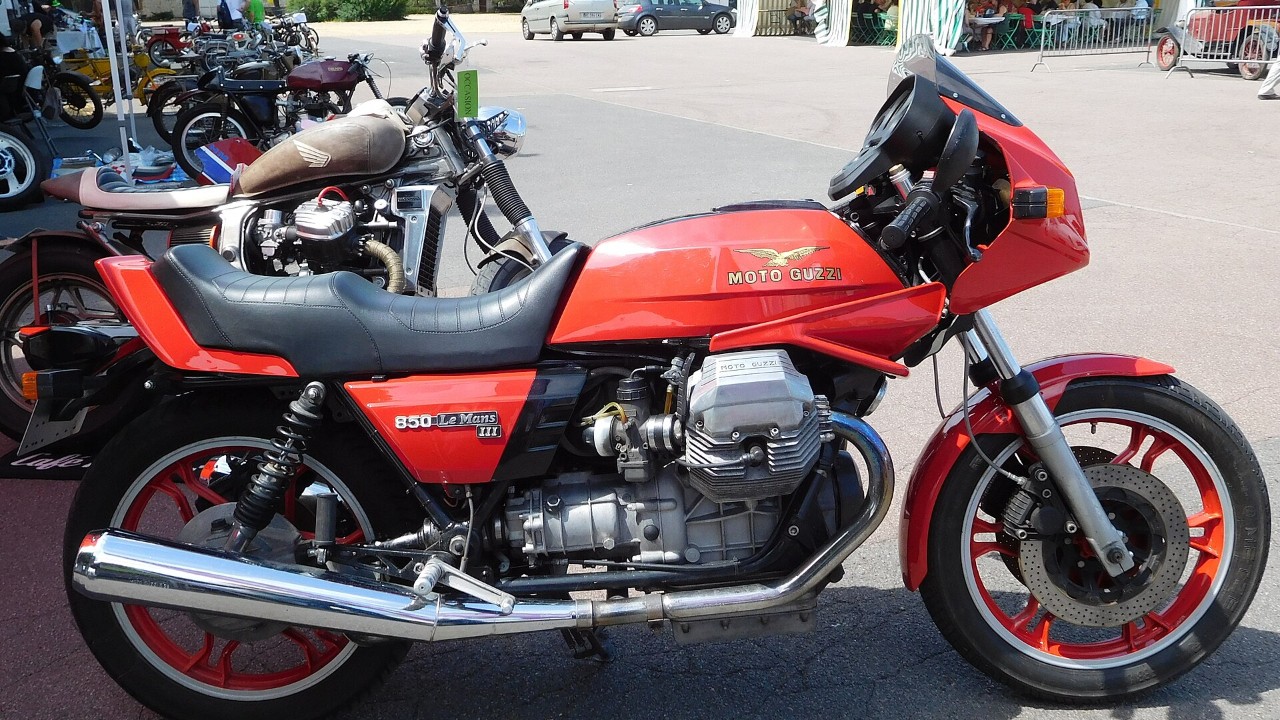
Moto Guzzi first showed the production Le Mans at the Milan show in November 1975, and sales began in 1976. The third version arrived in 1981 after a major redesign. Its tank, seat and fairing were updated, and its cylinder heads and barrels gained squared-off cooling fins.
Britain’s National Motor Museum keeps one in its collection. The museum lists an 844 cc V-twin, a top speed of 130 mph and more than 80 technical improvements over the Le Mans II. It also says this was the first European motorcycle to meet strict new US noise and pollution rules. Inside, riders faced a large white-faced Veglia tachometer set in a rubber binnacle. The museum gives its price when new as £3,339, and the Le Mans 1000 replaced it in late 1984.
Our take: the Moto Guzzi Le Mans III is the most grown-up café racer here. It kept the low bars and the long tank. At the same time, it met the tougher rules of the 1980s without losing its character. That blend of speed and practicality is why the Moto Guzzi Le Mans name still carries so much weight.
6. Royal Enfield Continental GT 650
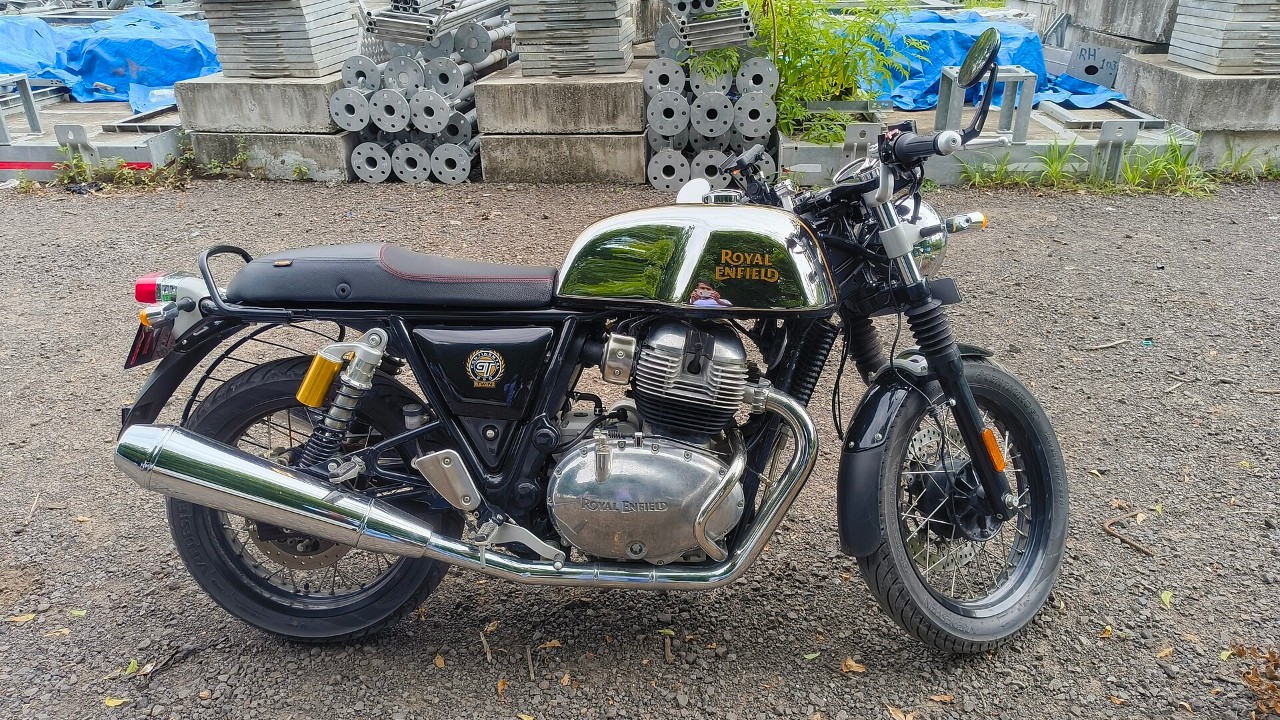
Royal Enfield revived its café racer name with an all-new 648 cc parallel twin. A 2019 review by UK insurance broker Carole Nash lists the engine at 47 hp at 7,100 rpm and 52 Nm of torque at 4,000 rpm. The chassis came from Harris Performance, the British frame maker Royal Enfield bought in 2015.
The details follow the old recipe closely. There are clip-on handlebars, rear-set footpegs and a racier 12.5-litre fuel tank. An optional solo seat completes the look. In addition, twin analogue dials and a Monza-style fuel cap add to the period feel. The review also found the riding position a little more leaned-forward than on the roadster Interceptor 650. According to that review, the UK price started at £5,899.
In our view, the GT 650 earned its place because it made the café racer affordable again. It does not chase huge power. Instead, it offers an air-cooled twin, two shocks and a single front disc, much like the bikes riders modified in the 1960s. We’d call it the most approachable icon on this list, and the most likely to be ridden every day.
7. Husqvarna Vitpilen 701
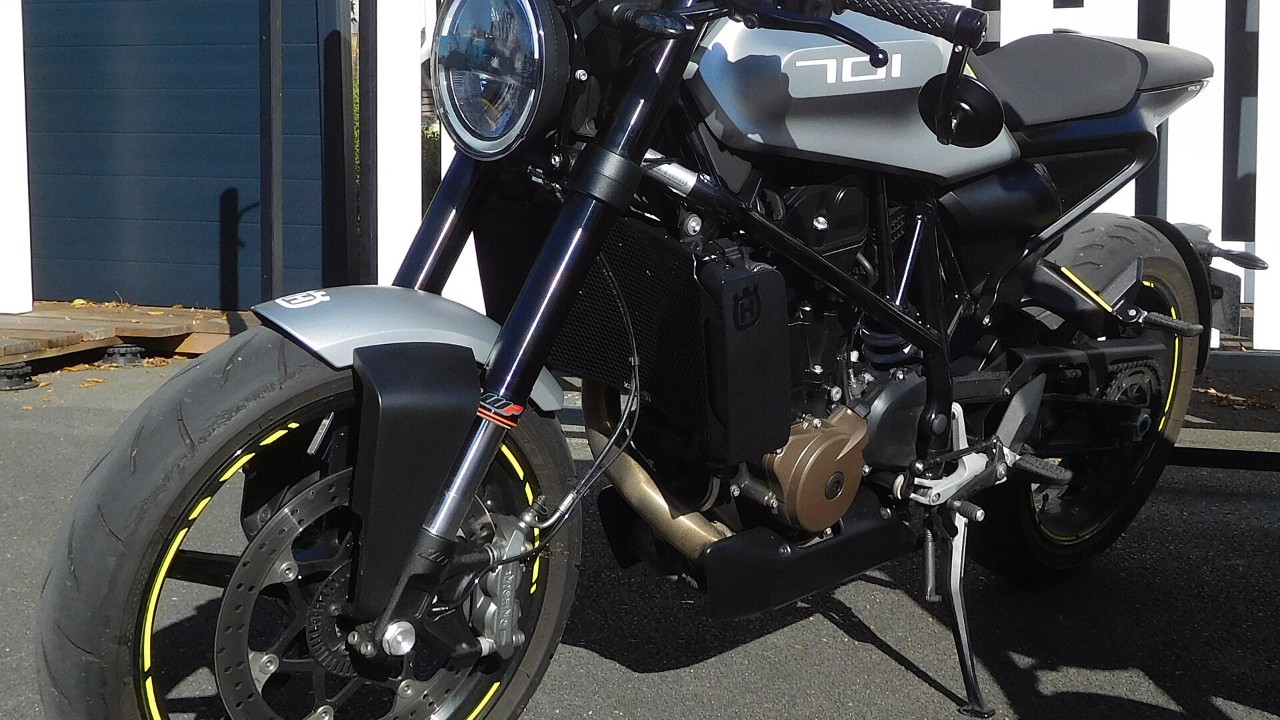
Husqvarna unveiled the Vitpilen 701 as a concept at the 2015 EICMA show in Milan. It showed the production version at EICMA two years later. The name is Swedish for “White Arrow,” and the bike borrowed its base from the KTM 690 Duke.
Rider Magazine’s first look lists a 693 cc single claimed at 75 hp and 53 lb-ft. The frame is chrome-moly steel trellis, and dry weight is 346 pounds. In addition, the bike carries WP suspension, Brembo brakes, switchable Bosch ABS and a slipper clutch. It rolls on 17-inch cast wheels, holds 3.2 gallons of fuel and has a 32.7-inch seat height.
Our take: the Vitpilen is the café racer rethought from a blank page. It uses one big cylinder, a round LED headlight and a short tail. As a result, it looks like nothing else on the road, yet it still follows the old idea of a light bike with low bars. We think that clean design is why it became a modern icon so fast. It also proved that a café racer did not need two cylinders, a long tank or chrome to look right.
8. 2021 Suzuki SV650X
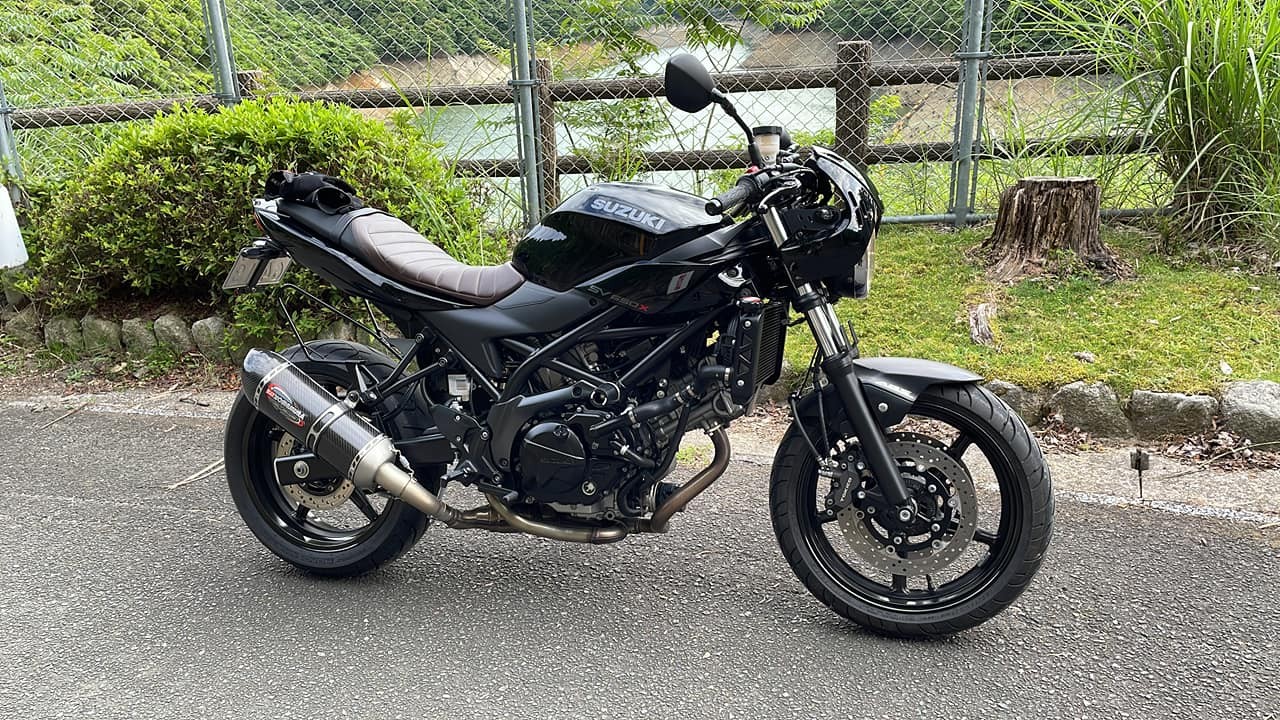
Suzuki first showed the SV650X as a reference model at the Tokyo Motor Show in October 2017. Then it brought a production-bound version to EICMA in Milan that November. According to Suzuki’s own announcement, sales were planned mainly for Europe from 2018.
The bike uses a 645 cc, liquid-cooled, 90-degree V-twin. On top of that, Suzuki added a headlight cowl with slits on both sides, clip-on handlebars and a “tuck-and-roll” seat. The launch curb weight was 198 kg, and the wheelbase measured 1,445 mm. Suzuki also offered fog lamps that mount under the headlight.
We like the SV650X because it took a proven street bike and gave it café manners. Therefore, the X version became an easy way into the style without the fuss of a project bike. This 2021 model shows the formula holding up years after its debut. In our view, it is also proof that a big maker can still take the style seriously. Our verdict: an icon for riders who want the look without the restoration, first shown in Tokyo in 2017.
More from Fast Lane Only