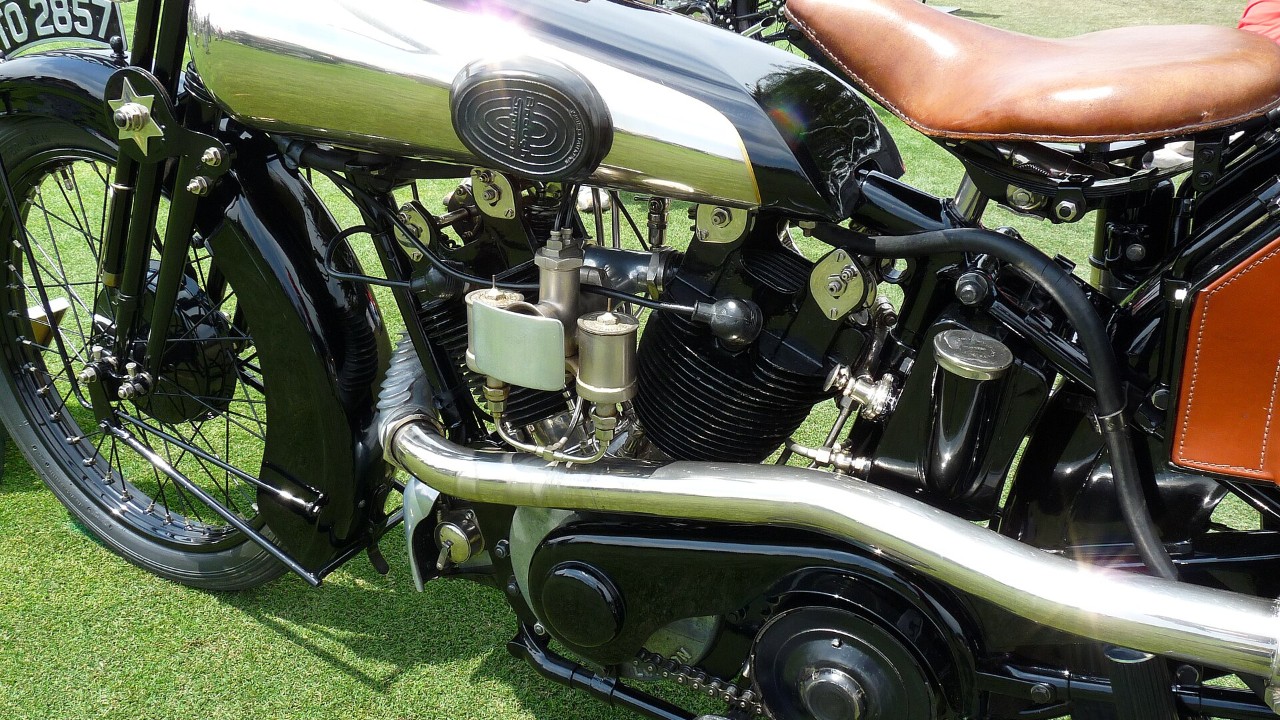
Harley-Davidson’s 1930 VL made about 30 horsepower from a 74-cubic-inch flathead V-twin, and riders shifted it by hand from a lever on the tank. That was normal riding in the early V-twin era, when brakes were optional, suspension was a guess and a top speed of 85 mph felt like flight.
The V-twin went on to define American motorcycling. However, the machines that built its reputation asked a lot of the people riding them. Some had a single band brake at the back. Others came without a front brake at all, or they were race bikes that topped 100 mph on wooden tracks.
These are our picks, twelve V-twins we’d love to see in a museum but would think twice about riding in today’s traffic. “Too dangerous” is our opinion, and it says nothing against the people who built and raced them. The specs, records and prices, though, come from club histories, auction reports and period sources.
1. Flying Merkel
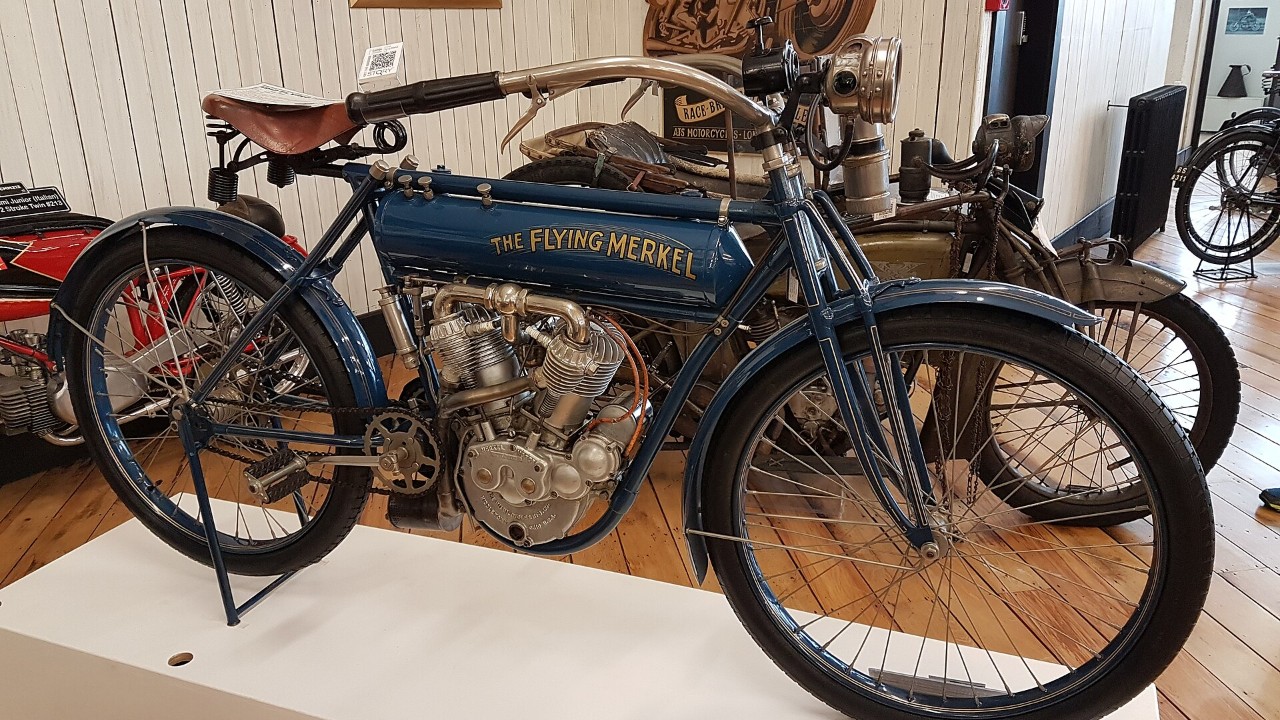
Joseph Merkel built his first motorcycles in Milwaukee, then merged with a Pennsylvania firm in 1908. By 1909, the company called its top model the Flying Merkel. In May 1911, he sold the business to Miami Cycle and Manufacturing in Middletown, Ohio, which painted the bikes in a bright Merkel orange.
The bike was clever for its day. It used a 6-horsepower V-twin, a two-speed gearbox with belt drive, rear suspension and Merkel’s patented spring front fork, an early forerunner of the telescopic fork. According to Hagerty’s history of the brand, it also had a throttle-controlled oiler before Harley-Davidson and Indian offered one. Meanwhile, a road-going Flying Merkel stopped with a single band brake on the rear wheel. Racers often ran with no brake at all.
That’s why it opens our list. In our view, a belt-drive twin with one rear band brake has no business in modern traffic, however pretty that orange tank looks. The same Hagerty piece notes that a 1911 Flying Merkel board track racer brought $423,000 at Mecum’s 2015 Las Vegas sale. At that price, nobody should risk one on the street anyway.
2. 1916 Thor Model O
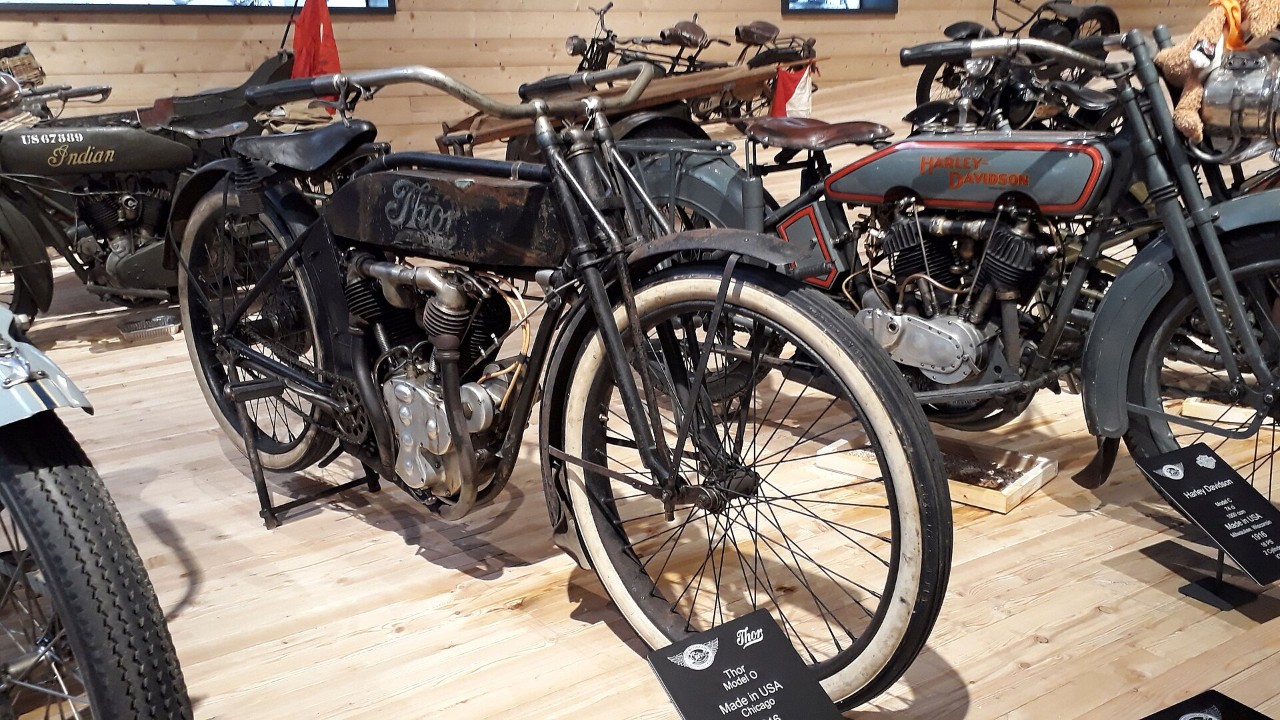
Thor came from the Aurora Automatic Machinery Company of Aurora, Illinois, a bicycle-parts maker that later sold appliances under the same name. From 1901, Thor built engines under license for Indian, and by 1902 it had supplied 150 motors to its partner. Then, in 1910, it launched a V-twin of its own.
The Model O used a V-twin with mechanical inlet valves, a step forward from the automatic valves Thor had used earlier. For 1916, the company also offered a three-speed transmission. Thor had real racing credibility too, because it hired engineer William Ottaway in 1909, and his bikes set national records before he left in 1913.
So why would we hesitate to ride one? Thor’s motorcycle story ended fast. The company stopped making motorcycle engines around 1916, and sales stopped by 1920. As a result, we’d expect parts for a Model O to be very hard to find, and any failure on the road could leave a rider with no easy fix. A century-old twin with that little support belongs, in our opinion, on a short run at a vintage meet with a support truck nearby.
3. 1917 Excelsior Big X
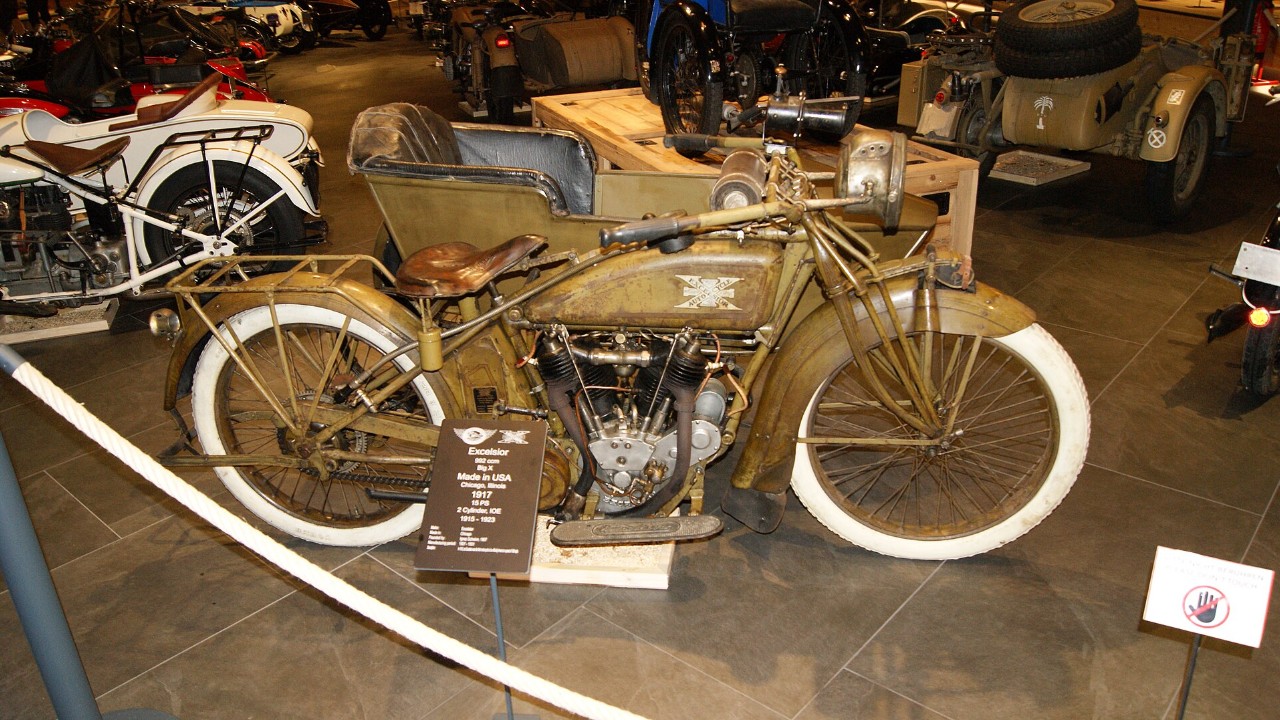
Excelsior built motorcycles in Chicago from 1907 to 1931. In 1912, bicycle maker Ignaz Schwinn bought the company, and five years later he added Henderson too. The Big X became Excelsior’s mainstay, with a 61-cubic-inch, 1,000 cc inlet-over-exhaust V-twin.
Early Big X machines used belt drive. Later, Excelsior moved to a two-speed and then a three-speed gearbox, and a few 1920s bikes even got a 74-cubic-inch engine. The model stayed in production until 1924, when the Super X replaced it.
The Big X makes our list because of its sheer size and age. In our opinion, a 1,000 cc twin from 1917 with period brakes and tires feels like a lot of engine for very little chassis. Excelsior also had a fast reputation, and an Excelsior was officially timed at 100 mph in 1912. That’s an impressive feat, but it also tells you how hard these bikes were meant to run. Survivors are scarce now, much like the machines in our list of American motorcycles that rarely turn up at auction. The story ended abruptly, though. In the summer of 1931, Schwinn told his department heads, “Gentlemen, today we stop.”
4. 1920 Indian Powerplus
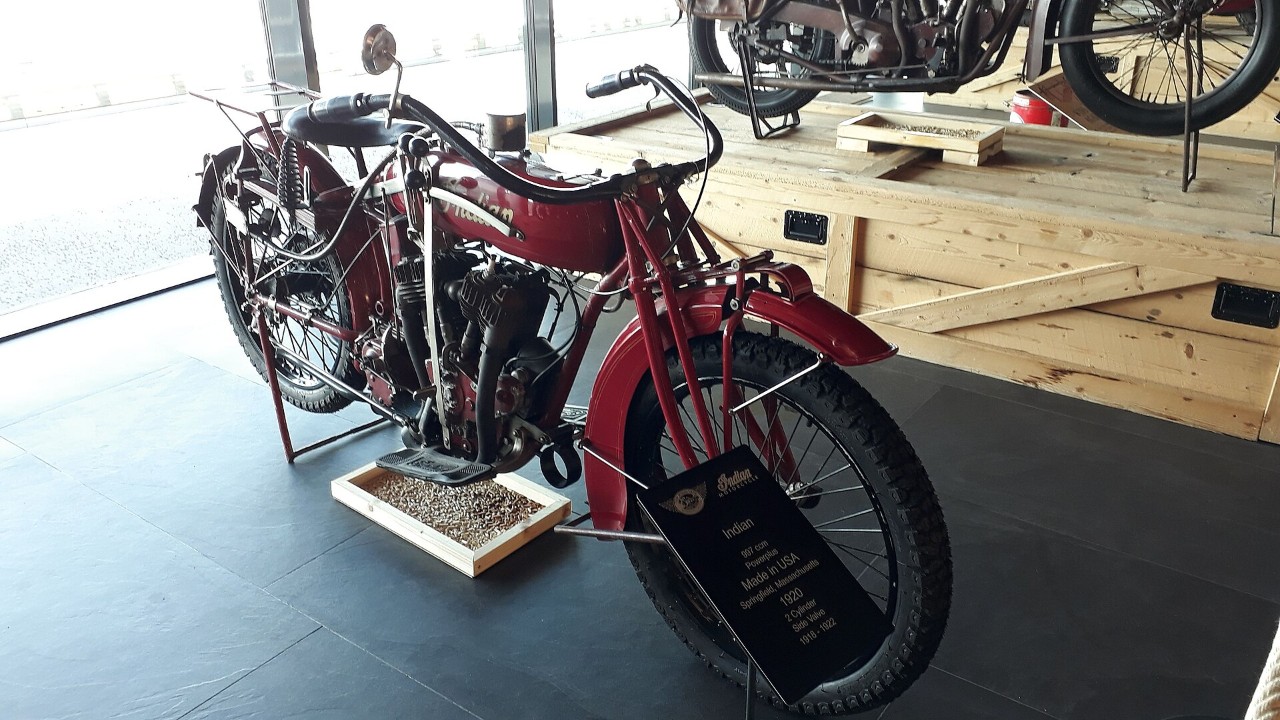
Indian built the Powerplus from 1916 to 1924 in Springfield, Massachusetts. It was Indian’s first flathead, a 42-degree side-valve V-twin of 61 cubic inches. From 1920 to 1922, Indian also offered a version of about 72 cubic inches. Output was roughly 16 horsepower.
The chassis tells the danger story. The Powerplus weighed about 430 pounds wet, yet it had no front brake. Instead, the rear wheel carried an internal expanding drum plus an external band brake. Riders shifted a three-speed gearbox by hand and worked a clutch with either hand or foot.
We’d still call the Powerplus a landmark. Its optional Cradle Spring Frame gave the rear wheel a swingarm with leaf springs, which was advanced for the time. But in our view, stopping a 430-pound machine with rear brakes only is a real gamble in modern traffic. Today, a Powerplus is better suited to vintage runs with experienced riders. Indian eventually replaced it with the Chief. If you buy one, budget time to learn its hand-shift and foot-clutch routine before you ride it anywhere busy.
5. 1923 Harley-Davidson Eight-Valve racer
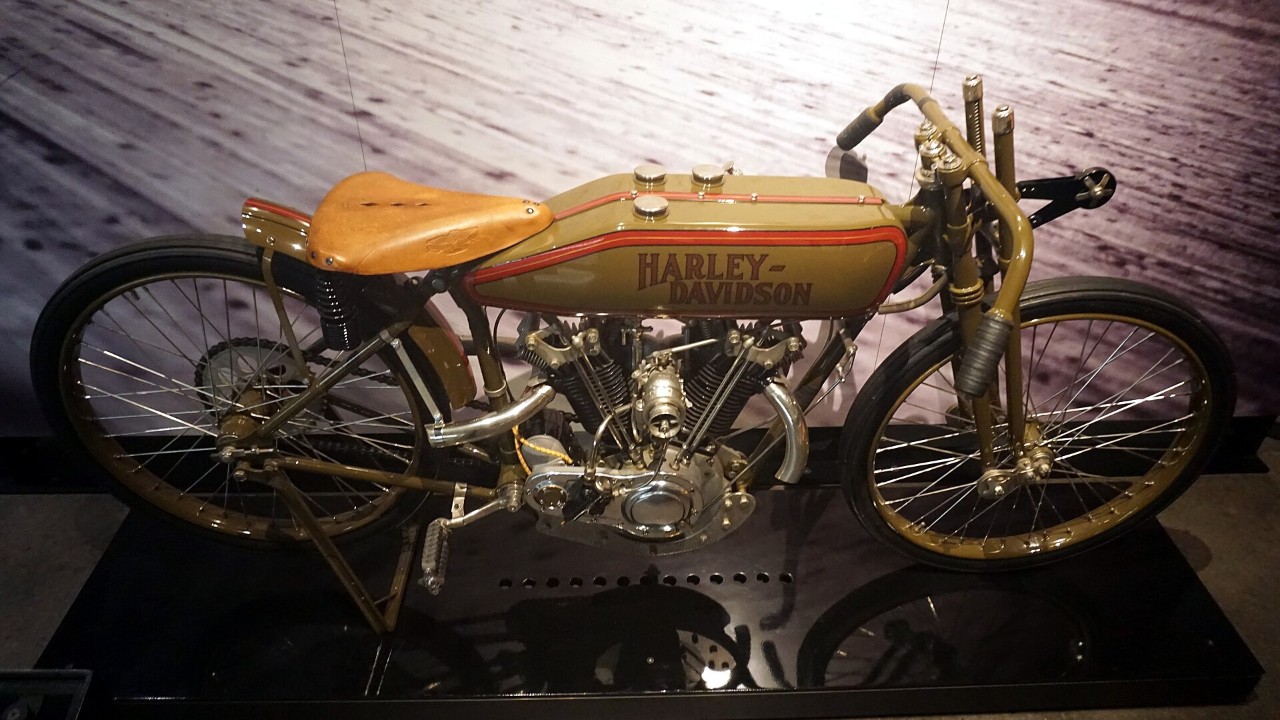
Harley-Davidson built its eight-valve racer for one job: winning. According to SlashGear’s history of the bike, rules required racing models to be offered for sale, so Harley listed the Model 17 eight-valve from 1916. The price was $1,500, roughly four times that of comparable bikes, and SlashGear suggests that price discouraged street use.
The same report cites MCNews as saying fewer than 50 were ever built. On its debut, it won the 1916 Dodge City 300-mile race. Then, in 1921, it became the first motorcycle to win a race at an average above 100 mph, and it collected its final wins in the late 1920s.
Our verdict is simple. A race-only machine built to average more than 100 mph on 1920s tracks is not something we’d take on a modern road. SlashGear also quotes Drive Mag calling it demanding even for riders used to triple-digit speeds. Few survive, and SlashGear notes, citing Shannons, that a 2015 sale in Australia brought A$600,000, about $407,000. So most people will only ever see one in a museum. That’s probably where it belongs.
6. 1928 Brough Superior SS100 Alpine Grand Sport
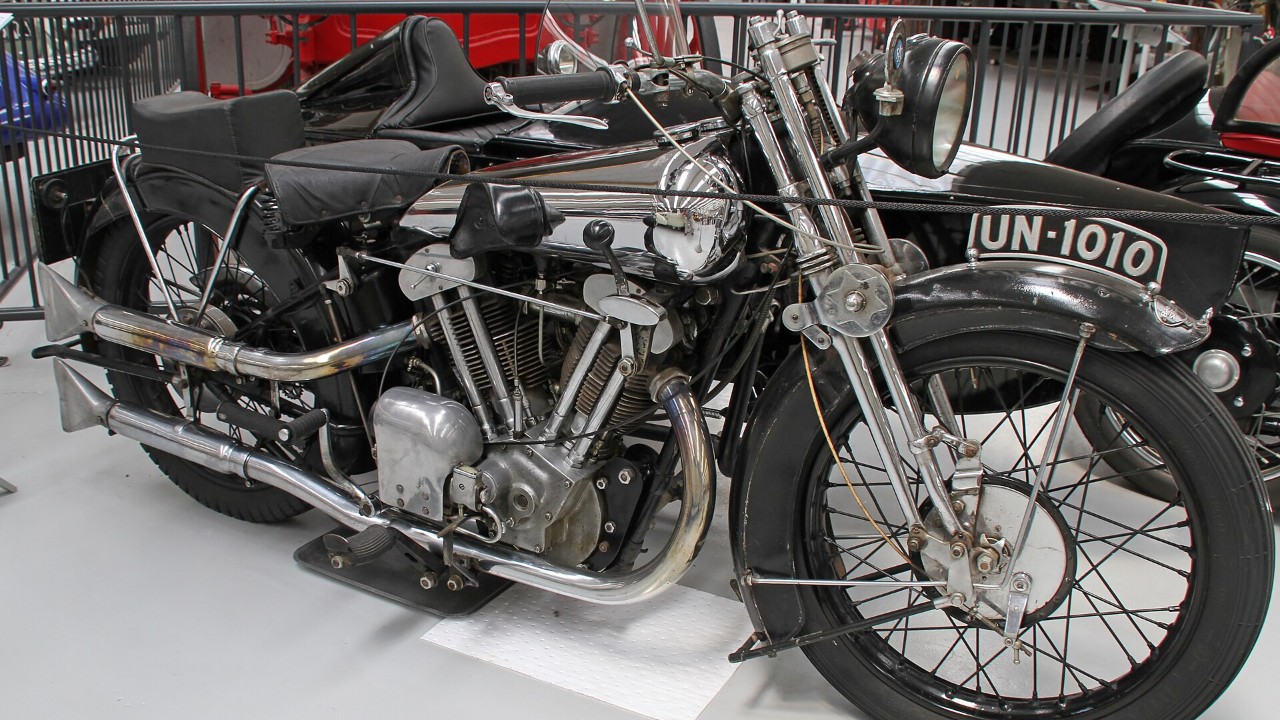
George Brough designed the SS100 in Nottingham, England, in 1924, and he sold it as “the Rolls-Royce of Motorcycles.” Brough Superior promised every SS100 could reach 100 mph. In 1925, one cost £170, and Brough built 69 that year.
The Alpine Grand Sports version arrived at the 1925 Motorcycle Show as an SS100 with full touring equipment. Early bikes used a twin-cam JAP V-twin, and Brough switched to Matchless engines in 1936. He also built his own front fork, developed from Harley-Davidson’s design and made by the Castle Fork and Accessory Company for strength and light weight.
In our opinion, the SS100 is the most elegant bike on this list, and that’s part of the problem. A promised 100 mph from a 1920s chassis invites riders to use it. T. E. Lawrence owned several Broughs, and he bought one of the first SS100s in 1925. Today, an Alpine Grand Sport is a collector’s treasure. If you’re lucky enough to own one, we’d keep the speeds sensible, since 1920s brakes and tires were never meant for the pace the engine can reach.
7. 1928 Indian 101 Scout
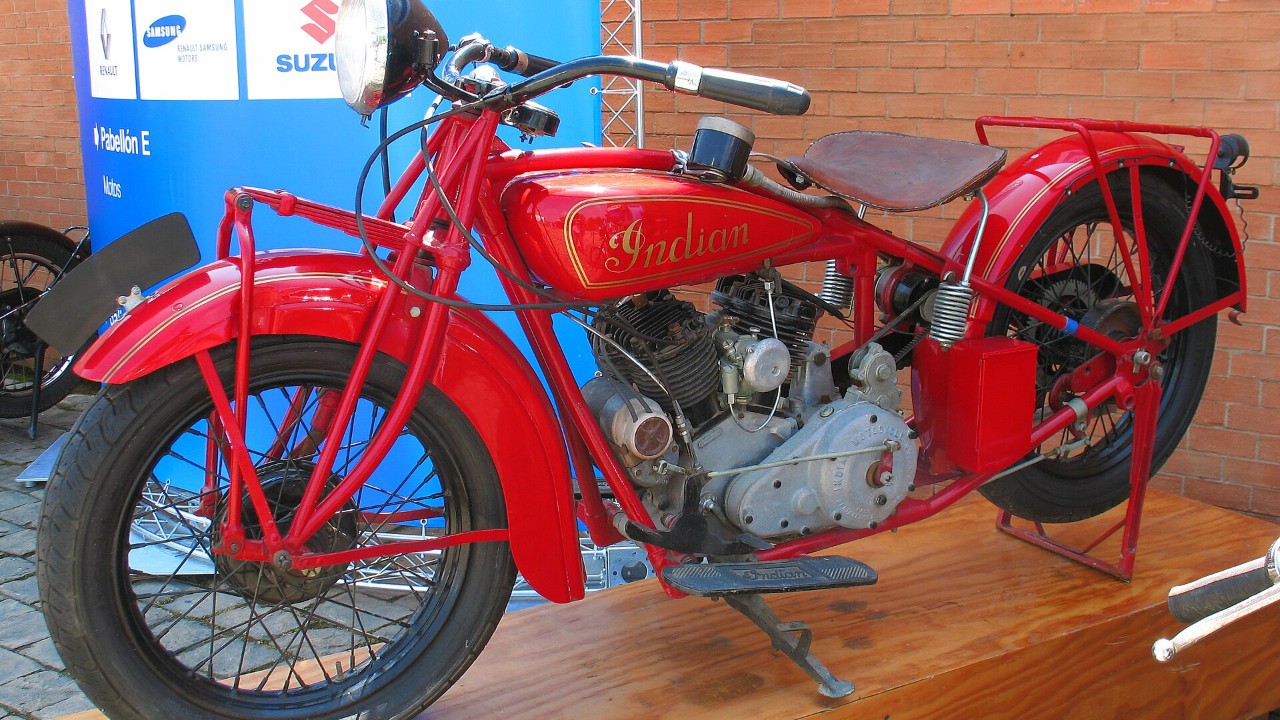
Charles B. Franklin designed both the original Indian Scout and its successor, the 101, which replaced it in mid-1928. The 101 used a longer wheelbase, more fork rake and a low seat height of 26¼ inches. Most carried a 45-cubic-inch V-twin, though a rarely advertised 37-cubic-inch version also existed.
This one is different from the rest of the list. The Scout gained a front brake in early 1928, and the 101 was known for its handling. Racers, hill climbers and trick riders loved it. In fact, the 101 still turns up in wall of death shows, where riders circle a vertical wooden drum.
So why is it here? Because its most famous modern job is riding sideways on a wall. In our view, that tells you how much skill these bikes ask for. Even so, the 101 has often been called the best motorcycle Indian ever made. Indian dropped it after 1931, when it moved to a shared frame for its 1932 range, because the 101’s unique chassis cost as much to build as the bigger Chief. If you want an early Indian to ride, though, the 101 is the one we’d pick.
8. 1932 Harley-Davidson VL
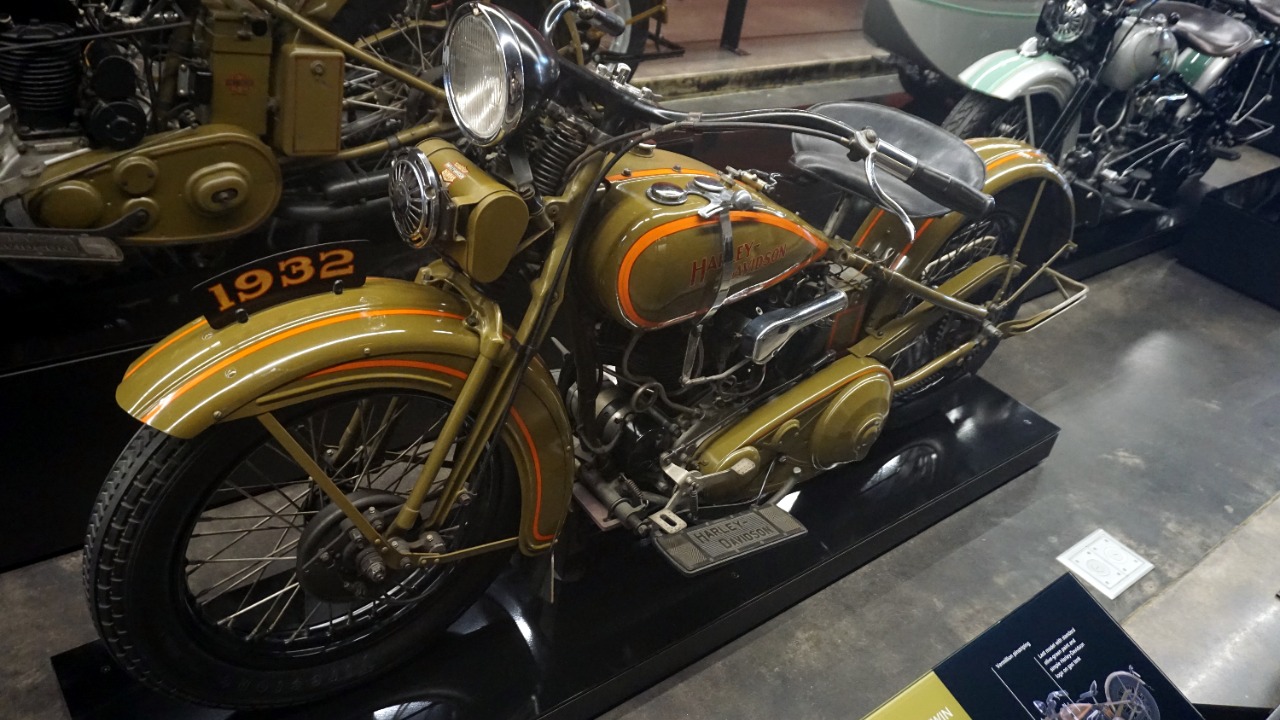
Harley-Davidson’s VL arrived for 1930 with a 74-cubic-inch, 1,213 cc flathead V-twin. It used removable cast-iron heads and an enclosed primary drive. It also had girder forks, a rigid hardtail frame, a sprung leather seat, a tank-mounted hand shift and a kick-start.
The launch was rough. A review at Bike-urious says the new motor “didn’t work very well,” and that over half of the first-year flatheads had to be rebuilt by dealers. Motorcycle Classics adds that Harley recalled the first two months of production. A quick factory redesign saved the model, and the VL went on to make about 30 hp and an honest 85 mph.
By 1932, the VL was sorted, but it was still a heavy machine with a rigid rear end and a hand shift. In our opinion, juggling a tank shifter in modern traffic takes more practice than most riders have. The Depression hit hard too. According to Motorcycle Classics, Harley sold just 3,703 motorcycles in 1933, down from about 21,000 four years earlier.
9. 1946 Harley-Davidson WR racer
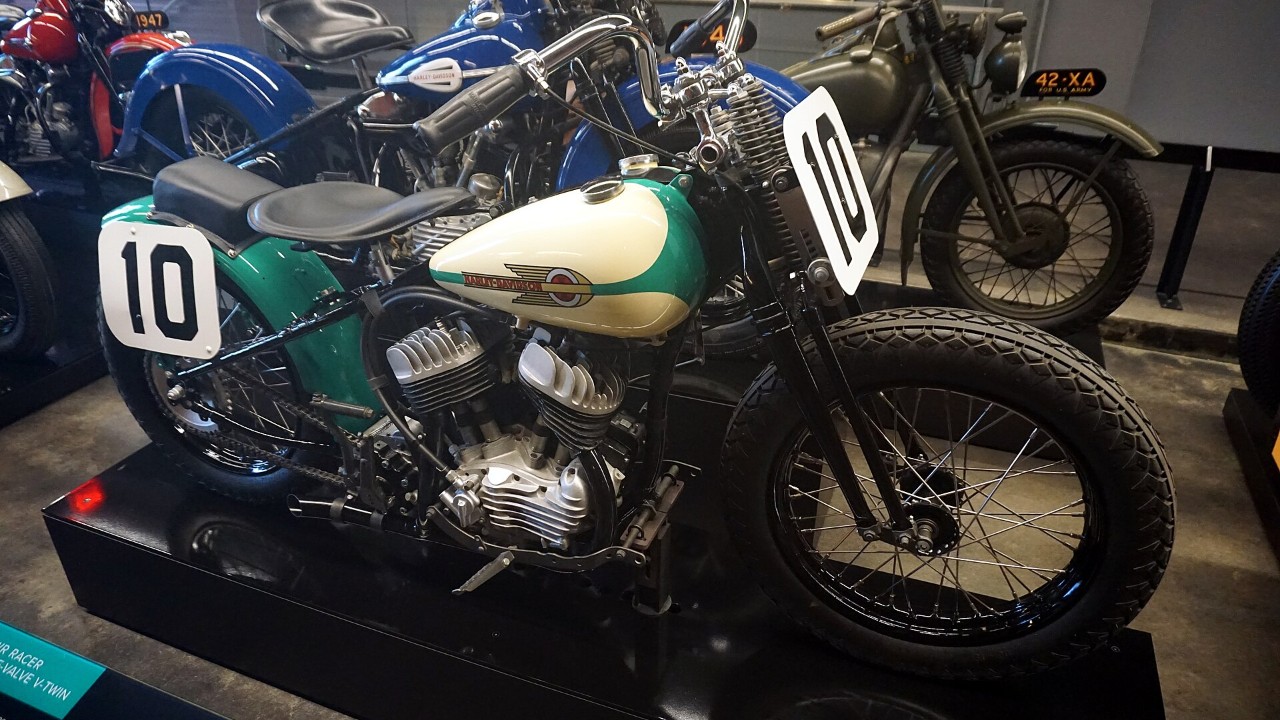
The WR was Harley-Davidson’s race-only flathead, built from 1941 to 1952. It made 35 horsepower and became the direct ancestor of the famous KR racer. It raced in the Class C era, when rules allowed side-valve engines up to 750 cc.
Class C was designed so amateurs could buy the same machines as the factory team. Harley and Indian both favored flathead engines under that formula, so a privateer could line up on a WR next to a factory rider.
We include it because it was never meant for the street. Harley built it for flat-track sliding, not for traffic. Also, its successor, the KR, listed no brakes at all in its racing form. Our take: a WR is a joy to watch at a vintage dirt-track event and a poor choice for a ride to the store. Its legacy is real, though, because the KR it led to won every Class C race in 1956. The KR also took 12 of 15 AMA Daytona 200 championships from 1955 through 1969.
10. 1952 Vincent Rapide Series C
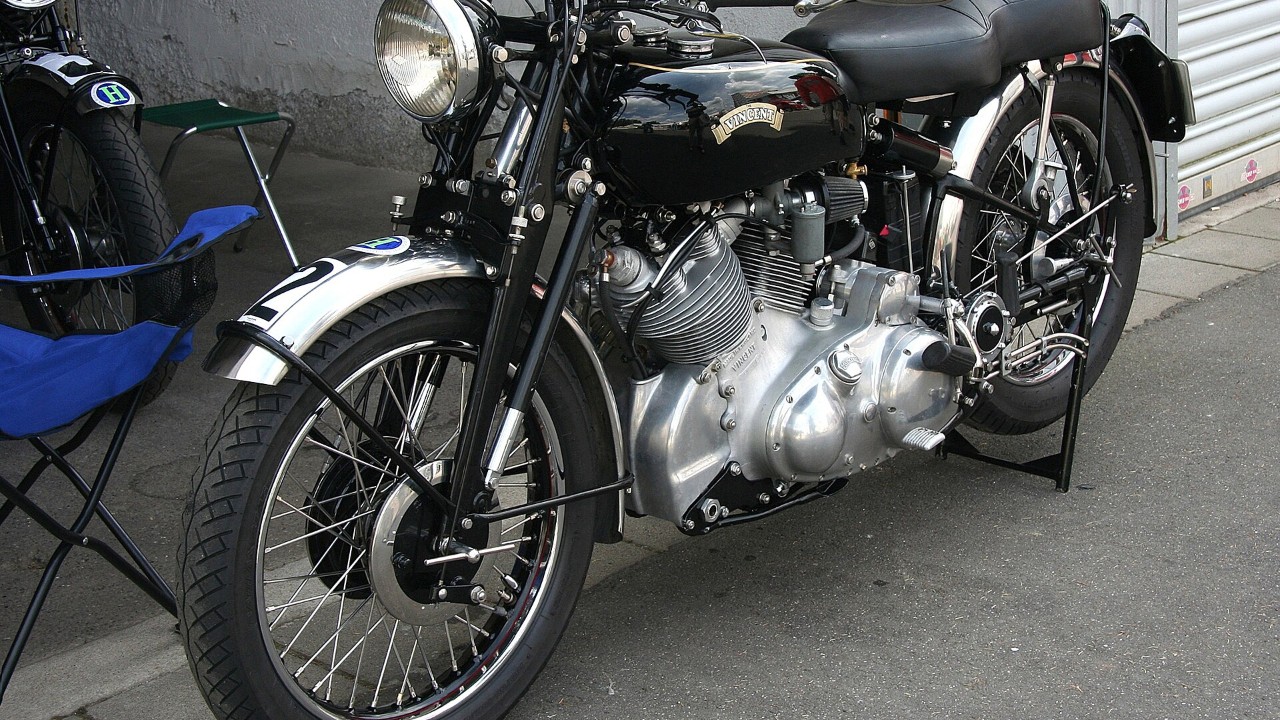
Vincent introduced the Series C Rapide in 1948. It differed from the Series B mainly in its front suspension, because Vincent replaced the old girder fork with its own Girdraulic design. A centrally mounted hydraulic damper controlled its movement.
The engine was a 998 cc, 50-degree V-twin with roughly 45 horsepower. It also served as a stressed member of the chassis. That design reduced the frame to an upper member, a box-section backbone that doubled as the oil tank. The Rapide’s estimated top speed was 110 mph, and it stopped with dual 7-inch drum brakes front and rear.
We think the Series C is the most modern bike in this group, and it’s a superb machine. But in our view, 110 mph on 1950s drum brakes and tires is the kind of speed that modern riders underestimate. That’s the reason it lands here. If you own one, make brake and tire maintenance your top priority. The Rapide also has a direct sibling on this list, the race-bred Black Lightning.
11. Vincent Black Lightning
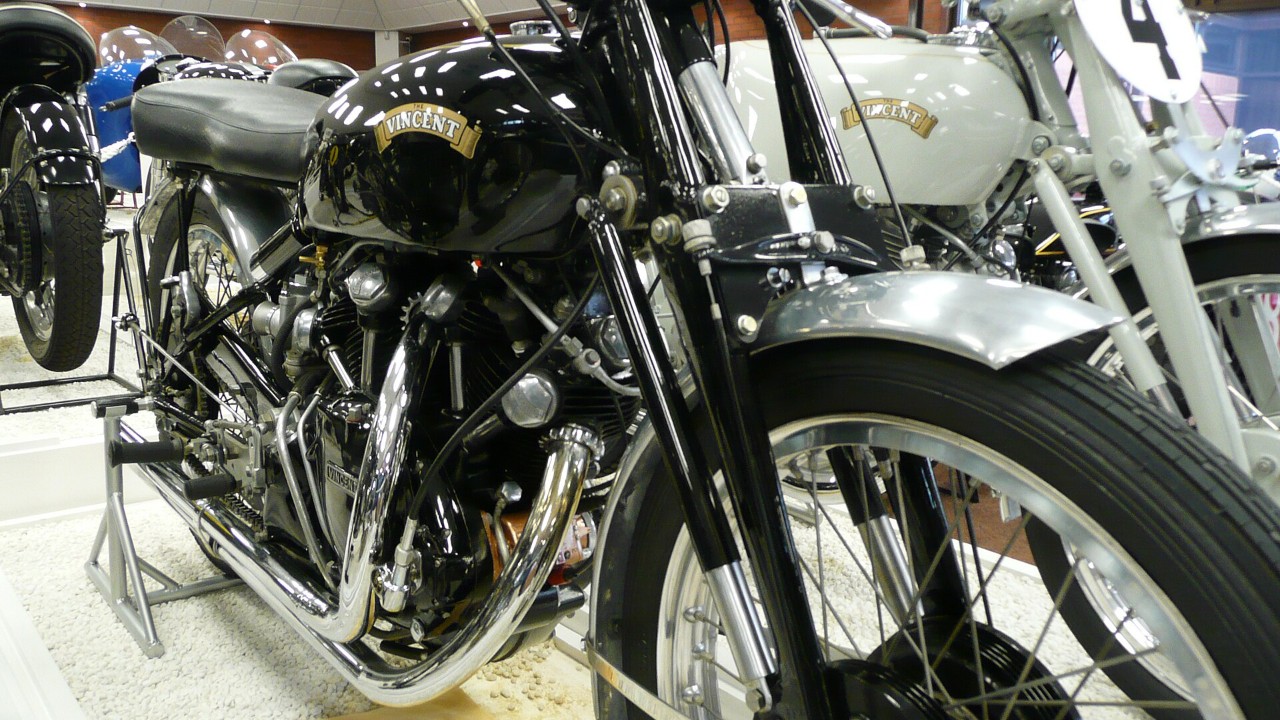
Vincent built the Black Lightning from 1948 to 1952 as a racing version of its 998 cc twin. It made 70 bhp and could reach 150 mph. To save weight, Vincent used magnesium-alloy parts, alloy rims, aluminum mudguards, rear-set controls and a solo seat.
On September 13, 1948, Rollie Free rode one at the Bonneville Salt Flats, lying flat in swimming shorts. His record return-run average was 150.313 mph, and the photo became famous as the “bathing suit bike.” Later, in January 2018, Bonhams sold a 1951 Black Lightning in Las Vegas for $929,000, according to Cycle News. That bike had set an Australian speed record of 141.5 mph in 1953 with rider Jack Ehret.
Our verdict: the Black Lightning is the fastest bike here and the one we’d least like to ride on a public road. A 150-mph machine with 1950s brakes and suspension is a race tool, not a commuter. For more machines in that mold, see our list of vintage motorcycles that were faster than anyone admitted. Only 31 were built, and 19 are said to survive. In other words, almost no one will get the chance to find out.
12. 1969 Harley-Davidson XLCH Sportster
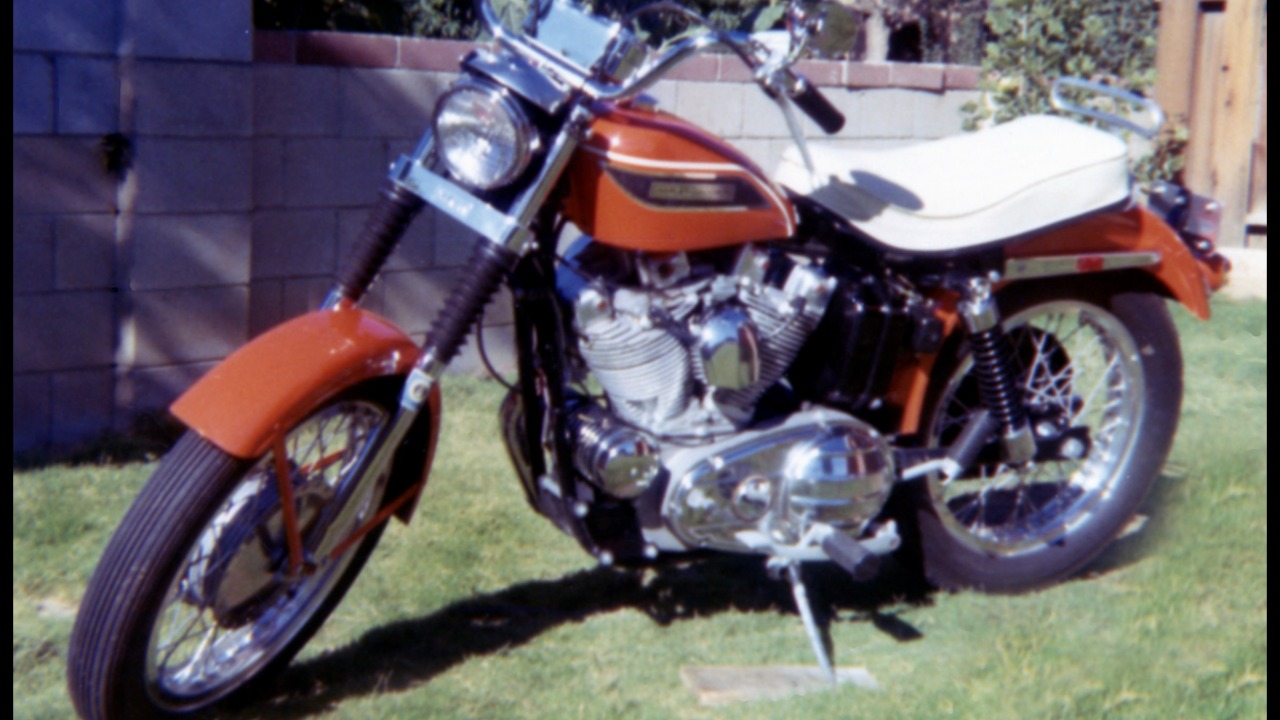
Harley-Davidson built the 883 cc XLCH Sportster from 1958 to 1971. Riders gave it the unofficial nickname “Competition Hot.” In 1967, Harley introduced electric starting on the touring XLH, while the stripped-down XLCH stayed a kick-start bike. In our view, that was the point, because it kept the bike simple and light.
The XLCH was the Ironhead Sportster in its leanest form. It belonged to the Sportster family that grew to 1,000 cc in 1972, when Harley claimed 61 hp for the bigger engine. The 883 version came before that, with fewer comforts than the XLH.
Why include a 1969 Harley-Davidson? In our view, a kick-start-only Ironhead with period brakes and suspension asks for a lot of commitment from a modern rider. It’s far more usable than a Powerplus or a Flying Merkel, of course. But if you buy one, learn the kick-start technique from someone experienced and keep the brakes in perfect order. The kick-start XLCH outlived this era, too, because 1979 was the last year Harley built one, with only 141 made.
More from Fast Lane Only