Few things sink your stomach like a repair estimate with a whole engine on it. You drop off your Toyota Tundra for a check before a road trip, and you drive out wondering whether it is about to cost more than it is worth.
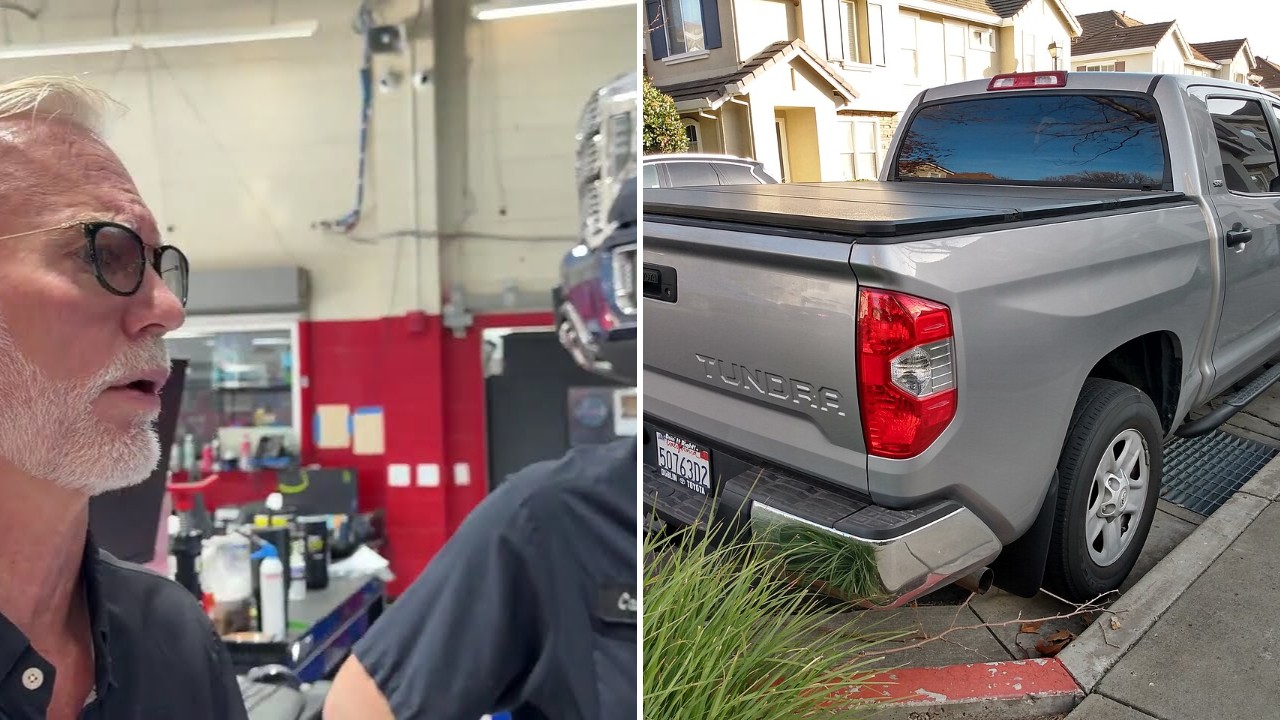
That is how one Toyota Tundra owner ended up at the shop of the mechanic behind @DavesAutoCenterCenterville. Dave says another shop had quoted the 2016 Toyota Tundra for a new engine and a new front differential, a bill he puts at more than $25,000. The owner wanted a second opinion before signing off.
The Tundra came in under its own power, and that was the first clue. Dave started it, listened, and checked the oil level. It was full. “Unless it’s got a hole in the side of the motor for an oil leak, it probably doesn’t need a motor,” he says.
What The First Shop Wrote Up
Dave read the earlier inspection on camera without showing the other shop’s name. He says the ticket listed a front CV axle at $5,700, which the shop later told him covered the entire front differential carrier assembly. The engine line looked like about $19,000 to him, though he notes the printout was hard to read.
According to the paperwork, the engine work came from a head gasket leaking slowly inside the engine, plus an oil leak at the valve cover. Meanwhile, the owner had a complaint of his own: a clunking noise in four-wheel drive that had not been there before.
According to Dave, the truck had never overheated or shown any warning signs. The owner had simply asked for a look-over before a road trip.
“This is so disgusting to me.”
Dry Underneath, And A Bent Dust Shield
With the truck on the lift, Dave and his technician went looking for the leaks. One side of the engine was dry. The other had what Dave calls sweating, a light film at the valve cover with no drip. To get a better look, they pulled off the skid plate, and the area behind it was dry too.
Next, they put the Tundra in four-wheel drive and ran the wheels on the lift. Dave heard a metallic scraping and traced it to a bent dust shield near the front driveline. He thinks a rock may have hit it. He pushed it back into shape with a screwdriver, and the noise went away.
“What was the correction? 30 seconds with the screwdriver.”
He then checked the axle the first shop flagged. The right side had no play. The left side moved slightly where it enters the differential, but there was no leak. Dave explains that worn bushings there usually show up as a leaking seal, and this one was dry. He asked his technician to measure it with a dial indicator and note it on the ticket.
The Phone Call
Dave also called the other shop and spoke with its owner, whom he says turned out to be a former employee of his. The shop’s position was that the axles had a significant amount of play where they enter the carrier, and that it recommended engines rather than head gaskets depending on the vehicle.
Dave did not agree. He told the owner on the phone that he would have replaced a head gasket if one were truly leaking, rather than put a whole engine in a Toyota. On this truck, he found neither a coolant leak nor a low coolant bottle.
What The Toyota Tundra Actually Needed
The owner told Dave he bought the truck at about 35,000 miles and had never flushed the fluids. So Dave’s recommendation was the routine maintenance a truck of this mileage is due for: coolant, differential, transfer case and transmission fluid, brake fluid, filters and spark plugs.
His only other note was to snug the valve cover bolts where the light seepage showed. No engine and no front differential.
What To Do When A Quote Sounds Too Big
- Ask what the failure looks like. A real leak leaves wet parts, drips or a dropping fluid level that someone can show you.
- Ask for photos or video of the problem, not just of a gauge or a test screen.
- Watch your own fluid levels. If you never add coolant or oil, an internal leak is a claim worth questioning.
- Get a second opinion on any engine or transmission replacement before agreeing to it.
- Keep up with fluid changes. Skipped maintenance is a cheaper problem to fix than most of what a big quote lists.
Where Things Stand
The Tundra left with a list of routine services instead of a five-figure repair. Dave says the owner had to wait three to four months for an opening at his shop, and he thinks the wait was worth it.
“Get a second opinion.”
The owner told Dave they love the truck and want to keep it for a long time.
More from Fast Lane Only