The Studebaker Big Six arrived in 1918 with a 354-cubic-inch six and a price that put it in Buick territory. It helped establish Studebaker as a maker of well-engineered cars. Yet today, many people picture just two Studebaker shapes: the bullet-nose of the early 1950s and the Avanti.
That leaves a lot of history out. Over five decades, Studebaker built big sixes, oddly named mid-size cars, wartime sedans, slick hardtops, two-door wagons and a compact that briefly saved the company. Many of those cars were everyday transport, so plenty were simply used up.
These seven are our picks: the Studebakers we think almost no one has seen in the metal lately. The engines, prices and production figures come from period records, auction catalogs and marque histories. The choices and verdicts, however, are ours.
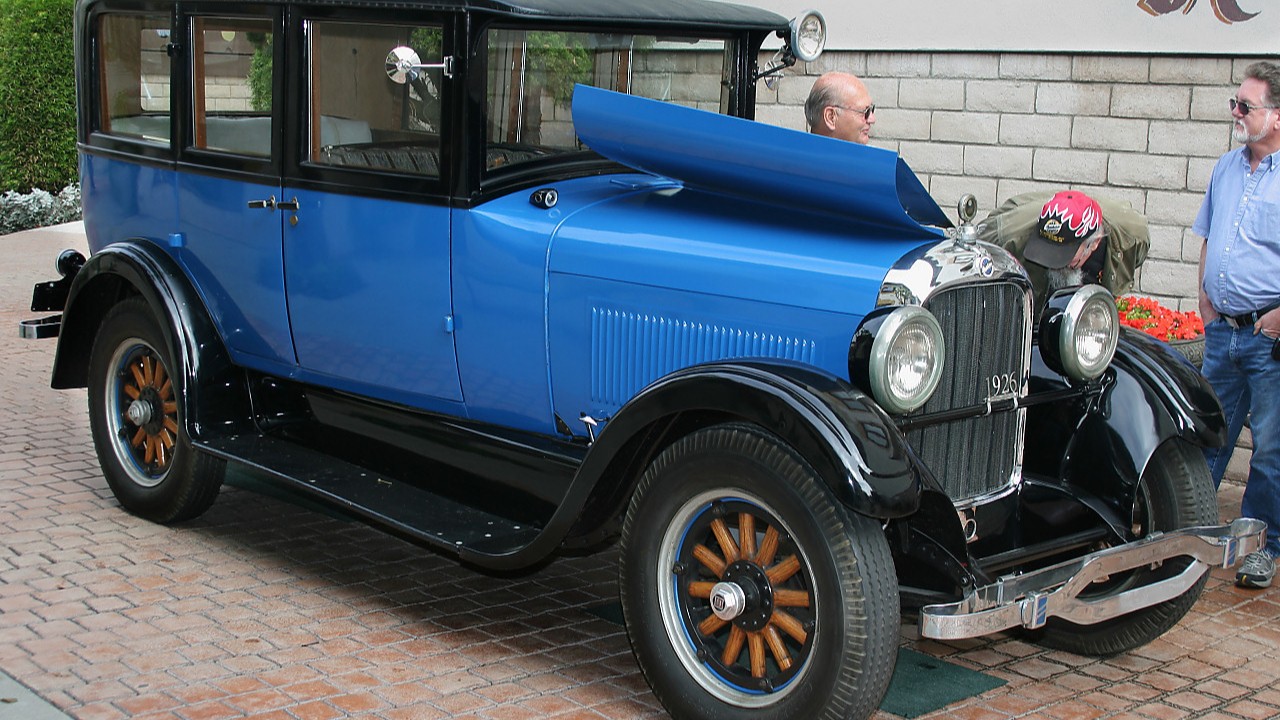
1. 1926 Studebaker Big Six sedan
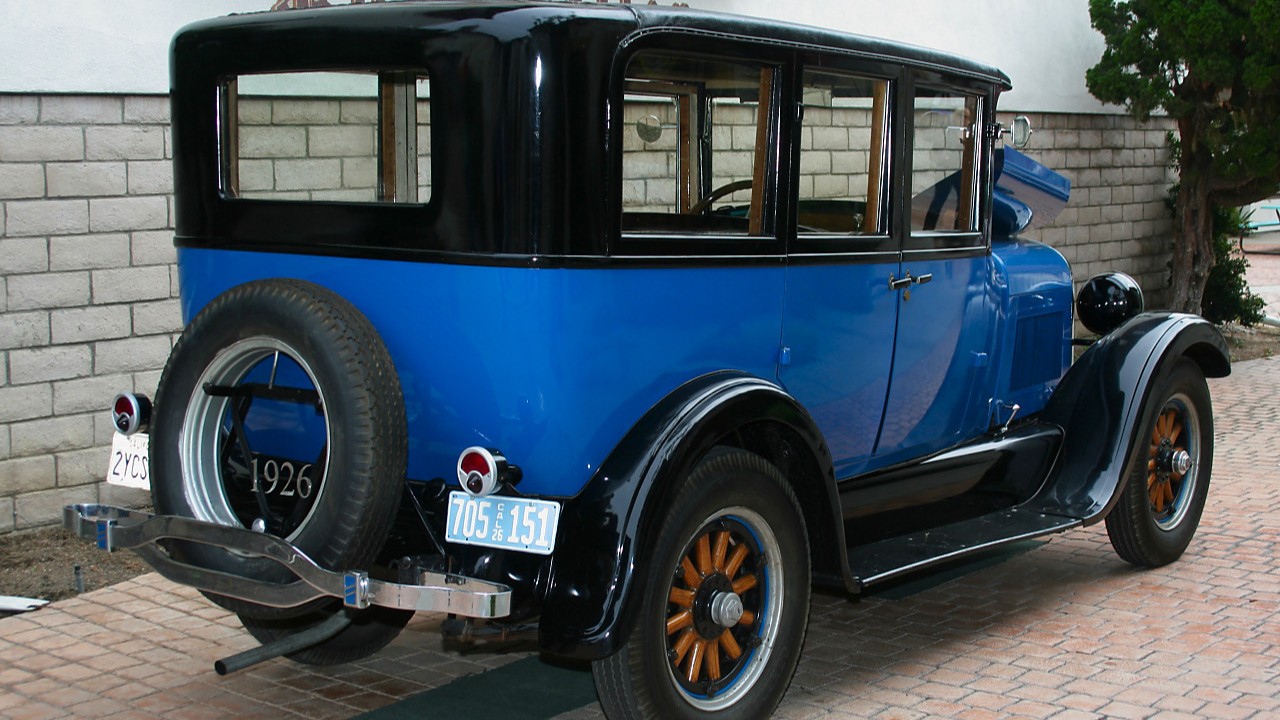
Studebaker’s Big Six set the tone for its car business. When it launched in 1918, its 354-cubic-inch L-head six made 60 horsepower, according to Mac’s Motor City Garage’s history of the Big Six. It was also the first Studebaker with a detachable cylinder head and a crankshaft damper.
The price at launch was $2,000, which placed it against Buick. Studebaker then widened the range, adding a coupe and a sedan in 1921 and a styling update in 1923. In addition, police departments adopted the Big Six, and that work only strengthened its reputation for toughness.
The name didn’t last much longer. In 1927, Studebaker introduced its new naming system with the President, Commander and Dictator. Even so, the Big Six label stayed in the model name through 1928, so a 1926 sedan comes from the final stretch of the original car.
In our view, a 1926 Big Six sedan is a fascinating survivor because it shows Studebaker at its most confident. Cheaper Studebakers outsold it, the same history notes. That helps explain why so few people today have seen one in person.
2. 1937 Studebaker Dictator coupe
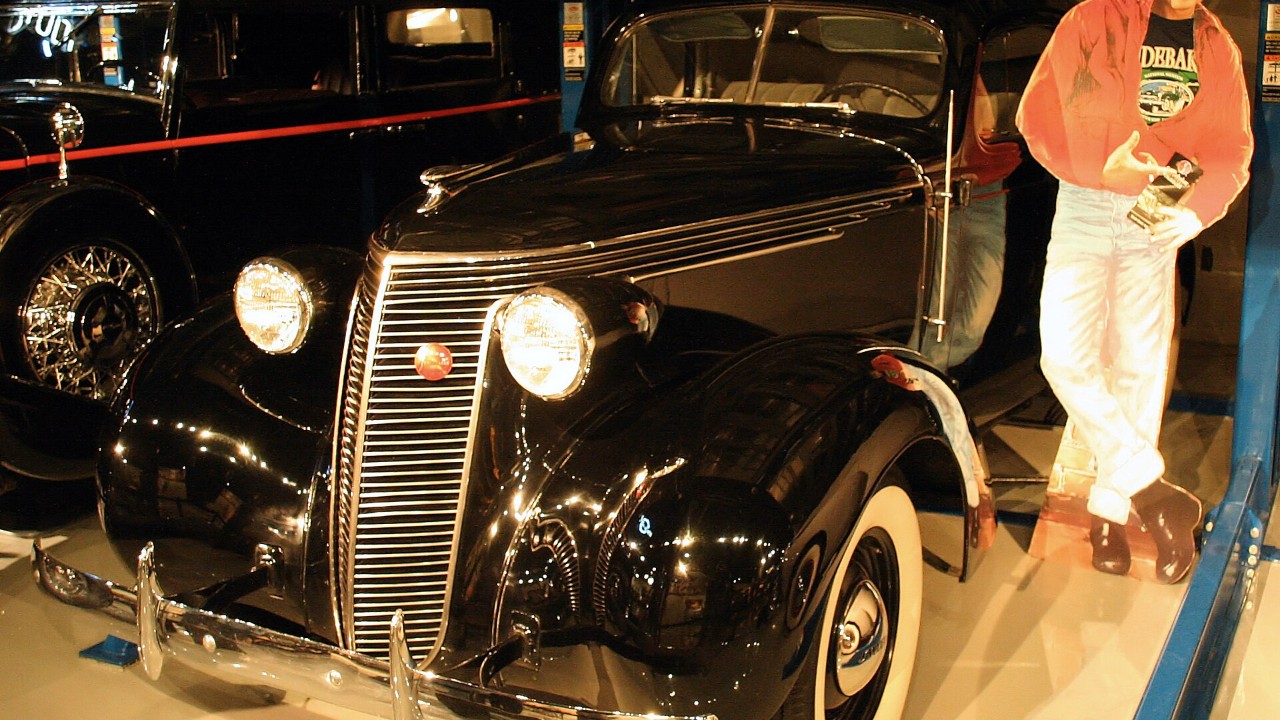
Yes, Studebaker really sold a car called the Dictator. The name debuted in 1927 as part of a theme built on government titles, with the Dictator below the Commander and President. Studebaker promised it would “dictate the standards” in the mid-priced field.
According to Mac’s Motor City Garage’s look at the Dictator name, export cars for Europe and the British Empire already wore the name Director. Then, for 1938, Studebaker dropped Dictator entirely and moved the Commander into the bottom slot. The company never gave a reason. However, the same article suggests that the rise of authoritarian governments in Europe made the word increasingly negative.
That makes 1937 the last year of a very strange badge. Historian Richard M. Langworth later called the name “bizarre” and “un-American.” Meanwhile, Raymond Loewy and Helen Dryden were already working on new design ideas for the company.
Our take: a 1937 Dictator coupe is a great piece of trivia on wheels. It’s a handsome late-1930s coupe, and the badge starts a conversation every time. For more cars that never got their due, see our list of Studebakers that deserved more attention.
3. 1941 Studebaker Commander two-door sedan
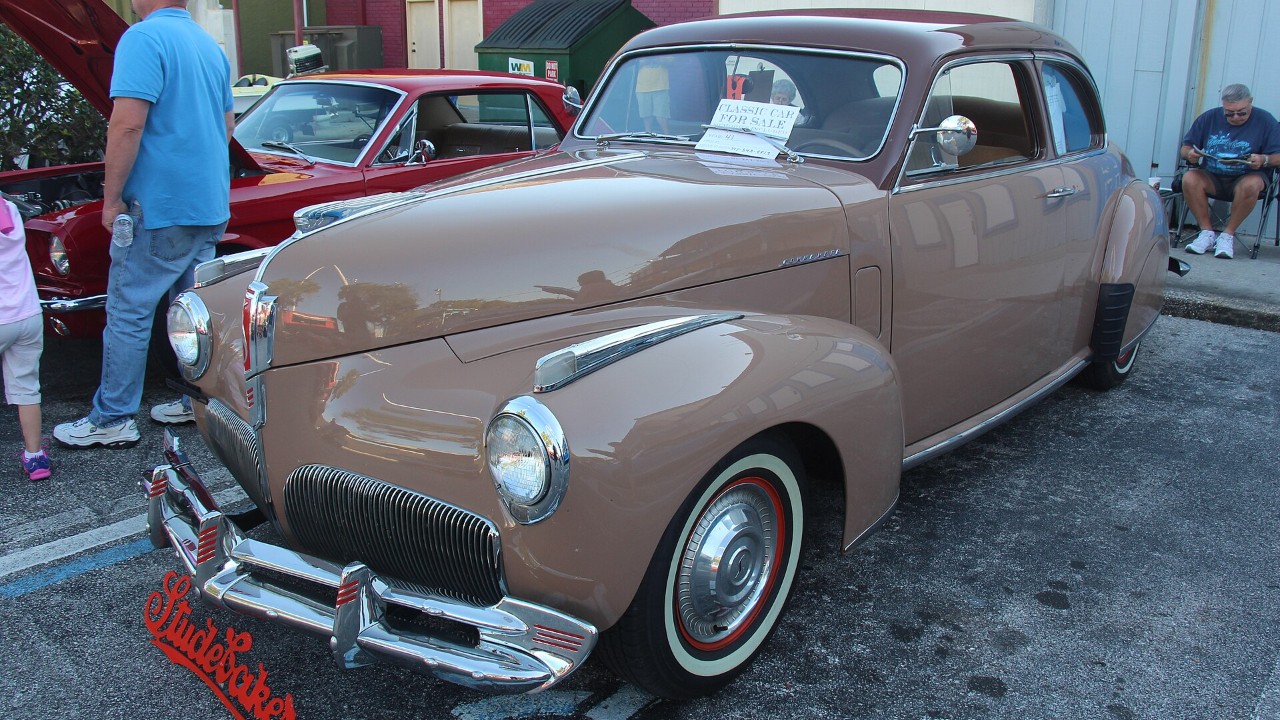
For 1941, Raymond Loewy’s firm restyled the big Studebaker body, and the Commander got a whole set of art deco details. It wore a biplane-style front bumper, twin waterfall grilles and a side sweepspear. Two-tone “Delux-Tone” paint was available, and the running boards disappeared.
Under the hood sat a 226-cubic-inch six. According to IndieAuto’s history of the 1941 Commander, prices hovered around $1,000 to $1,100. The two-door sedan coupe had a semi-fastback roof that made it look longer and lower than it was.
Studebaker built almost 42,000 Commanders that year. By comparison, it built almost 85,000 Champions and almost 7,000 Presidents. Then, in March 1941, the company added Skyway trim to the Commander and President. Skyway cars lost the two-tone sweepspear and gained fender skirts, and the Commander Skyway sedan coupe listed at $1,080.
In our view, the 1941 Commander two-door is one of the best-looking prewar cars from any independent maker. It sold in solid numbers, yet in our view clean examples almost never surface today. That’s why a clean one would stop us in our tracks.
4. 1946 Studebaker Skyway Champion
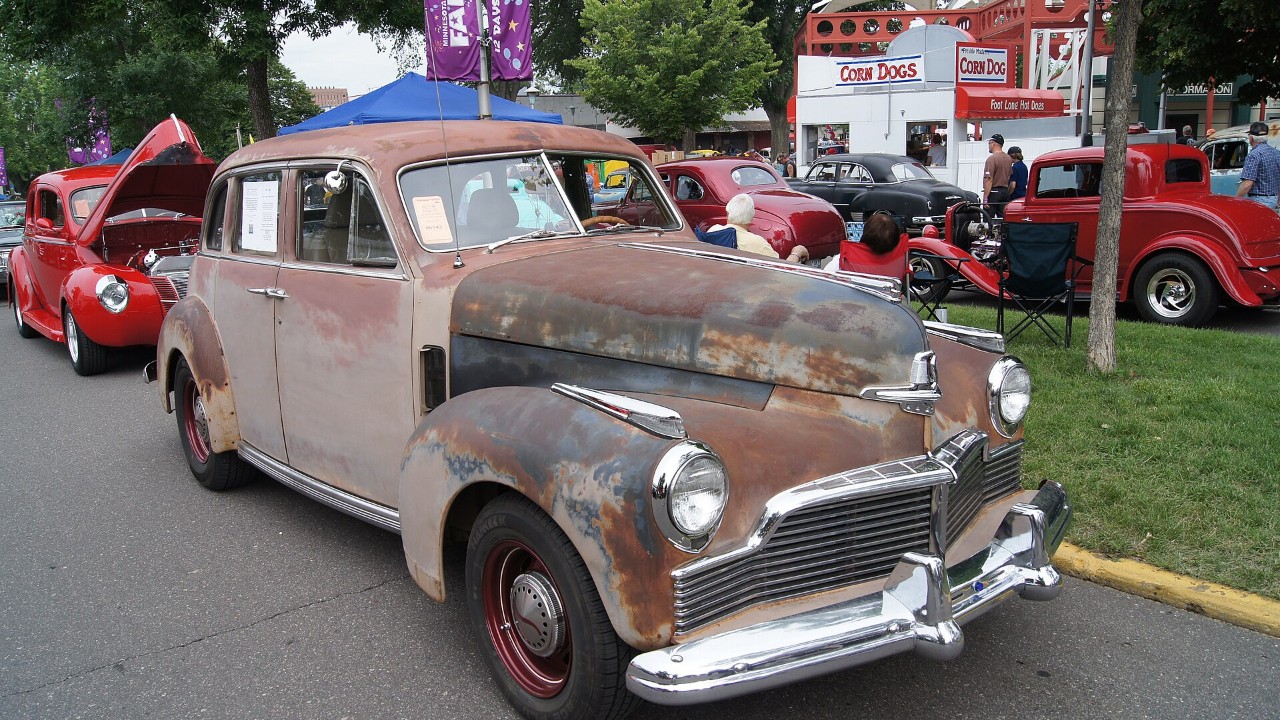
The 1946 Skyway Champion had a remarkably short life. Studebaker introduced it on October 23, 1945, but a long strike at a parts supplier delayed volume production until December 7. Then the line stopped on March 8, 1946, so the factory could retool for 1947.
According to Mac’s Motor City Garage’s story on Studebaker’s forgotten year, the car was essentially a 1942 model with heavier bumpers, a new steering wheel and a revised grille. It used a 169.6-cubic-inch L-head six rated at 80 horsepower. The chassis carried the same 110-inch wheelbase Studebaker had used since 1939.
Studebaker built 19,275 of these cars, and more than half were four-door Cruising Sedans. After that, the company moved on fast. On April 30, 1946, it unveiled its radically styled 1947 line at the Waldorf Astoria in New York, under the slogan “first by far with a postwar car.”
Our take: the 1946 Skyway Champion got lost between a war and a revolution in styling. Because it ran for about three months with little promotion, it’s the Studebaker on this list we’d most like to find at a show.
5. 1953 Studebaker Commander Starliner
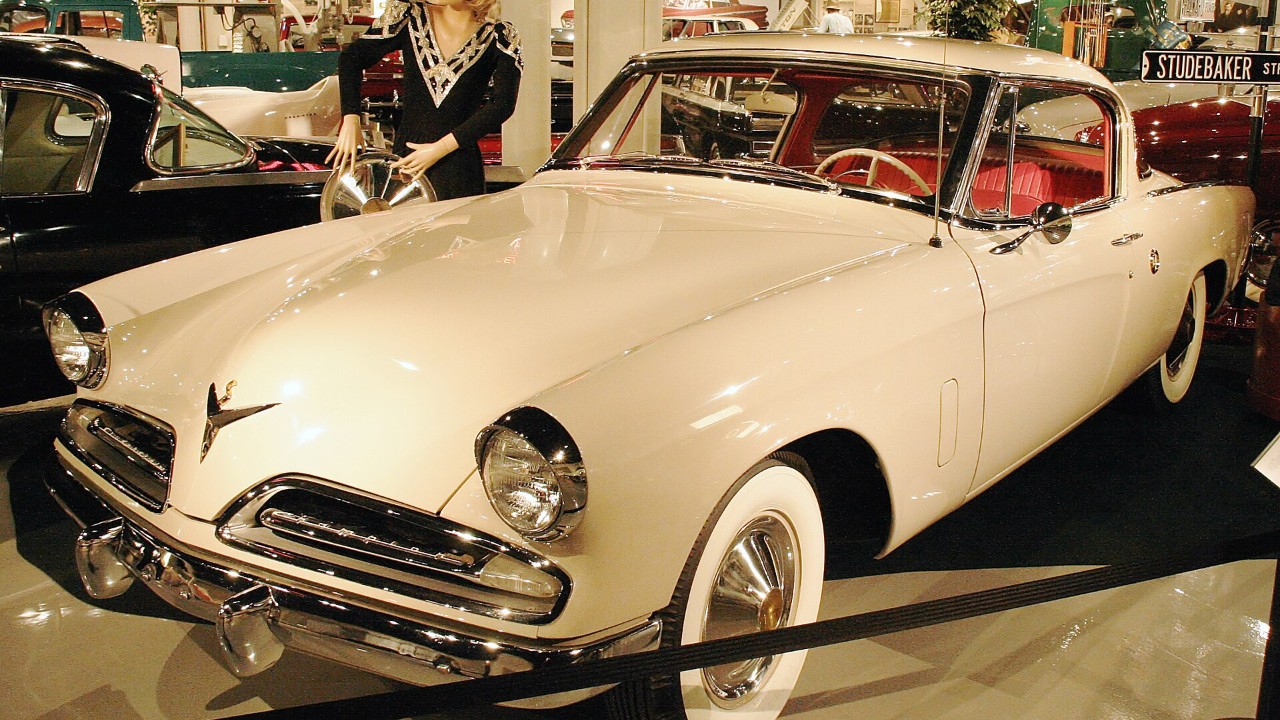
The Starliner was the Regal hardtop coupe of the 1953 Commander range, and it cost $2,374. That placed it above the DeLuxe Starlight coupe at $2,127 and the Regal Starlight at $2,213. It weighed 3,120 pounds and rode on a 116.5-inch wheelbase.
Robert E. Bourke, chief of the Loewy Studios in South Bend, led the overall design, according to OldRide’s 1953 Studebaker Commander data. Studebaker marketed the shape as its “New European Look.” In fact, it won the Fashion Academy of New York’s Gold Medal for outstanding style.
The Commander line carried a 232.6-cubic-inch V8 rated at 120 horsepower. Studebaker built about 76,092 Commanders across seven body styles for 1953, so the pillarless Starliner was just one part of a busy range. Studebaker kept chasing bold design for years afterward, right up to the 1962 Studebaker Avanti.
In our view, the Starliner is one of the most beautiful American cars of the 1950s. It’s low, clean and almost free of chrome clutter. The Starlight coupes kept a fixed pillar behind the doors, while the Starliner dropped it for an open side view. We’d take one in two-tone paint with the V8, because that combination shows off the shape best.
6. 1955 Studebaker Conestoga
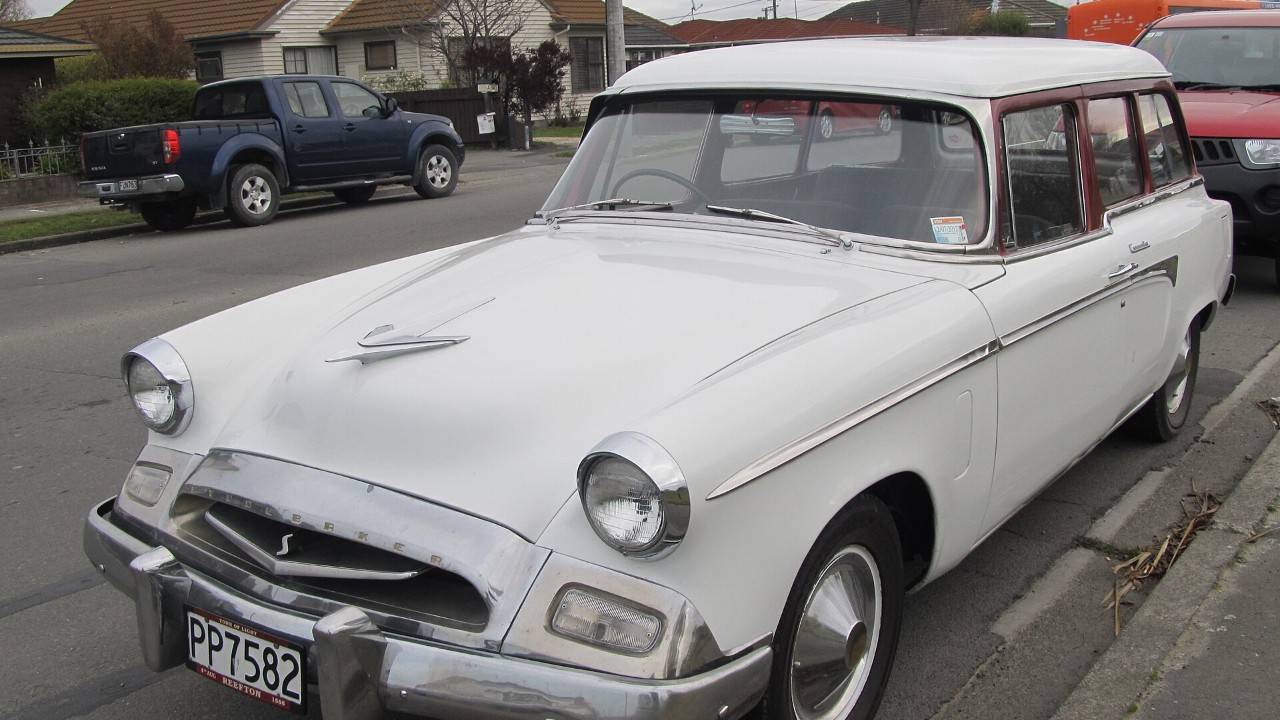
The Conestoga gave Studebaker a station wagon for 1954 and 1955 only. It came in one body style, a two-door, all-steel wagon. For its first year, Studebaker built 3,074 of them, with a base price of $2,095. The company also built an ambulance version, called the Ambulet, on the same body.
By 1955, the wagon had more power. The Truth About Cars’ Rare Rides feature on a 1955 Conestoga explains that the Champion six grew from 2.8 liters and 85 horsepower to three liters and 101 horsepower. However, Champion sales were falling, and an independent Studebaker struggled to match the Big Three on price.
Studebaker dropped the Conestoga name at the end of the 1955 model year. Even so, the basic wagon body carried on through several restyles and into the Lark era. As a result, the Conestoga is the forgotten link between Studebaker’s 1950s cars and its compact.
Our take: a two-door wagon looks unusual today, and that’s half the fun. The Truth About Cars’ featured car even had air conditioning, a surprising option on a small 1950s wagon. It’s practical, it’s handsome, and almost nobody at a show knows what it is.
7. 1960 Studebaker Lark VI sedan
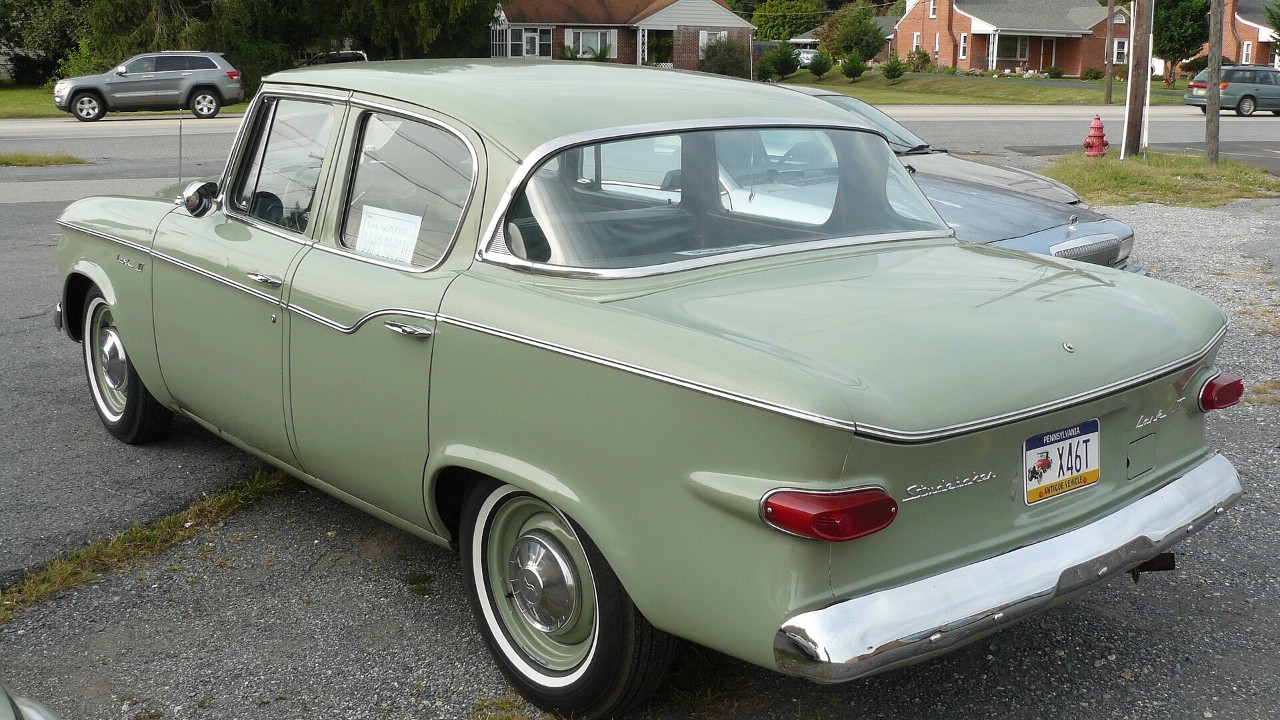
The Lark arrived for 1959 and pulled Studebaker back from the edge. According to Mac’s Motor City Garage’s guide to the 1960 Studebakers, volume jumped from 44,000 cars to 127,000 that year, a 188 percent gain. For 1960, production dipped only slightly.
The VI badge meant six cylinders, while VIII meant a V8. The Lark VI used a 169.6-cubic-inch L-head six rated at 90 horsepower, an engine that traced back to the 1939 Champion. Buyers could choose Deluxe or Regal trim. By comparison, the Lark VIII’s 259-cubic-inch V8 made 180 or 195 horsepower, so the VI was the thrifty pick. Meanwhile, Studebaker added a convertible and a four-door wagon to the 1960 range. That convertible was the company’s first since 1952, and about 8,000 found buyers.
The plain sedan was the bread-and-butter Lark. In our view, that’s exactly why so few turn up today, because people bought them as everyday transport and rarely thought to save one.
In our view, a 1960 Lark VI sedan deserves more love, because it’s the car that kept Studebaker alive. The boom didn’t last, though. Lark sales fell to fewer than 65,000 cars in 1961.
More from Fast Lane Only