A junkyard in San Jose, California, once held a 1991 Chevrolet Astro cargo van with 425,127 miles on the odometer. It had spent most of its life making deliveries. That is the kind of van this list is about: boxy, unglamorous and built to keep earning.
Vans rarely get the attention that pickups and sports cars get. Yet a few of them have built reputations for piling up miles, carrying families, hauling tools and outlasting the businesses that bought them. Some are cargo haulers, and others are oddball minivans with clever engineering hidden under the floor.
These are our picks, eight vans that we think have proved remarkably hard to kill, from 1970s workhorses to a 2005 heavy hauler. The verdicts are our opinion. The years, engines and mileage figures come from sources we checked.
1. 1996 Chevrolet Astro AWD
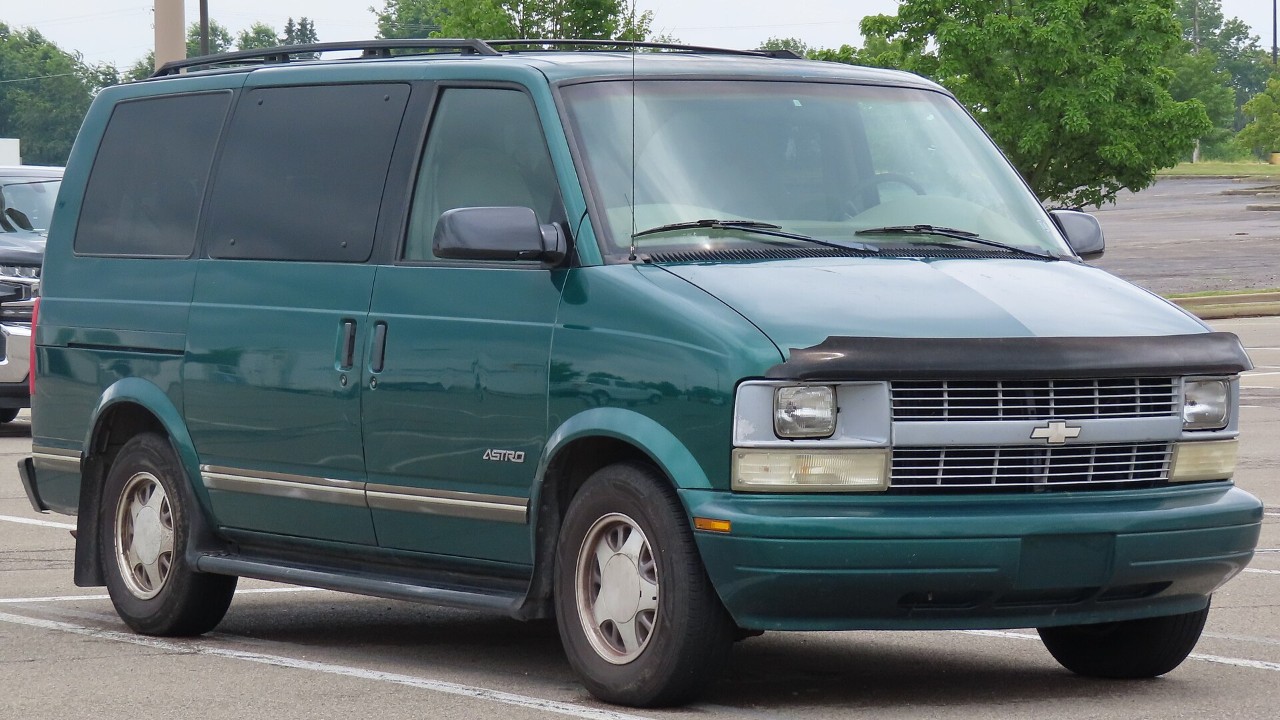
Chevrolet built the Astro from 1985 to 2005 at Baltimore Assembly in Maryland. It was a rear-drive van with truck parts underneath. According to The Truth About Cars, its powertrain came from the S-10 pickup and its front suspension from GM’s B-body station wagons. Early vans even offered the Iron Duke four and a five-speed manual through 1989.
All-wheel drive became an option in 1990, and by 1996 the van had moved into its second-generation long-nose shape. GM and its GMC twin, the Safari, sold about 3.2 million of these vans from 1985 through 2005. An Astro could also tow up to 5,500 pounds when properly equipped.
Our take: the AWD Astro is the van we’d pick for a snowy driveway and a big trailer. It is not refined, and it never pretended to be. However, the 4.3-liter V6 and truck hardware give it a toughness that front-drive minivans of the era never matched. If you buy one, check the AWD transfer case for leaks and the rear springs for sag. Then plan on a long, uneventful relationship with your new old van.
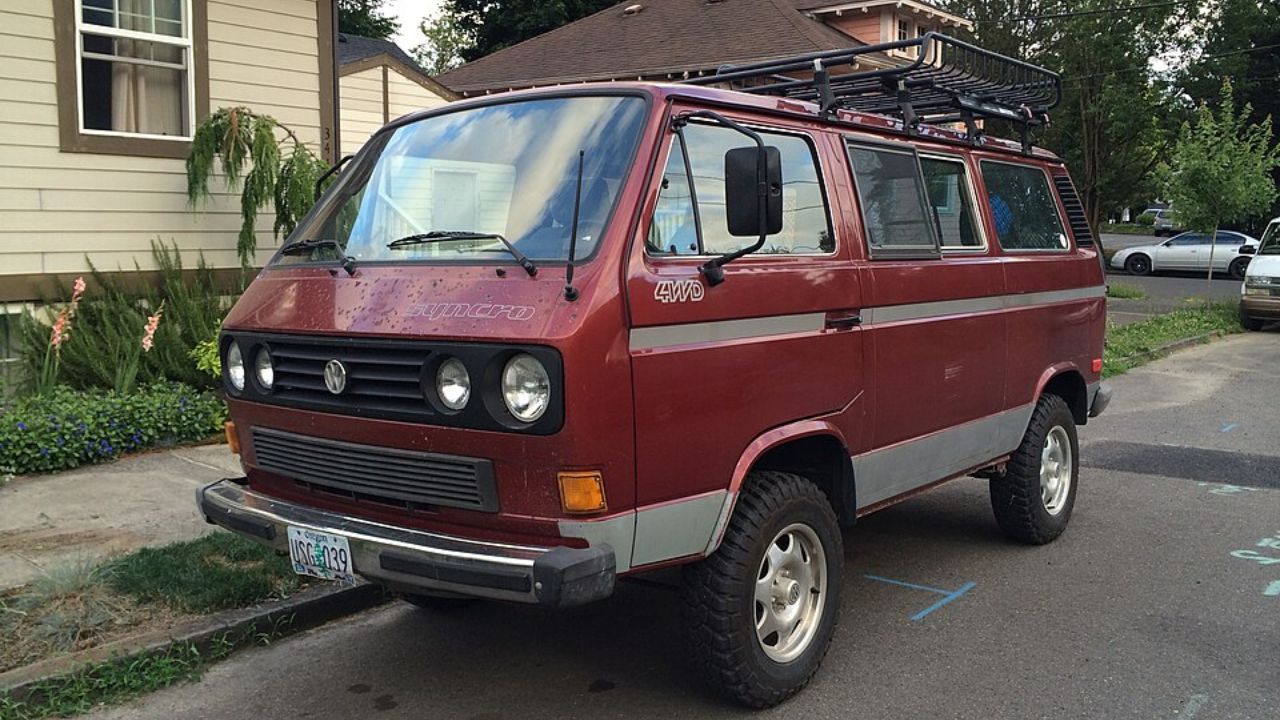
2. 1988 Volkswagen Vanagon Syncro

Volkswagen launched the T3 Vanagon in 1980 as a replacement for the T2 Bus. The all-wheel-drive Syncro version began production late in 1984 and debuted officially at the Brussels Commercial Vehicle Show in January 1985. Steyr-Daimler-Puch in Graz, Austria, added the four-wheel-drive hardware. Syncro production ran through 1992, while T3 vans kept rolling out of South Africa until June 2002.
By 1988, a U.S. Syncro used the water-cooled 2.1-liter flat-four, rated at 95 horsepower. That is not much power for a heavy van, so you drive one with patience. Hagerty’s Canadian valuation page notes that Syncro models are prized near ski destinations, while rust around the windshield and panel seams is a common problem.
In our view, the Syncro is the van people refuse to let go. It climbs trails that would stop most minivans, and it does so with the engine behind you. If you’re shopping, look past the drivetrain at first and inspect the body. A solid shell is the hard part to fix. Mechanical parts and specialist shops are easier to find than clean metal, and a rust-free Syncro is the one we’d pay extra for.
3. 1994 Toyota Previa Supercharged
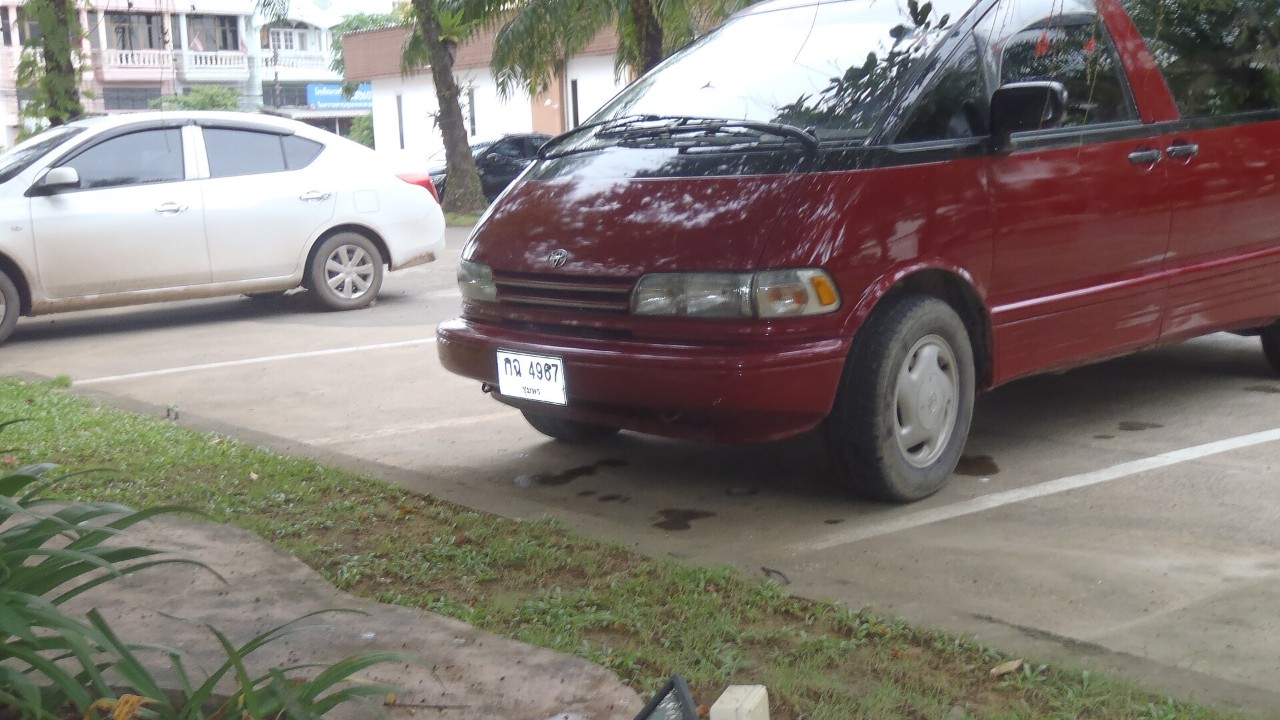
The Previa put its 2.4-liter four-cylinder engine under the front seats, tilted to one side to keep the floor flat. For 1994, Toyota added a supercharger. According to Consumer Guide, the supercharged engine made 161 horsepower at 5,000 rpm and 201 lb-ft of torque at 3,600 rpm.
The mileage stories are what make the Previa famous. Autoblog’s junkyard writer found a 1991 Previa with 337,178 miles. In the same story, he said the highest-mileage Previa he had found was a supercharged 1994 with 376,407 miles. That was his fourth Previa past 300,000 miles. He also notes that the Aisin supercharger added about 20 horsepower, and a five-speed manual was base equipment.
Our take: the Previa looked like a jelly bean, yet those mileage totals speak for themselves. We’d expect the under-seat engine to make some service jobs awkward, so budget for labor. Toyota made the supercharged engine standard for 1996 and 1997, then dropped the Previa from the U.S. market after 1997. If you want one, a 1994 or later supercharged All-Trac is the one we’d hunt for.
4. 2004 Dodge Sprinter 2500
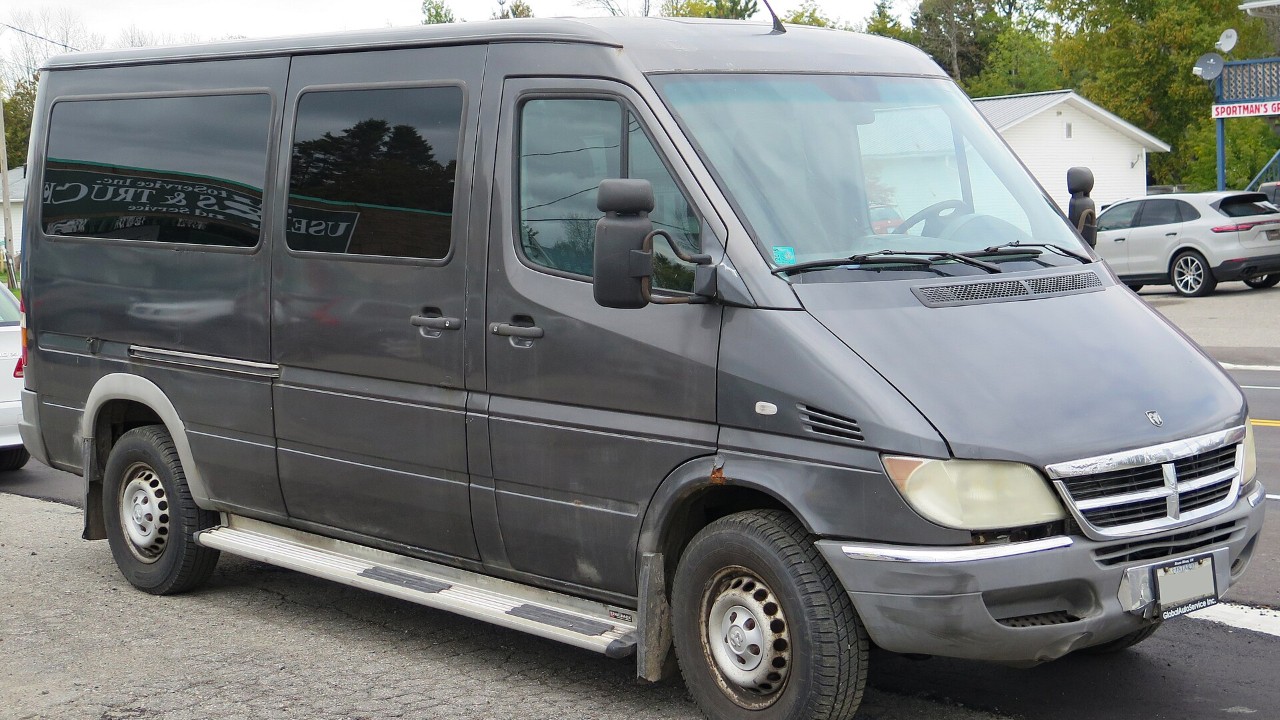
Mercedes-Benz’s Sprinter reached North America for the 2002 model year wearing a Freightliner badge. Then, for 2003, Dodge began selling it too. The early American vans used a 2.7-liter five-cylinder OM612 turbodiesel, rated at 156 horsepower. That engine lasted only for 2002 and 2003, and Freightliner kept selling its own version alongside Dodge.
For 2004, the Sprinter switched to the OM647 diesel, which met California’s emissions rules. As a result, the 2004 to 2006 Dodge Sprinter could be sold with a diesel in more states. Dodge kept selling its own Sprinter through the 2009 model year.
In our view, the first Dodge Sprinters changed what delivery and camper vans look like in America. Ford and GM vans of the time felt low and heavy by comparison. A well-kept 2500 makes a strong used buy. However, we’d check the floor, wheel arches and door bottoms for rust before anything else. We’d also want service records, because an old diesel rewards owners who kept up with oil changes. Find a good one, and we think it can keep working for many more years.
5. 2005 Chevrolet Express 3500
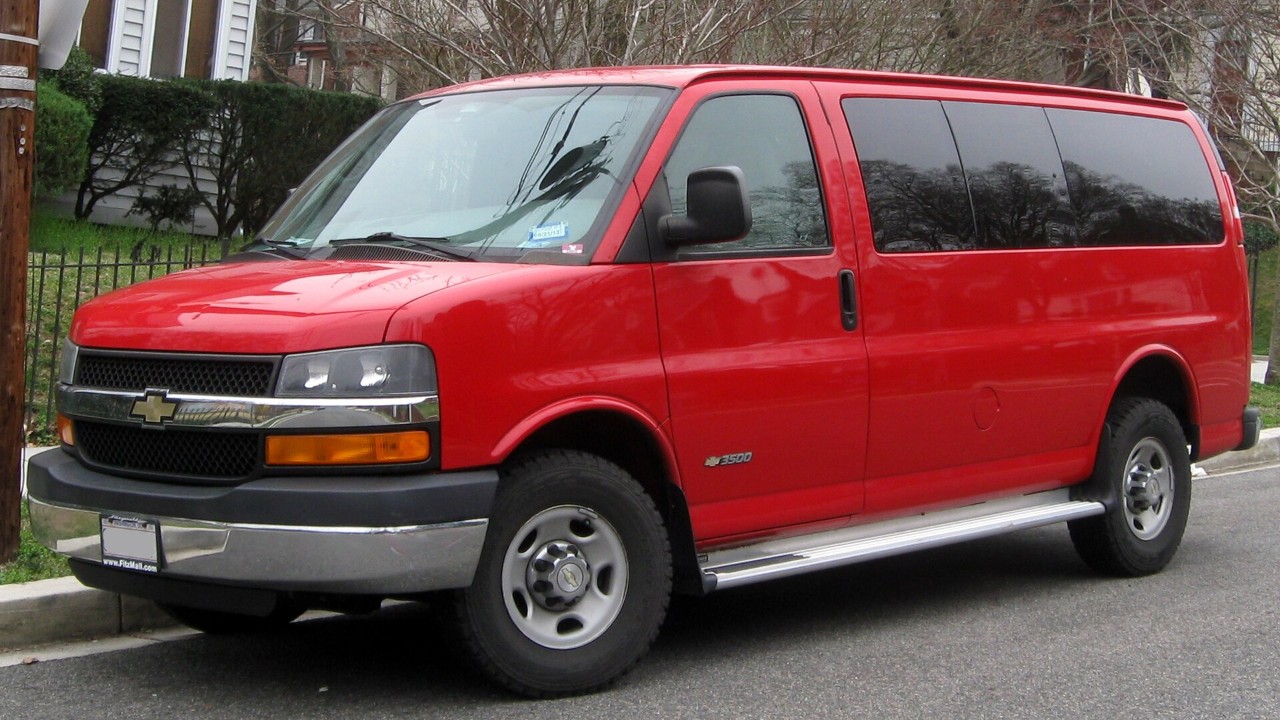
The Express arrived for the 1996 model year, replacing the old Chevrolet Van. GM has built it at Wentzville Assembly in Missouri, and over three million Express and Savana vans have rolled out. By 2022, the design had entered its 26th year of production, outlasting the 1971 to 1996 Chevrolet Van it replaced. Since 2017, Navistar’s plant in Springfield, Ohio, has also built some cutaway models.
For 2003, GM revised the platform and renamed it GMT610. A 2005 Express 3500 could carry the Vortec 6000 V8, offered on heavy-duty vans from 2003 to 2008, or the 4.8-liter Vortec V8. The Duramax diesel returned the following year, in 2006. In other words, a 2005 van is a gas-engine truck at heart.
Our take: the Express is the van you rent, the van your plumber drives and the van that shuttles airport passengers. It is not exciting, and it was never meant to be. That simplicity is why fleets keep buying it. If you buy a used 3500, check the brakes and the transmission fluid, because hard fleet use shows up there first.
6. 1997 Ford E-350 Club Wagon 7.3 Power Stroke
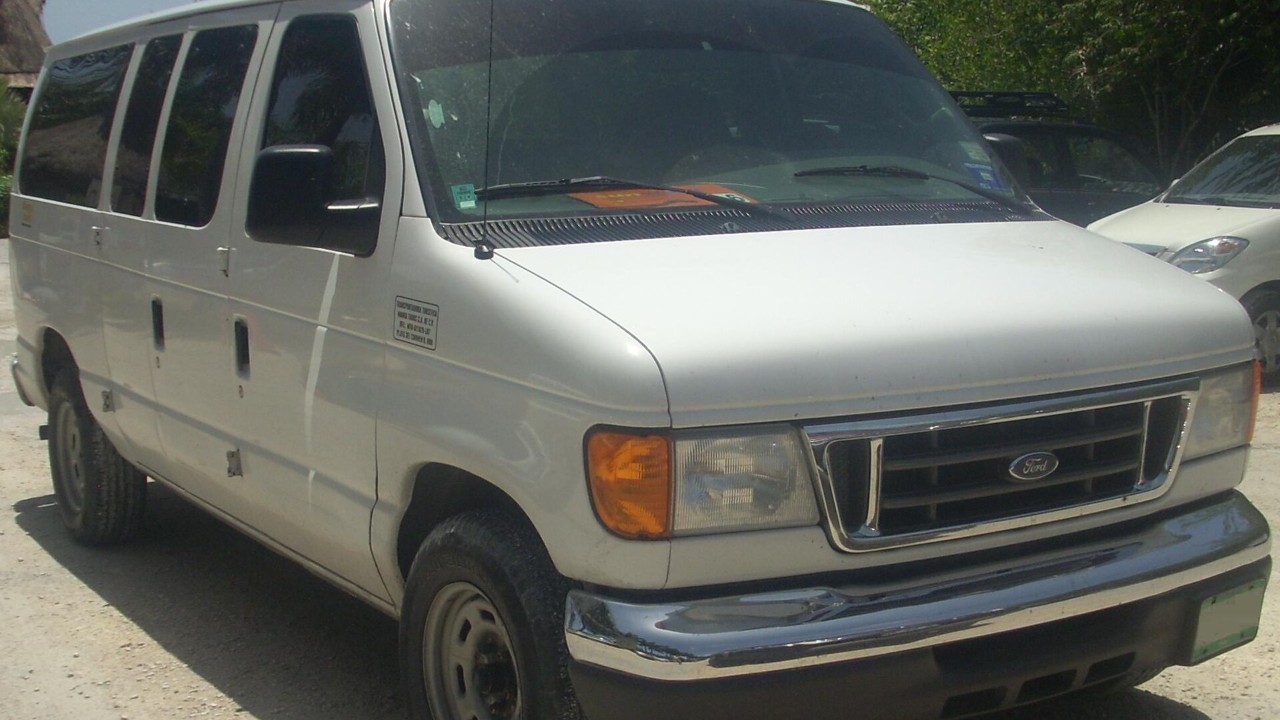
Ford’s E-Series traces back to the 1961 Econoline, which launched on September 21, 1960. We covered the 1961 Econoline pickup that put its six between the seats in a recent story. By 1997, the van was in its fourth generation, which arrived for 1992.
For 1995, Ford replaced the older IDI diesel with the 7.3-liter Power Stroke V8. The Club Wagon name marked the passenger version, and Ford dropped that nameplate for 1999. Meanwhile, the E-Series sold over 8.2 million units since 1961 and led full-size van sales in the U.S. from 1980 until 2014. After that, Ford kept building cutaway and stripped-chassis versions from the 2015 model year.
In our view, a 7.3 Power Stroke Club Wagon is the people-hauler for anyone who tows. The diesel is loud and slow by modern standards, but it has a strong following for good reason. Ford also marked 40 straight years as the nation’s best-selling commercial van brand through 2018, according to Hard Working Trucks. Check the injectors and glow plugs before you buy. Then go hitch up a trailer and enjoy it.
7. 1977 Dodge Tradesman B200
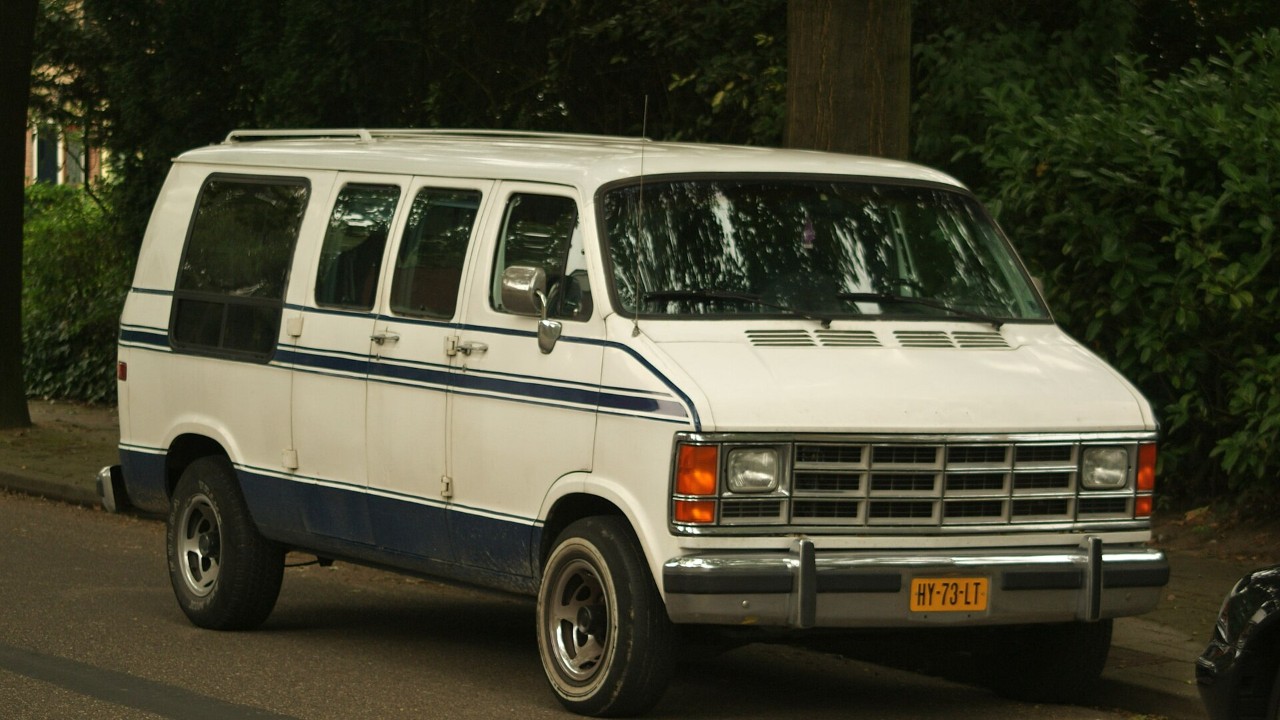
Dodge built its B-series vans from 1971 to 2003, and the Tradesman was the cargo version through 1978. The B200 was the three-quarter-ton model, and the passenger version was the Sportsman. Engines included the 225-cubic-inch Slant-6, the 318 V8 and, from 1972, the 360 V8. For 1976, the B200 and B300 could even carry a 400 or 440 big-block.
Instead of a full frame, the van used a one-piece welded body called the Uniframe. As a result, it sat lower and handled better than a body-on-frame van, though it carried more noise. Dodge added a sliding side door for 1974. Dodge built them at the Pillette Road plant in Windsor, Ontario, and near St. Louis until 1980.
Our take: the Tradesman is the classic 1970s custom-van base, and Dodge leaned into that. From 1976, it offered a factory Street Van package and membership in the “Dodge Van Clan.” Survivors with the Slant-6 are slow, but in our view that engine is about as stubborn as they come. If you find one, check the rocker panels and floors first. For more road-trip rigs, see the vans and campers owners keep.
8. 1986 Toyota Van
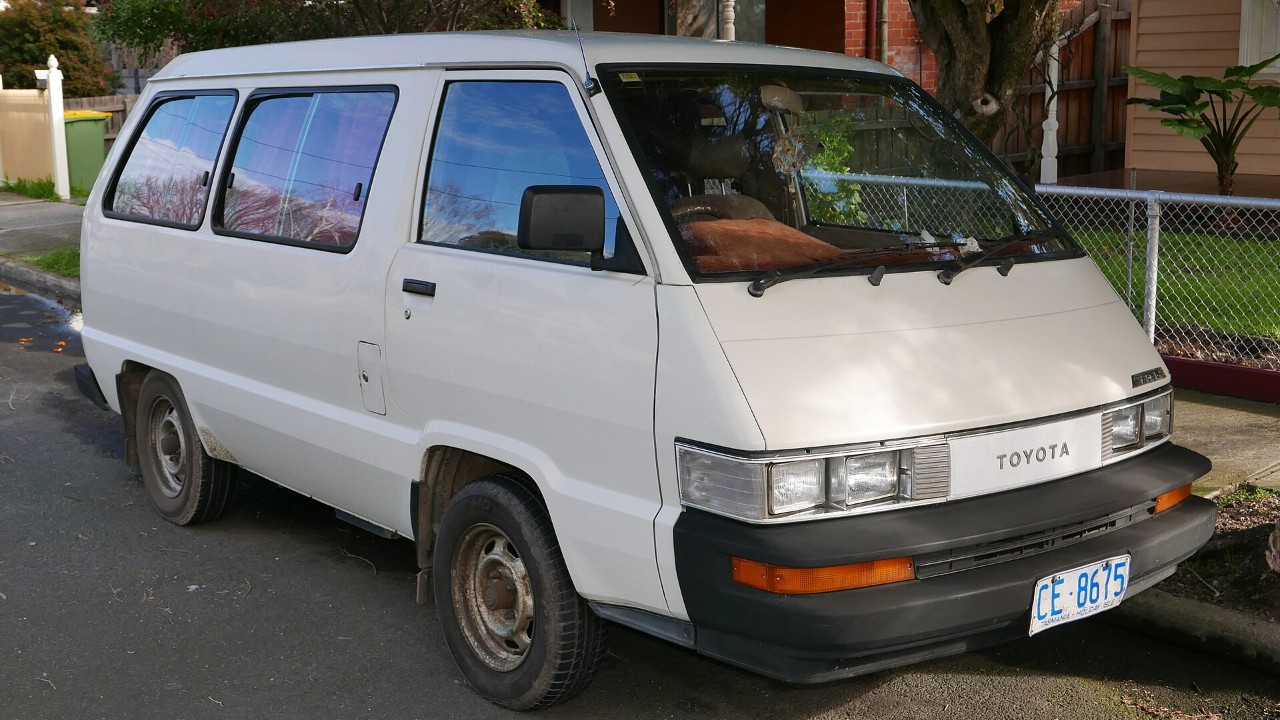
Toyota sold its TownAce in North America simply as the Toyota Van, starting with the 1984 model year. Its styling was shared with the MasterAce Surf. It used a cab-over layout, with the driver and front passenger sitting directly above the front axle. That puts it in the front mid-engine family, with the engine under the cabin.
For the 1986 facelift, Toyota replaced the 2.0-liter engine with a 2.2-liter 4Y-E rated at 102 horsepower. The original 3Y-U had made 87 horsepower, so the update was a real gain. Then, from 1987 to 1989, it offered a four-wheel-drive version with skid plates. Manual 4WD vans also got a two-speed transfer case with low and high ranges.
In our view, the Toyota Van is the boxy van Toyota sold before the Previa, and it shares the same stubborn streak. It is slow, so drive it like the tall box it is. Parts take some searching today, so we’d check the body carefully for rust before buying one. Even so, the van’s run is easy to date: Toyota sold the rear-drive version from 1983 to 1989.
More from Fast Lane Only