Only 133 examples of the Bizzarrini Strada left the workshop between 1964 and 1968, and the engineer behind the Ferrari 250 GTO created it. Even so, most people at a car show could not name it. That gap between pedigree and fame is the theme of this list.
The 1960s and early 1970s produced dozens of small sports car makers across Europe and Japan. Many built a few hundred cars, sold them to a handful of devoted buyers and then vanished. Some were fiberglass specials from British sheds, while others carried Italian bodies and American V8s.
So here are our picks, ten sports cars we think most enthusiasts have never seen in the metal. They range from a three-seat Datsun roadster to a mid-engined Swiss supercar with a Chrysler Hemi. Each one is real, each one reached paying customers, and each one deserves a bigger audience.
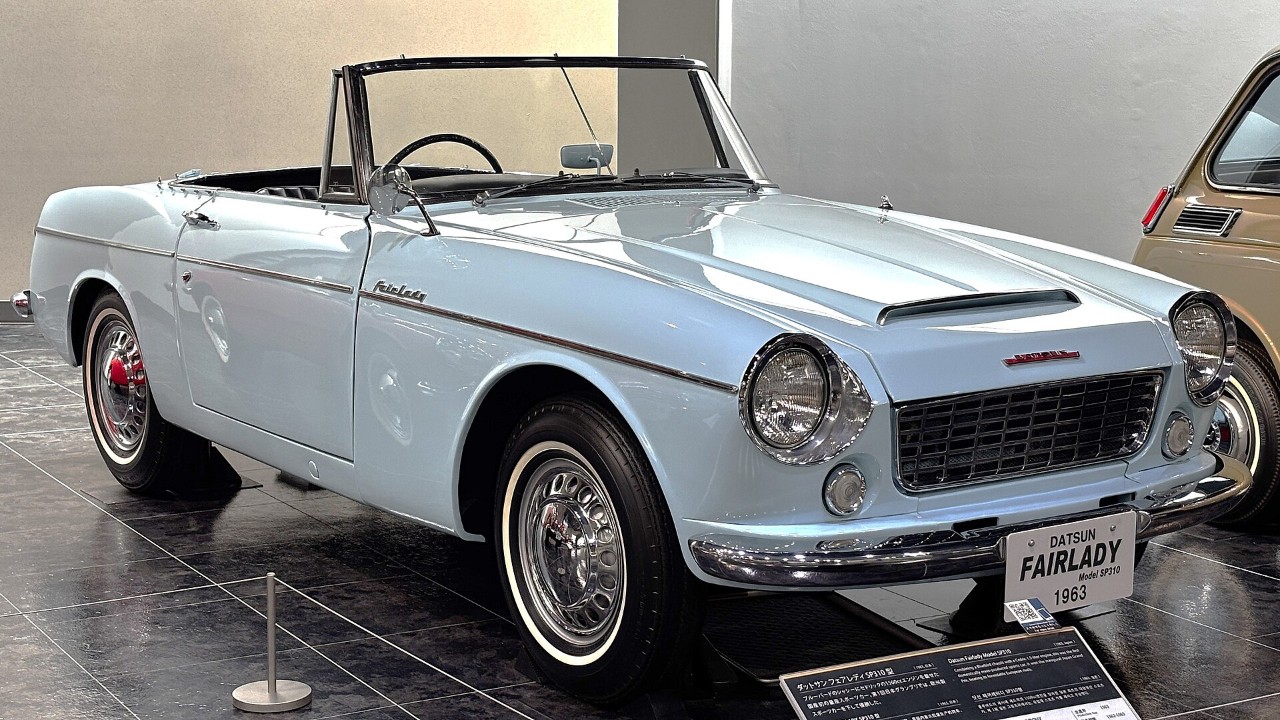
1. 1963 Datsun SP310 Fairlady 1500
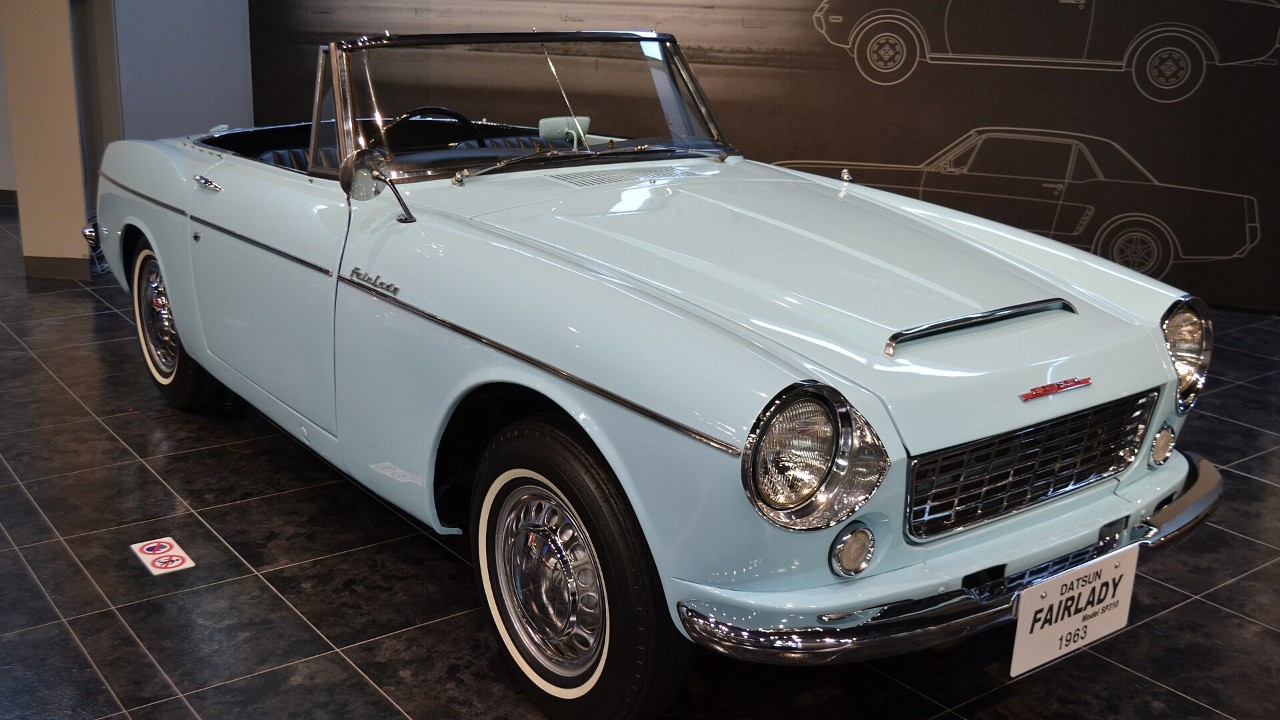
Long before the Z-car made Datsun famous in America, the company sold a small roadster called the Fairlady. The SP310 version arrived for 1963 with a 1,497 cc G15 overhead-valve four. In its first single-carburetor form, the engine made 77 PS.
Still, the cabin held the real surprise. The 1963 and 1964 cars were three-seaters, with two bucket seats up front and a single seat mounted sideways in the back. It was a strange layout for a sports car, and it gave the little Datsun a personality all its own.
The car improved quickly. After the first 300 SPL310 cars, a twin-SU version with 85 PS arrived for 1964 and 1965. Then, in March 1965, a 1.6-liter model replaced the 1500, and the 1965 revision dropped the rear seat. So the three-seat cars belong to a short window.
Our take: an early SP310 is a fun reminder that Japanese sports cars did not start with the 240Z. It looks a little like a British roadster, yet the sideways seat is pure Datsun quirk. Most fans have seen the later 1600 and 2000 models in photos. Far fewer have seen a 1500 in person.
2. 1965 Daihatsu Compagno Spider
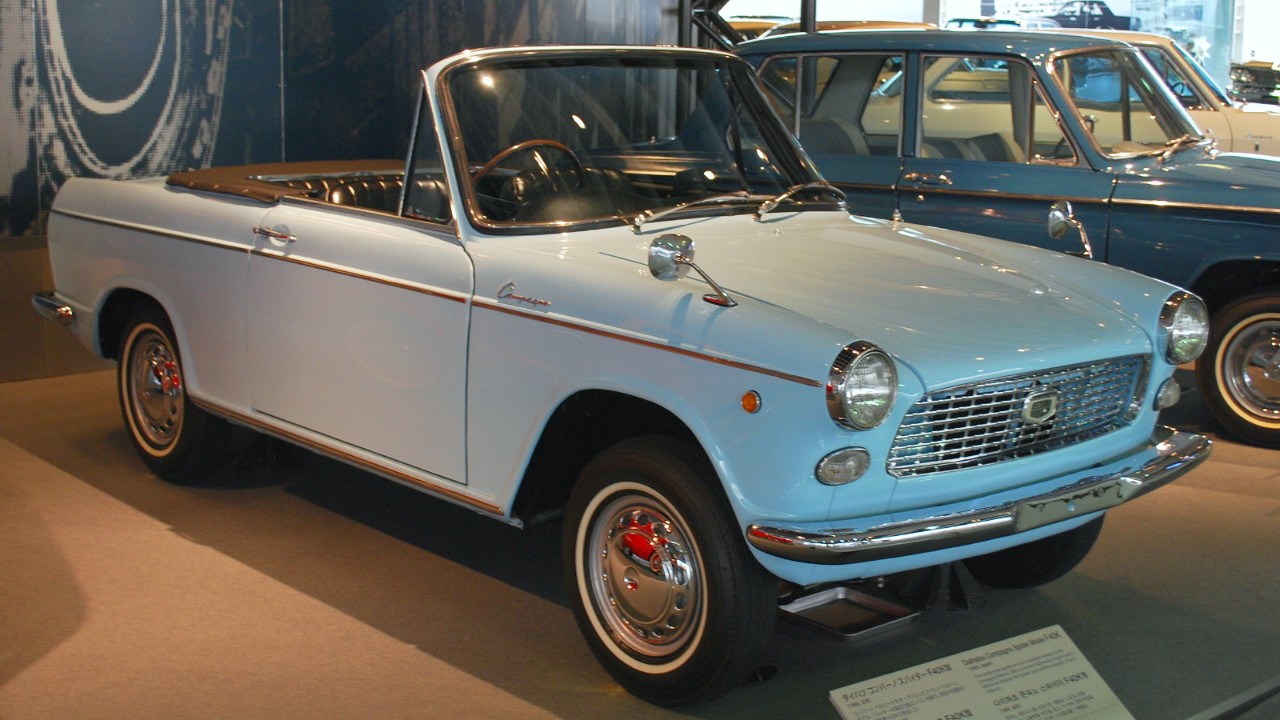
Daihatsu is best known today for tiny city cars, but in the 1960s it built a pretty Italian-styled convertible. The Compagno line ran from 1963 to 1970, and Vignale designed it. The Spider joined the range in April 1965.
Power came from a 958 cc four-cylinder engine with twin carburetors, rated at 65 PS. That was modest, but the car was small and simple. Meanwhile, the open body made the most of Vignale’s clean lines. The Deluxe Berlina sedan even had an Italian-flavored dashboard.
The Compagno also tried its luck abroad. It reached the British market in May 1965 as an official import. However, only six found buyers there. Daihatsu built about 120,000 Compagnos across all body styles, yet the Spider remains a rare sight outside Japan.
In our view, the Compagno Spider is one of the most charming Japanese cars of its decade. It mixes Italian design with Japanese engineering in a way few cars managed at the time. If you spot one at a show, take a closer look, because you may not see another for years. We would happily own one as a weekend cruiser.
3. 1965 Bond Equipe GT
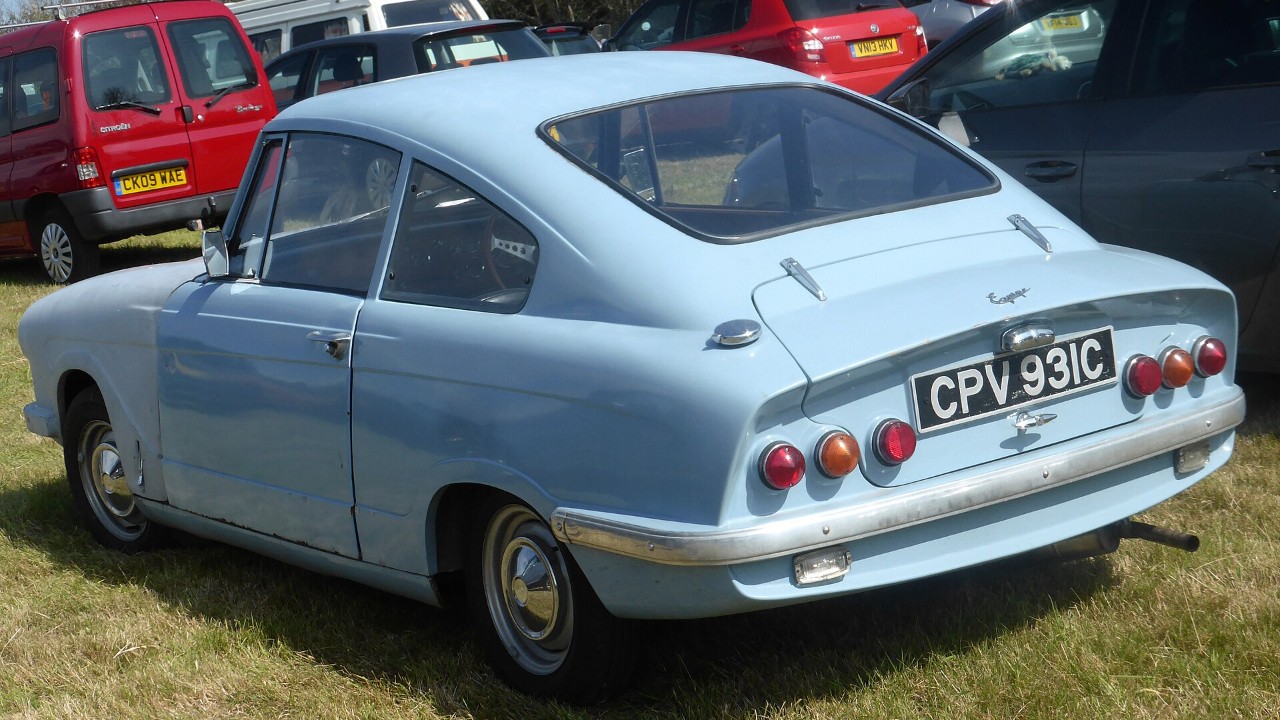
Bond was known for three-wheelers, so the Equipe came as a surprise. Launched in 1963, the GT was a 2+2 built on a Triumph Herald chassis with a fastback fiberglass body. Its engine came from the Triumph Spitfire, which gave it a sporty edge.
The 1965 cars sat in the middle of the story. From September 1964, the GT 4S took over with a 1,147 cc engine rated at 63 bhp, later raised to 67. That version proved the most popular, with 1,934 built. Later, the 2-Litre models moved to the Triumph Vitesse chassis and a 1,998 cc six.
In all, Bond built 4,389 Equipes from 1963 to 1970. Then Reliant, which bought Bond in February 1969, closed the factory in July 1970. Even so, workers finished the final cars by the end of October that year.
Our take: the Equipe is an easy way into 1960s British sports motoring, and it rarely shows up at American events. Because the mechanicals are Triumph, we would expect parts to be easier to find than you might think. In our opinion, it deserves far more attention than its three-wheeled siblings. Look for a car with a sound chassis, since the fiberglass body hides what is underneath.
4. 1966 Gilbern GT1800
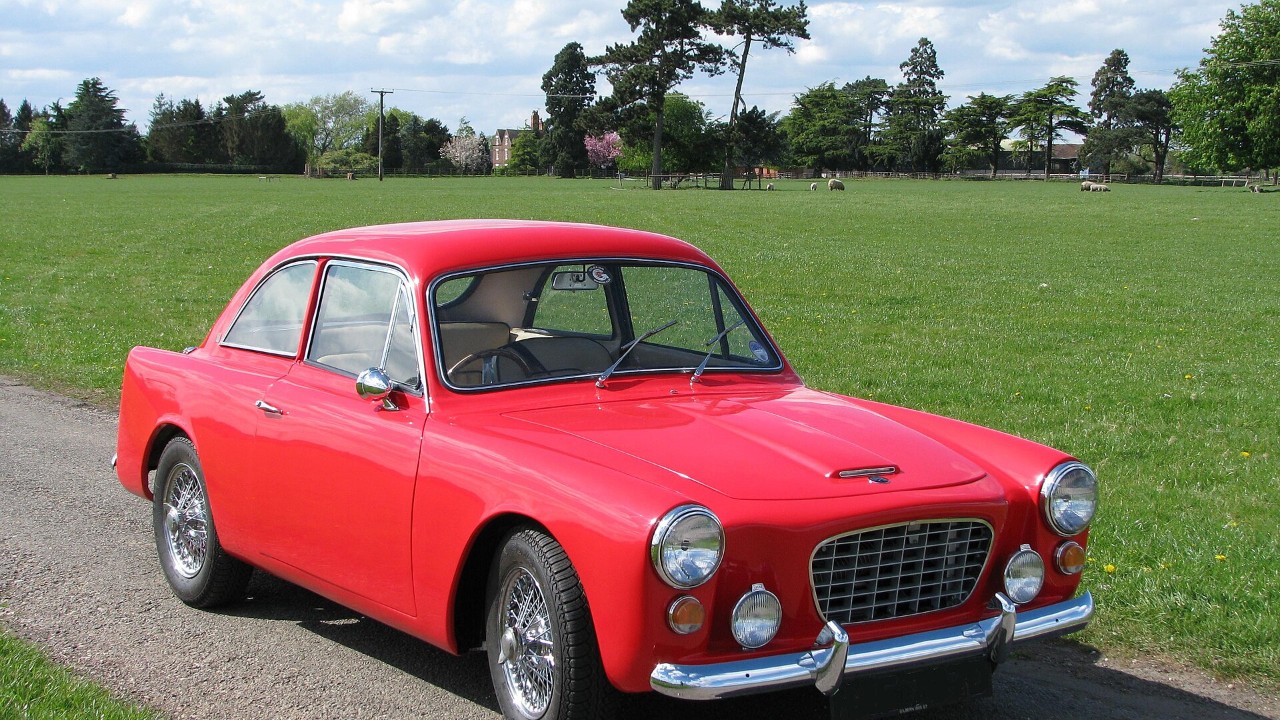
Wales is not famous for sports cars, which makes Gilbern even more interesting. Giles Smith, a former butcher, teamed up with Bernard Friese, a German engineer with experience in glass-fiber moldings. They started in a small workshop in Church Village, then moved to the old Red Ash Colliery at nearby Llantwit Fardre.
Their GT ran from 1959 to 1967, and Gilbern built only 280. Later versions used the 1,800 cc MGB engine, and the car took the GT1800 name when the bigger engine arrived. At first, Gilbern sold cars only as kits. Complete cars came later.
That kit heritage tells you a lot. Buyers often finished the cars themselves, so we would expect small differences from one survivor to the next. In fact, that hand-built quality is part of the appeal.
Meanwhile, the GT1800 shares its engine with the MGB, so you get a familiar powertrain in a far rarer shell. The body looks purposeful and compact.
In our view, the Gilbern GT1800 is one of the coolest cars Britain ever built in small numbers. It is a Welsh sports car with an MG heart, and that alone starts conversations. With only 280 GTs in total, you could attend shows for years without seeing one.
5. CG 1300 Coupe
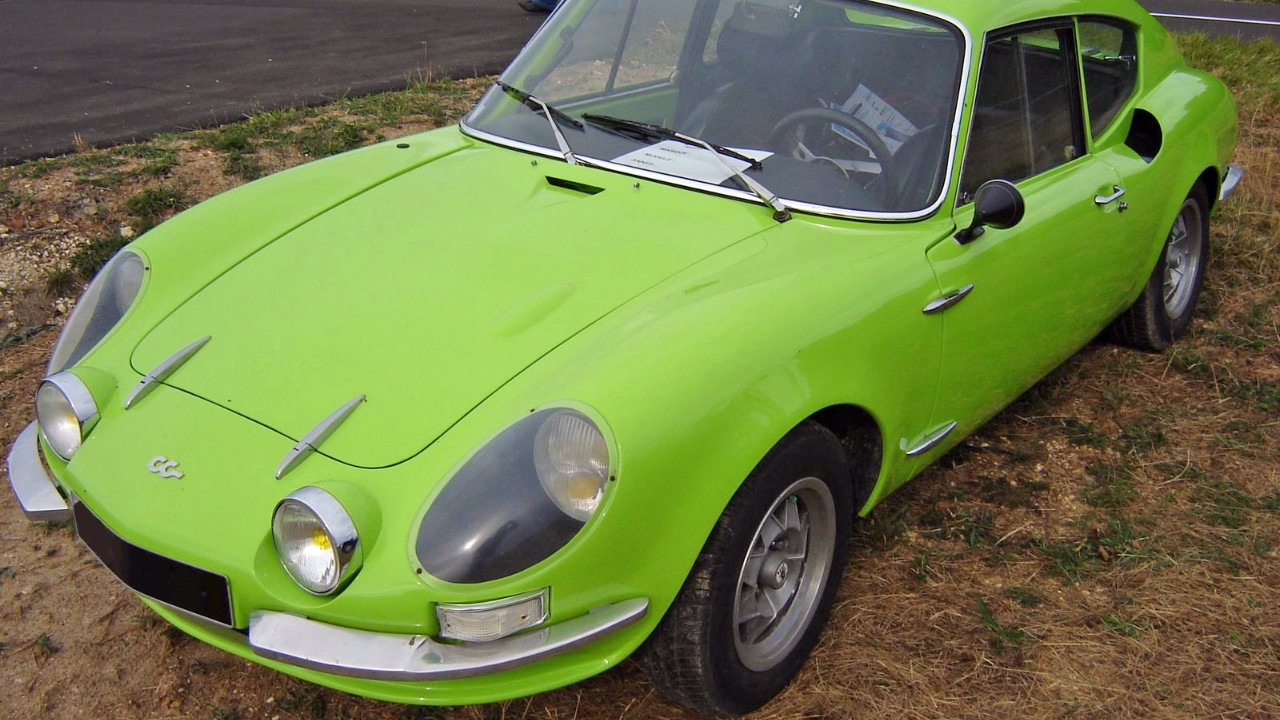
Chappe et Gessalin, or CG, was a small French firm run by the three Chappe brothers and their nephew, Jean Gessalin. According to Classic & Sports Car’s history of the marque, the company had about 20 staff in the early 1960s. It had also built Alpine’s first car, the A106.
The 1300 coupe arrived at the 1972 Paris Salon. It used the 1,294 cc engine from the Simca 1000 Rallye 2. CG bolted and riveted its glassfiber body to a steel chassis, and the kerb weight rose to 760 kg. A shorter, more angular tail, a glass rear window, a chin spoiler and bigger wheel-arch flares set it apart from earlier CGs.
As a result, the numbers are tiny. Classic & Sports Car counts a little under 400 CGs in total, and only 95 of them were the 1300. Then the firm closed its doors in May 1974.
Our take: the CG 1300 is a French rival to the Alpine that almost nobody outside France knows. It has competition looks, a light body and a Simca heart. If you love the A110, this is the car we would point you to next. Just be ready for a long search, because 95 cars do not show up often.
6. 1968 Bizzarrini GT Strada 5300
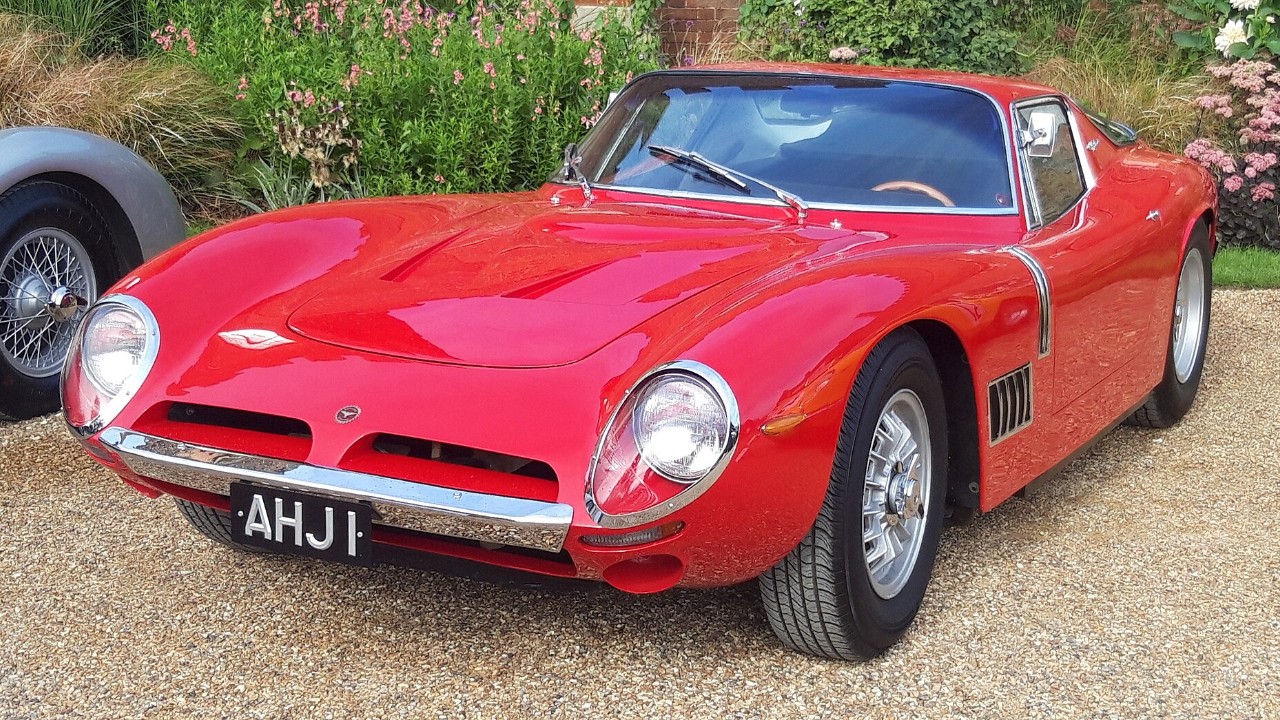
Giotto Bizzarrini joined Ferrari in 1957 and became chief development engineer at 31. Later, he designed the Iso Grifo for Iso, and his own 5300 GT was closely based on the Grifo A3/C. As Silodrome’s profile of the 5300 GT Strada explains, he built and sold the Bizzarrini Strada under his own name.
In short, the recipe was an Italian chassis with American muscle. A 327-cubic-inch Chevrolet small-block V8 made 365 horsepower, according to Silodrome, and the Corsa version reached 400. A four-speed Borg-Warner T-10, a limited-slip differential, Dunlop disc brakes and a de Dion rear end completed the package. The alloy body kept the Bizzarrini Strada at about 1,200 kg.
Better yet, the Bizzarrini Strada had racing roots, too. Bizzarrini designed the A3/C and 5300 GT for the 24 Hours of Le Mans, and Silodrome says it won its class at the 1965 race. In the end, Bizzarrini built only 133 examples from 1964 to 1968.
Our take: the Bizzarrini Strada is, in our eyes, one of the most beautiful cars of the 1960s, and it still flies under the radar. It has a Ferrari engineer’s chassis and a Corvette engine. In our view, that combination makes it a better story than many cars with more famous badges.
7. Fiat Dino Spider Second Series
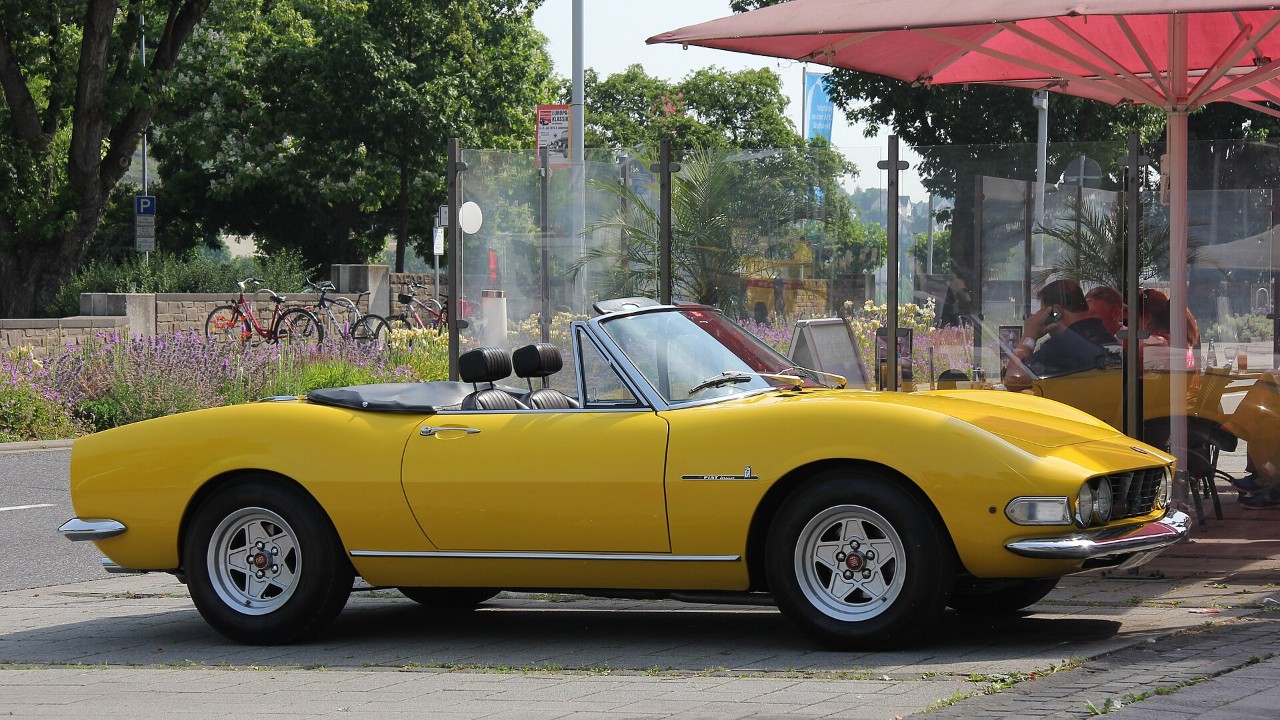
Fiat built the Dino to help Ferrari. The car used the Ferrari Dino V6 so the engine could qualify for Formula 2 homologation. Pininfarina designed and built the Spider body, while Bertone handled the coupe.
The second series arrived in 1969 with major changes. The V6 grew from 2.0 to 2.4 liters, and the block switched from light alloy to cast iron. Output rose to 180 PS at 6,600 rpm. In addition, a coil-sprung independent rear suspension, with parts derived from the Fiat 130, replaced the rigid axle.
From December 1969, the cars came together in Maranello, on Ferrari’s own line alongside the 246 GT. That makes the second-series Spider a Fiat assembled in a Ferrari factory. Fiat built only 420 of the 2400 Spiders, which makes it the rarest version of the Fiat Dino.
Our take: the 2400 Spider is the Dino most people do not know exists. You get a Ferrari-designed engine, a Pininfarina body and Ferrari assembly. In our opinion, it is the smartest way to own a piece of the Dino story. With just 420 built, finding one will test your patience.
8. Ginetta G15
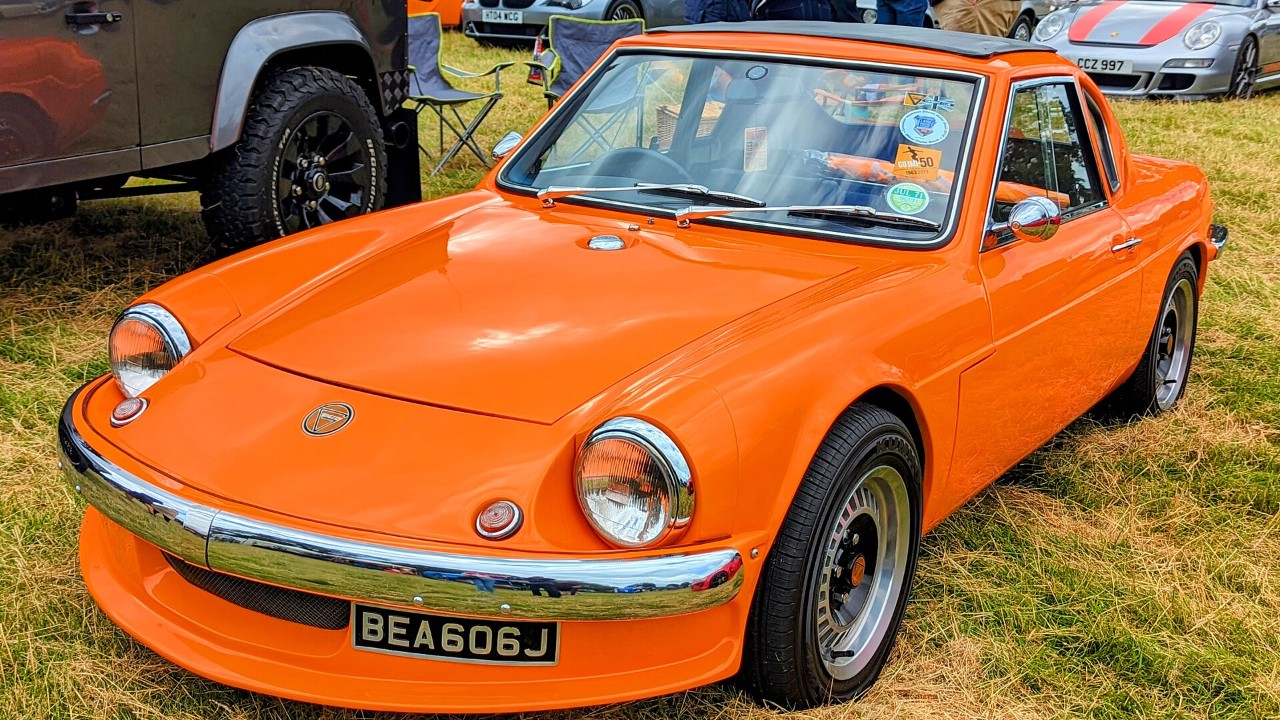
Ginetta Cars built the G15 in Witham, Essex, from 1968 to 1974. It was a small, rear-engined two-seat coupe designed by Ivor Walklett. Ginetta made about 800, which counts as a hit for a tiny British maker.
Meanwhile, the engine came from the Rootes Group’s Imp. The 875 cc four, inspired by the Coventry Climax FWMA racing unit, made about 55 bhp in standard form. Later, the G15S offered a 998 cc version with 65 bhp. That may not sound like much, but the G15 was a very small car.
Also, the construction was clever. The glass-fiber body came from a single mold, and it formed part of the structure on a tubular steel chassis. As a result, the shell did double duty as both skin and structure.
In our view, the G15 is one of the best small sports cars the 1960s produced, and it rarely gets the credit. It feels like a scaled-down racer for the road. Most American enthusiasts have never even heard of Ginetta. If you see a G15 at a show, it is worth a long look at how much car Ginetta squeezed into such a small package.
9. 1972 Intermeccanica Italia Spyder
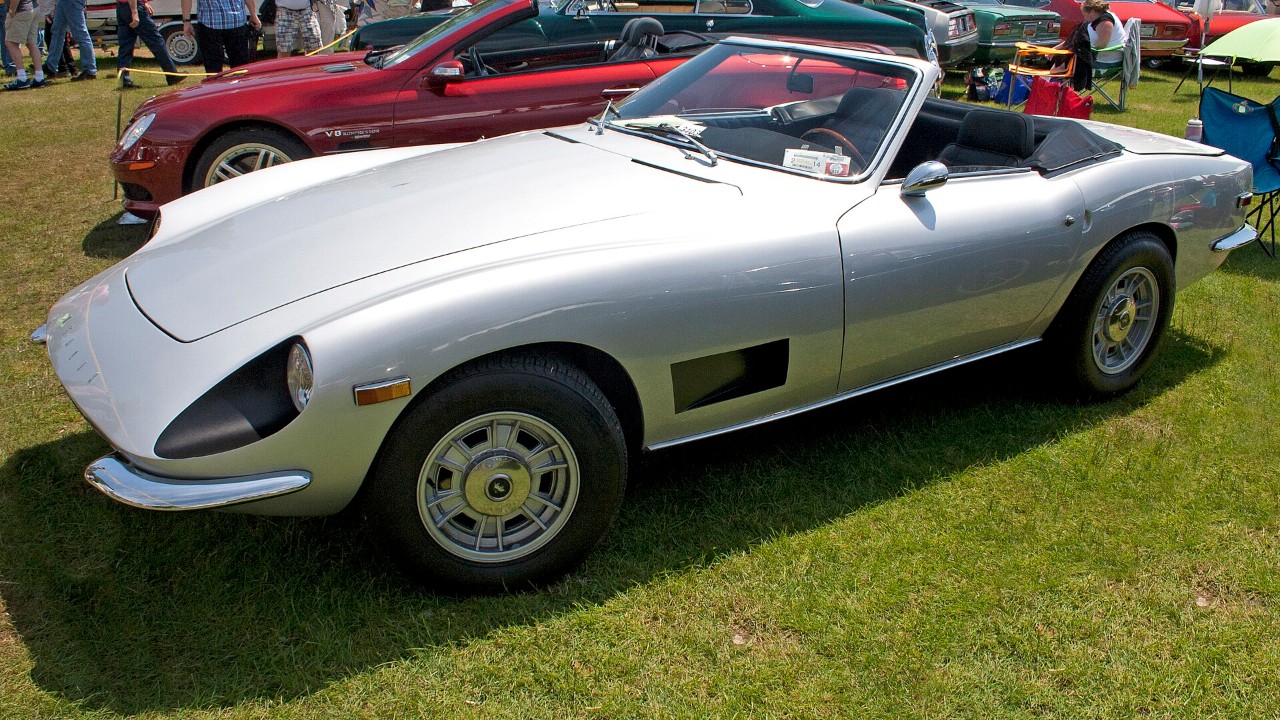
Frank and Paula Reisner founded Intermeccanica in Turin, Italy, in 1959. Their Italia began life as the Torino, and it was a larger grand touring car than the company’s earlier efforts. The firm built about 500 of them from 1966 to 1972, in both coupe and convertible form.
Again, the recipe will sound familiar. Like several Italian-American hybrids of the era, the Italia used Ford V8 power and Ford running gear. That meant parts were easy to find, while the body offered hand-built Italian style.
The Spyder is the open version, and to us it is the one to have. The long hood and short tail look classic Italian, yet the rumble is pure American V8. Meanwhile, the company’s later journey added to the mystique. Intermeccanica moved to the United States and then to Canada, where it has been based in Vancouver since 1982.
Our take: the Italia Spyder is a car that fooled plenty of onlookers into thinking it was something more exotic. In a sense, it was. With roughly 500 built, it is a rare sight, and the Ford drivetrain keeps it usable. We think it is one of the best-kept secrets of the period.
10. Monteverdi Hai 450 SS

The Monteverdi Hai made its debut at the 1970 Geneva show as the Hemi-powered 450 SS. Its 6,974 cc Chrysler Hemi V8 sat behind the cabin, fed by two Carter four-barrel carburetors. According to Classic & Sports Car, the car’s factfile lists 450 bhp at 5,000 rpm.
After that debut, the design story gets complicated. Trevor Fiore, who worked at Fissore, has said the shape was his own. However, the paperwork is copyrighted to Peter Monteverdi, who never gave up his claim. Monteverdi was born in 1934 near Basel, and he died in 1998 at 64.
Even the production count depends on who you ask. Monteverdi claimed 12 to 14 cars. Classic & Sports Car, by contrast, says there were four, and it dismisses two of those as continuation cars.
Our take: a mid-engined Swiss supercar with a Hemi is the definition of a car most fans have never seen. It is part muscle car, part European exotic, and almost entirely myth. In our view, it belongs at the top of any list like this. By Classic & Sports Car’s count, only two of the four Hai cars it tallies are originals rather than continuation cars.
More from Fast Lane Only