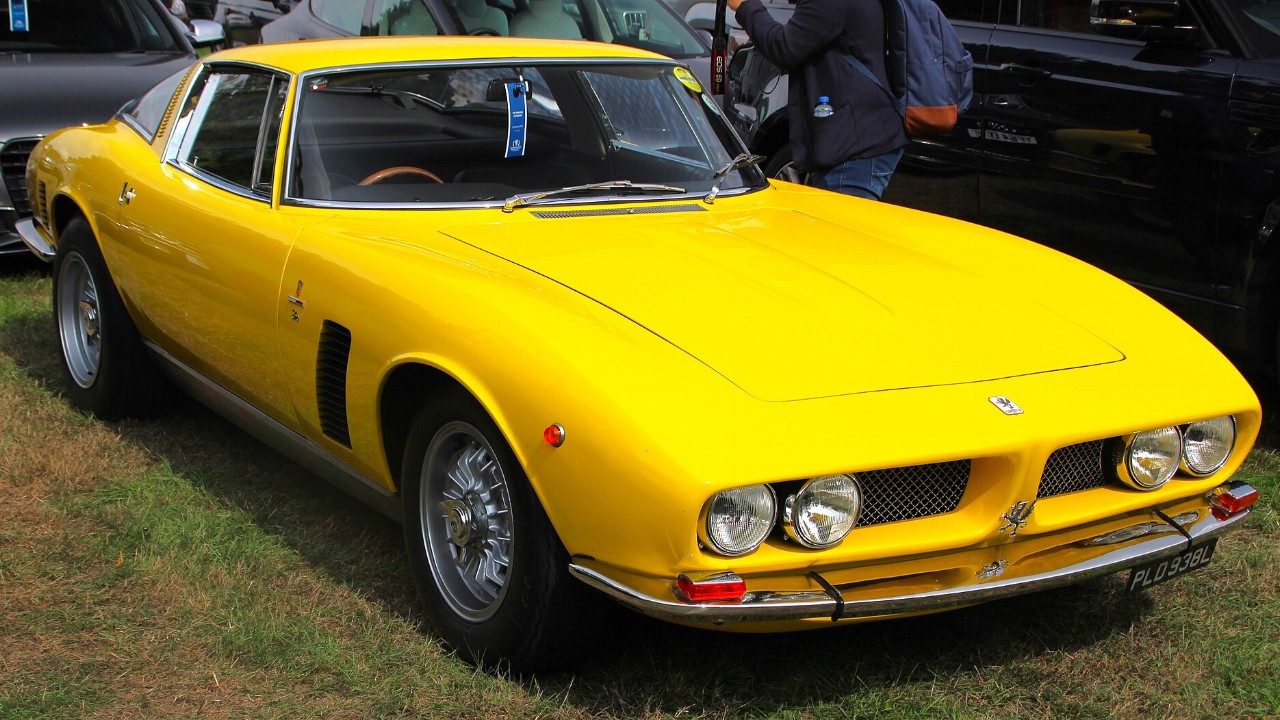
The Iso Grifo paired an Italian body with American V8 muscle, and it came from a company that once built refrigerators. It was one of many fast Italian cars of the 1960s and 1970s that left production after short runs. Iso’s own car business, for one, ended with the 1973 oil crisis.
Ferrari, Lamborghini and Maserati are famous for their headline cars. Yet each of them, plus smaller shops like Iso, built faster and stranger machines that most people have never heard of. Many had more engine than their makers could afford to keep selling.
These 12 are our picks for forgotten Italian sports and grand touring cars that, in our view, felt like too much car for the factories behind them. That verdict is our opinion. The years, engines and production figures come from the sources we read for this story.
1. 1966 Iso Grifo GL 350
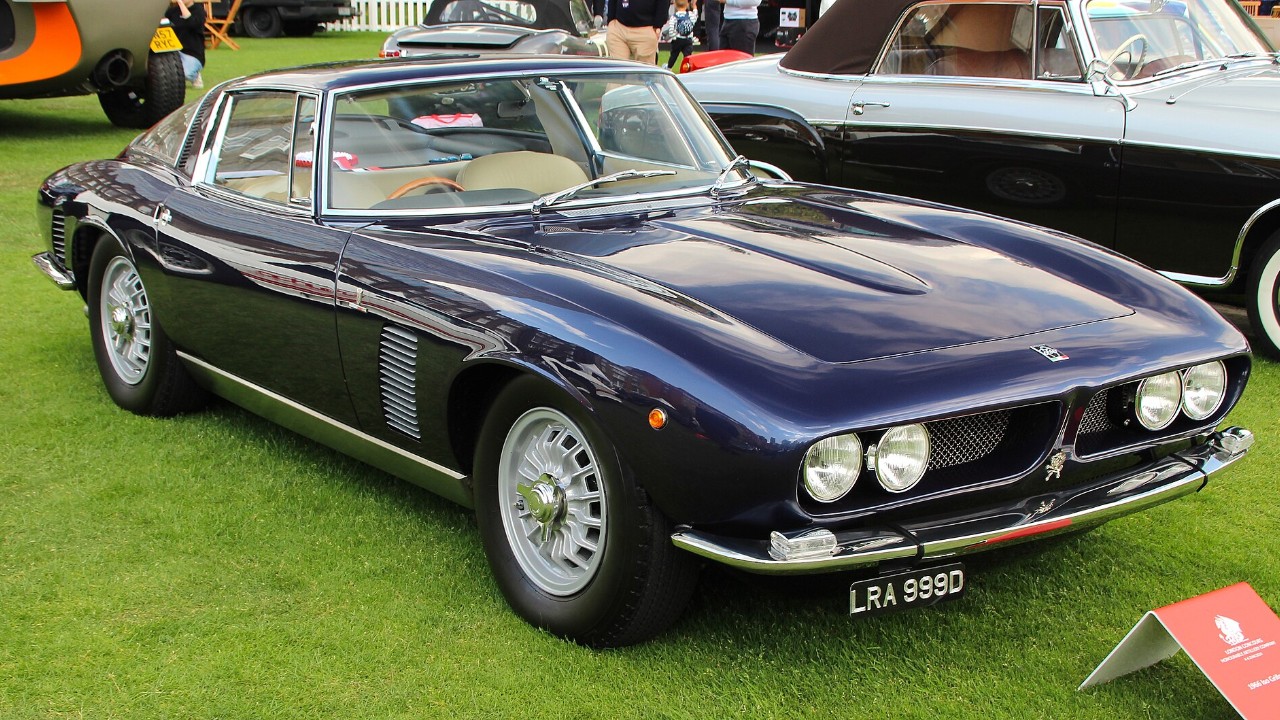
The Iso Grifo had an all-star cast. According to Silodrome’s Iso Grifo history, Giorgetto Giugiaro designed it and Giotto Bizzarrini engineered it. Carrozzeria Bertone built the bodies, while Iso founder Renzo Rivolta oversaw the project.
However, Rivolta didn’t have the money to develop his own engine and gearbox. So he bought Corvette V8s and Borg-Warner four-speeds instead. The Grifo arrived in 1965 as a leaner, faster car than Iso’s earlier Rivolta coupe, with a shorter wheelbase. It then ran through three generations until 1974. The later 7 Litri version used a 427-cubic-inch Chevrolet big-block rated at 435 hp.
The company’s story ends abruptly. Silodrome notes that the 1973 oil crisis ended Iso’s car production. We told the company’s earlier history in our story on Iso’s Corvette-powered Rivolta GTs. Our take: the early GL is the purest Iso Grifo, and it deserves far more attention than it gets. Because its drivetrain came from Chevrolet, we’d also guess it’s friendlier to own than its exotic badge suggests.
2. 1971 Iso Lele
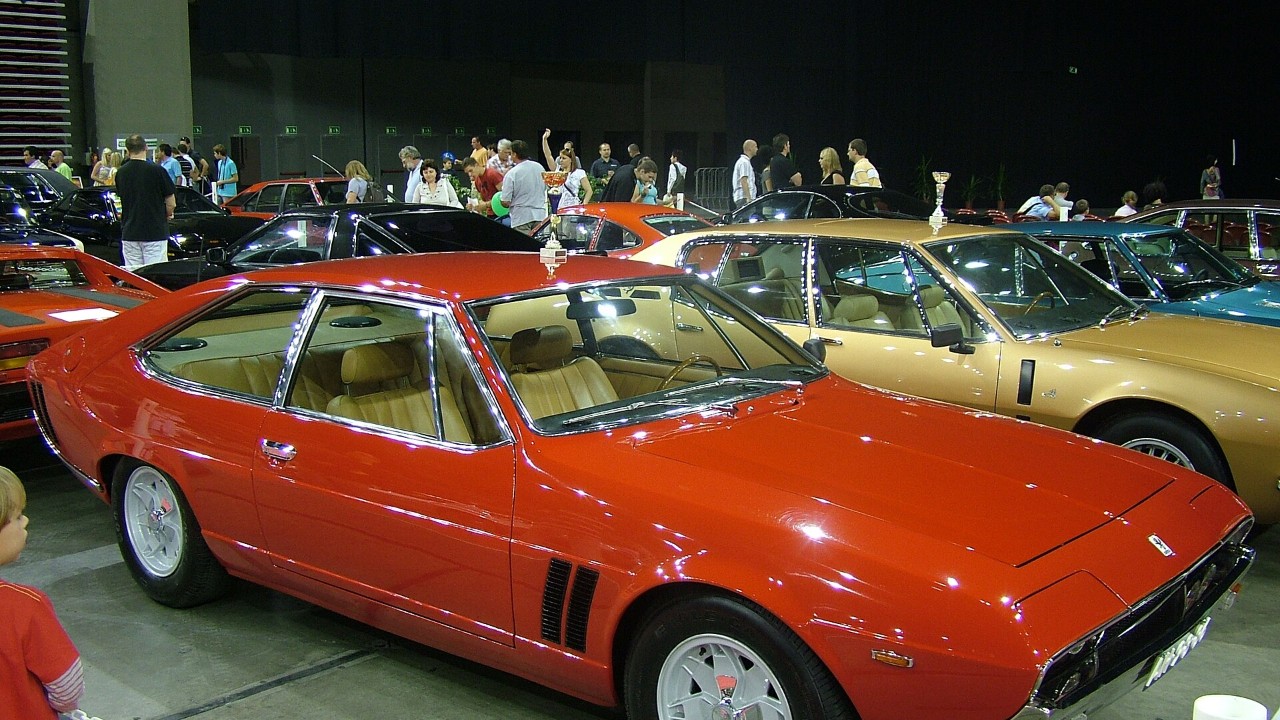
The Lele was Iso’s four-seat answer to the Lamborghini Espada, and it arrived while the Iso Grifo was in production. Petrolicious’ Iso Lele feature credits the design to Marcello Gandini at Bertone. It rode on the shared Iso chassis that Bizzarrini first designed, the same basic layout found under the Iso Grifo.
Power came from a Corvette-derived 327 V8 making about 350 bhp, matched to a four-speed manual. Iso named the car after Piero Rivolta’s wife. The total build came to just 285 cars, and only about 70 reached the United States.
That’s a tiny number for a car with this much engine. In our view, the Lele suffers from looking like a sensible coupe. Its sharp 1970s lines hide a big American V8. If you ever see one at a show, take the time to look under the hood. Also, with only about 70 sent to America, most U.S. fans have never seen one in person.
3. 1971 Iso Fidia
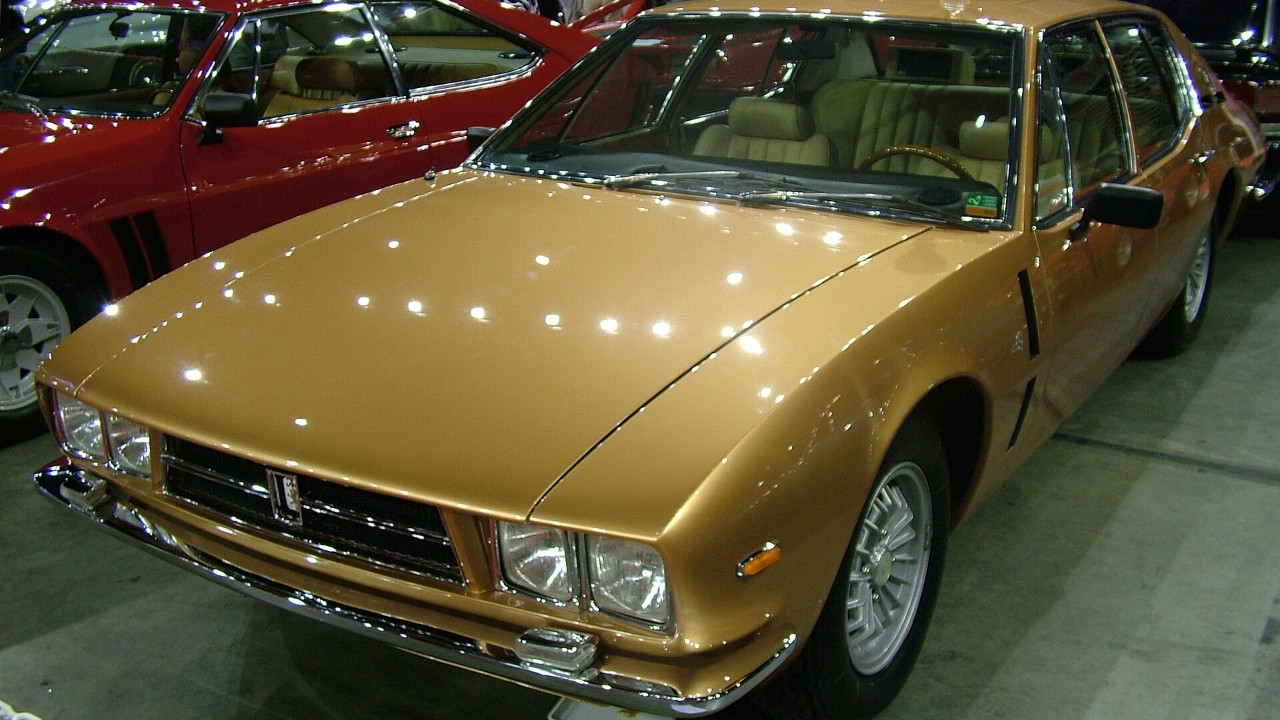
Iso also built a four-door, and it was every bit as serious. Giugiaro designed the Fidia while he worked at Ghia. Iso showed it at the Frankfurt Motor Show in September 1967 and kept it in production until 1975.
Through 1973 it used a 5.4-liter Chevrolet V8 in 300-bhp and 350-bhp versions. After that, Iso switched to a 5.8-liter Ford V8. Iso built only 192 Fidias in all. In 1971, Iso turned out just 15 of them. In other words, the factory averaged fewer than two Fidias a month that year.
Fifteen cars in a year is a hand-built pace, not a factory one. That alone tells you how hard it was to sell a V8 luxury sedan from a small Italian maker. Our take: the Fidia shows Iso’s ambition better than the Iso Grifo does. It’s a family car with a sports car’s heart, and we’d love to see more of them on the road.
4. 1970–1976 Lamborghini Jarama
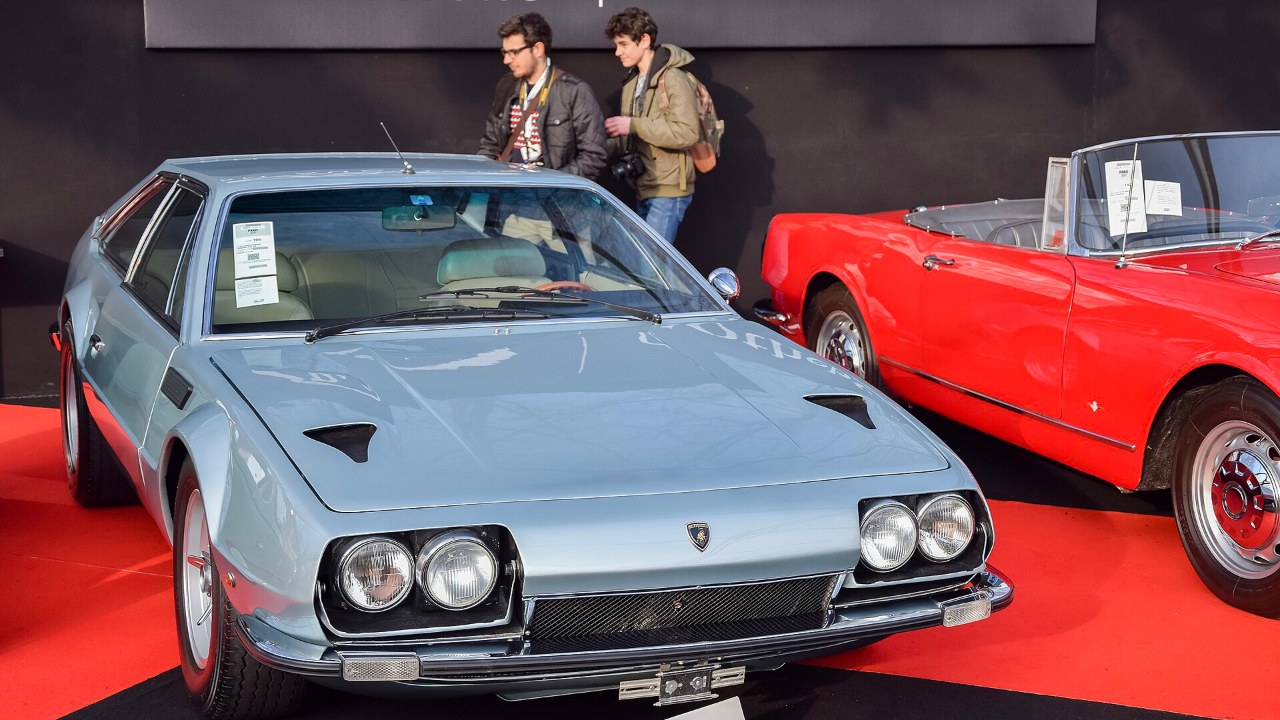
Lamborghini’s front-engine Jarama is the 2+2 most people skip on the way to a Miura. Marcello Gandini drew it at Bertone. Under the long hood sat a 3.9-liter V12, claimed at 350 bhp in the original car and 365 bhp in the Jarama S of 1972.
Even so, production stayed small. Lamborghini built 177 of the original Jarama and 150 of the S version. Since the S gained 15 bhp over the first car, it’s the version we’d look for. Ferruccio Lamborghini named it after the fighting bulls bred along Spain’s Jarama river, rather than the racing circuit near Madrid.
Here’s our opinion. The Jarama is a V12 grand tourer from Lamborghini’s early years, yet its boxy shape has kept it in the shadows. To us, that shape has aged better than its reputation suggests. With fewer than 330 built in total, it’s also a hard car to find.
5. 1974 Lamborghini Urraco P250 S
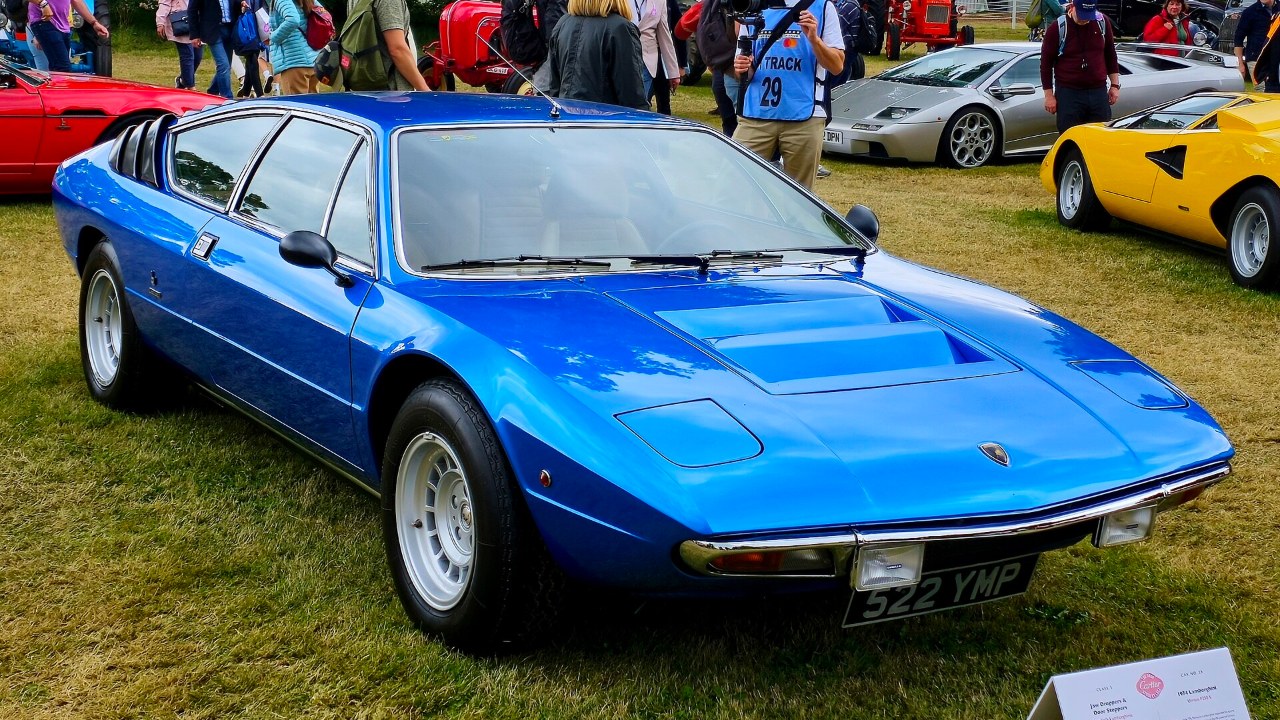
The Urraco was Lamborghini’s attempt at a smaller, cheaper car. According to Hagerty UK’s history of the Silhouette, the P250 appeared in 1970 with a 2.5-liter V8 mounted transversely behind the cabin. It made 220 hp. Bertone handled the design, and the last Urraco left the factory in 1979. Later, the P300 brought a 3.0-liter V8 with 265 hp, according to Hagerty UK.
Real production began in 1972. Lamborghini then revised the car as the P250 S in 1973, adding full leather upholstery, tinted power windows and optional metallic paint. The P250 tally reached 520 cars, including 21 P111 models for the American market.
In our view, the Urraco tried to do too much at once. It was a mid-engine 2+2 with a brand-new V8 from a company still finding its feet. The P250 S is the version we’d pick, since it added the comfort the car needed. Few people remember it next to the Countach, which is exactly why it belongs here.
6. 1976 Lamborghini Silhouette
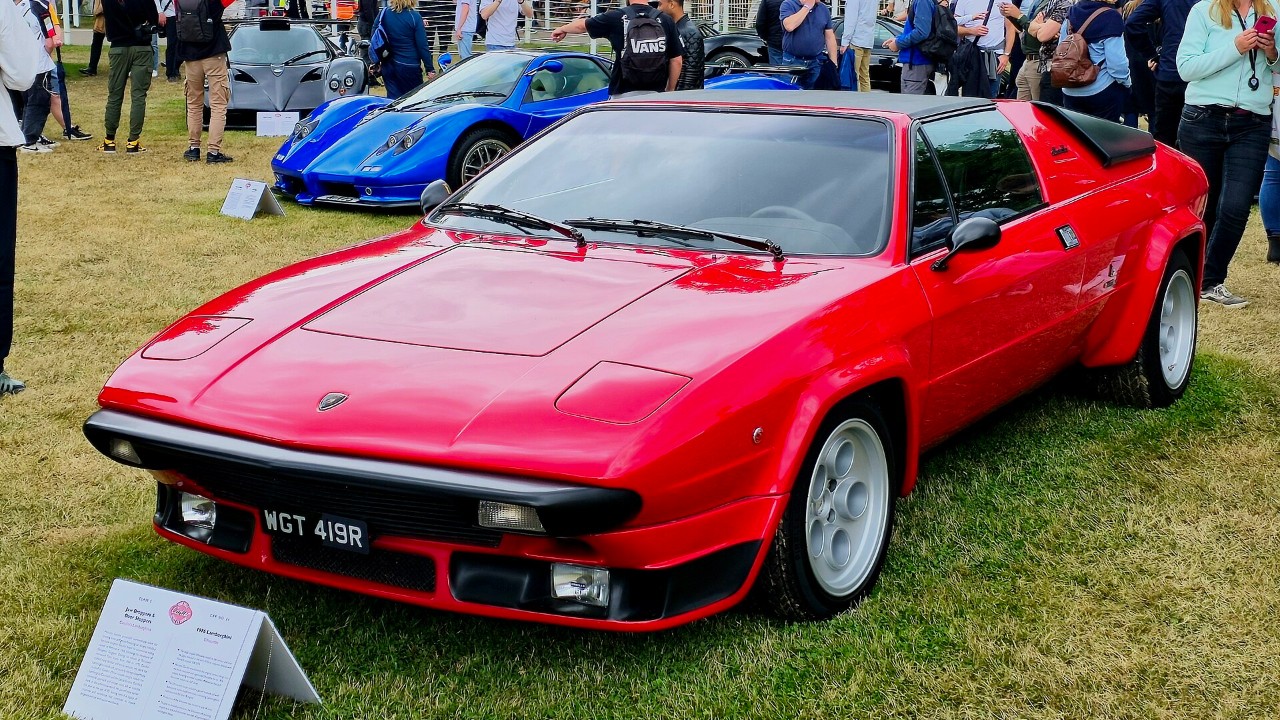
The Silhouette turned the Urraco into a targa-top two-seater. Hagerty UK says Lamborghini revealed it at the Geneva show in spring 1976. Under the skin, it was essentially an updated 3.0-liter Urraco, keeping that car’s V8 and much of its bodyshell. Bertone did the conversion, and Hagerty UK credits the design to Marcello Gandini.
Yet the production run was tiny. Lamborghini built just 55 Silhouettes before the final car in 1979. That last one went on to become the prototype for the Jalpa.
Fifty-five cars is barely a production run at all. In other words, Lamborghini averaged fewer than 15 Silhouettes a year from 1976 through 1979. In our opinion, the Silhouette is the missing link most fans never knew existed. It bridges the Urraco and the Jalpa, yet few people could name it. An open-top V8 Lamborghini this scarce deserves more fame than it has.
7. 1982–1988 Lamborghini Jalpa

The Jalpa picked up where the Silhouette left off. Lamborghini launched it in 1982 and built it until 1988, as Hagerty UK reports. It used a 3,485cc V8, a later version of the engine first seen in the Urraco and carried over in the Silhouette.
The Jalpa sold better than the cars before it, with more than 400 made. Even so, that’s a small figure for a car meant to be the brand’s more approachable model. It kept the targa roof and the mid-engine layout, then dressed them in sharper 1980s lines. As a result, the small Lamborghini finally found a few hundred buyers before it bowed out in 1988.
Our take: the Jalpa lived its whole life next to the Countach, and it couldn’t win that comparison. We’d argue it makes a friendlier daily driver than its big brother, though. In our view, that makes it the Lamborghini of its era we’d actually use.
8. 1976–1983 Maserati Merak SS
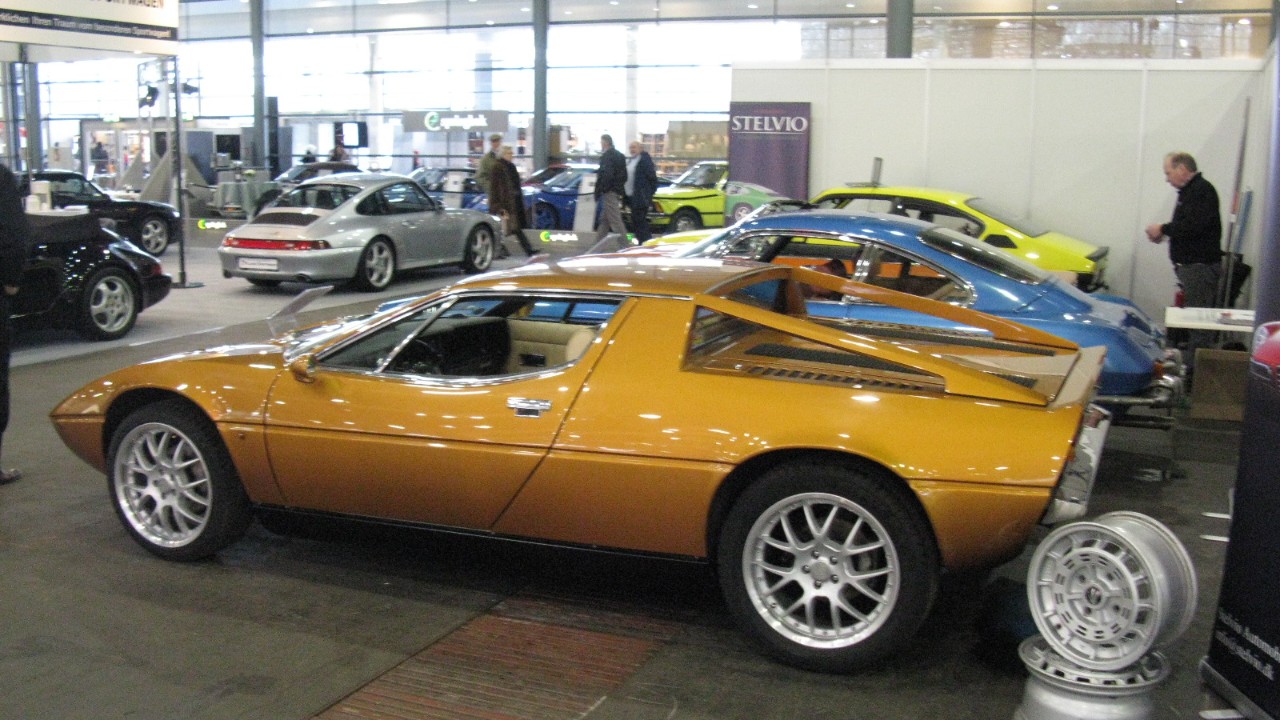
The Merak shared its engine story with a French car, which makes it an odd Maserati from the start. Its V6 grew out of the 2.7-liter Tipo C.114 that Giulio Alfieri designed in 1967 for the Citroën SM. For the Merak, Maserati bored it out to 3.0 liters. Meanwhile, Giugiaro styled the car at Italdesign.
The SS was the sharper version. Maserati showed it in 1975 and built it from 1976 until 1983. It made 220 PS, 30 PS more than the original Merak, and weighed about 50 kg less. Maserati had built roughly 1,000 SS models by the end. We traced the SM side of this story in our piece on how Citroën got the SM’s V6 from Maserati.
In our opinion, the Merak SS is the forgotten mid-engine Maserati. Most attention goes to bigger, louder Maseratis. Yet the SS offered more power and less weight than the Merak it improved. We’d pick one over many better-known 1970s exotics, since the SS fixed what the first Merak lacked.
9. 1971 Maserati Indy
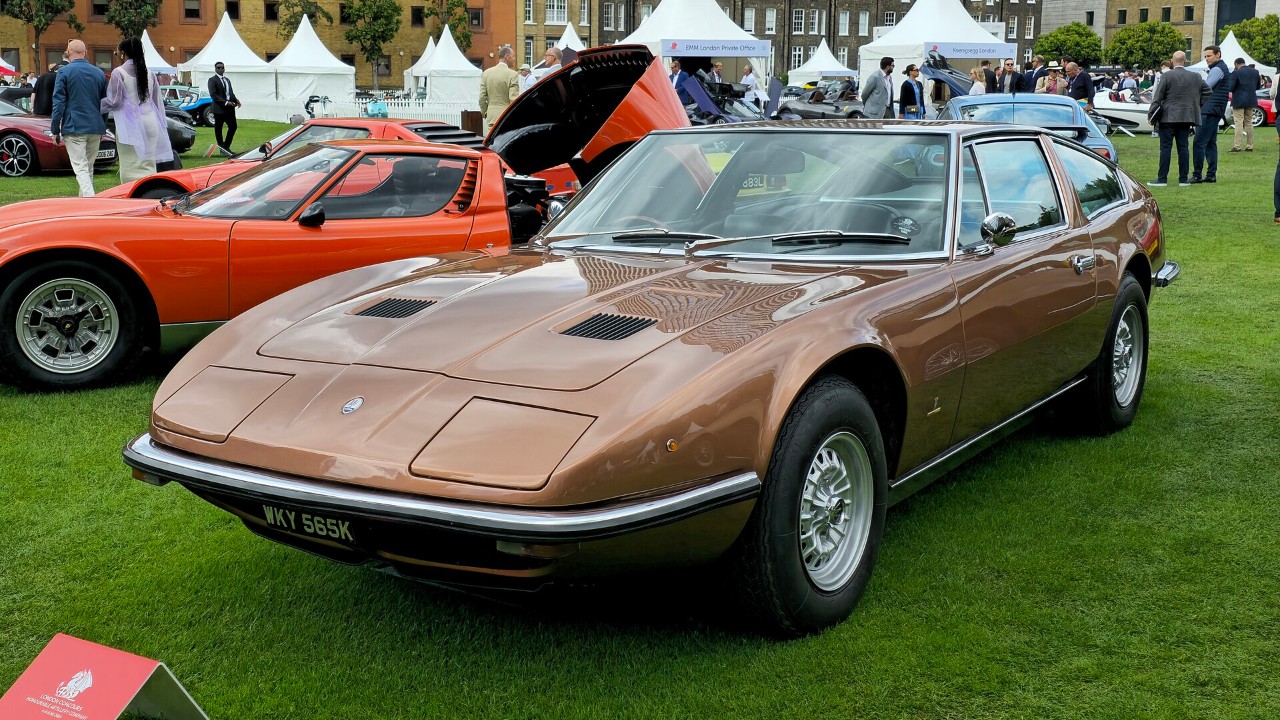
Maserati asked Vignale for a four-seat coupe, and the Indy was the result. According to Sports Car Digest’s Indy anniversary story, it first appeared on Vignale’s stand at the 1968 Turin show. It then made its official debut on Maserati’s stand at Geneva in 1969.
The engine kept growing. The first Indy had a 4,136cc V8 with 260 hp. Then for 1970, a 4,719cc version made 290 hp. By 1971, a 4,930cc V8 arrived with 300 hp. As a result, the Indy offered three engine sizes in its first three years. Maserati built 1,102 Indys in Modena between 1969 and 1975. The name honors the 8CTF race car’s Indianapolis 500 wins in 1939 and 1940.
Our take: the Indy sits in the shadow of better-known Maseratis. A 300-hp V8 coupe with room for four was a lot of car for 1971. That makes the 1971 car, with its bigger engine, the one we’d want.
10. 1971 Fiat Dino Coupe 2400
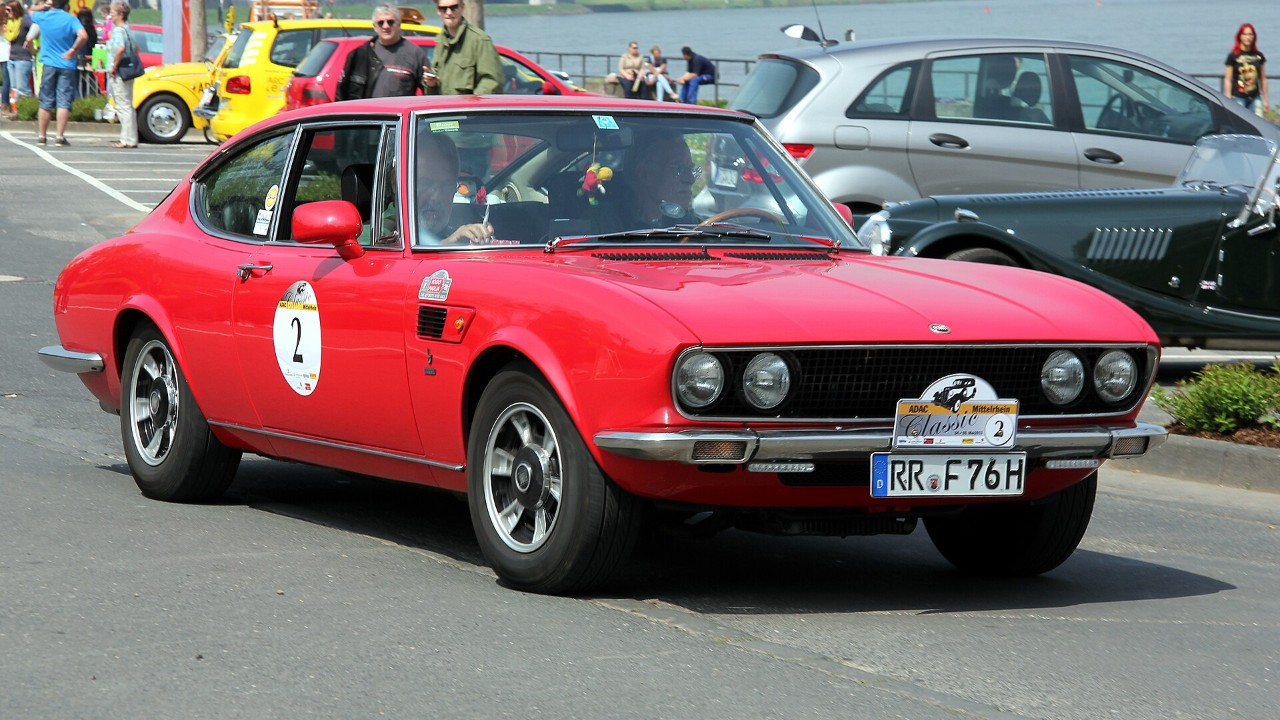
The Fiat Dino exists because Ferrari needed help. As Hagerty’s Fiat Dino story explains, Ferrari didn’t have the capacity to build its V6 in the numbers racing rules required. So Fiat built the engines and put them in its own car. Bertone styled the Coupe, while Pininfarina did the Spider.
The 2.4-liter V6 replaced the original 2.0-liter late in the run, making 180 hp. The later cars also traded a live rear axle for independent rear suspension. In all, Fiat built 7,803 Dinos. Meanwhile, the 2400 Spider is the rarest version, with 420 built, according to Hagerty. Assembly of the 2.4-liter cars moved onto Ferrari’s line at Maranello from December 1969.
Most people miss that Ferrari link behind the Fiat badge. In our view, the 2400 Coupe is the smart way into a Ferrari-designed V6. For a closer look at that engine in another car, see our story on the Lancia Stratos and its Dino V6.
11. 1971–1972 Ferrari 365 GTC/4
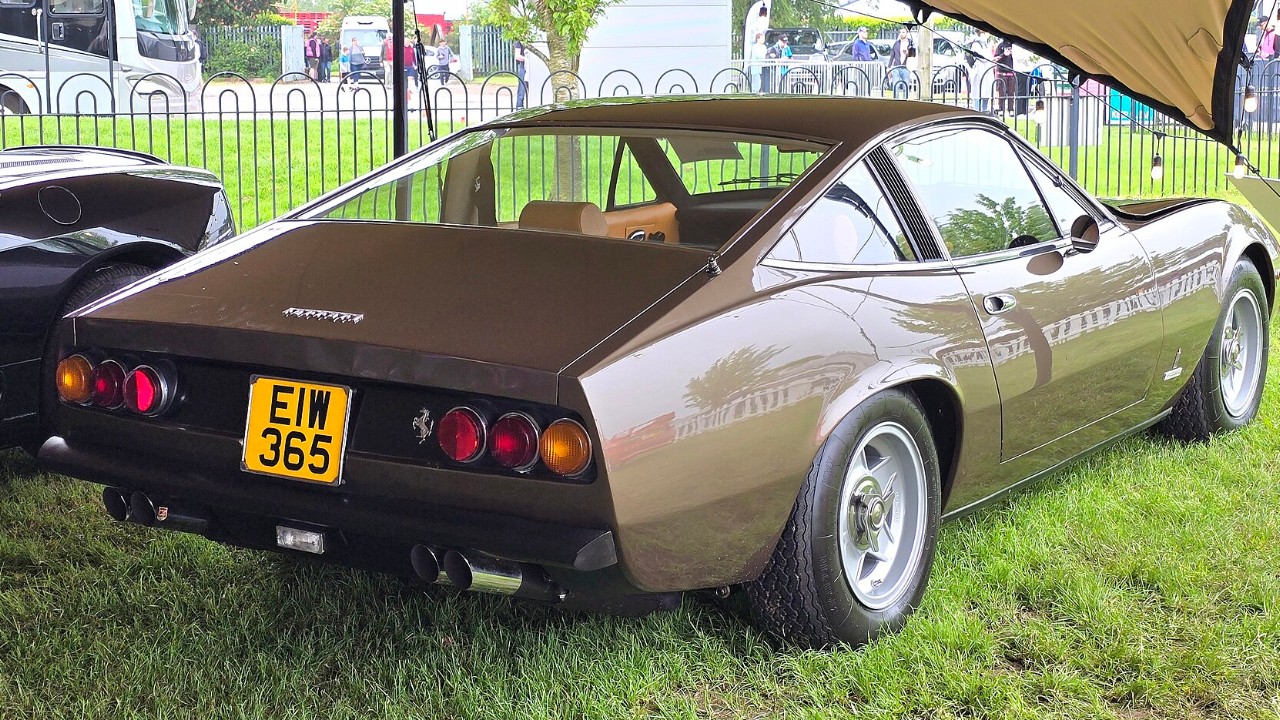
The 365 GTC/4 lived a short life between bigger names. According to RM Sotheby’s lot notes for a 1972 car, it debuted at the 1971 Geneva show. Ferrari built approximately 500 over 18 months, and most went to the United States.
Filippo Sapino of Pininfarina drew its wedge shape. It shared its chassis with the 365 GTB/4 but took a softer, more luxurious approach, with fold-down rear seats. Meanwhile, its 4.4-liter V12 made 340 PS in standard form. It also replaced two models at once, the 365 GTC and the 365 GT 2+2.
Our take: the GTC/4 is the V12 Ferrari that lives in the 365 GTB/4’s shadow, despite sharing its bones. It’s quieter and roomier, yet it gets far less attention. Because most went to the United States, American buyers also have the best odds of finding one, in our view. With production done in about a year and a half, we think it’s one of the most overlooked front-engine Ferraris of the 1970s.
12. 1972 Ferrari 365 GT4 2+2
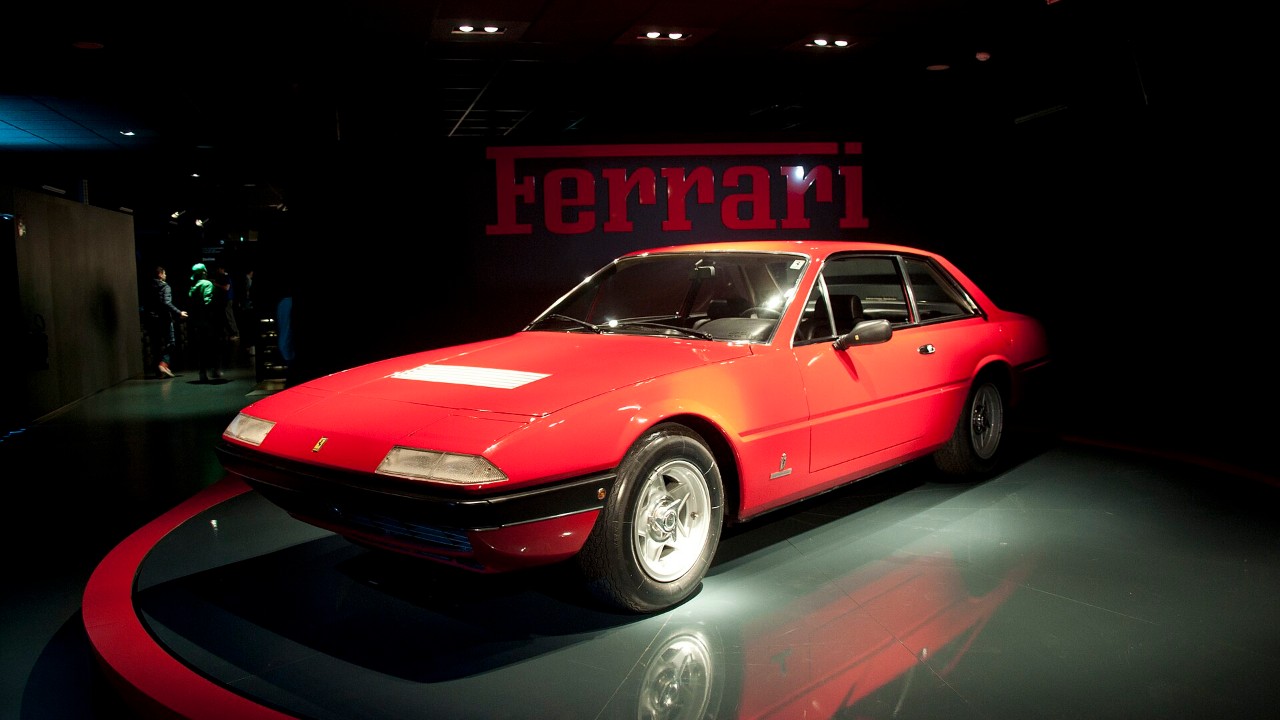
Ferrari followed the GTC/4 with a proper four-seater. The 365 GT4 2+2 debuted at the 1972 Paris Motor Show. Leonardo Fioravanti designed it at Pininfarina, and it gave Ferrari a long, crisp four-seat shape.
As before, power came from a 4,390cc V12 rated at 340 PS. So the extra seats came without a loss of power compared with the GTC/4. Ferrari built the car from 1972 to 1976, with 524 made including three prototypes. After that, the 400 replaced it.
In our opinion, the 365 GT4 2+2 is the forgotten original of a long-running family. The later 400 tends to get the attention, so people forget the first version. That makes this first car the one we’d seek out. A V12 family car from Maranello was a bold idea in 1972, and Ferrari built just 524, prototypes included.
More from Fast Lane Only