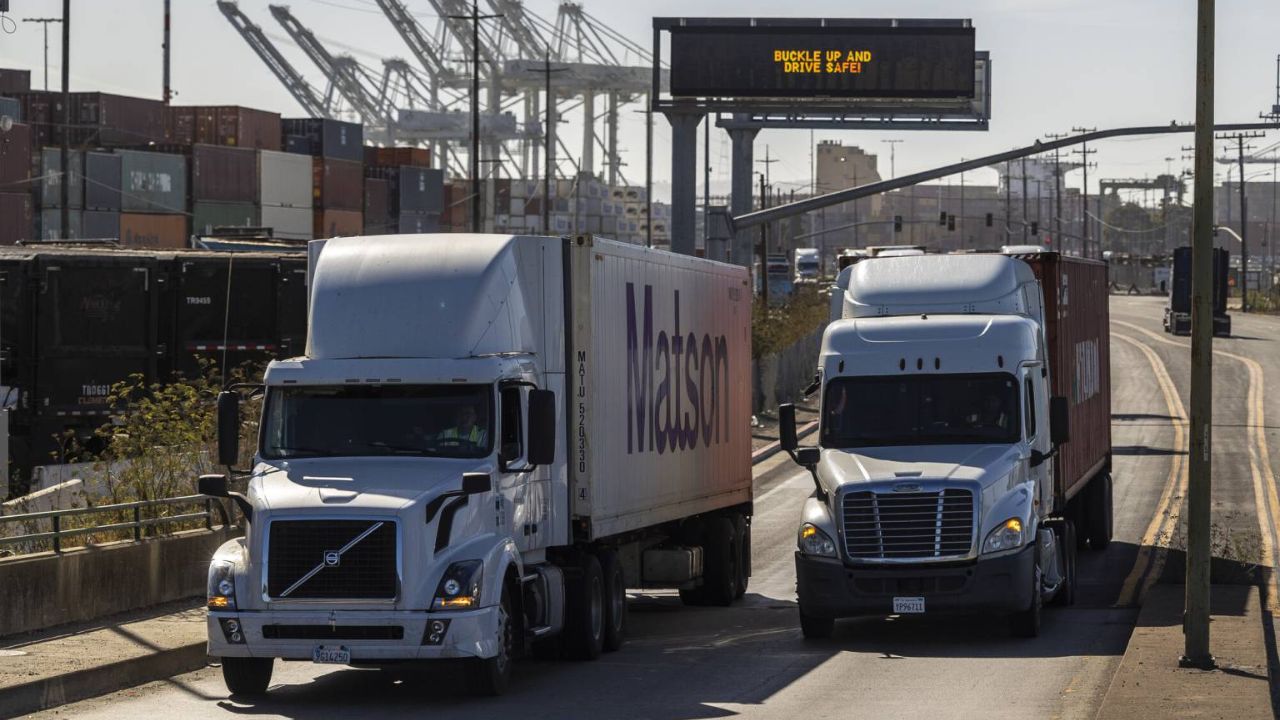
You are watching a fight over immigration, trucking safety, and federal power land squarely on California highways. As California officials move to revoke 17,000 commercial licenses held largely by immigrant drivers, you are being pulled into a clash between state regulators and the Trump administration over who gets to decide who is qualified to haul freight. Whether you run a fleet, drive a rig, or rely on goods that move through the state, you now sit in the middle of a legal and political crossfire that reaches from WASHINGTON, D.C. to the Port of Oakland.
At stake is not only whether those 17,000 licenses survive, but also how you will recruit, train, and insure drivers in a freight economy that already leans heavily on immigrants. The outcome will shape your labor costs, delivery schedules, and exposure to federal enforcement for years, even if you never set foot in California.
How 17,000 immigrant CDLs became a federal flashpoint
To see how a paperwork fight turned into a national showdown, start with California’s own review. State officials are moving to revoke 17,000 CDLs after federal scrutiny of how some immigrant drivers were trained and tested, with regulators arguing that they have to protect highway safety and keep their licensing system in line with federal rules. In the state’s own framing, the campaign is part of a broader look at What Behind California Mass Commercial License Revocations, a process that has pulled in training schools, exam procedures, and the question of whether some applicants were properly vetted before they were allowed behind the wheel.
From the federal side, the conflict intensified when the Trump administration used an audit to question the legitimacy of a large block of immigrant commercial licenses that had been issued through specific training pipelines. According to one detailed account, the company’s travails began when that audit raised doubts about whether drivers met the standards that federal law expects states to enforce, which then fed into a wider political narrative about immigration and security that you now see playing out across the trucking sector. As California pushed back, you were left with a tug of war over who bears responsibility when a state’s licensing practices collide with Washington’s enforcement priorities.
Why immigrant drivers carry so much of your freight
If you manage freight in or through California, you already depend on immigrant labor more than the national averages suggest. One analysis of trucking demographics notes that California’s freight economy leans heavily on immigrant drivers, with the situation affecting about 20% of truck drivers nationwide even though they represent only 5% of all CDLs. When you line those numbers up with the targeted pool of 17,000 licenses, you can see why immigrant communities and their employers feel singled out, and why any disruption to that workforce can ripple quickly through your routes and warehouse docks.
The revocation significantly impacts immigrant drivers who followed state rules, paid tuition to training schools, and built careers around long haul and regional work that keeps California’s ports and distribution centers moving. You may have hired some of these drivers precisely because they were willing to take overnight port drayage, cross border lanes, or less desirable routes that other drivers passed over, only to find their livelihoods suddenly tied to a fight over whether their qualifications were valid in the first place. For you, the message is blunt: your staffing plans are exposed whenever federal regulators decide that a state’s licensing pipeline no longer meets their expectations.
Trump’s Transportation Secretary Sean P. Duffy turns up the heat
Your regulatory risk grew even sharper once Transportation Secretary Sean P. Duffy stepped into the spotlight. In a pointed statement from WASHINGTON, D.C., U.S. Transportation Secretary Sean P. Duffy framed the California licensing issue as a matter of illegal trucking licenses and made clear that the Federal Motor Carrier Safety Administratio would not tolerate what he cast as a breakdown in oversight. When a cabinet official signals that kind of posture, you should read it as a warning that audits, data sweeps, and potential funding leverage are all on the table for carriers that rely on drivers tied to the questioned programs.
The same pressure campaign has been reinforced through additional federal messaging that accuses California of mishandling Commercial Driver Licenses on a large scale, repeatedly pointing to the figure of 17,000 as evidence of systemic failure. When you connect those statements with the technical infrastructure behind CDL regulation, such as the federal Training Provider Registry that sits at tpr.fmcsa.dot.gov, you can see how quickly a political dispute can turn into operational risk for your company. If a training provider you used loses its federal recognition, you may suddenly have to pull drivers off the road, retrain them, or face questions from inspectors who now view your hiring decisions through a more skeptical lens.
California’s legal pushback and what it means for your fleet
California has not simply accepted the federal narrative, and that resistance directly affects how you plan for the next year. State officials and advocates have gone to court to challenge the Trump administration’s attempt to rescind large numbers of commercial driver’s licenses through new federal regulation, arguing that drivers who followed the rules should not be punished retroactively. One lawsuit describes how Last year, the Department of Transportation issued a rule that would have stripped licenses from people who had already been vetted, raising concerns about due process and whether drivers could be insulated from any retaliatory action once they spoke out about the chaos that followed.
For you, the legal back and forth creates a kind of regulatory whiplash. On one side, California officials are moving to revoke 17,000 CDLs under their own review of What Behind California Mass Commercial License Revocations, telling you that some drivers may no longer be valid even if they still show up as licensed in your internal systems. On the other side, court orders tied to the California lawsuit temporarily halts Trump’s crackdown on revoking CDL, which can delay or partially block federal attempts to force immediate cancellations. You are left to navigate a patchwork of state notices, federal guidance, and legal updates, all while trying to keep trucks loaded and insured.
How you can protect your operation in the crossfire
In this environment, you cannot treat licensing as a one time onboarding step. Instead, you need to treat every driver file as a living record that could be questioned if it traces back to the California programs under scrutiny. That starts with verifying where your drivers trained and tested, then cross checking those providers against both state alerts and federal registries. The federal Training Provider Registry at federal registry is one tool you can use to confirm whether a school is recognized, while state level updates on California Revokes Commercial Driver Licenses can flag programs that are now under review even if they were once accepted.
You also need to prepare for the human and financial side of any mass revocation. If some of your drivers fall within the 17,000 at risk, you may face sudden schedule gaps, higher overtime for remaining staff, and potential claims from workers who believe they are being unfairly sidelined. Industry advocates have already described how one company’s travails began in September when the Trump administration released an audit that questioned the legitimacy of about a thousand immigrant commercial licenses, which then cascaded into layoffs, legal bills, and tense meetings with the advocacy group that represents them. You can avoid the worst of that disruption by building contingency plans now, including cross training non CDL staff for yard moves, lining up third party carriers, and budgeting for retraining costs if drivers need to requalify under stricter rules.
More from Fast Lane Only