Chevrolet introduced the Camaro in the fall of 1966 as a 1967 model, and buyers could choose a hardtop or a Camaro convertible right from the start. That open car set a tone the nameplate never lost. Over six generations, the Camaro wore hidden headlights, pace-car stripes, plush trim and, finally, a supercharged V8 with track hardware.
Most of us have a Camaro story. Maybe it was a neighbor’s car, a first date or the poster on a bedroom wall. However, not every Camaro tugs at the heart in the same way. Some are fast, some are rare, and a few simply feel right every time you turn the key.
These are our picks: eight Camaros we swear we’d never sell. The verdict is ours alone, so treat it as garage talk rather than a market forecast. Still, every year, engine and production figure below comes from factory history and published records.
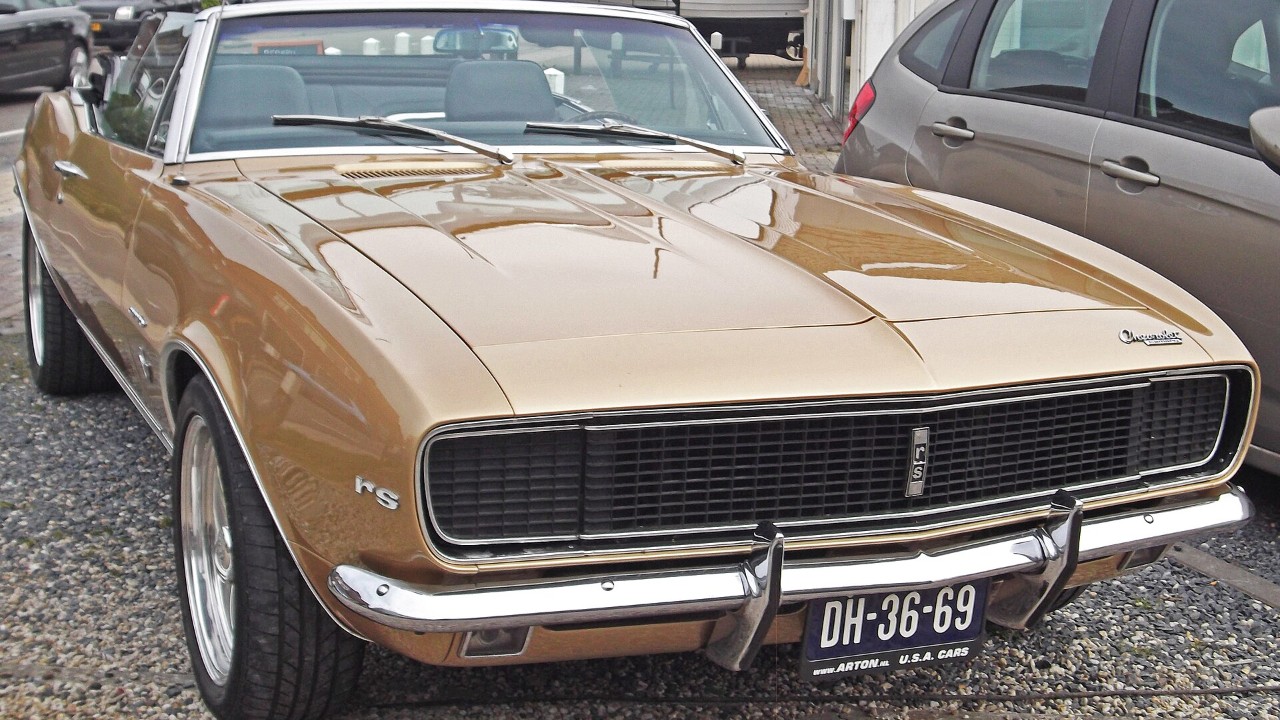
1. 1967 Chevrolet Camaro RS convertible

The first-year Camaro had a party trick, and it lived in the grille. When you ordered the RS appearance package, the headlights hid behind doors that slid sideways out of sight. The package also brought revised taillights, with the back-up lamps moved below the rear bumper. On top of that, it added RS badges and bright exterior trim.
Here’s the part we love most. Chevrolet offered the RS look on any 1967 Camaro, so the hidden lamps could sit on any model in the range. In addition, the RS shape went straight to Indianapolis that year. A Camaro RS/SS convertible with a 396 paced the 1967 Indianapolis 500, and Chevrolet sold 100 replicas to the public.
Our take: a first-year Camaro convertible with the RS nose is the purest version of the original idea. It looks clean with the lamps closed and a little surprised when they pop open. Top down on a summer evening, it reminds you why the Camaro took off so fast. We’d keep one for that drive alone, even if a newer car could beat it everywhere else.
2. 1969 Chevrolet Camaro Indy 500 Pace Car
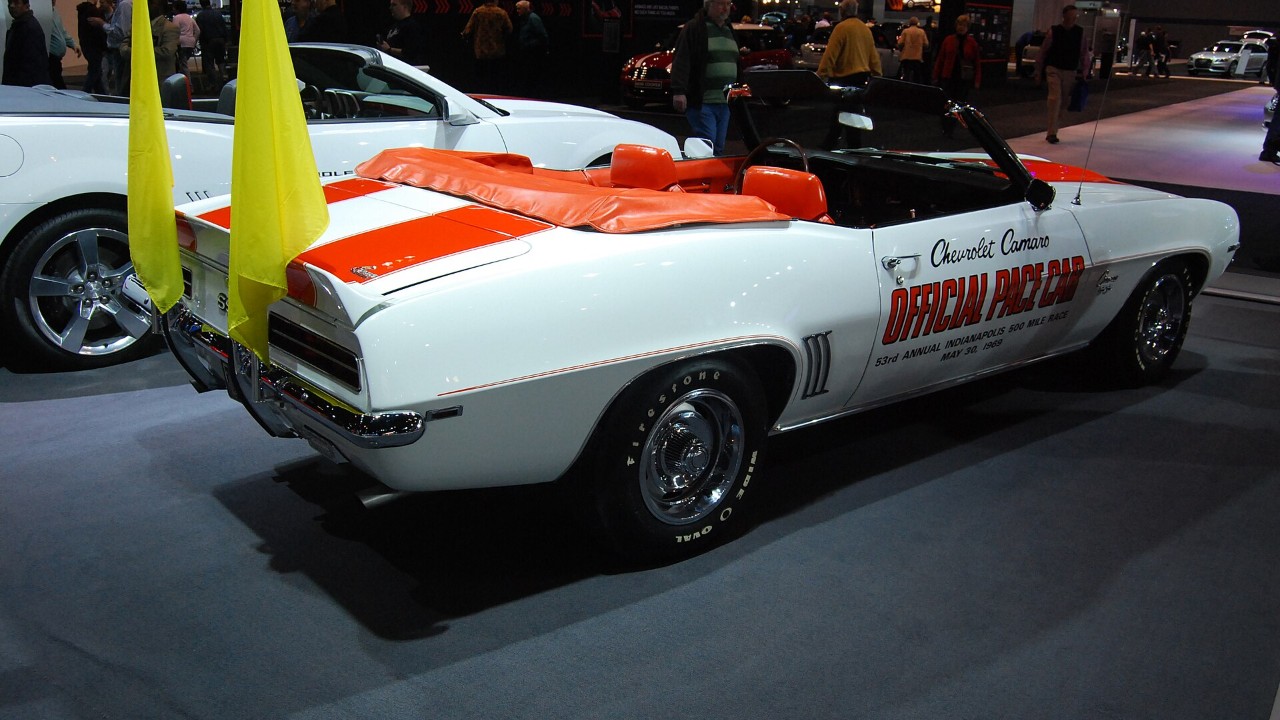
For 1969, Chevrolet turned a pace-car honor into an option you could tick on the order form. Option code Z11 carried the name Indy 500 Pace Car Accents, and it cost just $36.90. According to Classic Industries’ history of the 1969 pace car, the package meant Dover White paint, Hugger Orange stripes and a white convertible top. It also added a cowl-induction hood and Official Pace Car door lettering.
Inside, the Z11 cars wore bright orange trim with houndstooth cloth accents that other convertibles didn’t get. The same history cites Camaros.org for a total of 3,675 Z11 replicas. The standard setup was a 350 small-block with a three-speed manual. Even so, buyers could step up to the 396 big-block and a three-speed automatic, the combination the two original Indy pace cars used. Chevrolet also built about 500 Z10 coupes for certain Southwest dealers.
Our take: few colors say late-1960s Detroit like white and orange on a convertible. It’s loud in the best way, and the history is baked into the paperwork. Because the stripes are easy to copy, check the trim tag and documentation before you buy. If the papers check out, we’d never let it go.
3. 1973 Chevrolet Camaro Type LT

The second-generation Camaro grew up fast, and the Type LT proves it. Chevrolet introduced the Type LT for 1973 as the comfortable Camaro. It came with a quieter, better-appointed interior and full instrumentation. Rally-style wheels, variable-ratio steering, sport mirrors and hidden windshield wipers rounded it out.
That mix arrived at a good moment. Camaro sales climbed to 96,751 for 1973, and then the 1974 cars grew seven inches longer. Much of that growth came from new bumpers that federal standards required. As a result, the 1973 Type LT keeps the shorter, cleaner body from before that change. The Type LT stayed in the lineup until the Berlinetta replaced it for 1979.
Our take: everybody chases the Z28, but the Type LT is the Camaro you could drive every day in 1973 without earplugs. It keeps the long-hood, short-deck body that made the second generation so handsome. Meanwhile, the full gauges make it feel special from the driver’s seat. We’d hold onto one for long highway days, and we wouldn’t apologize for picking comfort over stripes.
4. 1979 Chevrolet Camaro Berlinetta
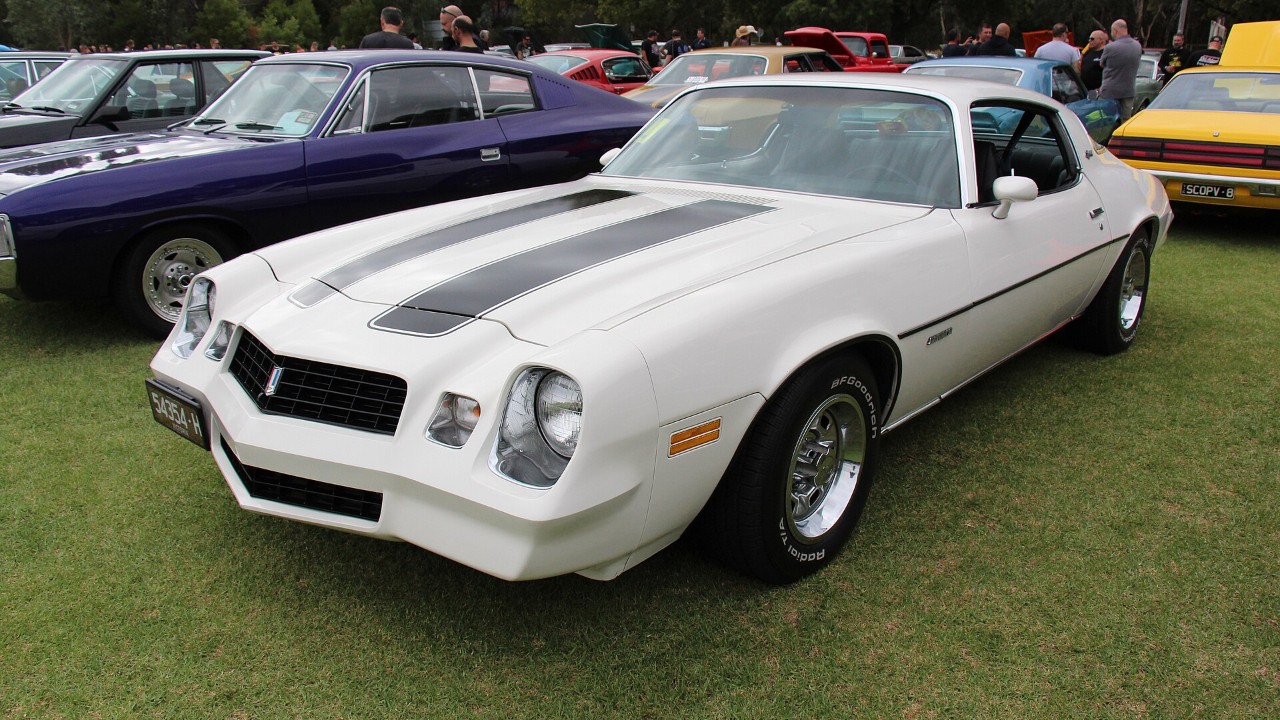
The Berlinetta took over from the Type LT for 1979 as the luxury-minded Camaro. It used the 305-cubic-inch V8 with a two-barrel carburetor as its standard engine. In other words, Chevrolet aimed this one at cruising rather than quarter-mile times. By comparison, the 1973 Z28 had carried a 350 rated at 245 horsepower, so the shift in priorities is easy to see.
The timing was perfect for Chevrolet. Camaro sales hit 282,571 units in 1979, the strongest year of the second generation and the highest annual total for any Camaro generation. So the Berlinetta arrived right at the peak, when the long-running body had won over more buyers than ever.
Our take: the Berlinetta is the Camaro for people who’d rather glide than launch. It captures the late-1970s mood, with a small V8 that never needs to feel rushed. Moreover, it’s a reminder that the Camaro sold best when it focused on everyday drivers. Look for honest original examples with intact trim, because a complete car beats a project every time. We’d keep a nice one as a Sunday car for good.
5. Chevrolet Camaro IROC-Z convertible
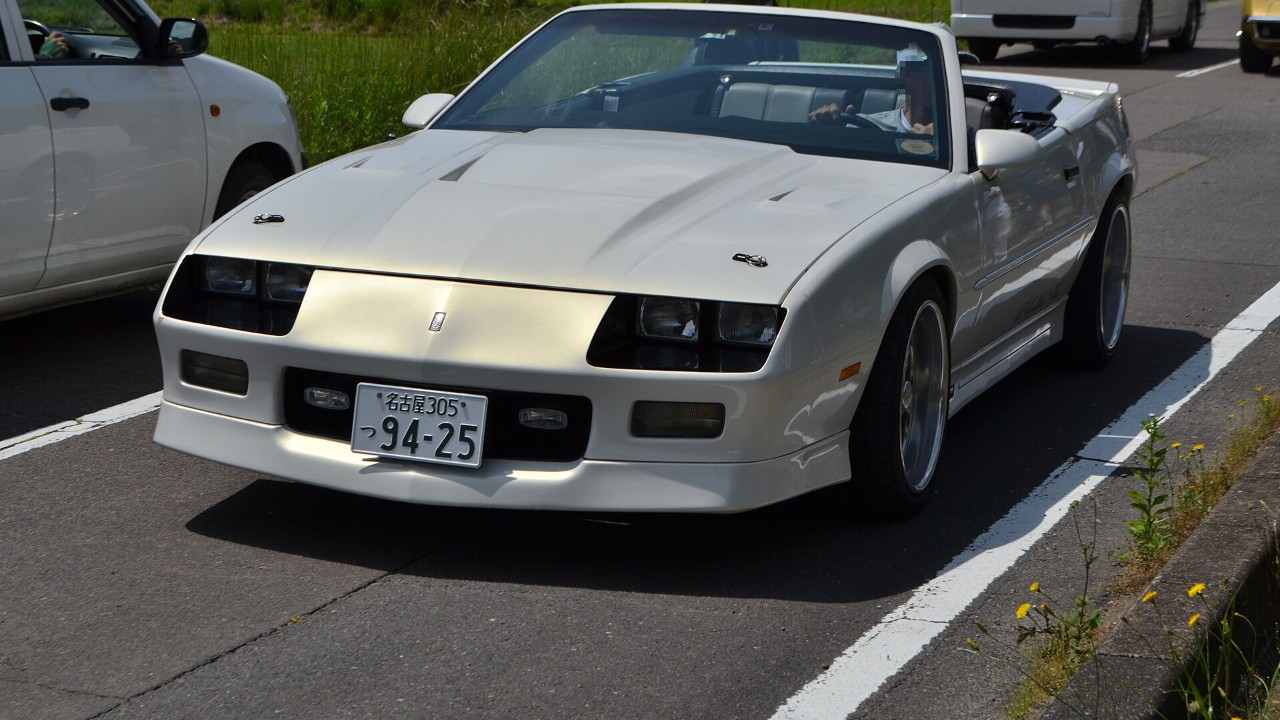
The IROC-Z began in 1985 as an option package on the Z28. Chevrolet named it after the International Race of Champions. Then, for 1987, the convertible returned to the Camaro lineup. The American Sunroof Company converted T-top cars into convertibles, and the first year totaled 1,007 units across the trims that offered the top.
The engines are a big part of the appeal. In 1987, the 350 Tuned Port Injection V8 joined the IROC-Z at 225 horsepower, though only with an automatic. By 1990, that engine had climbed to 245 horsepower, its final IROC-Z rating. After that season, the badge disappeared, because Chevrolet decided not to renew its contract with the race series.
Our take: an IROC-Z convertible captures the late-1980s better than almost anything with four wheels. You get the wide-tire stance, the tuned-port V8 sound and open sky over your head. If you shop for one, confirm the IROC-Z equipment through the build codes, since badges are easy to add. We’d keep a documented one forever and drive it with the radio up.
6. 1997 Chevrolet Camaro SS 30th Anniversary convertible
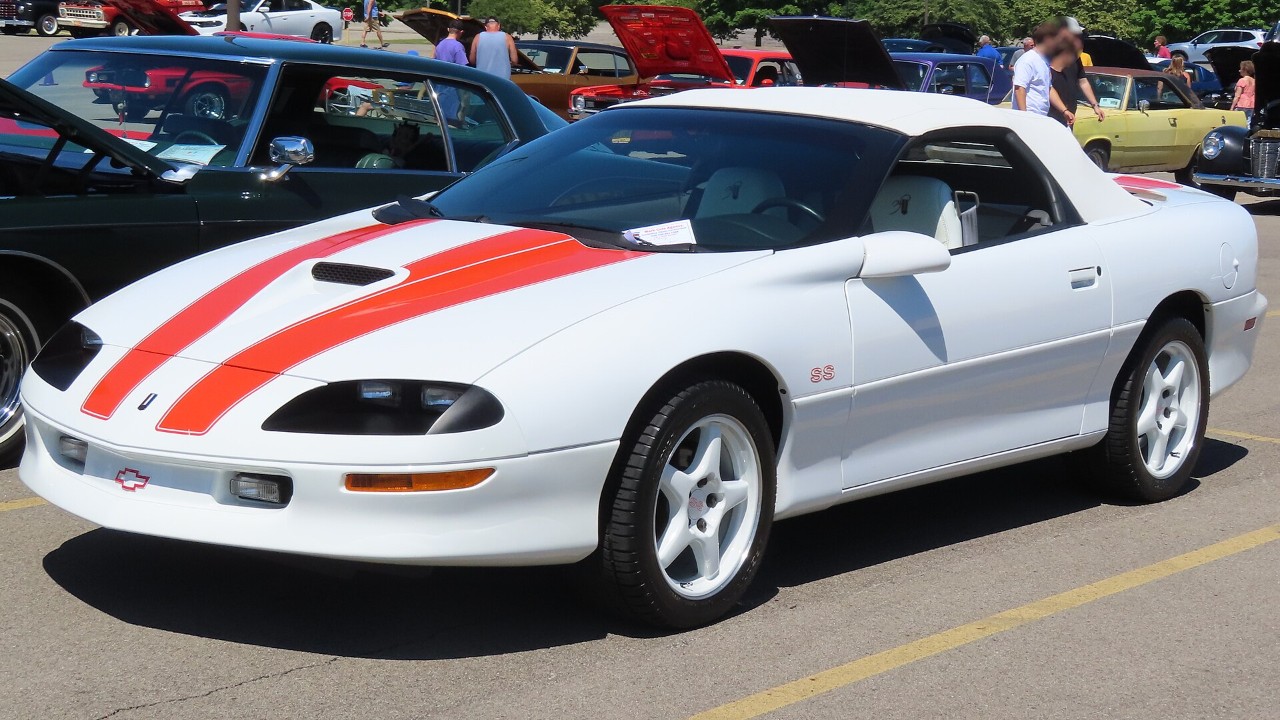
Chevrolet marked the Camaro’s 30th birthday with the 30th Anniversary Limited Edition. It paired white paint with orange stripes, a clear nod to the 1969 pace car. The package came only on the Z28, SS and RS, and you can confirm one by the RPO code Z4C on the trim tag. Meanwhile, the whole 1997 Camaro got a new interior and tri-color taillights.
The SS part matters too. Chevrolet built the SS with SLP Engineering starting in 1996, and its V8 made 305 horsepower. For 1997, SLP went further on a tiny batch of anniversary cars. It fitted 108 of them with the LT4 V8 rated at 330 horsepower. Of those, 100 went to the United States and six went to Canada, while two served as prototypes. The fourth-generation cars came from Sainte-Thérèse, Quebec.
Our take: an anniversary SS convertible ties the whole Camaro story together in one car. It has modern fuel injection and real speed, yet it wears the colors of a 1969 icon. Check for the Z4C code and SS paperwork before you pay a premium. With those in hand, we’d park it and never answer the phone when buyers call.
7. 2010 Chevrolet Camaro 2SS
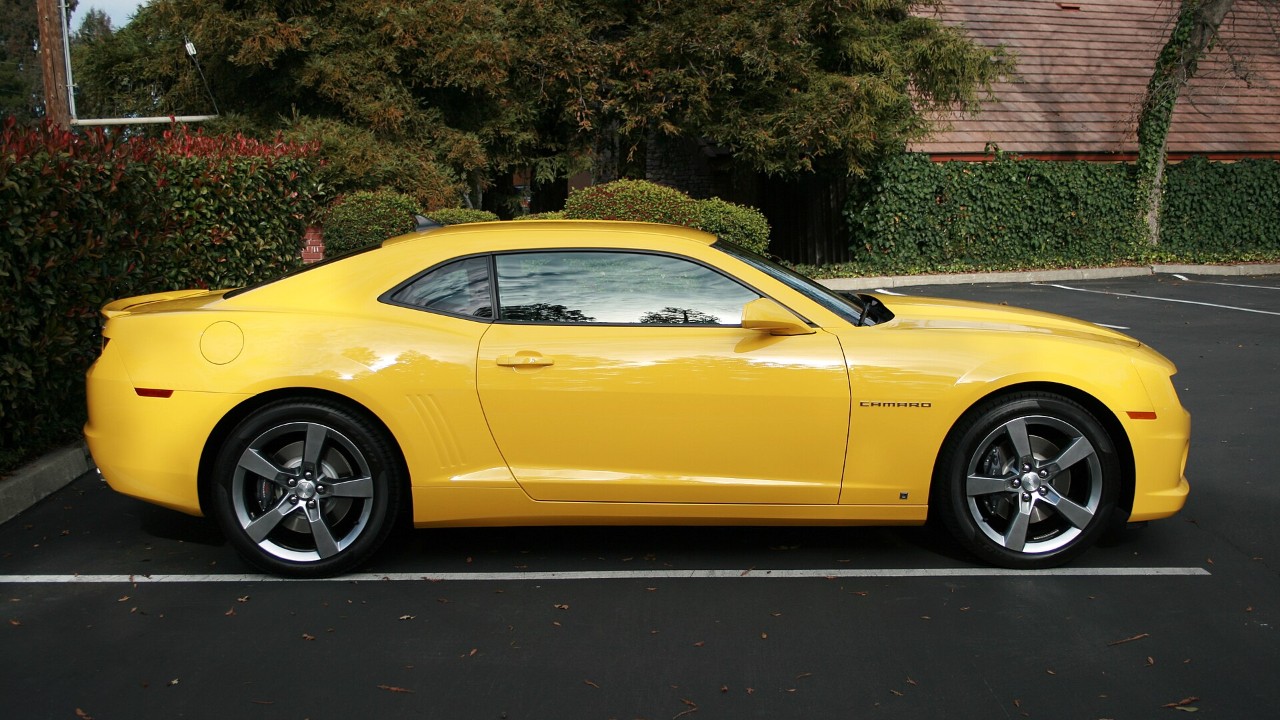
The Camaro returned for 2010 after the fourth generation ended in 2002, and the new car drew its shape from a concept. Chevrolet first showed that concept at the 2006 North American International Auto Show in Detroit. Production began on March 16, 2009, at Oshawa, Ontario, and the car went on sale in April 2009 as a 2010 model. The 2SS sat at the top of the launch lineup.
Two V8s powered the SS. With the manual, the 6.2-liter LS3 made 426 horsepower. With the automatic, the L99 made 400 horsepower and used Active Fuel Management to save fuel on the highway. Every SS also rode on 20-inch wheels with four-piston Brembo calipers. The car pictured carries the RS package too, which added HID headlamps with halo rings, a rear spoiler and RS taillamps.
Our take: the 2010 2SS brought the Camaro back to life, and that matters to us. It also launched a pop-culture moment, since Chevrolet built 1,916 Transformers Special Edition cars in 2010. If you find a manual LS3 car with good records, buy it before the market notices. We’d never sell ours, because it’s the Camaro that started the comeback.
8. 2018 Chevrolet Camaro ZL1 1LE
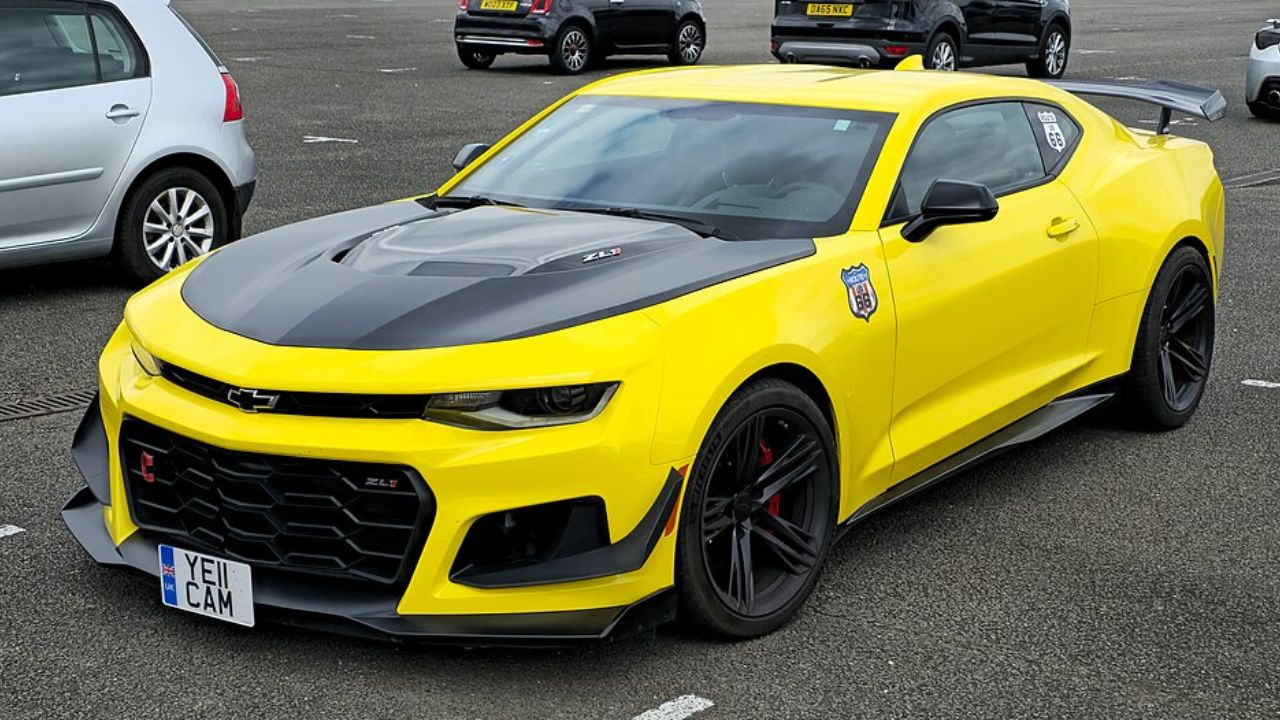
The ZL1 1LE turned a muscle car into a serious track tool. Its supercharged LT4 V8 makes 650 horsepower, and Chevrolet surrounded it with racing-derived parts. According to Auto123’s report on the record lap, it uses Multimatic DSSV spool-valve dampers front and rear. It also wears Goodyear Eagle F1 Supercar 3R tires, front dive planes and a carbon-fiber rear wing.
The results spoke loudly. In 2017, a ZL1 1LE lapped the Nürburgring Nordschleife in 7:16.04. That made it the fastest Camaro ever around the German track at the time. It also beat the automatic 2017 ZL1 by 13.56 seconds. Better still, the 1LE weighs about 60 pounds less than a standard ZL1, thanks to thinner rear glass, a fixed rear seatback and lighter parts. At first, Chevrolet sold it only with a six-speed manual.
Our take: the ZL1 1LE is the most capable Camaro Chevrolet ever offered, and it feels like a reward for decades of loyalty. We’d keep one for track days and slow sunny cruises alike. Its era has closed, too. Sixth-generation Camaro production ended on December 14, 2023, at Lansing Grand River Assembly in Michigan.
More from Fast Lane Only