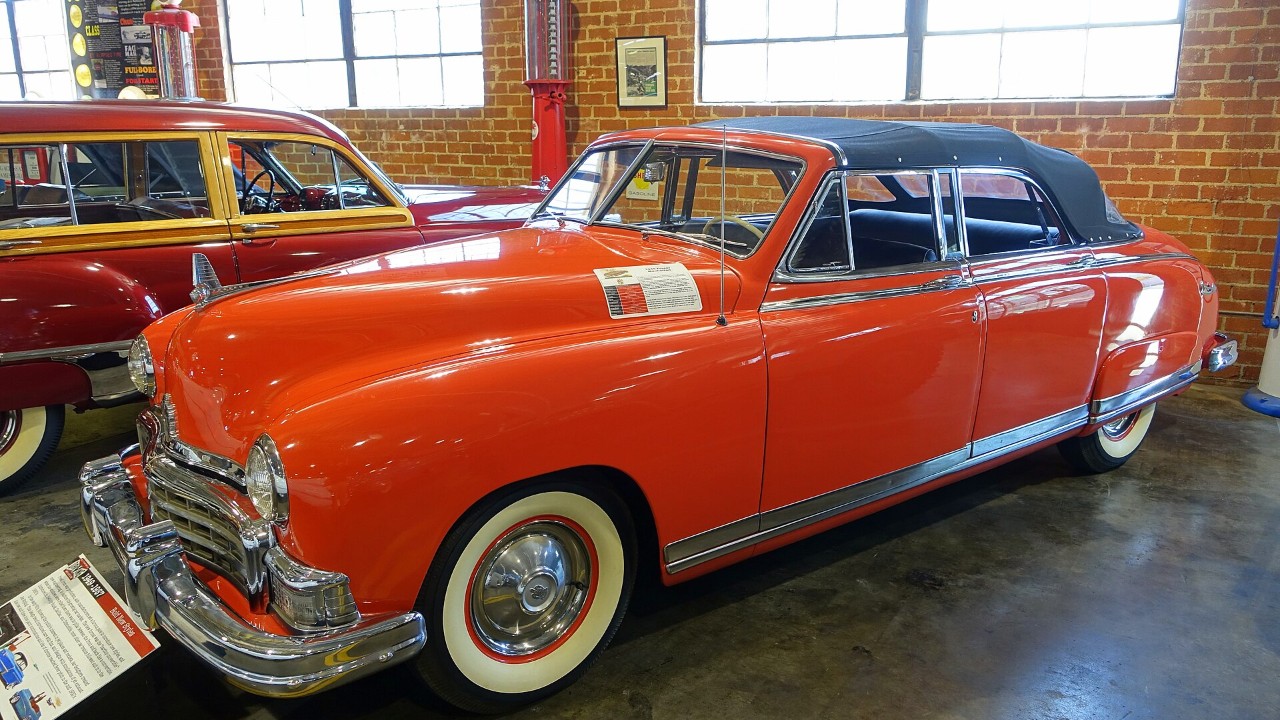
Henry J. Kaiser and Joseph W. Frazer founded Kaiser-Frazer on July 25, 1945, and they aimed straight at Detroit’s giants. Their cars rolled out of Willow Run, then the largest building in the world. Within a decade, the company had built everything from a utility sedan with a folding rear seat to the supercharged Kaiser Manhattan.
The story did not end well. Sales fell hard in 1949 once the Big Three launched their own postwar designs, and Kaiser left the American car market after 1955. Yet that short run produced some of the most original cars of the era. In our view, the market still underrates almost all of them.
These are our picks, eight Kaiser-Frazer cars we think won’t stay cheap much longer. The verdict is our opinion, not a price forecast. Every fact behind it comes from the record, and we explain below why each car deserves more attention than it gets.
1. 1949 Frazer Manhattan Convertible Sedan
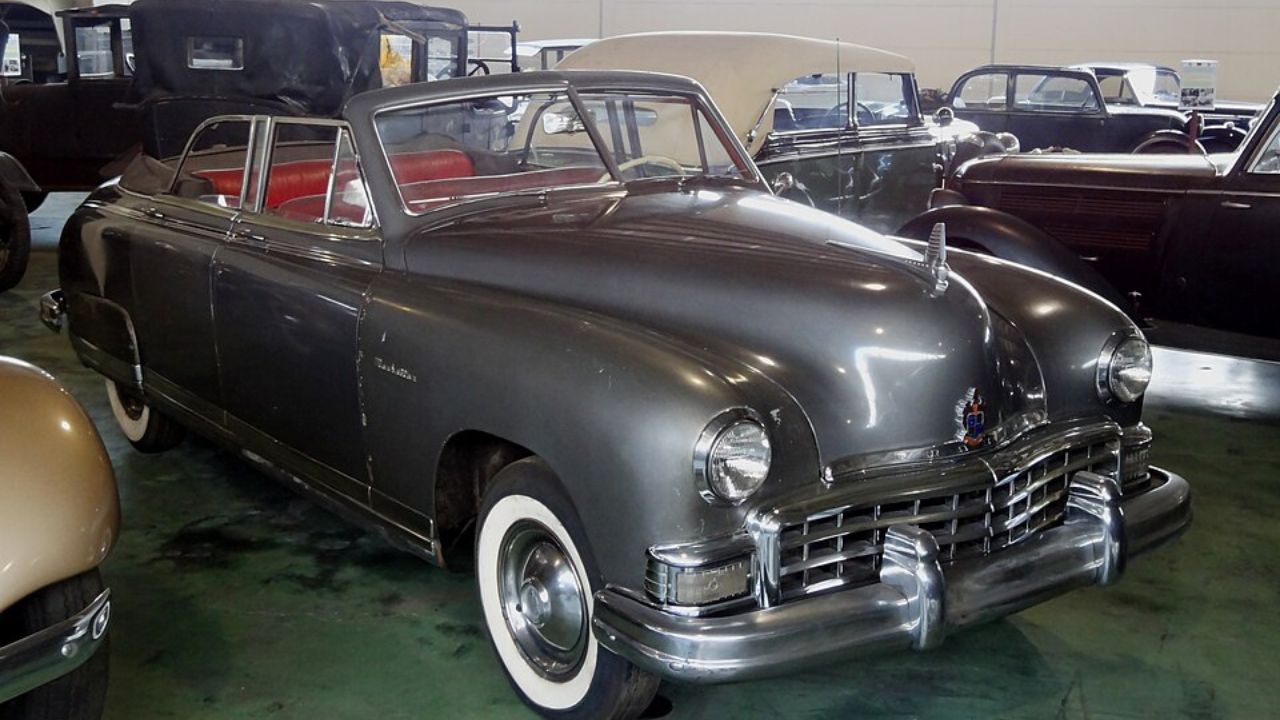
Joseph Frazer lent his name to the upscale half of the company, and the Manhattan was the top Frazer. For 1949, it gained a body style that sounds impossible today: a four-door convertible. Imagine a full-size family sedan with the roof folded away and the window frames gone.
The body shared its basic shell with the Kaiser sedans, which kept costs down. However, the Frazer wore richer trim, and the open version looked grander than its price suggested. That made it a bold play for a company only a few years old. In fact, Kaiser-Frazer leaned on style and novelty to win buyers away from older brands.
Still, the idea lasted longer than the brand. The Frazer nameplate was dropped after a final run of about 10,000 cars in 1951, and that year’s Manhattan convertible was the last four-door American convertible until the 1961 Lincoln Continental. So the Frazer got there a decade before Lincoln made the format famous.
Our take: four-door convertibles from the 1960s already have a big following, and the Frazer got there years earlier. When collectors connect that dot, we expect interest in these cars to grow. If you find one with a sound top and solid floors, we would grab it.
2. 1949 Kaiser Traveler
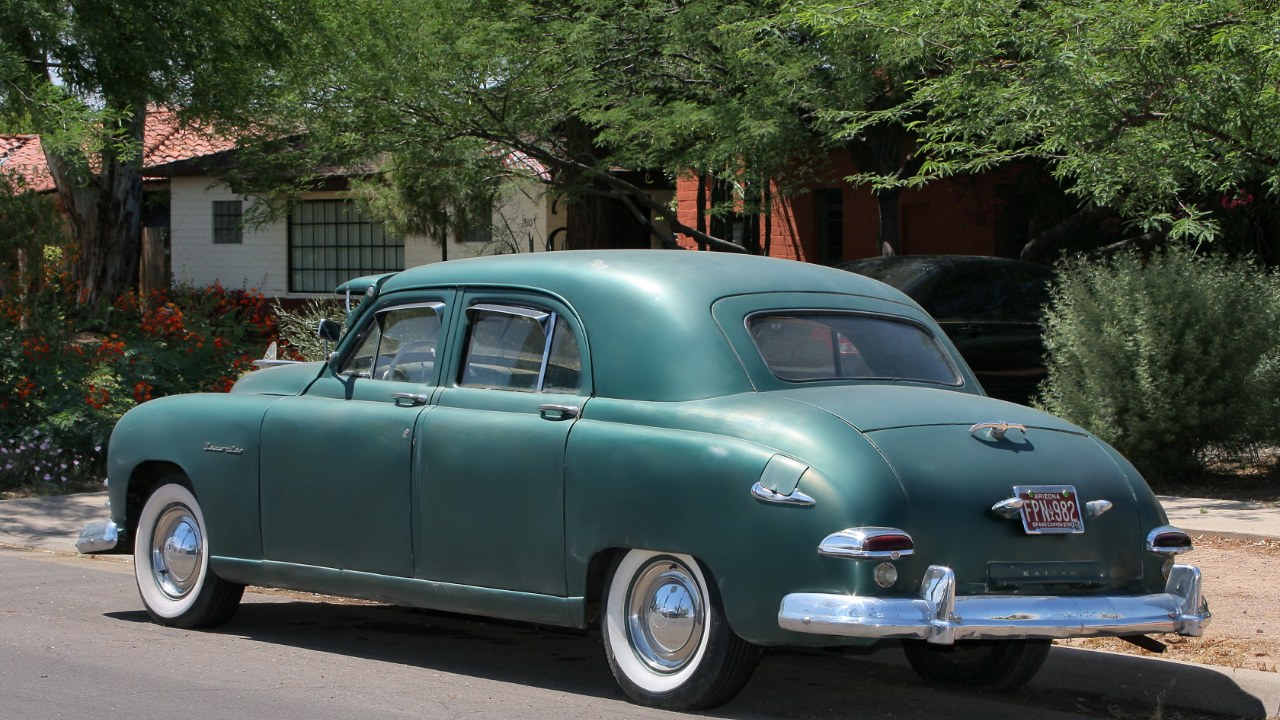
Long before hatchbacks were common, Kaiser sold a sedan that could swallow a canoe. The Traveler started as an ordinary four-door. Then engineers added a drop-down lower panel and an upward-opening rear window. Folding the rear seat opened up an eight-foot load space, according to Hagerty’s history of Kaiser-Frazer.
However, there were clever compromises, too. As Mac’s Motor City Garage explains, the spare tire lived inside the left rear door. That door was welded shut and fitted with a dummy handle, so the rear passenger had to use the other side. The base Traveler cost $2,088 in 1949, about $100 more than the regular sedan.
Buyers liked the idea. Hagerty says about a quarter of the roughly 100,000 Kaisers shipped for 1949 and 1950 were Traveler or Vagabond models. That is a strong share for a body style nobody else sold.
In our view, the Traveler is the most underrated postwar utility car in America. It solves the same problem modern crossovers solve, and it did so in 1949. As more people learn that story, we think the Traveler will stop being a curiosity and start being a target.
3. 1951 Kaiser Deluxe Club Coupe
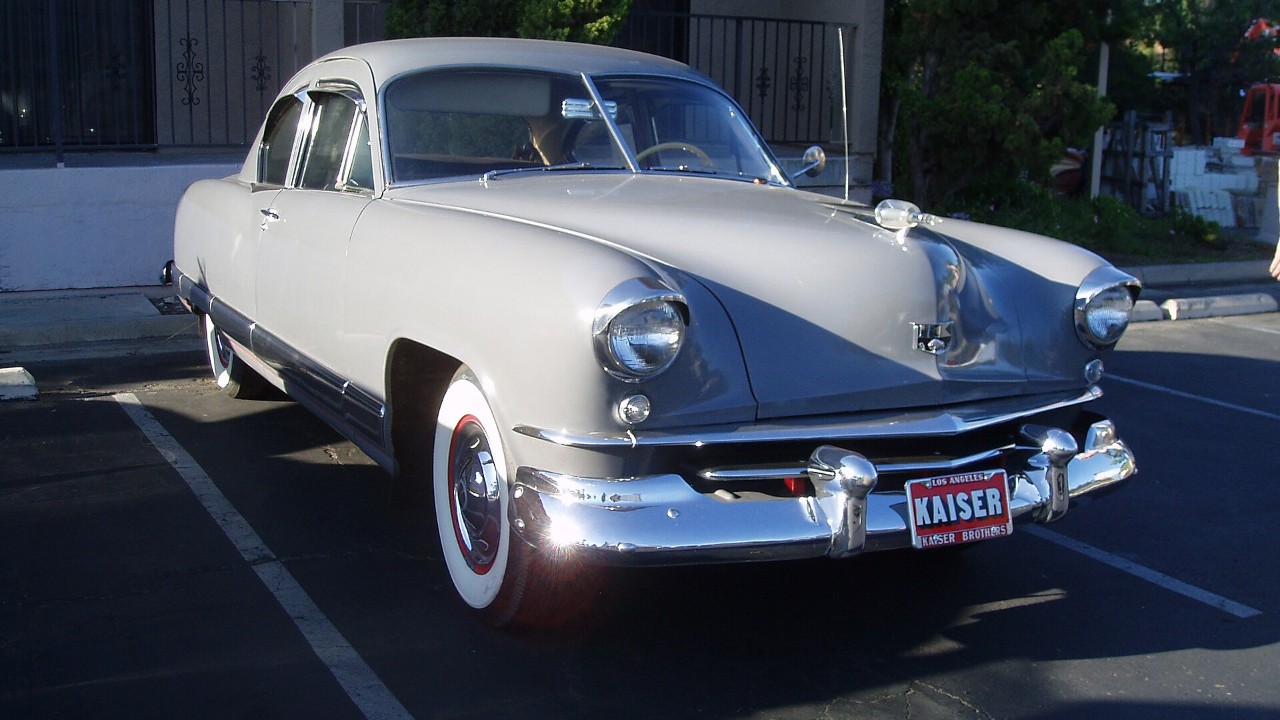
For 1951, Kaiser launched an all-new body drawn by Howard “Dutch” Darrin, the stylist known for his Packard work. It carried a dip in the rear fender line that fans call the “Darrin dip.” The rear window had a heart-shaped outline, which earned it the nickname “sweetheart window.”
The two-door club coupe is the version we would look for. According to Hagerty’s buyer’s guide to the 1951–55 Kaiser, four-door sedans were by far the most common body. Two-door sedans are much rarer. Meanwhile, the standard engine was a Continental six with only 115 horsepower. So no one bought these cars for speed.
The style is the draw. To our eyes, the Darrin body still looks years newer than many of its 1951 rivals. Hagerty also lists the problems a buyer should check: rust in the rocker panels, overly light power steering and engines that tend to overheat. Budget for those, and you get a stylish early-1950s car.
Our take: the club coupe pairs that design with the rarity of the two-door body. As prices for mainstream two-door sedans of the period climb, we expect this Kaiser to follow them up.
4. 1952 Kaiser Manhattan Sedan
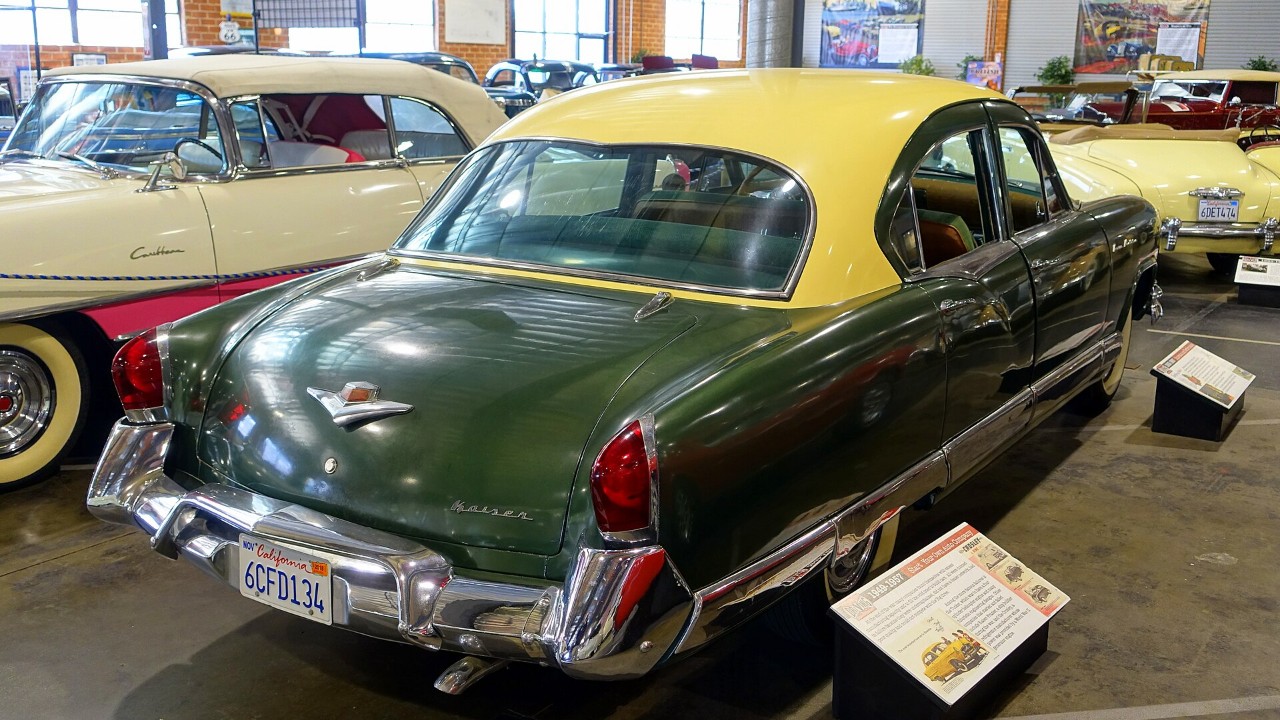
When Frazer disappeared after 1951, its best name moved over. The Kaiser Manhattan became the new top trim for 1952, replacing the Deluxe at the head of the line. Kaiser kept the Virginian as a carryover to clear leftover 1951 stock, and the Deluxe stayed below.
Of course, the Manhattan earned its spot with details you can spot from across a show field. According to Mac’s Motor City Garage, wide bright-metal rocker moldings set it apart from the Deluxe. Inside, it offered distinctive cloth and vinyl combinations in bold colors. By comparison, the Deluxe looked subdued.
Underneath, the sedan used a conventional ladder frame and an L-head six that started life at Continental. Kaiser bought its Hydra-Matic automatics from General Motors, so a two-pedal Manhattan was a relaxed cruiser. Darrin and Duncan McRae shaped the body, and Kaiser marketed the look as “Anatomic Design.”
We like the four-door Manhattan because it is the most usable way into Darrin’s design. It has room for the whole family, and its trim makes it look special. In our opinion, the colorful interiors are the hidden gem here. Find one with original fabric, and keep it that way.
5. 1952 Henry J Vagabond

The Henry J was Kaiser’s small economy car, named for the boss himself. It went on sale on September 28, 1950. Willys-Overland supplied both engines: a 134.2-cubic-inch four with 68 horsepower, the same basic engine as the CJ-3A Jeep, and a 161-cubic-inch six with 80 horsepower.
The Vagabond was a smart fix for a problem. Kaiser had leftover 1951 cars, so it added an outside Continental-style spare tire and a nicer interior. Then it sold them as the 1952 Vagabond. Kaiser sold 7,017 of them, with either engine.
That rear-mounted spare is the thing you notice first. It gives the stubby fastback a touch of swagger that the base car lacked. In addition, the upgraded cabin made the little car feel more grown-up. Early Henry J models had no trunk lid at all, and owners reached the trunk by folding down the rear seat.
Our take: the Vagabond is a one-year special edition with a clear story, and collectors love that combination. With 7,017 sold, we think the supply of good ones will keep shrinking. If you want an affordable entry into Kaiser history, start here.
6. 1953 Henry J Corsair Deluxe

The Henry J came from an unusual brief. Hagerty notes that a federal loan required the car to seat five and sell for no more than $1,300. The result measured 175 inches long on a 100-inch wheelbase, a size that seemed tiny next to most American sedans of the day.
For 1952, the Corsair line gave the car better styling and quality. It wore a full-width grille, and the taillamps moved into the rear fender fins. The Corsair Deluxe was the six-cylinder version. Still, buyers drifted away. Hagerty counts 81,000 sales in the first year, 23,000 in the second and 17,500 in 1953.
Those falling numbers mean the 1953 cars were already a small slice of the total. As a result, we rarely see a clean Corsair Deluxe, even at large shows.
In our view, this is the pick of the Henry J line. The six gives it enough power for modern roads, and the Corsair styling is far tidier than the first cars. Small, quirky American cars from the 1950s are finding new fans, and we think the Corsair Deluxe is next in line. Buy the best body you can find, because trim parts are scarce.
7. 1953 Allstate Two-Door Sedan
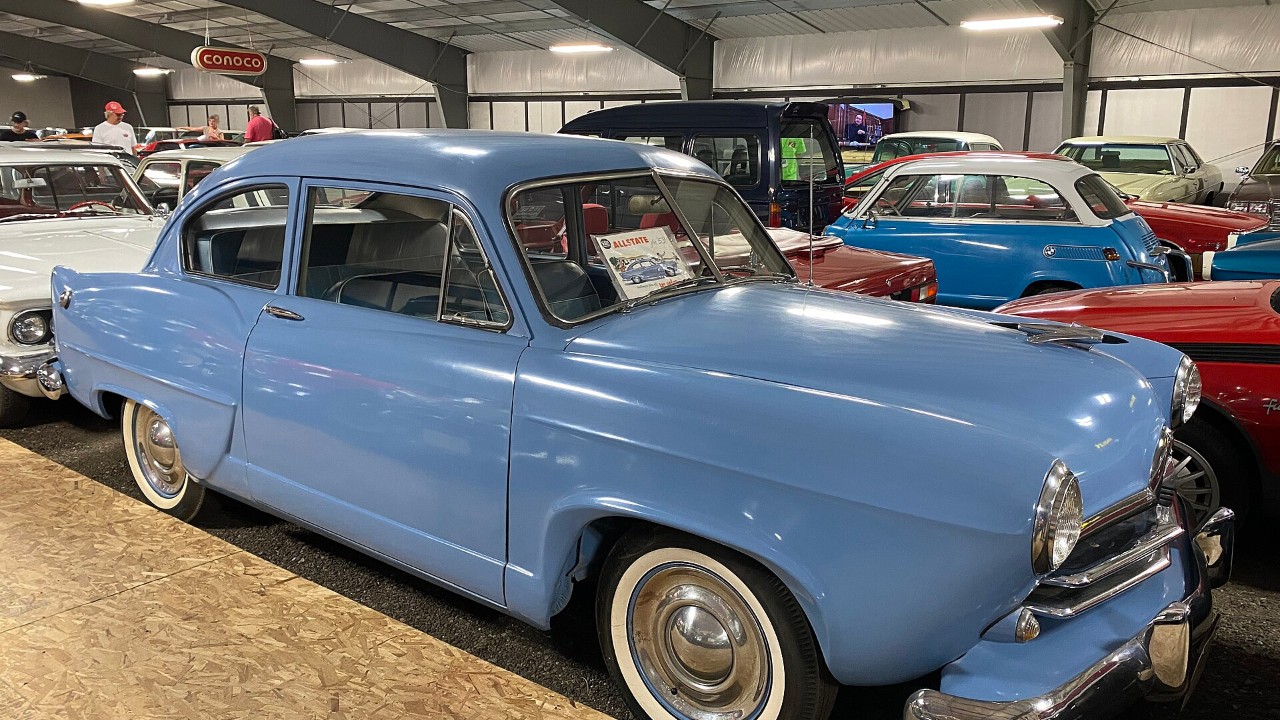
Yes, Sears once sold a car. Starting in 1952, the retailer offered a rebadged Henry J under its Allstate name. It came with its own grille, hood ornament, hubcaps, badges and trim, so it did not look like a straight copy of the Kaiser product.
The experiment did not last. Hagerty says some Sears stores sold the car, but fewer than 2,400 were built. After two years of weak sales, Sears dropped it. That makes the 1953 Allstate one of the shortest-lived nameplates of the decade.
Instead, the story is the hook. Selling a car through a department store sounds modern, and Sears tried it more than 70 years ago. Meanwhile, the Allstate shares its mechanical parts with the Henry J, so keeping one running is easier than its rarity suggests. Body trim is another matter, since the Allstate pieces were unique.
Our take: few cars at a show get as many double takes as an Allstate. People see the Sears connection and want to know everything. We think that kind of curiosity is exactly what pushes values up over time. If one comes up for sale with its Allstate trim intact, we would take it seriously.
8. 1955 Kaiser Manhattan
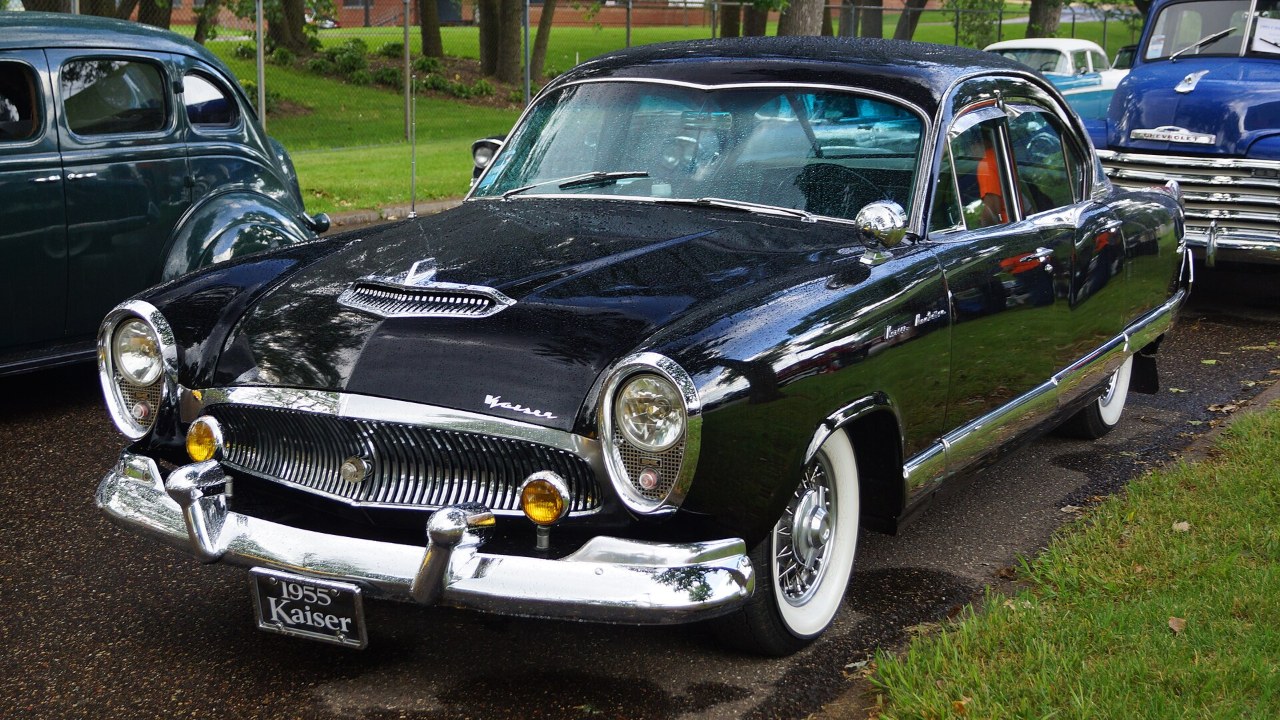
By 1955, Kaiser was running out of road, but the Kaiser Manhattan went out with some muscle. A McCulloch supercharger arrived as an option on the L-head six in 1954. For 1955, Hagerty says the blower became standard, which gave the big sedan the extra push its six had always needed.
Very few buyers ever saw one. According to Hagerty, only 210 true 1955 Kaisers were produced for the domestic market. Mac’s Motor City Garage likewise says only a few hundred Manhattans were delivered in the United States that year. Then the company left the passenger car market at the end of the 1955 model year.
The design did not die, though. Kaiser shipped the tooling to Industrias Kaiser Argentina, and the shape returned there as the Carabela from 1958 to 1962. As a result, a South American cousin outlived the American original by several years.
In our view, the supercharged 1955 Kaiser Manhattan is the car this list builds toward. It is the final American Kaiser, it has a blower, and the domestic production count sits in the hundreds. A car with that much story rarely stays under the radar for long, and IKA built about 15,000 Carabelas before the line ended in 1962.
More from Fast Lane Only