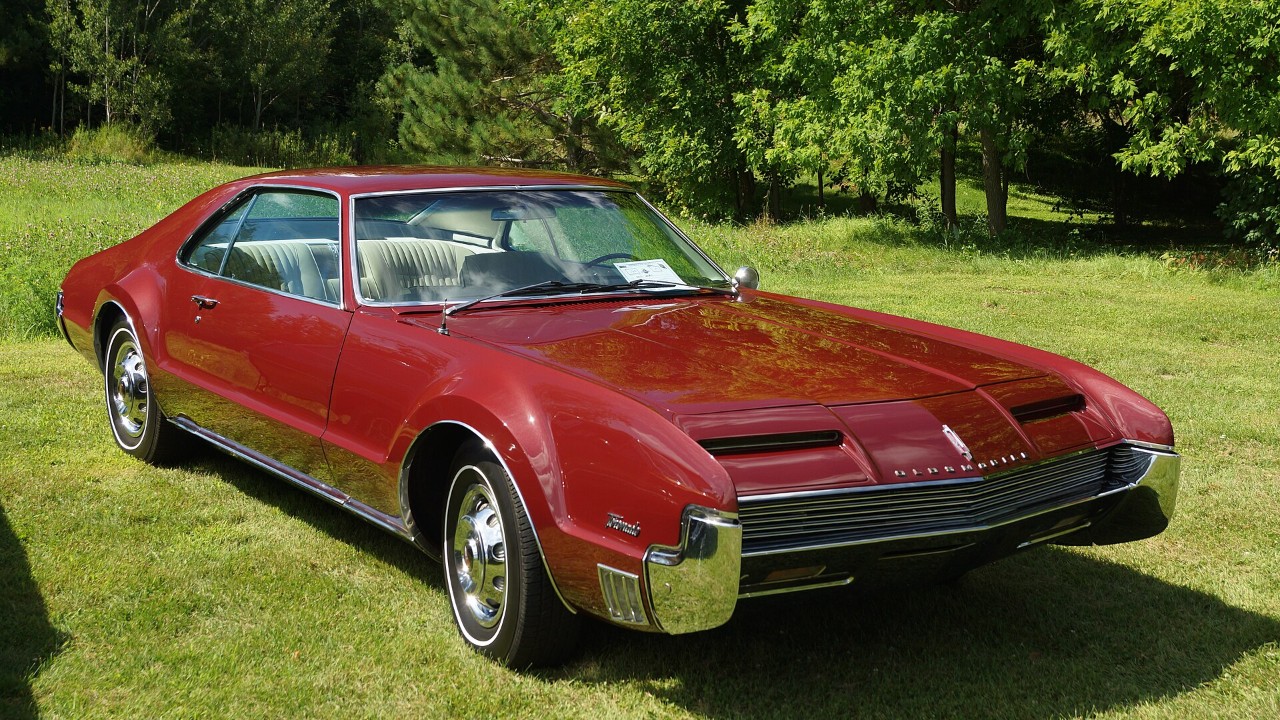
The Chevrolet Monte Carlo did one thing well, on and off, from its 1970 debut to the last car in 2007. It gave buyers a roomy two-door coupe with a long hood and an easy, comfortable nature.
Still, that recipe changed a lot over the years. The car went from rear-drive V8 muscle to front-drive V6 cruiser and back to V8 power at the very end. Yet the best versions never needed gimmicks. Instead, they simply mixed good looks, comfort and a drivetrain you could live with every day.
These eight are our picks, and the verdicts are our opinion. Each one shows that plain, honest engineering has a place in a car hobby full of flash. The years, engines and figures come from period road tests, model histories and buyer guides we read for this story.
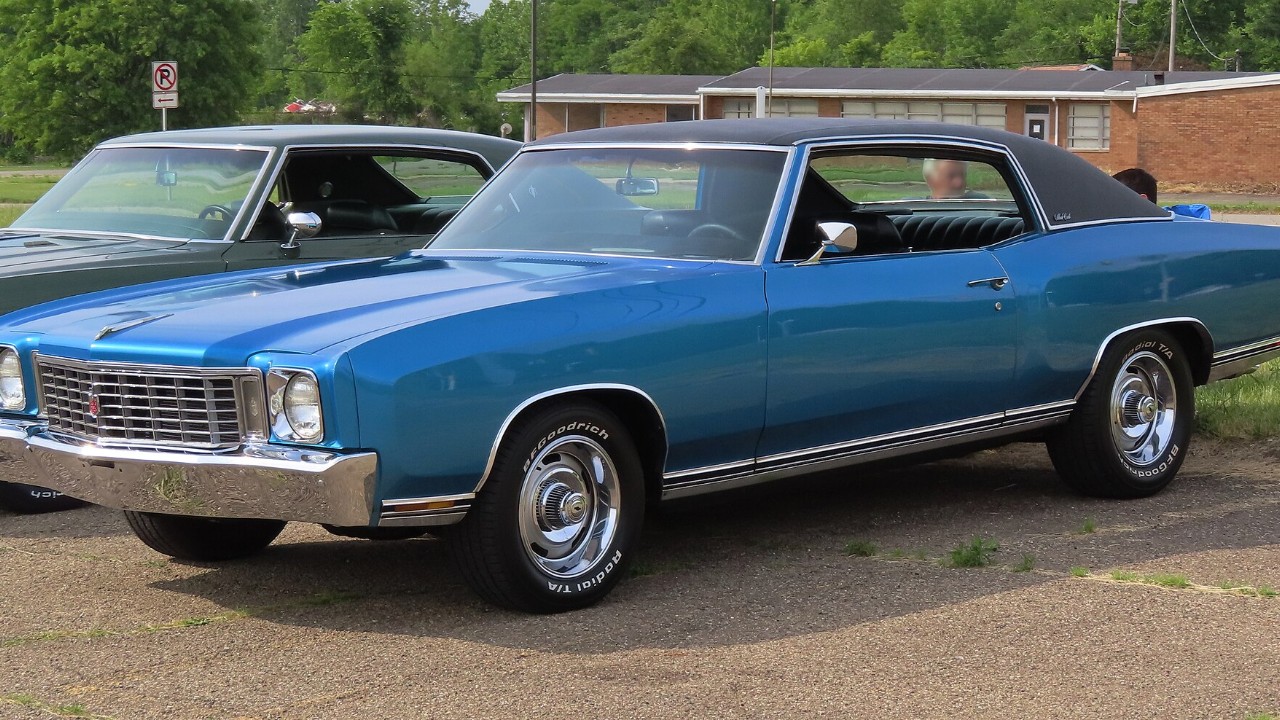
1. 1972 Chevrolet Monte Carlo Custom

At first, the Monte Carlo arrived for 1970 as Chevrolet’s take on Pontiac’s Grand Prix. Chevrolet chief John DeLorean unveiled it in September 1969. It started at $3,123, and a two-barrel 350 V8 with 250 gross horsepower came standard. According to Hagerty, it rode on a 116-inch wheelbase, longer than the Chevelle hardtop it was based on.
By 1972, the last year of that first body, Chevrolet offered something new. The Monte Carlo Custom was a one-year option with its own suspension and other items that had once come only with the SS package. Better yet, buyers could order it with any engine on the list. Hagerty counts 180,819 Monte Carlos for the 1972 model year, so this was a well-loved car by then.
Our take: the Custom shows what simplicity means here. That’s because you got SS-style handling without having to commit to the biggest engine. That makes it, in our view, the smart buy among first-generation cars. We compared the 1972 model with a Ford rival in our Gran Torino vs. Monte Carlo matchup. If you’re shopping, ask for paperwork, since the Custom option is easy to miss on a car that looks like any other 1972.
2. 1973 Chevrolet Monte Carlo S
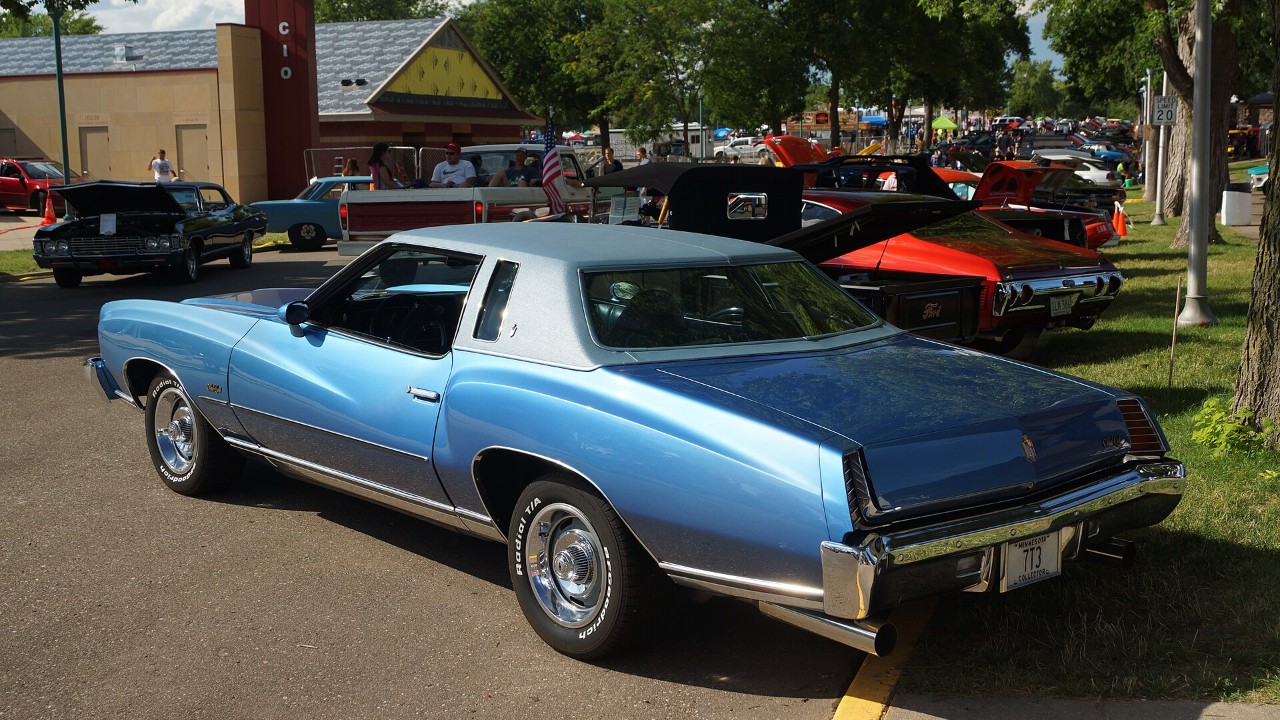
For 1973, the Monte Carlo moved into GM’s new Colonnade era. According to Mac’s Motor City Garage, Chevrolet studio chief David Holls led the design. It kept the 116-inch wheelbase and body-on-frame construction, and the base car listed at $3,415.
The S label went to cars with the automatic transmission and a radial-tuned suspension. In fact, that suspension mattered. Motor Trend named the 1973 Monte Carlo its Car of the Year, and Mac’s Motor City Garage says the magazine praised its European-style ride and handling, which John DeLorean had pushed for. Meanwhile, buyers could also add Swing-Out Strato bucket seats, one of the era’s fun options. Hagerty counts 233,689 Monte Carlos for 1973, a big jump from 1972.
Our take: the 1973 S is the Monte Carlo that proved a comfortable coupe could also handle. It didn’t need a huge engine to earn its award, because the chassis did the work. In our view, that’s the purest expression of the car’s simple appeal. If you find one, look for the S badging and original suspension parts, since those define this version.
3. 1986 Chevrolet Monte Carlo Luxury Sport
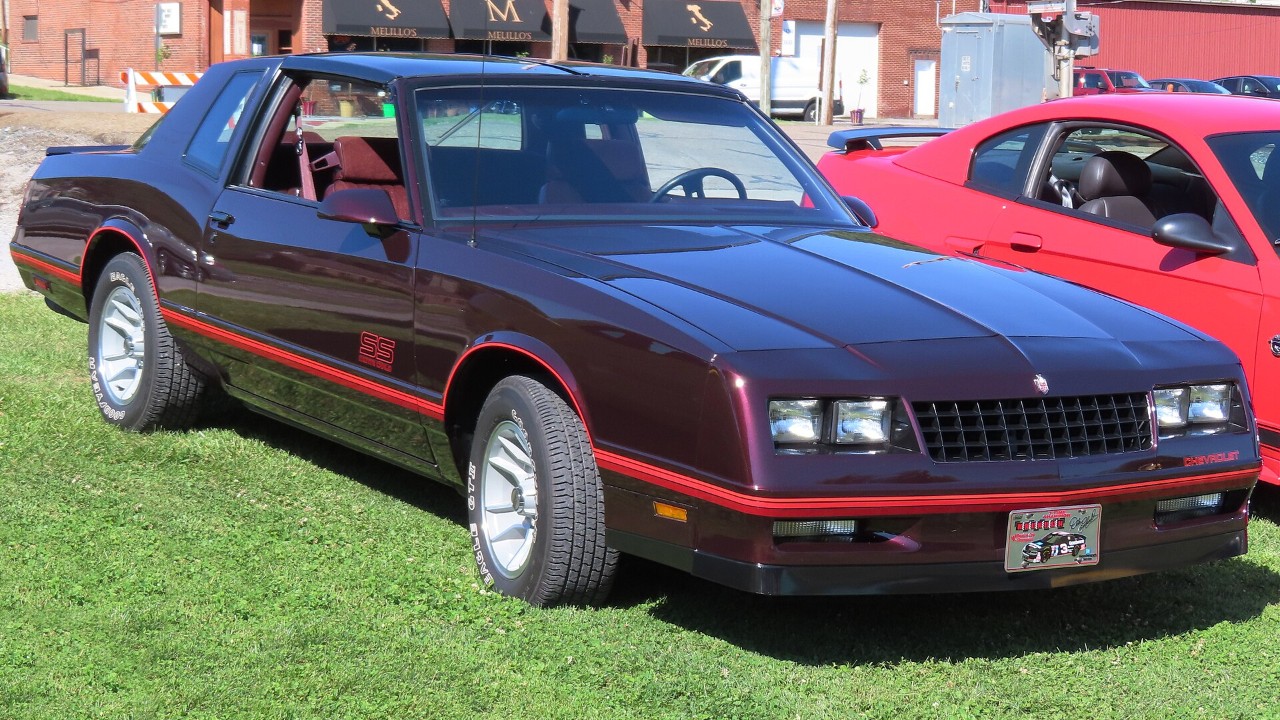
The 1986 Luxury Sport, or LS, gave the rear-drive Monte Carlo of the 1980s a fresh face. It brought a revised front fascia, “aero” side mirrors and a new rear fascia. In addition, it swapped the old sealed-beam lamps for “Euro” headlights with replaceable bulbs in a glass composite housing.
At the back, the bumper lost its notch, and the taillights wrapped around the sides. As a result, those small changes made the LS look sleeker without touching the basic rear-drive layout. The LS sold well, too. Chevrolet built 39,794 of them for 1987, the following year.
Our take: the LS is the quiet sibling of the SS, and that’s why we like it. It gives you the smoother 1980s nose and the same rear-drive layout, minus the SS price tag. If you want the high-performance version, our story on how the 1987 Monte Carlo SS kept performance alive covers it. In our view, a clean LS is one of the best-value 1980s coupes around. Check the headlight housings and taillight lenses, because those LS-only parts are what set it apart. We’d happily take one home.
4. 1995 Chevrolet Monte Carlo LS
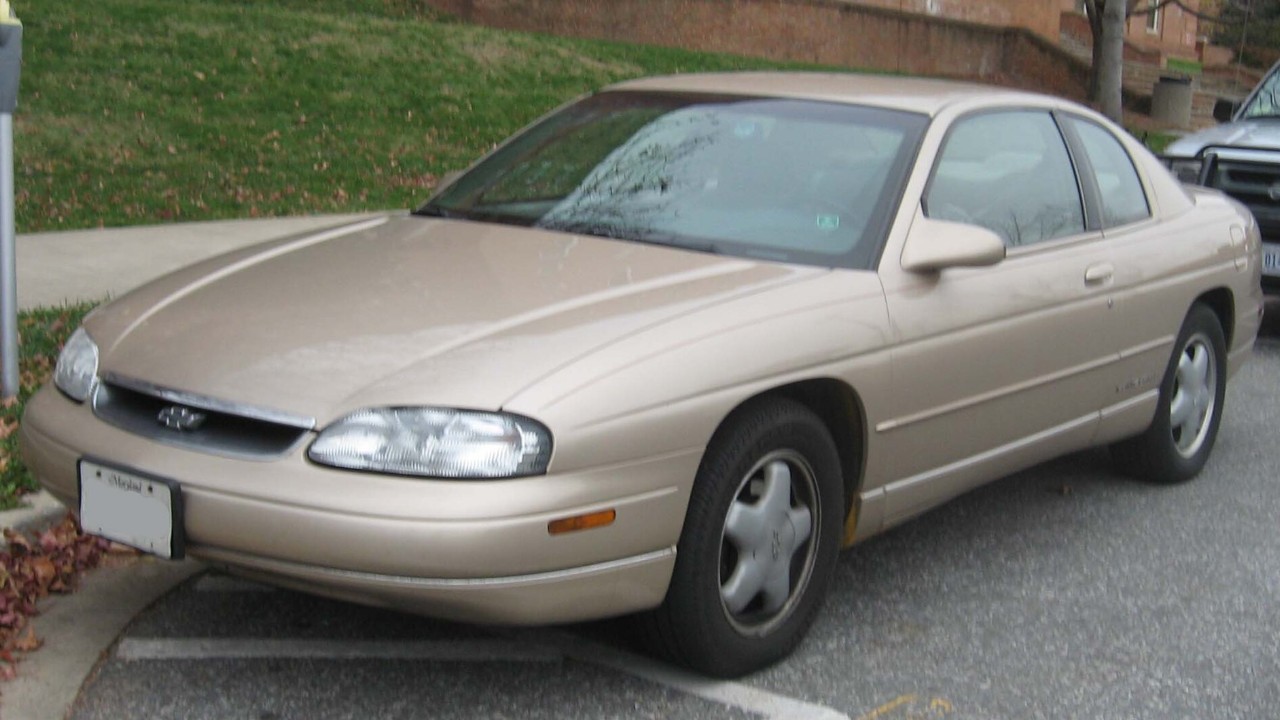
For 1995, the Monte Carlo changed completely. The new car moved to GM’s W-body platform, which meant front-wheel drive for the first time. There was no V8, and Chevrolet built it only as a coupe, in Oshawa, Ontario.
However, the LS was the volume model. It used a 3.1-liter V6 rated at 160 horsepower and 185 lb-ft of torque. Above it sat the Z34, with a twin-cam 3.4-liter V6. Chevrolet built 61,310 LS coupes for 1995, against 39,628 Z34s. So most buyers chose the simpler, cheaper car. By 1996, the Z34’s engine carried a 215-horsepower rating, so the gap between the two was real. Even so, the LS won on sheer numbers.
Our take: the 1995 LS is the Monte Carlo at its most practical. It isn’t fast or rare, but it does the daily job without fuss. For us, that’s exactly what this list is about. A front-drive V6 coupe is a sensible classic for someone who wants to drive every week. If you buy one, keep a close eye on service records, because a well-kept LS is worth far more to an owner than a neglected Z34.
5. 2002 Chevrolet Monte Carlo SS Dale Earnhardt Signature Edition

NASCAR fans know this one at a glance. Chevrolet built the Dale Earnhardt Signature Edition on the SS and offered two looks. One was black with Galaxy Silver rocker panels and air dams. The other was all black, with black ground effects instead.
The details tell the story. A “Dale Number 3” logo sat behind the rear side windows, with Earnhardt’s signature beneath it. Inside, the car carried “Intimidator” SS badges, an Intimidator and No. 3 badge on the dash, and his signature on the gauge cluster. Also, the cabin used all-black leather. Five-spoke diamond-cut wheels finished the look. Under the hood sat GM’s familiar 3800 V6, the L36, rather than anything exotic.
Our take: this is a tribute car built on a simple, proven base, and we think that’s the right approach. The badges and paint carry the meaning, while the drivetrain stays easy to own. In our view, it’s one of the most meaningful Monte Carlos of the front-drive era. If you shop for one, make sure the signature badges and interior trim are original, because they make the car special.
6. 2006 Chevrolet Monte Carlo LTZ
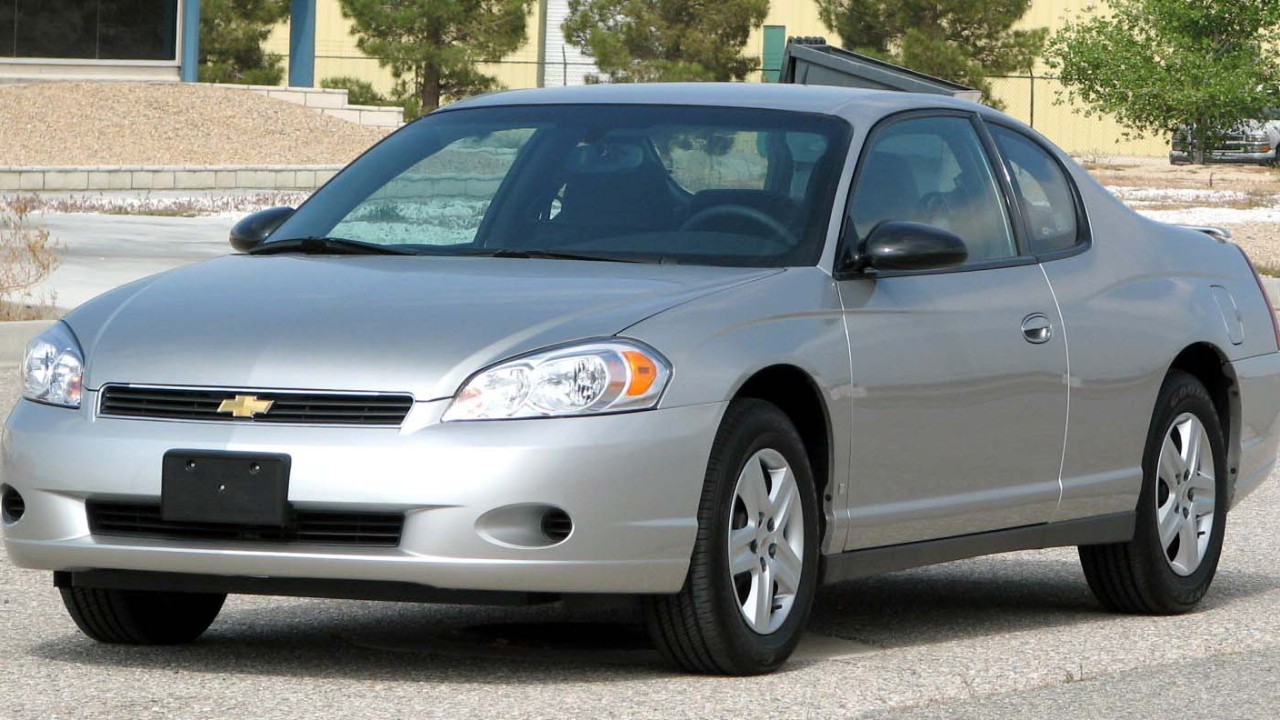
The final-generation Monte Carlo offered a one-year luxury trim. According to Consumer Guide, the 2006 LTZ came with leather upholstery, heated front seats and satellite radio. It also had an upgraded sound system and a universal garage-door opener. In addition, it brought illuminated visor mirrors and an automatic day/night mirror. Chevrolet dropped the LTZ for 2007.
Meanwhile, power came from a 3.9-liter V6. Consumer Guide lists it at 242 horsepower, later re-rated at 233. That’s a strong number for a front-drive coupe of its day. However, Consumer Guide also lists trouble spots for 2006 cars, including air-conditioning mode problems and chafed torque converter clutch wiring that could cause rough shifts.
Our take: the LTZ is the comfortable, well-equipped way to enjoy the last Monte Carlo without paying SS prices. It keeps the V6 simple and adds the features you’ll actually use. As a one-year trim, it’s also a little unusual. If you’re buying, check that the air conditioning changes modes properly and that the transmission shifts cleanly. Those are the known weak spots, and a good LTZ should pass both tests.
7. 2005 Chevrolet Monte Carlo LT
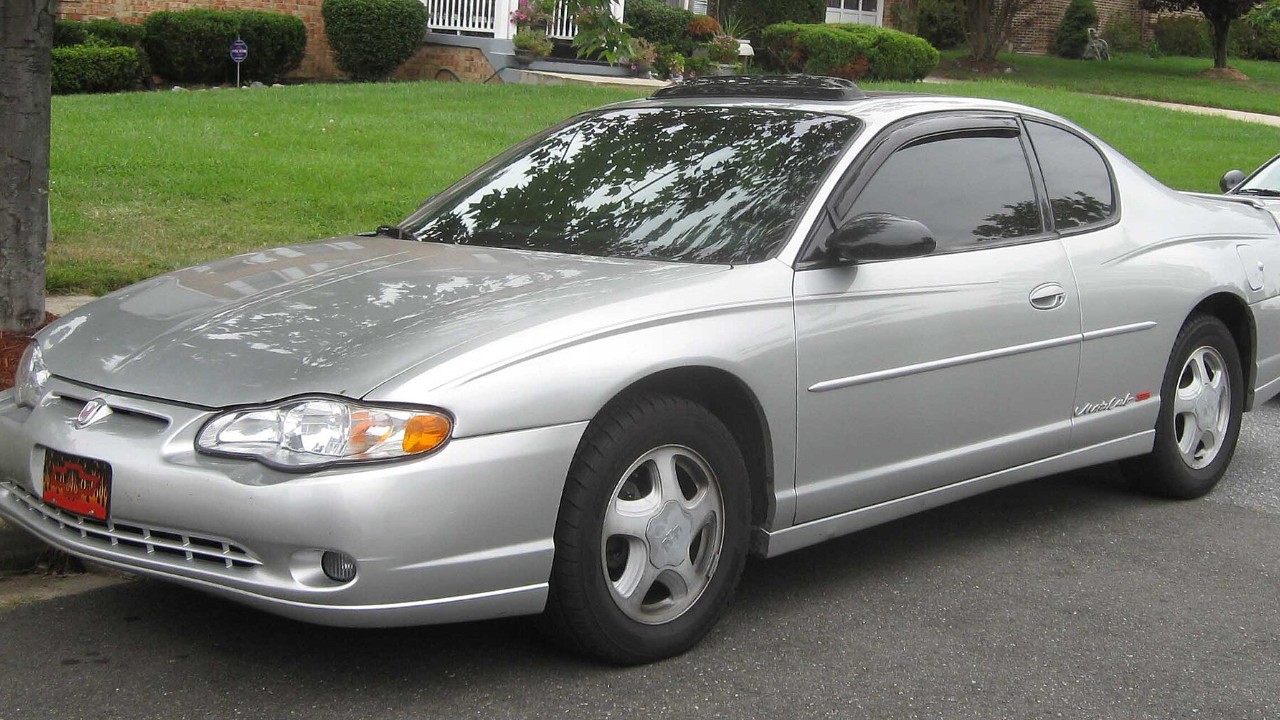
For 2005, Chevrolet tidied up the sixth-generation lineup. As a result, the naturally aspirated SS became the LT. It kept the 3.8-liter L36 V6, rated at 200 horsepower and 225 lb-ft of torque. Meanwhile, the top SS kept a supercharged V6 until the V8 arrived for 2006.
In fact, that engine is the heart of the appeal. The L36 is the same 3800 V6 that powered the Earnhardt tribute car, so parts knowledge is easy to share across both. Chevrolet built 37,143 Monte Carlos in total for 2005. That’s a modest number, so the LT never became a common sight the way earlier generations did.
Our take: the 2005 LT is the definition of a no-drama classic in the making. It has a simple V6, a big coupe body and a lineage that runs straight back to the 1970 original. In our view, it’s a budget-friendly way to own a Monte Carlo you can drive every day. If you shop for one, focus on maintenance history and rust, not options. The basic hardware is what you’re really paying for. Simple, in this case, is the whole point.
8. 2006 Chevrolet Monte Carlo SS V8
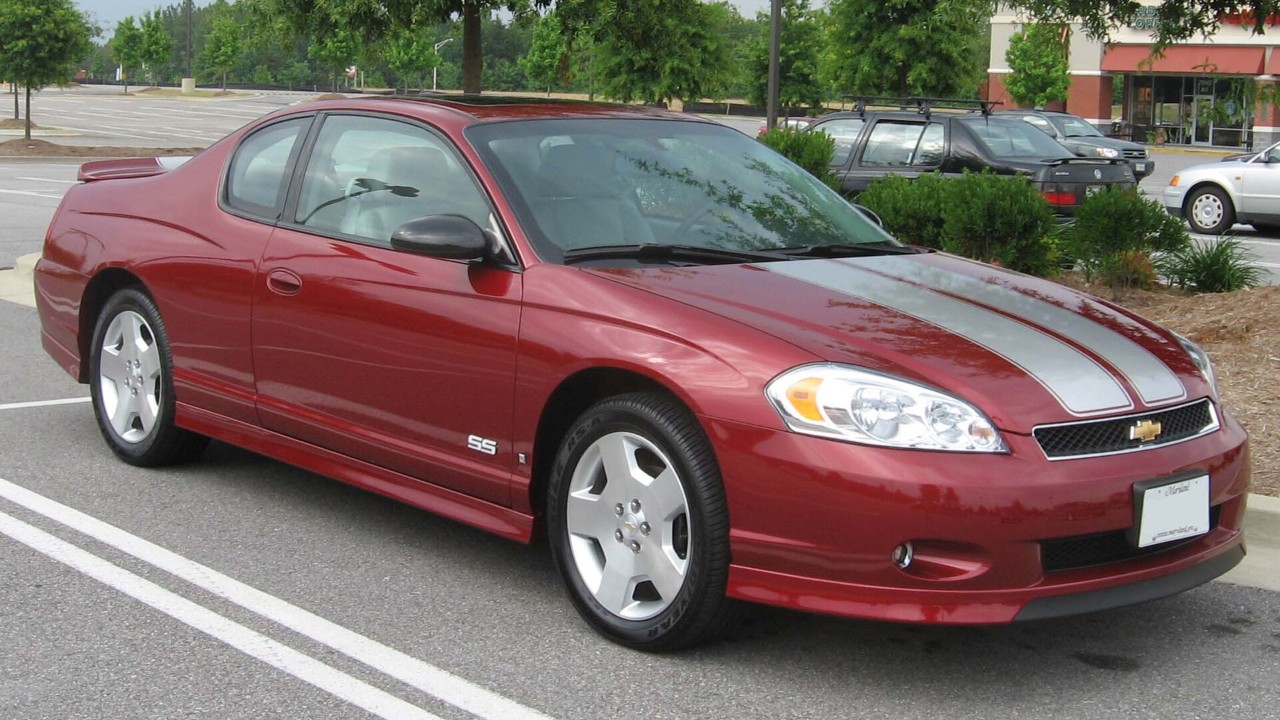
The last Monte Carlo SS brought back a V8. For 2006, Chevrolet fitted a 5.3-liter LS4 rated at 303 horsepower and 323 lb-ft of torque. It was the first V8 in a Monte Carlo since 1988.
MotorWeek tested it and recorded zero to 60 mph in 6.0 seconds, plus a 14.5-second quarter-mile at 101 mph. Active Fuel Management could shut down four cylinders on the highway, and MotorWeek lists 18 mpg city and 28 highway. Even so, the base price was just $26,990. In the end, Chevrolet built only 14,829 SS models over two years. Production ended at Oshawa, and the last two cars, both red SS coupes, rolled off on June 19, 2007.
Our take: the SS V8 is a fitting farewell. It pairs a simple pushrod V8 with a comfortable coupe body, and that’s the Monte Carlo formula in a nutshell. In our view, it’s the most collectible modern Chevrolet Monte Carlo. If you find one, check service records for the transmission. With fewer than 15,000 built, a clean one is worth a careful search. We can’t think of a better way to end the story.
More from Fast Lane Only