The Oldsmobile Toronado arrived for 1966 as a big personal-luxury coupe with a surprise under the hood. It sent its power to the front wheels, something no American car had done in decades. That gamble won awards, and it shaped GM’s big coupes for years.
The Toronado then lasted until 1992, through four generations and a long list of trims. Some versions chased power, while others chased comfort, gadgets or style. Not all of them sold well. Yet almost every one tried something its rivals didn’t.
These seven are our picks, and the admiration is our opinion. The years, figures and features come from published model histories and road-test sources. We picked one car for each idea worth remembering, from the first front-drive coupe to the last sporty Trofeo.
1. 1966 Oldsmobile Toronado
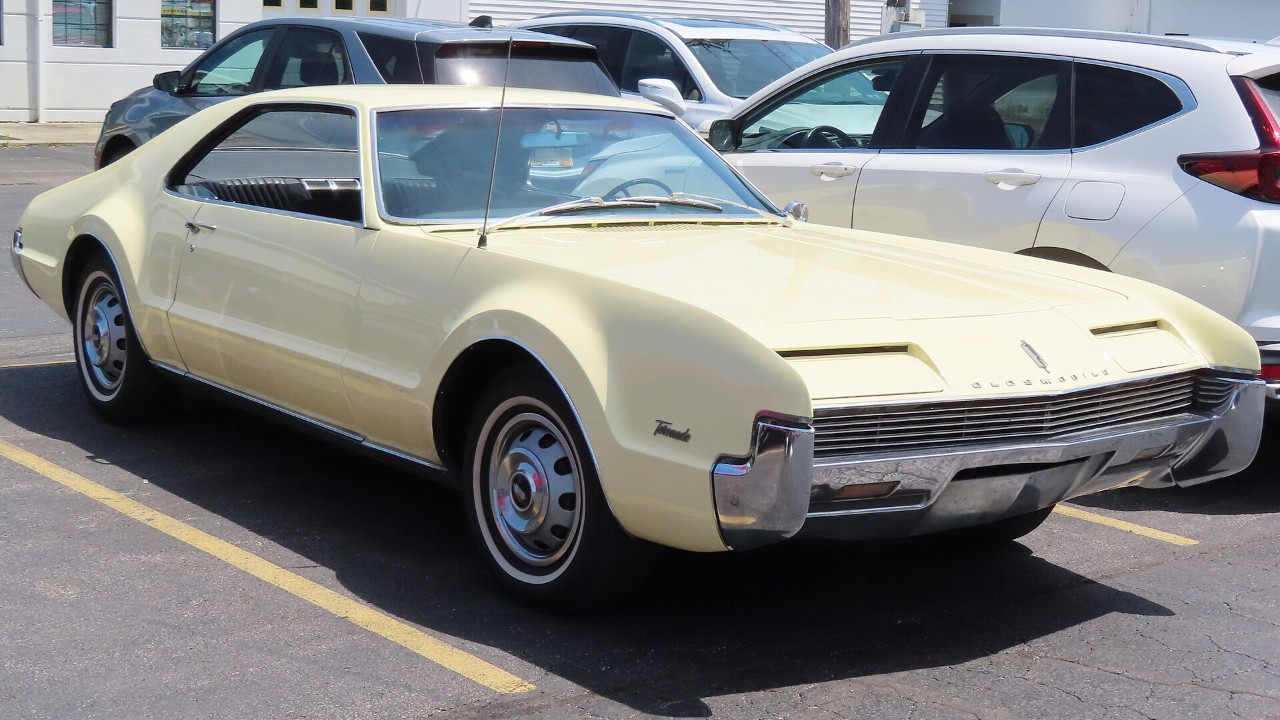
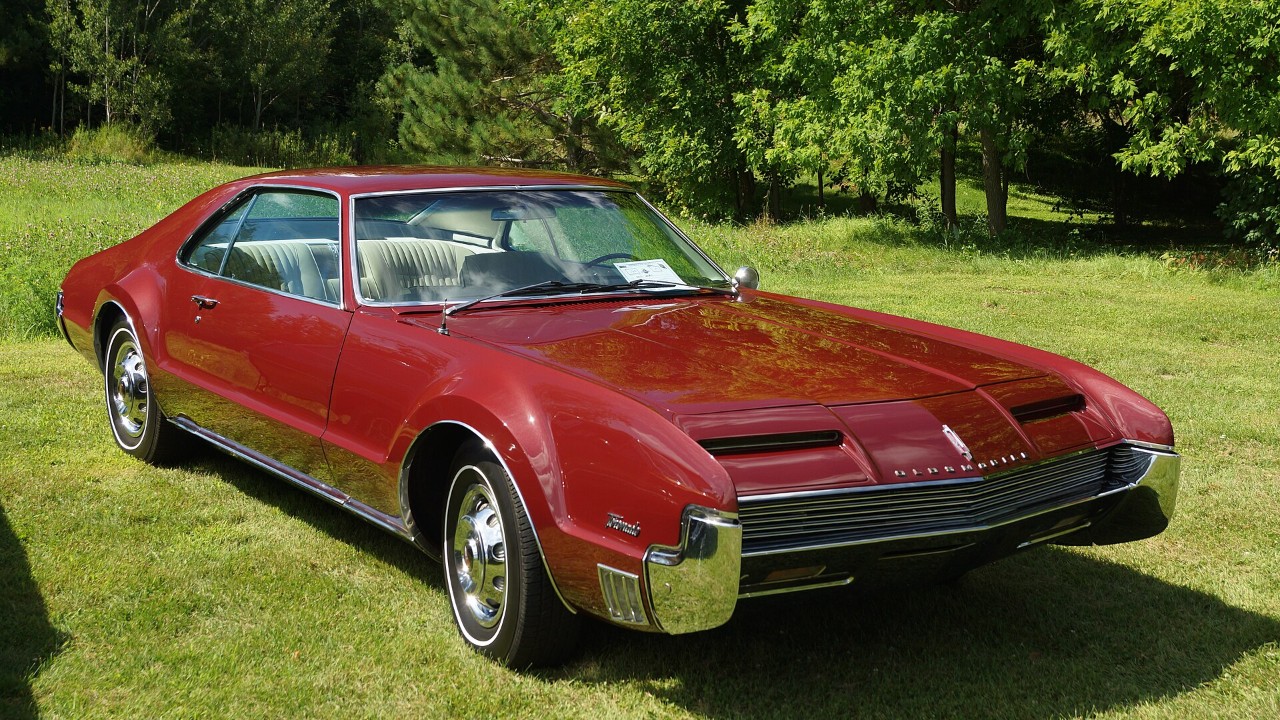
Everything starts with the original. Oldsmobile mounted a 425-cubic-inch V8 lengthwise and paired it with a three-speed automatic that sat alongside the engine. A chain carried power from a crank-mounted torque converter to the transmission. According to Hagerty, development began back in 1958, and the result was the first front-drive car from any domestic maker since Cord.
The numbers were big, too. Old Cars Weekly lists 385 horsepower, 475 lb-ft of torque and a curb weight of 4,496 pounds. The same piece credits the car with Motor Trend’s Car of the Year title, Car Life’s engineering award and third place in Europe’s Car of the Year vote. It also notes 33,204 calendar-year deliveries. Later, Hagerty’s 2019 figures showed the 1966 as the most valuable year of the first generation, with a median #3-condition value of $18,000.
Our take: the first Toronado is the one that earned the name its reputation. It looks like a jet-age fastback, and Old Cars Weekly says it cruised comfortably above 100 mph. If you want the full engineering story, read how the 1966 Toronado introduced bold engineering. In our view, no other trim matters more.
2. 1968 Oldsmobile Toronado W-34
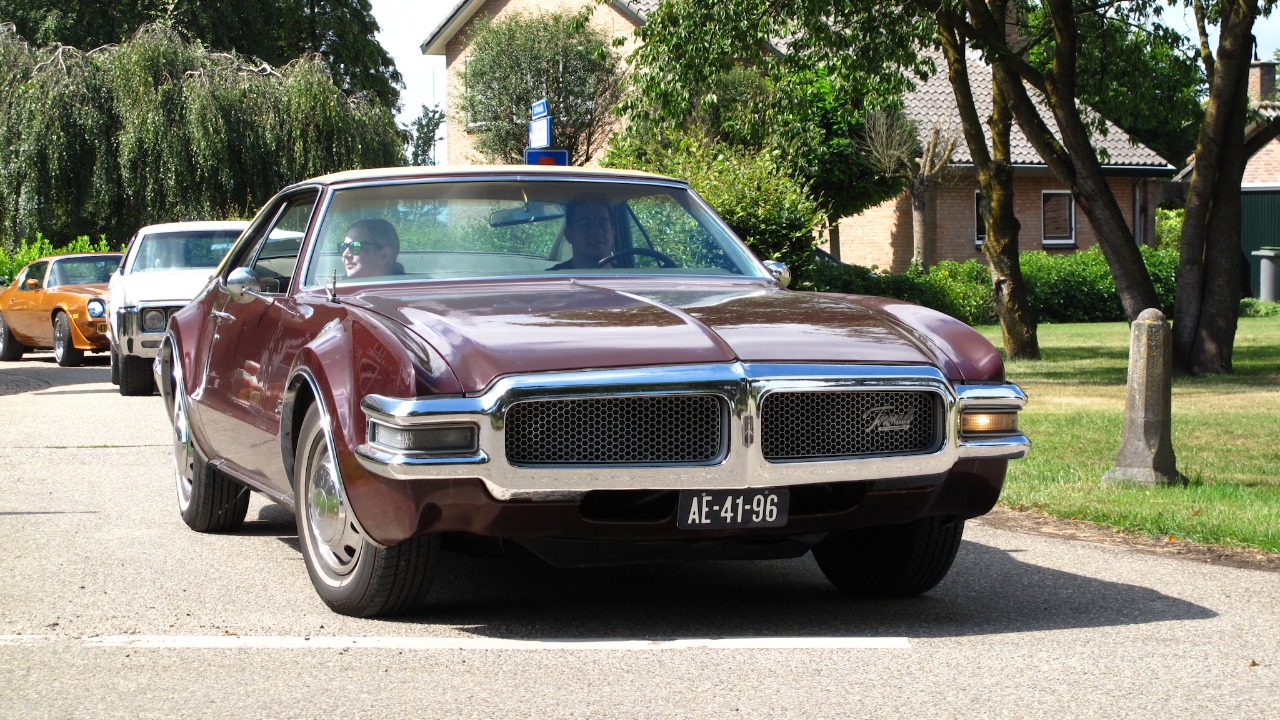
For 1968, Oldsmobile gave the Toronado a bigger heart. The 455-cubic-inch V8 made 375 horsepower in standard form. However, buyers who ordered the W-34 option got 400 horsepower, and model histories credit a W-34 car with a 7.5-second run from zero to 60 mph.
That power also proved the front-drive layout could handle serious work. Hagerty notes that Oldsmobile took the Toronado to Pikes Peak and scored class wins in 1968 and 1970. Later, GM reused the Toronado’s front-drive hardware with the Oldsmobile 455 in the GMC Motorhome. That rig ran from 1973 to 1978, and GMC built 12,921 of them. That sleeper character is a big part of why we admire the W-34. Few people at a cruise night will guess what’s under its hood.
Our take: the W-34 is the muscle-car Toronado, and that’s rare in a luxury coupe. It proves the engineers trusted their front-drive package with big power. We covered the year’s trade-offs in our look at the 1968 Toronado. If you’re shopping, ask for documentation, since the option code is what separates a W-34 from a standard 455 car.
3. 1977 Oldsmobile Toronado XS
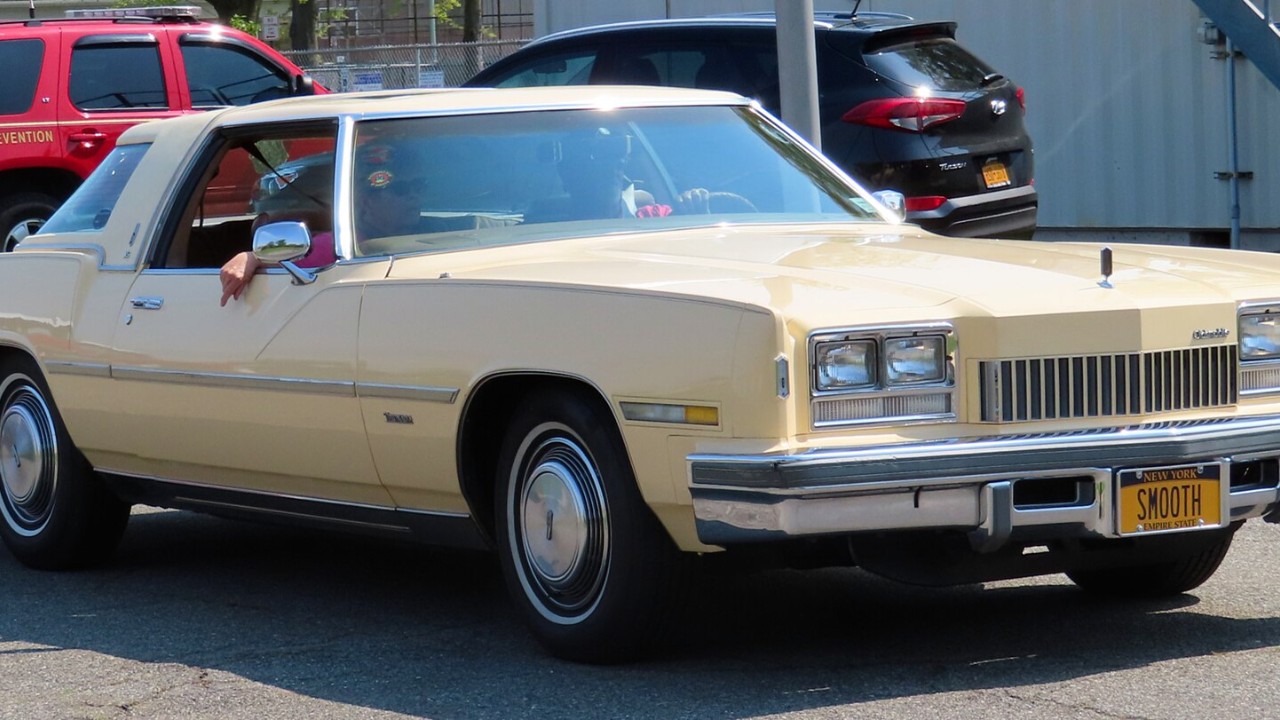
The XS is the Toronado people remember for its glass. Its bent-glass rear window wrapped around three sides of the roof. According to Mac’s Motor City Garage, PPG made it with a “Hot Bent Wire” process that could fold tempered glass into dramatic shapes.
That glass came at a price. The same source puts the XS at nearly $10,700, about $2,500 more than a standard Toronado Brougham. Oldsmobile built 2,714 XS coupes for 1977 and 2,453 for 1978. Meanwhile, an even wilder XSR prototype with power T-tops never reached production. Instead, the XS kept the bent glass and got a power moonroof. Under the hood, a 403-cubic-inch V8 rated at 200 net horsepower did the work. Mac’s Motor City Garage adds that the XS shared GM’s E-body platform with the Buick Riviera and Cadillac Eldorado.
Our take: the XS is a rolling greenhouse, and we mean that kindly. It shows how far a big coupe could push style in the late 1970s. Fewer than 5,200 were built across two years, so it’s a rare sight at any show. In our view, it’s the most daring Toronado of all.
4. 1979 Oldsmobile Toronado Brougham

For 1979, GM shrank the Toronado hard. The new car lost nearly 1,000 pounds and almost 16 inches of length. It rode on a 114-inch wheelbase and kept front-wheel drive. Mac’s Motor City Garage notes that Oldsmobile dropped the XS that year, when the Toronado became a single Brougham coupe.
So the Brougham was the whole lineup, not a fancy trim. It offered a diesel V8 as well as gas power. Early sales of that diesel went well, but the engine later earned a poor reputation. That history makes the gas cars the easier choice today. It’s also a reminder that downsizing didn’t have to erase character. In our eyes, the 1979 car still looks long, formal and confident from the curb.
Our take: the 1979 Brougham deserves more credit than it gets. It kept the big-coupe feel while dropping much of the bulk, which was no small task for a full-size car. We like it as a comfortable, honest cruiser that skips the 1970s excess. If you want one, we’d choose a gas-engine car and check the paperwork for any diesel history before you buy.
5. 1980 Oldsmobile Toronado XSC
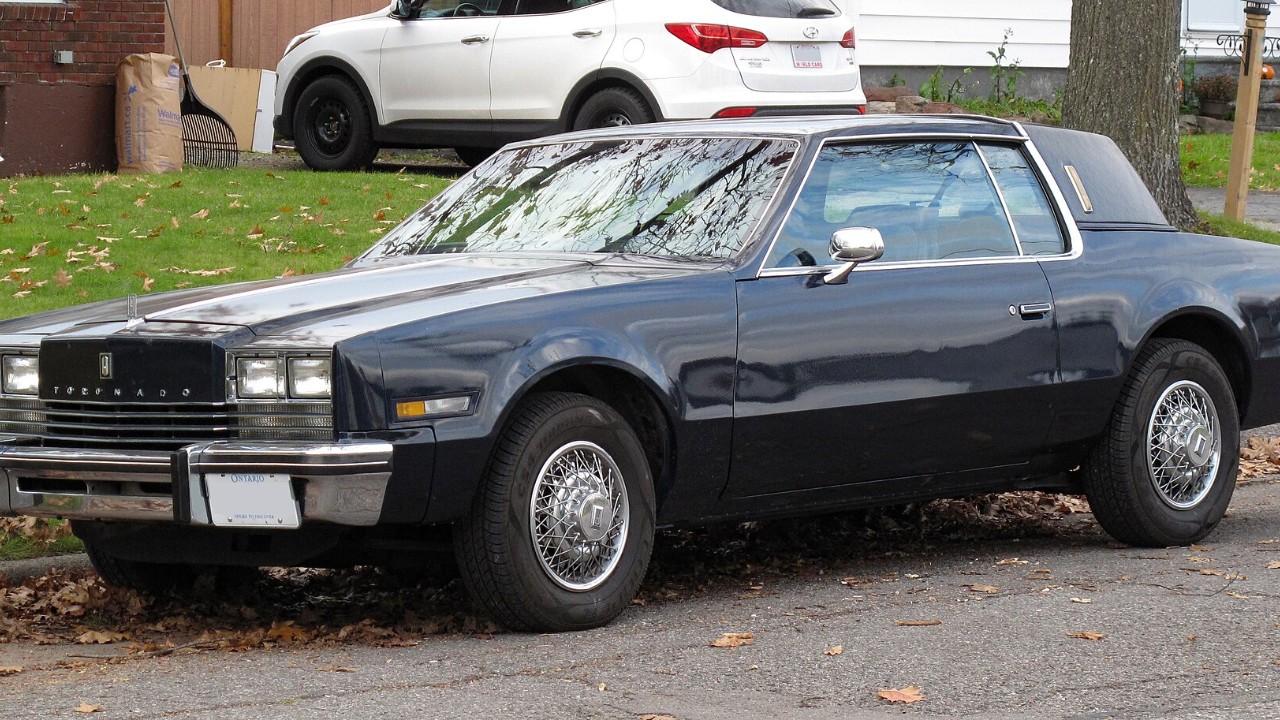
The XSC was a trim package for 1980 and 1981, and it aimed at drivers. Its main change sat inside the cabin. Instead of the usual split bench, it used individual front bucket seats. That gave the third-generation coupe a more personal, sporty feel.
The XSC also hints at where the Toronado was heading. By the end of the decade, the sporty Trofeo would carry the same idea much further. In other words, the XSC was an early test of whether Toronado buyers wanted a driver’s car as well as a lounge on wheels. Its run lasted only two model years, which makes it an easy one to miss. We’d call it the first sign that the Toronado wanted to be more than a boulevard car.
Our take: we admire the XSC because it tried to change the Toronado’s personality without changing the car. Bucket seats sound like a small thing. Yet in a big personal-luxury coupe, they set a different mood from the moment you sit down. If you find one, check that the original seats are intact, because they’re the whole point of the package.
6. 1984 Oldsmobile Toronado Caliente

The Caliente brought the Toronado into the digital age. Offered for 1984 and 1985, the trim package added velour and leather upholstery along with digital instrumentation. It arrived near the end of the third generation’s run.
That timing matters. According to Curbside Classic’s history of the later cars, Oldsmobile sold 42,185 Toronados in 1985, the final year of the third generation. After that, the downsized 1986 car never came close to that number. So the Caliente marks the last high point for the big front-drive Toronado before sales fell away. In addition, the trim shows how Oldsmobile sold its flagship coupe in the mid-1980s: warm, plush and a little flashy. We see it as a time capsule of that moment, right before the big Toronado gave way to a much smaller car.
Our take: the Caliente is pure mid-1980s luxury, and that’s the appeal. Digital gauges and plush seats tell you exactly when it was built. We think it deserves a place in any Toronado collection for that reason alone. If you’re shopping, test every display and switch, because the electronics are the part you’ll want working.
7. 1988 Oldsmobile Toronado Trofeo
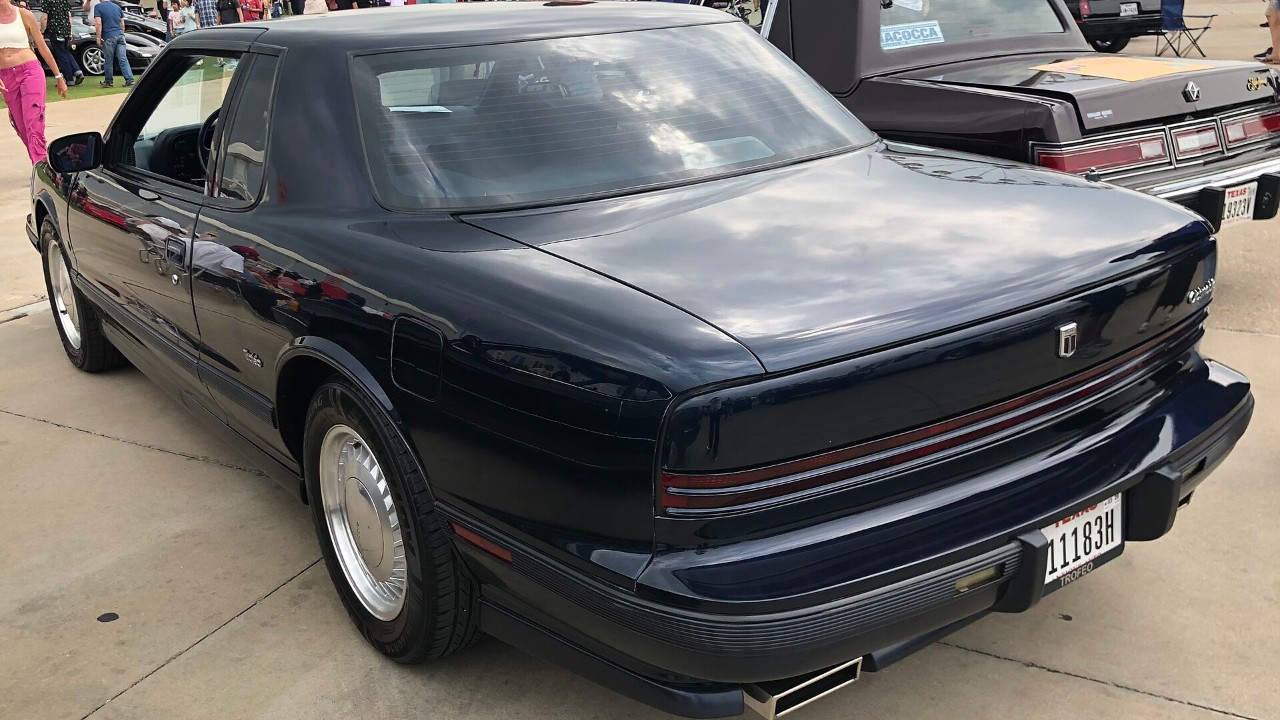
For 1986, the Toronado shrank again, losing more than a foot in length and switching to a 3.8-liter V6. Then Oldsmobile added the Trofeo as a sporty trim. According to Curbside Classic, it brought FE3 touring suspension, heavily bolstered leather buckets and monochrome paint.
For 1988, a stronger 3.8-liter V6 added 25 horsepower and 15 lb-ft of torque. That year, sales reached 16,494, the peak for the fourth generation. The Trofeo became its own model for 1989, and Curbside Classic says it made up more than 80 percent of sales by 1992. The last Toronado left the line on May 28, 1992. Even so, Oldsmobile kept experimenting with the car right to the end, and that spirit is why the whole family appeals to us.
Our take: the Trofeo is the Toronado that finally leaned into driving fun. It is lighter, tighter and more modern than any earlier version. For more of the family’s range, see our list of Toronados that were unlike anything else. In our view, a clean 1988 Trofeo is the smartest way to enjoy an Oldsmobile Toronado as a daily classic.
More from Fast Lane Only