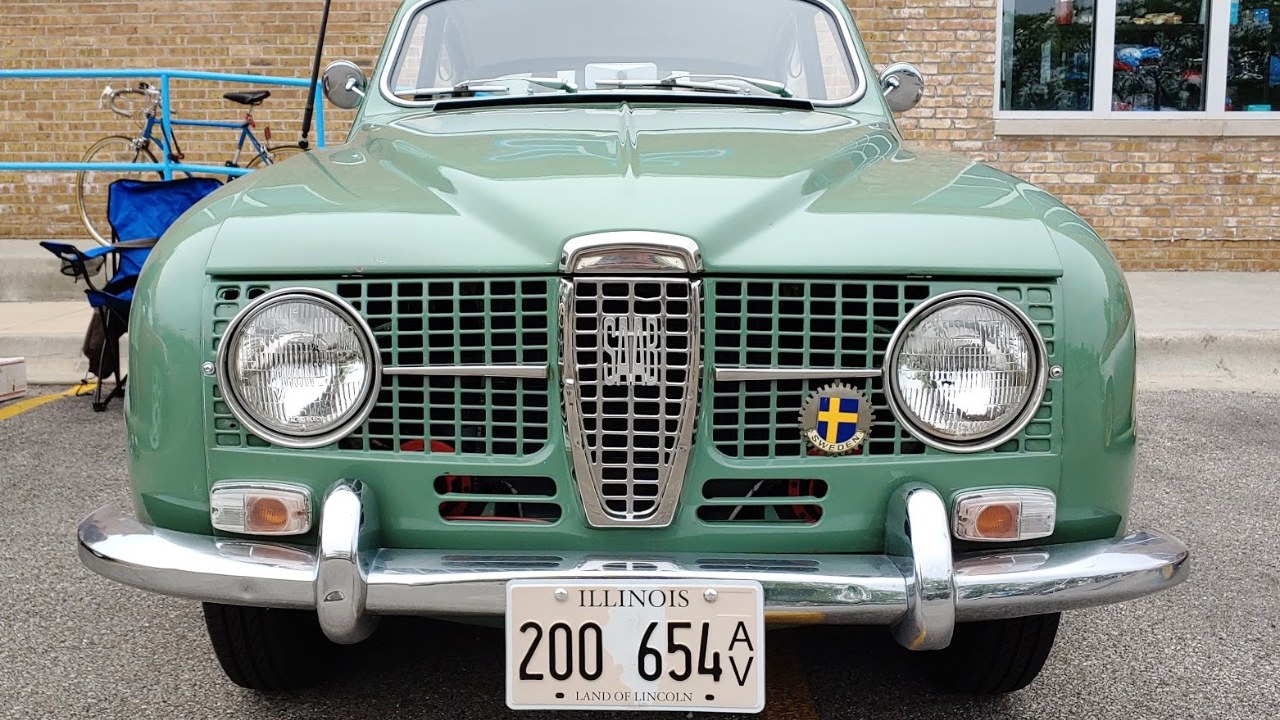
Saab built jet fighters as well as cars, and you can see it in the shapes. From the teardrop 92 to the rally-winning Saab 96, the company’s cars looked like nothing else parked at the curb. Many of them were also much quicker through a corner than their size suggested.
Saab never had a big budget, so its designers made do with clever ideas instead. That’s why the cars aged so gracefully. Most of them avoided fashion, and as a result they never looked dated. Meanwhile, odd engineering choices, from two-stroke engines to Ford V4s, gave owners plenty to talk about.
These ten are our picks, and the verdicts are our opinion. We chose cars that turn heads today, whether at a show or in a grocery store lot. The years, engines and production counts come from model histories, a Saab museum and marque-focused writers we read for this story.
1. 1949–1957 Saab 92
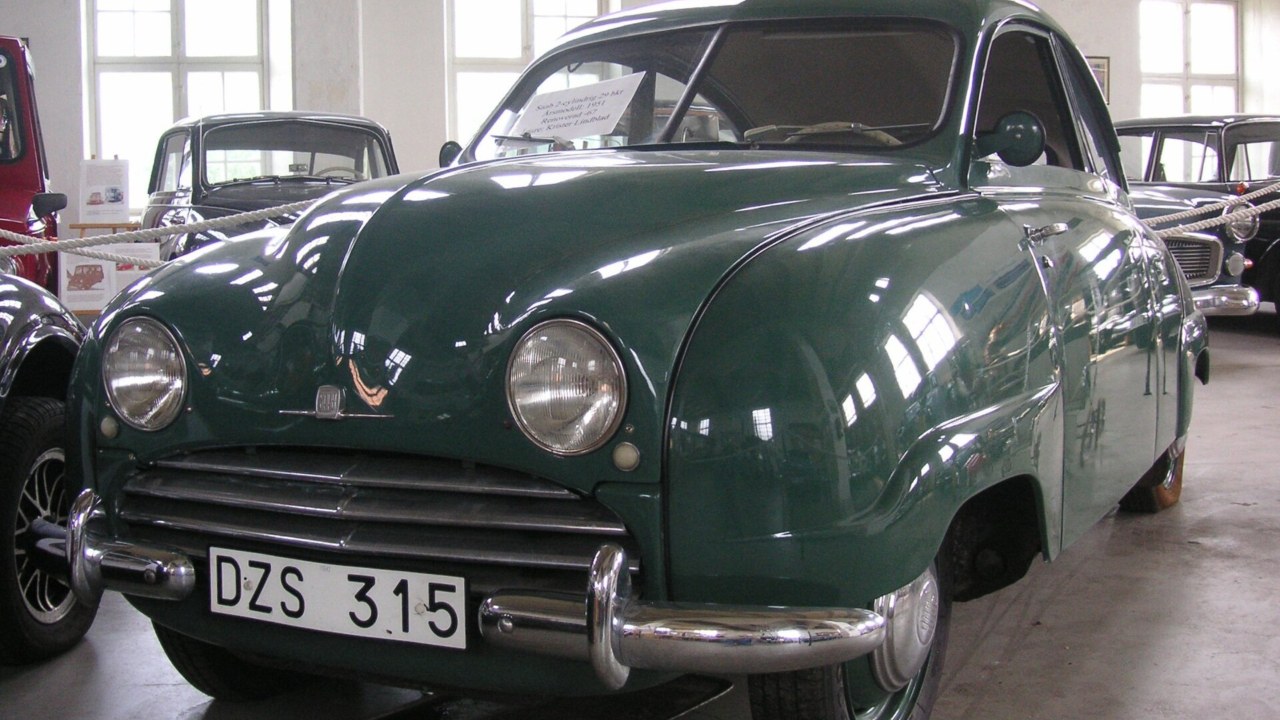
Saab’s first production car rolled into full production on December 12, 1949. Sixten Sason drew it, and the shape slipped through the air with a drag coefficient of 0.30. That figure would flatter many modern cars. Meanwhile, under the hood sat a 764 cc two-stroke twin making 25 horsepower at launch, rising to 28 horsepower by 1954.
The early cars came in one color, a dark bottle green. Saab used it because the company had surplus paint left over from the war. Saab made only 700 cars for the 1950 model year. Overall, Saab made 20,128 cars across the 92’s run, which ended in 1957.
Our take: the 92 is the purest Saab shape there is, and it looks like a polished river stone on wheels. It also proved itself early. In 1952, Greta Molander won the Coupe des Dames at the Monte Carlo Rally in a 92 tuned to 35 horsepower. For a tiny car from an aircraft maker, that is quite a résumé. If you see one at a show, walk around the back and look at the way the roof flows into the tail. In our view, few postwar economy cars have such a clean profile.
2. 1958–1960 Saab GT750
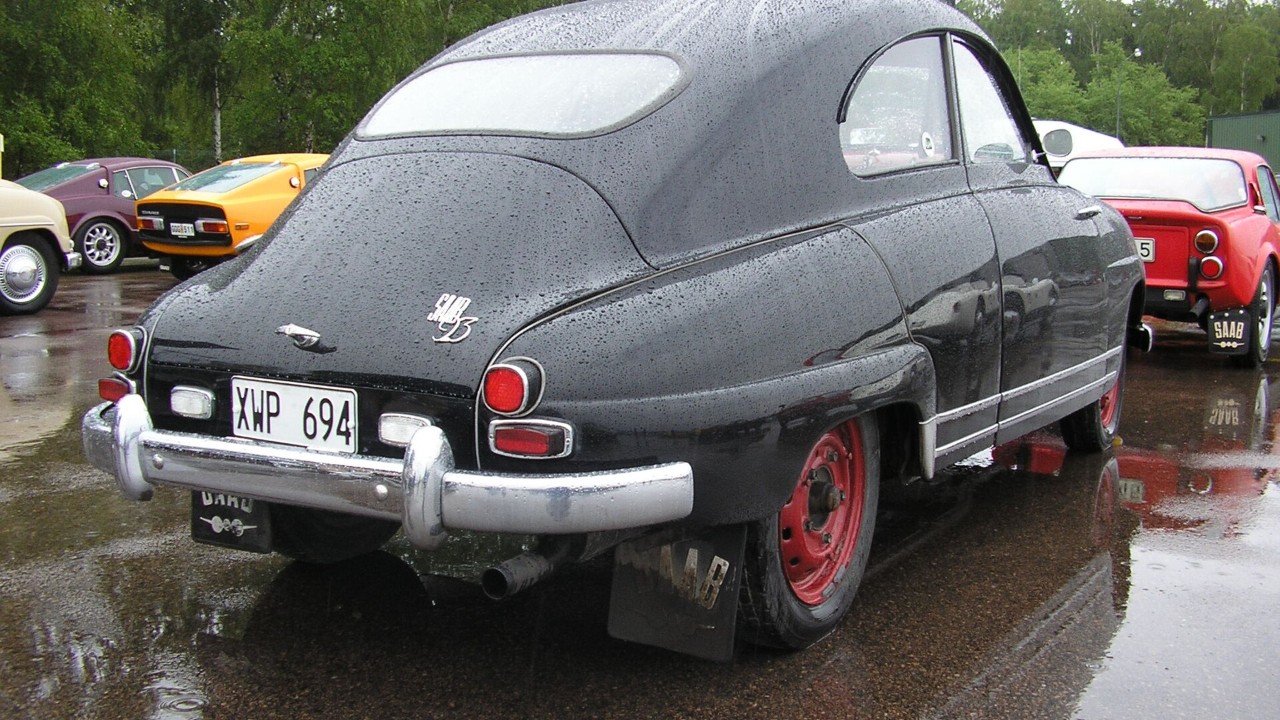
Saab’s US chief, Ralph T. Millet, pushed for a sportier 93, so the company showed a dressed-up version at the 1958 New York show. According to Saab Planet’s history of the GT 750, the three-cylinder two-stroke made 50 horsepower at 5,000 rpm. A dealer kit with a double carburetor and new exhaust added seven more.
Still, the cabin was the real treat. Buyers got plush front seats with adjustable lumbar support, a big tachometer and a wood-rimmed steering wheel. There was also a Halda Speed Pilot, a rally measuring device for the navigator. Saab Planet counts 605 cars with the GT 750 name built between 1958 and 1960. More than 540 of them shipped to the United States.
Our take: this is the Saab for people who love a sleeper. From across the street it looks like a humble family sedan. Up close, the chrome trim, extra lamps and badges tell you something special is going on. However, the engine needs revs to wake up, so it rewards a driver who keeps it buzzing. With so few built, any GT750 at a cars-and-coffee meet is a genuine event, and we’d stop to look every time.
3. 1966 Saab 96 Monte Carlo 850
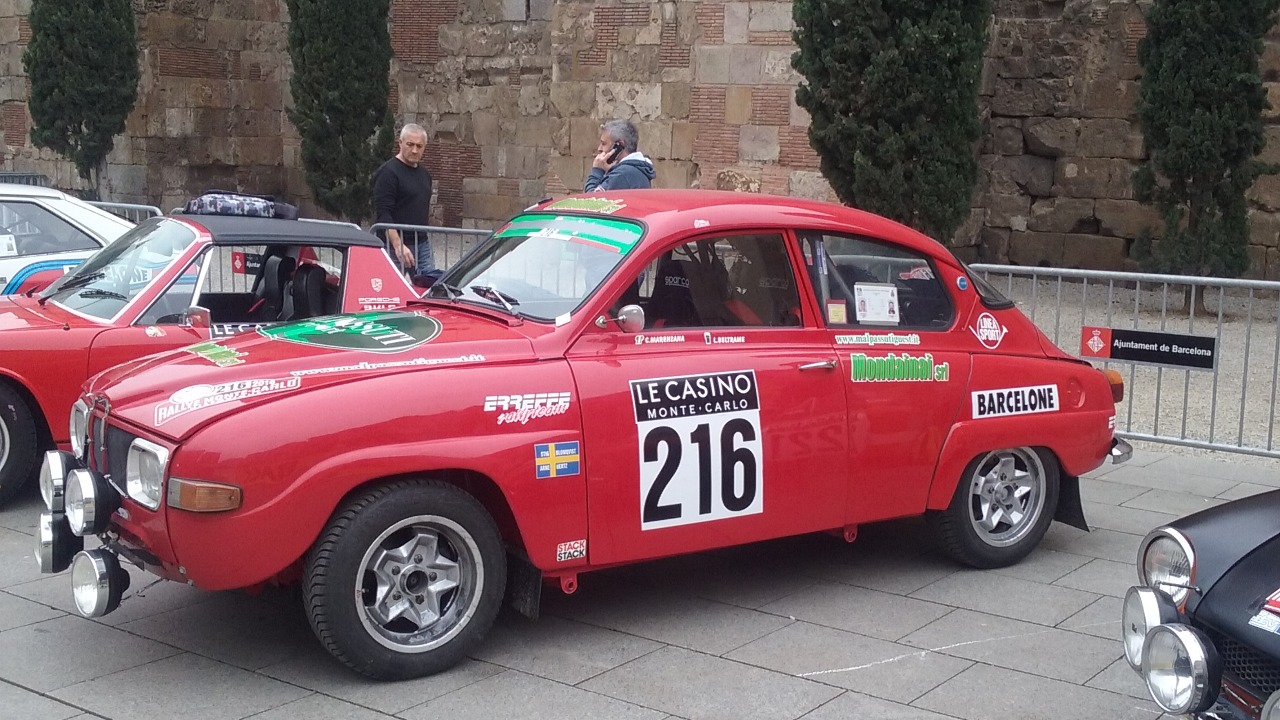
The Monte Carlo name was earned, not borrowed. Erik Carlsson won the Monte Carlo Rally in a Saab in 1962 and again in 1963. He also took the RAC Rally three years running, starting in 1960. For 1966, Saab gathered its sporty variants under one badge, the Monte Carlo 850.
First, the recipe started with the regular Saab 96 and its 841 cc two-stroke three-cylinder. Saab then gave the sport version triple carburetors, oil injection and a reworked cylinder head. The extra oil system meant owners no longer had to mix oil into the gas at every fill-up. Meanwhile, the shape stayed the same rounded, friendly body that ran from 1960 to 1980.
Our take: the Saab 96 is the car we’d pick as the face of the brand, and the Monte Carlo is the one to find. It has the rally story, the two-stroke ring-ding soundtrack and that bulbous profile all in one. Saab built 547,221 examples of the 96 in total, so the basic car is easy to spot. A real Monte Carlo is harder, which makes it more rewarding to own. In our view, a Saab 96 in rally trim parked beside a modern hatchback draws more smiles than almost anything else from the 1960s.
4. 1959–1978 Saab 95 estate
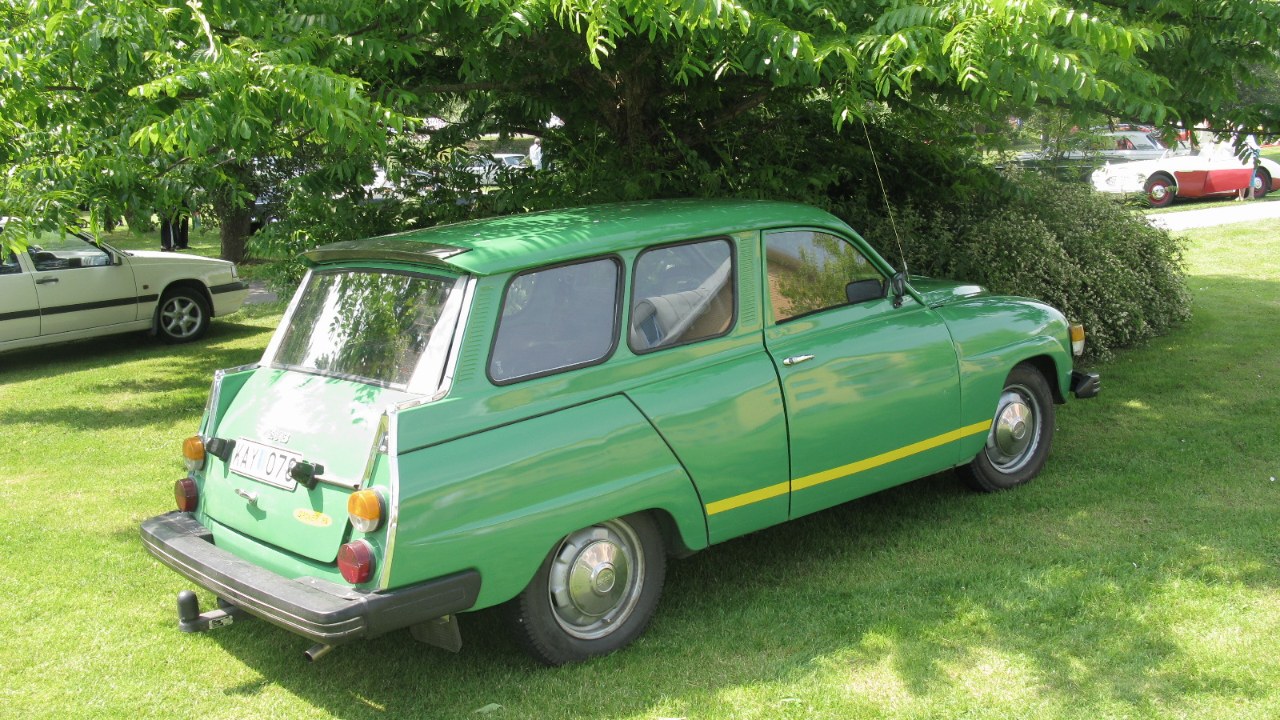
The 95 was Saab’s station wagon, and it had room for seven. Its secret was a rear-facing folding seat in the back. Saab kept that seat until the 1976 model year, when the 95 became a regular five-seater.
It also had a few tricks under the skin, because Saab rarely did anything the usual way. The early two-stroke cars carried a handle on the firewall that engaged a freewheel. That let the car coast downhill without starving the engine of oil. Then, from 1967, buyers could get the four-stroke Ford Taunus V4 shared with the 96. Saab built only 40 wagons in 1959 and finished in 1978 after 110,527 in all.
Our take: we think the 95 is one of the best-looking small wagons ever made. It takes the friendly, rounded Saab look and stretches it into something useful. To our eyes, it looks practical and playful at the same time. If you want the full story of how this wagon earned its place, our earlier piece on the 1965 Saab 95 digs into its purpose. For a show car, we’d hunt for an early example with that third-row seat intact.
5. 1968 Saab Sonett V4
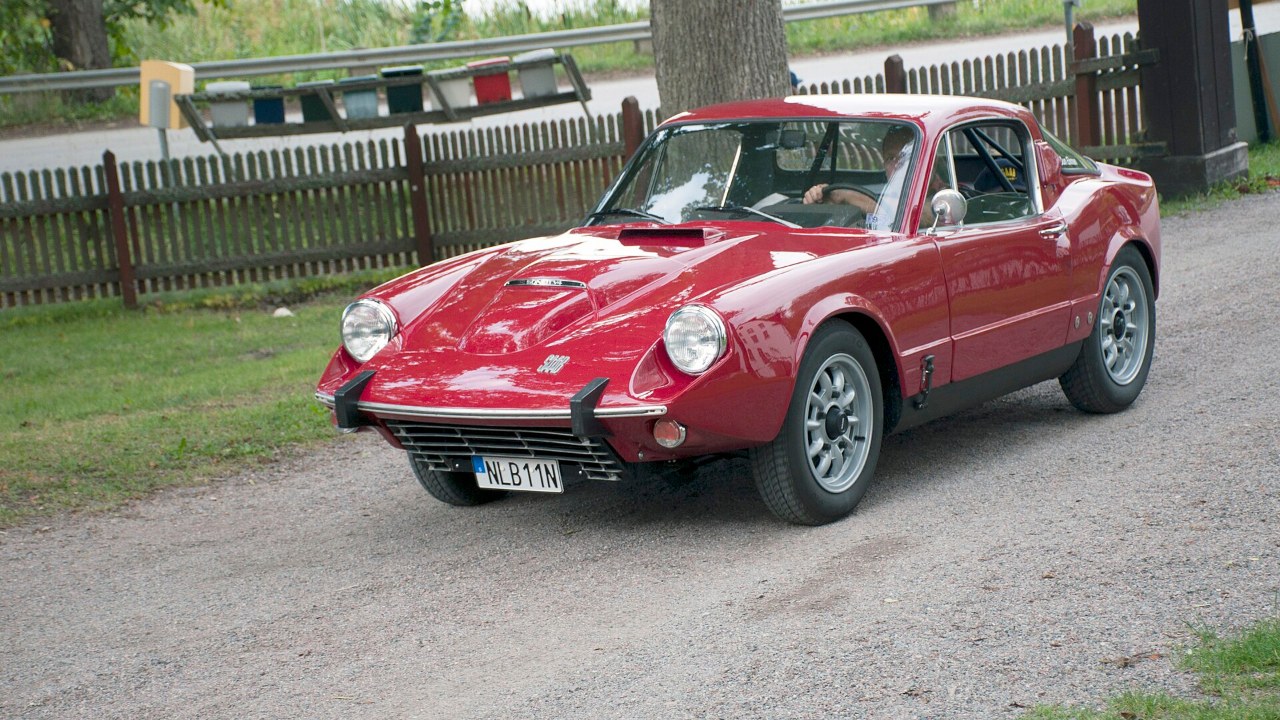
Saab’s little sports car got a new heart in mid-1967. The original two-stroke Sonett gave way to the Ford Taunus V4, a 1,498 cc engine rated at 65 horsepower. To make it fit, designer Gunnar A. Sjögren drew a bulge into the fiberglass hood. As a result, the car gained its instantly recognizable nose.
According to Car & Classic’s Sonett history, the V4 also brought a column shifter, high seat backs, a roll bar and wider wheels. Just over 1,600 left the factory, and most went to the United States. There, it took on British roadsters such as the MG Midget and MGB at a sticker price between $3,200 and $3,800.
Our take: the Sonett V4 is a small car with a big personality. That hood bulge gives it character from every angle. Underneath, the fiberglass body sits on a steel box chassis, which we find a neat bit of practical engineering. We’ve covered its rule-breaking side in our story on the Sonett V4 that didn’t follow any rules. Here, we simply love how it looks. At a show, it pulls a crowd that a much faster car often can’t.
6. 1974 Saab Sonett III
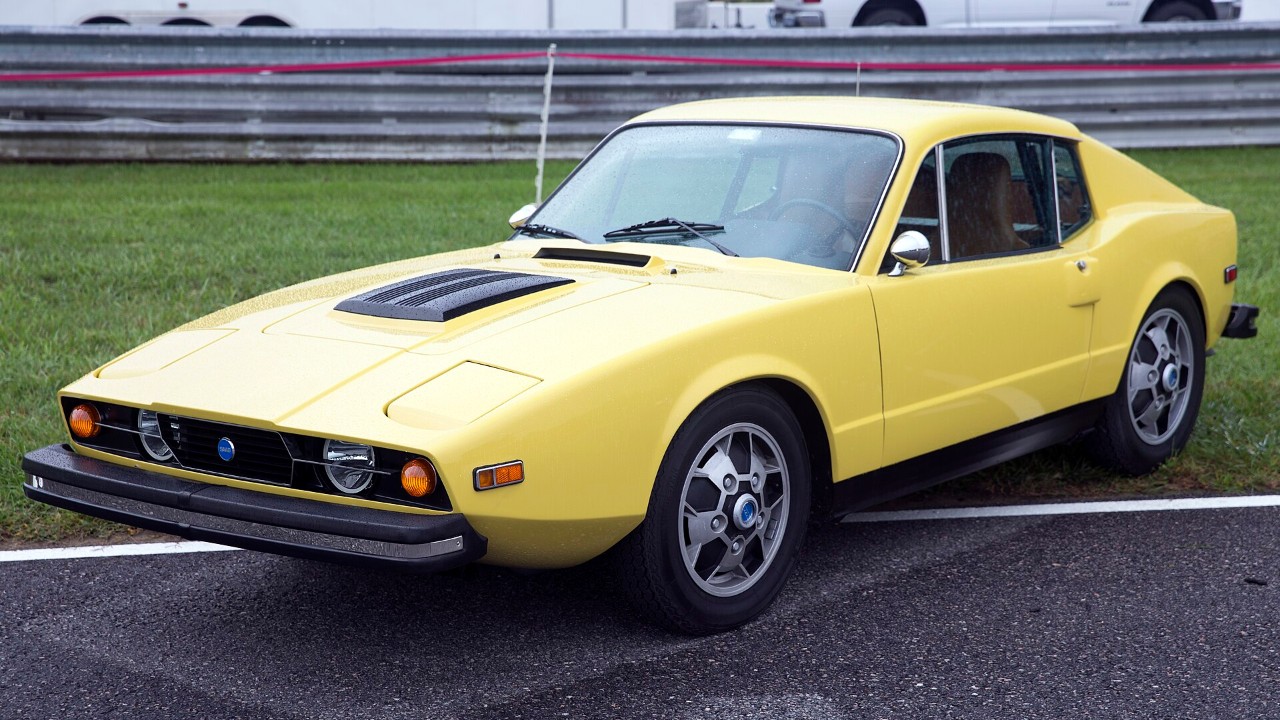
The final Sonett was also the most modern-looking one. Sergio Coggiola drew the first version of the body, and Gunnar A. Sjögren adapted it to fit the existing chassis. Pop-up headlights also came standard. Instead of a hatchback, the car got a hinged glass rear window over the luggage area.
By 1974, the car had changed in small ways. Car & Classic notes that later cars wore US-mandated bumpers, and factory air conditioning had become an option. The 1,700 cc Ford V4 kept the same 65 horsepower as before. In addition, Car & Classic quotes a 0 to 60 mph time of around 12 seconds and a top speed of nearly 105 mph. Production ended in 1974 after 8,368 Sonett IIIs.
Our take: the Sonett III is the wedge-shaped answer for people who find the earlier cars too quirky. It looks sharp with the headlights up, and it looks sleek with them down. The 1974 bumpers are bulky, but they’re part of the car’s story now. If you’re shopping, check the chassis carefully, because rust there is the real enemy. In our view, a clean late Sonett III is one of the most charming small sports cars of the 1970s.
7. 1978 Saab 99 Turbo
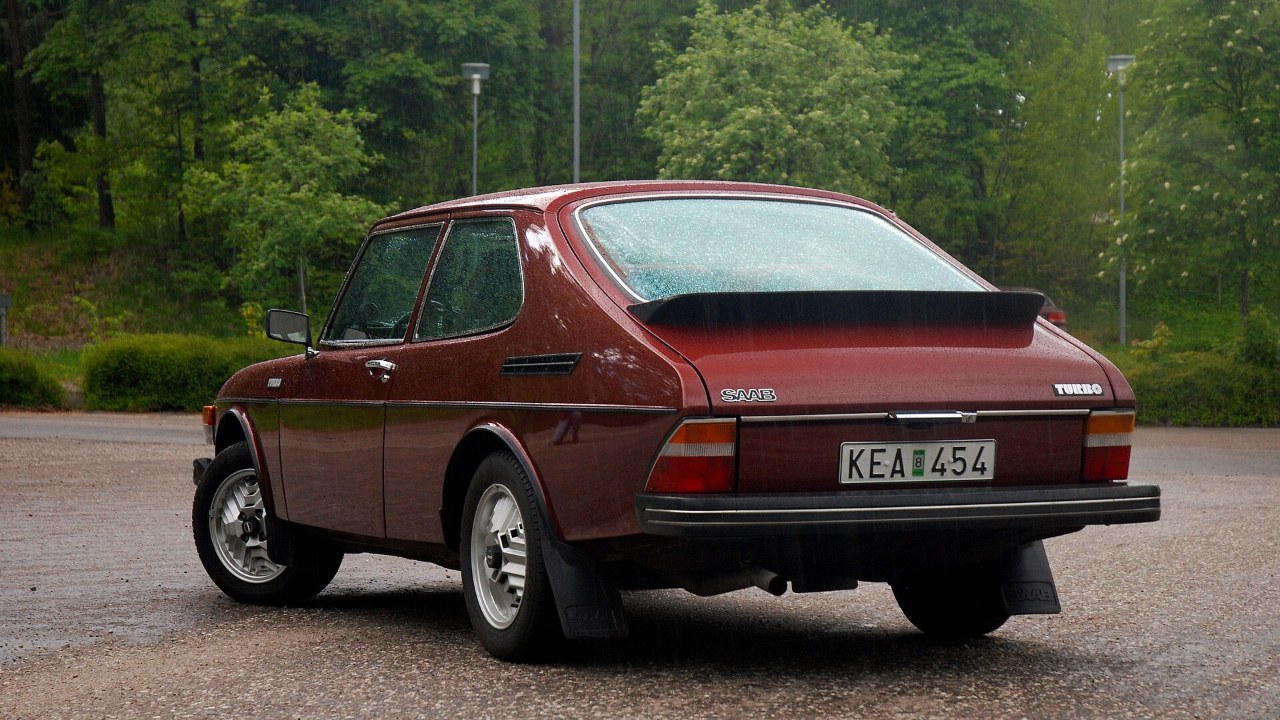
The 99 Turbo arrived for 1978, after Saab built about 100 pre-series cars in 1977. Its turbocharged 2.0-liter four made 145 PS in Europe. American cars carried a 135-horsepower rating, and only for that first year. At first, the Turbo came only as a three-door combi coupé.
Then the rally team made its point. Stig Blomqvist and co-driver Björn Cederberg won the 1979 Swedish Rally in a 99 Turbo. Later, Popular Mechanics placed the car second on its list of the best turbocharged cars of all time. You can see a first-year example at the Saab Heritage Car Museum USA in Sturgis, South Dakota. Its owner restored the car in the late 1990s.
Our take: the 99 Turbo made boost feel normal, and it looks smart doing it. The combi coupé body has a long, gentle slope at the back that suits it well. It also marks the moment turbocharging moved from race cars into everyday driving, and that history adds to the charm for us. For a broader look at Saab’s boost history, see our feature on when Saab made turbo cars worth driving. We’d take a three-door in a period color every time.
8. 1991 Saab 900 SPG
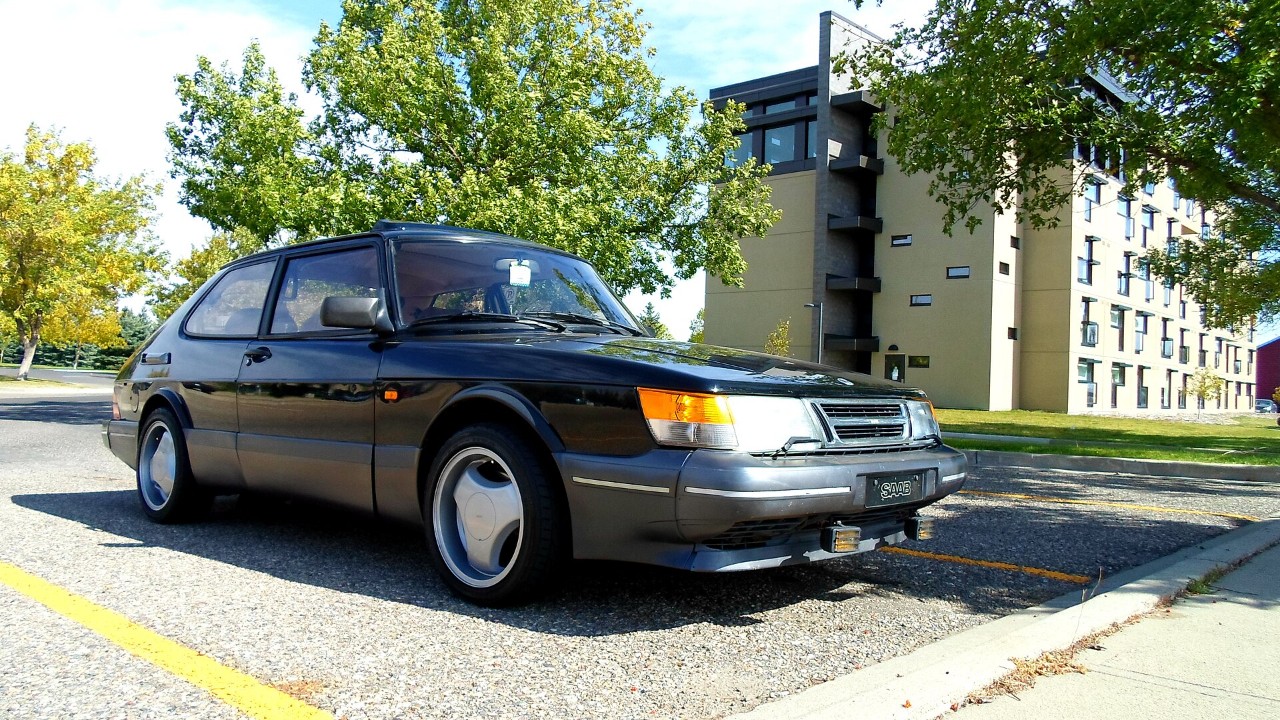
At first, Europe knew this car as the 900 Aero. North America got it as the SPG, short for Special Performance Group, starting in 1984. It was the first Saab delivered with the 160-horsepower 16-valve turbocharged engine. Saab wrapped it in a body kit with skirts and gave it special wheels, a sport suspension and sway bars.
The US run lasted six years and ended in 1991. Over that time, Saab imported 7,625 SPGs to North America. Some later cars with a special boost controller made 175 or 185 horsepower in markets without a catalytic converter. American cars, however, kept the standard tune.
Our take: the classic 900 already had one of the most distinctive profiles of the 1980s. In our view, the SPG body kit smooths the sides and makes the whole car look lower and tighter. We think it’s the sharpest version of the shape. A 1991 car comes from the last US year, which gives it a nice place in the story. If you find one with its original wheels and kit pieces in good shape, hang onto it. That full kit is what turns heads.
9. 1999 Saab 9-3 Viggen
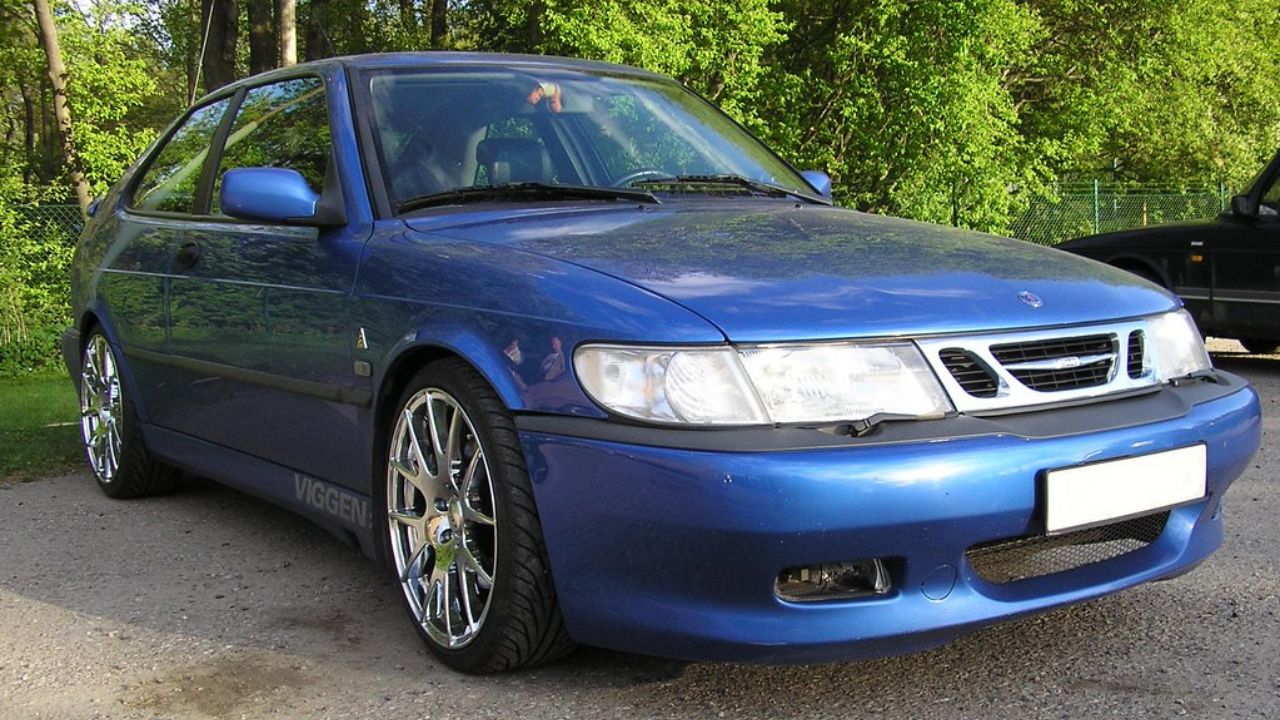
Saab named this car after its Viggen jet fighter, and the word means “thunderbolt.” Valmet Automotive built the Viggen in Uusikaupunki, Finland. It was the only plant that made the car in all three body styles: three-door, five-door and convertible. A 2.3-liter turbo four sent its power through a five-speed manual, the only gearbox offered.
At first, output stood at 225 PS, and it later climbed to 230 PS, with 350 Nm of torque. Saab built only about 4,600 Viggens between 1999 and 2002. The first year in the United States was especially narrow. All 426 American cars imported for 1999 were three-doors, and 420 of them wore blue paint.
Our take: the Viggen is the most aggressive-looking Saab of its era, yet it never shouts. Its sporty body styling looks purposeful rather than flashy. Lightning Blue, a color exclusive to the car, is the one to have. If you want a modern Saab that people will cross a parking lot to see, start here. Just budget for a careful inspection, since even the newest Viggen is now more than 20 years old.
10. 1993–1997 Saab 9000 Aero
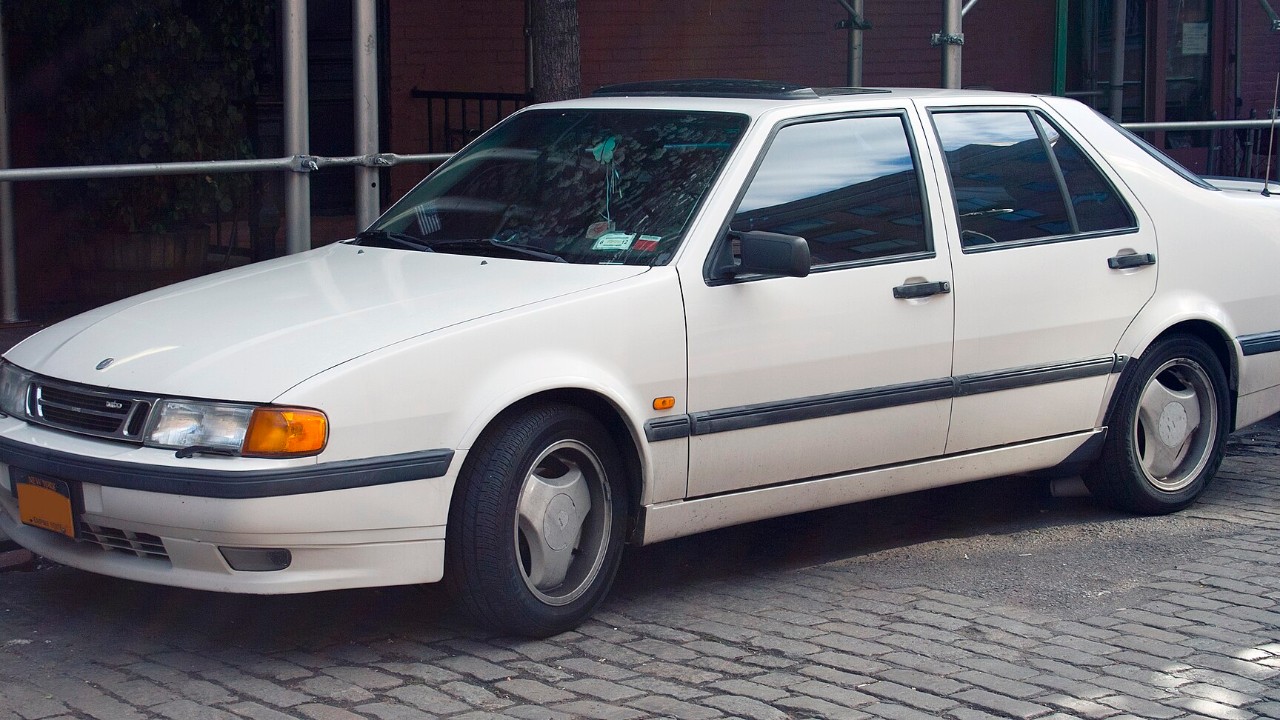
Saab unveiled the 9000 Aero at the 1992 Paris Motor Show and put it on sale on the CS hatchback body. Its 2.3-liter turbocharged four made 225 PS with a manual gearbox. Automatic cars, by contrast, made 200 PS. The manual car reached 100 km/h in 6.7 seconds and topped out at 155 mph.
The 9000 came from a joint project with Fiat called the Type Four platform. That makes the Aero a cousin of the Fiat Croma, Lancia Thema and Alfa Romeo 164. Saab ended the Aero in 1997. After that, for 1998, its engine spread across the wider 9000 range. In other words, the Aero’s best feature became standard fare in its final years.
Our take: the 9000 Aero is a big, calm hatchback that happens to be very fast. Its clean lines look crisp and understated. We like that it hides its speed so well. Most people see a sensible Swedish family car until it pulls away. For that reason, it is a perfect partner to the older Saab 96 in a two-car garage of Swedish classics. A well-kept Aero in a dark color looks like an executive express, and in our view it deserves more attention than it gets.
More from Fast Lane Only