The 1970 Chevrolet El Camino SS arrived at a moment when American muscle cars were hitting their stride, yet it refused to fit neatly into any one box. With big-block V8 power under a Chevelle-style nose and a usable pickup bed out back, it turned a practical workhorse layout into something that could run with the quickest street machines of its era.
More than half a century later, collectors still chase high-spec examples, and modern giveaways and auctions keep the model in the spotlight. The appeal is not just nostalgia. The 1970 El Camino SS captured a specific idea that still resonates: a vehicle that could haul lumber on Friday and dominate the boulevard on Saturday.
What happened
By 1970, Chevrolet had already cycled through several generations of the El Camino concept, but that model year brought a near-perfect convergence of styling, performance and utility. The SS package turned the car-truck hybrid into a true muscle machine, especially when paired with the 454 cubic inch V8 that also powered Chevrolet’s most serious Chevelle variants. Period performance figures and contemporary coverage describe versions of the 454 as producing well over 400 horsepower, even when official ratings were more conservative for insurance and regulatory reasons.
Under the skin, the 1970 El Camino SS shared its basic platform with the Chevelle, which meant a stout body-on-frame layout, rear-wheel drive and a suspension tuned for both straight-line acceleration and everyday drivability. With the SS 454 option, buyers could choose between automatic and four-speed manual transmissions, along with heavy-duty cooling, upgraded brakes and performance-oriented rear axle ratios. That combination allowed the El Camino to deliver quarter-mile times that rivaled many dedicated coupes while still offering a full-size cargo box behind the cab.
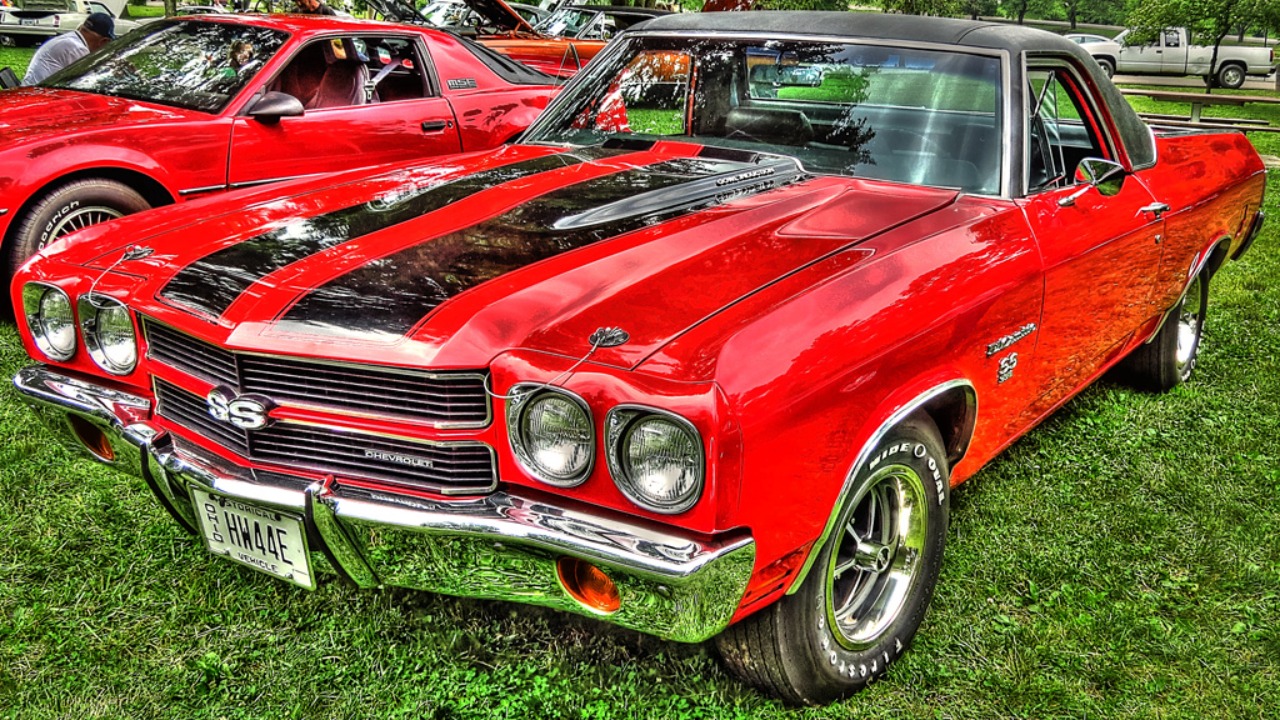
The styling reinforced that dual personality. From the front, the El Camino SS largely mirrored the Chevelle SS, with a broad grille, quad headlights and, on many examples, bold striping and SS badging. From the side and rear, however, it was unmistakably a pickup, with a long, flat bed and squared-off tailgate. Inside, the layout followed Chevrolet’s intermediate car formula, with bucket or bench seats, an optional console and the full spread of gauges that muscle-car buyers expected. The result looked more like a sporty coupe that happened to have an open cargo area than a traditional work truck.
That balance of form and function has kept the 1970 El Camino SS in demand among enthusiasts. Modern promotions that offer a restored 1970 Chevrolet El Camino SS as a prize highlight how the model’s mix of style and practicality still attracts attention, with organizers emphasizing the car’s big-block power and show-quality presentation to draw entries from collectors and casual fans alike. One such giveaway has centered on a carefully refurbished example, presented with period-correct wheels and trim to underline how desirable a clean 1970 SS remains for today’s buyers, as described in a feature on a chance to win a 1970.
In enthusiast circles, the 1970 SS 454 variant stands out as the most coveted. Coverage of the El Camino’s history often singles out the 454-powered version as a unique blend of muscle car and pickup, with the same aggressive front clip and drivetrain hardware found in high-performance Chevelles, but with the added versatility of a truck bed. One detailed overview of the El Camino’s evolution describes the 1970 SS 454 as “part muscle car, part pickup,” and highlights how that big-block V8 gave the car-truck hybrid genuine high-performance credentials, especially in LS5 and LS6 forms, which were among the most powerful factory engines of the period, as outlined in an analysis of the El Camino SS.
Beyond the headline engine, Chevrolet offered a range of V8 options for the 1970 El Camino, including smaller-block units that delivered respectable performance with lower cost and better fuel economy. Buyers could also specify comfort and convenience features that mirrored Chevelle options, such as air conditioning, power steering, power front disc brakes and upgraded audio systems. This flexibility helped the El Camino appeal to a wide audience, from contractors who wanted a stylish work vehicle to enthusiasts who saw it as a sleeper muscle car that could tow a boat or carry parts in the bed.
Although Chevrolet would continue to build El Caminos into the late 1980s, the 1970 model year is often treated as a high-water mark for performance. Emissions regulations, insurance pressures and changing market tastes soon pushed manufacturers toward smaller engines and more comfort-focused designs. That context has only strengthened the position of the 1970 SS 454 in collector rankings. Lists of Chevrolet’s greatest muscle cars frequently place the 1970 Chevelle SS 454 near the top, and they often mention the El Camino SS 454 in the same breath, since it shared the same basic powertrain and performance potential, as seen in a ranking of the best Chevy muscle.
Why it matters
The 1970 El Camino SS matters because it represents a rare case where a manufacturer successfully merged two automotive identities without diluting either one. In most eras, buyers face a trade-off between performance and practicality. Pickup trucks tend to prioritize payload and durability, while muscle cars focus on acceleration and image. The El Camino SS blurred that line in a way that still influences how enthusiasts think about multi-purpose performance vehicles.
From a historical perspective, the 1970 SS 454 version demonstrates how far Chevrolet was willing to go in pursuit of street performance at the turn of the decade. Installing one of the company’s most powerful big-block engines into a vehicle with an open cargo bed was a bold decision, especially when that engine was already stretching the limits of what insurers and regulators would tolerate in a passenger car. The result gave buyers a factory-built hot rod that could tow and haul, which helped cement Chevrolet’s reputation among performance-minded drivers.
The model also helps explain the enduring fascination with car-based pickups. While the El Camino and its rivals eventually disappeared from new-car showrooms, the idea of a vehicle that drives like a car but offers truck-like utility has never fully gone away. Modern crossovers and performance-oriented pickups echo parts of the formula, but the 1970 El Camino SS remains one of the clearest expressions of that concept. Its low ride height, car-like seating position and relatively compact footprint made it easier to live with in urban and suburban settings than a full-size truck, yet the bed could still handle home-improvement runs or light commercial tasks.
Collectors place a premium on that versatility. A well-sorted 1970 El Camino SS can serve as a showpiece at events, then carry spare parts, tools or even motorcycles in the back. Owners often highlight the satisfaction of using a classic muscle-era drivetrain in a way that feels functional rather than purely recreational. That sense of purpose distinguishes the El Camino from many coupes that spend most of their time parked or trailered to events.
There is also a cultural dimension. The El Camino has long carried a certain working-class swagger, especially in SS trim. It appealed to buyers who valued performance but did not necessarily identify with the more polished image of a two-door coupe. That character has translated into film and television roles, music references and a strong presence in regional car cultures, particularly in parts of the United States where pickup trucks are part of daily life. The 1970 SS sits at the center of that identity, since it combines the peak of factory power with the clean, squared-off styling that many fans prefer.
From an engineering standpoint, the 1970 El Camino SS illustrates how shared platforms can be leveraged to create niche variants without excessive cost. By borrowing the Chevelle’s front structure, drivetrain and interior components, Chevrolet could justify a relatively low-volume body style that still met corporate standards for quality and safety. That approach foreshadowed later strategies where automakers spin multiple body styles and trims from a single platform in order to reach different customer segments.
The car also has significance in the broader story of American muscle cars. As emissions rules tightened and fuel prices rose, many high-compression big-block engines disappeared or were detuned. The 1970 El Camino SS 454 therefore stands as a marker near the end of what enthusiasts often call the first golden age of muscle. Its survival in good condition provides a tangible link to that period, and its continued popularity in auctions and giveaways indicates that the market still values that connection.
In the collector market, the El Camino’s hybrid nature can actually enhance its appeal. While some purists focus on coupes and convertibles, a growing number of buyers want something that stands out on a show field. A 1970 El Camino SS with correct stripes, wheels and interior trim delivers that visual impact, especially when the hood is raised to reveal a detailed big-block. Yet the vehicle remains usable, which can make ownership feel more rewarding than with rarer, more fragile exotics.
The model’s influence can also be seen in how enthusiasts modify and restore them today. Some owners pursue period-correct restorations that preserve original color combinations, drivetrain specifications and factory options. Others treat the El Camino as a canvas for restomod builds that add modern suspension components, fuel-injected engines and updated brakes while retaining the classic body lines. The underlying concept of a sporty, practical hauler adapts well to both approaches, which keeps interest high across different segments of the hobby.
What to watch next
Looking ahead, the 1970 El Camino SS is likely to remain a reference point in discussions about performance and practicality, especially as automakers experiment with new types of crossovers and electric pickups. While no major manufacturer currently offers a direct successor in the form of a low-slung, car-based pickup with muscle-level power, the appetite for vehicles that combine speed and utility has not faded. Enthusiast interest in the El Camino helps signal where some of that demand might go if a modern reinterpretation ever appears.
In the near term, the most visible developments will continue to come from the collector market. Auction results for high-spec 1970 SS 454 examples, particularly those with documented original drivetrains and desirable color combinations, will shape how owners and restorers approach their cars. Strong prices encourage faithful restorations and careful preservation, while softer numbers might push more owners toward custom builds that prioritize personal taste over originality. Either way, the El Camino’s presence at major shows and online marketplaces will keep its story in front of new generations of fans.
Giveaways and promotional campaigns centered on the 1970 El Camino are another trend to watch. As organizers look for vehicles that can attract attention across social media and enthusiast forums, the combination of a recognizable nameplate, big-block heritage and usable bed makes the 1970 SS a strong candidate. Each time a restored example is offered as a prize, it reinforces the model’s status as an attainable dream car rather than a museum piece, which helps sustain interest in driver-quality cars as well as show-level builds.
More from Fast Lane Only