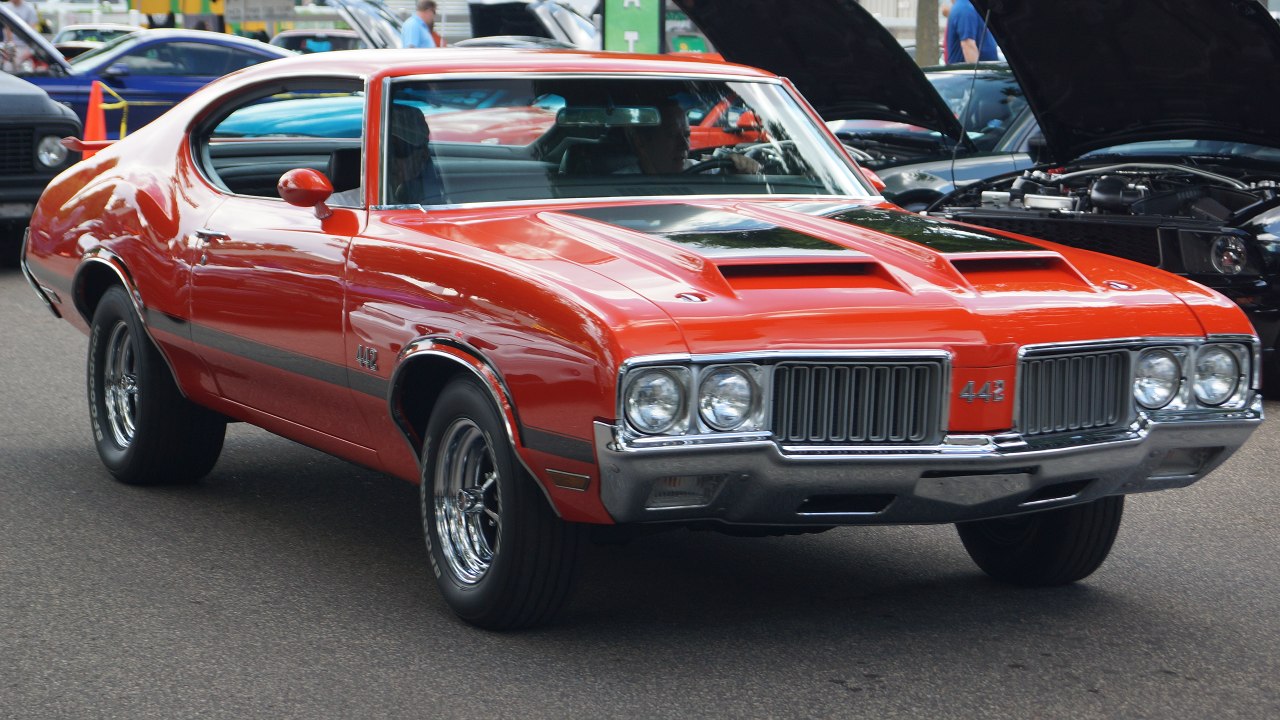
The 1970 Oldsmobile 442 arrived at the peak of the muscle car era with a factory rating of 360 horsepower and engineering that put it among Detroit’s most sophisticated performance machines. More than half a century later, its blend of big-block torque, tuned suspension and subtle design cues still defines what many enthusiasts expect from a serious American performance coupe. That mix of raw output and carefully considered hardware is why the 1970 model year remains the benchmark for the 442 badge.
What happened
Oldsmobile entered 1970 with a clear mission for the 442: build a street car that could deliver real performance numbers while still reflecting the division’s upscale image. The centerpiece was the 455 cubic inch V8, a big-block engine that in standard W-30 trim was rated at 360 horsepower and a towering 500 pound-feet of torque. Those figures placed the 442 directly in the top tier of the muscle field and gave it the flexibility to run hard at the drag strip or cruise comfortably on the highway.
Rather than relying almost entirely on straight-line punch, Oldsmobile treated the 442 as a complete package. Engineers specified a high-lift camshaft, large-valve cylinder heads and a four-barrel carburetor that allowed the 455 to breathe at higher rpm without sacrificing low-end pull. Compression ratios were aggressive by modern standards, which helped the engine respond instantly when the driver tipped into the throttle. The result was a car that felt urgent from idle yet still pulled strongly as the tachometer swept upward.
Chassis tuning was just as deliberate. The 1970 442 received heavy-duty springs, stiffer shocks and thicker anti-roll bars compared with the Cutlass models it was based on. That hardware reduced body roll and improved stability at speed, traits that separated the 442 from more softly sprung intermediates of the period. Power front disc brakes were widely available, and a limited-slip rear differential helped put the 455’s torque to the pavement instead of spinning a single tire into smoke.
Transmission choices rounded out the drivetrain strategy. Buyers could pair the 455 with a close-ratio four-speed manual for maximum engagement or opt for a three-speed automatic that still shifted with authority under full throttle. Rear axle ratios ranged from highway-friendly sets to aggressive performance gears, which allowed the 442 to be tailored either as a long-distance cruiser or a stoplight brawler. The combination of torque-rich big-block power and flexible gearing made the car feel strong in almost any situation.
Styling signaled the performance intent without resorting to excessive ornament. The 1970 442 wore a unique dual-scoop hood that fed cooler air toward the carburetor, along with functional hood pins and subtle 442 badging. Optional stripes and color-keyed wheels added visual drama, but the underlying shape remained clean and restrained. Compared with some louder competitors, the Oldsmobile looked more mature, which suited the division’s positioning as a slightly more refined alternative within General Motors.
Inside, the 442 carried over much of the Cutlass cabin, yet the details leaned toward performance. Bucket seats, a center console and a full set of auxiliary gauges were common choices. Many cars were ordered with options such as a sport steering wheel and tachometer, which reinforced the impression that this was a driver’s car, not just a dressy two-door. Oldsmobile’s emphasis on comfort meant the interior materials and assembly quality were often a step above what buyers found in some competing muscle models.
The 442 name itself reflected the formula that had defined earlier versions: four-barrel carburetor, four-speed manual transmission and dual exhaust. By 1970, the specification sheet allowed more variation, yet the badge still communicated a clear message. This was the Oldsmobile for buyers who valued acceleration and handling as much as chrome and vinyl roofs. The 360 horsepower rating was not simply a marketing claim, it was the core of an integrated performance package.
Within the broader Oldsmobile lineup, the 442 sat at the top of the performance hierarchy. The division had experimented with high-output models before, and it would later create more obscure efforts such as the rare Aerotech-based special, but the 1970 442 represented the moment when engineering resources, market demand and corporate tolerance for big horsepower all aligned. It was the car that made the strongest public statement about what Oldsmobile engineers could do when given relatively free rein.
Why it matters
The 1970 442 matters because it captured the technical peak of the original muscle era just before tightening emissions rules and rising insurance costs reshaped the market. The 360 horsepower rating from a factory big-block, combined with 500 pound-feet of torque, marked a level of output that would soon become difficult to sustain. Within a few years, compression ratios fell, advertised horsepower dropped and the character of many performance cars changed. The 1970 442 stands as a snapshot of what was possible when those constraints had not yet taken hold.
From an engineering perspective, the car showed how a manufacturer known for comfort and refinement could still deliver serious speed. Oldsmobile was not typically the first name associated with drag strips or street racing, yet the 442 proved that the division’s engineers understood airflow, combustion and chassis dynamics as well as anyone in Detroit. The carefully matched camshaft, induction system and exhaust layout demonstrated a holistic approach to power rather than a simple displacement race.
The suspension and braking upgrades also helped shift expectations for what a muscle car could be. Many high-horsepower intermediates of the period were quick in a straight line but felt unsettled in corners or under hard braking. The 442’s heavy-duty components, wider tires and power disc brakes meant drivers could carry more speed with confidence on winding roads. That balance between acceleration and control foreshadowed the approach later adopted by modern performance coupes that combine big power with track-capable chassis tuning.
For collectors and historians, the 1970 model year holds special weight because it represents the most potent factory configuration of the original 442 formula. Earlier cars had established the badge, but the jump to the 455 cubic inch engine and the 360 horsepower rating set a new benchmark. Later versions would face stricter regulations and changing buyer priorities, which altered their character. As a result, the 1970 cars often command higher interest and values, especially when documented with original drivetrain components and desirable options.
The car’s significance also lies in what it reveals about General Motors’ internal dynamics at the time. Corporate policies had historically limited displacement in certain body styles, which affected how Pontiac, Chevrolet, Buick and Oldsmobile could position their performance models. By 1970, some of those restrictions had eased, allowing Oldsmobile to put a full 455 cubic inch engine into the 442 and compete directly with rivals like the GTO, Chevelle SS 454 and GS 455. The 442’s specification sheet shows how quickly the performance race escalated once those internal barriers were relaxed.
Culturally, the 1970 442 contributed to the image of the muscle car as something that could be both fast and somewhat understated. Its styling avoided the more extreme graphics and add-ons that appeared on some competitors, yet the car delivered equal or better performance. That combination appealed to buyers who wanted serious capability without shouting about it at every stoplight. The idea of a sleeper with upscale trim and hidden strength has influenced later performance sedans and coupes that follow a similar philosophy.
The engineering choices in the 442 also highlight the trade-offs of the era. High compression and generous cam timing produced excellent power on the high-octane fuel of the period, but those same factors made the engines less tolerant of lower-grade gasoline and more challenging to adapt to early emissions controls. As regulations tightened, manufacturers had to pull back on those aggressive specifications, which explains why cars like the 1970 442 feel so different from their mid-decade successors even when they share similar displacements.
From a modern performance engineering standpoint, the 442’s hardware looks almost simple, yet the underlying principles remain relevant. The focus on efficient airflow through the heads and intake, careful matching of camshaft characteristics to the engine’s intended use and attention to chassis balance rather than just engine output all mirror current best practices. The difference is that contemporary cars achieve those goals with electronic controls and advanced materials, while Oldsmobile’s engineers relied on mechanical tuning and extensive testing.
The car also holds a place in the story of Oldsmobile itself. The division would later struggle to define its identity as performance priorities shifted and corporate strategies changed. Enthusiasts often point to the 442 as proof that Oldsmobile was capable of building world-class performance cars when conditions allowed. That legacy continues to shape how the brand is remembered, long after its final production vehicles left the assembly line.
What to watch next
Interest in the 1970 442 is likely to remain strong among collectors, which has implications for restoration standards and parts availability. As more cars receive full restorations, the market tends to reward examples that retain original drivetrains, correct paint codes and factory-style interiors. That focus on authenticity encourages suppliers to reproduce specific components such as suspension bushings, brake hardware and trim pieces that match original specifications, which in turn makes it easier for owners to keep surviving cars close to their factory configuration.
At the same time, there is a growing community of enthusiasts who treat the 442 as a platform for modern upgrades. These restomod builds often retain the original body and general appearance but incorporate fuel-injected engines, overdrive transmissions, improved brakes and revised suspension geometry. The goal is to preserve the character of the 1970 design while delivering performance and drivability that align with current expectations. As more of these projects appear, they raise questions about how far modifications can go before a car loses the qualities that made it special in the first place.
Regulatory and environmental trends will also influence how owners use high-output classics like the 442. Some regions are tightening rules around emissions testing, fuel formulations and urban access for older vehicles. Enthusiasts may respond by limiting use to occasional drives, track events or club gatherings, which changes the role of the car from daily transport to a more curated experience. That shift can increase the sense of occasion when the 455 roars to life, but it also reinforces the idea of the 442 as a historical artifact rather than a regular tool.
On the engineering front, comparisons between classic big-block power and modern performance technology will continue to shape how the 442 is perceived. Contemporary V8 engines often match or exceed 360 horsepower with smaller displacements, lower emissions and better fuel economy, yet many drivers still value the immediate, mechanical feel of a carbureted 455. As more people experience both types of powertrains, discussions about throttle response, sound and character will keep the 442 relevant as a reference point.
More from Fast Lane Only