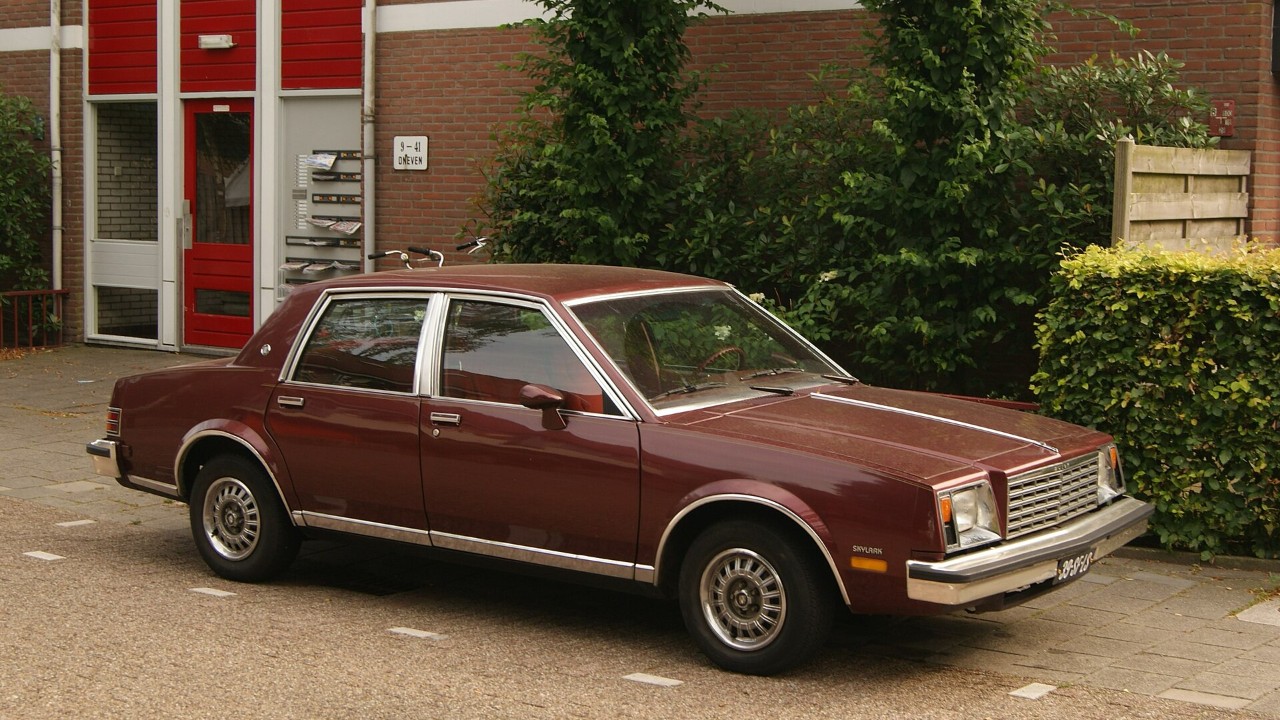
The Chrysler slant six arrived in the 1960 Valiant, leaning 30 degrees to one side so the hood could sit lower. It went on to power cars, then pickups, boats, forklifts and airport tugs. Chrysler kept building it for marine and industrial jobs until 1991.
That long working life is what we admire most. However, there was never just one slant six. Chrysler offered it in three sizes, cast one version in aluminum, sold racing parts over the dealer counter and built special versions for markets far from Detroit.
These six are our picks for the versions that best show how much abuse the design could take, from the Daytona track to export markets. All of the verdicts are our opinion. The specs and dates come from engine histories, owner clubs and period road tests.
1. 1960–1969 Chrysler 170 slant six
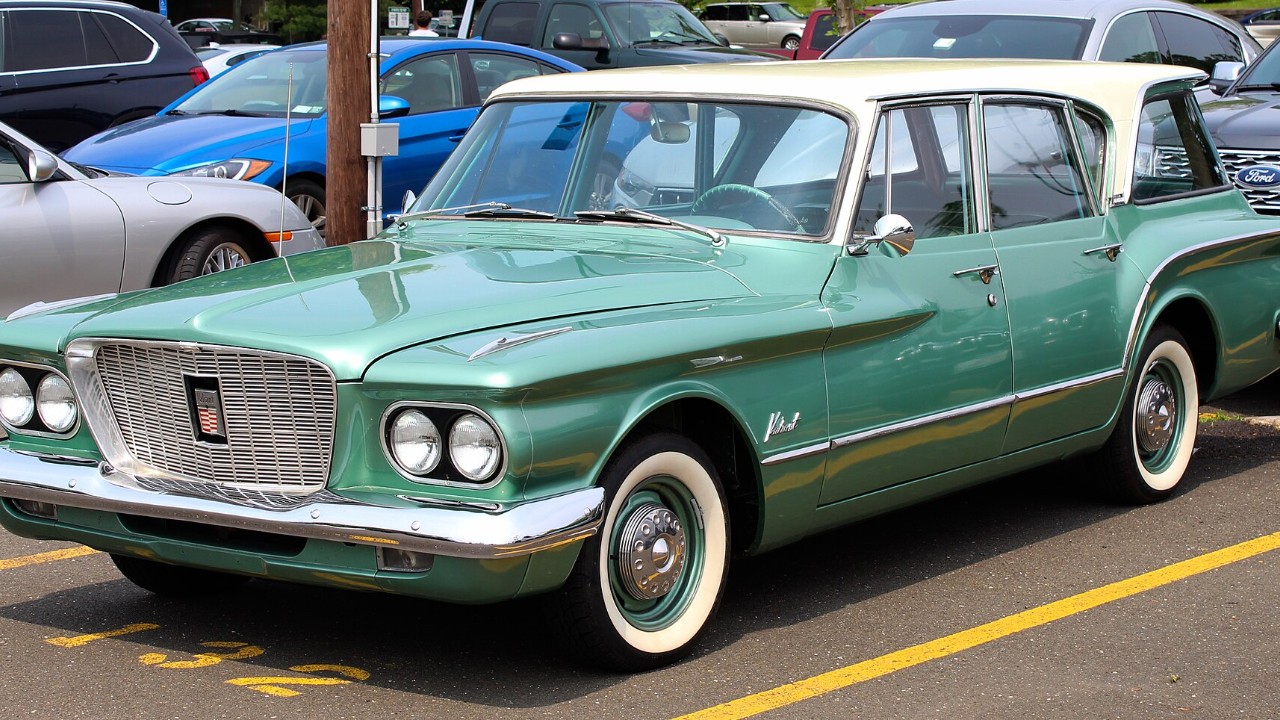
The smaller slant six debuted in the 1960 Valiant, a compact that Chrysler first showed at the London motor show in October 1959. Its 170 cubic inches came from a 3.4-inch bore and a 3.125-inch stroke. Chrysler gave it a short, low-deck block that no other version shared. Then, it marketed the whole engine family as the “30-D Economy Six” for 1960.
The slant was more than a styling trick. Because the block leaned over, the intake manifold had room for longer runners than a typical straight six. According to David Zatz at MoTales, the 170 carried a rating of 101 horsepower at 4,400 rpm through 1966. For 1967, it picked up the 225’s larger carburetor and camshaft, and the rating rose to 115 horsepower.
Our take: the 170 is the gentle one, and in our view it suits a light compact best. Chrysler sold it in North America through 1969 and abroad until 1971. If you’re comparing compacts from the era, our look at how the 1963 Ford Falcon and 1963 Plymouth Valiant aged shows where this engine fit. If you find a 170 car, keep it stock and enjoy the efficiency.
2. 1970–1974 Chrysler 198 slant six
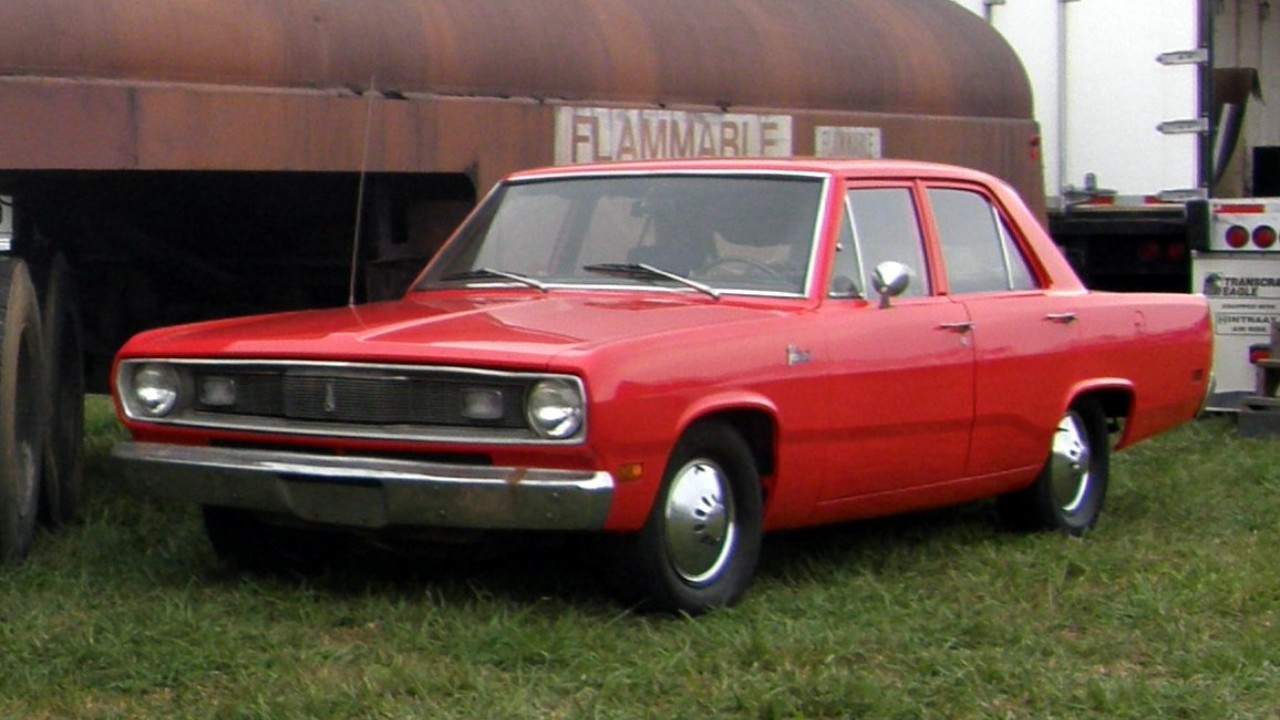
The 198 replaced the 170 for 1970, and it came from a cost-cutting idea. Instead of casting two different blocks, Chrysler used the tall block from the 225 for both sizes. To get 198 cubic inches, it fitted a crank with a 3.64-inch stroke and longer connecting rods, at just over seven inches.
MoTales lists 125 gross horsepower at 4,400 rpm and 180 lb-ft of torque for 1970 and 1971. After the switch to net ratings, the figures dropped to 100 horsepower for 1972 and 95 for 1973 and 1974. So, the 198 was never quick. Instead, it was the base engine that did the daily work.
Our take: the 198 is the slant six most people overlook, and we think that’s a mistake. It shares its block with the bigger 225, so many parts swap across. In addition, Chrysler offered it for only five model years, which makes it a neat period detail in an early-1970s compact. Before you buy, ask about coolant. MoTales quotes Daniel Stern on old sixes that ran plain water instead of anti-corrosion coolant. A well-kept 198 car is cheap transportation with real character, in our view.
3. 1961–1963 Chrysler 225 aluminum-block slant six
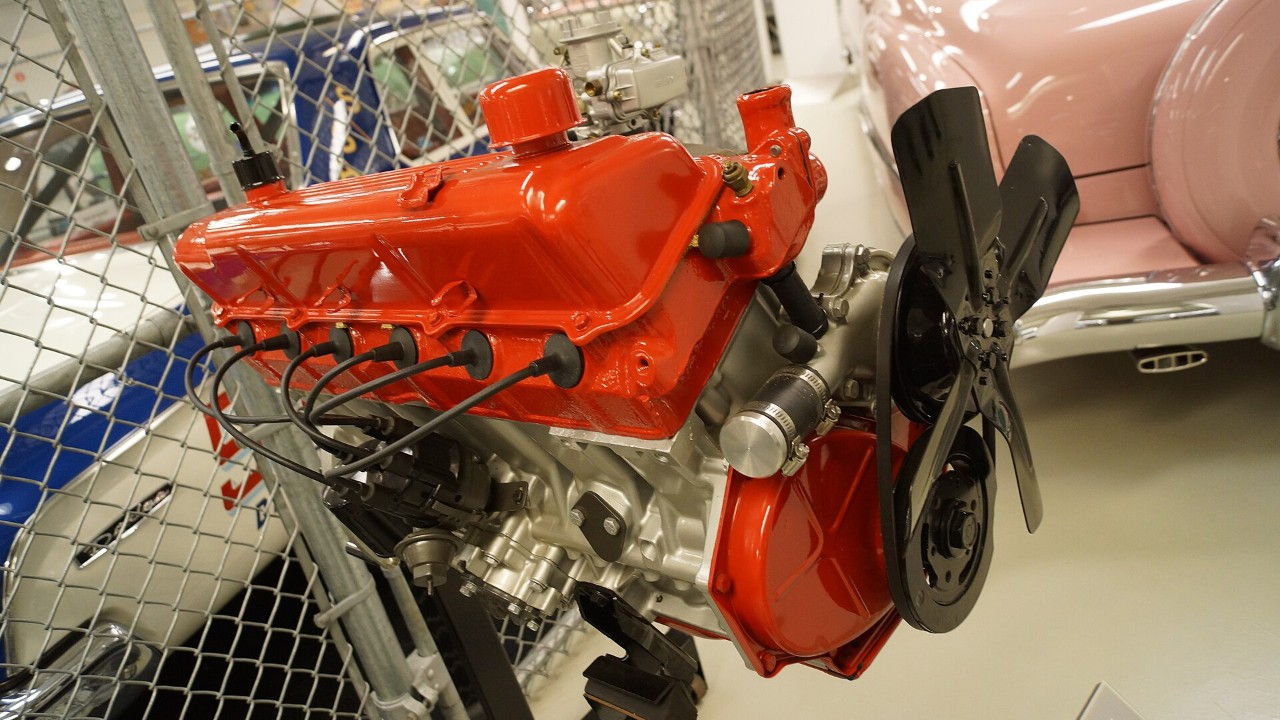
Chrysler engineering chief Paul Ackerman wanted to cut weight from the Valiant, so the company cast a slant six block in aluminum. MoTales says Chrysler kept an iron block in reserve to meet the launch date. Later, from mid-1961 to early 1963, the die-cast aluminum 225 went into passenger cars. The owners’ site slantsix.org puts production at about 45,000 engines, while other histories give figures above 50,000.
Inside, the block used thin cast-in iron cylinder liners surrounded by aluminum. The camshaft ran directly in bored aluminum journals with no bearing inserts. Also, the engine needs its own head gasket, because the liner tops leave a narrow sealing surface. Slantsix.org warns against turbocharging or very high compression, since either can crack the liners.
Our take: the aluminum 225 is the slant six we’d most like to own and least like to abuse. It is a rare piece of early-1960s engineering, and a period road test even credited the lighter block with reducing understeer. That said, corrosion is its enemy. If you find one, ask how it was cooled, use proper coolant and treat it as a survivor rather than a race engine.
4. 1960–1962 Chrysler Hyper Pak slant six
The Hyper Pak was a dealer-sold kit that turned a family six into a racing engine. It included a long-ram intake with a Carter four-barrel carburetor, a hotter camshaft and dual cast-iron headers. A full-race version also added high-compression pistons. Chrysler rated the package at 148 horsepower on the 170 and 196 on the 225.
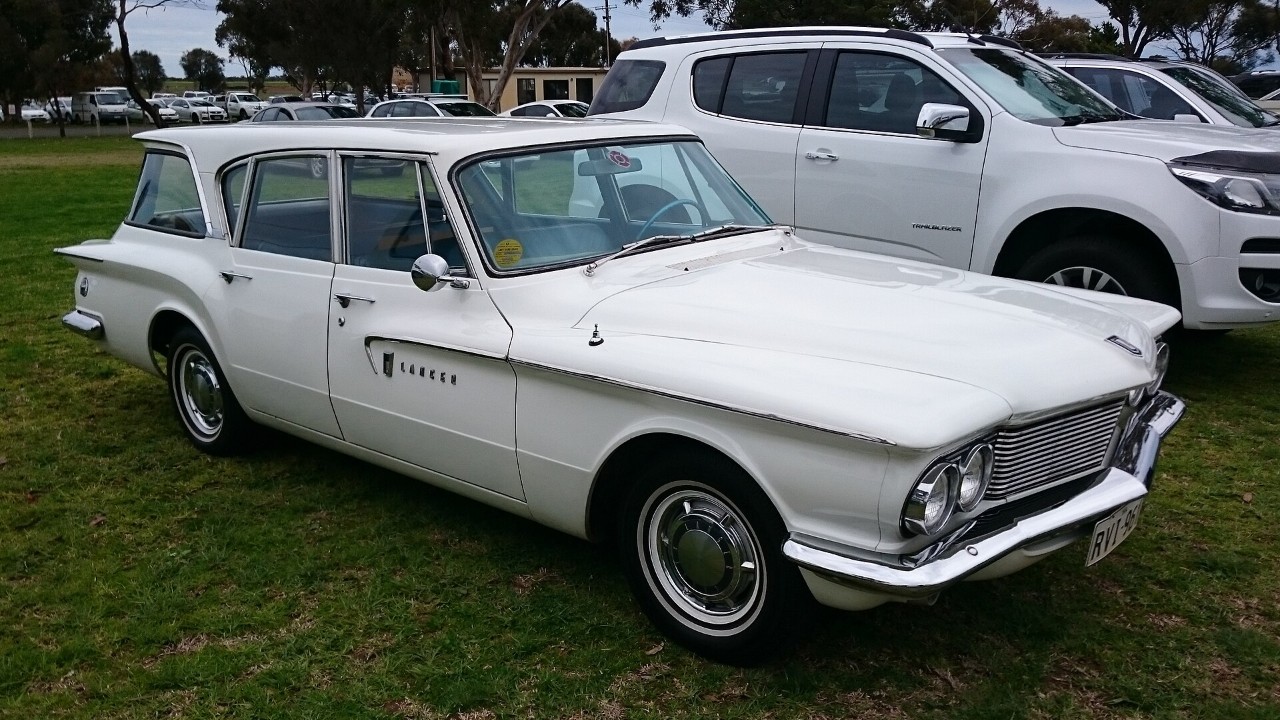
The kit proved itself early. At the 1960 NASCAR compact race at Daytona, seven Hyper Pak Valiants took the first seven places. A year later, a magazine test of a 1961 Dodge Lancer showed the street version’s effect. As Curbside Classic recounts, 0-to-60 mph fell from 15.9 to 11.8 seconds compared with a stock 225, and the quarter-mile dropped from 19.8 to 18.5 seconds.
Our take: the Hyper Pak is the best proof that this engine could take a beating at full throttle. We love that Chrysler sold it over the counter. The same test found it returned about 2 mpg less than a regular 225, which seems a fair price to us. If you want this flavor today, an original kit is a collector’s prize. Meanwhile, the idea fits right in with our list of six-cylinder builds that kept up with V8s.
5. 1977–1983 Chrysler Super Six
By the mid-1970s, emissions controls had made the slant six sluggish. Chrysler’s fix was the Super Six, a two-barrel package that reached North American cars for 1977. It used a Carter BBD carburetor, a progressive two-barrel design. As a result, power rose from 100 to 110 net horsepower, and torque went from 170 to 180 lb-ft.
The bigger story was how it drove. Throttle response and drivability improved more than the peak numbers suggest. According to MoTales, retired Chrysler engineer Pete Hagenbuch told Allpar that one valve engineer and two road-test mechanics developed the setup in 1975. For 1979, Chrysler also hid the idle adjustment screws to keep owners from tuning by ear.
Our take: the Super Six is the late slant six we’d choose for daily driving. Its drivability gains over the one-barrel engines matter more on the road than the extra 10 horsepower. One thing to know: Chrysler switched from a forged steel crankshaft to a cheaper cast one partway through 1976, so these engines have the cast crank. In our view, that matters little for normal driving. For more on the whole family, our earlier story on how the slant six earned its tough reputation fills in the background.
6. 1967 Chrysler slant six export two-barrel

North American buyers never got this one. For 1967, Chrysler released a two-barrel 225 for export markets and rated it at 160 horsepower. It used a Carter BBD carburetor on an open-plenum iron intake and a slightly longer-duration camshaft. The engine found buyers in Central and South America, South Africa, Australia and New Zealand.
Those markets took six-cylinder cars more seriously than the US did, MoTales notes. Depending on the year and setup, export sixes carried ratings of 155, 160, 175 or 190 horsepower. In Argentina, for example, the 1965–1968 Valiant GT ran dual carburetors and a 180-horsepower rating. MoTales also reports that the two-barrel layout drew on a marine setup. Later, the 1971 export-and-marine camshaft went into every US and Canadian slant six with solid lifters through 1980.
Our take: the export two-barrel shows the slant six at its most hard-working. In those markets, the six was a serious engine rather than the budget choice. Finding a genuine example in the US is hard. However, the parts and ideas carried back home. A slant six built with export-style parts is, in our view, the best all-around street version.
More from Fast Lane Only