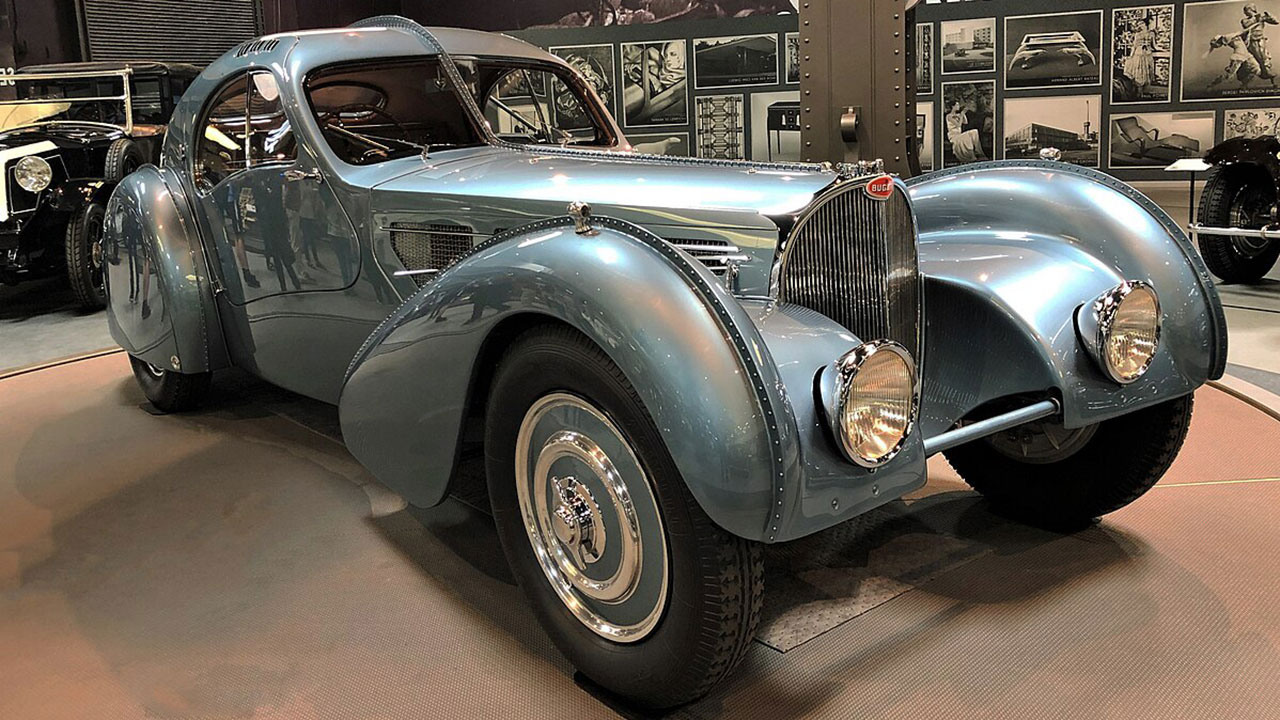
Bugatti built just four Type 57SC Atlantic coupes, and today only three survive. The Bugatti Atlantic is the extreme case, but plenty of 1930s cars tell a similar story. In fact, small runs, the Depression and a world war all cut deep into numbers that were tiny to begin with.
That is what makes prewar rarity different. A low-production 1960s muscle car can have hundreds of survivors. By contrast, many of the most daring cars of the early 1930s left the factory by the dozen. Then time, war and neglect thinned them out further, and every museum purchase takes another one out of circulation.
These eight are our picks for rare prewar cars getting scarcer every year, and the verdicts are our opinion. Each one pushed technology or style forward, and each one survives in small numbers, from the Bugatti Atlantic down to a front-drive oddity most people have never heard of. The production counts and survivor figures come from auction records, museums and marque historians.
1. 1933 Pierce-Arrow Silver Arrow
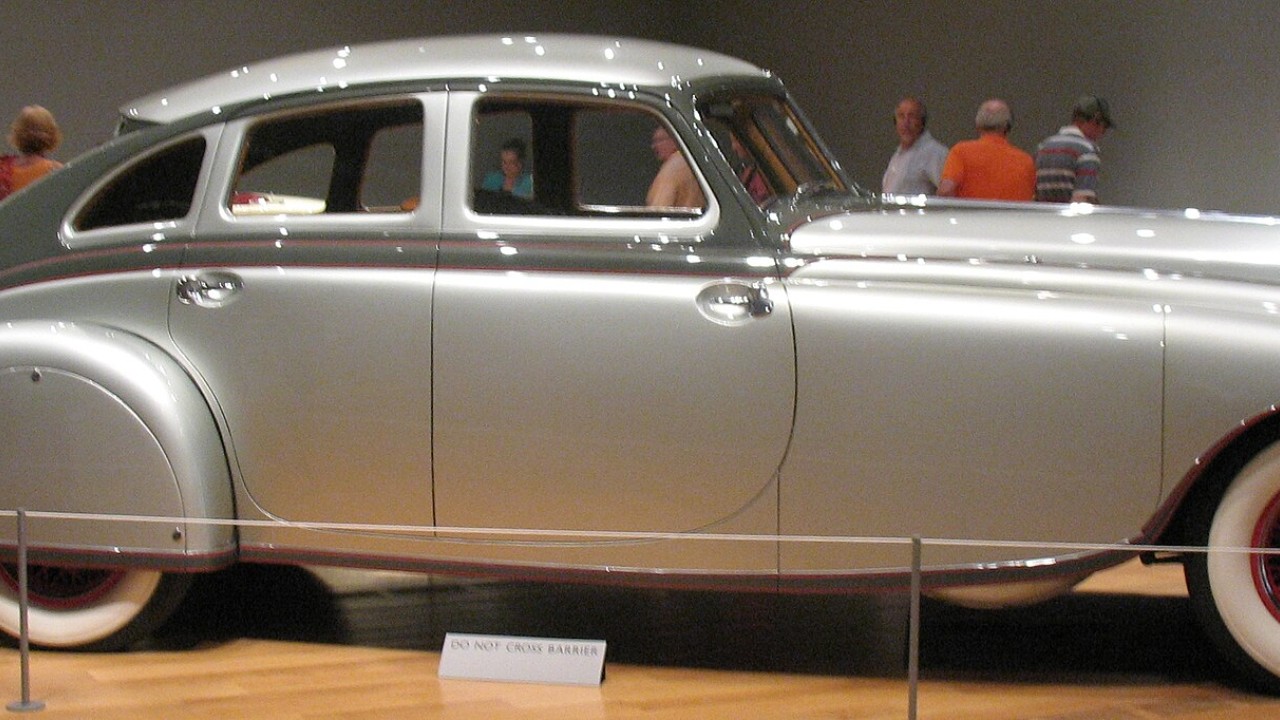
Pierce-Arrow made the Silver Arrow as a statement. The young stylist Phillip O. Wright drew its streamlined body, and the company’s president, Roy Faulkner, backed the project. The car first appeared at the New York Auto Show in January 1933, and Pierce-Arrow advertised a top speed of 115 mph. Each one cost $10,000, a vast sum in the Depression.
Yet only five were hand-built. According to RM Sotheby’s, three known survivors remain. One of them, Silver Arrow number 3, went on show at the 1933 Chicago World’s Fair. Later, RM Sotheby’s sold that car in New York in 2015 for $3,740,000.
Our take: the Silver Arrow is a design study that somehow reached customers. Its streamlined shape looked years ahead of the upright sedans around it. However, the price and the timing doomed it to a tiny run. In our view, three survivors is about as scarce as a famous American car gets, and none of them is likely to leave its collection soon. The later Pierce-Arrows that borrowed the Silver Arrow name never captured the same magic. For more elegant cars from the same decade, see our list of prewar automobiles that still feel elegant today. If you want to see one, watch the major concours and museum shows, because that is where these cars now live.
2. 1931 Marmon Sixteen
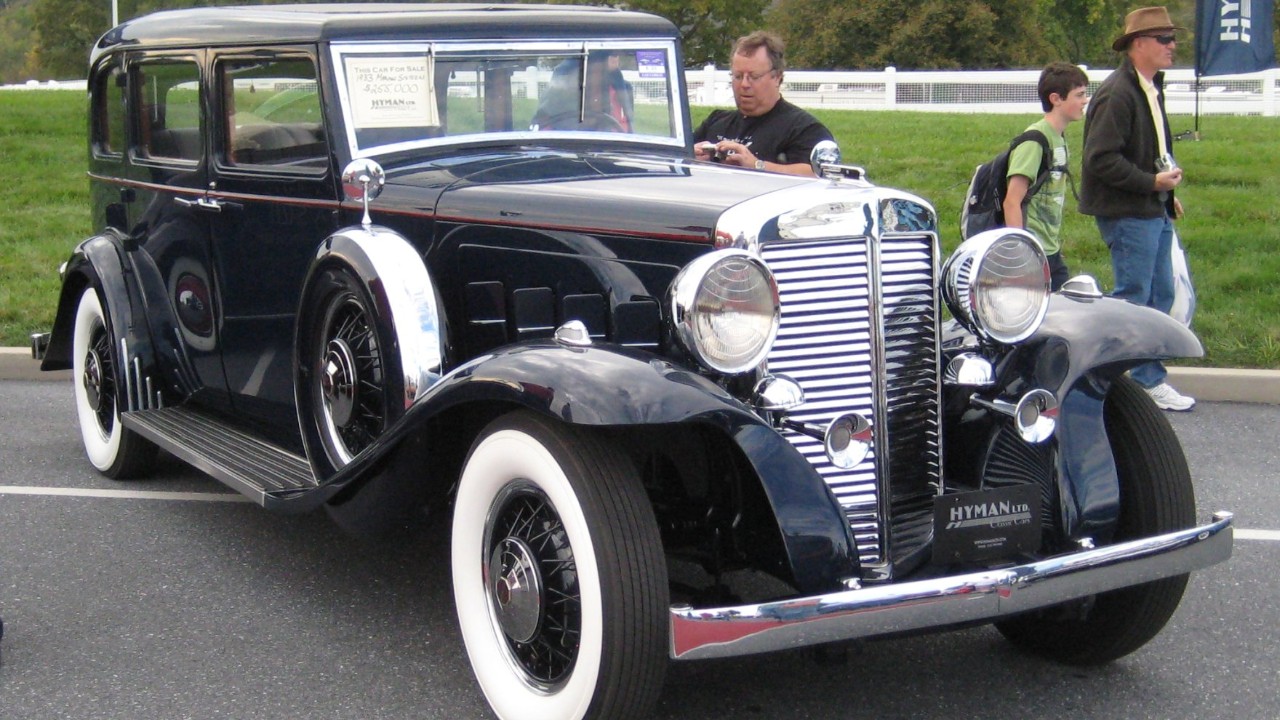
Marmon’s answer to the luxury arms race was a V16 made almost entirely of aluminum. The 491-cubic-inch engine produced 200 hp, and it used steel cylinder liners in an aluminum block. Marmon also used aluminum for some body panels and trim. Howard Marmon later received a medal from the Society of Automotive Engineers for the design.
The timing hurt. Cadillac launched its own V16 first, and an ex-Marmon engineer, Owen Nacker, had designed it. Marmon then sold its car into the worst years of the Depression. RM Sotheby’s cites marque expert Dyke W. Ridgley, who puts total Sixteen production at only 365 to 375 cars. It also notes that just eight convertible coupes exist. The Art Deco bodies came from the Teague family, and RM credits the son, Walter Dorwin Teague Jr., with most of the work.
Our take: the Sixteen is the engineer’s V16. Its aluminum engine was a bold, modern idea, yet it arrived too late to matter. In our view, that makes it more interesting than the better-known Cadillac. Few prewar cars can claim this much original thinking in one engine. If one ever comes up for sale, expect serious competition from museums and V16 specialists.
3. 1930 Ruxton Model C
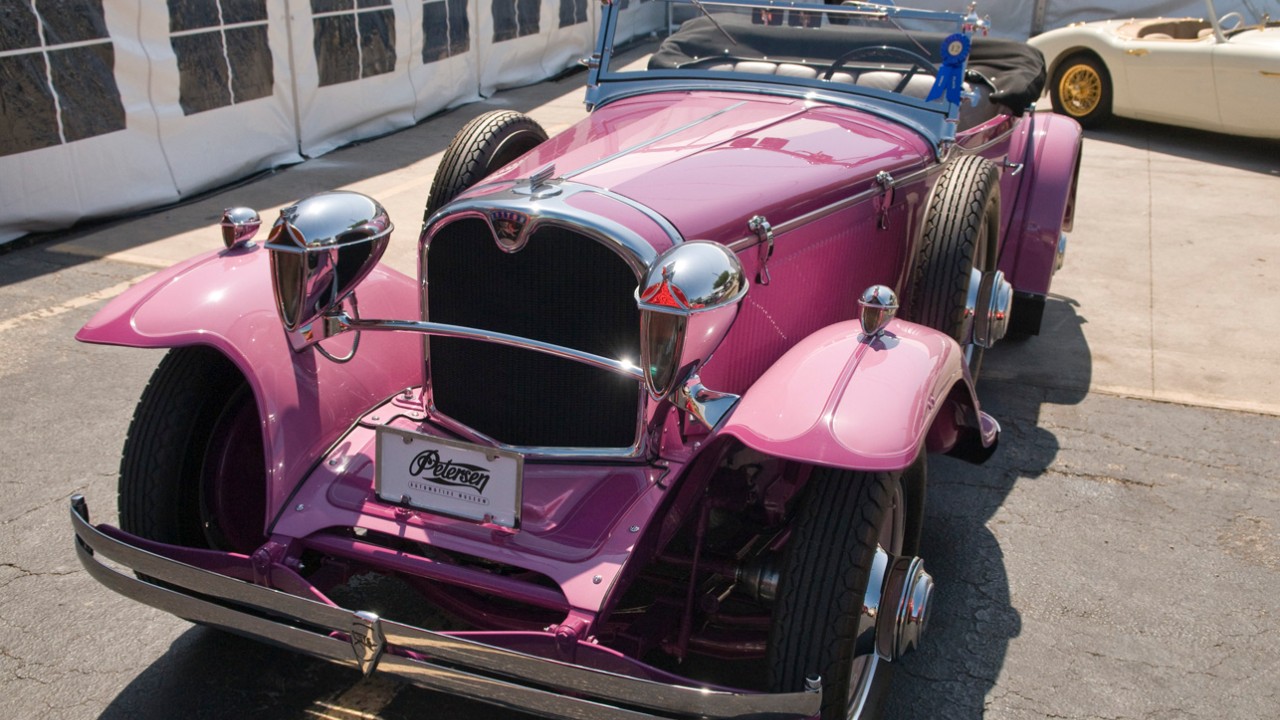
The Ruxton was a front-drive car that sat remarkably low. William Muller placed the engine and gearbox ahead of the front axle, which let the body ride roughly ten inches lower than a typical sedan. New Era Motors advertised it as “Ten Inches Lower than Any Other Motor Car.” As a result, it needed no running boards at all.
The Revs Institute lists a 4.4-liter Continental straight-eight with 100 hp. It also explains the striking paint. Set designer Joseph Urban created multi-tone liveries, and the first Urban-painted Ruxton appeared at the 1930 New York Auto Show. Production never really got going, though. Marque specialist Jim Fasnacht’s research indicates no more than 96 cars, with perhaps 30 to 40 sold to customers. Today, nineteen survive, by the Revs Institute’s count.
Our take: the Ruxton is the definition of a car that history almost erased. Its backers ran into money trouble, and Moon Motor Company filed for bankruptcy in November 1930. In our view, its low stance and wild paint make it one of the most striking American cars of its era. Sixteen of the nineteen survivors gathered at Pebble Beach in 2014, which tells you how small this world is. If you see one at a show, take your time with it.
4. 1934 Tatra T77
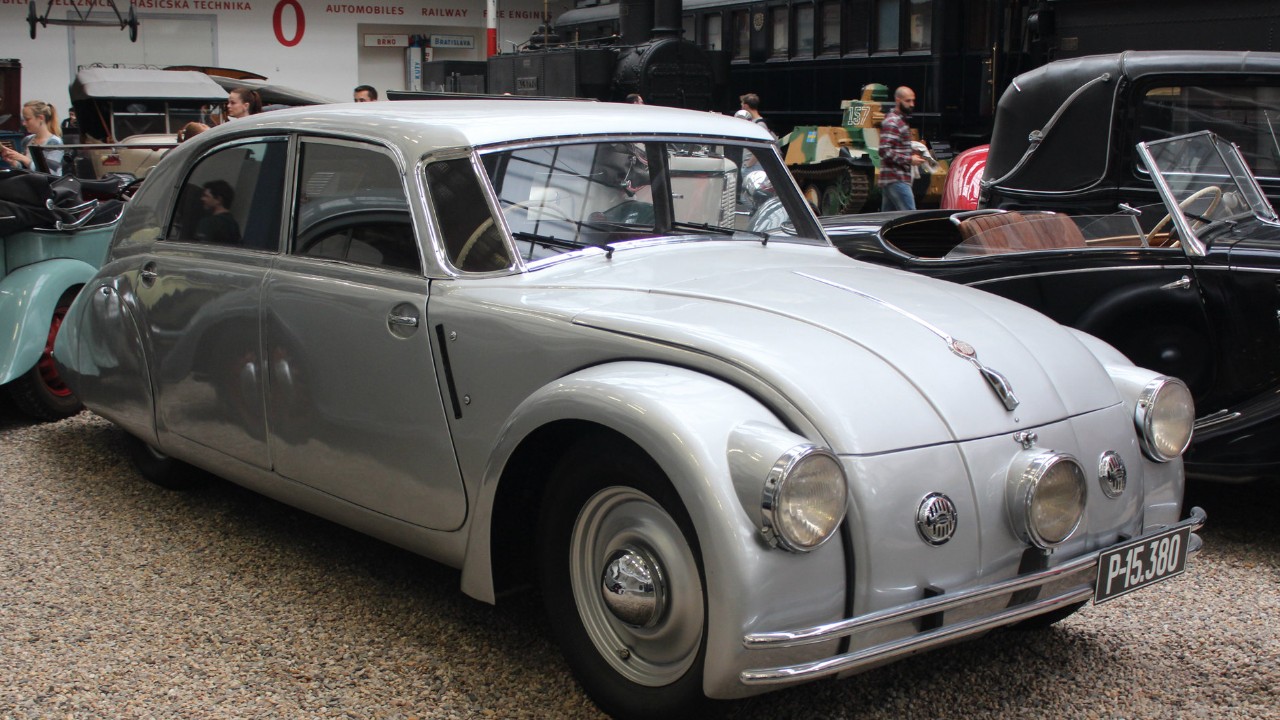
Czechoslovakia’s Tatra put its V8 in the back and shaped the body for low drag. Hans Ledwinka led the design, Erich Übelacker drew the body and Paul Jaray, an aerodynamics expert from the Zeppelin world, consulted. The T77 launched in 1934 with an air-cooled V8 mounted in the tail. Then the 77a followed in 1935 with a 3.4-liter engine and 75 hp.
The Southward Car Museum in New Zealand calls the T77 the first serial-produced, truly aerodynamically designed automobile. It lists a central steel-tube chassis and magnesium alloy in the engine, transmission, suspension and body. The 77a also added a third headlamp, which on several cars turned with the steering. Even so, total production ran to only about 250 cars, plus a handful of pre-series prototypes.
Our take: the T77 is the car that showed what streamlining could do on the road, not just in a drawing. In our view, it matters more to automotive history than its tiny production suggests. The Southward museum’s car arrived from England in 1971 in well-used condition, and the museum restored it in its own workshop. Survivors like that one are the only way most of us will ever see a T77. It belongs in any conversation about the rarest prewar cars in today’s market.
5. 1932 Stutz DV-32
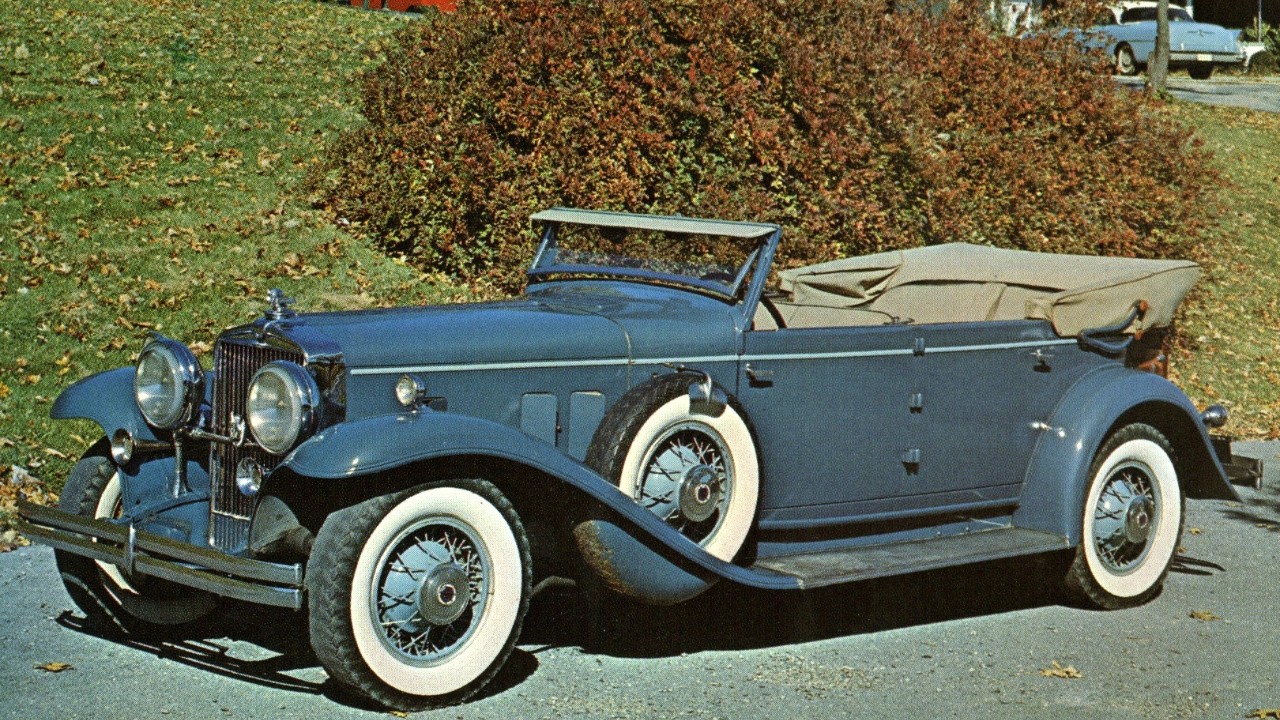
Stutz fought the multi-cylinder craze with valves instead of cylinders. Its 1931 DV32 engine was a straight-eight with dual overhead camshafts and four valves per cylinder, for 32 in total. That was racing-style hardware in a luxury car. After all, the name simply stood for “dual valve,” with 32 for the valve count.
According to RM Sotheby’s, the engine began life as Stutz’s 322-cubic-inch eight and made some 156 hp in DV-32 form. RM also says Stutz built barely 100 cars in all of 1932. More recently, RM Sotheby’s sold a 1932 DV-32 convertible coupe by LeBaron for $544,000 at Amelia Island in 2018.
Our take: the DV-32 is the thinking person’s prewar luxury car. Instead of adding cylinders, Stutz made each one breathe better, an idea that later became commonplace. In our view, that foresight makes the DV-32 one of the cleverest cars of its decade. Sadly, the company didn’t last long enough to benefit from it. With so few built in its final years, each survivor carries a big share of the Stutz story. If you want one, expect to buy from collectors who rarely sell.
6. 1937 Cord 812 Supercharged
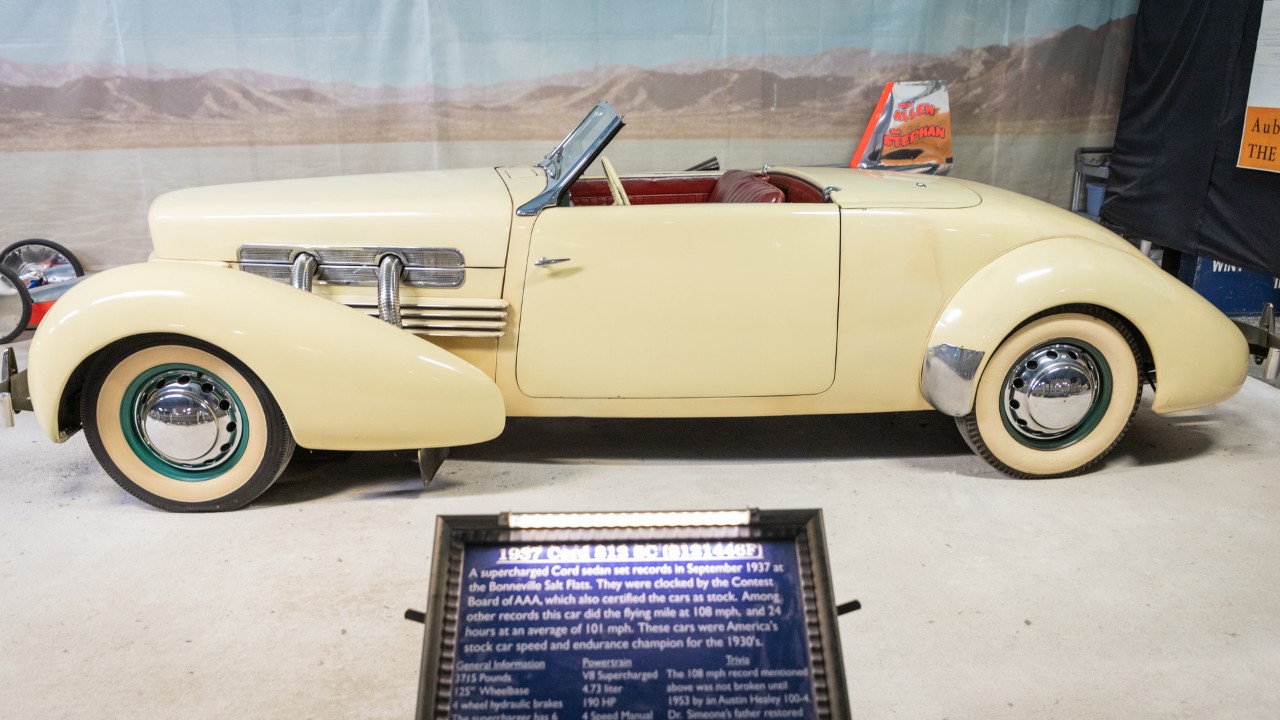
The Cord 810 and 812 combined front-wheel drive and hidden headlights in one daring shape. Gordon Buehrig led the styling team, while Lycoming supplied the engine. The headlamps retracted into the fenders, and drivers raised them with hand cranks on the dashboard. Power came from a 4,739 cc Lycoming V8 making 125 hp in standard form.
For 1937, Cord offered a Schwitzer-Cummins supercharger, and supercharged cars wore chrome external exhaust pipes on each side of the hood. RM Sotheby’s says the blower boosted output to almost 200 hp. It also reports that Cord built just 64 supercharged cabriolets, and perhaps a third remain. Total 810 and 812 production reached only 2,972 cars before Cord stopped building them in 1937. We looked at the earlier car in why the 1936 Cord 810 remains so advanced-looking.
Our take: the supercharged 812 is the most complete version of a brilliant idea. It has the looks, the engineering and the extra power, plus those chrome pipes that announce the supercharger before you even open the hood. In our view, the cabriolet is the one to chase, because so few remain. For example, RM sold one in Arizona in 2019 for $212,800.
7. 1938 Graham Spirit of Motion Supercharger
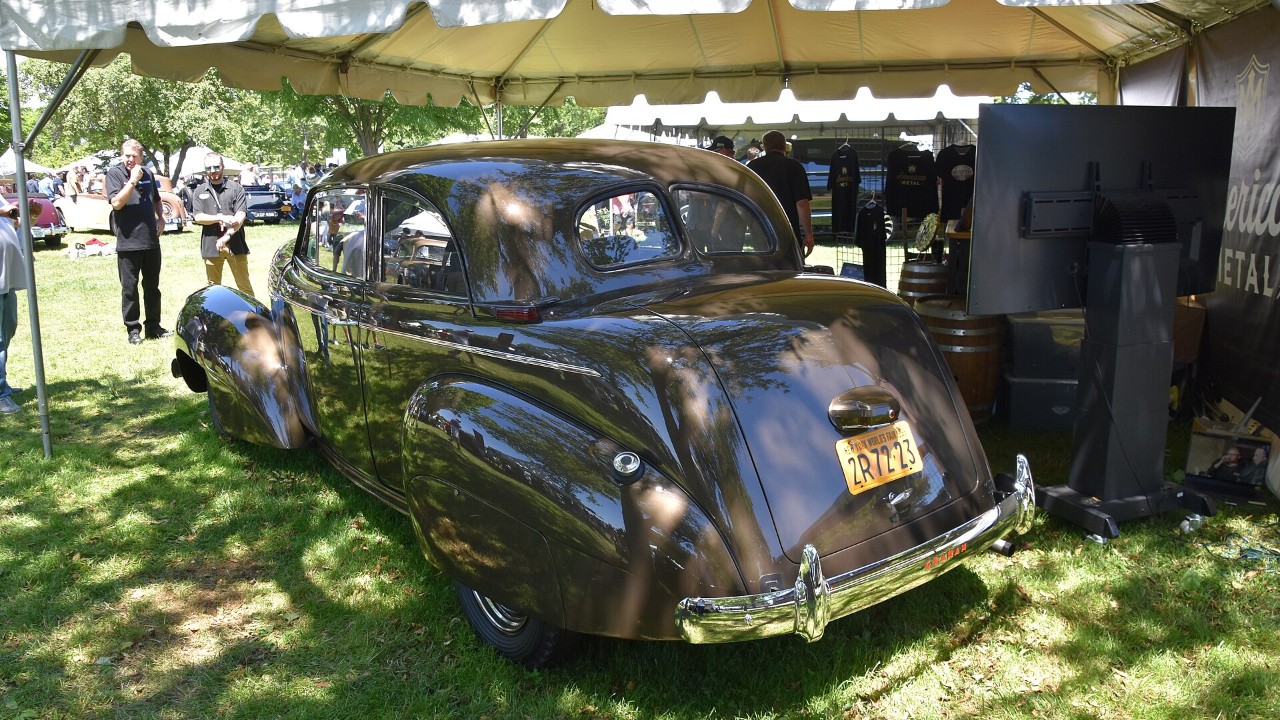
Graham-Paige started offering a supercharger in 1934, a crankshaft-driven unit designed in-house by assistant chief engineer Floyd F. Kishline. Then, for 1938, it launched a radical new body it called the Spirit of Motion. The forward-leaning nose looked like it was moving while parked. Graham hired Amos Northup of Murray Body to design it, but he died before finishing, so Graham’s engineers likely completed the work.
The press praised it, and the design won awards in France. However, buyers stayed away, and the styling flopped in the showroom. RM Sotheby’s describes the supercharged Graham 97 with a 217.8-cubic-inch L-head six rated at 116 bhp. Then, in 2017, it sold a 1938 Graham 97 Supercharged cabriolet with a Saoutchik body for $770,000.
Our take: the Spirit of Motion is the prewar car that collectors underrated for decades. Even its “Sharknose” nickname seems to date from the 1950s, long after the car flopped. In our view, the supercharged sedan is the purest version, because it combines Graham’s two best ideas in one car. Total Spirit of Motion production across 1938 to 1940 was small, and fewer remain each year. If you want a daring prewar design without Bugatti Atlantic money, start here.
8. Bugatti Type 57SC Atlantic, from 1936
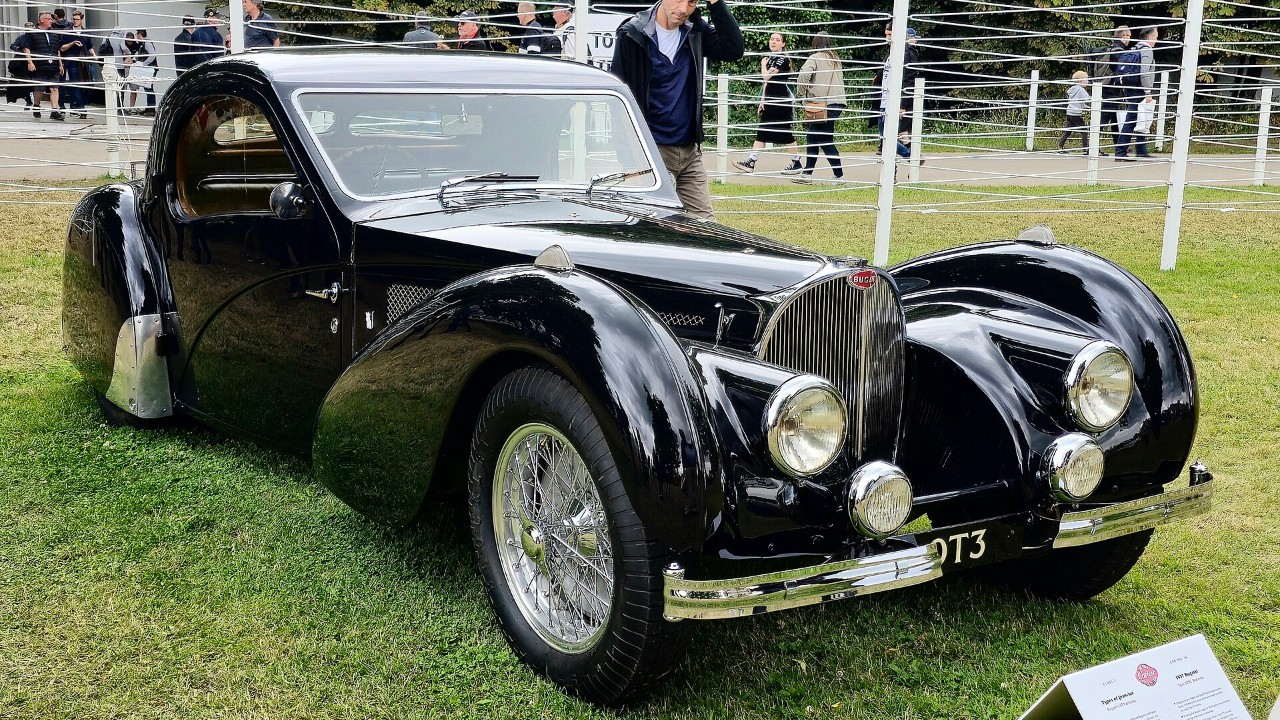
Bugatti built 710 Type 57s, but only four became Atlantics. Jean Bugatti, the founder’s son, based the shape on the 1935 Aérolithe concept. That car used Elektron panels that nobody could weld, so engineers riveted them together on the outside. The production Atlantics used plain aluminum, yet Bugatti kept the riveted dorsal seam as a styling signature.
The first Atlantic, chassis 57374, went to Victor Rothschild, according to Old Cars Weekly. Old Cars Weekly also names Peter Mullin and Rob Walton as its later owners. Later, that car sold in 2010 for a reported $30 million. Meanwhile, the second car, known as La Voiture Noire, has been missing for decades, so the world knows of only three Bugatti Atlantic coupes today.
Our take: the Bugatti Atlantic is the rarest car on our list, and it may be the most beautiful car of the 1930s. With three known examples, though, it can’t get much scarcer without disappearing. In our view, it shows how one designer’s vision can outlive its creator, since Jean Bugatti died in 1939 at just 30. Ralph Lauren’s black Atlantic won Best of Show at Pebble Beach in 1990 and at Villa d’Este in 2013. To see one, check the concours calendar, because that is the only place most of us ever will.
More from Fast Lane Only