Chevrolet built 254,331 Bel Air four-door sedans for 1957, and it sold them as everyday family cars. Today, in our view, a classic sedan like that stops people in a parking lot faster than many new sports cars.
That’s the odd thing about family cars. When they’re new, nobody looks twice. However, give them a few decades, and the plain four-door becomes the car people remember from their childhood. As a result, the survivors stand out even more.
These are our picks for seven family sedans that continue to turn heads decades later. We mixed American full-size cars with European favorites, because good design came from both sides of the Atlantic. The verdict is our opinion. Still, the years, engines and production numbers come from period specifications, factory archives and market reports.
1. 1957 Chevrolet Bel Air 4-Door Sedan
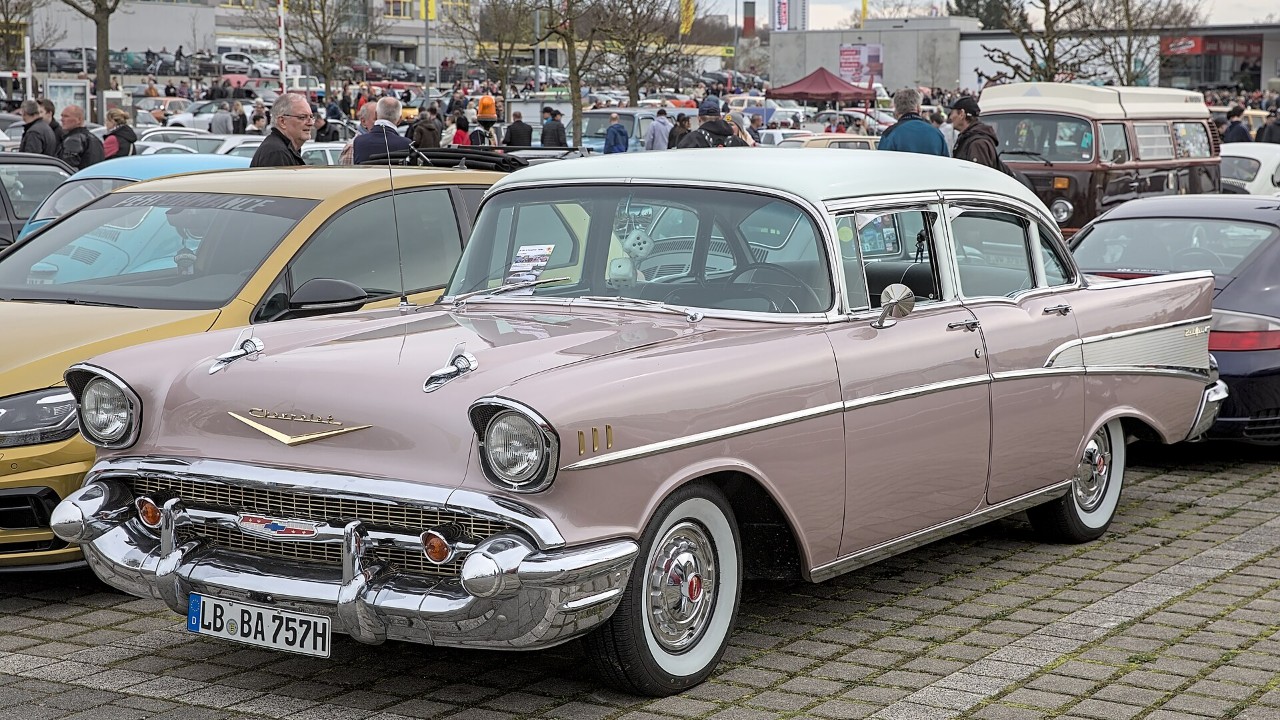
The 1957 Bel Air was the last of the 1955–57 “Tri-Five” Chevrolets. Chevrolet built 1,505,910 cars that year, and 702,220 of them were Bel Airs. According to conceptcarz’s 1957 Bel Air production records, Chevrolet built 254,331 of them.
Buyers could choose from a wide engine range. The base 235.5-cubic-inch six made 140 hp. Above it sat a 265 V8 and several versions of the 283 V8. At the top was the fuel-injected 283, rated at 283 hp, or one horsepower per cubic inch. Most Bel Airs left the factory with carburetors, so the fuel-injected cars are rare. Meanwhile, the Turboglide automatic was on the option list.
Our take: the two-door hardtop gets the magazine covers, but the four-door sedan has the same fins, the same chrome and the same dashboard. That makes it one of the most affordable ways to own the 1957 look. In our view, a Bel Air sedan in a two-tone paint scheme turns just as many heads at a cruise night. It also has room for the whole family, which was the point all along.
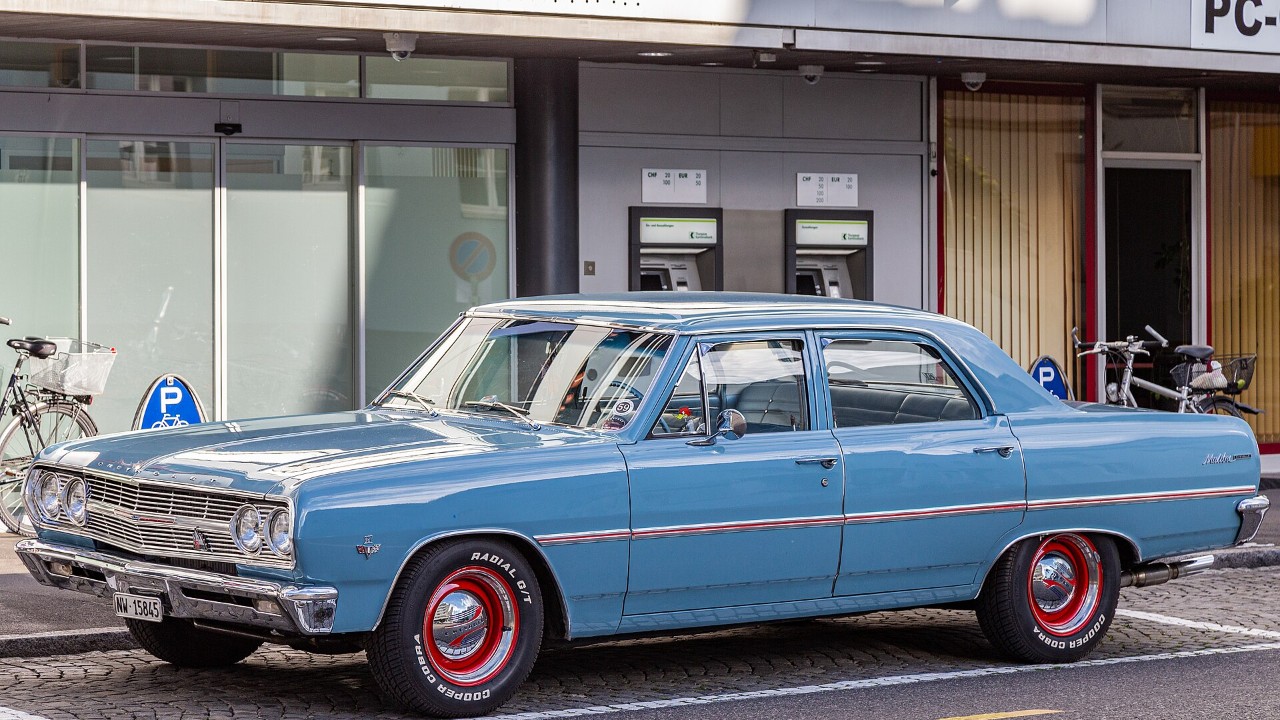
2. 1963 Rambler Classic 660 sedan
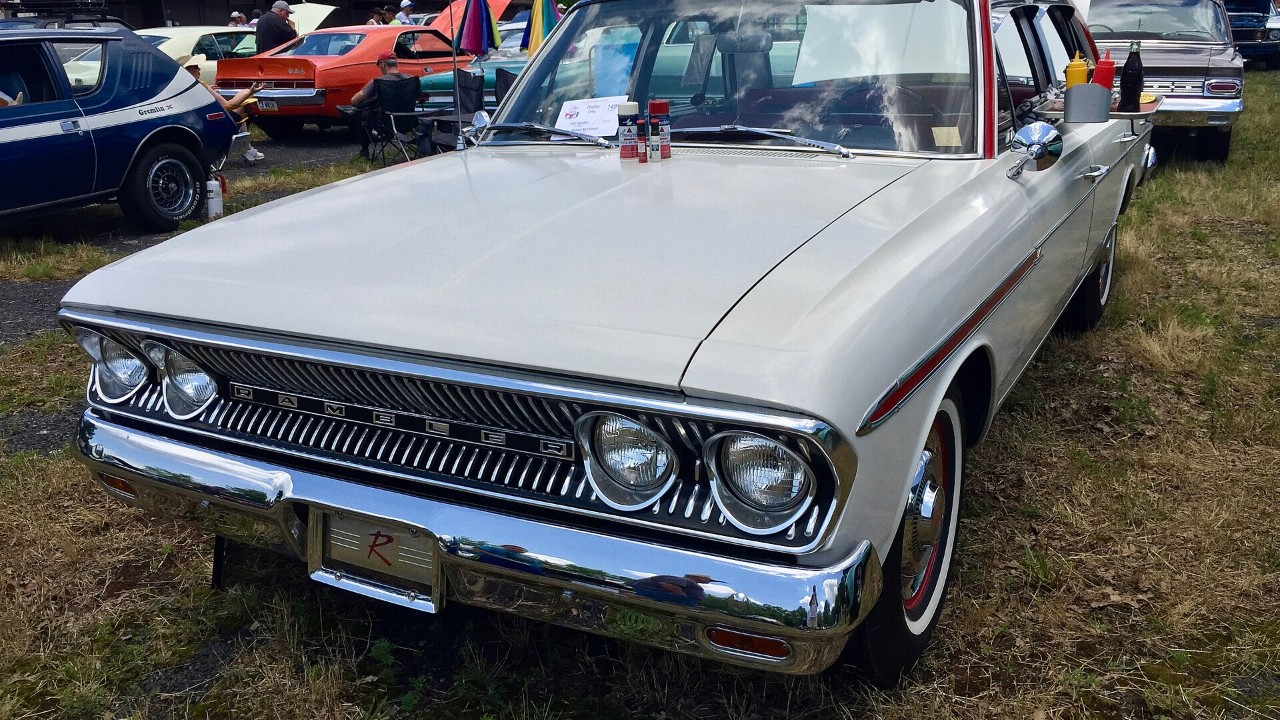
Motor Trend named the Rambler Classic and Ambassador its 1963 Car of the Year. The magazine pointed to AMC’s engineering, and that praise was earned. The new “Uniside” construction stamped each door surround from a single piece of steel. That one stamping replaced 52 separate parts, which cut weight and improved door fit.
The Classic also rode on a new 112-inch wheelbase, up from 108 inches. It was one of the earliest popular-priced cars with curved side glass, too. At launch, the only engine was a 195.6-cubic-inch six. Then, in February 1963, AMC added a 287 V8. The 660 sat in the middle of the line, between the 550 fleet model and the top 770.
The 1963 Classic sold well. According to Mac’s Motor City Garage, Rambler built more than 464,000 cars that year, and the Classic made up about two-thirds of the total. It was also the last AMC design finished under styling chief Edmund E. Anderson. Our take: this is a classic sedan with a clean, crisp shape that still looks modern for 1963. For more from the brand, see our list of forgotten Ramblers that were pure blasts to drive.
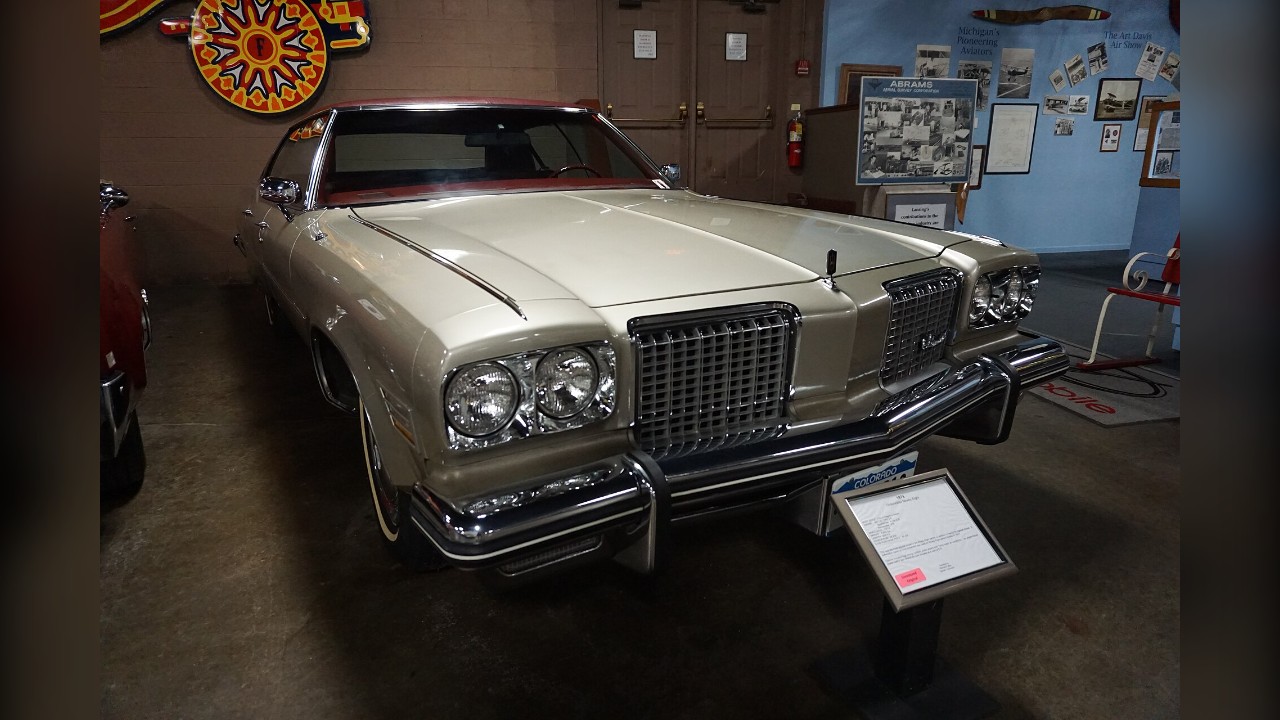
3. 1965 Ford Galaxie 500 LTD 4-Door Hardtop
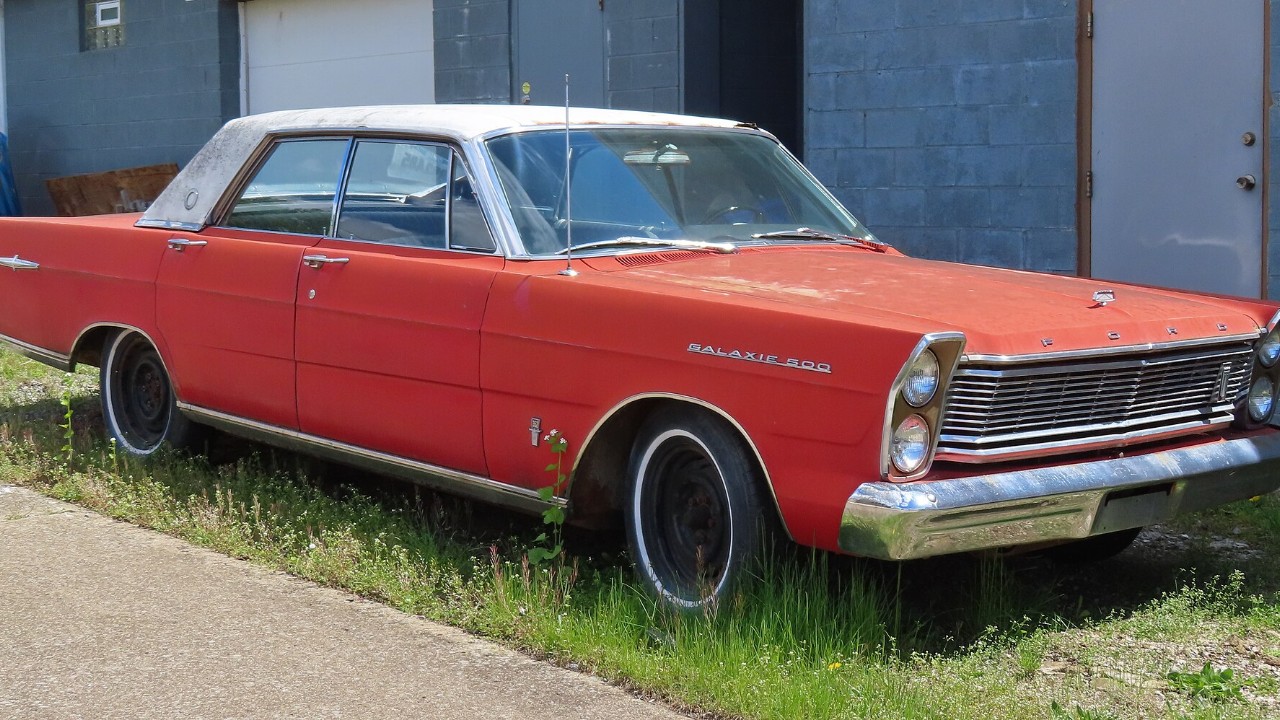
Ford launched the LTD for 1965 as the luxury model of the Galaxie 500 line. It came as a two-door or a four-door hardtop, with a plush cloth interior and woodgrain trim. Options included power windows, a power driver’s seat and air conditioning. Its main rival was the Chevrolet Caprice, which arrived in the middle of the 1965 model year.
Ford also made bold claims for it. According to Hagerty’s history of the 1965–68 Galaxie, an ad campaign promoted the hardtop Galaxie 500 LTD as quieter than a Rolls-Royce. Hagerty credits the new chassis. Ford replaced the rear leaf springs with coil springs, three links and a Panhard bar. It also added 15-inch wheels and rubber body mounts to cut noise.
Buyers responded. Hagerty counts 978,429 full-size Galaxies for 1965, up by more than 55,000 from the year before. Our take: a four-door hardtop with no center pillar is one of the most elegant shapes of the 1960s. With all the windows down, the LTD looks long, low and clean. In our view, it turns more heads than the two-door, simply because so few people expect a family car to look this good.
4. 1966 Pontiac Catalina 4-Door Sedan
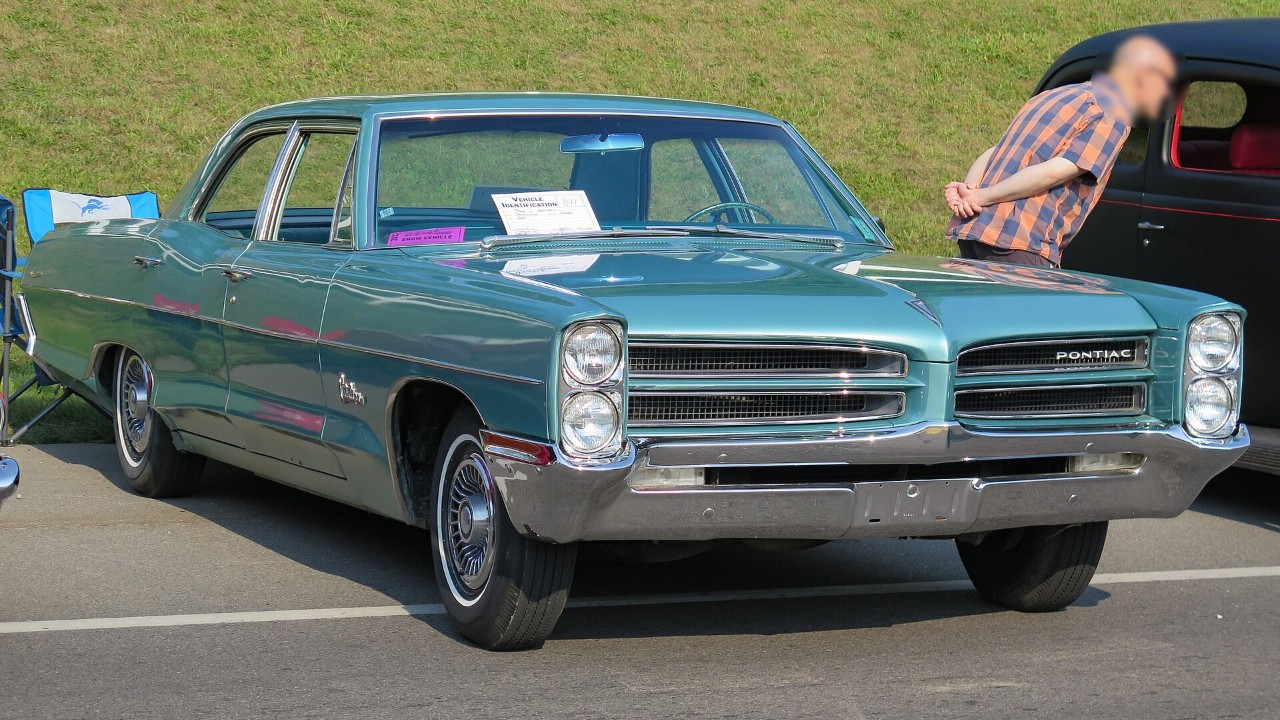
The Catalina was Pontiac’s entry-level full-size car, and the four-door sedan was its best seller. According to conceptcarz, Pontiac built 80,483 Catalina four-door sedans for 1966. That made it the largest single body style in the line. Prices ran from about $2,760 to $3,600 across the range.
Pontiac didn’t treat its family car as a plain wrapper, though. Every 1966 Catalina used a V8. The standard 389 made 256 hp with a manual or 290 hp with the Turbo Hydra-Matic. Buyers could also order 421 V8s rated from 338 hp up to 376 hp in HO Tri-Power form. The car rode on a 121-inch wheelbase and stretched 214.8 inches long.
Its styling helped too. The 1966 car carried over the curvy “Coke-bottle” profile Pontiac introduced for 1965, with a new grille and taillights. Pontiac also held third place in industry sales for most of the 1960s. Our take: a 1966 Catalina sedan in a bright factory color looks far more expensive than it was. In our view, it’s one of the best-looking American four-doors of the decade, and it can still keep up on the highway with a healthy 389.
5. 1970 Mercedes-Benz 250 W114 sedan
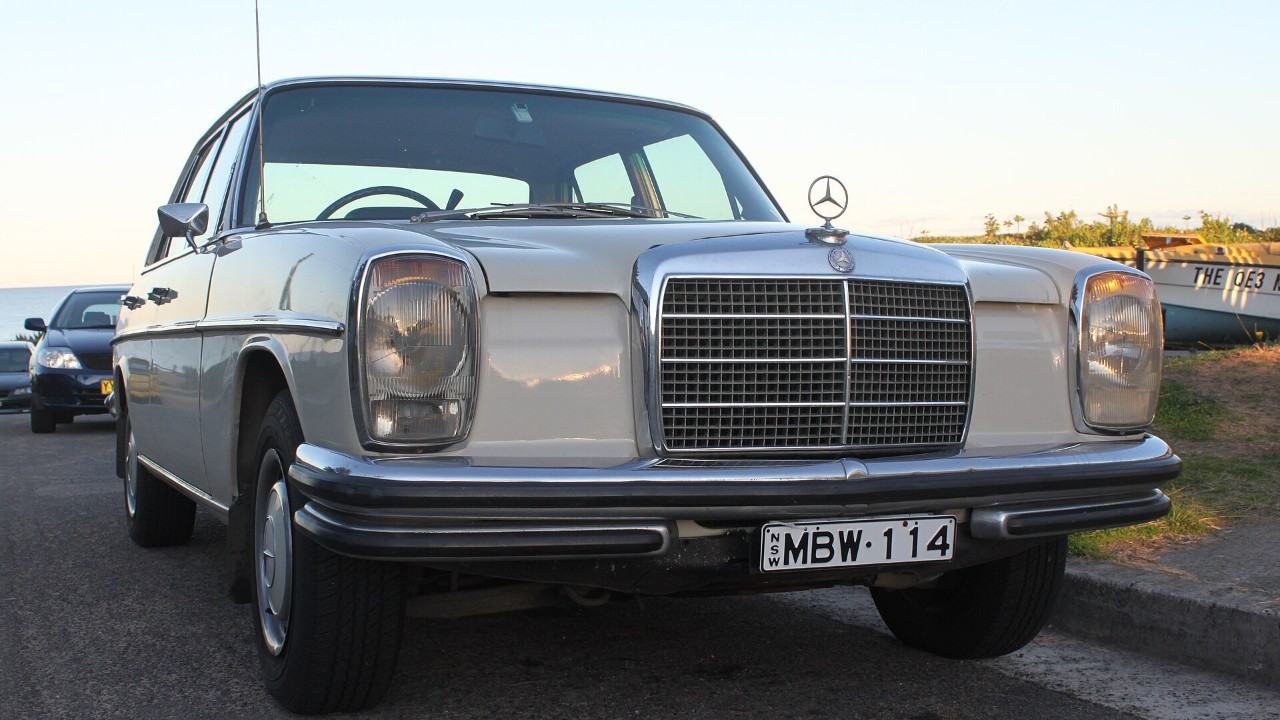
Mercedes-Benz unveiled its new mid-size sedans in January 1968 in Sindelfingen. Fans nicknamed them “Stroke Eight” because of the “/8” in the model code, which marked the launch year. The range split into two families. The W115 cars used four- and five-cylinder engines, while the W114 cars like this 250 used sixes. Paul Bracq styled them, and sedan production began in March 1968.
The 250 used a 2.5-liter M114 six rated at 130 PS, about 129 hp. Mercedes built 78,303 of these sedans. Across both families, total production reached 1,919,056 cars. Meanwhile, MercedesBlog’s 50th-anniversary history describes the /8 cars as the ancestors of today’s E-Class.
Durability became part of the legend. One Greek taxi driver’s 1976 240 D covered 4.6 million kilometers before he donated it to the Mercedes-Benz Museum. Our take: the 250 is the classic sedan for people who like understated design. It has clean lines, thin pillars and a big glass area. In our view, a tidy W114 still draws admiring looks because it shows how good a plain shape can be when the details are right.
6. 1963 Peugeot 404 sedan
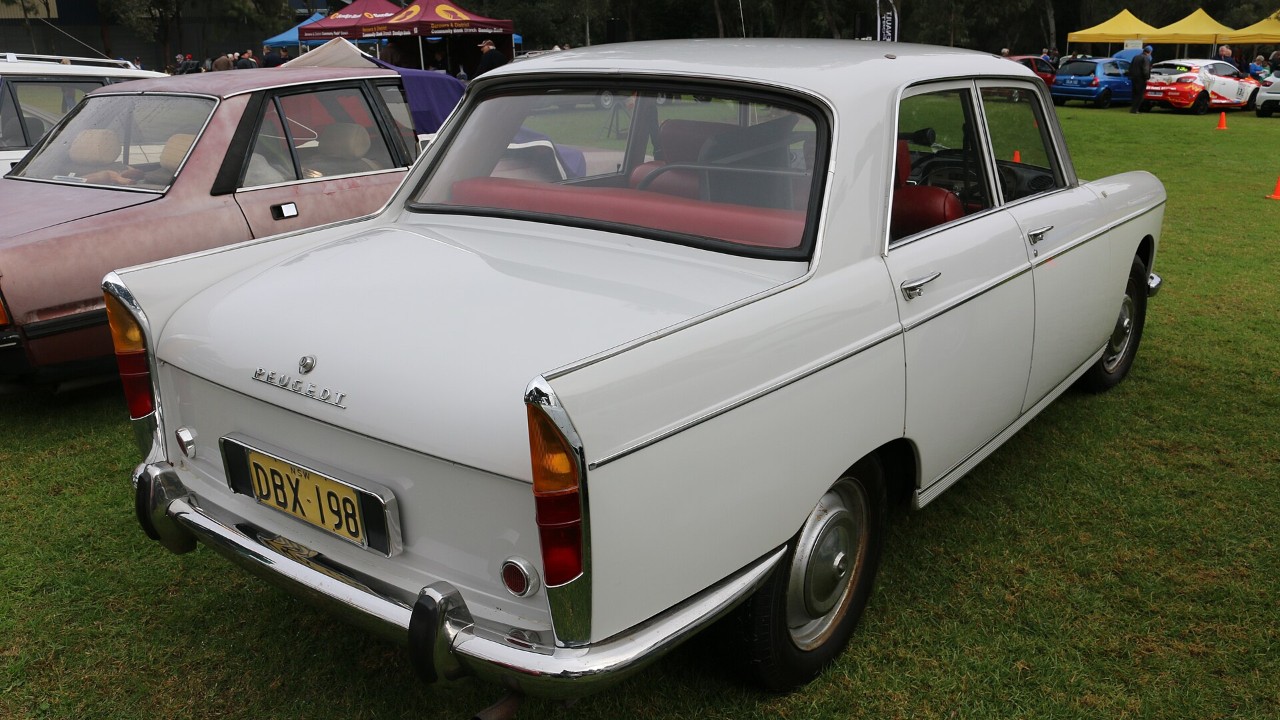
Pininfarina designed the Peugeot 404, and it went on sale in 1960. Peugeot built it in France until 1975. By the end of production, the factories had turned out 2,885,374 cars worldwide. Licensed assembly also continued in Kenya until 1991.
In 1963, the standard sedan used a 1,618 cc four-cylinder rated at 72 SAE hp. A fuel-injected version made 85 SAE hp. However, the 404’s real reputation came from Africa. It won the East African Safari Rally in 1963, 1966, 1967 and 1968, a famously punishing event. Argentina’s Safrar plant also built 162,583 of them.
That rally record says a lot about a family car. The 404 was designed for French families, yet it proved itself on some of the roughest roads in the world. Our take: the 404’s Pininfarina lines still look sharp, especially the tidy fins and wide grille. In our view, it’s one of the best-looking family cars Europe built in the 1960s. At an American car show, a 404 also turns heads for a simple reason: many people can’t guess what it is.
7. 1970 Volvo 144 DL
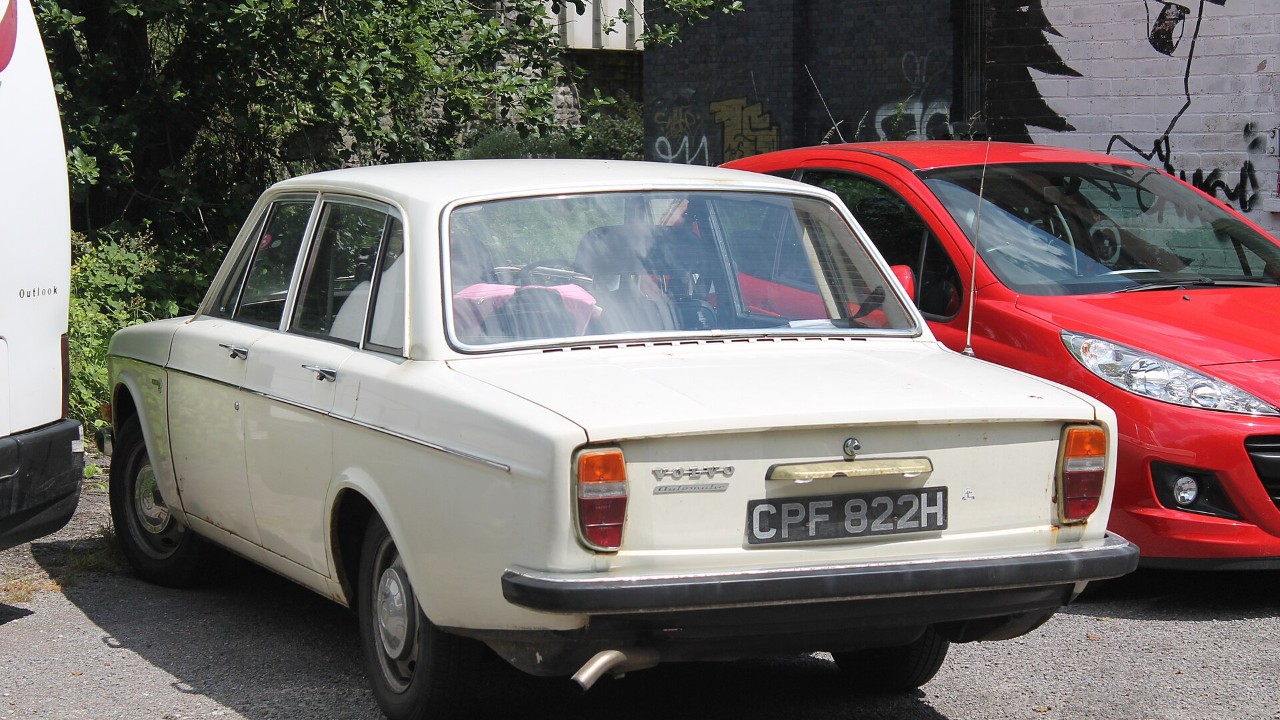
Volvo presented the four-door 144 in August 1966. It began the 140 Series, which remained Volvo’s volume model line until 1974. According to Volvo Cars’ heritage archive, the 144 had energy-absorbing zones front and rear. It also had disc brakes on all four wheels and a dual-circuit system in which each circuit served three wheels.
Inside, Volvo removed protruding parts from the cabin and fitted belts for the driver and front passenger. Power came from the 1.8-liter B18 or 2.0-liter B20 four-cylinder engines. Transmissions included a four-speed manual, a four-speed with electric overdrive and a three-speed automatic.
The design also lasted. Volvo developed the 140 into the 240, which was still on sale in the early 1990s. Our take: a 1970 144 DL is the root of the boxy Volvo look that so many families trusted for decades. In our view, its big glass area and three side windows give it a clean, honest shape that still draws a nod. For another take on Volvo’s family cars, see our list of family sedans we’d never sell. Finally, Volvo built 523,808 examples of the 144 sedan, part of 1,205,111 cars in the whole 140 Series.
More from Fast Lane Only