International Harvester built light trucks from 1907 until the last Light Line pickup rolled out on May 5, 1975. In between, the farm-equipment giant sold pickups, delivery vans and crew cabs. It also built the Scout, a small 4×4 that ran from 1961 to 1980.
Those trucks have a loyal following today. But an old IH is still an old work truck. Many lived hard lives on farms and delivery routes, and the company’s approach to rustproofing did them no favors. Some models also carry quirks that make them tough to live with.
These are our picks, nine International Harvester trucks we’d think twice about before buying. That’s our opinion, not a verdict on the trucks or the people who love them. Every reason we give, though, comes from period specs, restorer guides and collector-market reporting. Each entry also ends with what we’d look for instead.
1. 1953 International Harvester R-110 pickup
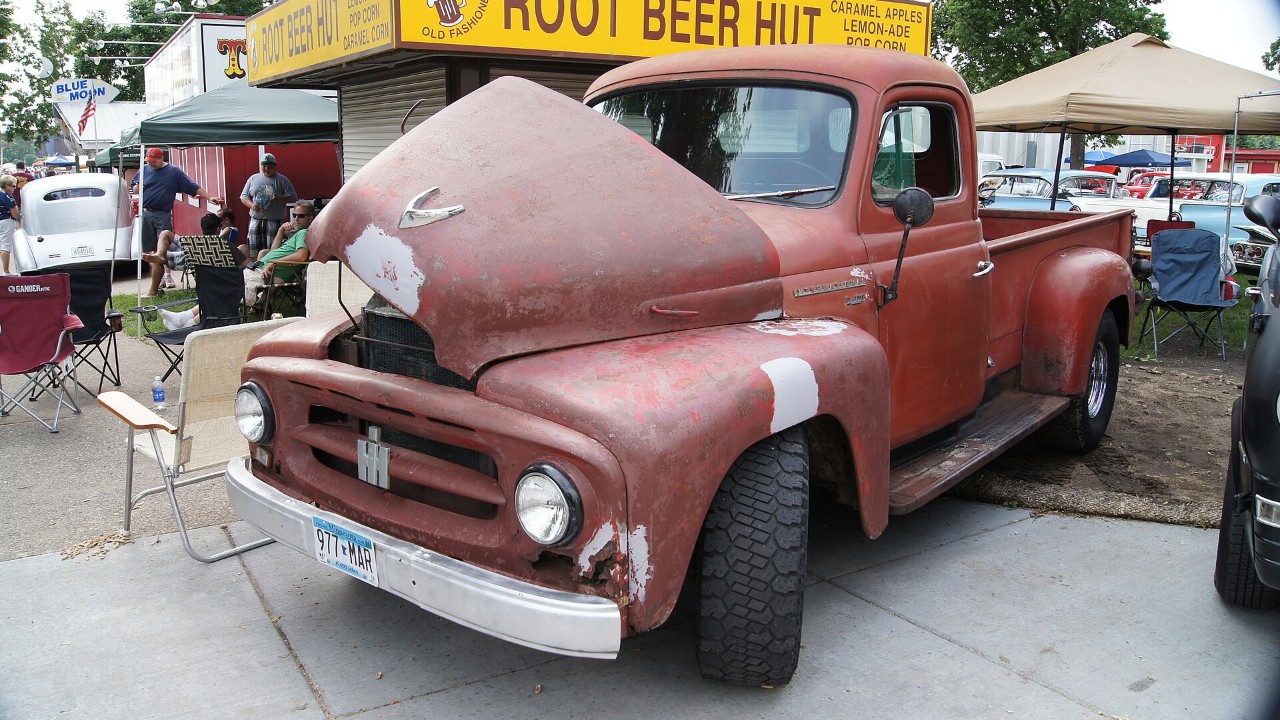
The R-series replaced the L-series for 1953, and it kept the older cab while adding a simpler grille with IH’s “tractor” emblem. Light-duty pickups from the R-110 to the R-130 used the Silver Diamond 220 inline-six. It made 100 hp and came with a three-speed manual.
That’s the first reason to pause. A 100-hp six moving a full-size pickup feels slow on a modern highway. The standard three-speed doesn’t help at cruising speed, either. International did offer better options, including an overdrive manual, a version of GM’s Hydramatic automatic and power steering.
In our view, a base R-110 is a lovely truck for local runs and a tiring one for long trips. The good news is that you don’t have to settle. International built 72,659 R-110s in 1954 and 1955 alone, so the supply is deep enough to be choosy. Buyer advice: hold out for an R-110 with overdrive or power steering. Then skip any truck whose seller can’t show you the frame and cab corners.
2. 1952 International Harvester Metro van
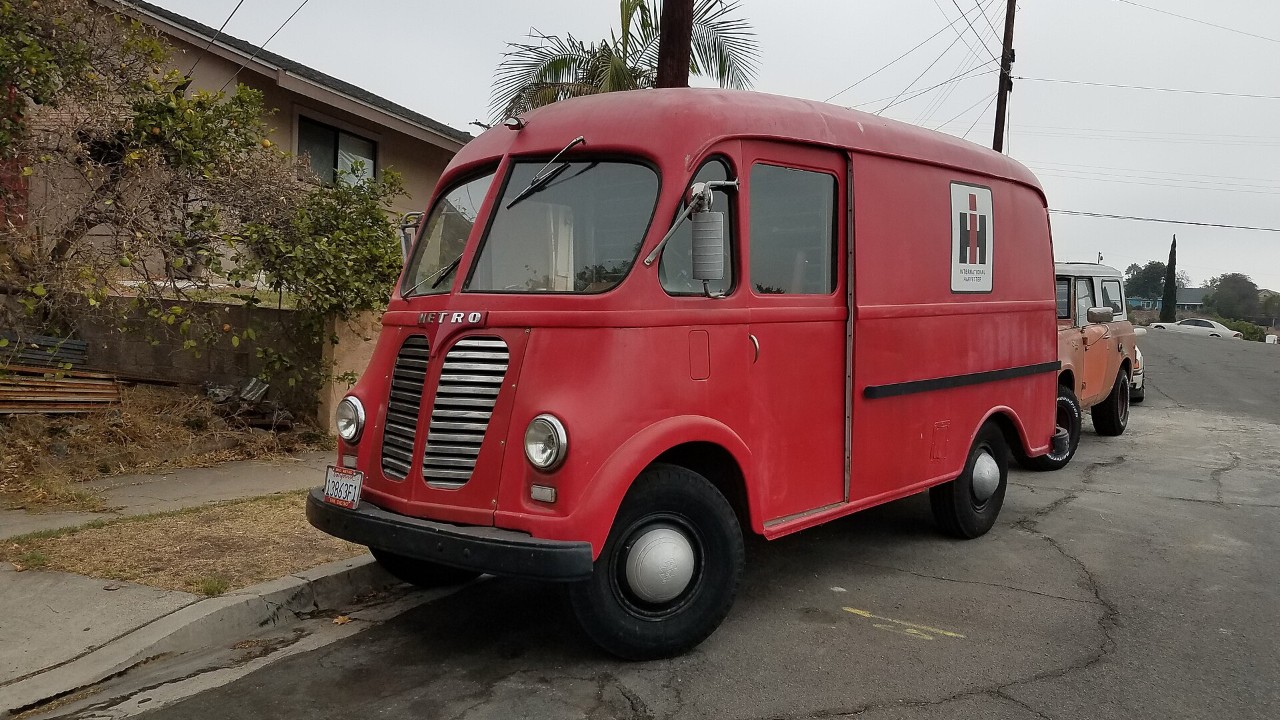
The Metro was International’s multi-stop delivery van, built from 1938 to 1975. Its bodies came from the Metropolitan Body Company in Bridgeport, Connecticut, which became an IH subsidiary in January 1948. The half-ton LM-120 of this era used the SD-220 engine, plus the transmission, rear end and brakes of an L-120 pickup.
Look at the van’s job description, and the risk becomes clear. Metros were once a common sight on milk and bakery routes. They also served as ambulances, mobile offices and radio vans. That means thousands of short trips, constant stops and years of commercial use. The LM-120 also carried a 5,400-pound gross weight rating with a 7¾- or 9½-foot body. That’s a lot of van for a 100-hp six.
Our take: a Metro makes a charming shop van or food-truck project, but a tired one can swallow a budget fast. Its tall body is specific to the Metro, so a rusty example asks for far more fabrication than a pickup does. We covered another side of the Metro in our earlier list of International Harvester trucks to avoid. Buyer advice: buy the most solid body you can find, even if the drivetrain needs work.
3. International Harvester L-110 pickup
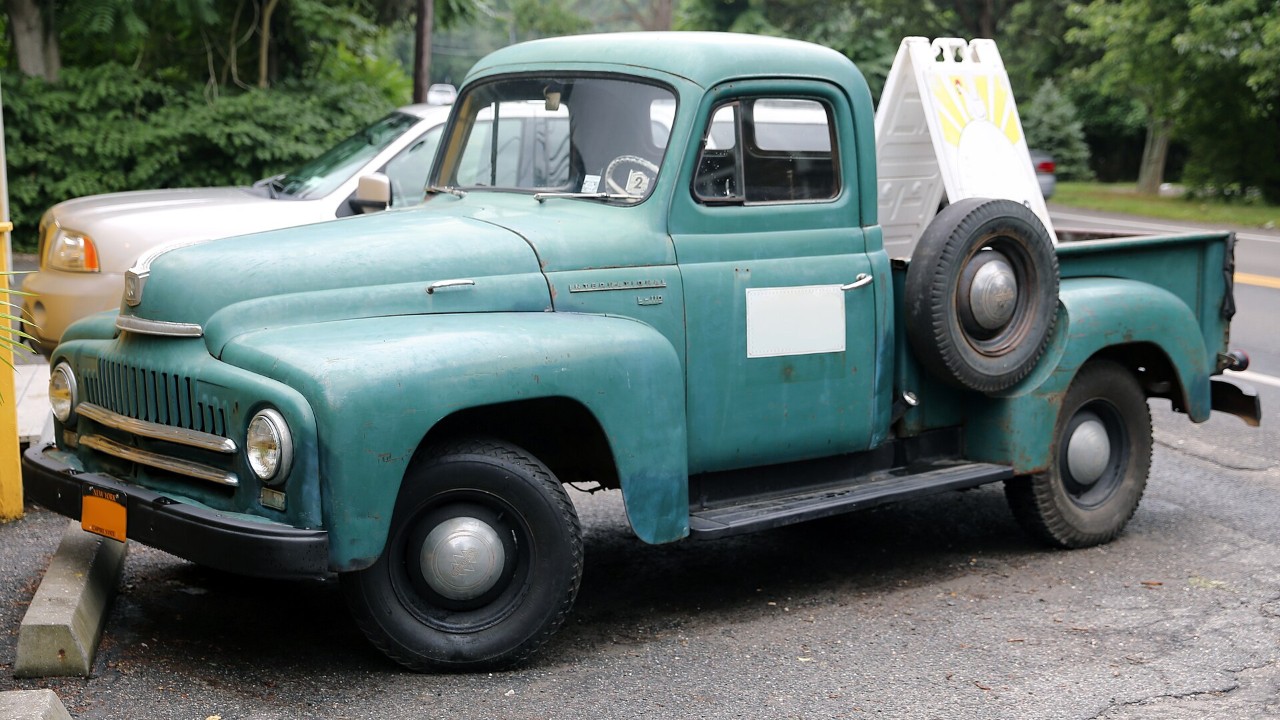
The L-series arrived in the fall of 1949 and carried International’s light trucks into the early 1950s. The L-110 used the Silver Diamond 220 overhead-valve six. It displaced 220.5 cubic inches and made 100 hp. Options at the time included electric wipers, a radio and a clock.
The gearbox list is where we’d slow down. Buyers could get a column-shifted three-speed with synchromesh, but International also offered the floor-mounted Model T9 four-speed without synchromesh. That “crashbox” demands double-clutching on every shift. After May 1950, a synchronized T98 four-speed became an option on many models, which makes the difference worth checking before you buy.
We think the L-110 has one of the best faces of any 1950s pickup. But a truck you can’t shift smoothly in traffic soon becomes a truck you don’t drive. A Barn Finds report on a 1952 L-110 describes a farm truck parked after a leaking water pump. It’s a reminder that even small failures can sideline these trucks. Buyer advice: look for a synchronized gearbox, then budget for the cooling system on day one.
4. 1960 International Harvester B-120 pickup
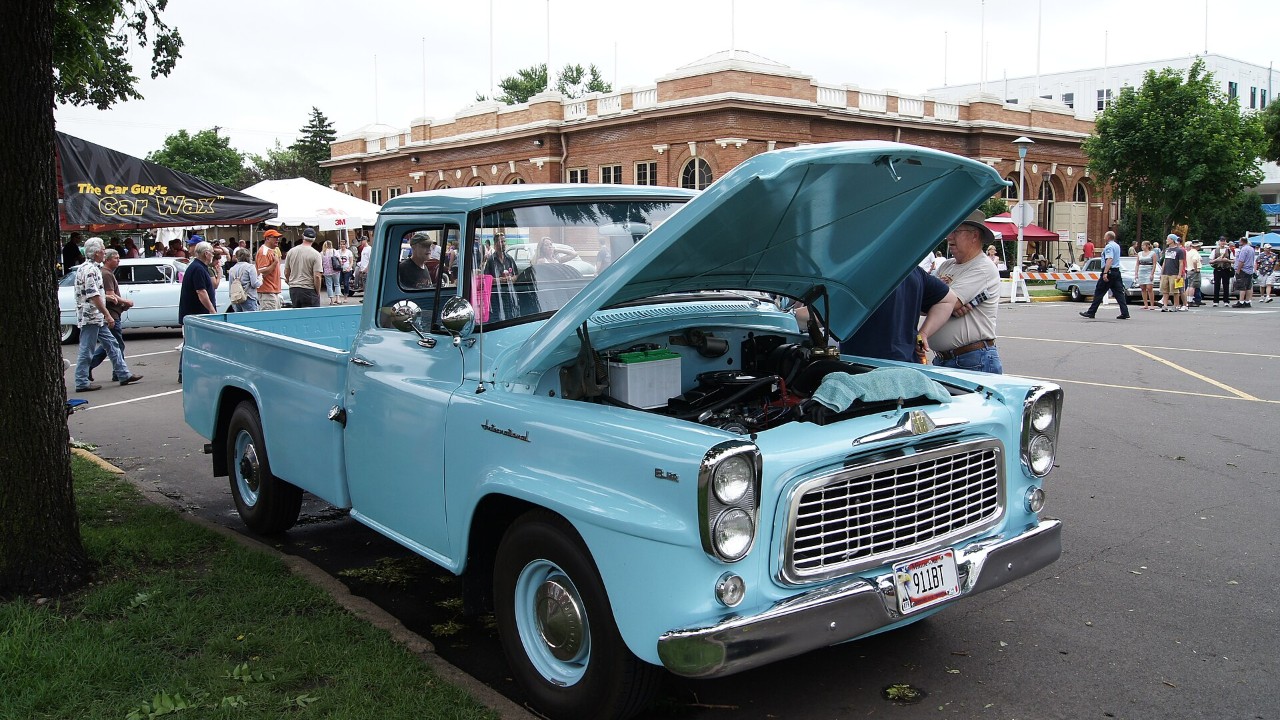
International’s B-series was short-lived, offered only from 1959 to 1961. The B-120 was the three-quarter-ton version, and buyers could order it with four-wheel drive. That makes it a tough, capable truck, and also a heavy one.
The short run is part of our concern. A model made for just three years is rarer than the longer-running series around it, so finding original trim can take patience. Many of these trucks have also been changed over the decades. A Barn Finds feature on a restored 1959 B-120 4×4 shows how. Its original 266-cubic-inch engine had given way to a 345 V8 from 1971. Swaps like that can be good upgrades. However, they also mean the truck you’re looking at may not be the truck International built.
In our view, a B-120 4×4 is a great tool and a demanding daily driver. A three-quarter-ton suspension rides firmly, and a stiff four-speed and transfer case add more to learn. Buyer advice: decide whether originality matters to you before you shop. If it does, verify the engine and drivetrain against the truck’s data plate, and pass on anything with a mystery swap.
5. 1964 International Harvester Scout 80
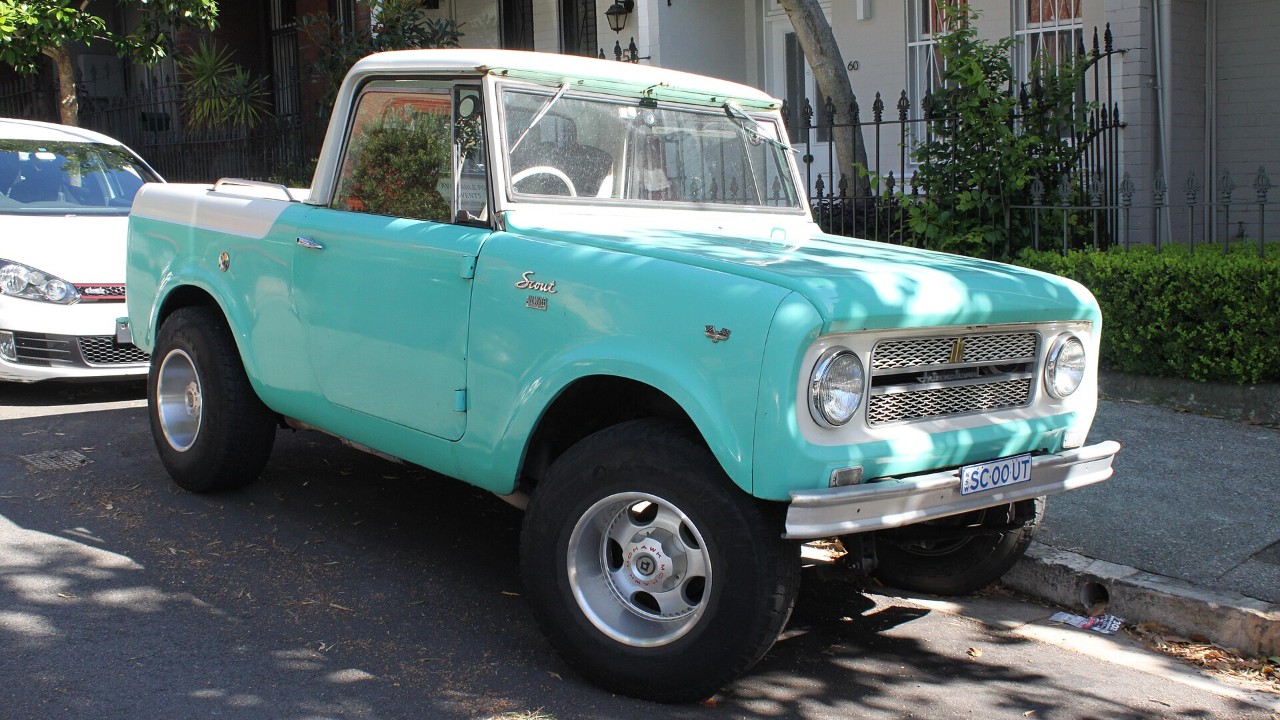
The Scout 80 arrived in late 1960 as a 1961 model, built to take on the Jeep CJ. It had a fold-down windshield and vacuum wipers, and early trucks even had removable sliding side windows. Its standard engine was the 152-cubic-inch four, which International made by cutting its 304 V8 in half. That four made 93 hp.
It’s a wonderful piece of history, and it’s also very basic. One history describes the first Scout as a brute with very few comforts. More importantly, Hagerty’s Scout collector guide names rust as the greatest concern and blames IH’s “laissez-faire attitude towards rustproofing.” It says rust is most common in the front fenders, the body mounts and the welds.
Our take: a Scout 80 is a fun weekend toy, but a rusty one can cost more than a clean later Scout. Hagerty also suggests looking for a Scout with power steering and power brakes, because unassisted brakes are hard work. Buyer advice: crawl underneath and check every body mount before you talk price. If you want to drive it often, consider a later Scout. We told more of the Scout’s early story in our look at how the 1961 Scout helped define early utility vehicles.
6. International Harvester Scout 800A
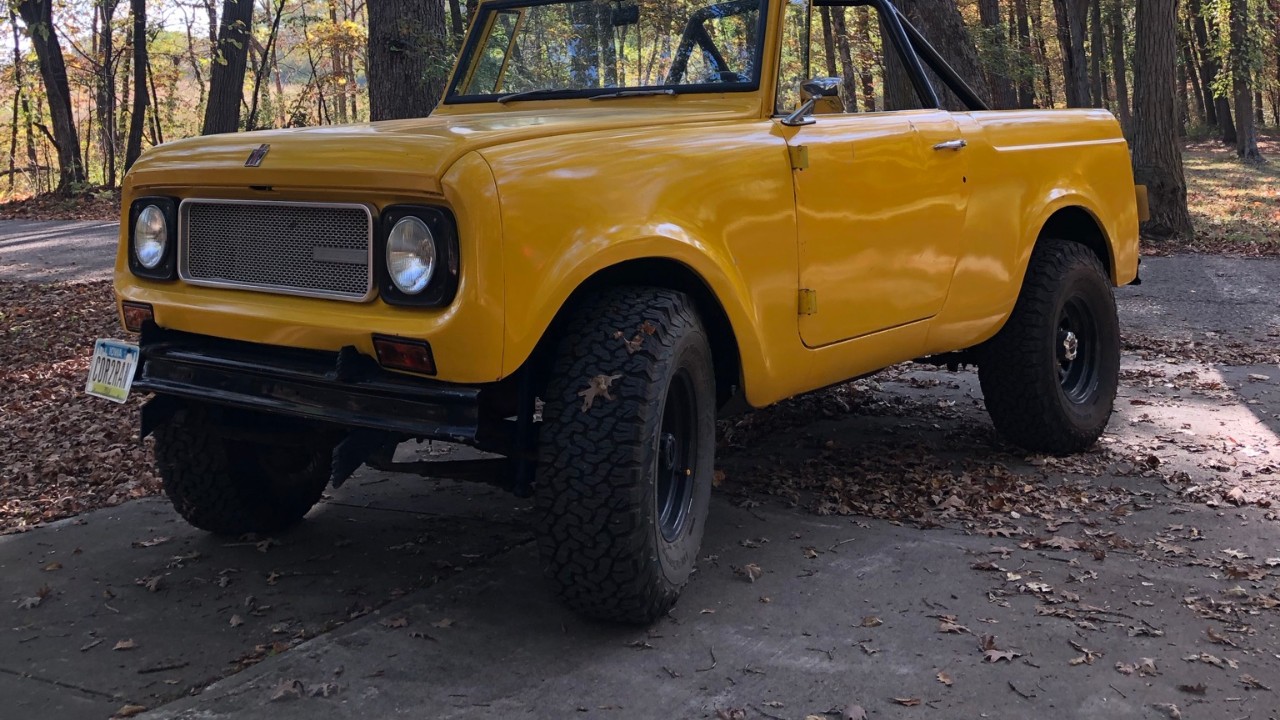
The 800A replaced the Scout 800 in November 1968. It added a 304-cubic-inch V8 to the four engines carried over from the 800. It also brought a quieter Dana 20 and a heftier rear axle. You can spot one by its three-piece grille and bezel-mounted headlights.
On paper, the 800A is the best of the early Scouts. Yet its strengths can attract the wrong kind of owner. In our view, a small, tough Scout with an available V8 is exactly the kind that gets turned into a trail rig. Hagerty’s collector guide warns buyers to avoid Scouts used as rock crawlers, because the frame tends to get beaten up under that punishment. The same guide also flags rust in the fenders and body mounts.
Meanwhile, the four-cylinder 800A is a different truck from the V8 one, and both deserve a careful look. We’d also note that the 800A was a short chapter, since the 800B followed in August 1970. In our view, that makes a clean, unmodified 800A worth the wait. Buyer advice: skip lifted, heavily modified trucks unless you want a project. Instead, pay more for a stock 304 truck with a straight frame and its original drivetrain.
7. International Harvester C-120 Travelette
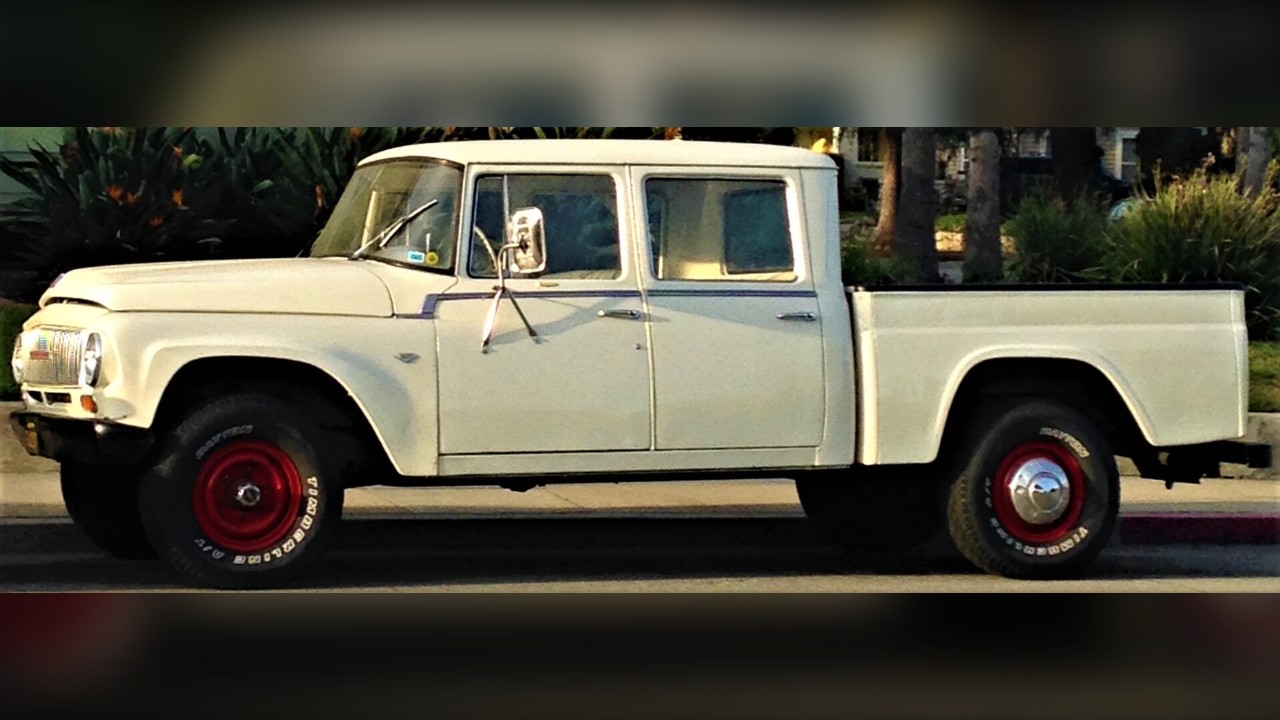
The Travelette was International’s crew-cab pickup. It started with three doors in 1957, then added a fourth door for 1961. That same year, the C-series took over. International sold it in two-wheel and four-wheel drive.
Crew cabs are useful, but they’re also heavy. A Truth About Cars junkyard find of a 1962 C-120 Travelette found a 240-cubic-inch six rated at 141 hp in 1962. That’s about what a 2014 Corolla made. The same writer noted that even a rust-free California truck had been worn out by 52 years of hard work.
Our take: a Travelette is a rare and practical classic, but it can hide expensive wear. One four-door C-120 profiled by Barn Finds had spent years with a forestry department and had needed both floor pans replaced. Later Travelettes also became heavier and thirstier than rivals, and that helped end the line after 1975. Buyer advice: inspect the floors and rear cab corners closely. Then treat a truck with fleet history as a full mechanical rebuild until proven otherwise.
8. 1971 International Harvester 1010 pickup
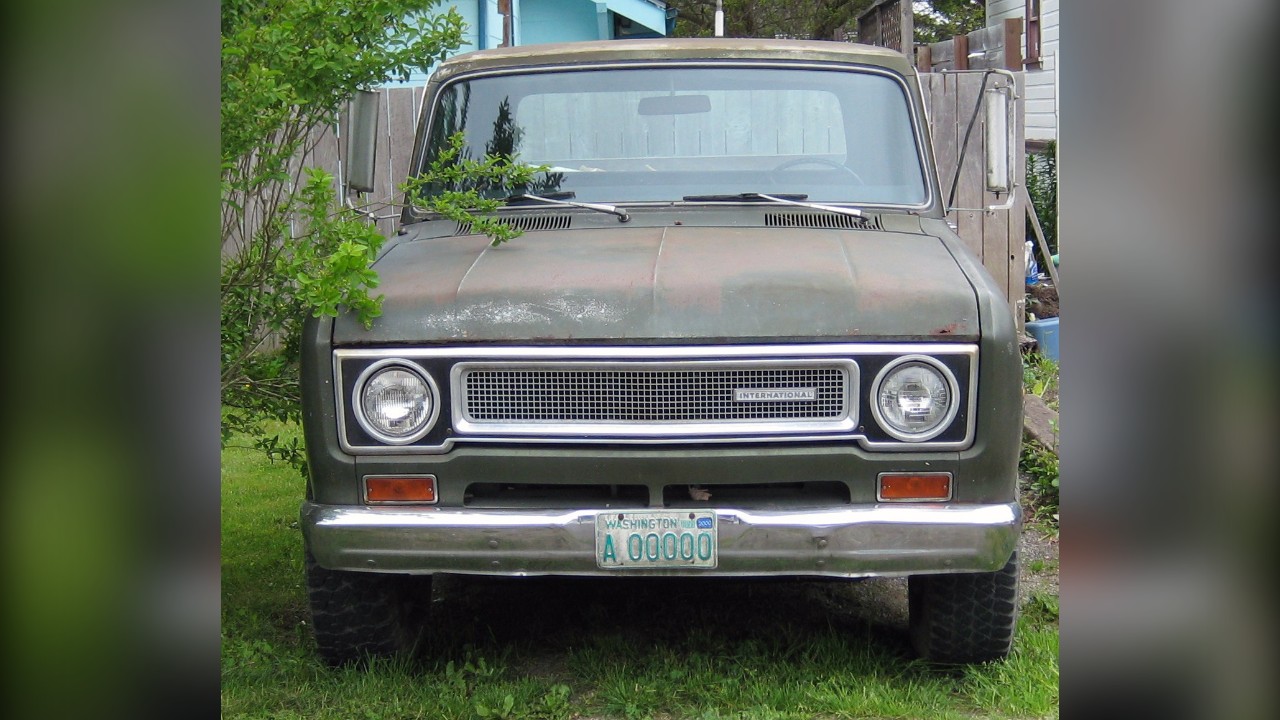
International launched its Light Line pickups in early 1969 as the D-series. In 1971, it dropped the “D” and added a “10,” so the half-ton 1000D became the 1010. The 1010 shared its weight rating with the 1110. The difference sat up front, though. This half-ton used torsion-bar independent front suspension, while the 1110 and heavier models used a solid I-beam axle.
That torsion-bar setup is our main reason for caution. Independent front ends have more parts to wear, and IH’s share of the light-truck market had already fallen to 4.1% by 1969. Fewer trucks on the road usually means fewer parts on the shelf. Engine choices were wide, from AMC’s 232 six to IH V8s of 266, 304, 345 and 392 cubic inches. So check exactly what’s under the hood.
In our opinion, the 1010 drives more like a car than older IH pickups, which is its appeal. Still, a worn independent front end on a 50-year-old truck isn’t cheap to sort. Buyer advice: if you want a simple, tough Light Line truck, the 1110 with its I-beam front axle may be the easier one to keep. Either way, parts support still exists. IH sold its Scout and Light Line parts business to Scout/Light Line Distributors in 1991.
9. 1977 International Harvester Scout SSII
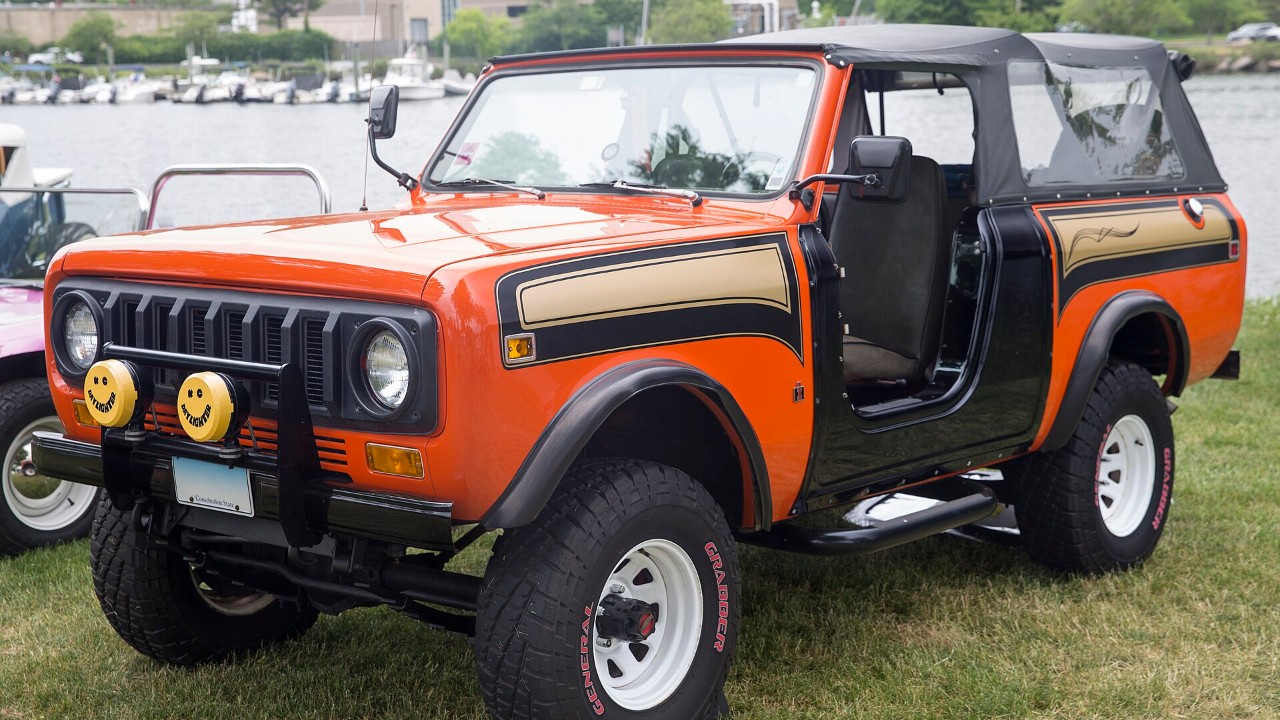
The Super Scout II, or SSII, ran from 1977 to 1979 as a stripped-down off-road model. It came with a soft top, plastic door inserts, a plastic grille, a roll bar and windshield-mounted mirrors. Sub-models included the four-cylinder Rancher Special.
The SSII shares the Scout II’s biggest weakness. According to a Scout II buyer’s guide from restoration shop Corsetti Cruisers, Scouts were never fully galvanized, so rust is nearly certain. The guide says to check the rear spring mounts, body mounts, the area under the doors, the rear crossmember and the inner rockers. It also warns that unrestored wiring is often patched. Meanwhile, dash pads, gauge clusters and original seat frames are getting hard to find.
An SSII adds its own risk, because a soft-top off-roader may well have lived outdoors and seen hard trail use. In our view, that combination makes a rough SSII one of the riskiest Scouts to buy. Buyer advice: confirm the VIN tags on the frame and body match, then check every rust point on Corsetti’s list. International built its last Scout on October 21, 1980.
More from Fast Lane Only