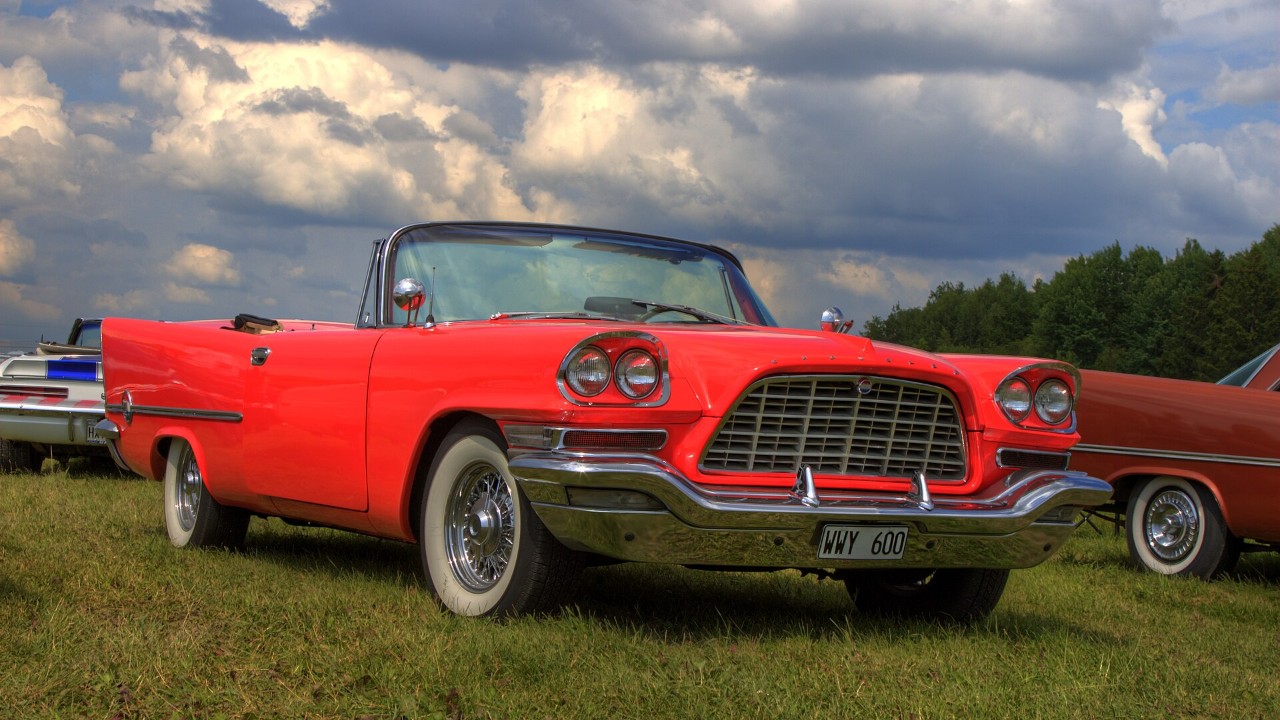
Chrysler built 2,402 copies of its 1957 300C, and only 484 of them were convertibles. That makes the Chrysler 300C convertible a rare sight, but rarity isn’t the only reason people stop and stare when one rolls into a parking lot. A good convertible from the 1950s and 1960s simply looks like an occasion.
The trick is that many of the best ones aren’t famous. For every Corvette or Mustang drop-top, the era offered big Pontiacs, crisp Fords, plush Mercurys and even a tiny Rambler with its own power top. Plenty of them now sit in garages, waiting for a sunny weekend.
These seven are our picks: the convertibles we think continue to turn heads decades later, and the reasons we would put each one on a show field today. The prices, engines and production numbers come from period records and marque histories. The verdicts are our own.
1. 1957 Chrysler 300C convertible
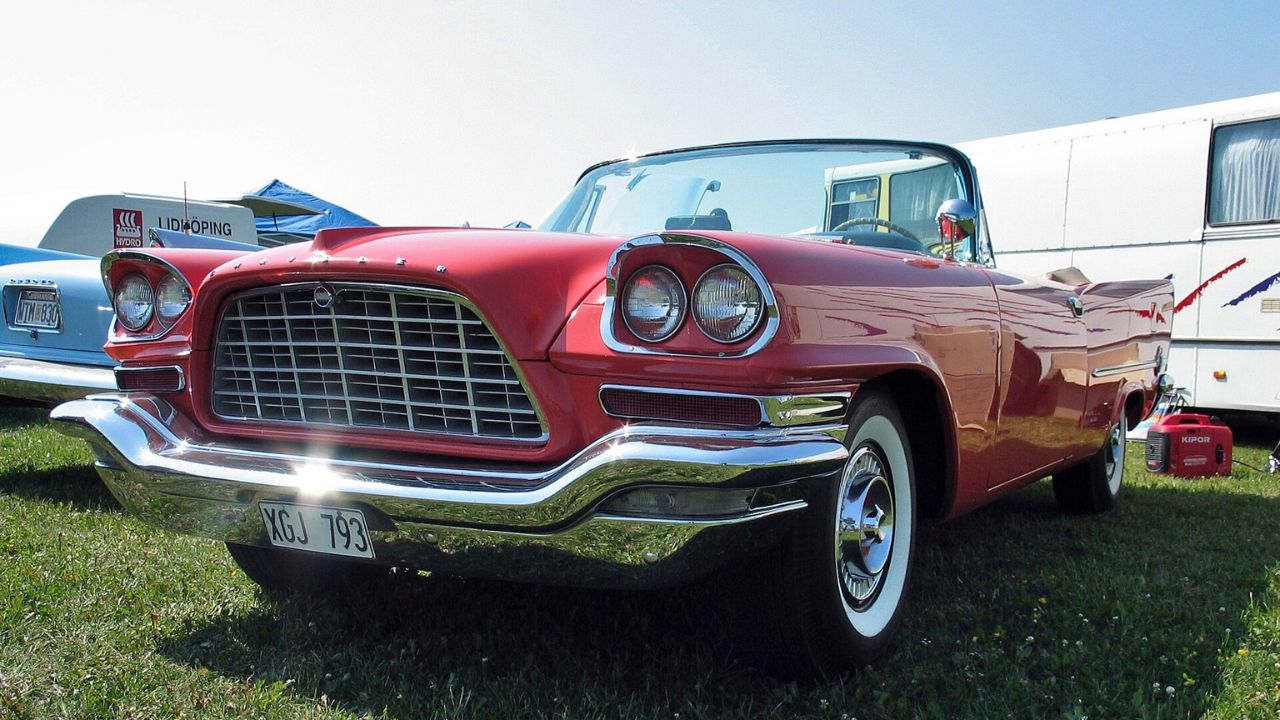
For 1957, Chrysler finally offered its letter-series muscle car without a roof. The convertible listed at $5,359, compared with $4,929 for the hardtop, so the open car carried a hefty premium. As a result, buyers took 1,918 hardtops and just 484 convertibles that year.
The engine matched the price. Chrysler bored the Hemi V8 out to 392 cubic inches, fed it through two four-barrel carburetors and rated it at 375 horsepower. A limited version made 390 horsepower, and Chrysler built just 18 of those. Meanwhile, Chrysler introduced its Torsion-Aire front suspension across its cars that year, and the 300C got it too.
The details are what make it special up close. The wide trapezoid grille belonged to the 300C alone. Ducts just below the headlights fed cool air to the front brakes, and tan leather came standard inside. Red, white and blue 300C medallions appeared on the sides, hood, trunk and dash. Only five paint colors were on the list, from Jet Black to Gauguin Red.
In our view, the Chrysler 300C convertible is the most complete package on this list. It pairs Hemi power with Forward Look fins, and that combination still stops conversations at any show. If you find one, be ready to pay for it, because Chrysler built only 484.
2. 1962 Rambler American 400 convertible
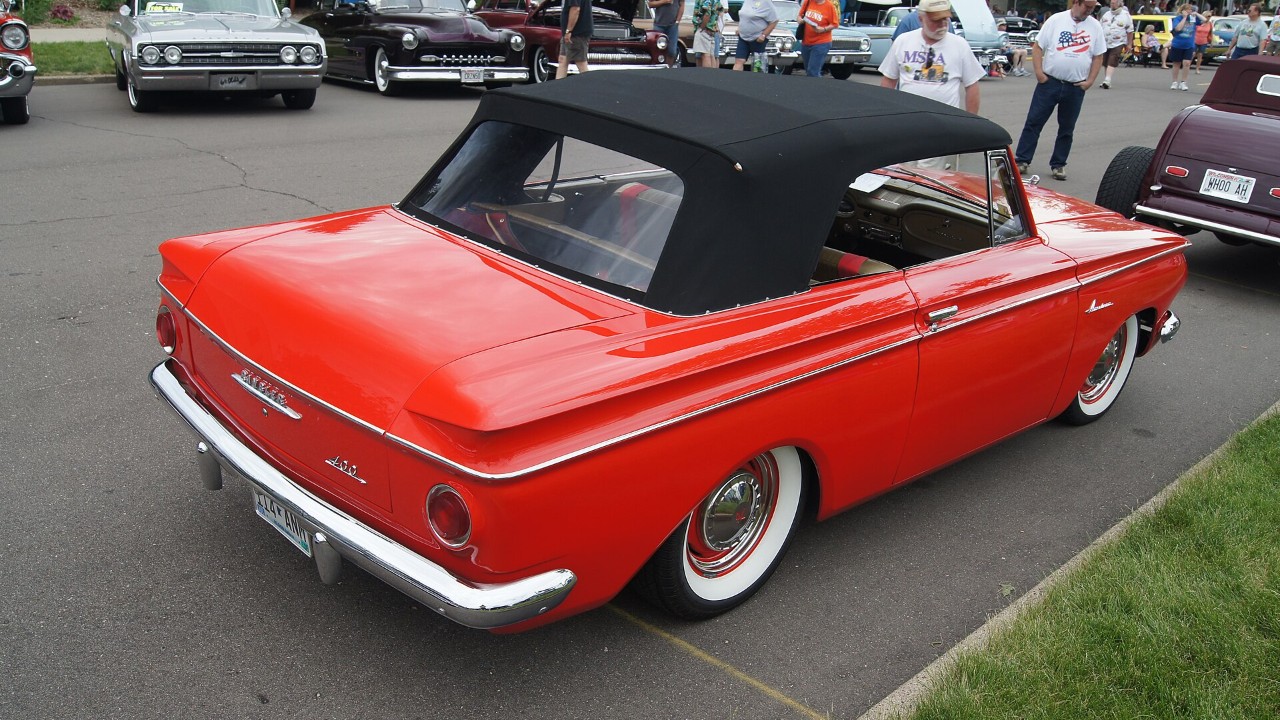
Not every head-turner needs a Hemi. For 1962, American Motors renamed its top Rambler American trim the 400, and the convertible kept a feature that surprised buyers in such a small car: a power-operated top with roll-down door glass. Under the hood sat a 195.6-cubic-inch six.
The 400 got the 125-horsepower overhead-valve version of that engine as standard, according to Curbside Classic’s look at a surviving 1962 American 400 convertible. The same piece explains that AMC design chief Ed Anderson reused much of the older body, which limited how far the restyle could go. It also calls the car America’s lowest-priced convertible that year.
Buyers liked it anyway. Rambler sold 13,497 of these convertibles in 1962, then just 4,750 in 1963. In all, AMC built 125,678 Americans for the 1962 model year. So the open car made up roughly one in ten.
Our take: the American 400 convertible draws a crowd because nobody expects it. It’s small, upright and a little odd, and that charm wins people over fast. AMC fans may also enjoy our list of Ramblers with a strong reputation among mechanics.
3. 1963 Ford Galaxie 500 XL convertible
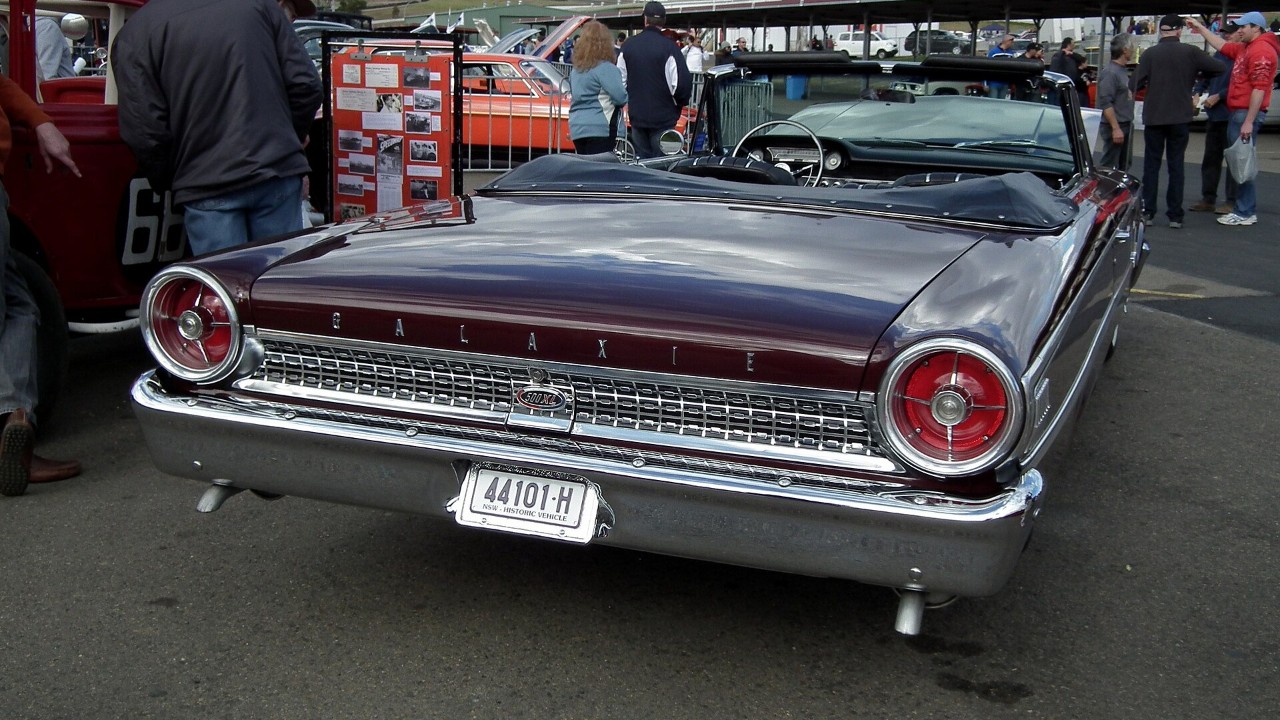
Ford launched the Galaxie 500 XL for 1962 as a bucket-seat, center-console “Lively One,” and the company said XL stood for “Xtra Lively.” The convertible version made the change easy to spot. Instead of the old Sunliner script, it wore Galaxie 500 XL badges on each rear fender.
For 1963, the XL carried on with a few important changes under the hood. A 260-cubic-inch V8 replaced the old 292 Y-block as the base V8, and then a 289 took its place partway through the year. Buyers could also order a 352 or one of three versions of the 390. Later in the year, Ford added a 427 rated at 425 horsepower, mainly for racing use.
That range gave the XL convertible two personalities. With a small V8, it’s a relaxed boulevard cruiser. With a big-block, on the other hand, it becomes a fast, heavy grand tourer. Ford built 535,256 Galaxies of all kinds for 1963, so the XL convertible had plenty of company in showrooms.
In our view, the 1963 XL convertible is the best-looking big Ford of the decade, especially with the top down and the buckets on show. It turns heads because it looks like pure early-1960s optimism.
4. 1964 Dodge Polara 500 convertible
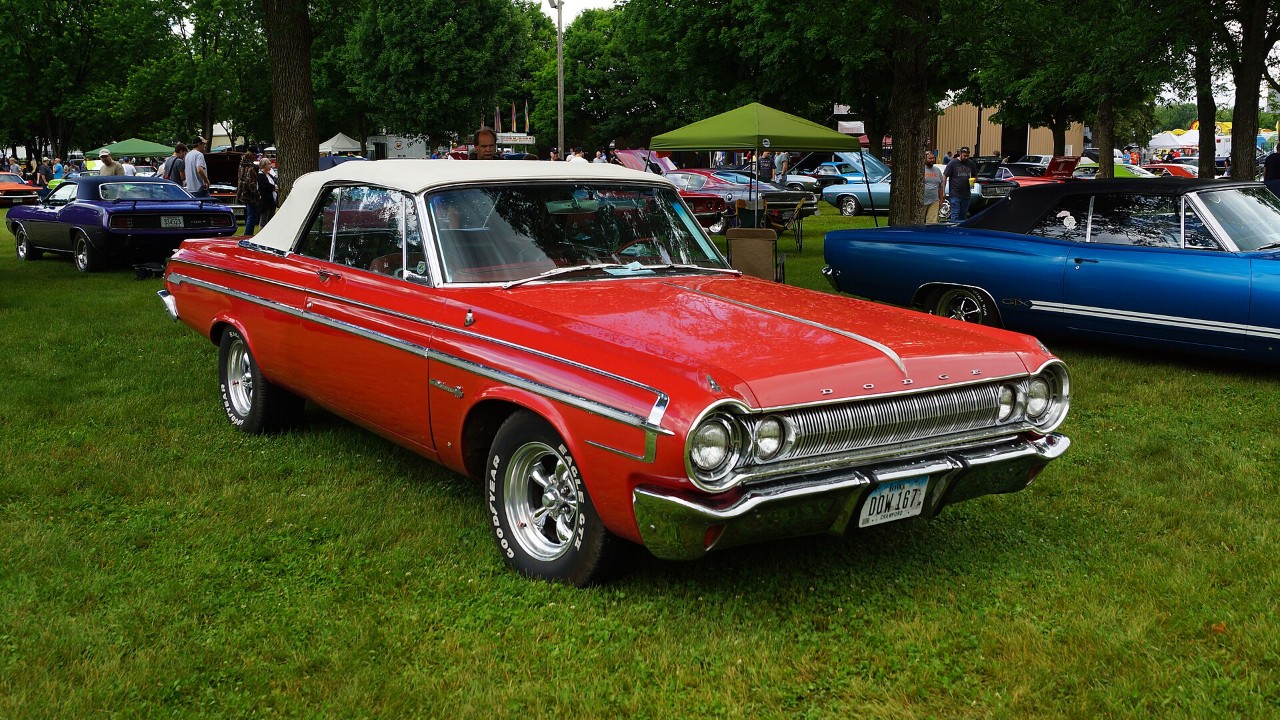
Dodge kept the Polara 500 exclusive in 1963 and 1964. During those two years, it came only as a hardtop coupe or a convertible, with bucket seats and deluxe vinyl upholstery as part of the deal. That made the 500 the sporty, image-building car in Dodge’s mid-size lineup.
For 1964, Dodge gave the Polara a revised front end and new tail lamps. The Polara models got six small, square taillights, three per side, set inside a bright trim panel. Lesser Dodges made do with four lights and no panel. Meanwhile, the car rode on a 119-inch wheelbase, and optional V8 engines went as large as 413 cubic inches.
The restyle worked. Dodge’s 1964 cars sold noticeably better than the 1963 models, although the factory split for the Polara 500 convertible is hard to find. Either way, it’s a car that most show-goers can’t name on sight.
Our take: the Polara 500 convertible is the sleeper of this list. It has the buckets, the long hood and that distinctive tail, yet most people have to walk around the back to learn what it is. In our book, that’s exactly what a head-turner should do.
5. 1966 Pontiac Catalina convertible
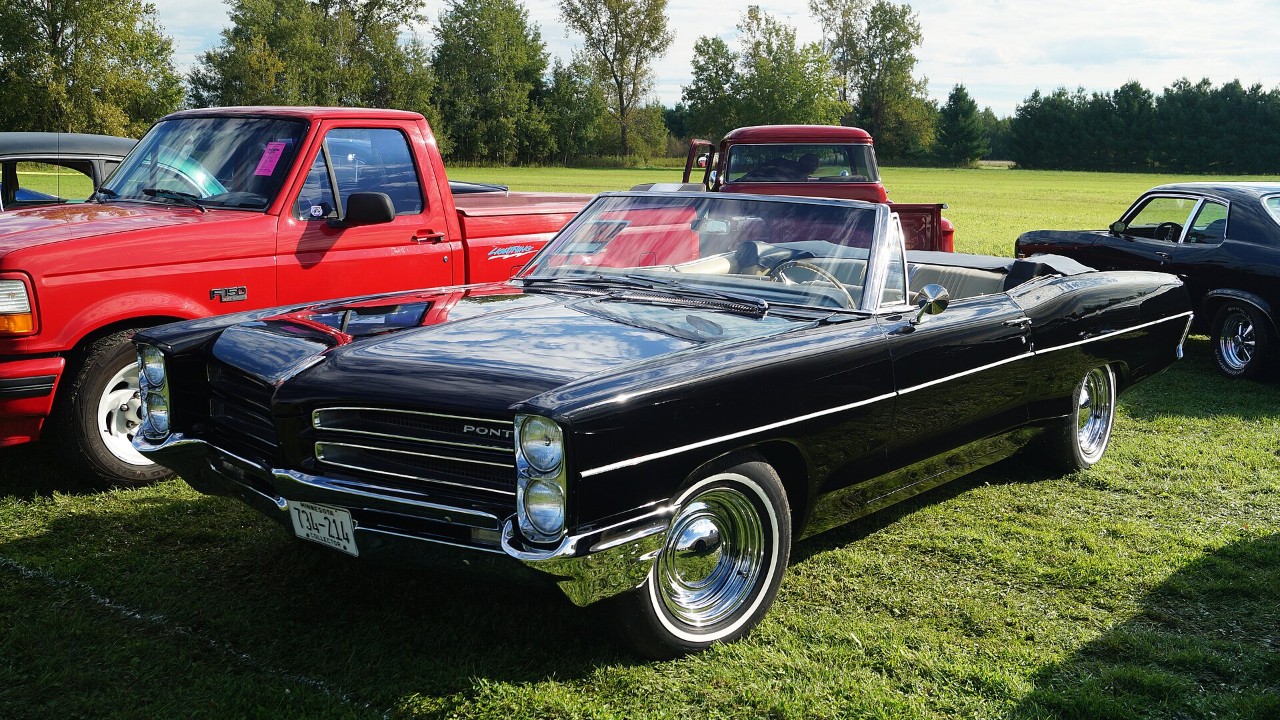
Pontiac’s big cars were at their peak in the mid-1960s, and the 1966 Catalina convertible shows why. The factory price was $3,219, and Pontiac built 14,837 of them, according to OldRide’s 1966 Pontiac Catalina data. Before options, it weighed 3,860 pounds.
The changes for 1966 were subtle. New plastic grilles and headlight extension caps gave the front a more integrated look. In addition, the sporty Catalina 2+2 became its own series that year, and its convertible listed at $3,602.
Engine choices ran deep. The 389 came in versions from 256 to 333 horsepower, including Tri-Power setups. Above them sat the 421, offered at 338, 356 and 376 horsepower. As a result, a Catalina can be anything from a smooth highway cruiser to a genuinely fast car.
In our view, the stacked-headlight Catalina convertible is one of the best-proportioned American cars of the decade. It turns heads because it looks long, low and confident from every angle. If you want more of that era, see our list of rare convertibles from the 1950s and 1960s worth remembering.
6. 1968 Mercury Montego MX convertible
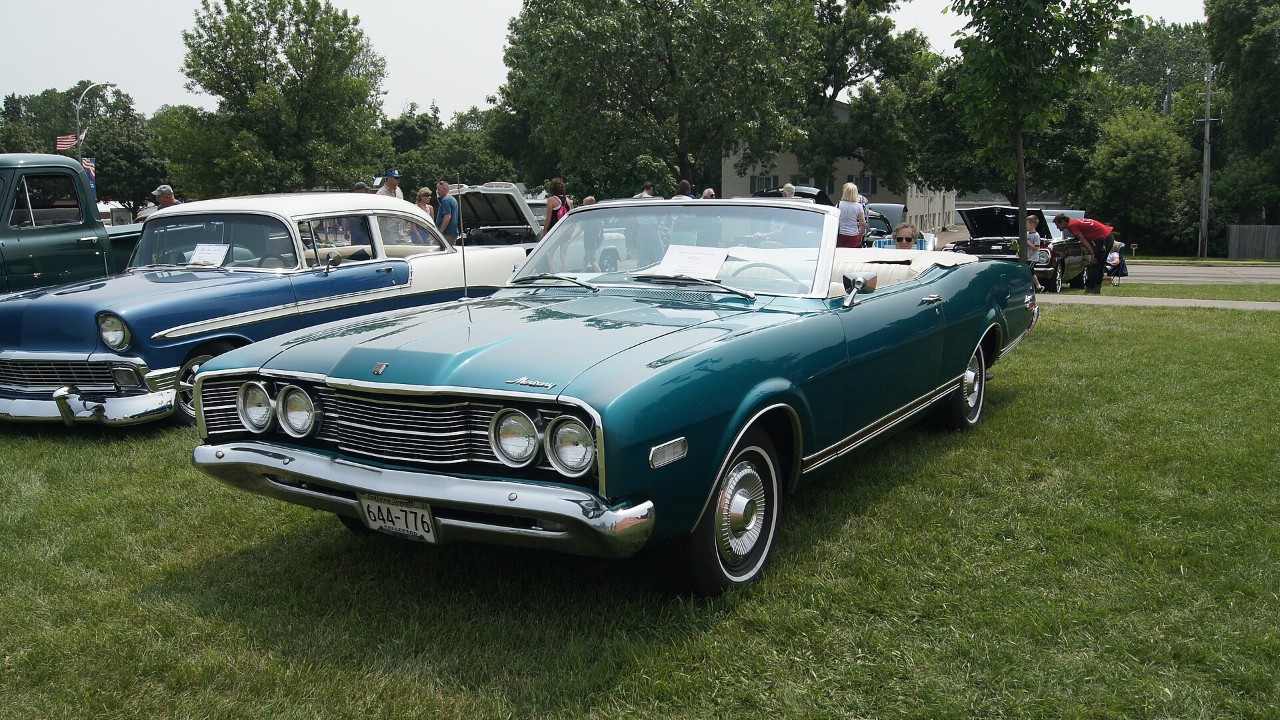
Mercury introduced the Montego for 1968 as the new name for its mid-size line. The Montego MX replaced the Comet Caliente, and the lineup included a two-door convertible from the start. Alongside it, the range offered a two-door hardtop, a four-door sedan and a station wagon. Yet the open Montego lasted only two seasons, because Mercury dropped the convertible for 1970.
It was a stylish car while it lasted. Curbside Classic’s study of a 1969 Montego MX convertible points out rear flanks that echo Continental styling and a dash with hints of the 1967 Cougar. The same article lists V8 options from a 220-horsepower 302 through the 351 to a 320-horsepower 390. However, the 428 Cobra Jet wasn’t offered in the convertible.
Few buyers took the open version. Curbside Classic reports that Mercury built only 1,725 Montego convertibles for 1969. By then, convertible sales were sliding across the industry.
Our take: the Montego MX convertible turns heads because almost nobody recognizes it. It looks like a scaled-down luxury car, and the top-down profile is cleaner than the hardtop’s. Find one with a 390 and you have a quiet, quick cruiser.
7. 1969 Mercury Cougar XR-7 convertible
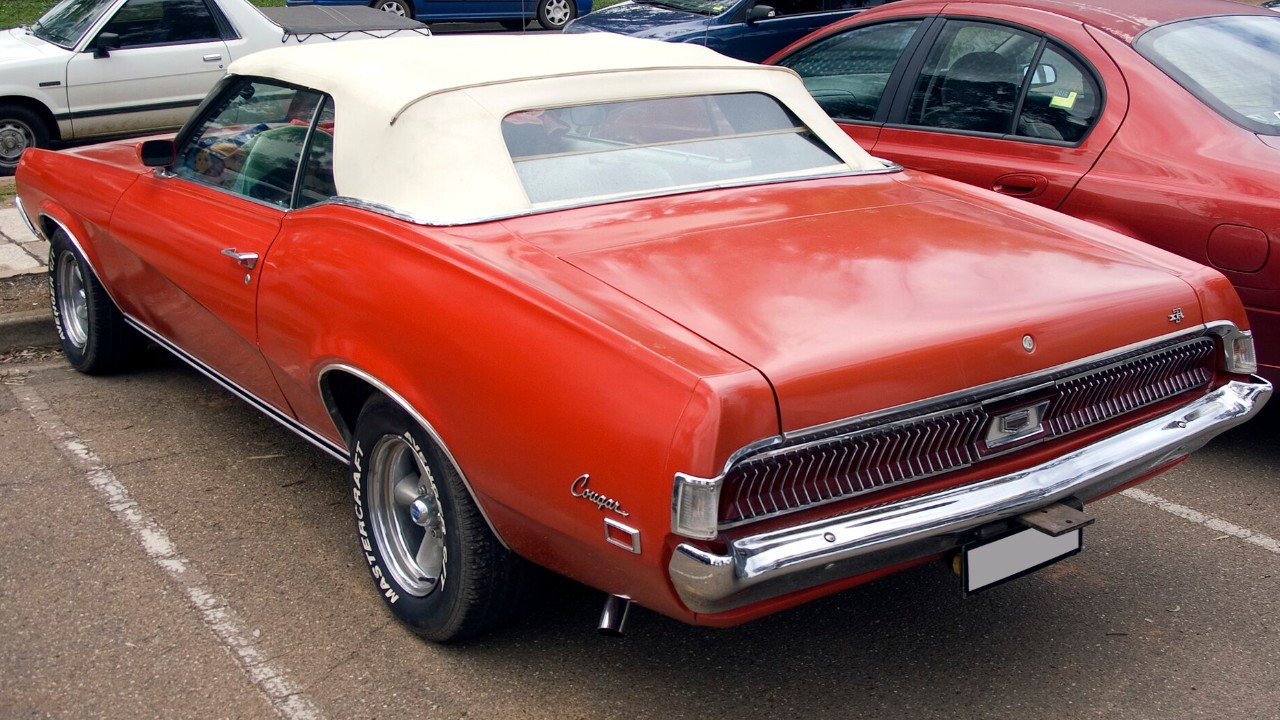
The Cougar didn’t offer a convertible in 1967 or 1968. For 1969, Mercury finally cut the roof off, and it offered both a base car and the upscale XR-7. According to Curbside Classic’s history of the 1969 Cougar, the XR-7 convertible cost $3,578, about $200 more than the base open car.
That money bought real equipment. The XR-7 came with leather seating, a tachometer, a trip odometer, an electric clock and a rim-blow steering wheel. The standard engine was a 250-horsepower 351 V8 with a two-barrel carburetor. From there, options climbed through a 320-horsepower 390 to the 428 Cobra Jet.
The car also earned a moment on screen. A specially prepared 1969 XR-7 convertible appeared in a James Bond film, which gave the shape some instant glamour. Meanwhile, the 1969 Cougar grew 3.5 inches longer, gained side sweepspears and swapped its “electric shaver” grille for a horizontal one.
In our view, the XR-7 convertible is the most elegant pony car of its year. It feels like a small luxury car, yet it still has the long-hood stance people love. Curbside Classic also counts it as the rarest 1969 Cougar body style, with 4,024 built.
More from Fast Lane Only