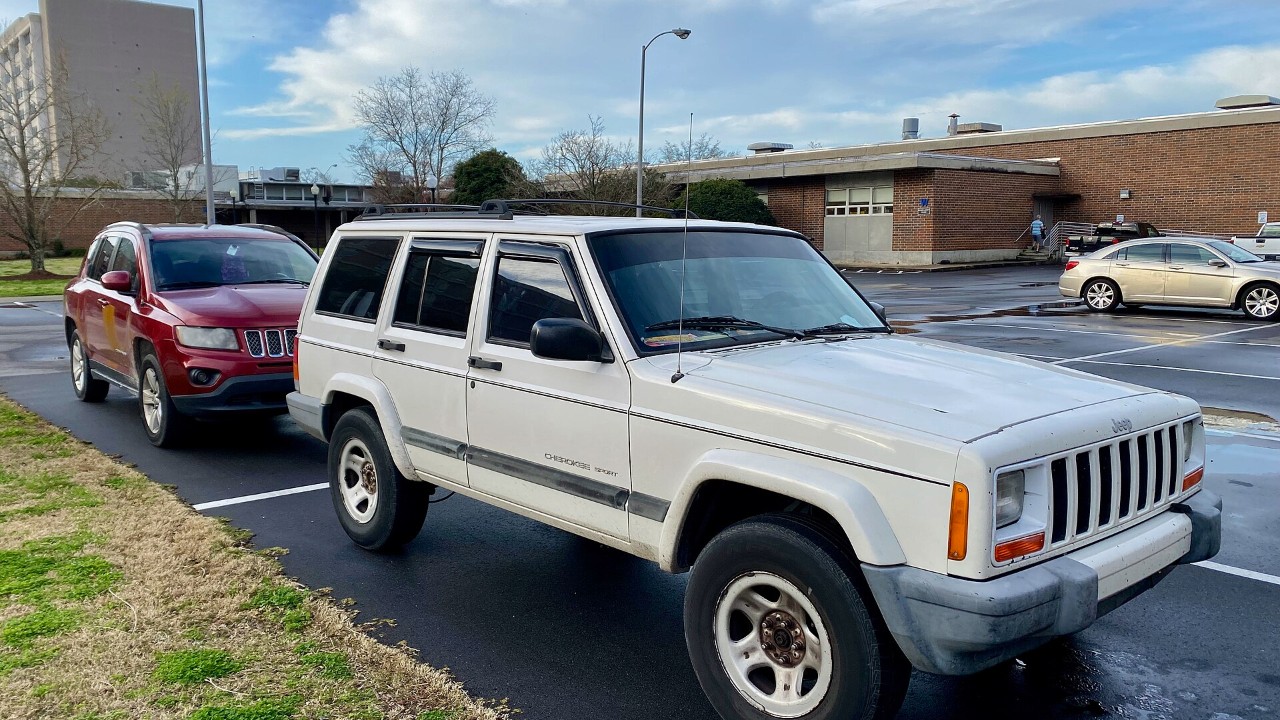
Jeep built roughly 3 million Cherokee XJ models between 1983 and 2001, and it did it with a unibody instead of a separate frame. The Jeep Cherokee XJ then stayed on sale for 18 model years. It also shows what a good utility vehicle really is: simple, honest and ready to work.
Utility vehicles live harder lives than most cars. They tow, haul, ford creeks and carry families through winters. So when one stays in production for decades, or keeps a following long after the last one left the plant, that tells you something about how it was built.
These are our picks: nine utility vehicles that, in our view, rarely let anyone down. They range from 1960s Jeeps to 1990s family haulers, and every year, engine and production figure below comes from a source we checked. The verdict on each one is our own opinion.
1. 1966 Jeep Wagoneer
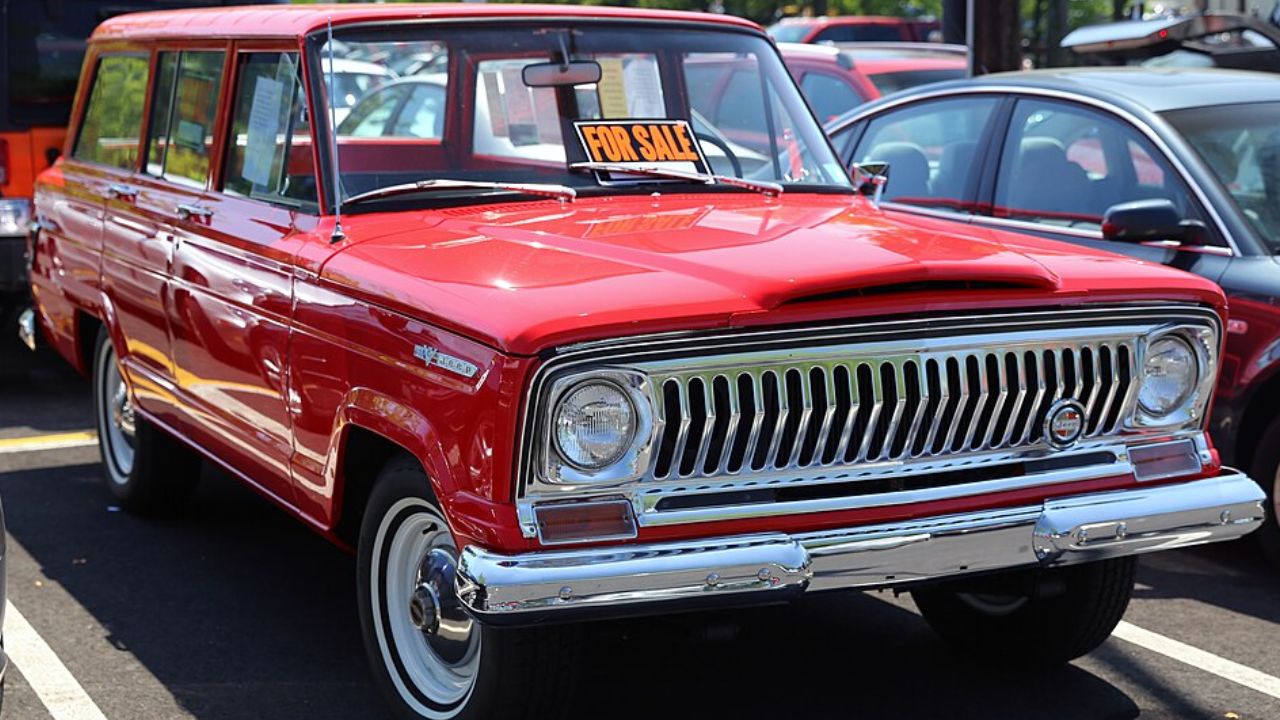
The Wagoneer debuted in November 1962 as a 1963 model, replacing the Willys Jeep Station Wagon. A team led by industrial designer Brooks Stevens shaped it. Meanwhile, Willys engineers handled the hardware underneath.
That hardware was ahead of its rivals. Early Wagoneers used the Tornado overhead-cam 230-cubic-inch six, rated at 140 horsepower. An automatic transmission and optional independent front suspension were unheard of in other mainstream four-wheel-drive vehicles at the time. Then, late in 1965, Jeep added a 327-cubic-inch V8 rated at 250 horsepower. For 1966, the more luxurious Super Wagoneer joined the line. Later, the Wagoneer added a smarter drivetrain, as we covered in how Quadra-Trac gave the Wagoneer full-time four-wheel drive.
The production run is the strongest argument. The SJ-series Wagoneer lasted 29 model years, and Jeep’s final 1991 Grand Wagoneer carried a “Final Edition” badge on the dashboard. In our view, a 1966 car with the V8 is the sweet spot. If you buy one, check the floors and rockers before anything else.
2. 1972 International Harvester Scout II

International Harvester built the Scout II from April 1971 until October 21, 1980, at its plant in Fort Wayne, Indiana. It was a farm-equipment maker’s idea of an SUV, and it showed. The engine list ran from a 196-cubic-inch four to 304 and 345 V8s.
Buyers could also pick AMC 232 and 258 sixes. Later, from 1976, a Nissan SD33 diesel six joined the list, followed by the turbocharged SD33T for 1980. The running gear got tougher, too. After 1974, Dana 44 axles went under both ends of every Scout II, and power disc brakes became standard starting with late 1974 trucks.
Across the whole Scout line, International built 532,674 trucks from 1960 to 1980. Our take: a 1972 Scout II is a simple, mechanical truck that rewards a careful owner. Early trucks have the Dana 30 front axle, so if you plan to wheel it hard, a post-1974 Dana 44 truck is the safer buy.
3. 1971 Land Rover Series IIA 109 Station Wagon
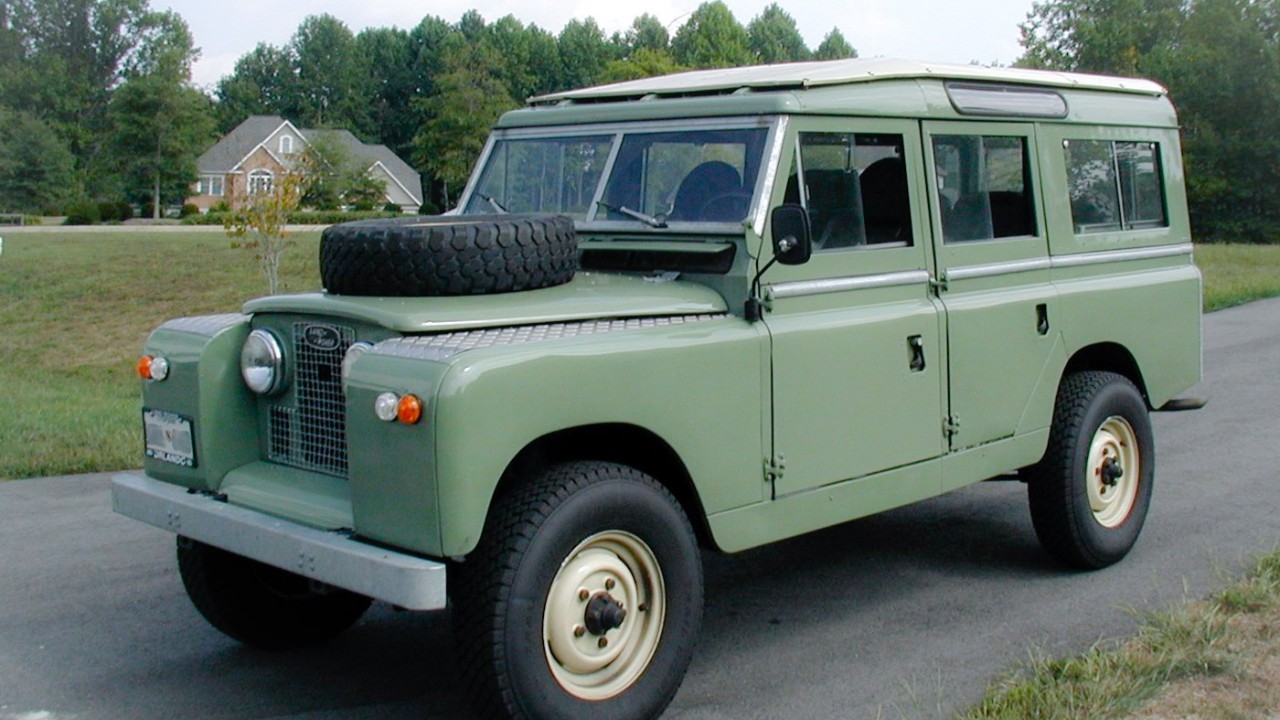
Land Rover’s Series IIA arrived in 1961, and the long 109-inch wheelbase made it a people-carrier. The station wagon came with ten seats as standard and offered twelve as an option. In fact, a twelve-seat layout stayed available on later Land Rovers until 2002.
The recipe was simple and rugged. Aluminum alloy bodywork sat on a box-section steel ladder frame. The usual engines were the 2.25-liter gasoline four and the 2.25-liter diesel. After 1967, long-wheelbase models could also get a 2.6-liter inline-six. Sales peaked in 1969 and 1970 at more than 60,000 a year.
That export record says the most. By February 1968, Land Rover had built just short of 600,000 vehicles, and it shipped more than 70 percent of them abroad. A 1971 car is one of the last IIAs before the Series III. For the full lineage, see our rundown of Land Rover models from the Series I to the Defender. Our advice: buy the best frame you can find, because the aluminum body won’t rust but the steel underneath will.
4. 1986 Mitsubishi Montero
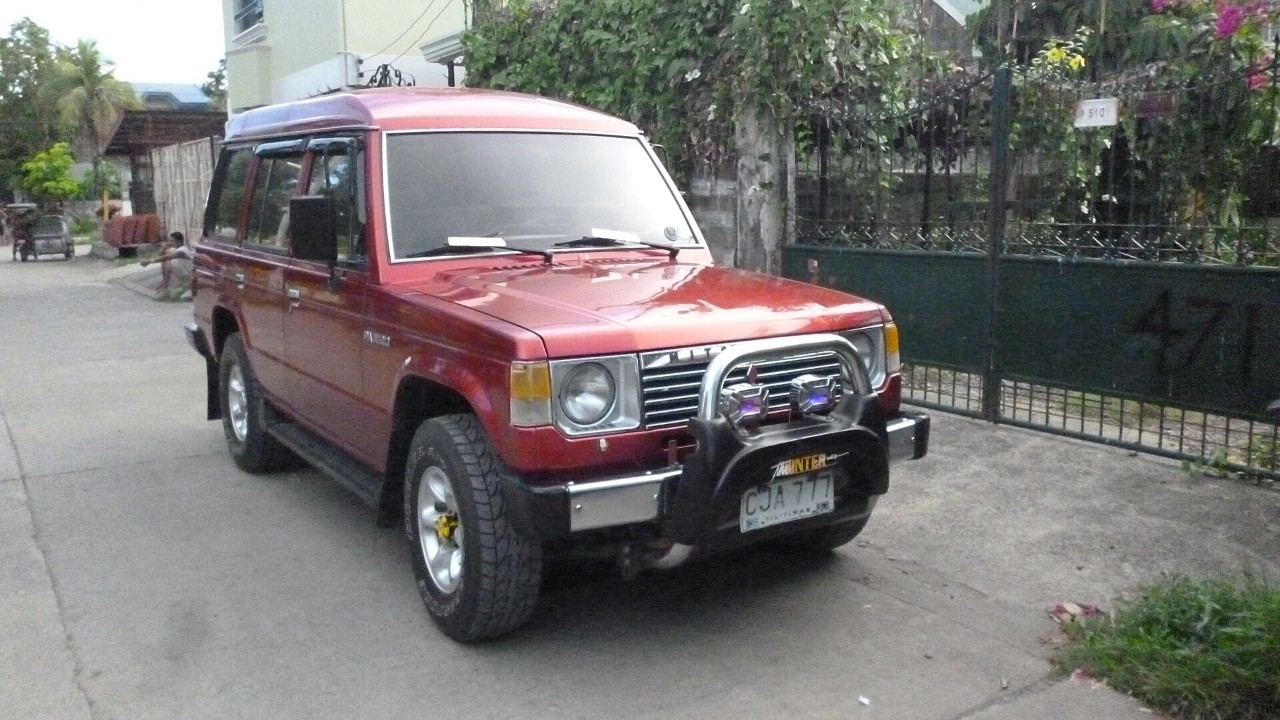
Mitsubishi showed the Pajero at the Tokyo Motor Show in October 1981 and launched it in May 1982. In North America, Spain and Latin America, it wore the Montero name instead. It replaced the Mitsubishi Jeep Delivery Wagon.
The Montero proved itself in the toughest test available. In the 1983 Paris–Dakar, Andrew Cowan won his class in one. A year later, a Pajero finished first in the modified production class and third overall. European versions used a 2.6-liter gasoline four rated at 103 PS. Dodge even sold a rebadged version as the Raider from 1987 through 1989.
Across its generations, the Pajero went on to win the Dakar 12 times overall. That record started with first-generation trucks like this 1986 model. In our opinion, the first-generation Montero is one of the most underrated 4x4s of the 1980s. If you shop for one, look for a rust-free body and service records, since some parts can take patience to find.
5. 1979–1991 Mercedes-Benz 300 GD (W460)
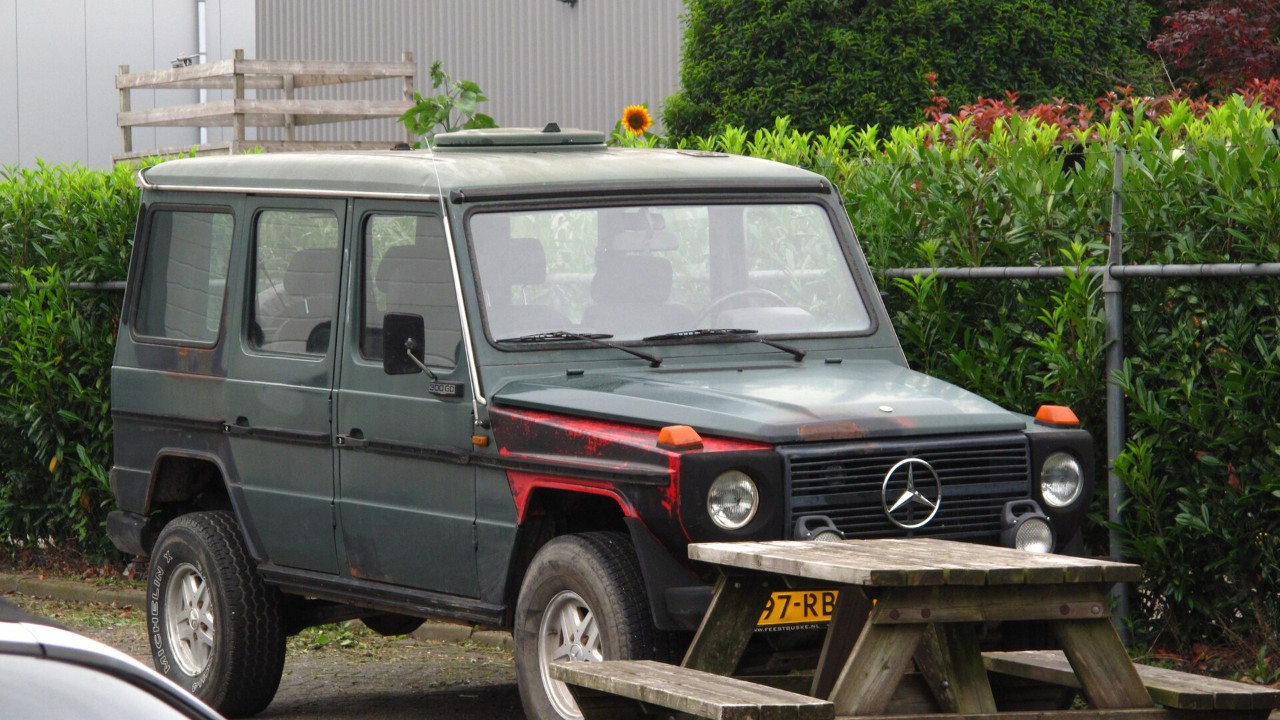
The G-Class started with a 1972 agreement between Daimler-Benz and Steyr-Daimler-Puch of Graz, Austria. Engineers in Stuttgart handled design and testing. Meanwhile, the Graz team planned production, and the truck went on sale in September 1979.
The 300 GD was the slow, steady choice. Its 2,998 cc five-cylinder diesel made 88 PS at 4,400 rpm. As a result, the run from 0 to 100 km/h took 27 seconds. Nobody bought one to win drag races. Armies did buy the G, though. The Argentine Army began using it in 1981, and Peugeot built a licensed French version, the P4.
The basic design has outlived nearly everything around it. For 1990, Mercedes revised the truck heavily and gave it a new W463 chassis code. Even so, the G-Class has become one of the longest-produced vehicles in Daimler’s history, with a span of 46 years, and only the Unimog surpasses it. Our take: an original W460 300 GD is the purest, most mechanical way into that story.
6. 1992–1999 Chevrolet Suburban GMT400
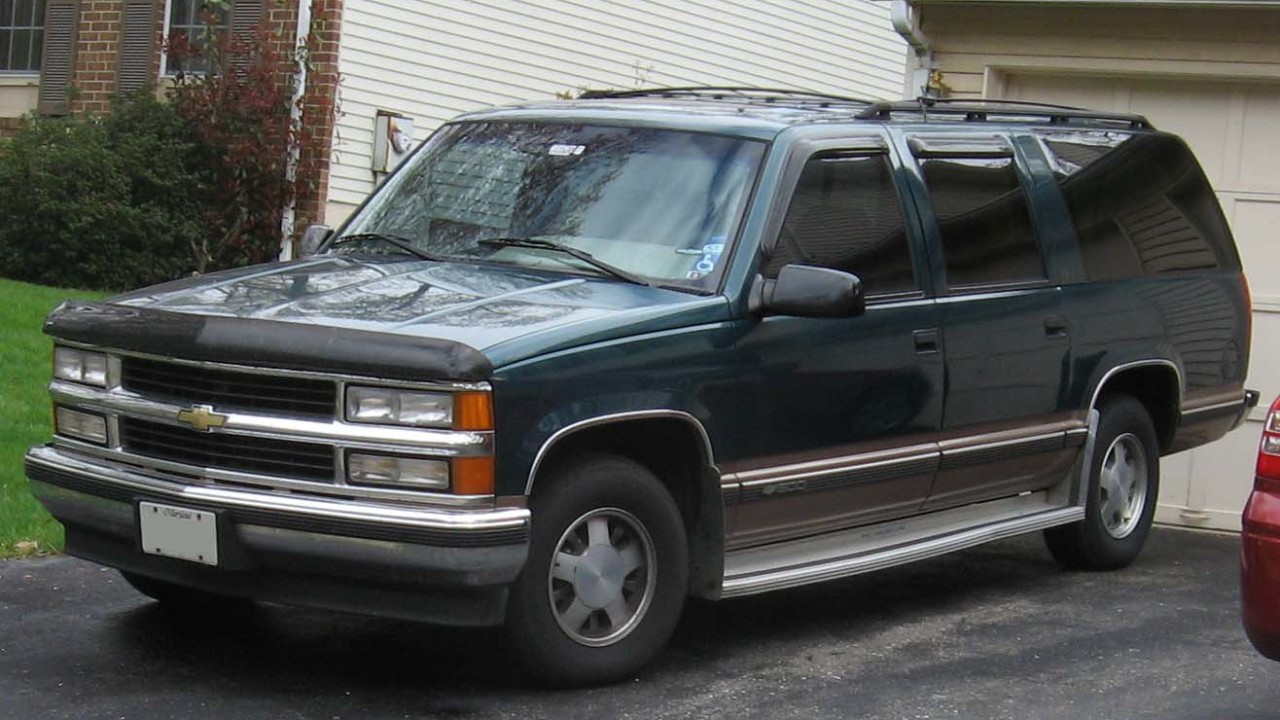
The Suburban is the longest-produced automobile nameplate in the world. Chevrolet began building its all-steel “carryall-suburban” in 1934. By the 1990s, the name meant a full-size family hauler that could also tow.
The eighth generation, built on GM’s GMT400 platform, arrived in December 1991 for the 1992 model year. A 5.7-liter V8 came standard, and 2500-series trucks could get the 7.4-liter V8. Then, for 1994, a 6.5-liter turbodiesel V8 replaced the old 6.2. For 1996, both gasoline engines gave way to updated Vortec versions. If you want the whole history, our guide to 12 Suburban generations covers each one.
We think the GMT400 Suburban is the sweet spot for a used hauler. It combines old-school body-on-frame toughness with fuel injection and modern comfort. Our advice: the 1996–1999 Vortec trucks make the most sense for daily use, and a 2500 with the 7.4 suits heavy towing.
7. 1990–1995 Toyota 4Runner SR5 V6
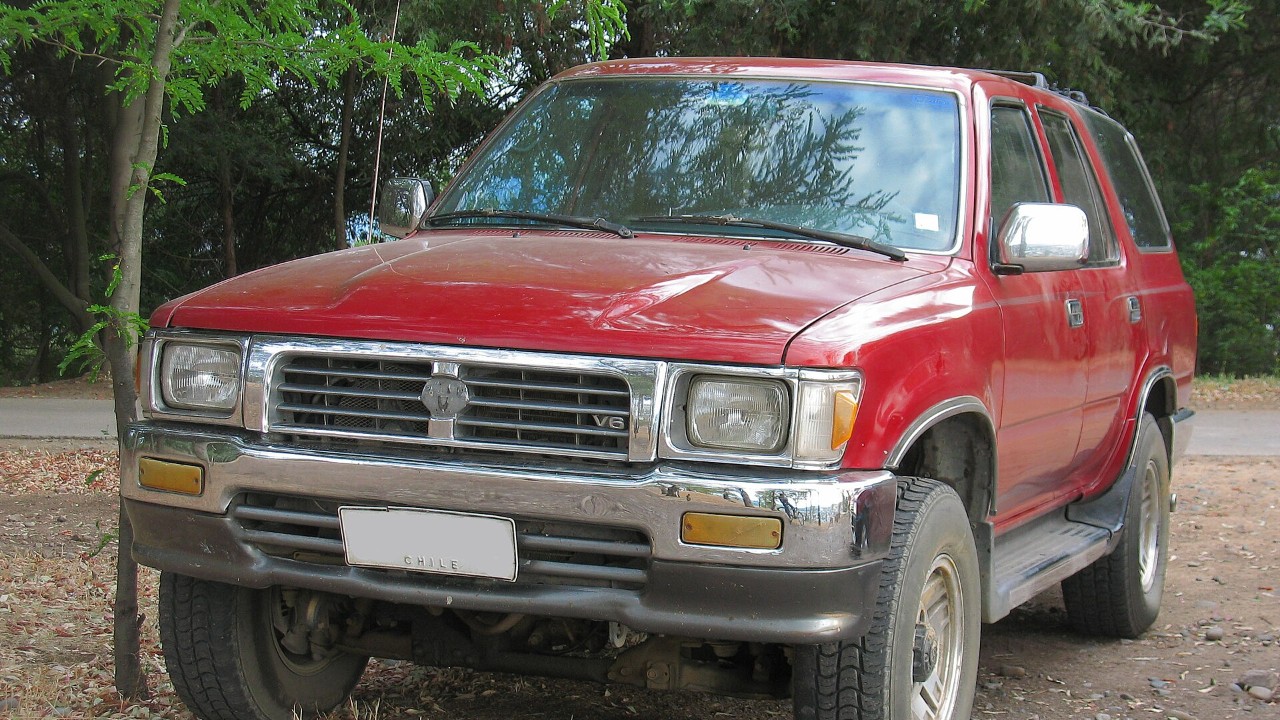
Toyota launched the second-generation 4Runner in 1989 for the 1990 model year. It stayed based on the Hilux pickup, but it gained a new full-steel body. Toyota also dropped the removable top, according to Toyota’s own 40th-anniversary history of the 4Runner.
The SR5 got the 3.0-liter 3VZ-E V6 in the United States. From 1990, it also came with rear-wheel anti-lock brakes. Nearly all second-generation trucks had four doors, and U.S. two-door sales ended in August 1992. One quirk carried over: the rear glass retracts into the tailgate, so you lower the window before you drop the gate.
Toyota’s history counts more than 4 million 4Runners sold worldwide across all generations. The same history notes an iSeeCars.com study that ranked the 4Runner in the top five longest-lasting vehicles. In our view, the second-generation SR5 is where that reputation started. Our advice: check the frame and the service records before you buy.
8. 1997–2001 Jeep Cherokee XJ Sport

The Cherokee XJ debuted for 1984 with a unibody instead of a separate frame. Compared with the full-size Wagoneer, it was 21 inches shorter, six inches narrower, four inches lower and 1,000 pounds lighter, according to Jeep’s own 1980s history. It also swept the “4X4 of the Year” awards from three major off-road magazines.
The engine that made the Jeep Cherokee XJ famous arrived in 1987. Jeep’s 4.0-liter inline-six made 190 horsepower from 1991. Then, for 1997, the XJ got a major refresh with new styling, a steel liftgate and a new dashboard. The Sport trim ran from 1988 to 2001 with cloth-and-vinyl seats and air conditioning.
Toledo, Ohio, built the XJ until June 2001. In our opinion, a 1997–2001 Sport with the 4.0 and Command-Trac part-time four-wheel drive is the one to buy. It pairs the later interior with the drivetrain we’d trust most. If you find a clean one, check the floors and the cooling system first.
9. 1992–1996 Ford Bronco XLT
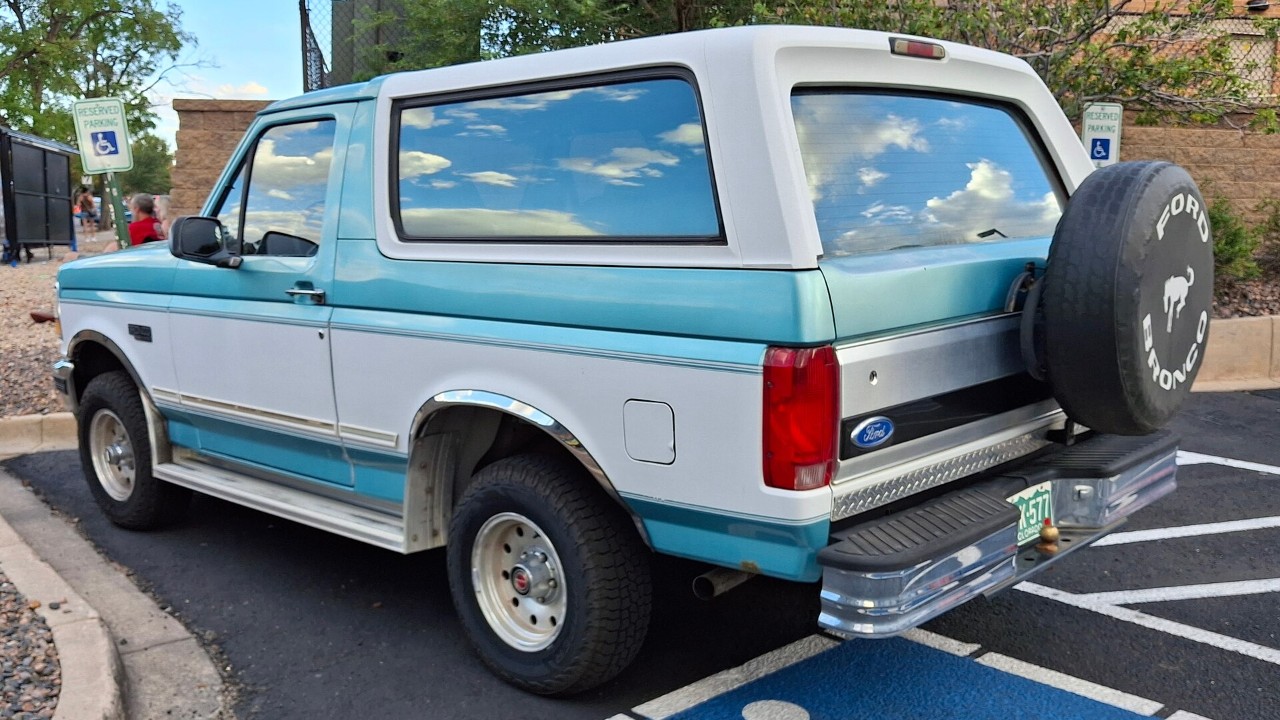
The fifth-generation Bronco arrived for 1992, designed alongside the ninth-generation F-150. It carried over the 4.9-liter six, the 5.0-liter V8 and the 5.8-liter V8. Then, for 1994, Ford dropped the six and made the Bronco a V8-only truck.
Ford also made the last Broncos safer. Four-wheel anti-lock brakes replaced rear-wheel ABS for 1993, and a driver-side airbag arrived for 1994. Rear passengers got three-point belts mounted to the hardtop, which ended the top’s marketing as removable. Meanwhile, the XLT got optional leather, and monochrome XLT Sport models ran from 1993 to 1996.
Production stayed strong right to the end, with 37,693 built in 1995 and 34,130 in 1996. In our view, that says buyers trusted it. Our advice: a 1994–1996 XLT with the 5.0 V8 is the easiest to live with. The last fifth-generation Bronco rolled off the Wayne, Michigan, line on June 12, 1996, and Ford brought the name back to that same plant for 2021.
More from Fast Lane Only