The Ford Econoline was the best-selling full-size van line in the United States from 1980 until it retired. That run says something simple about vans. People who buy them for work keep them working, often far past the point where a family car would have been sent to the crusher.
Vans live hard lives. They haul tools, ladders, church groups, campers and ambulance crews. Many get loaded to the roof, idled for hours and parked outside all winter. As a result, most of them wear out and disappear. Some, however, seem to shrug it off for decades.
These twelve are our picks for the vans that seem nearly impossible to kill. Their toughness is our opinion, built on what we know of their design and their working lives. The years, engines and production figures come from the makers’ records and published model histories, plus a few high-mileage survivors documented in junkyard reports.
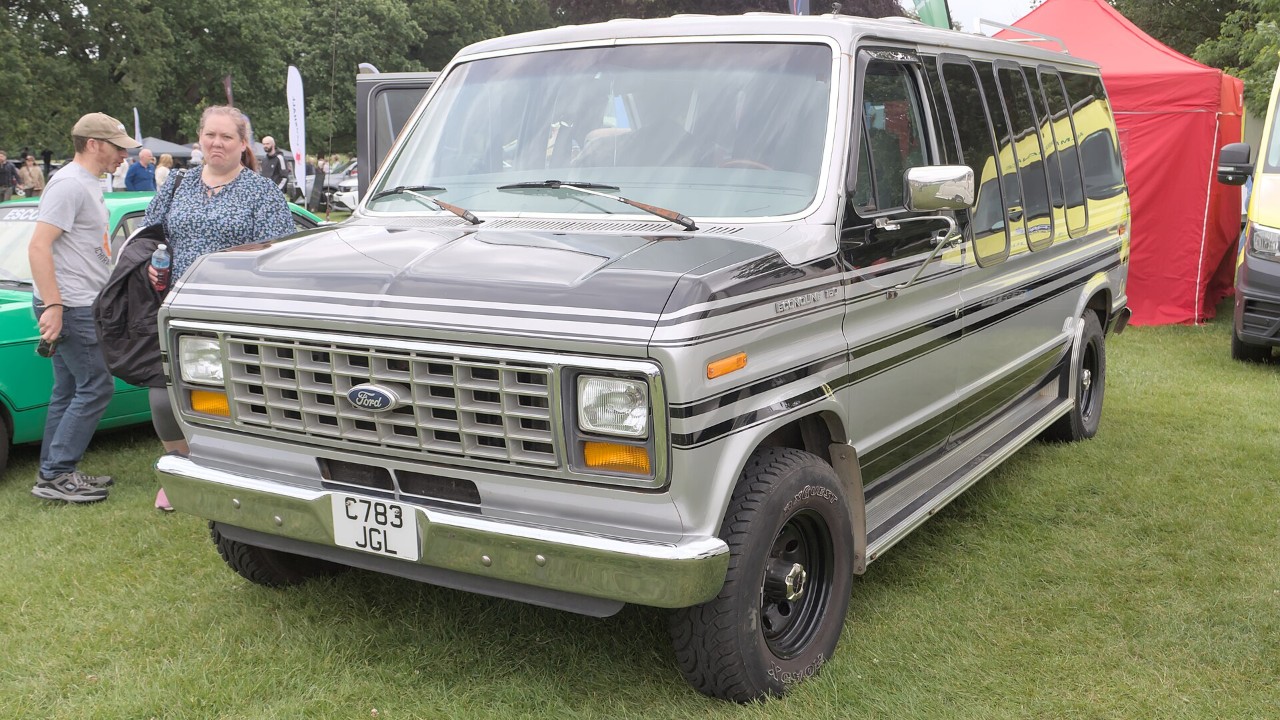
1. 1986 Ford E-350 Econoline Custom Superwagon
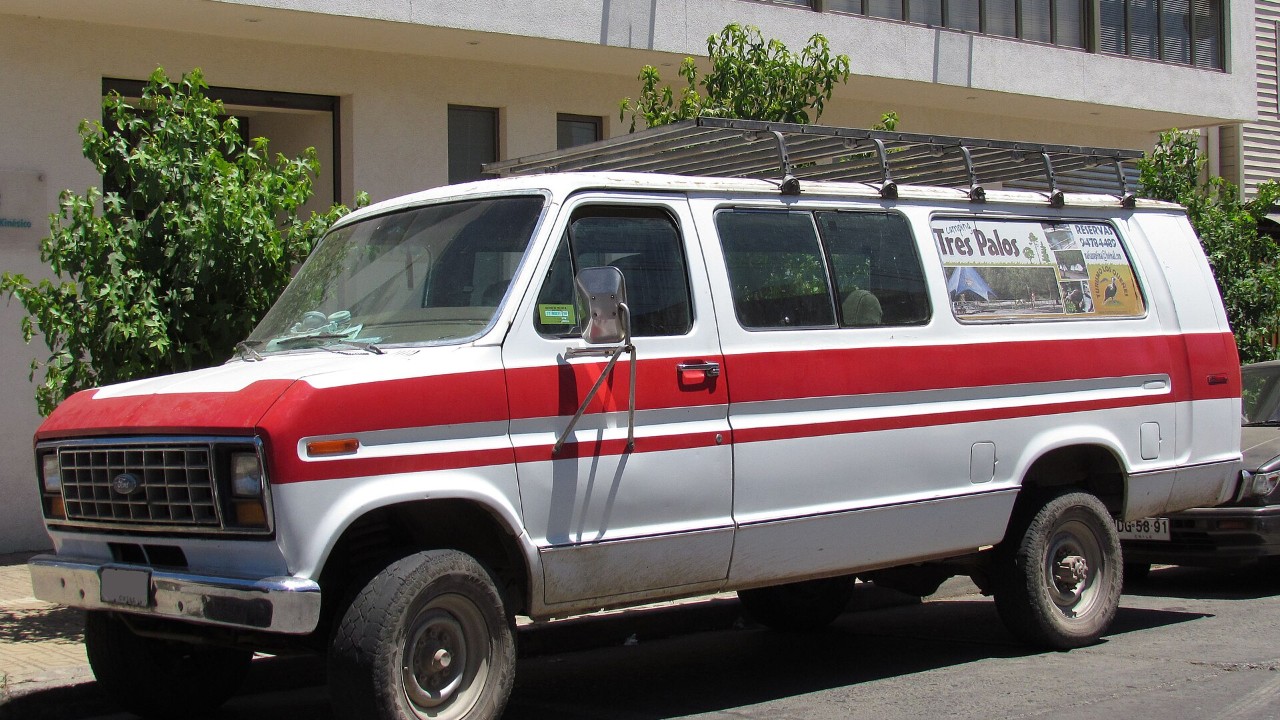
The third-generation Ford Econoline arrived for 1975 on an all-new chassis with body-on-frame construction. That frame mattered. It let Ford sell the Econoline as a cutaway chassis for ambulances, small buses and box trucks. The long-wheelbase version rode on 138 inches, which was the longest full-size van wheelbase on sale until 1990.
On the Ford Econoline, the Superwagon name points to the 1978 Super Van and Super Wagon. These added a rear body extension for extra cargo or up to 15 passenger seats. From 1983, buyers could also order a 6.9-liter IDI diesel V8 built by International Harvester. In 1988, that engine grew to 7.3 liters. For that reason, we see this generation as the backbone of the American work van.
In our view, a 1986 E-350 Superwagon is the template for every hard-working van that followed. It is simple, heavy and easy to fix with common Ford parts. We have also looked at the vans from the 1970s that became cultural icons, and the Econoline was central to that story. Few vans have earned their reputation so honestly. In our eyes, a well-kept Ford Econoline Club Wagon is the most practical way to move a whole team.
2. 2000 Chevrolet Express 2500
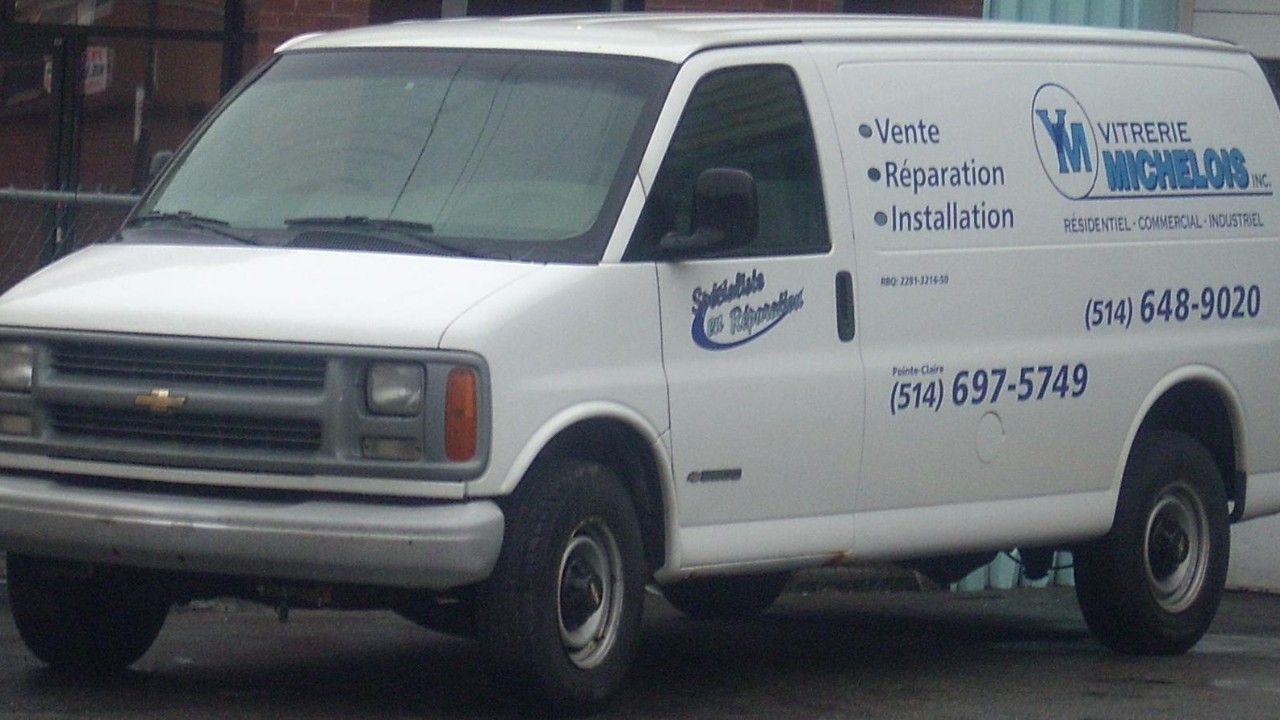
The Express replaced Chevrolet’s G-series van for 1996. It was the first all-new design for GM’s full-size van line since 1971, and it was built tough from the start. The GMT600 chassis uses a full-length ladder frame with boxed front rails. Wheelbases measured 135 inches and, on 2500 and 3500 models, 155 inches. In other words, it was designed like a truck first.
Engine choices ran from a 4.3-liter V6 to a 7.4-liter V8. GM also offered a 6.5-liter turbo-diesel V8, the first turbocharged diesel in a GM van. Heavy-duty 2500 and 3500 vans used the stout 4L80-E automatic. Production began in January 1996 at Wentzville, Missouri. Since then, GM has built more than three million Express and Savana vans.
Our take: the early Express is the definition of “set it and forget it,” much like the Ford Econoline before it. Its basic design has been in production since 1996, and that tells you how little needed fixing. Fleet buyers kept ordering it year after year. If you need a cheap used work van, a well-serviced 2500 with the V8 is hard to beat. We would happily trust one with a full load of tools.
3. 2005 GMC Savana 3500
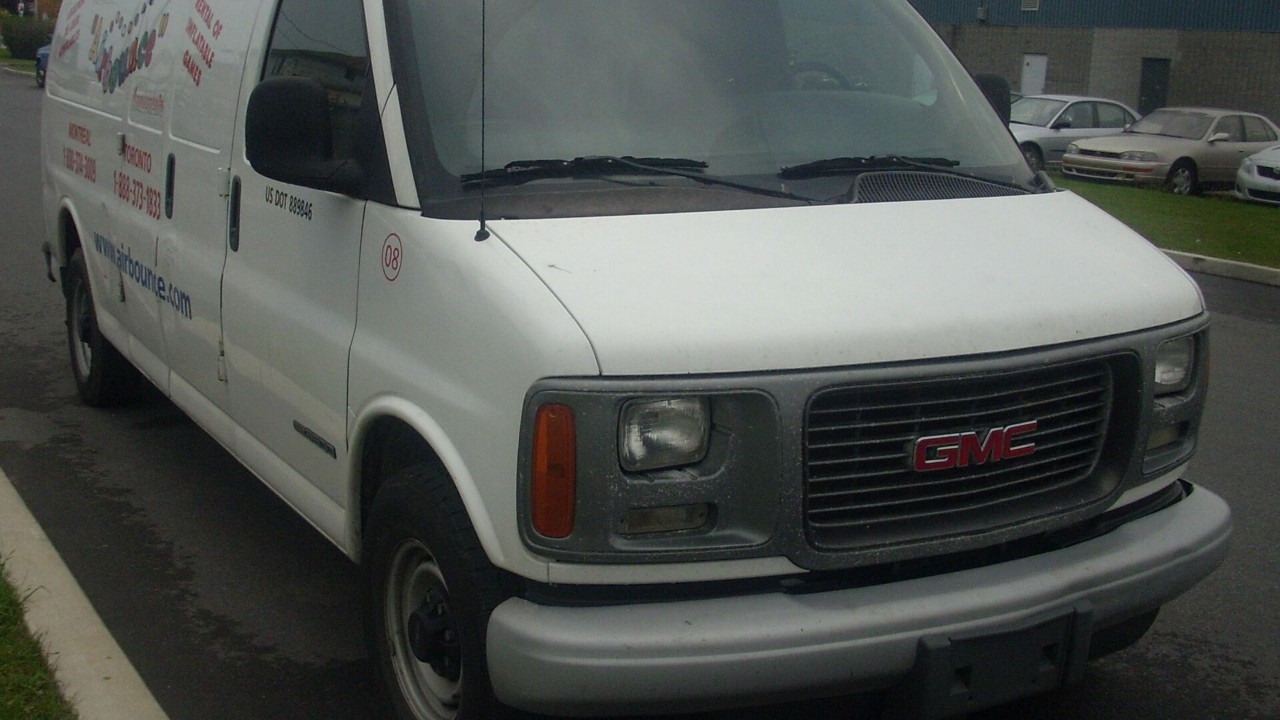
GMC introduced the Savana for 1996 to replace the Vandura and Rally. It is essentially the same van as the Express, with its own grille and GMC badges. The 2003 revision brought frame and chassis upgrades plus a new front end. Then, for 2005, the 3500-series vans got standard stability control. However, GM kept its 2003–2014 all-wheel-drive option to 1500 and light-duty 2500 vans with the 5.3-liter V8.
The heavy-duty 3500 is where this van earns its keep. For 2005, these trucks offered a 4.8-liter or a 6.0-liter V8. Heavy-duty models sit above 8,500 pounds gross vehicle weight rating. GM also sells the 3500 as a cutaway, so you will find the same bones under ambulances, buses, RVs and delivery bodies.
We think the Savana 3500 seems nearly impossible to kill because it was never asked to be anything else. In fact, GM kept this basic design going for so long that it passed the 1971–1996 Chevrolet Van in production years. For a big family or a camper conversion, a 2005 Savana 3500 Wagon is a serious long-haul tool. Just be sure to budget for brakes and tires, since these vans are heavy.
4. 1996 Dodge Ram Van 2500
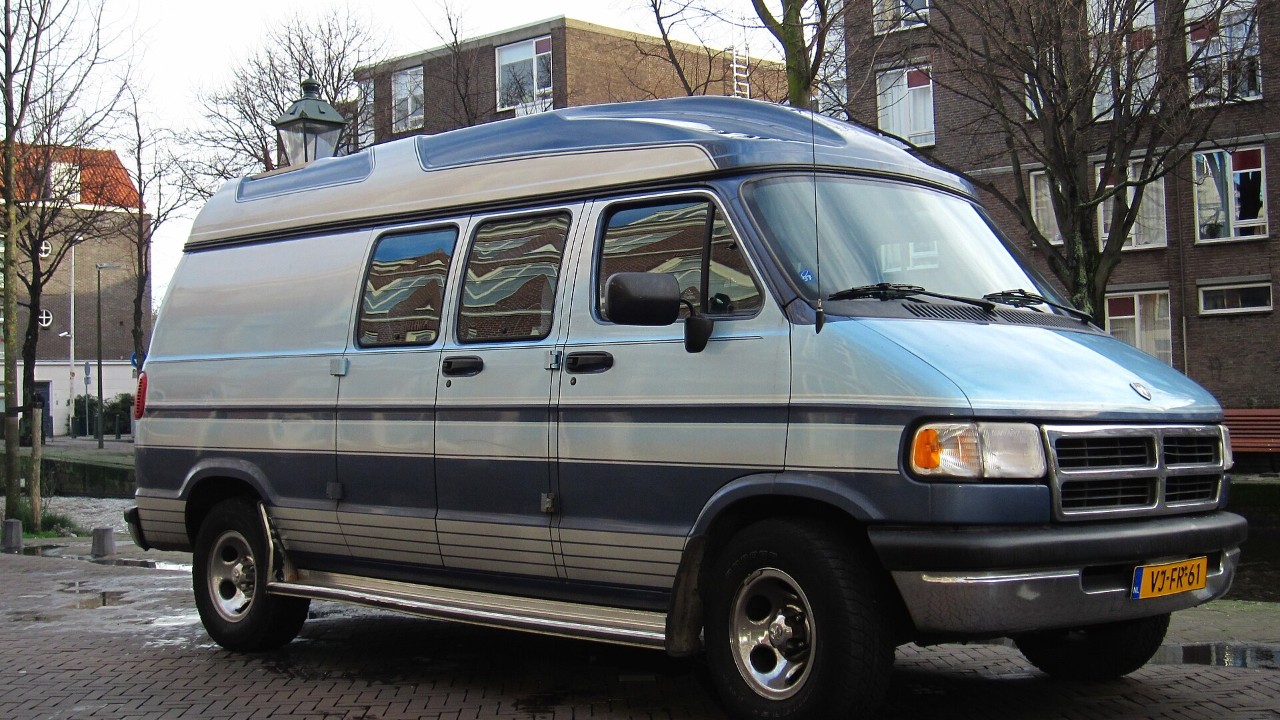
Dodge built its B-series vans from 1971 to 2003. For that whole run, they came from the Pillette Road Truck Assembly plant in Windsor, Ontario. Early vans wore Tradesman and Sportsman badges. Later, the Ram Van name took over. For 1994, Dodge renamed the models B1500, B2500 and B3500 to match the Ram pickups. Later, for 1998, the powertrain moved forward under a longer hood.
The third-generation vans used Chrysler’s Magnum engines. The 5.2-liter V8 made 230 horsepower, and the 5.9-liter made 250. Dodge also has a claim to the stretched passenger van. It introduced the extended Maxivan and Maxiwagon in 1971, and the Maxiwagon could seat 15 people. In the mid-1970s, these vans were also a favorite base for custom builds.
In our opinion, the 1996 Ram Van 2500 is the overlooked member of the big-three van club. It is simple, and its Magnum V8s are common and familiar to any mechanic. Its 33-year production run is proof that Dodge got the basics right early. Finally, in 2003, the Dodge Sprinter replaced it, which ended an era for Windsor-built vans.
5. 1995 Chevrolet Astro AWD
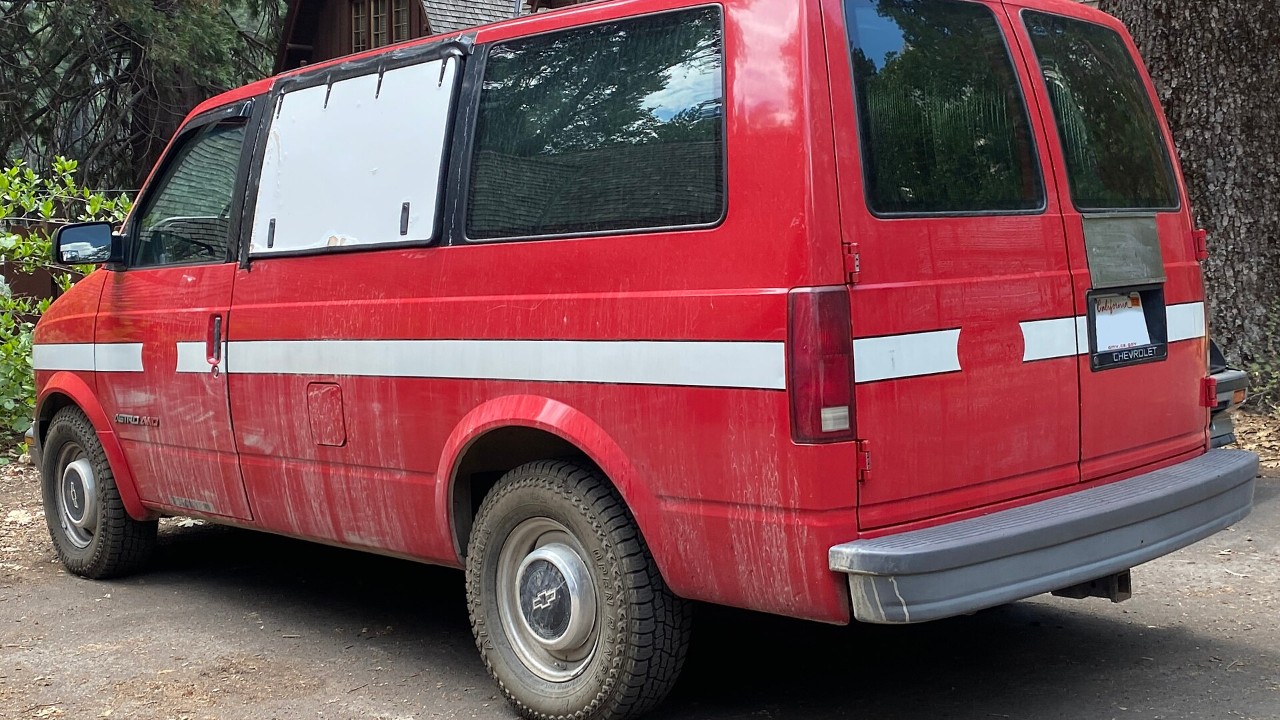
The Astro was a midsize, rear-drive van built in Baltimore from 1985 to 2005. In 1990, Chevrolet added all-wheel drive, giving it real all-weather traction. The 4.3-liter V6 eventually reached 200 horsepower. Properly equipped, an Astro could tow up to 5,500 pounds. In addition, GMC sold a twin called the Safari, a name borrowed from Pontiac.
Real-world proof of its toughness exists. The Truth About Cars documented a 1991 Astro cargo van in a California junkyard with 425,127 miles. It had spent most of its life as a delivery truck. The writer notes that its powertrain was all S-10 hardware and its front suspension came from GM’s B-body wagons.
Our take: that parts-bin approach is exactly why Astros last. Because of it, repair parts are easy to find. Everything underneath is shared, proven truck hardware. GM built about 3.2 million Astros and GMC Safaris before the last van left the line on May 13, 2005. For a family van with a truck’s heart, a clean AWD Astro is a smart buy. It is also easy to work on in a home garage.
6. 1993 Toyota Previa
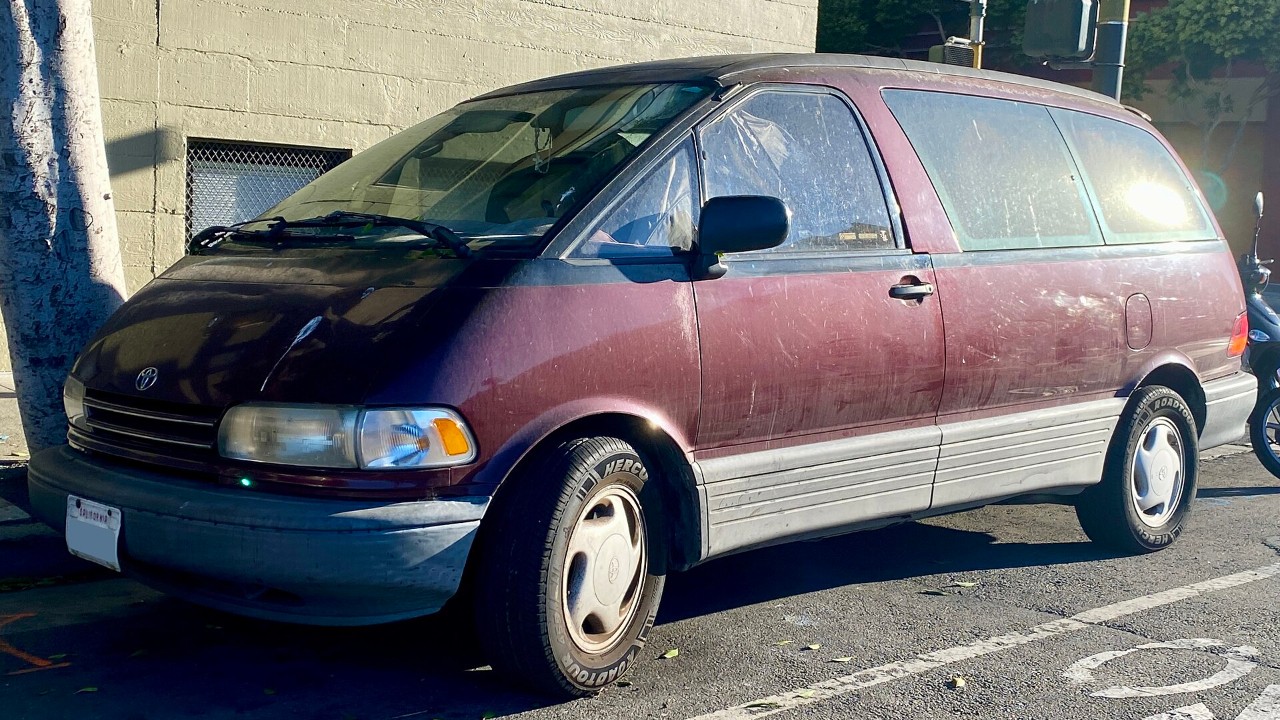
The Previa looked like an egg, and it was built like nothing else in its class. Toyota laid its 2.4-liter four almost flat under the front seats, tilted 75 degrees from vertical. That mid-engine layout freed up a lot of cabin space. In base form, the 2TZ-FE engine made 133 horsepower. Buyers could also choose All-Trac all-wheel drive. Normally, its viscous-coupled center differential split torque 50/50 front to rear.
Toyota sold the Previa in the U.S. from March 1990 until 1997. Its long-life reputation has real evidence behind it. The Truth About Cars found a 1994 Previa LE in a Denver-area yard with 376,407 miles. That van appeared to have spent its final days working as an electrician’s rig.
In our view, the 1993 Previa is the best mix of oddball engineering and Toyota stubbornness. It predates the supercharged engine, which arrived for 1994, so it is a little simpler. The catch is that the engine lives under the front seats, so service takes patience. Even so, we would take a well-kept Previa over many newer minivans. It is roomy, clever and fun to own.
7. 1980 Mercedes-Benz 207 D TN
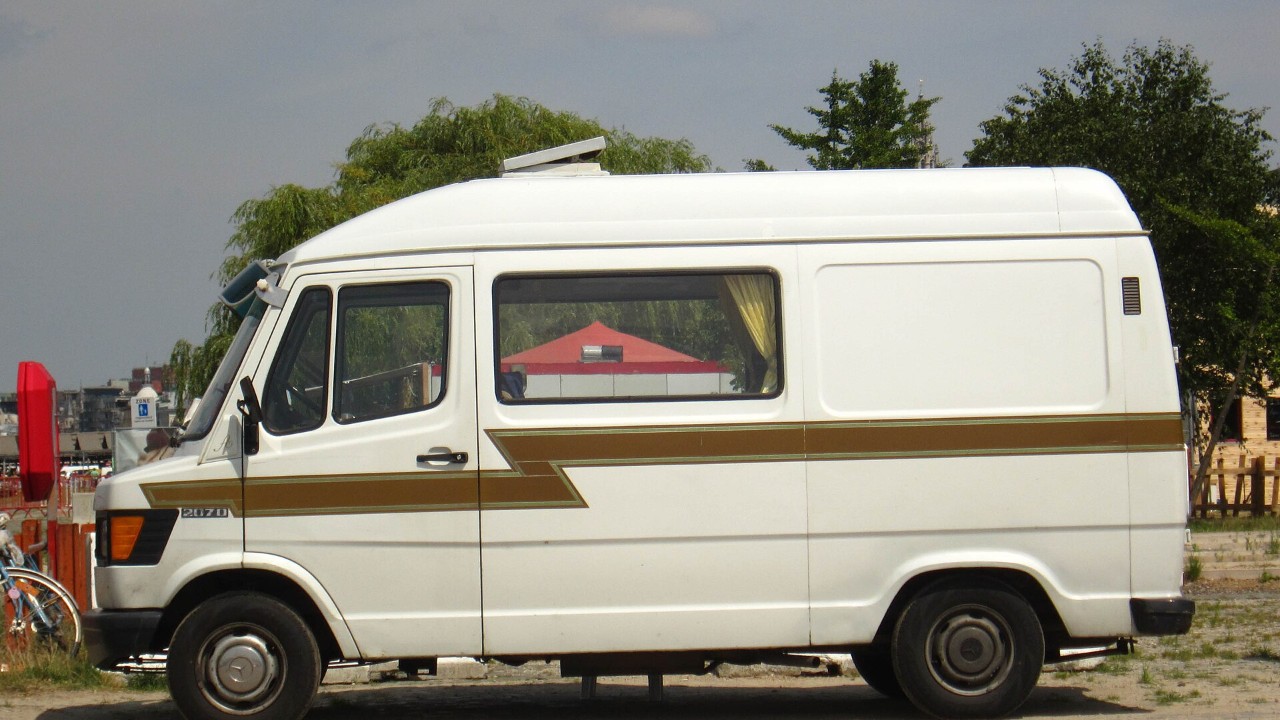
Mercedes-Benz launched its TN van in April 1977. It was also known as the Bremer Transporter, after the Bremen plant where it was first built. Production later moved in stages to Düsseldorf. The 207 D was one of the original models, powered by a 2,404 cc four-cylinder diesel rated at 65 PS.
That is not a lot of power, and that is part of the point. With only 65 PS from 2.4 liters, the OM616 diesel is hardly working hard. The TN lineup grew to include heavier 307 D, 407 D and 409 D models. In total, Mercedes built 970,000 of these vans over 18 years. In 1995, the first Sprinter replaced it. After all, 18 years is a long life for any commercial van.
Our take: the 207 D is the van you buy if you never want to rush and never want to stop. It is slow on the highway, yet that simple diesel rewards patience with long service. In our opinion, a solid TN is one of the most honest European vans ever built. It does one job, and it keeps doing it.
8. 1999 Toyota HiAce H100

The fourth-generation HiAce appeared in August 1989, and its main Japanese run lasted until August 2004. Toyota built it in Japan and Portugal, plus Malaysia from 1998 to 2004. Chinese makers also produced versions, including the long-running Jinbei Haise. Body styles ranged from standard and long-wheelbase vans to the 15-seat Commuter minibus. Also, buyers could get part-time or full-time 4WD, depending on the market. Later, a Y100 truck version ran from May 1995 to 2001.
Its diesels are the reason it earned its reputation. The 2.8-liter 3L was at first the only engine for Japanese 4WD models. With the August 1993 facelift, the 3.0-liter 1KZ-TE turbo-diesel arrived in Japanese HiAce Wagons. Toyota even built the HiMedic ambulance version from 1992 to 1997, with a 4.0-liter V8 shared with the Celsior.
In our opinion, the HiAce H100 is the van the rest of the world quietly runs on. It carried passengers, patients and cargo on several continents. A 1999 model is a great example, with the later diesels and years of updates. If you can import one legally, it is one of the toughest vans you could own.
9. 1972 Volkswagen Type 2 Westfalia
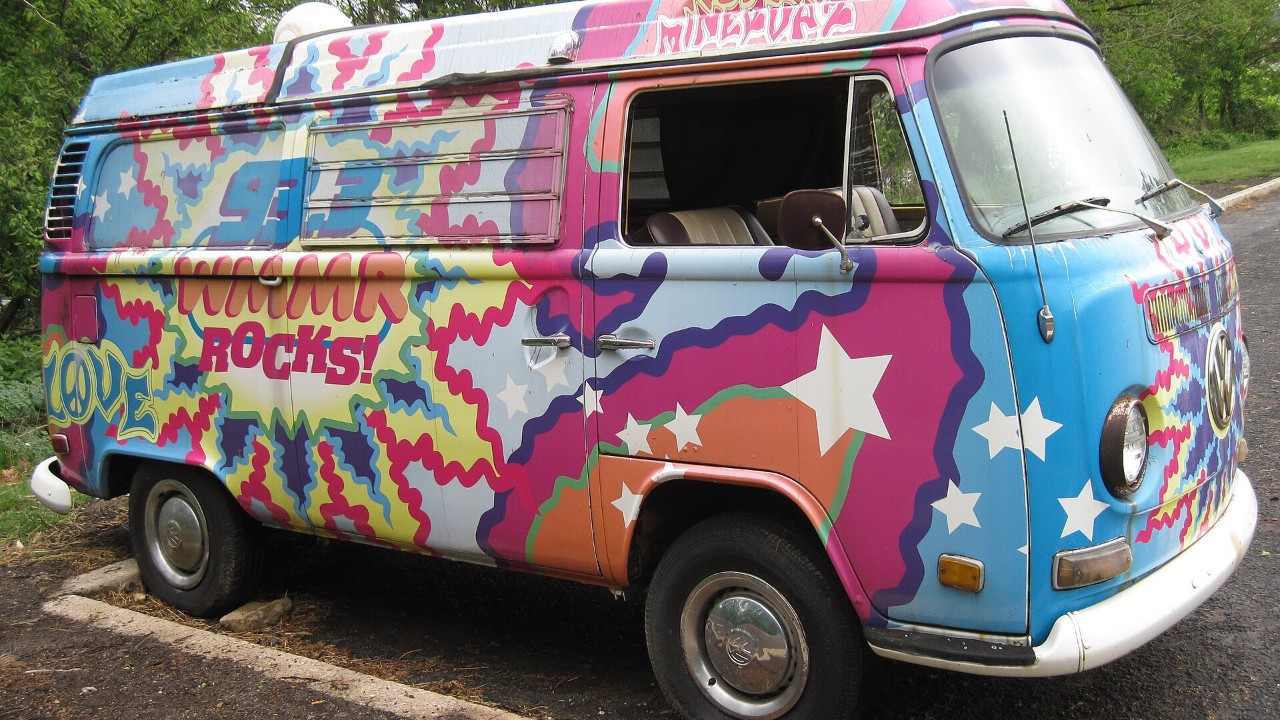
The bay-window Type 2 brought a bigger engine option for 1972. The new 1.7-liter Type 4 “pancake” engine became standard on U.S. and Canadian models. It was rated at 66 horsepower with the manual and 62 with the automatic. Westfalia turned many of these vans into campers, often with an optional pop-up top. By comparison, the 1971 van’s 1.6-liter engine was rated at just 50 horsepower.
The second-generation design lasted far longer than anyone in 1972 could have guessed. Mexico built it from 1970 to 1994, and it switched to a water-cooled 1.8-liter engine there in 1987. Meanwhile, Brazil kept building the T2 until December 31, 2013. Stricter safety rules, including required airbags and anti-lock brakes, finally ended it. The farewell was a run of 600 Last Edition vans.
Our take: an air-cooled Westy will never be fast, but it keeps coming back from the dead. Parts are everywhere, and the engine is simple enough to rebuild at home. We have written about the rise of camper vans and van life culture, and this van sits at the center of it. A 1972 Westfalia is the classic way in.
10. 1988 Volkswagen Vanagon Syncro
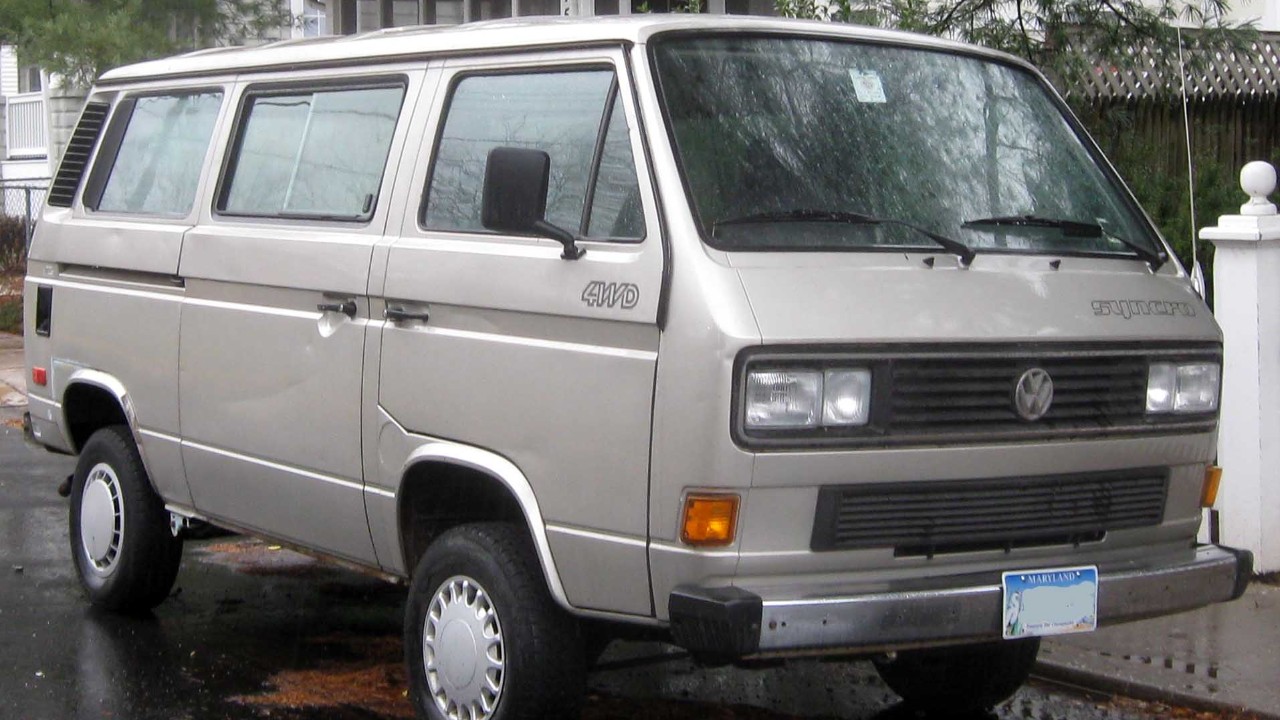
The Vanagon Syncro started production in late 1984 and made its official debut in January 1985 at the Brussels commercial vehicle show. Volkswagen did not build the four-wheel-drive versions in Hannover. Instead, Steyr-Daimler-Puch added the system in Graz, Austria, and kept building Syncros there until 1992.
U.S. vans of this era used the water-cooled 2.1-liter Wasserboxer flat-four. Its 95-horsepower version stayed in use until Vanagon imports to the U.S. ended in 1991. Besides that, Volkswagen listed a 90-horsepower version and a 112-horsepower one for European markets without catalytic converters. As a result, a 1988 Syncro gives you the mature version of the engine with all-weather traction. The T3 platform itself outlived its German run, too. Production continued in South Africa until June 2002.
We think the Syncro seems nearly impossible to kill because owners refuse to let it die. These vans have become rolling projects, rebuilt again and again. In our view, a well-sorted 1988 Syncro is one of the most capable camping vans ever sold here. Expect to search hard for a rust-free one, though, and to keep up with maintenance.
11. 2004 Dodge Sprinter
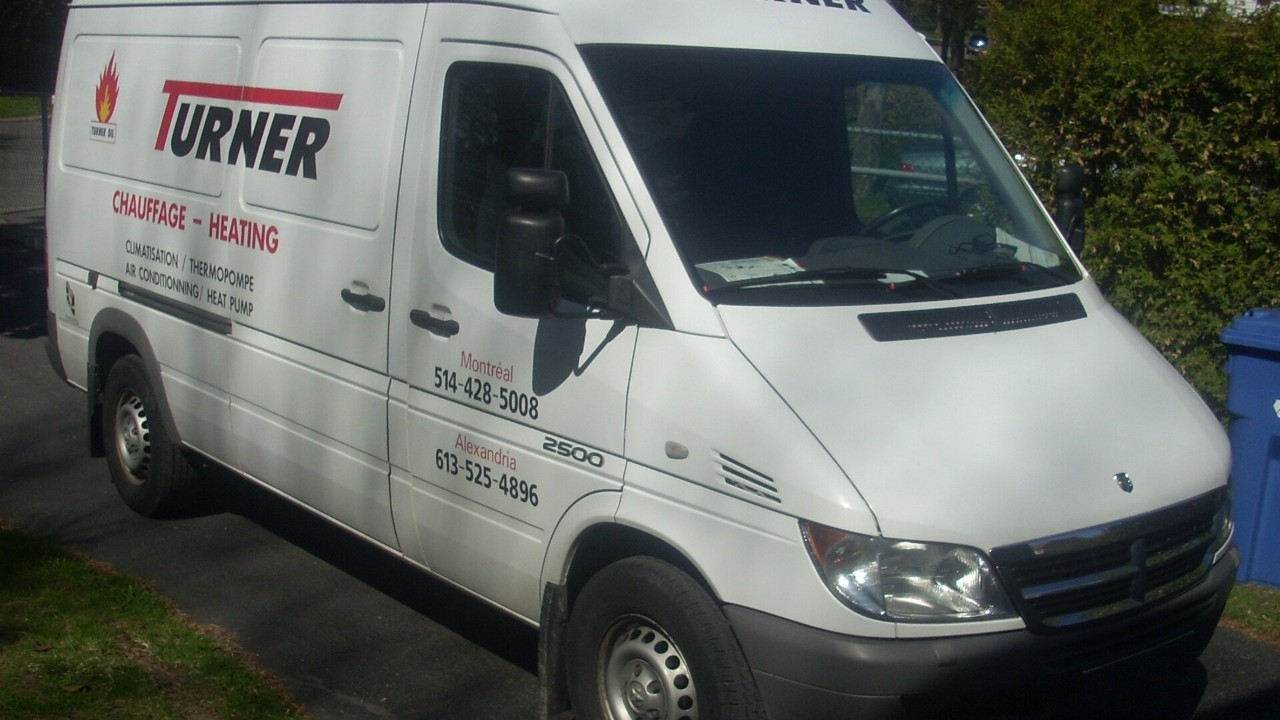
The Sprinter launched in Europe in 1995 to replace the old Mercedes T1 van. In North America, it first wore Freightliner badges. Dodge branding followed in 2003. To avoid the “chicken tax” on imported vans, Mercedes built cargo versions in Düsseldorf, took them partly apart and shipped them to Gaffney, South Carolina, for reassembly.
Before that, 2002–2003 Sprinters used the earlier OM612 engine. From 2004 to 2006, U.S. Sprinters used the OM647 version of a 2.7-liter five-cylinder diesel. It was rated at 154 horsepower and 243 lb-ft of torque. The 3500 High Roof rode on a 158-inch wheelbase. That 3500 High Roof carried an estimated 21 mpg, which is impressive for a van that size.
In our opinion, the 2004 Dodge Sprinter changed what Americans expected from a work van. In short, it made a tall European diesel van normal here. Its diesel needs proper care and the right oil. However, a cared-for example can keep running for a long time. We would pick one over many gas vans of the era for fuel economy and space alone.
12. 2015 Nissan NV3500
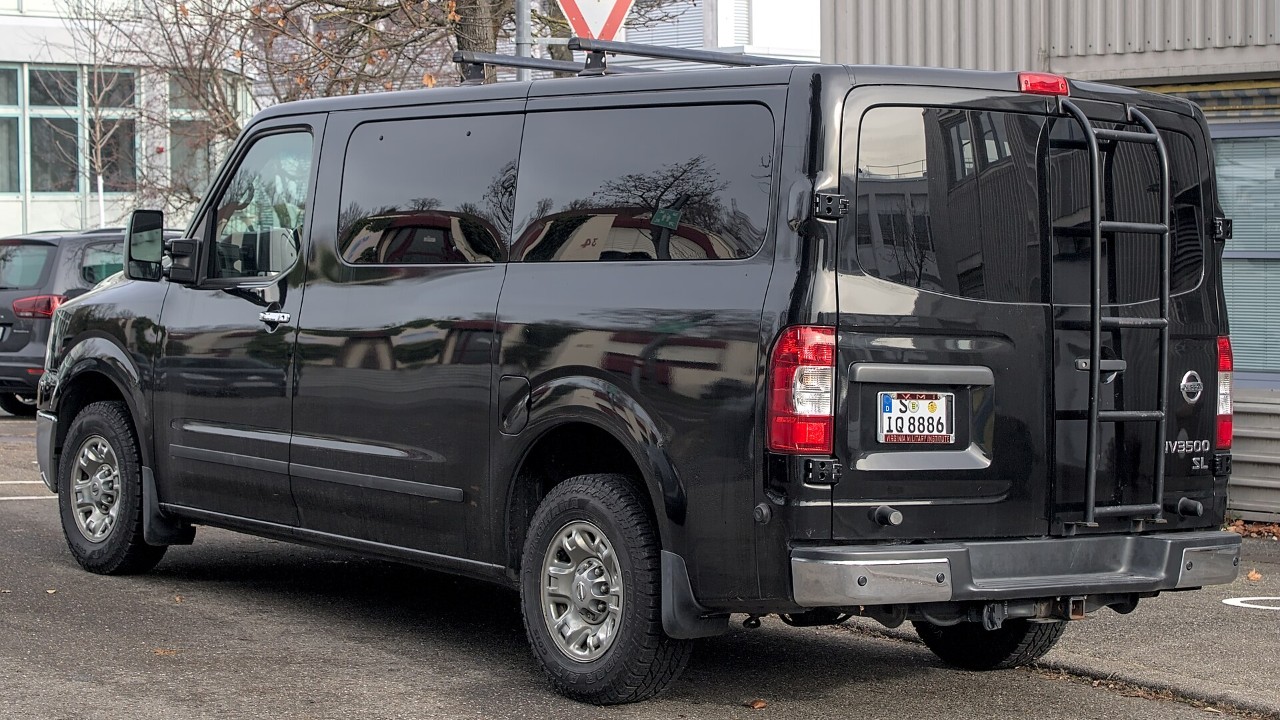
Nissan’s NV was a full-size van built for North America, and it came from the same F-Alpha platform as the Titan pickup. Nissan built it in Canton, Mississippi, and in Aguascalientes, Mexico. The base 4.0-liter V6 made 261 horsepower. The optional 5.6-liter V8 made 375 horsepower. In passenger form, the NV3500 seated up to 12 people.
The NV’s long, pickup-style hood is a big part of its appeal. In our view, keeping the engine out front makes routine service far less of a chore. Also, cargo models came in low-roof and high-roof forms, with the high roof listed at up to 106 inches tall. Production ended in mid-2021, and sales continued through the end of the year.
Our take: the NV3500 is the newest van on this list, and it already has the right recipe. A Titan-derived platform, a big V8 and that pickup-style nose are all good signs. Nissan built the last NV vans in 2021, so used ones are now the only way to get one. In our view, that makes a clean V8 example worth hunting down.
More from Fast Lane Only