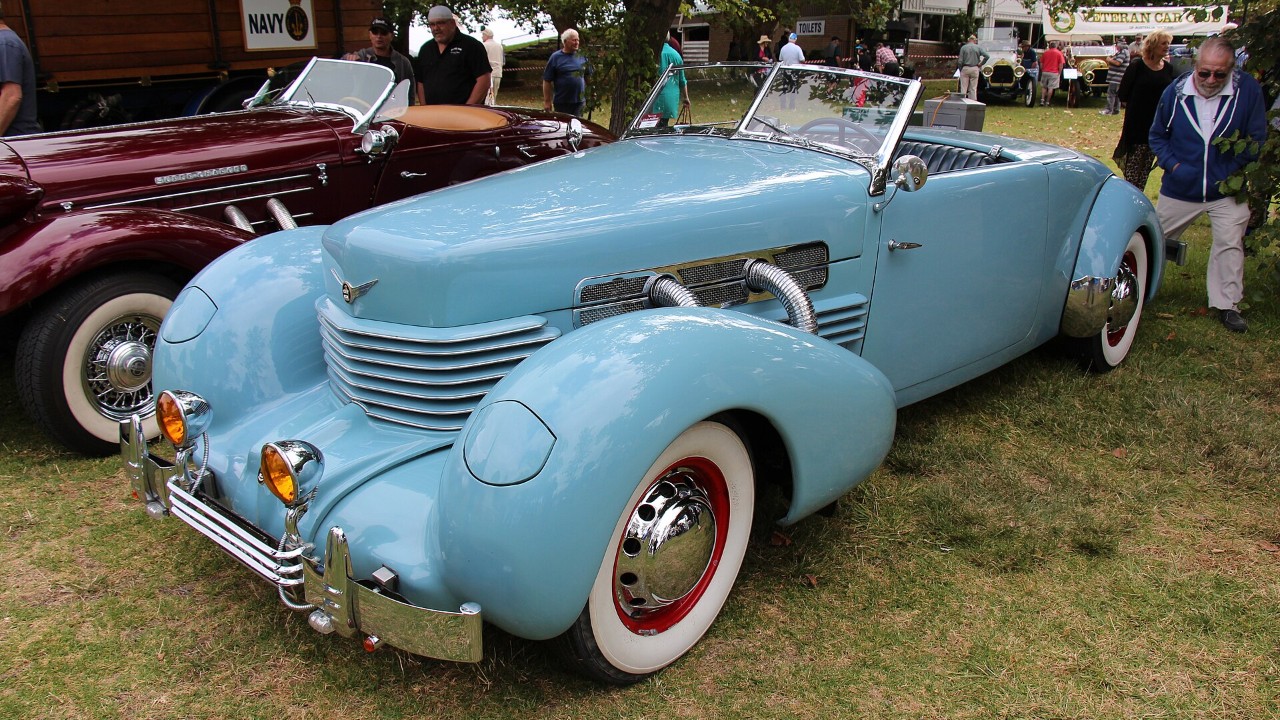
The 1930s gave car shows their best headliners. Within a few years, American and European makers built V12 and V16 luxury cars, supercharged speedsters, and a front-drive Cord 812 Supercharged cabriolet with headlights that cranked out of its fenders. They did it while the Depression squeezed buyers hard.
Because money was tight, many of these cars sold in tiny numbers, and some never reached a showroom at all. Yet they still pull a crowd whenever one rolls onto a show field, because nothing built since looks quite like them.
These are our picks for the 1930s cars that impress the most in person, and the ranking is our opinion. However, the figures behind them come from museum records, auction houses and the makers’ own histories.
1. 1937 Cord 812 Supercharged Cabriolet
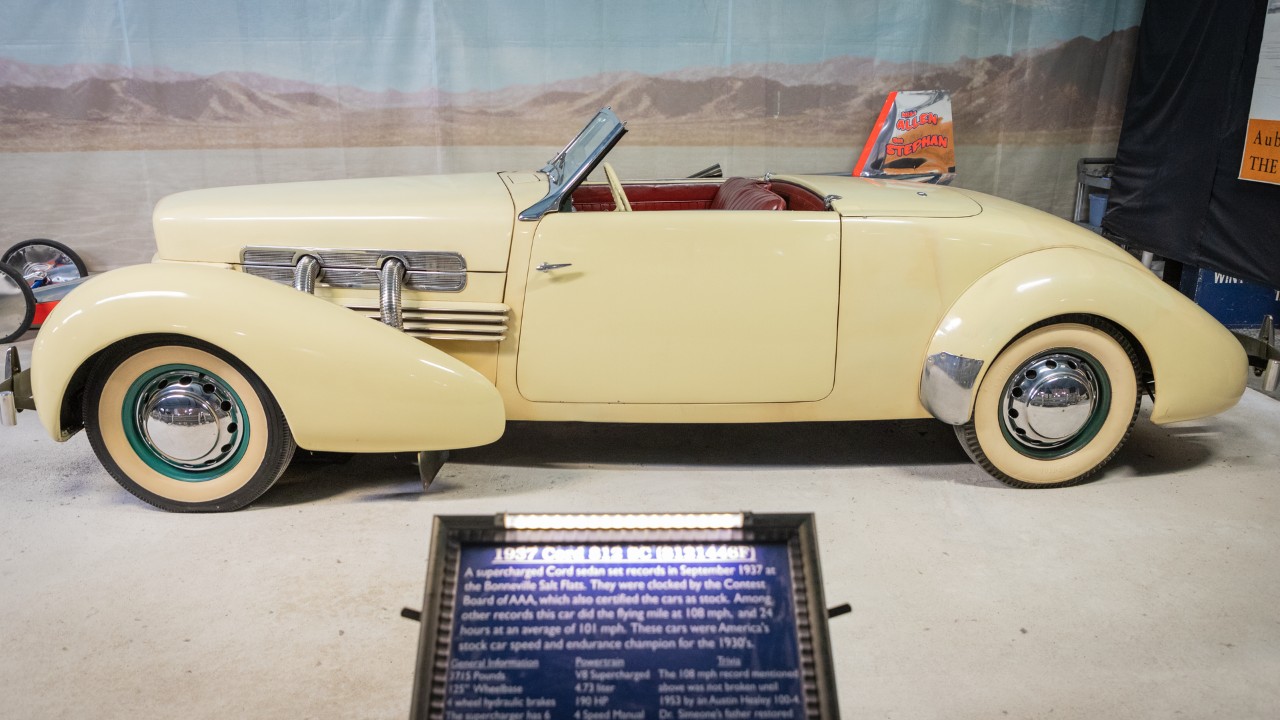
Gordon Buehrig led the team that styled the Cord 810 and 812, with Vince Gardner and Alex Tremulis among his designers. Unlike most rivals, the car drove its front wheels through a 4.7-liter Lycoming V8. Its headlamps also hid inside the fenders until the driver turned hand cranks on the dashboard.
The supercharged cars are easy to spot. Chrome exhaust pipes sweep out of each side of the hood, a feature only the blown cars wore. Speed backed up the looks, too. A supercharged Cord sedan set a flying-mile record of 107.66 mph at Bonneville, according to the Simeone Foundation Automotive Museum.
Cord built only 2,972 of the 810 and 812 before production ended in 1937. In our view, the Cord 812 Supercharged cabriolet wears the most futuristic shape of the decade. Its running gear even underpinned the one-off 1938 Phantom Corsair.
2. 1936 Auburn 852 Boattail Speedster
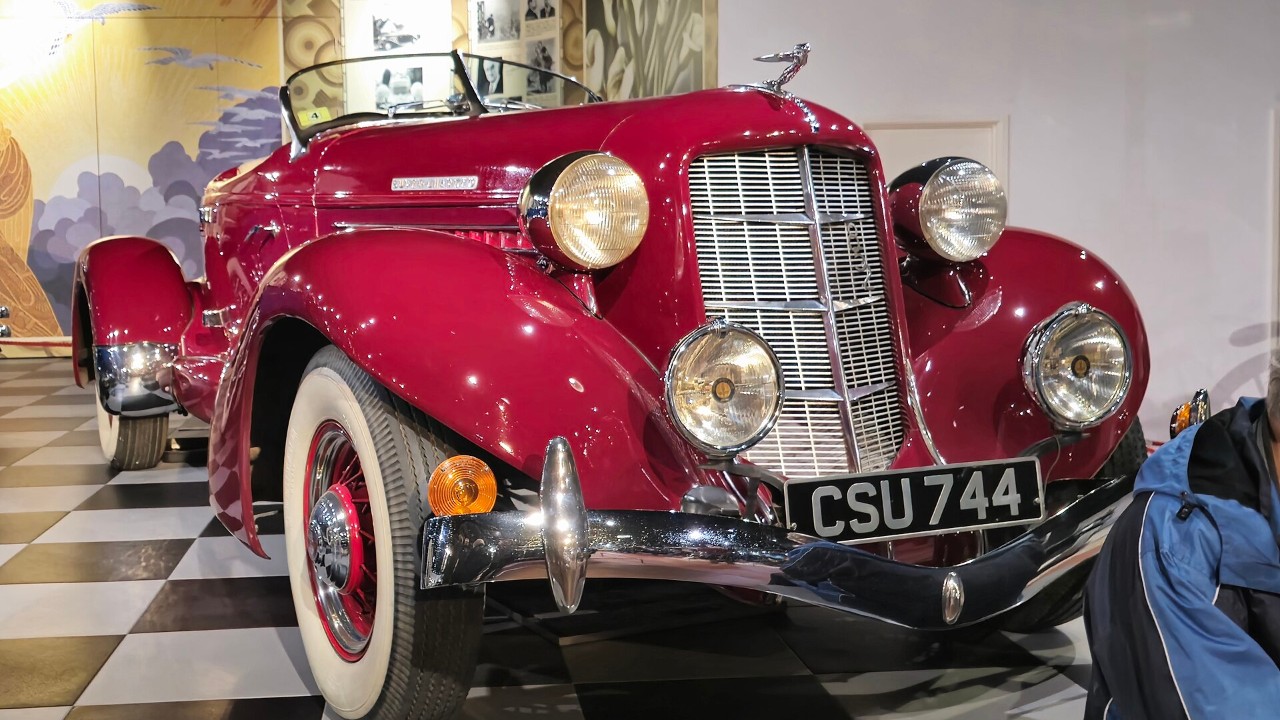
Auburn introduced the 851 Speedster in 1934 for the 1935 model year, then updated it as the 852 for 1936. Gordon Buehrig styled the 851 body, with a tapering boattail that ends in a point behind the seats. Meanwhile, under the long hood, a supercharged straight-eight made 150 hp.
Only 143 supercharged 851 and 852 boattail speedsters left the factory. Then Auburn stopped building cars altogether in 1937. As we covered in our story on the Auburn 851 dash plaque, each supercharged 851 carried proof that it had passed 100 mph.
Our take: few cars look this fast while parked. An 852 on a show lawn draws people from across the field.
3. 1935 Duesenberg Model SJ LaGrande Dual Cowl Phaeton
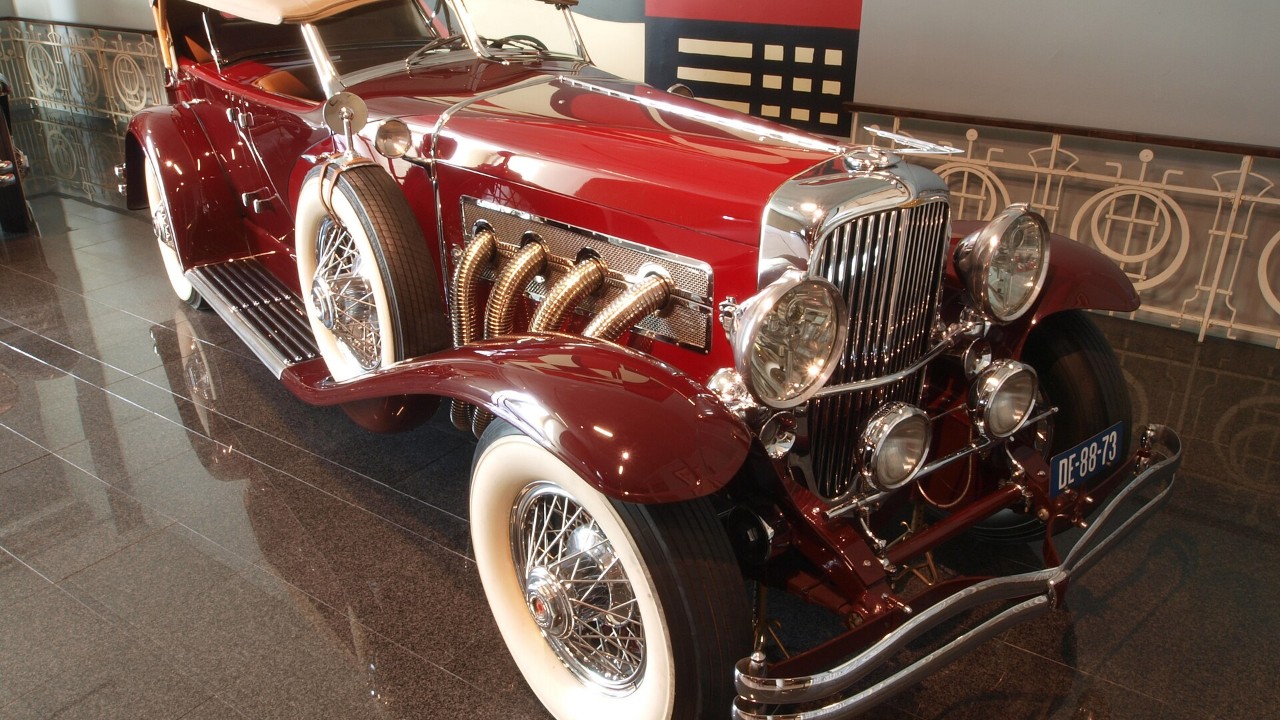
The Model J made its debut at the New York show on December 1, 1928, and a bare chassis cost $8,500. Later, that price rose to $9,500 after 1932. The SJ then added a supercharger to the 420-cubic-inch straight-eight and lifted output to 320 hp, against 265 hp for the regular J.
Duesenberg built only 36 SJs among 481 Model J cars. Buehrig-designed bodies also went out under the LaGrande name, and Walker-LaGrande built a 1935 SJ dual-cowl phaeton. In that layout, a second windshield and cowl shelter the rear passengers.
In our opinion, a supercharged Duesenberg with a dual-cowl body is about as grand as an American car ever got. The SJ reportedly reached about 130 mph in third gear.
4. 1934 Packard Twelve
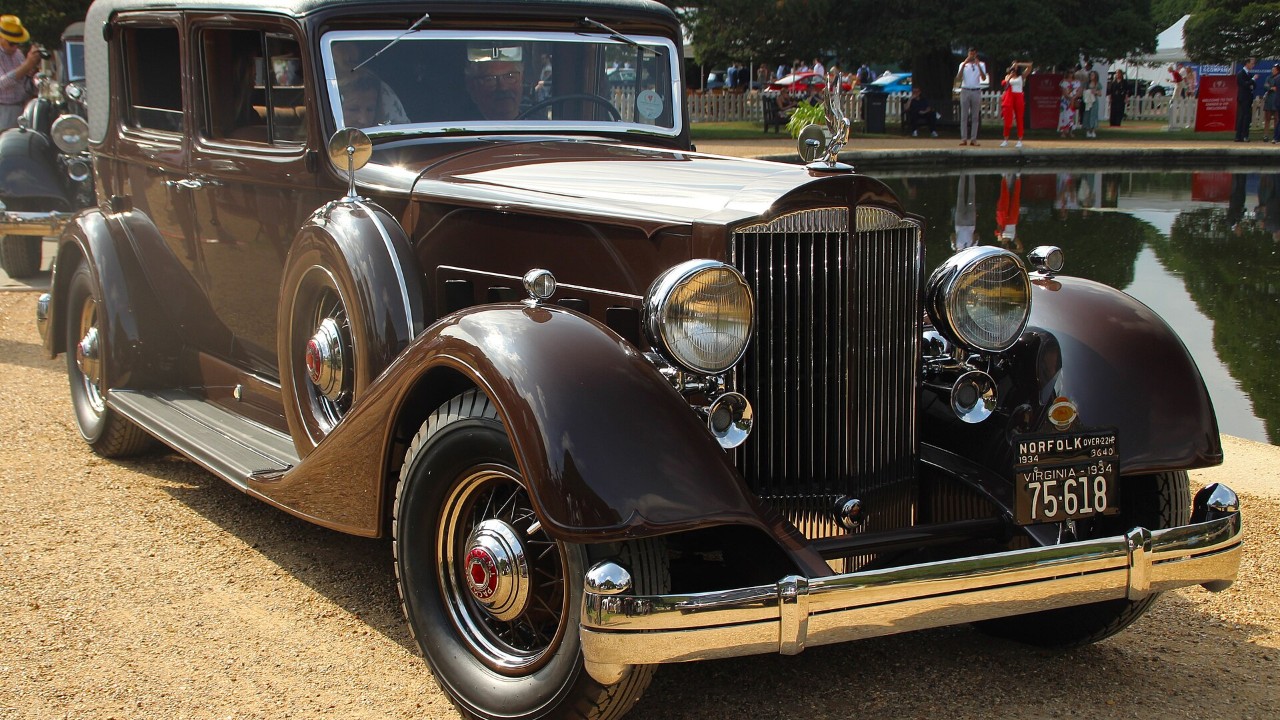
Packard built 960 Twelves for 1934, its Eleventh Series. The cars rode on three wheelbases under model codes 1106, 1107 and 1108. In addition, each carried a 445.5-cubic-inch V12 rated at 160 hp. That year also brought a modern touch, because 1934 was the first season Packard offered a factory radio.
The body choices ranged widely. LeBaron bodied a Runabout Speedster that year, while Packard itself built just four Aero Sport Coupes. Those coupes were the last cars “Custom Made by Packard.”
We think the 1934 Twelve shows Packard at its smoothest and most confident. With fewer than a thousand built, a ’34 is also a rare sight at a show.
5. 1930 Cadillac V-16 Dual Cowl Sports Phaeton
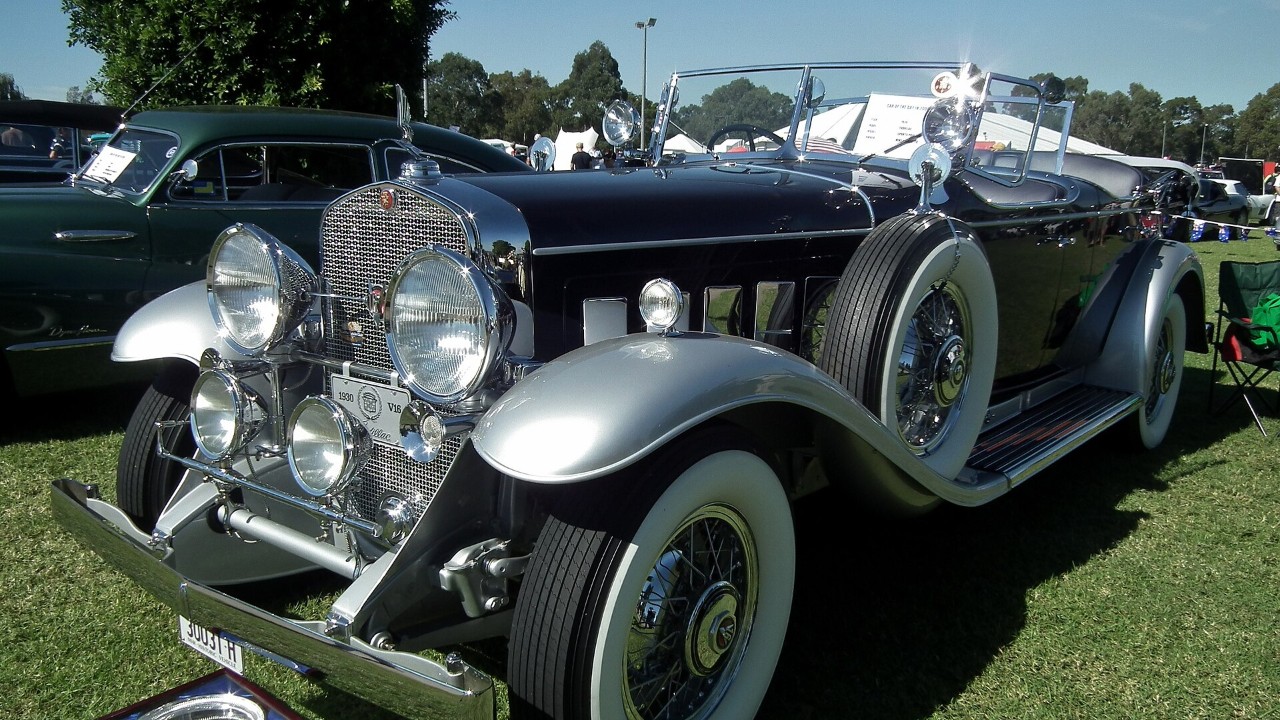
Cadillac launched the V-16 Series 452 at the New York auto show on January 4, 1930. Above all, its 452-cubic-inch engine used a narrow 45-degree V and overhead valves. Fleetwood and Fisher built the bodies, and Fleetwood’s 1930 catalog alone offered 10 basic styles.
Timing worked against it. Orders peaked in mid-1930, but Cadillac built only 54 cars that October. In fact, the company later estimated it lost money on every V-16 it sold. About 2,500 came in 1930, the peak year, and 4,076 in all over 11 years.
Our take: lifting the hood on a V-16 stops people mid-sentence. A dual-cowl sports phaeton adds the open-air drama to match.
6. 1933 Pierce-Arrow Silver Arrow
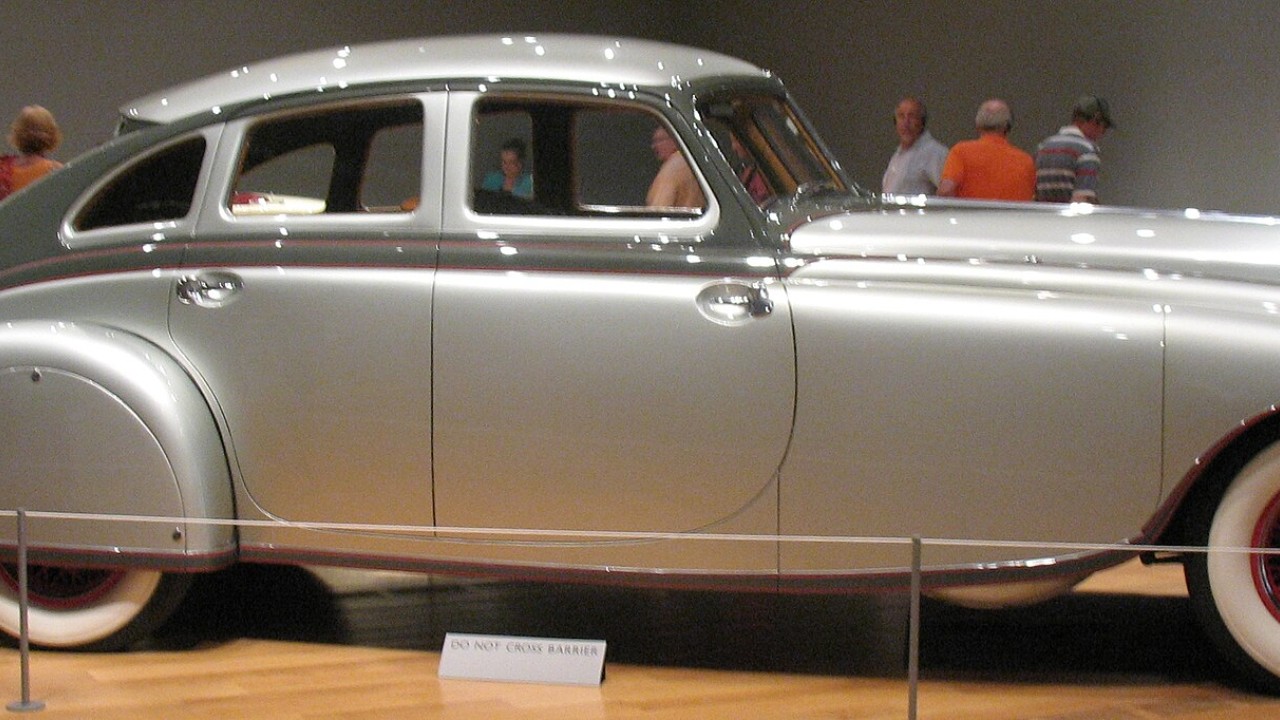
Phillip O. Wright designed the Silver Arrow, and Pierce-Arrow showed it in New York before sending it to Chicago’s Century of Progress fair. The roofline runs in one smooth sweep from windshield to tail. Even the spare wheels hide in lockers inside the front fenders, opened from controls on the dashboard.
Power came from a 462-cubic-inch V12 rated at 175 hp, and the company advertised a 115-mph top speed. Each car also cost $10,000. Pierce-Arrow hand-built only five, and three of them survive today.
We would put the Silver Arrow on any short list of the decade’s boldest designs. Seeing one in person is a genuine event. For more scarce prewar metal, see our 8 rare prewar cars.
7. 1936 Delahaye 135 M
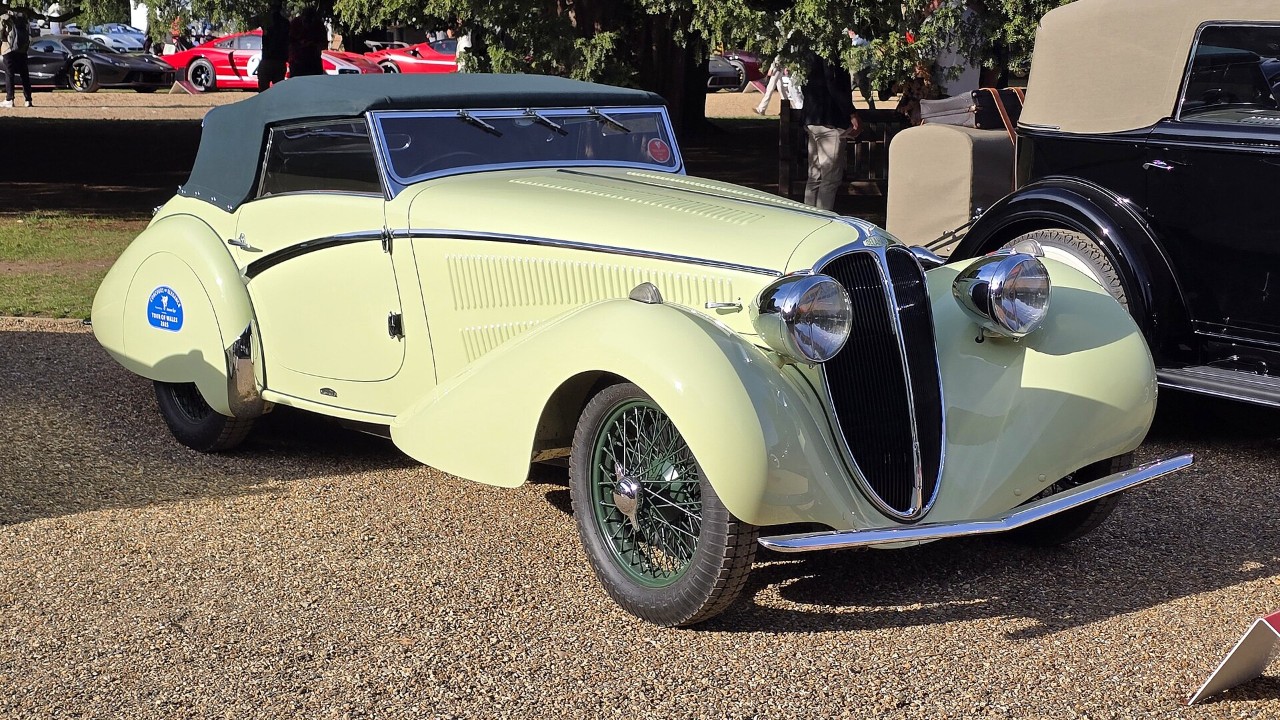
Jean François designed the Delahaye 135, which arrived in 1935. Then the 135 M followed in 1936 with a 3,557 cc straight-six. Depending on how many carburetors it carried, the engine made 90, 105 or 115 hp, and buyers could pick a Cotal pre-selector gearbox.
The car also won where it counted. A 135 took the 1937 Monte Carlo Rally, and Chaboud and Trémoulet won the 1938 24 Hours of Le Mans in one. Meanwhile, coachbuilders such as Figoni & Falaschi, Chapron and Saoutchik wrapped the chassis in some of France’s most daring bodies.
Delahaye built about 2,000 135s between 1935 and 1954. In our view, a race-winning chassis with coachbuilt curves is exactly what a concours crowd wants to see.
8. 1938 Talbot-Lago T150 C SS
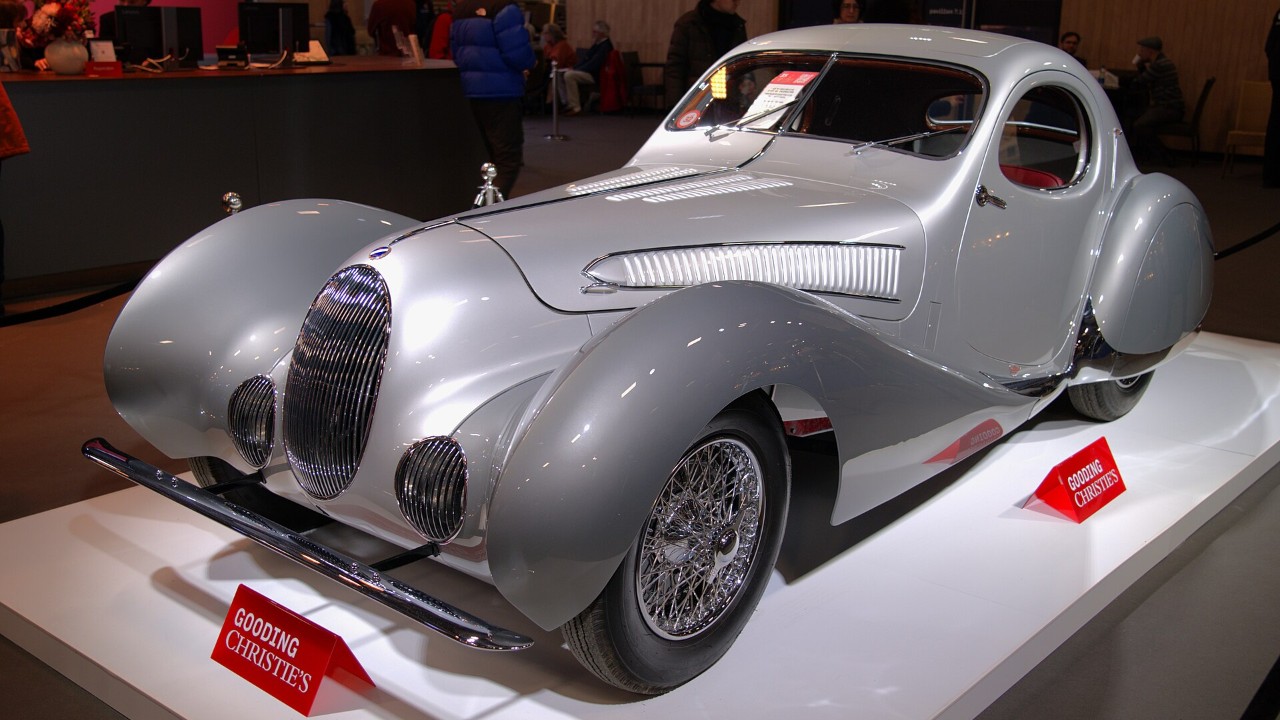
Anthony Lago’s company built the T150-C around a newly enlarged 4-liter engine, and Walter Becchia designed the new cars. The competition roadsters finished 1-2-3-5 in the sports-car French Grand Prix of 1937. They also won that year’s RAC Tourist Trophy at Donington Park.
Then Figoni et Falaschi wrapped the chassis in its “teardrop” coupe bodies. RM Sotheby’s counts 16 of these coupes over two years: five early “Jeancart” cars and 11 “New York” style cars. At RM’s 2026 Monterey sale, one teardrop carried a $7 million to $8 million estimate but did not sell.
Our take: the teardrop Talbot is the car that makes other show cars look plain. Its flowing teardrop body is the reason.
9. Stout Scarab
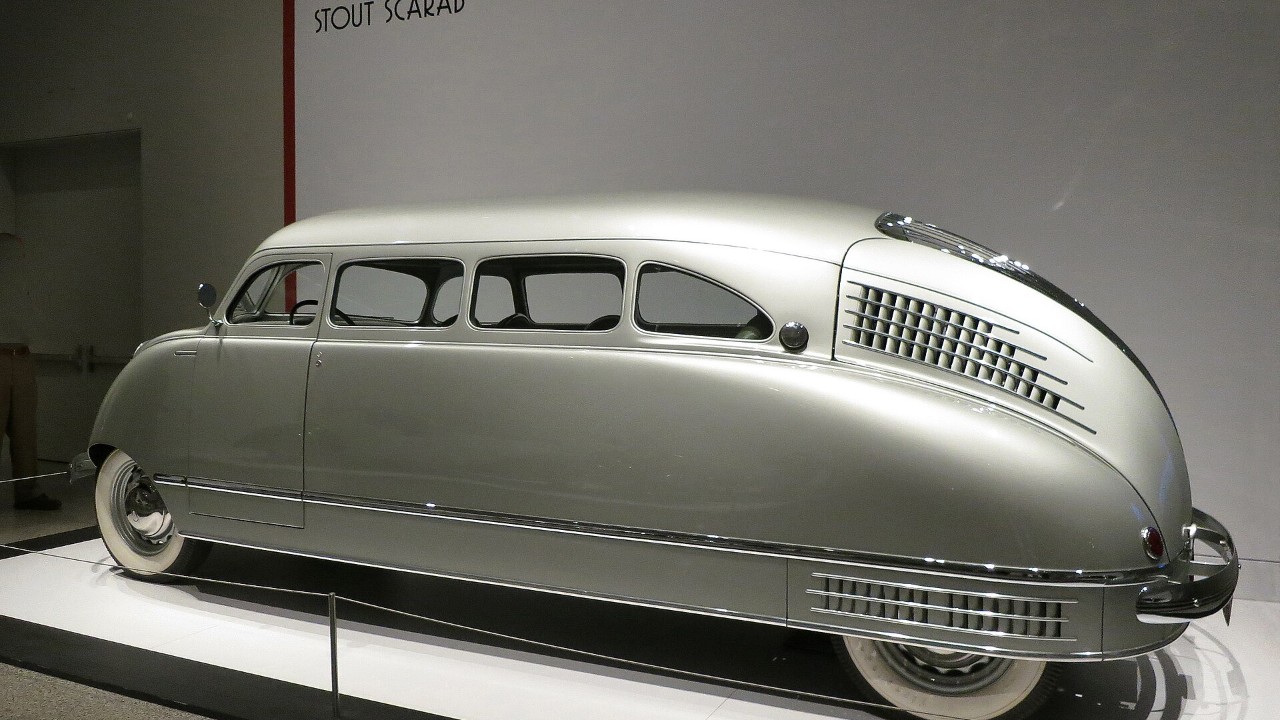
William Stout designed the Scarab around its cabin. His car put a Ford flathead V8 in the rear, over the back axle, and freed the cabin for seats that could move. A small card table could even sit among the passenger seats, though the driver’s seat stayed fixed.
First came a drivable prototype in 1932, and a second followed in 1935. Stout founded his car company in 1936, but only about nine production Scarabs followed. Each cost $5,000, and up to five survive, by most accounts.
We see the Scarab as the minivan’s great-grandfather. Its beetle shape turns heads, and the Detroit Historical Museum owns a running example.
10. 1937 Studebaker Dictator Coupe Express
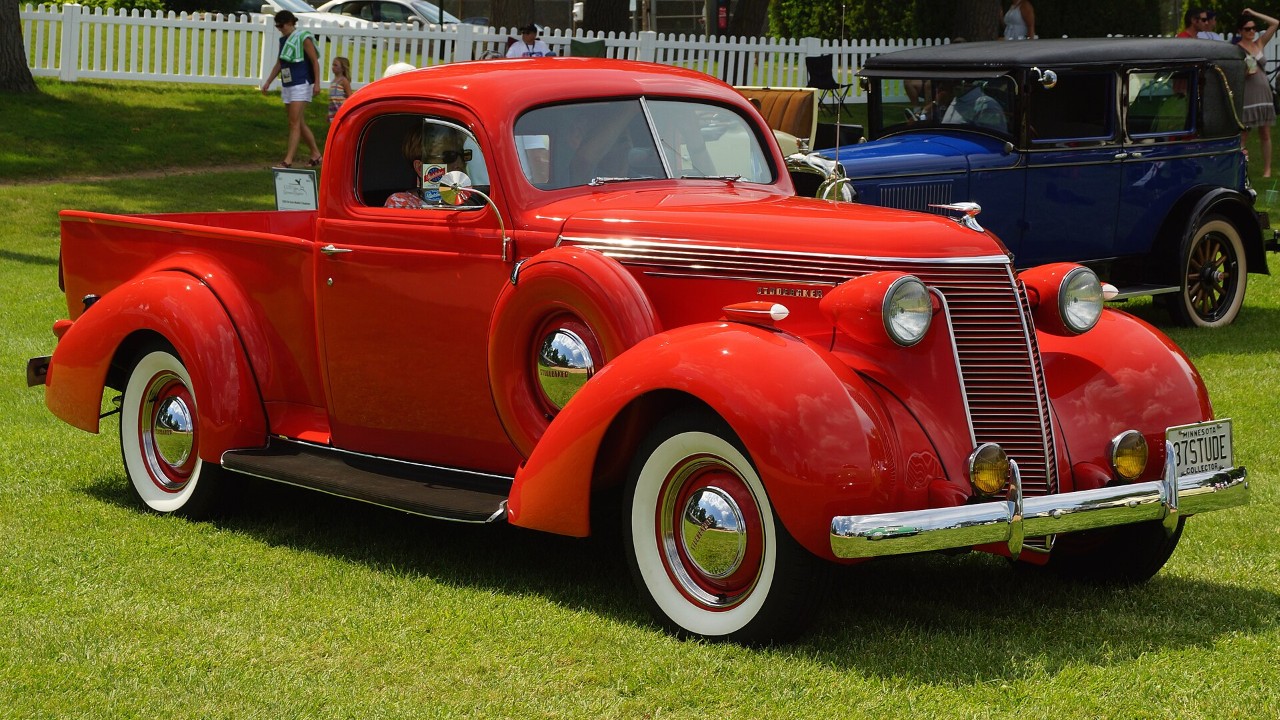
Studebaker built its 1937 Coupe Express on the Dictator passenger car’s frame, running gear and front sheet metal. Raymond Loewy also designed it. As a result, the pickup looks like a stylish car up front and a hard worker at the back. Buyers could order a factory metal bed or a bare cab and chassis.
Power came from a 217.8-cubic-inch six rated at 86 hp, according to RM Sotheby’s. In fact, the auction house says Studebaker built 3,125 for 1937. One sold for $63,250 at RM’s Auburn Fall sale in 2015.
In our view, the Coupe Express is the most charming truck of the decade. It also gives a show-goer something unexpected between the sedans.
11. 1936 Ford Model 68 Deluxe Roadster
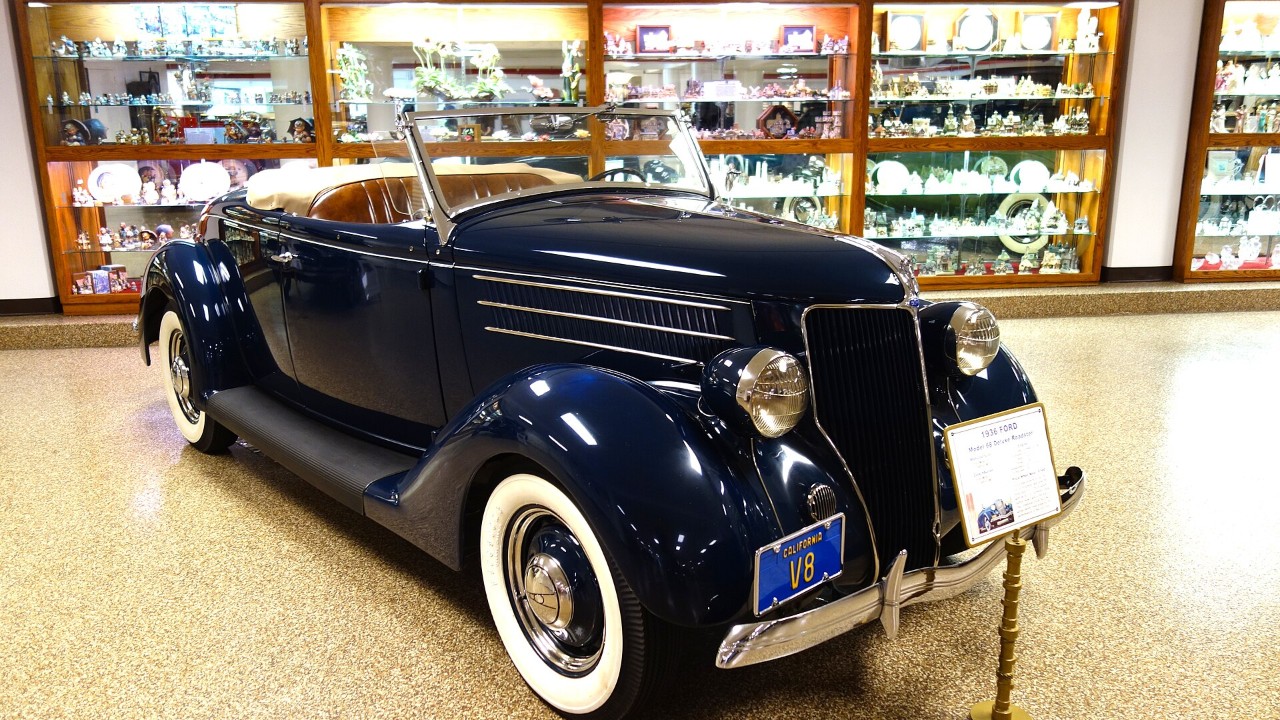
Ford’s 1936 update was more than a new grille. Designer Holden “Bob” Koto gave the car a new hood and a grille of thin vertical bars. Meanwhile, pressed-steel “spider” wheels replaced the old wire wheels, a larger radiator improved cooling, and the gearbox gained helical gears for first and reverse.
Power came from Ford’s 221-cubic-inch flathead V8, rated at 85 bhp. Ford built only 3,862 Deluxe Roadsters that year, the rarest of its open models, RM Sotheby’s notes. Survivors also bring real money: one sold for $74,250 at RM’s Hershey sale in 2015.
Our take: a stock ’36 roadster proves you don’t need a coachbuilder to stop a crowd. The clean grille and spider wheels do the work.
12. 1938 Buick Y-Job
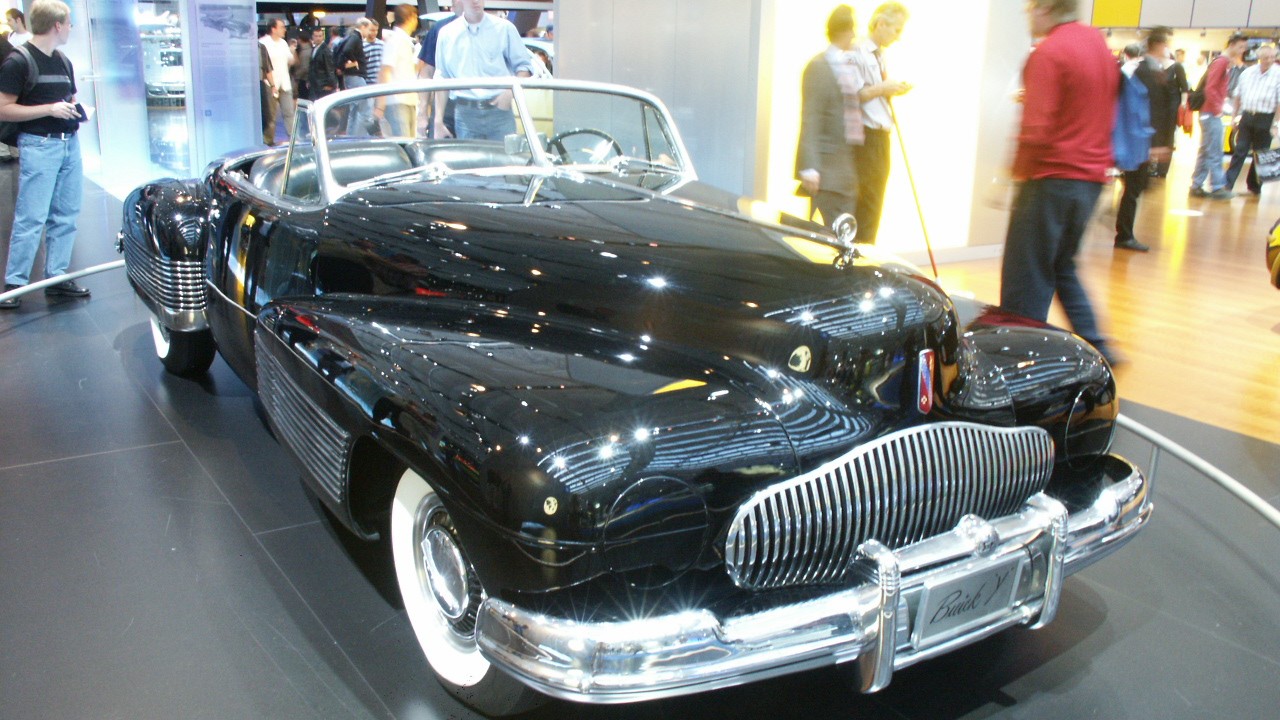
Harley Earl’s styling group built the Y-Job on a 1937 Buick chassis, and GM’s heritage collection calls it the industry’s first concept car. Back then, it already carried hidden headlights, flush door handles and electrically operated windows. A metal deck also hid its convertible top.
Those features later reached production cars. By 1939, the press had moved past calling it a concept and described it instead as the “Car of the Future.” In our opinion, no 1930s car predicted the next 20 years of American styling more clearly.
Today the Y-Job sits in the GM Heritage Collection, and Earl’s styling organization lives on as GM Design.
More from Fast Lane Only