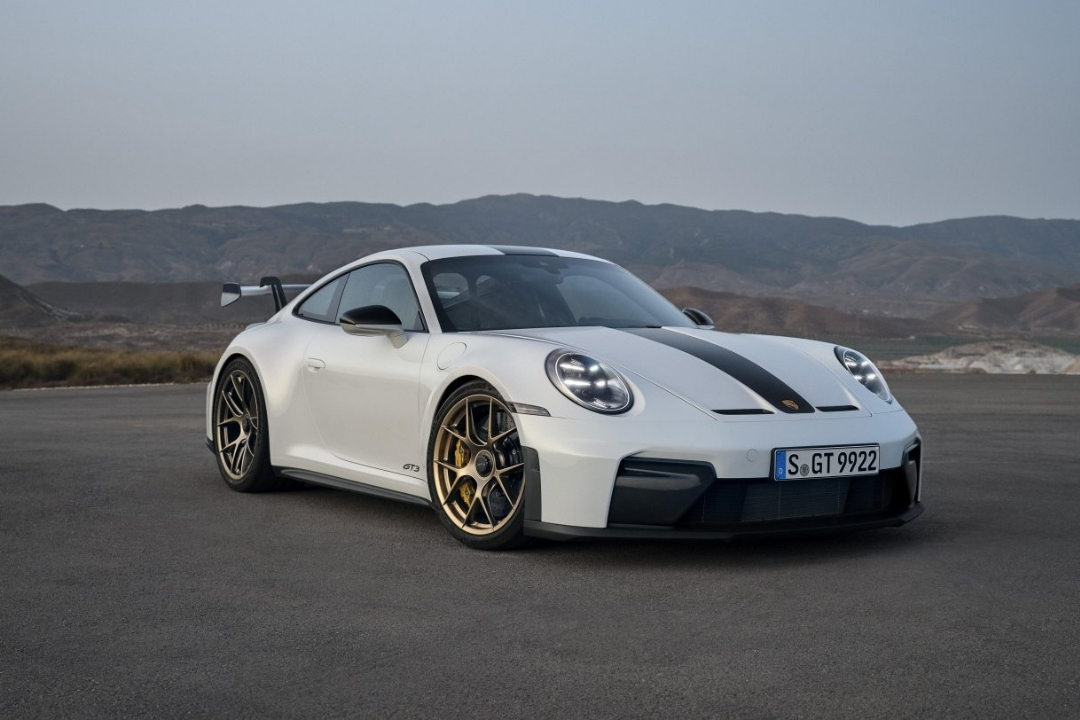
A buyback title on a Porsche is scary. Add a full wrap, a rough idle, and an exhaust leak, and most buyers walk away without looking twice. That pile of red flags is exactly why Samcrac got a 991.1-generation GT3 at auction for way less than it should have cost. And it’s exactly why the seller wanted it gone fast.
The seller wasn’t some random flipper, either. It was George, a dealer who buys, trades, and sells cars like this one for a living, with an active social media presence. Clips showed George getting the GT3 on trade, hearing something that sounded like engine trouble, and deciding on the spot to just wholesale it. If anyone knows when a GT3 is actually in trouble, it should be a guy who deals with them all the time.
So when Samcrac spotted his own car in those old clips, the question was obvious: did he just buy someone else’s real problem? What he found instead was a car whose scariest-looking issue turned out to be one of the cheapest things wrong with it.
The lemon title isn’t really about this car’s engine
The buyback title sounds bad, but the real issue has almost nothing to do with mechanical failure. Early 991.1 GT3s got hit with a stop-sale order before some pre-ordered cars even reached buyers, after two European customer cars caught fire soon after delivery. Rather than hand out cars that might need new engines before owners even drove them, Porsche bought back a few dozen early cars. This GT3 was one of them, branded a lemon before it had gone a single mile with its first real owner.
That’s a different story from the other big problem GT3s from this era are known for: worn finger followers, a coating on the rocker arm that wears down over time and can eventually let a valve hit the piston. Porsche replaced a lot of engines under warranty because of it. But according to Samcrac, most GT3s that got those new engines don’t have buyback titles at all. So the title on this car reflects a problem that got fixed before it ever left the factory, not some ongoing risk hiding in the engine.
What George actually noticed
That still doesn’t explain why George, who knows these cars well, sounded so sure something was wrong. His own mechanic scanned it on camera, found no trouble codes, and guessed it just needed new spark plugs. George described the problem as a laggy startup, which really just means a long crank. And a long crank on a car this new usually points to the battery or fuel system before it points to spark plugs.
That’s the exact reasoning Samcrac followed, and it’s why he skipped past spark plugs and went straight for the electrical side.
The soot, the spark plugs, and the real problem
Up on the lift, the first thing he found was an exhaust leak, coming from a crooked, over-tightened clamp on the factory center muffler. Records showed a past owner had run an aftermarket exhaust piece at some point, and whoever put the factory part back on hadn’t done it right. It was a real issue, just not a big one, and Samcrac fixed it for good by putting on a full aftermarket exhaust system instead of just re-clamping the old one.
The spark plugs told a similarly boring tale. Pulled and checked, they had none of the brown staining that builds up on plugs that have been in for a while, backing up the mechanic’s guess that they’d already been swapped. Clean plugs, no stored codes, and an engine that ran smooth all the way through the RPM range. None of it pointed to anything serious.
That left the battery. A test showed a cheap, non-factory-spec battery reading just 11.9 volts and putting out 582 cold cranking amps, way under its 900 CCA rating. A car this new should have come with a stronger battery from the factory. Running on a weaker, mismatched one was a strong candidate for the slow, laggy startup George kept mentioning, though Samcrac stopped short of calling it a sure thing. He hooked up a jump pack and said the startup sounded a little better, but he was honest that it might also just be from driving the car more regularly since he bought it. Either way, he didn’t treat it as a mystery worth losing sleep over.
The number that made the deal
George had been asking $115,000 for the car retail. Once he gave up on that and decided to just wholesale it, he first tried to sell it privately for $102,000, then listed it at auction with a $105,000 buy-it-now price, close to top wholesale money for a car like this. Samcrac figured he had no real shot against buyers willing to pay near six figures, so he placed a hidden proxy bid just under $90,000. He won it somewhere around $86,000 to $87,000, about $15,000 to $19,000 below what George had been trying to get wholesale.
More from Fast Lane Only
- Unboxing the WWII Jeep in a Crate
- 15 rare Chevys collectors are quietly buying
- 10 underrated V8s still worth hunting down
- Police notice this before you even roll window down
*Research for this article included AI assistance, with all final content reviewed by human editors.