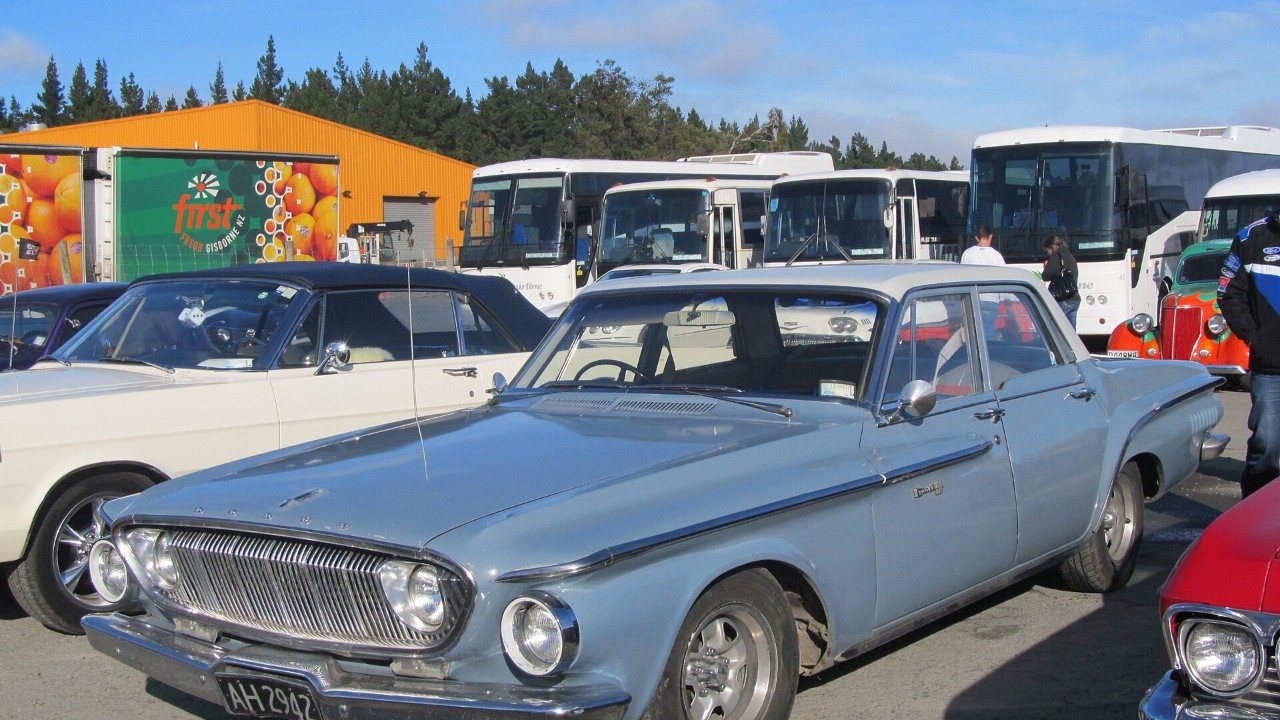
In the middle of 1962, Dodge started offering a 415-horsepower Ramcharger 413 V8 in its Dodge Dart line. Soon after, drag strips across the country took notice. That car set the tone for what Dodge does best. It takes a sensible platform and then gives it far more muscle than anyone asked for.
Since then, the habit never really went away. Across the decades, Dodge built swivel-seat convertibles, a turbocharged family sedan, a convertible pickup and a V10 coupe with a roof shaped around racing helmets. Not all of them sold well, though. However, each one has a personality you cannot buy in a showroom anymore.
So these are our picks for seven Dodges we would keep forever. The verdicts are our opinion, and so is the stubbornness. Still, every engine, production count and sale figure behind them comes from auction catalogs, period histories and the model records we read for this list.
1. 1962 Dodge Dart 330 Ramcharger 413
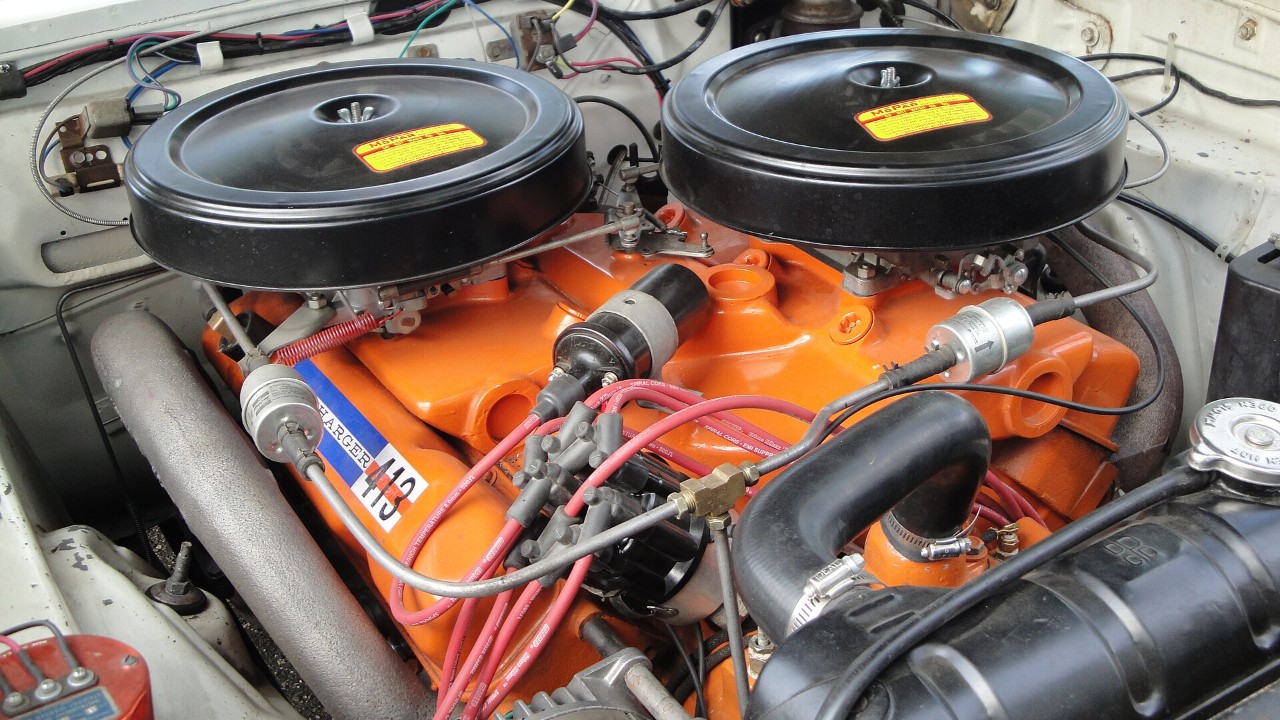
For 1962, Dodge shrank its big cars onto a lighter unibody platform. As a result, the lineup ran Dart, Dart 330, Dart 440 and Polara 500. Then, partway through the year, Dodge added the Ramcharger 413, rated at 415 hp and aimed squarely at sanctioned drag racing. In a lighter body, that engine soon started breaking performance records.
An EngineLabs history of the Max Wedge explains that Dodge called the engine the “Ram-Charger 413,” while Plymouth sold it as the Super Stock 413. The 1962 version also ran 13.5:1 compression. It breathed through twin Carter AFB carburetors on a special long-runner intake. As a result, it made right around 500 lb-ft of torque.
Our take: a Ramcharger Dodge Dart 330 is a piece of Mopar drag history, not just a fast old sedan. Dodge built the engine for the strip, so a well-documented car deserves an owner who appreciates that history. For that reason, we would never let ours go.
2. 1991 Dodge Spirit R/T
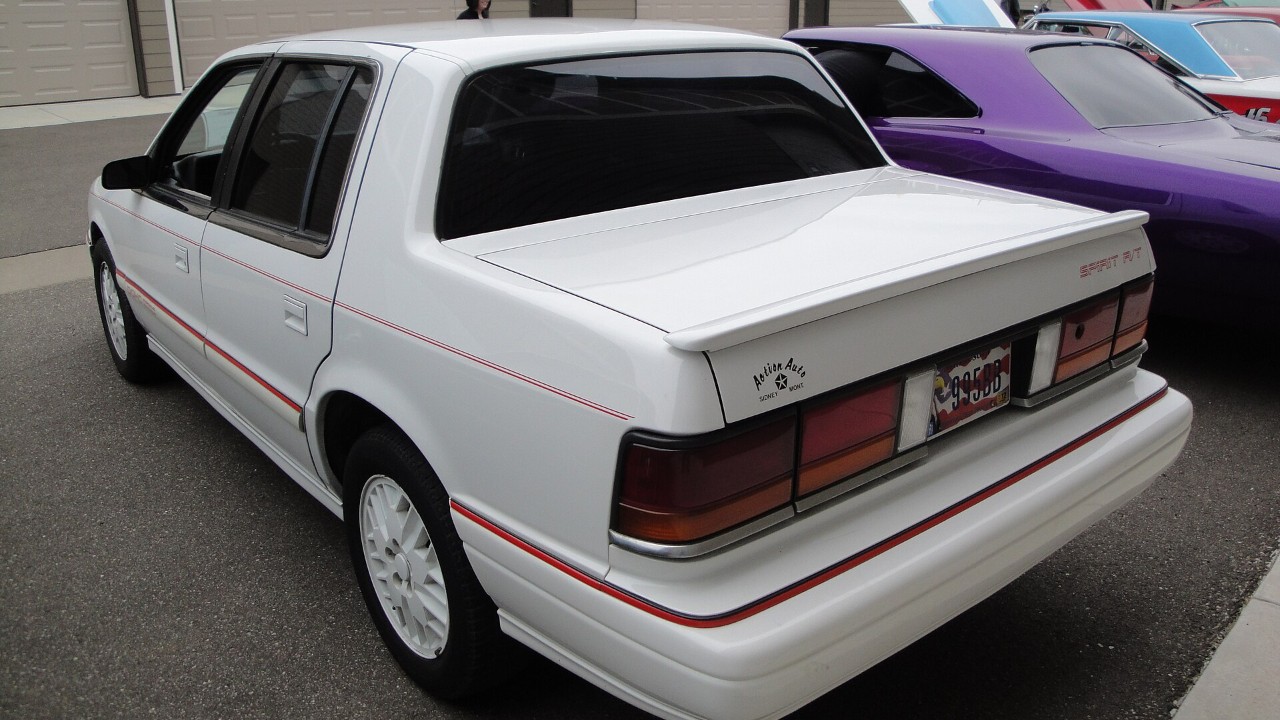
Under the Spirit R/T’s plain sedan body sat a 2.2-liter Turbo III four-cylinder. It used an intercooled turbo and a 16-valve twin-cam head. In fact, Lotus designed that head, beating entries from Maserati and Hans Hermann. The only gearbox was a heavy-duty five-speed manual with a Getrag gearset. Output reached 224 hp, which was plenty for a front-drive family car.
A Hagerty feature on the 1991–92 Spirit R/T notes that the car made one horsepower less than a Mustang 5.0 of the same era. It also cites a 15.1-second quarter mile at 97 mph. Meanwhile, Motor Trend named the Spirit R/T its Domestic Sport Sedan of the Year for both 1991 and 1992.
Few people bought one, so rarity is part of the appeal. U.S. sales came to 1,208 in 1991, split between 774 red cars and 434 white ones. In our opinion, that makes a clean red 1991 car one of the most satisfying sleepers Dodge ever sold. Besides, we would keep it for the reactions alone.
3. 1959 Dodge Custom Royal Lancer convertible

The Custom Royal sat at the top of the Dodge range from 1955 to 1959. Meanwhile, convertibles wore the Lancer name. Then, for 1959, Dodge stretched the fins, fitted a new “full mouth” grille and added a novel interior option. According to an RM Sotheby’s catalog for a 1959 Custom Royal D-500 convertible, swivel front seats debuted that year as a $70.95 extra.
The same catalog says Dodge built just 984 Custom Royal convertibles for 1959. In standard D-500 form, the 383 made 320 bhp. By comparison, the Super D-500 used two Carter carburetors and made 345 bhp. The car RM offered had that Super D-500 engine and a three-speed TorqueFlite, and it sold for $151,250.
Our take: this is late-1950s Detroit at full volume. Together with the chrome, the fins and the seats that swing out to meet you make the case on their own. Once you own one, selling it would feel like handing away the whole decade.
4. 1971 Dodge Charger Super Bee
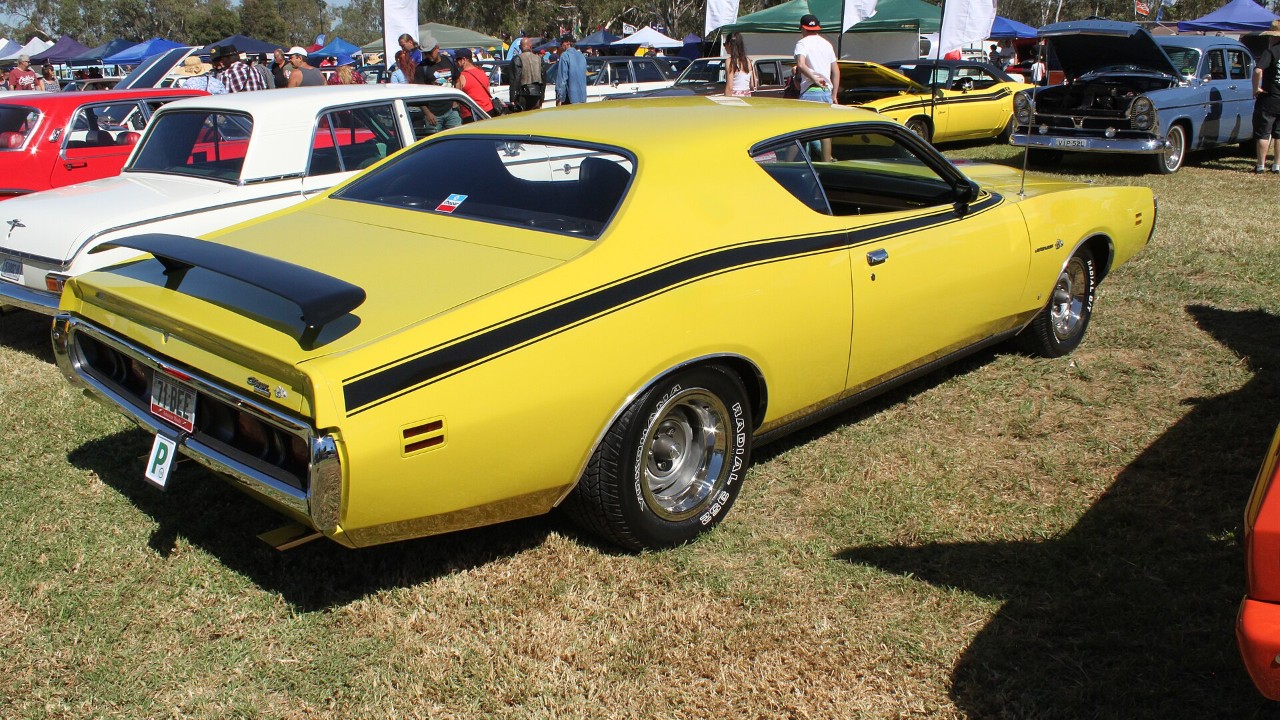
The Super Bee ran for four model years, but the last one was different from the rest. For 1971, Dodge moved the Bee from the Coronet to the Charger, because the Coronet had become a four-door only. As a result, the 1971 car got the Charger’s semi-fastback roofline, a flush rear window and an integral rear spoiler.
According to Old Cars Weekly’s profile of the 1971 Charger Super Bee, the base engine was a 300-hp 383 Magnum. Buyers could step up to a 385-hp 440 Six-Pack or the 425-hp 426 Street Hemi. Dodge built about 5,054 of these cars, and the base price was $3,271. However, only 22 had the Hemi, and nine of those had four-speeds.
In our view, that one-year-only status is reason enough to keep one. After all, it is the only Super Bee built on a Charger body. That is why even a 383 car is worth holding onto.
5. 1997 Dodge Viper GTS
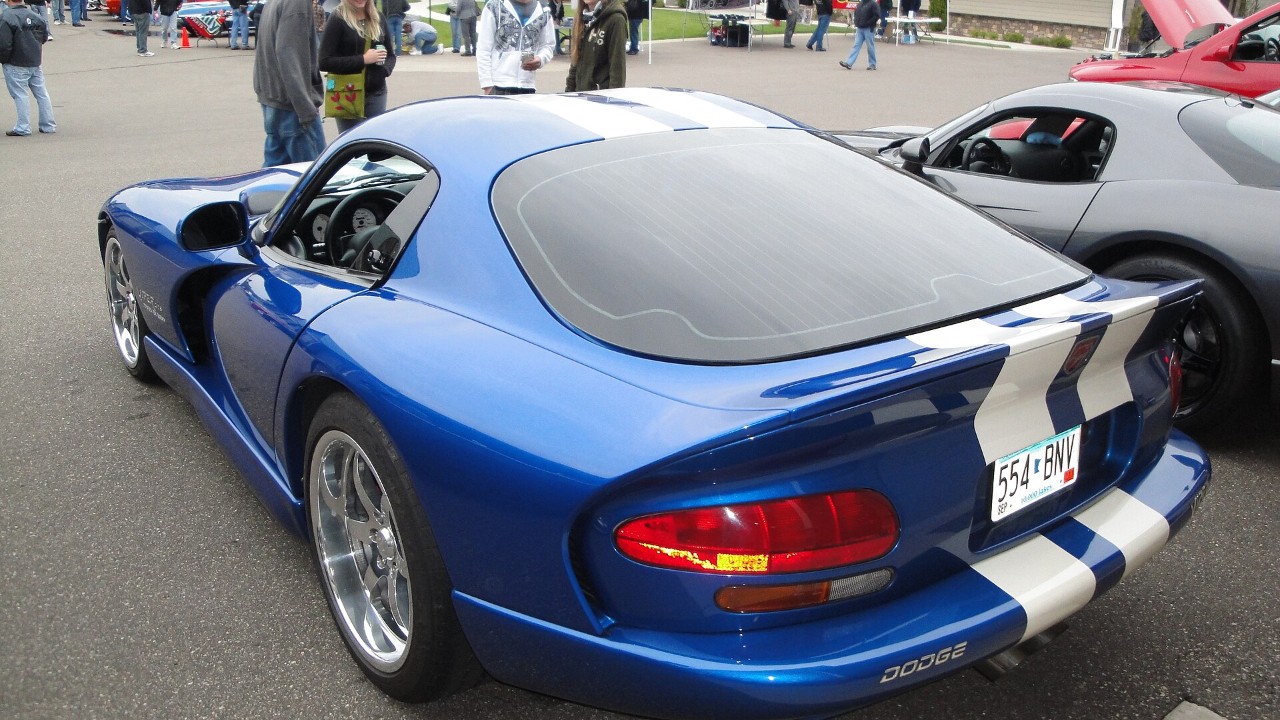
Dodge added the GTS coupe later in the 1996 model year. Despite its familiar look, over 90 percent of it was new compared with the RT/10 roadster. The roof also gained two raised sections, nicknamed the “double bubble,” that made room for helmets. Its look drew on the Shelby Daytona Coupe, which Pete Brock designed. The GTS also brought the first airbags to the Viper, along with air conditioning and power windows.
Under the hood, the 8.0-liter V10 made 450 hp and 490 lb-ft of torque. According to The Drive’s story on Jay Leno’s 1996 Viper GTS, it sent that power through a Borg-Warner T56 six-speed manual. A GTS also paced the 1996 Indianapolis 500. For Viper output over time, see our guide to the 5 Dodge Viper generations and the V10 output each one carried.
Our take: the GTS is the Viper that grew up without going soft. It kept the raw V10 but added a roof you can live with. So we would keep one in the garage and drive it on every clear weekend.
6. 1968 Dodge Dart GTS
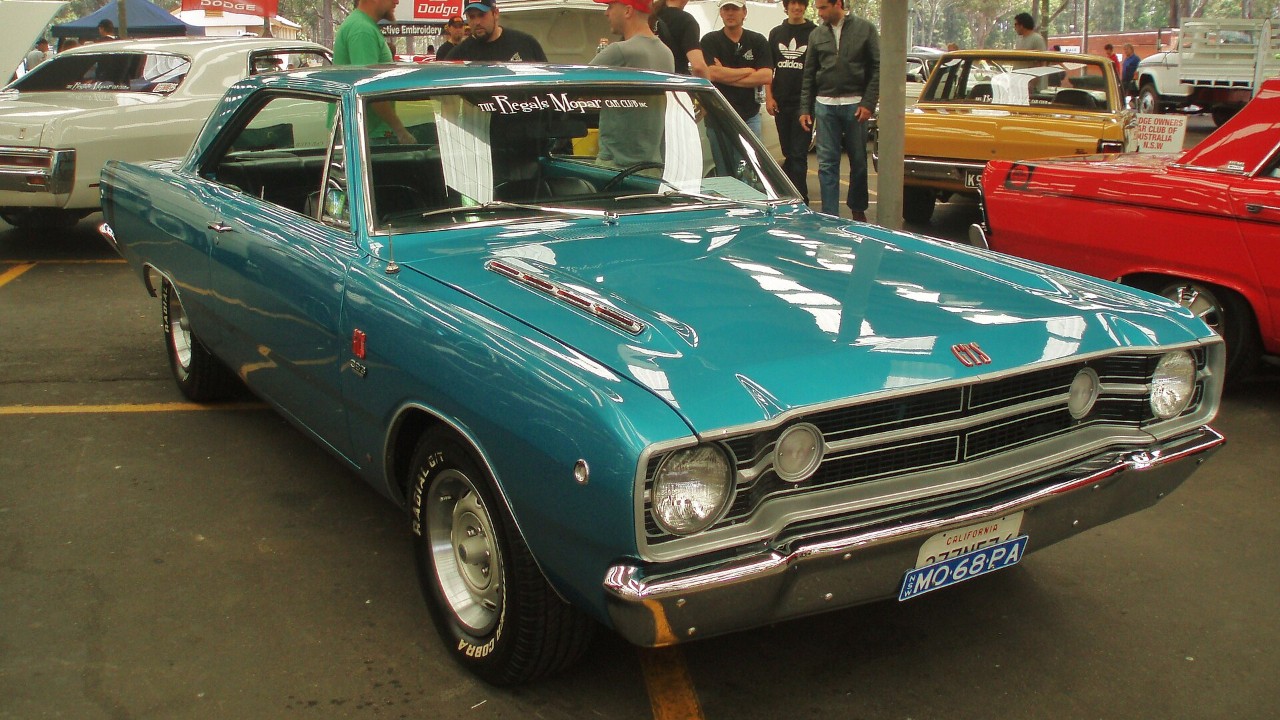
The Dart GTS arrived late in 1967 as the performance version of Dodge’s compact. Because it came so late in the model year, Dodge built it only in limited numbers at first. For 1968, the GTS carried the high-output 340 V8 as standard. Buyers who wanted even more could also order a 300-hp, 383-cubic-inch big-block.
Even so, the 340 is the reason we love it. That small-block, rated at 275 bhp in four-barrel form, gave the light Dodge Dart a strong balance of power and handling. The 383 made it quicker in a straight line, but the 340 car feels more complete. We covered the full engine story in 10 engines Dodge put in the Dart from 1963 to 1976.
Our take: a 1968 GTS is the compact muscle car for people who drive their classics. It is small enough to toss into a corner yet strong enough to embarrass bigger cars. That mix is exactly why we would never trade one away.
7. 1989 Dodge Dakota convertible
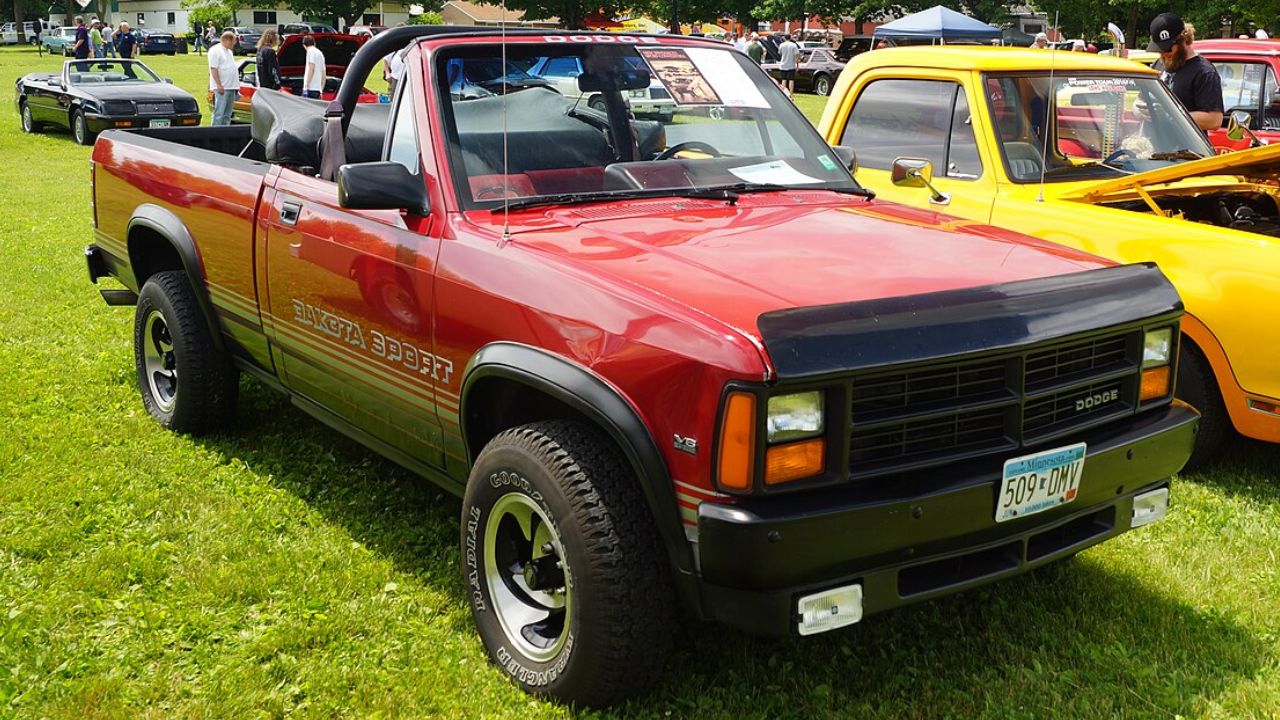
Dodge built the Dakota convertible with American Sunroof Corporation, better known as ASC. It also had a single-hoop roll bar and a simple manual top. According to a Hagerty history of the 1989–91 Dakota Sport convertible, the standard engine was a 125-hp, 3.9-liter V6. Buyers could also choose a five-speed manual or four-speed automatic, and four-wheel drive was optional.
Sales then faded fast. Hagerty puts production at 2,842 for 1989 and 909 for 1990, then “depending on who you believe” just eight for 1991. The same article says a good driving example won’t cost more than $10,000. For a Dakota with more power and less sun, read about the 1989 Shelby Dakota, the first Dakota with a V8.
In our opinion, the Dakota convertible is the most fun you can have in a Dodge pickup for the money. It is odd and cheerful, while almost nobody else at the show has one. That is a combination we would never give up.
More from Fast Lane Only