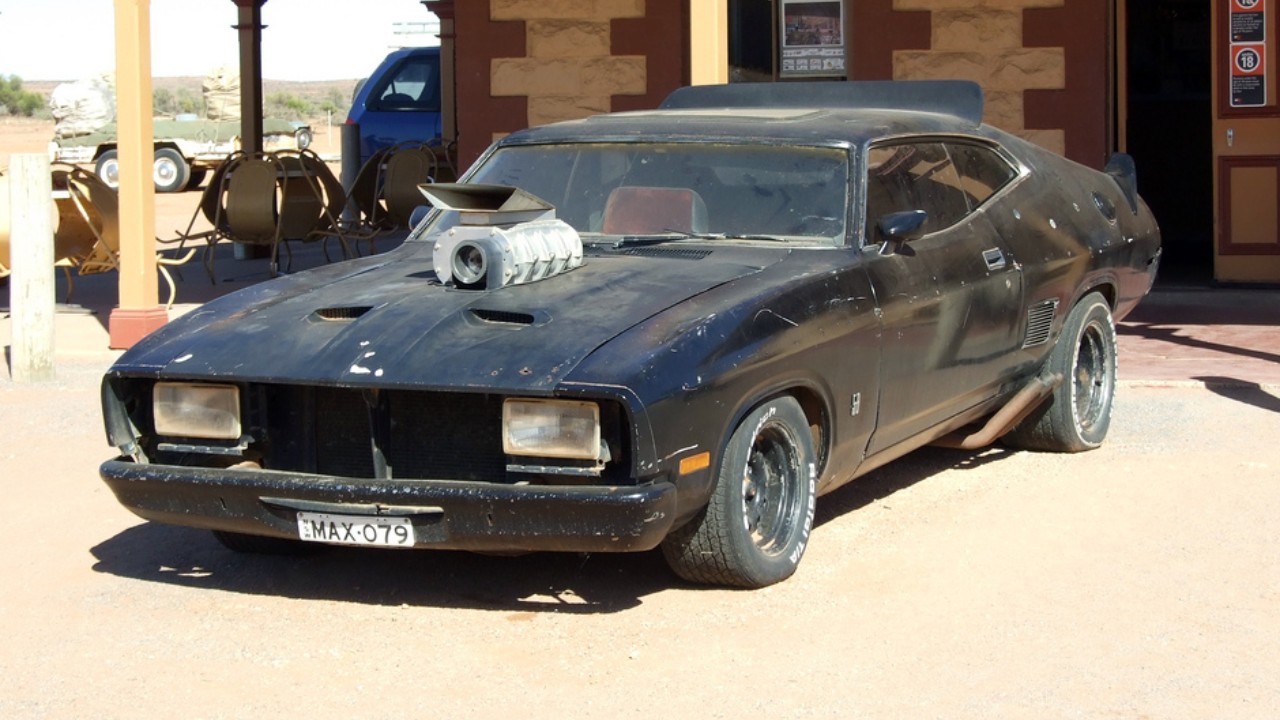
The Mad Max Interceptor began life as a 1973 Ford Falcon XB GT coupe, an Australian muscle car that most American viewers had never seen. Its most famous part, the supercharger poking through the hood, did nothing at all in the 1979 film. That blower was a prop. Meanwhile, the story of the car behind it is far stranger than the movie.
The black coupe was first known as the “Pursuit Special,” according to Shannons. Today, most fans simply call it the Interceptor. Yet the car itself came close to vanishing more than once. It was offered for sale, handed to a mechanic as payment, bought back for a sequel, sent to a scrap yard and finally rescued by a collector.
So here is how a stock Falcon became one of the most recognized cars in film, and what happened to it after the cameras stopped.
Why the Mad Max Interceptor was a Falcon, not a Mustang
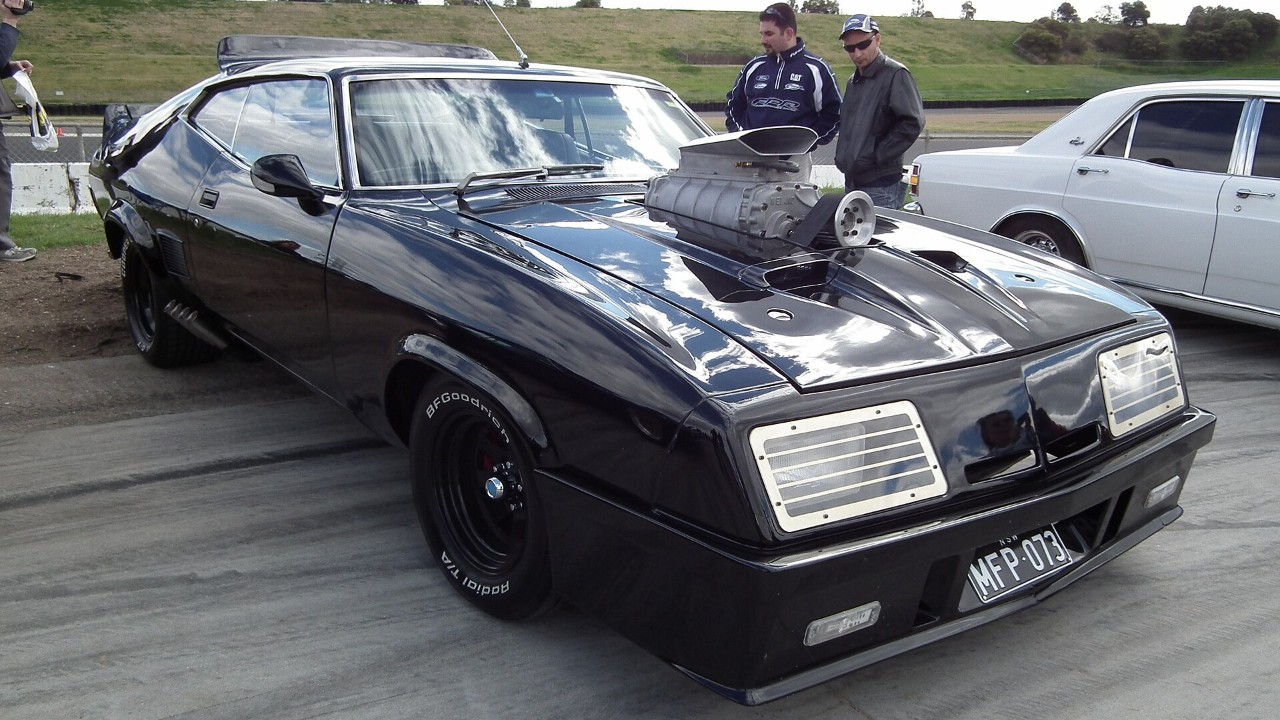
The production team first wanted Mustangs, according to Skillset magazine’s history of the car. However, Australian Falcons cost less, and the budget was tight. That choice gave the film a local hero car built on a 351 V8. As a result, the Interceptor looks unfamiliar to many American fans, even though it wears a Ford badge.
Several hands shaped the look. Shannons, the Australian classic car specialist, credits Ray Beckerley with transforming the coupe before filming. Meanwhile, the Melbourne firm Graf-X International handled the conversion on a commission from art director Jon Dowding, according to Fraser Engine Co. The angular “Concorde” nose came from Peter Arcadipane, who designed it while at Ford Australia. His own business, Arcadipane Products, then made and fitted it. Shannons adds that the boot and roof spoilers are said to come from Bob Jane’s Monaro, and Errol Platt installed them.
The blower that was just for show
The supercharger is the Mad Max Interceptor detail everyone remembers. In fact, it was a Weiand 6-71 unit sticking up through the hood, and it was nonfunctional, as Fraser Engine Co. explains. Skillset goes further. It calls the first film’s blower “totally non-functional” and says the crew borrowed it from a Top Fuel team instead of buying one.
The exhaust told a similar story. The builders added eight individual side pipes, but only two of them worked, according to Fraser. In other words, much of the menace was theater. Still, the illusion held up on screen.
Two well-known names got behind the wheel. Mel Gibson drove the car, and so did stuntman Grant Page, Shannons reports.
Sold for a debt, then bought back for the sequel
After the first film, the car’s luck ran thin. Kennedy-Miller Productions could not sell it for $7,500, Shannons says. Instead, it went to mechanic Murray Smith in 1979 in lieu of money the company owed him. Smith then removed the supercharger, replaced the bonnet and made the car roadworthy and registered.
Even so, Smith could not find a buyer for the Mad Max Interceptor. That changed in 1981, when Kennedy-Miller bought the Falcon back for Mad Max 2, released as The Road Warrior in the United States. For the sequel, the crew removed the lower half of the Concorde nose and the rear bulkhead. Two large petrol tanks took the bulkhead’s place.
The sequel also used a second Falcon coupe for driving and stunts. Meanwhile, the original stayed on hand for close-ups. Because the stunt car took heavy damage on screen, a rumor spread that the real Interceptor died too. That rumor missed the mark.
From an Adelaide Hills wrecking yard to a museum floor
After filming, a scrap yard in Broken Hill got the job of disposing of the damaged props. The largely intact original, however, went to a wrecking yard in the Adelaide Hills. According to Shannons, it sat under a tarpaulin with “eight exhaust stacks poking out” as the only clue to what lay beneath.
Around 1985, entrepreneur Bob Fursenko bought the car and paid for a restoration. Then he toured it for paid viewing. Fursenko restored the full Concorde nose but kept the twin fuel tanks from the sequel. As a result, Shannons notes, the car does not match either film exactly.
Later, the Mad Max Interceptor went on display at the National Motor Museum in South Australia. Next, Peter Nelson, owner of the Cars of the Stars Motor Museum in the United Kingdom, bought it in 1992. It lived in Britain for about 20 years, Skillset says.
Where the Interceptor went next
In 2011, Michael Dezer bought the UK museum’s entire inventory and shipped it to Miami, according to Shannons’ report on the car’s sale listing. Before its 2012 display, custom builder Jim Martino modified the Falcon. Only two real screen cars ever existed, Skillset says, and one of them was destroyed during the franchise.
The survivor’s next move came with Dezer’s collection. When Shannons reported on it, Dezer was moving his cars to Orlando, Florida. At that point, the Orlando Auto Museum had listed the original 1973 XB Falcon GT for sale, with no asking price disclosed.
More from Fast Lane Only