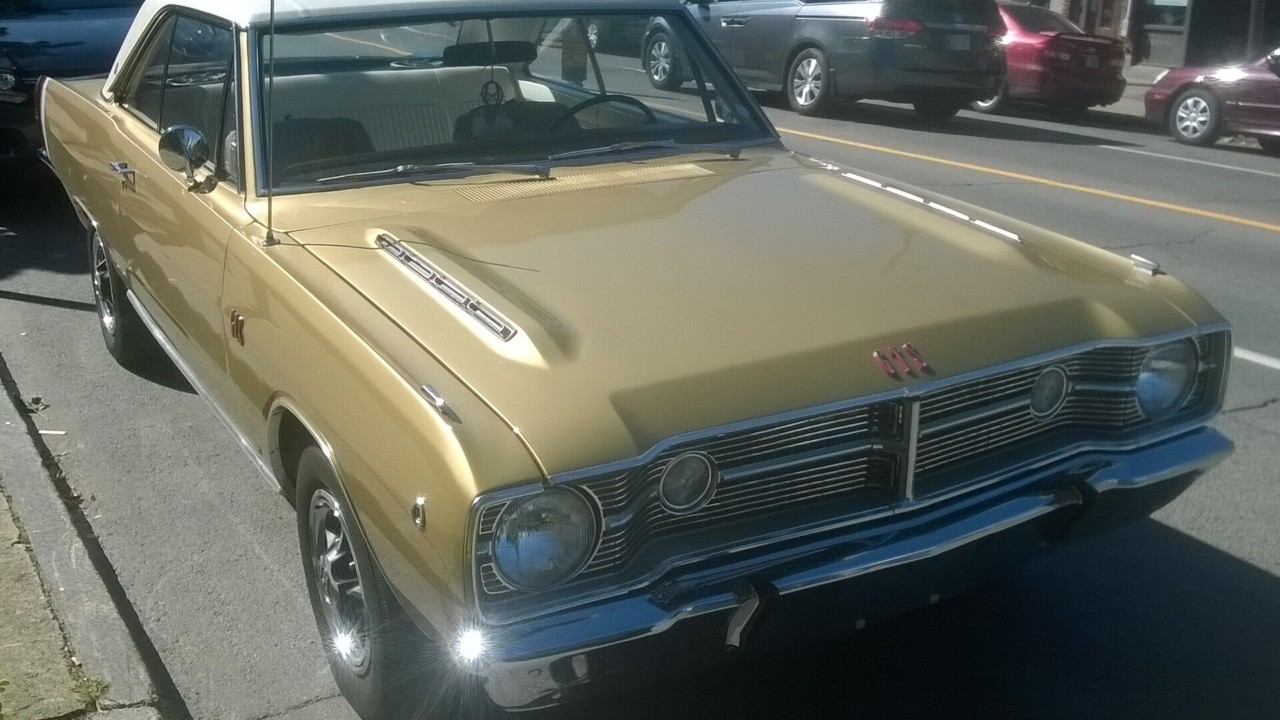
The Dodge Dart started life in 1960 as a full-size car and ended its first run in 1976 as a compact. In between, it wore wild fins, surfer stickers and a race Hemi. It even came back decades later on an Italian-designed platform.
As a result, that long run produced a lot of Darts. Some were family sedans that sold by the hundred thousand. Meanwhile, others were drag cars built in tiny numbers, or odd option packages that most people forgot within a year.
These 12 are our picks, the Darts we think deserve to be remembered. They span the whole story, from the first 1960 cars to the last one built in 2016. The years, engines and figures come from Dodge’s own heritage pages, period records and model histories.
1. 1960 Dodge Dart Pioneer
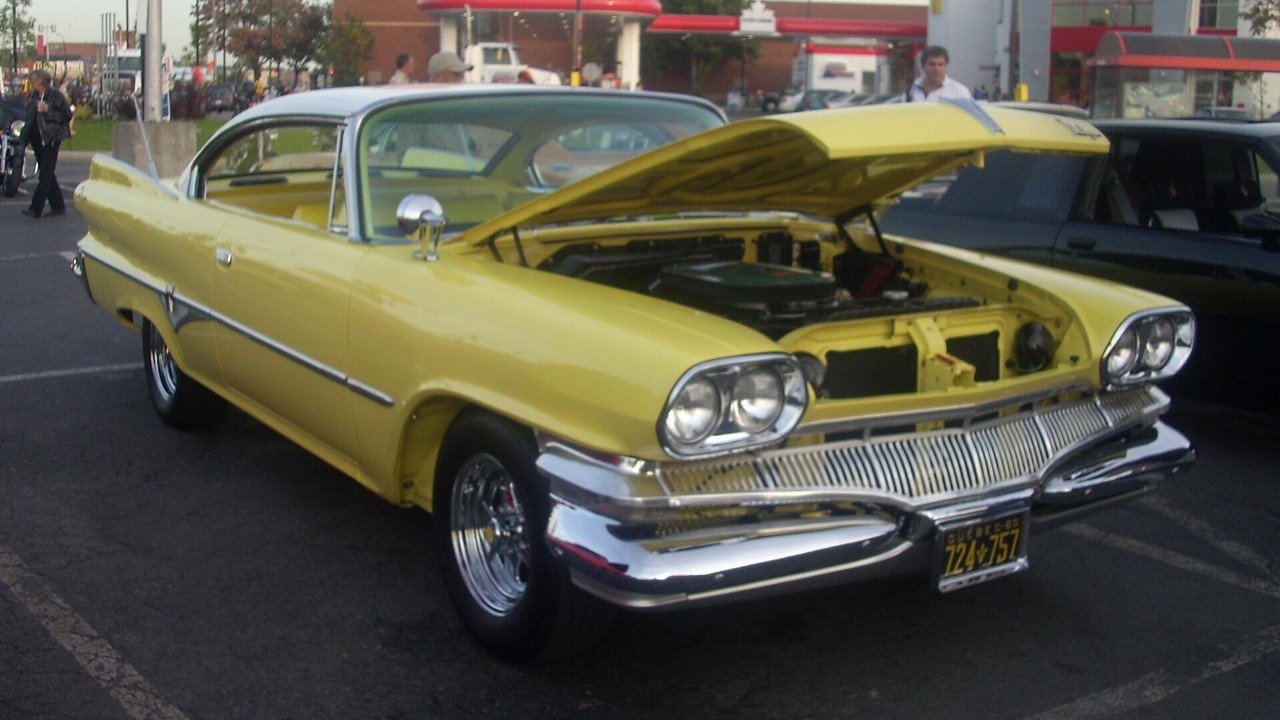
Chrysler created the Dart to solve a dealer problem. For 1960, it ended the pairing of Dodge and Plymouth dealers, which left more than 3,000 Dodge-only stores without a Plymouth-priced car. The Dart filled that gap with Dodge styling on the shorter 118-inch Plymouth wheelbase.
At first, buyers could choose three trims: the base Seneca, the mid-range Pioneer and the top Phoenix. According to Mac’s Motor City Garage, Dart models started at $2,330, a full $600 less than the senior Dodges. Power came from the new 225 slant-six, while 318 and 361 V8s cost extra. Underneath, Chrysler’s unibody construction was also new that year.
Our take: the Pioneer is the Dart for people who wanted a little more than the basics. It worked, too. Dodge built 367,804 cars for 1960, and Darts made up about 87 percent of them. The Phoenix sat higher in the range, but the Pioneer offered most of the look for less money. Few first-year cars have saved a brand’s dealer network so neatly.
2. 1961 Dodge Dart Seneca
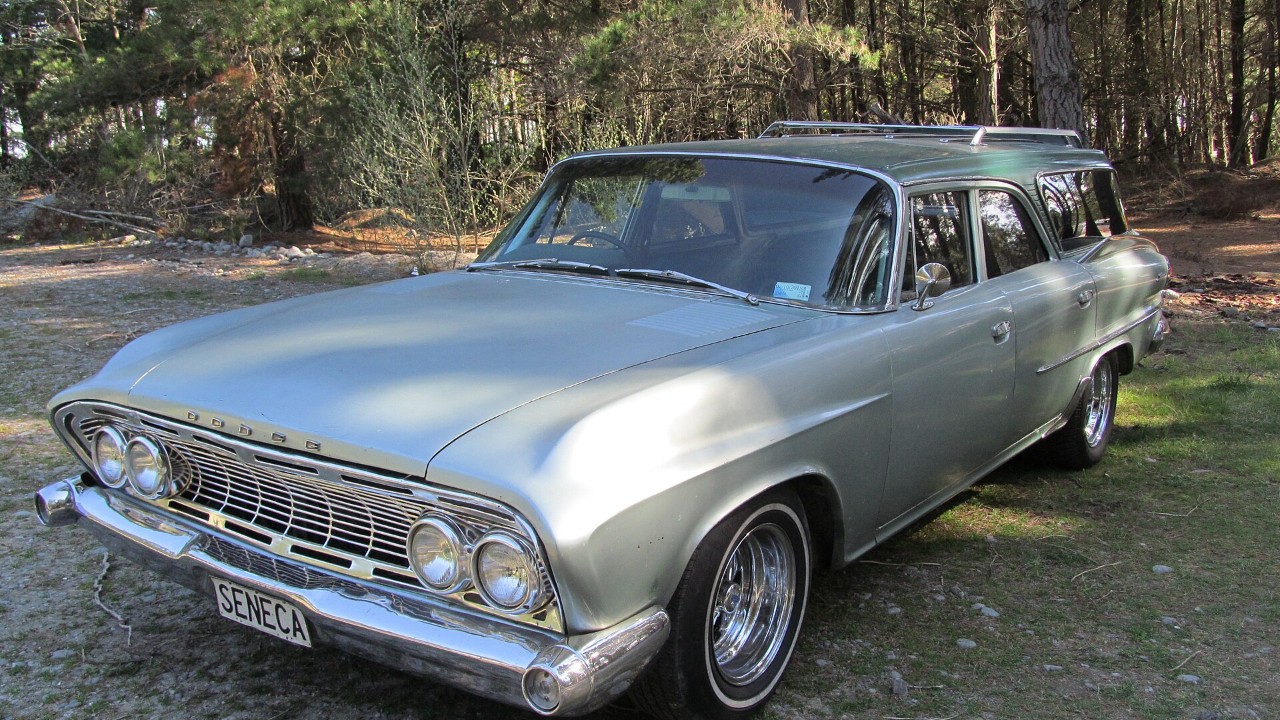
For 1961, Dart sales fell hard. The base Seneca dropped from 111,600 cars in 1960 to 66,100 in 1961. In total, Dart production that year came to 142,708.
Because of that slide, we find the 1961 Seneca an interesting survivor today. It was the plainest Dart of a year that buyers did not love. Even so, it kept the same basic recipe as 1960: a unibody full-size car with slant-six or V8 power and Dodge’s own sheet metal.
Our take: base cars like this rarely got saved, because nobody thought of them as special. That is exactly why we would stop to look at one. If we had the choice, we would take a Seneca with the simplest powertrain and plain hubcaps, just as most buyers ordered them. If you find a 1961 Seneca, check the unibody rails and floors carefully. Rust in a unit-body car is harder to fix than rust on a separate frame.
3. 1962 Dodge Dart 440
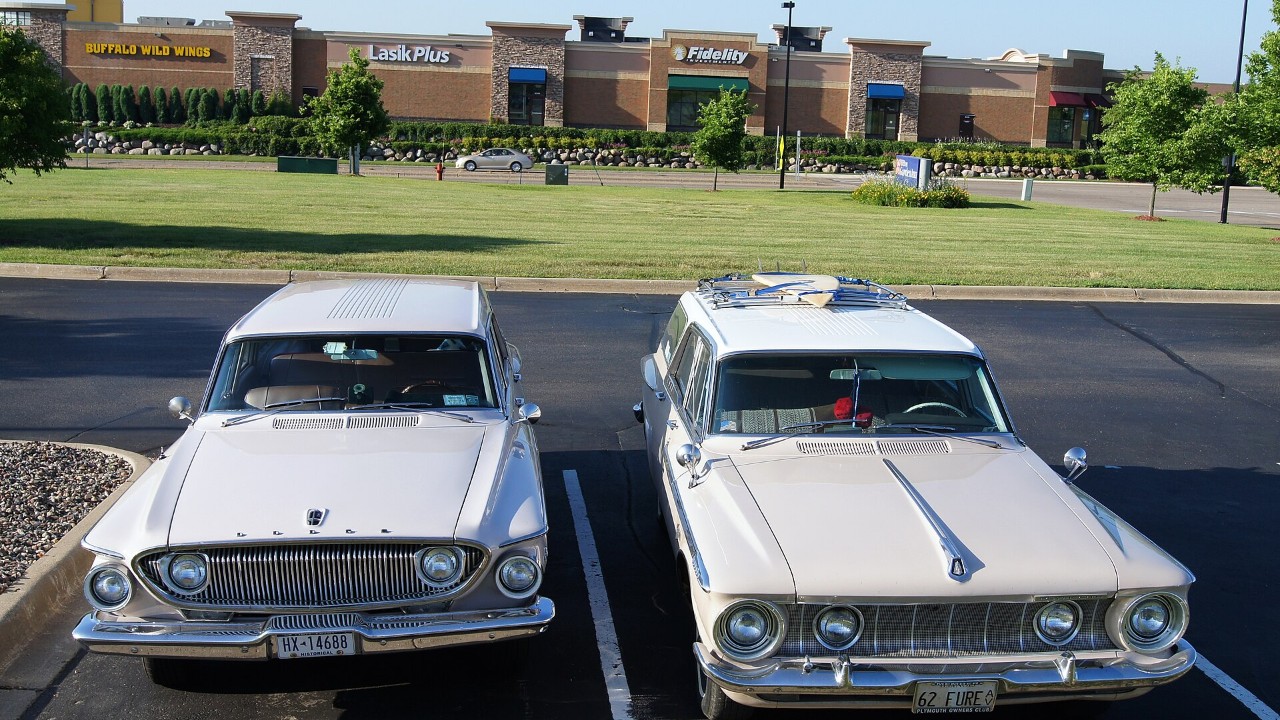
For 1962, Dodge shrank its full-size line, and the Dart name moved onto the smaller car. The range ran from the plain Dart through the Dart 330 and Dart 440. The Polara 500 sat on top, though it did not officially count as a Dart. That made the 440 the best-equipped car that still wore the Dart name.
Then the big news came mid-year. Dodge offered a 413-cubic-inch Ramcharger V8 rated at 415 horsepower. Suddenly, a downsized Dodge could carry a drag-strip engine. In our view, that option showed where Dodge was heading.
Our take: the 1962 Dart 440 is the car that showed a smaller Dodge body could go fast. In fact, a 440 with a big V8 is one of the most interesting Mopars of the early 1960s, in our view. Ask for documentation before you pay extra for a Ramcharger car.
4. 1964 Dodge Dart GT 273
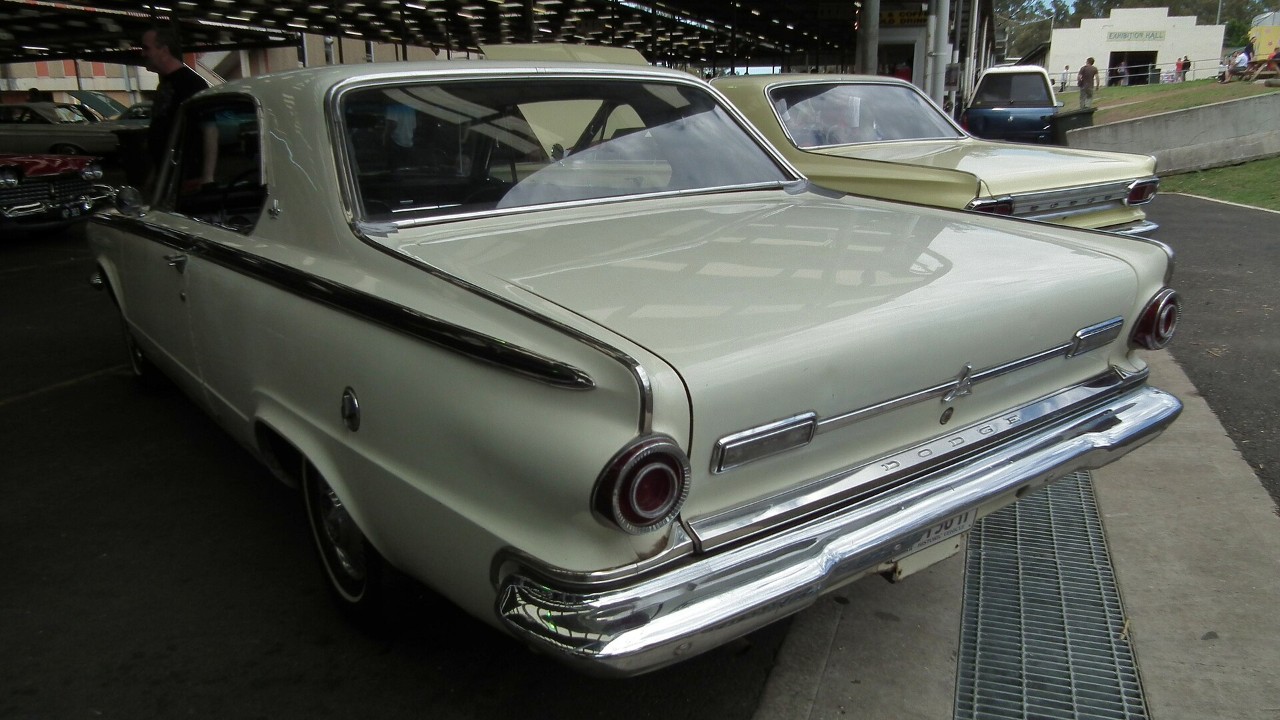
By 1963, the Dart had become a true compact, and the GT sat at the top of the range. Dodge sold the GT only as a two-door hardtop or a convertible. Therefore, it was the sporty, dressed-up Dart.
For 1964, the GT got a real engine to match. Dodge added the new 273-cubic-inch LA V8, with a two-barrel carburetor and 180 horsepower, as the top option. A two-barrel carburetor kept it mild, yet 180 horsepower was a big step for a compact. We explored the next year’s car in our look at how the 1965 Dart GT punched above its class.
Our take: the 273 changed what a compact Dodge could be. In our view, it set the tone for the V8 Darts that followed. We would look for a 1964 GT hardtop with the 273 and its original bucket seats.
5. 1967 Dodge Dart 270 hardtop

Dodge redesigned the Dart for 1967. After that, the 270 and GT trims carried on with few changes. Meanwhile, the base 170 six gained power, rising to 115 horsepower. That may sound modest, but it gave the entry-level cars a welcome boost.
The 270 hardtop sat in the middle of the range, below the GT. As a result, it skipped the flash and kept the comfort, which is what many families wanted.
Our take: the 270 hardtop is the honest, everyday Dart we wish more people saved. Its pillarless roof gives it a sportier look than its price suggests. If you find one with a slant-six and no rust, it makes an easy, cheap classic to run. Upgrade the brakes if you plan to use it often. In our view, an unrestored 270 with original paint is worth more than a modified one.
6. 1968 Dodge Hemi Dart L023
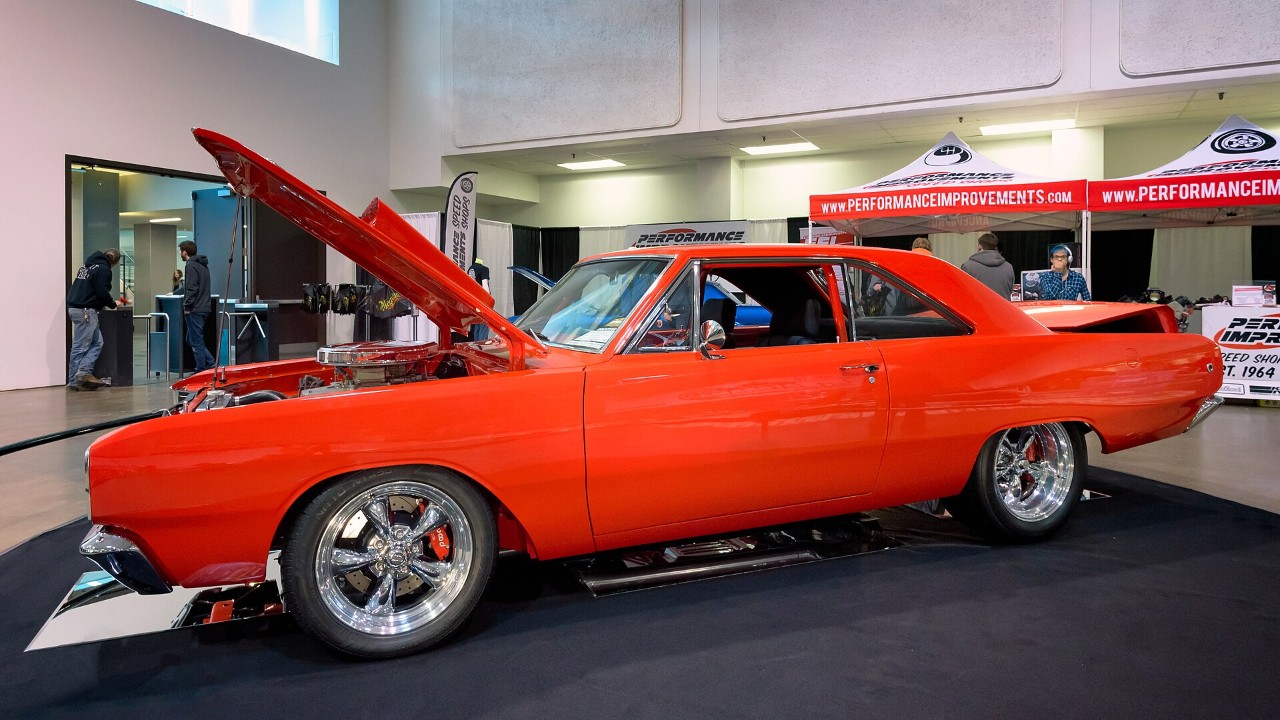
The L023 was the Dart at its most extreme. Dodge’s own heritage page says it built 80 Super Stock Hemi Darts for 1968, all at the Hamtramck plant in Michigan. Hurst then finished them, and they left from its Madison Heights facility.
In fact, every one was a stripped drag car. It had fiberglass front fenders and a scooped fiberglass hood, plus thin .080-inch side glass. The heater and rear seat came out, and adjustable straps replaced the window cranks. A 426 Race Hemi with 12.5:1 compression and two 770-cfm Holley carbs sat under the hood. As a result, the race-ready car weighed just 3,020 pounds. Dick Landy ran a four-speed car to 10.46 seconds at 131.19 mph in October 1968. In 1970, NHRA moved the cars up to the SS/A and SS/AA classes.
Our take: Dodge sold these “as is,” without any warranty, and said they were not for street use. That tells you everything. For more, our piece on how the 1968 Hemi Dart outran cars it was never meant to face covers the racing side in depth.
7. 1969 Dodge Dart GTS 383
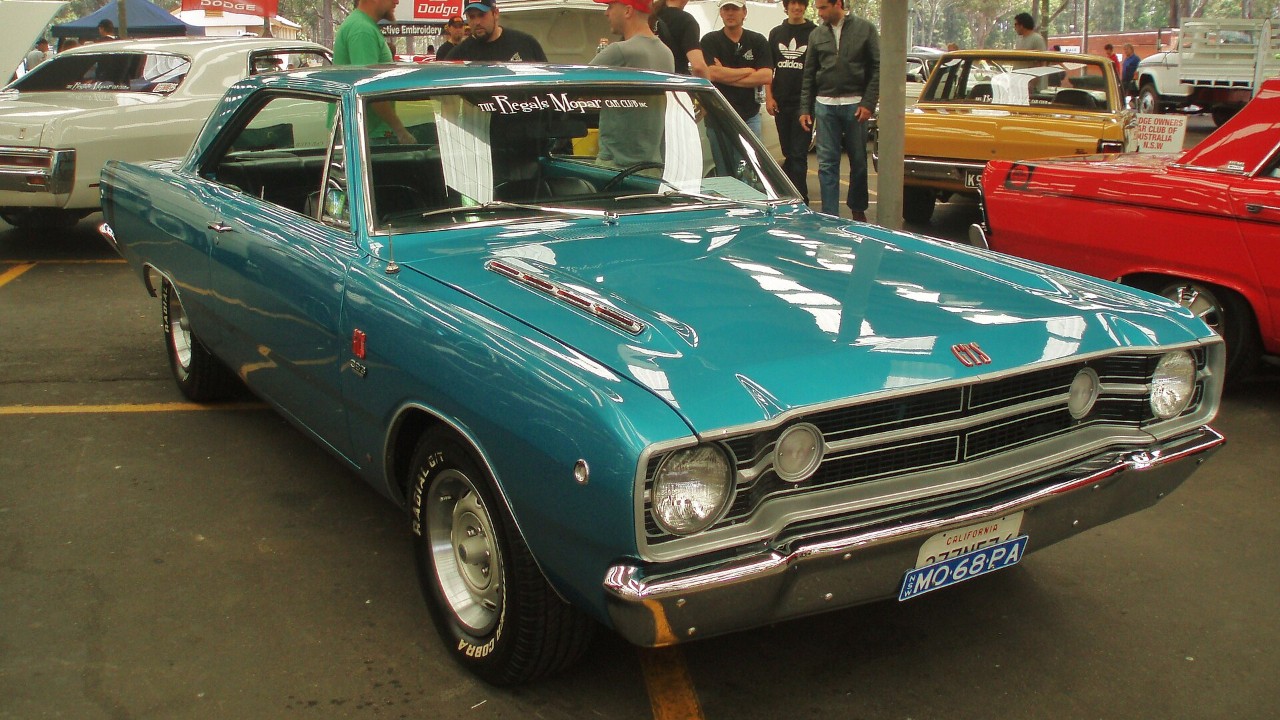
The GTS was the street performance Dart. For 1968, it came standard with the 340-cubic-inch V8. Buyers who wanted more could order a 383 big-block, rated at 300 horsepower.
For 1969, Dodge went further and made a 440 V8 available in limited numbers. In other words, the 383 became the middle ground. It gave the compact GTS big-block torque without the extreme 440 setup. In our view, that makes the 383 the most practical big-block GTS to hunt for today.
Our take: the 383 GTS is the Dart for buyers who want a classic big-block feel in a small package. We wrote about the car’s reputation in our feature on the Dart GTS 383. If you shop for one, check the fender tag and paperwork, because tribute cars exist.
8. 1971 Dodge Demon Sizzler
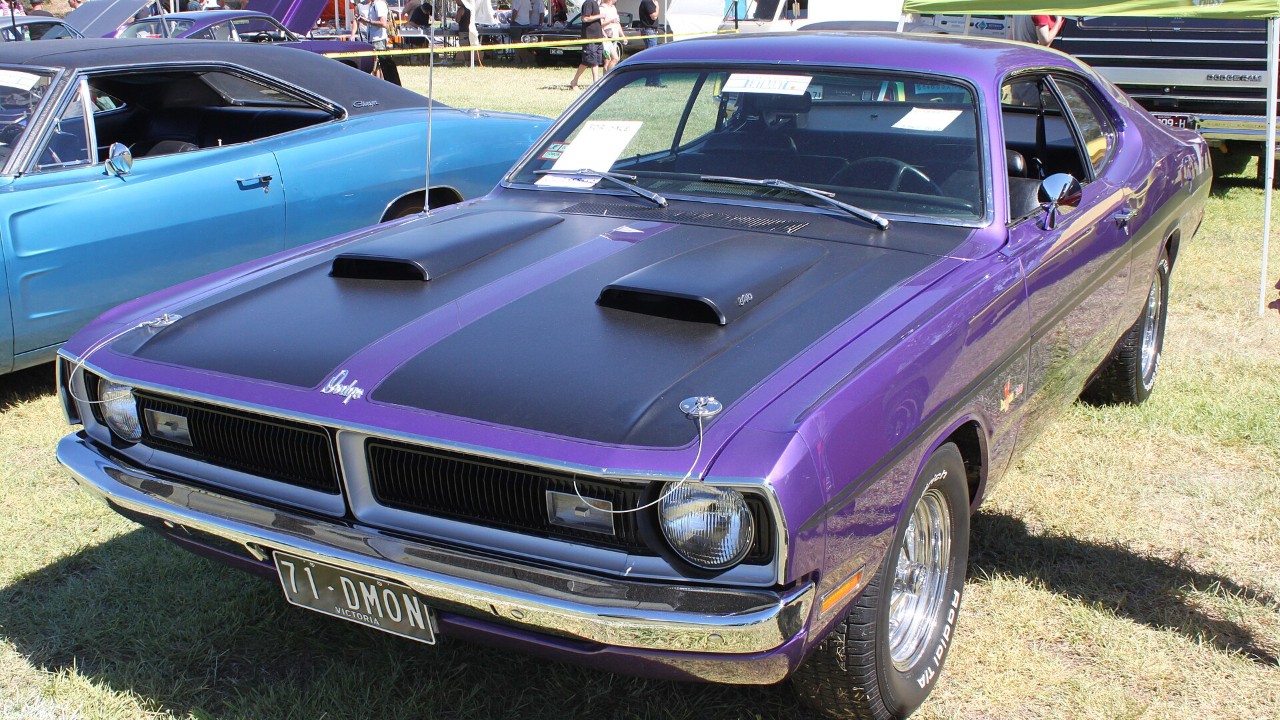
The Demon arrived for 1971 as Dodge’s version of the Plymouth Duster. Both cars also used the same Mopar A-body. Dodge gave the Demon a Dart front clip and its own taillights, according to Dodge’s history of the 1971 Demon. Because the Demon arrived a year after the Duster, Dodge had a proven formula to work from.
Starting March 1, 1971, a Sizzler trim package added some spice to the line. It sat above the base car and included a blacked-out hood. Engines ranged from 198 and 225 slant-sixes to a 318 V8. The hot Demon 340, by contrast, carried a conservative rating of 275 horsepower.
Our take: the Sizzler is the Demon for people who wanted the look without the insurance bill of a 340. Because it was a mid-year package, many people have never heard of it. We think an original Sizzler with its trim intact is worth more attention than it gets.
9. 1973 Dodge Dart Sport 340
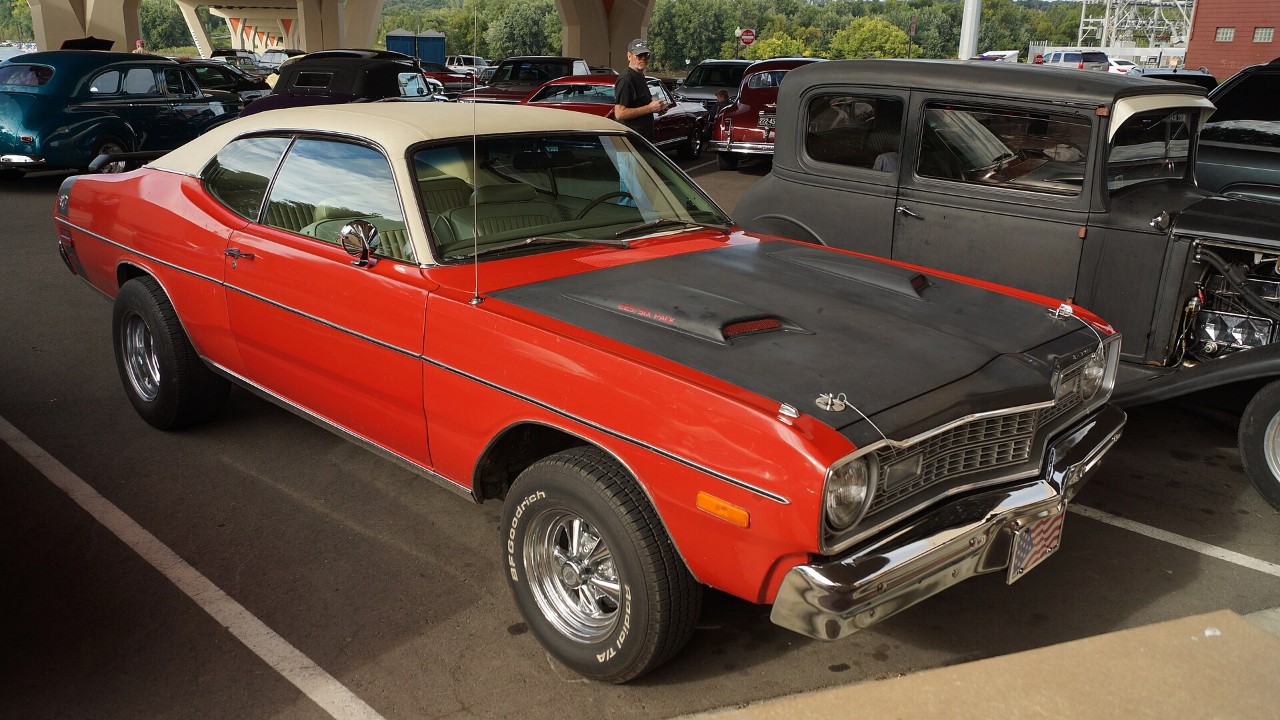
However, the Demon name did not last. For 1973, Dodge renamed its fastback compact the Dart Sport. The performance version became the Dart Sport 340. The Dart Sport kept the Demon’s fastback body, which the Demon had shared with the Plymouth Duster.
That change brought the hottest compact back under the Dart name. The fastback shape stayed, and so did the small-block 340. Dodge kept the formula of a light body with a strong V8, even as the muscle car era wound down around it.
Our take: the Dart Sport 340 is the last of the hot small-block Darts. We think it is one of the better ways into early 1970s Mopar muscle. Make sure the car is a real 340 car, because swaps from lesser models are easy. The Dart Sport name also carried two odder packages on this list, the Hang 10 and the Dart Lite.
10. 1975 Dodge Dart Sport Hang 10
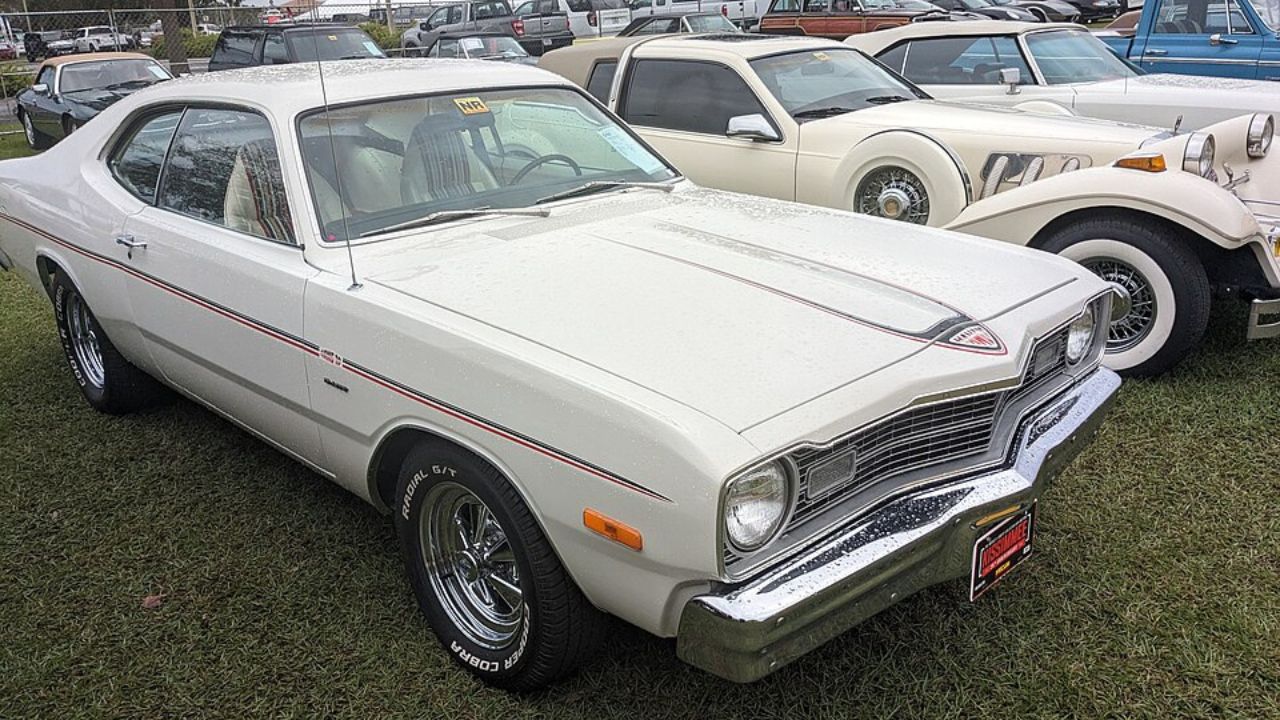
The Hang 10 might be the most 1970s option package ever sold. It ran for 1974 and 1975 and arrived as a $254 dealer-fitted option under code A63. Every car wore EW1 Eggshell White paint, plus side and hood decals that included a surfer on the rear quarter.
Inside, it also had colorful door trim and shag carpet. In addition, the rear seat folded down to carry a surfboard or two. According to Street Machine, there are no official build figures, but the general consensus is about 700 cars. Dealers reportedly ordered around 1,000 sticker packs, so a few more may exist. Buyers got a slant-six and an automatic as standard, with a manual, 318 or 360 V8 available.
Our take: we love that Dodge built a surf car out of a compact. With only about 700 made, the Hang 10 is far rarer than most people guess. If you find one, check the decals and interior for originality, since those are the whole point of the package.
11. 1976 Dodge Dart Lite
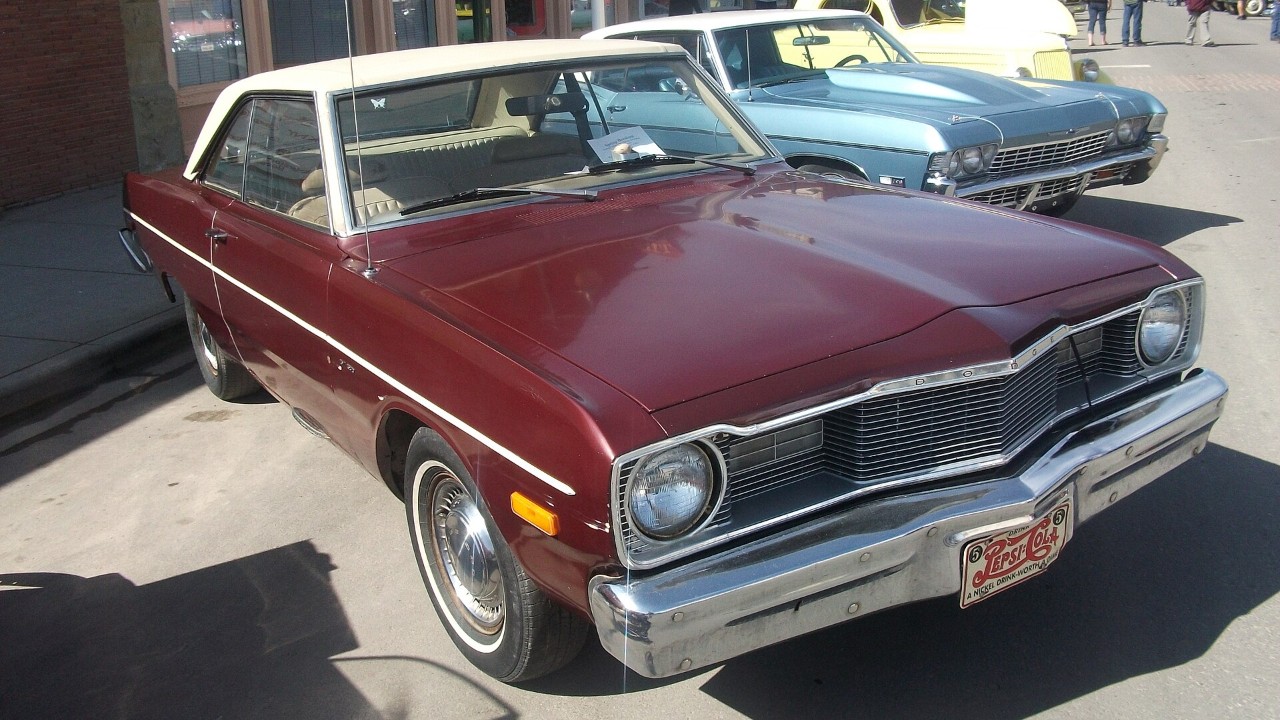
The Dart Lite was Dodge’s answer to the fuel crisis. It weighed at least 150 pounds less than a standard Dart Sport. To get there, Dodge used aluminum parts and offered only the 225 slant-six, with a specially calibrated carburetor.
In the end, the effort paid off. With a manual transmission, the EPA rated the Dart Lite at 36 mpg on the highway. It arrived in 1976, which was the Dart’s final year in North America. Dodge replaced the car with the Aspen in late spring 1976.
Our take: the Dart Lite proves the old Dart could adapt to almost anything. It went from Hemi drag car to fuel saver in under a decade. That makes it one of the more interesting fuel-economy experiments of the 1970s, in our view. Because it was a final-year package, few people know it exists. Look for the aluminum parts when you inspect one, because they are what make it a Dart Lite.
12. 2014 Dodge Dart GT
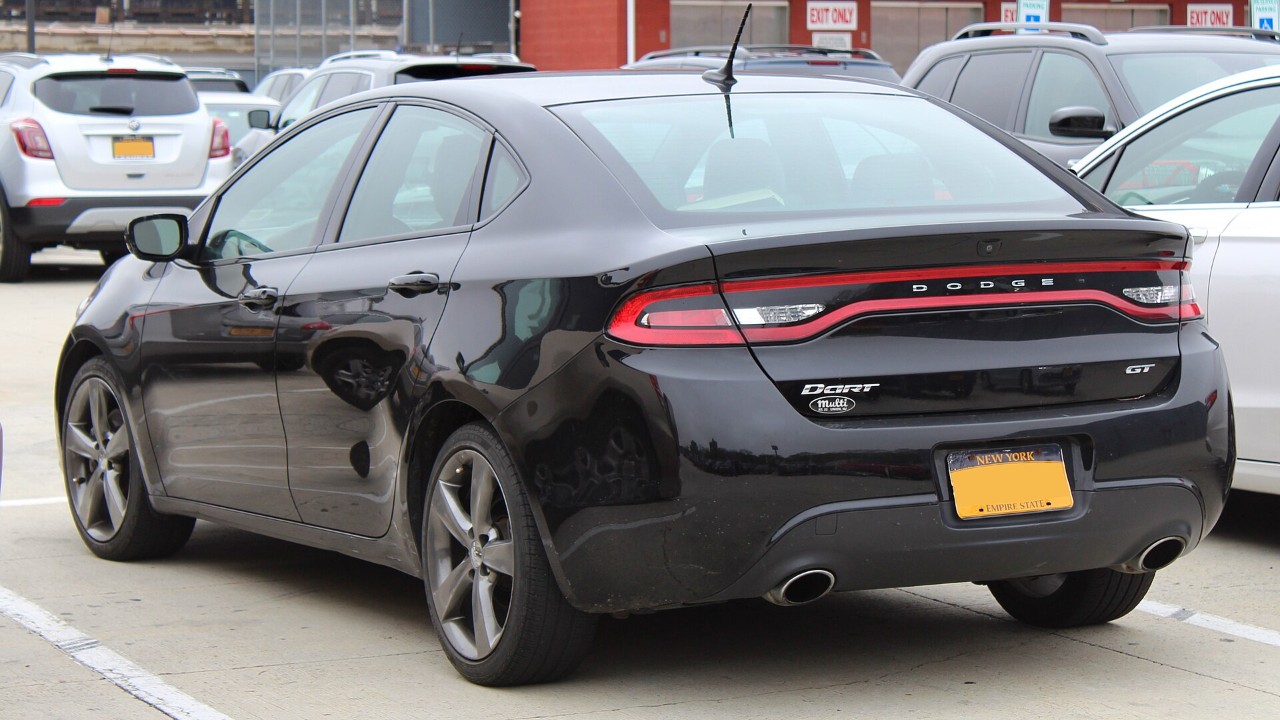
The Dart name returned for 2013 on a very different car. It used a modified Fiat compact platform shared with the Alfa Romeo Giulietta. Engineers widened it 1.5 inches and stretched the wheelbase 3.7 inches to create the platform known as Compact U.S. Wide.
At the top of the range, the GT was the sporty trim. It used the 2.4-liter Tigershark MultiAir four-cylinder, rated at 184 horsepower and 171 lb-ft of torque. The range also included a 2.0-liter Tigershark and a 1.4-liter turbocharged MultiAir engine. Chrysler built the car at its Belvidere Assembly Plant in Illinois. For 2014, Dodge sold 83,858 Darts in the United States. Sales peaked the next year at 87,908.
Our take: the modern Dart never caught on the way Dodge hoped, but a well-kept GT is a comfortable, roomy compact. We think it deserves to be remembered as the last chapter of the Dart story. Production ended on September 2, 2016.
More from Fast Lane Only