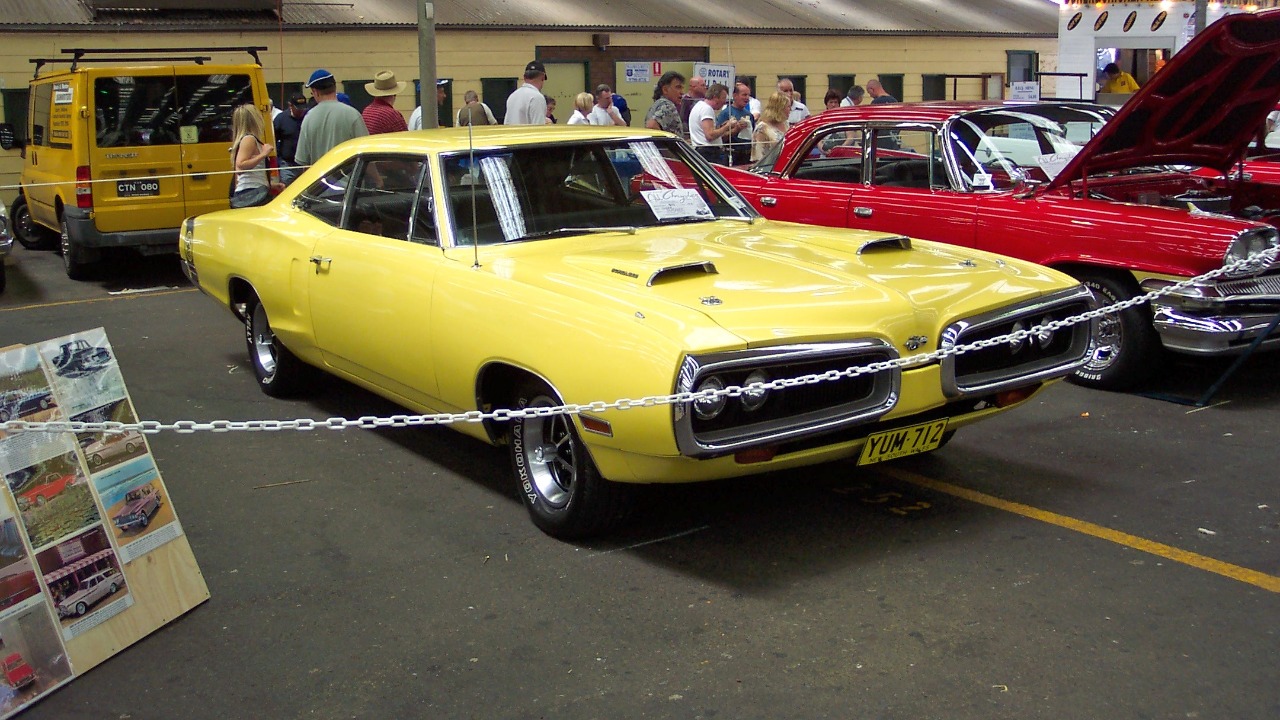
The 1970 Dodge Super Bee was built for buyers who wanted big-block power without big-block pricing. Positioned just below Dodge’s premium muscle offerings, it delivered up to 375 horsepower from the 440 Magnum V8 while keeping the sticker low enough to lure younger drivers and budget-minded racers. That mix of brute performance and blue-collar sensibility has turned the 1970 Super Bee into one of the clearest expressions of Detroit’s muscle car arms race.
What happened
By 1970, Dodge already had a full slate of performance models. The Charger covered the upscale side of the market, while the Coronet served as a more practical mid-size platform. The Super Bee began as a budget performance version of the Coronet, introduced for the 1968 model year as Dodge’s answer to the Plymouth Road Runner. It shared the same basic B-body architecture and much of its hardware but was trimmed and priced to reach value-conscious enthusiasts who still demanded serious speed.
The 1970 model year brought the final evolution of the original Super Bee formula on the Coronet body. Styling shifted to a distinctive twin-loop front bumper that framed a pair of grille openings, a look that immediately separated the Super Bee from more conservative Coronets in the same showroom. Stripes, badges, and bright colors made the car stand out even before the hood was raised, yet the real story sat between the fenders.
At the heart of the 1970 Super Bee lineup was a tiered engine menu that started with a 383 cubic inch V8 and climbed to the 440 and 426 Hemi. The 383 Magnum, rated at roughly 335 horsepower, formed the base of the performance story and kept the entry price down. For drivers who wanted more, Dodge offered the 440 Six Pack with three two-barrel carburetors and a factory rating of 390 horsepower, as well as the legendary 426 Hemi for those willing to spend substantially more.
For many buyers, the sweet spot was the 440 Magnum four-barrel, rated at 375 horsepower. While the Six Pack and Hemi grabbed the headlines, the 440 Magnum delivered stout torque, relatively simple tuning, and a lower cost than the exotic setups. In a Super Bee, that engine turned the car into a serious street and strip contender without forcing buyers into the premium Charger R/T or the more expensive Hemi territory.
Dodge’s pricing strategy was deliberate. The Super Bee used the Coronet’s more modest trim and fewer luxury options, which kept manufacturing costs under control. Interiors were functional rather than plush, with bench seats available and fewer standard convenience features. The savings showed up on the window sticker, where a Super Bee undercut better-appointed muscle cars that often shared the same drivetrains.
The car’s performance hardware reflected that focus on value. Heavy-duty suspension components, upgraded cooling, and performance rear axle ratios were bundled into packages that favored straight-line speed and durability. Buyers could choose between a four-speed manual with a Hurst shifter or the Torqueflite automatic, both proven in drag racing circles. Optional limited-slip differentials and performance tires rounded out the package for drivers who planned to run at the local strip on weekends.
Visually, the Super Bee leaned into its working-class mascot. The cartoon bee logo appeared on fenders and tail panels, and high-impact colors such as Plum Crazy, Go Mango, and Sublime turned the car into rolling advertising for Dodge’s performance image. The styling was bold, but the underlying message was simple: this was a serious muscle car that did not pretend to be a luxury coupe.
Within Dodge’s broader performance family, the Super Bee slotted below the Charger and above more ordinary Coronets. The Charger line, which evolved through multiple Charger generations, carried more upscale sheet metal and interior appointments and often attracted buyers willing to pay extra for style and comfort. The Super Bee, by contrast, was unapologetically focused on speed per dollar, which helped Dodge cover more of the market without overlapping its own products too heavily.
Why it matters
The 1970 Super Bee captures a specific moment in American automotive history when manufacturers were chasing ever higher horsepower figures while trying to hold the line on price. Insurance premiums and emissions regulations had not yet choked the segment, so Dodge could still sell a mid-size car with 375 horsepower and a factory warranty to a young buyer with a modest budget. That combination makes the Super Bee a case study in how Detroit used clever packaging to democratize performance.
Pricing was central to the car’s impact. By stripping out some of the frills found in higher-end models, Dodge allowed customers to spend their money on the parts that mattered most to performance. The 440 Magnum engine, heavy-duty driveline, and performance suspension were all available without the cost of premium trim, power accessories, or elaborate interiors. For many buyers, the car represented the most direct route to big-block power at a manageable monthly payment.
This strategy also shaped the culture around the Super Bee. Owners often treated the car as a tool rather than a trophy, using it for daily driving during the week and racing on the weekends. The relative affordability encouraged modifications, from intake and exhaust upgrades to gear swaps and suspension tuning. That willingness to wrench on the car helped cement its reputation in grassroots drag racing scenes, where consistency and value mattered as much as outright speed.
Within the broader muscle car market, the 1970 Super Bee highlighted the tension between image and substance. Some competitors leaned heavily on styling and luxury, offering vinyl roofs, ornate interiors, and extensive option lists that pushed prices into near-luxury territory. Dodge’s mid-level performance car took a different path, prioritizing mechanical content over cosmetic flourishes. The result was a car that might have looked a little plainer inside but could run neck and neck with more expensive rivals at the strip.
The Super Bee’s place in Dodge’s lineup also helped the brand maintain a performance identity across income levels. The Charger appealed to buyers who wanted a more refined personal coupe, while the Super Bee spoke directly to younger enthusiasts and working-class customers. That two-pronged approach allowed Dodge to project a unified performance image while tailoring each model to a specific budget and lifestyle.
From a historical perspective, the 1970 Super Bee marks the high-water point of the original muscle car era for this nameplate. After 1970, tightening emissions standards, rising insurance costs, and changing buyer preferences began to erode the formula that made the car possible. The Super Bee name would later reappear on other platforms, but the combination of a relatively low price, a big-block 440 Magnum, and factory-rated 375 horsepower was very much a product of its time.
Collectors and historians now see the 1970 Super Bee as a bridge between raw street machines and more refined performance cars. Its straightforward engineering and honest positioning have aged well, especially as modern enthusiasts look back on cars that delivered genuine performance without excessive complexity. The car’s focus on mechanical value over luxury trappings feels surprisingly contemporary in an era when many buyers again prioritize performance per dollar.
The model also illustrates how manufacturers balanced marketing flair with real capability. The cartoon bee graphics and high-impact colors drew attention, but the underlying hardware backed up the image. That authenticity matters to collectors today, who often seek out cars that were more than just styling exercises. The Super Bee’s reputation for durability and performance helps sustain its appeal on the auction circuit and in private sales.
In the context of Dodge’s long performance story, the 1970 Super Bee shows how the brand used shared platforms and drivetrains to reach different customer segments. By leveraging the B-body architecture and engines that also powered Chargers and other models, Dodge could spread development costs while tailoring each car’s identity. The Super Bee’s role as the value-focused muscle option was a key part of that strategy.
What to watch next
Interest in late 1960s and 1970 muscle cars has remained strong among collectors, and the 1970 Super Bee sits squarely within that sweet spot. Values for well-preserved or properly restored examples have climbed as buyers recognize the car’s blend of performance and relative rarity compared with more widely produced models. The 440 Magnum and 440 Six Pack versions in particular draw attention from enthusiasts who want the big-block experience without stepping into the higher price bracket of Hemi cars.
The market also reflects growing appreciation for cars that offered serious performance without luxury pretensions. As collectors look beyond the most famous nameplates, models like the Super Bee gain ground because they tell a more complete story about how ordinary buyers accessed speed. Documentation that confirms original engine and drivetrain combinations, factory colors, and option packages has become increasingly important for buyers who want to capture that history accurately.
Restoration trends suggest that many owners now aim to preserve the Super Bee’s original character rather than over-customize it. Period-correct wheels, factory stripe packages, and stock-style interiors are common choices, even when engines receive internal upgrades for reliability or modest power gains. That approach respects the car’s roots as a factory-built value muscle machine, rather than turning it into a modernized restomod that could be almost any vintage coupe.
At the same time, the Super Bee’s straightforward engineering makes it a popular platform for performance builds. The B-body chassis accepts a wide range of suspension and brake upgrades, and the big-block engine bay leaves room for modern induction and ignition systems. Enthusiasts who want to combine classic styling with updated drivability often see the Super Bee as a smart starting point, especially when compared with more expensive or historically sensitive models.
The car’s legacy also shapes how Dodge approaches modern performance branding. While the company has revived the Super Bee name on later models, the original 1970 formula still resonates: substantial power, aggressive styling, and a price that undercuts the most luxurious offerings in the lineup. That template can be seen in more recent performance trims that emphasize value-packed horsepower rather than top-tier luxury features.
Looking ahead, the 1970 Super Bee’s story will likely gain even more relevance as the industry shifts toward electrification and away from large-displacement internal combustion engines. Enthusiasts who grew up hearing about big-block V8s are increasingly interested in owning a piece of that history before such cars become harder to find in original condition. The Super Bee’s combination of accessible pricing (relative to rarer halo models) and authentic muscle credentials positions it as a key target for that nostalgia.
Museums and heritage collections that document American performance history often highlight cars like the Super Bee to explain how mass-market buyers experienced the muscle era. The model’s role as a budget-friendly entry point helps balance exhibits that might otherwise focus only on the most exotic or expensive machines. That visibility, in turn, reinforces the car’s status among enthusiasts who value historical significance as much as raw performance numbers.
More From Fast Lane Only: