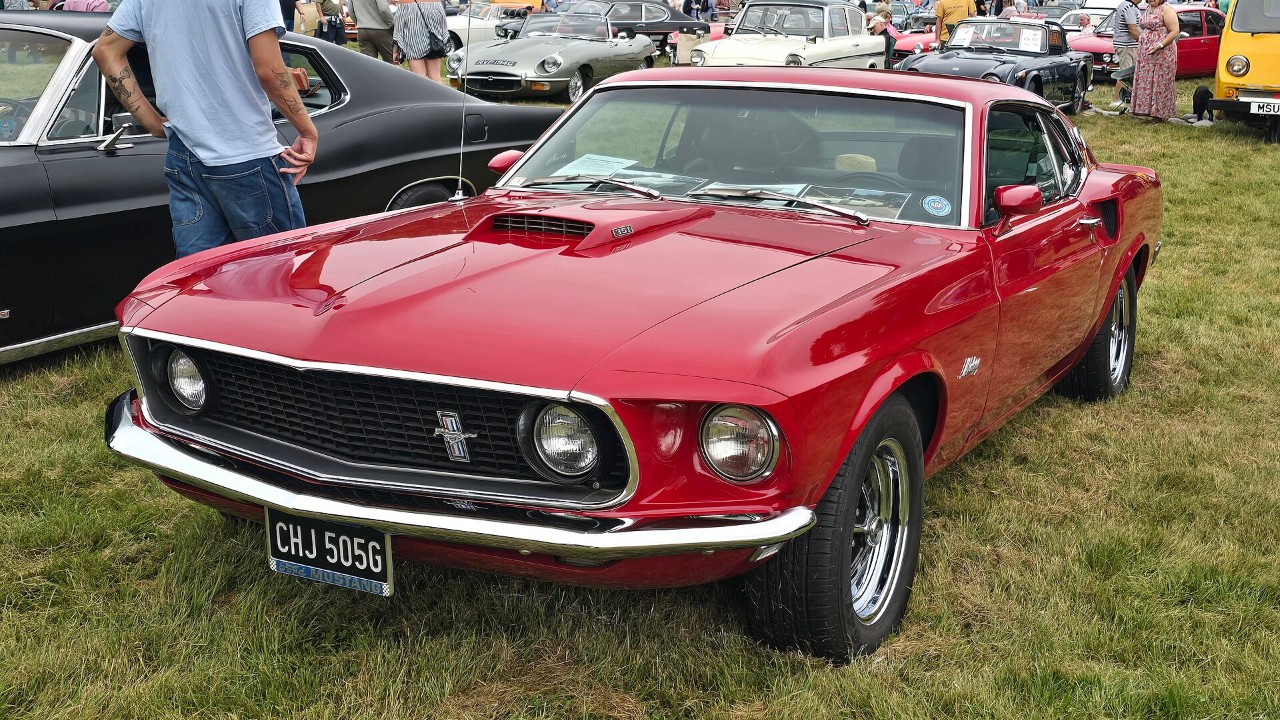
Ford’s sales literature called the 1969 Mustang fastback the SportsRoof. That 1969 Mustang SportsRoof is still the shape most of us picture when we hear the word fastback. However, the roofline did not stop at Dearborn’s pony car. Through the late 1960s and the 1970s, it showed up on intermediates, compacts, economy cars and imports.
Plenty of those cars live in the shadow of a more famous badge. A Mach 1, a Boss or a Cobra Jet gets the spotlight. Meanwhile, the car next to it with the same slope sits a rung lower. That gap is exactly why we keep an eye on them.
These are our picks for eight fastbacks we think won’t stay affordable much longer. The verdict is our opinion, not a price forecast. Every fact behind it comes from factory specs and period history, and we’ve left out any value figures we couldn’t confirm.
1. 1969 Ford Mustang GT 390 SportsRoof
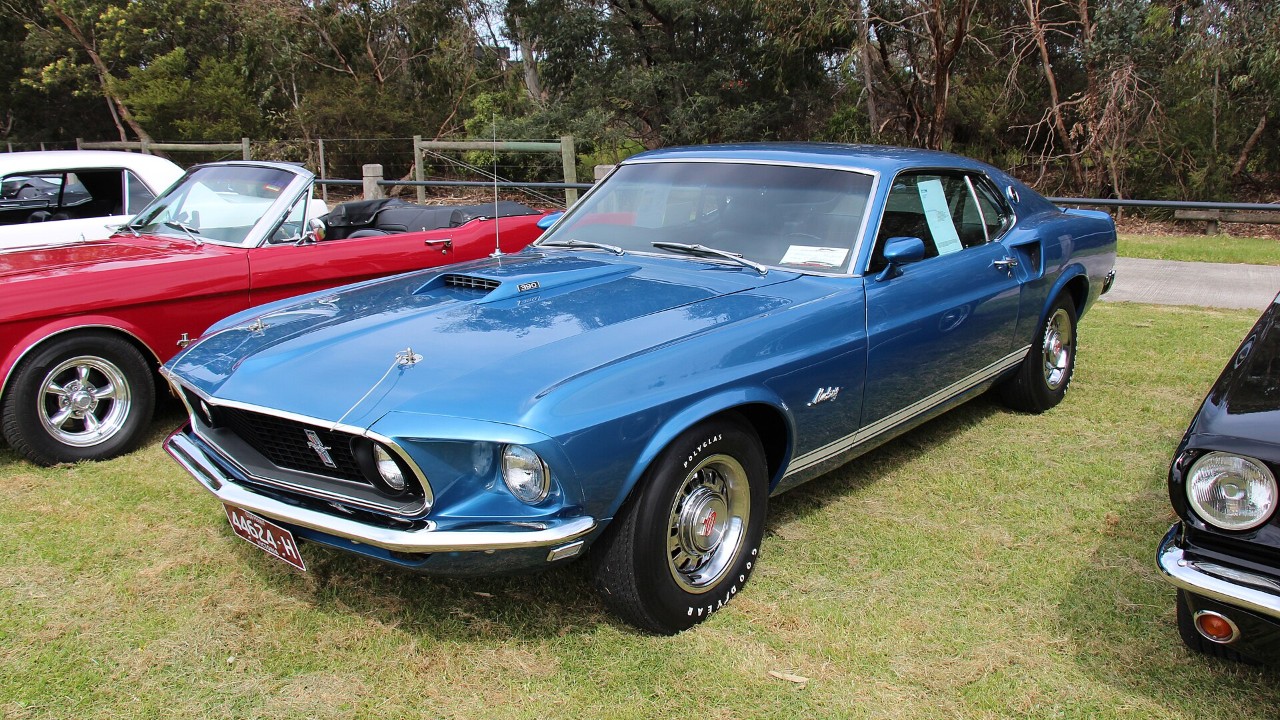
For 1969, Ford stretched the Mustang body by 3.8 inches and gave the fastback its SportsRoof name in the sales literature. Meanwhile, the optional 390 V8 carried a rating of 320 horsepower at 4,600 rpm. It also made 427 lb-ft of torque at just 3,200 rpm, which is the real story on the street.
The GT package is the twist. Ford dropped it after 1969 because of poor sales, as only 5,396 Mustang GTs found homes that year. Meanwhile, the brand-new Mach 1 sold 72,458 copies. In other words, the GT version of the 1969 Mustang SportsRoof marks the end of a line.
Our take: the GT has the same big-block pull and the same roof as its famous sibling, yet it rarely gets the same attention. Want a big-block 1969 fastback? Check the door tag and paperwork, because the GT name alone does not prove the engine. We also looked at other forgotten Mustangs that turned into surprise collectibles, and the pattern is familiar.
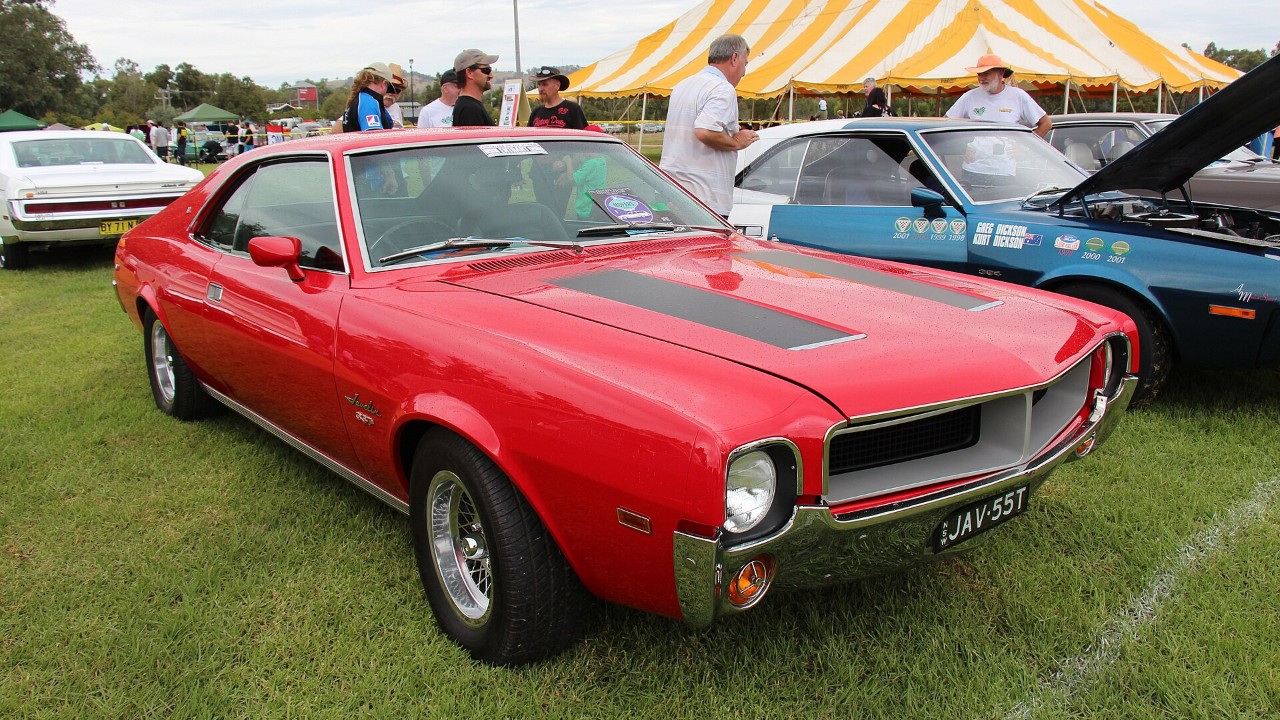
2. 1972 Mercury Montego GT
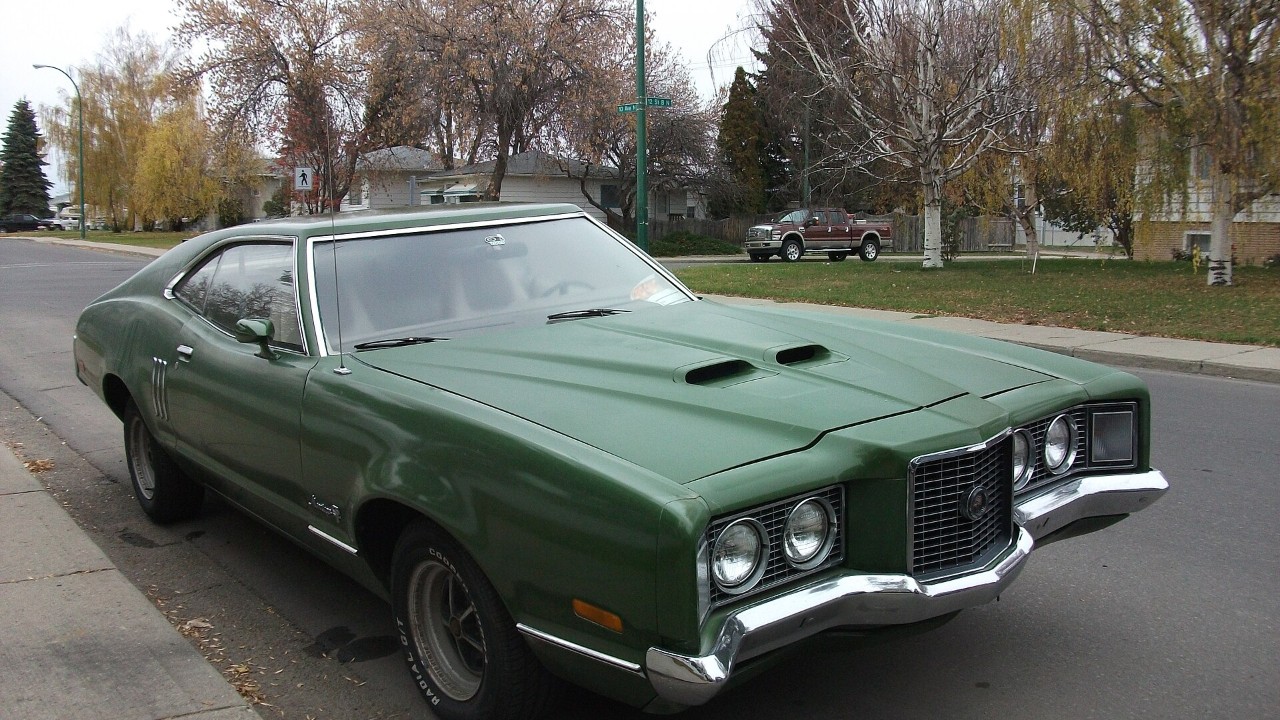
Mercury redesigned the Montego for 1972 alongside the new Ford Torino. Under the skin, the change was big. The car moved from unibody construction to a separate frame. Two-door models rode a 114-inch wheelbase, while sedans and wagons got 118 inches.
The Montego GT was the fastback of that family, Mercury’s version of the Gran Torino SportsRoof. It also took over from the Cyclone as the line’s performance model, because the Cyclone became an option package that year. Then the window closed fast. Mercury sold the fastback GT for only 1972 and 1973, and it was gone for 1974.
In our view, two short model years and a Mercury badge make this one of the least-known fastbacks of the decade. Most people at a show walk past it thinking it’s a Torino. That anonymity is a big part of the appeal, but it won’t last if more people learn what it is. Buyer advice: confirm the car is a real GT and not a dressed-up base model before you pay GT money.
3. 1975 Ford Pinto Runabout 2.8 V6
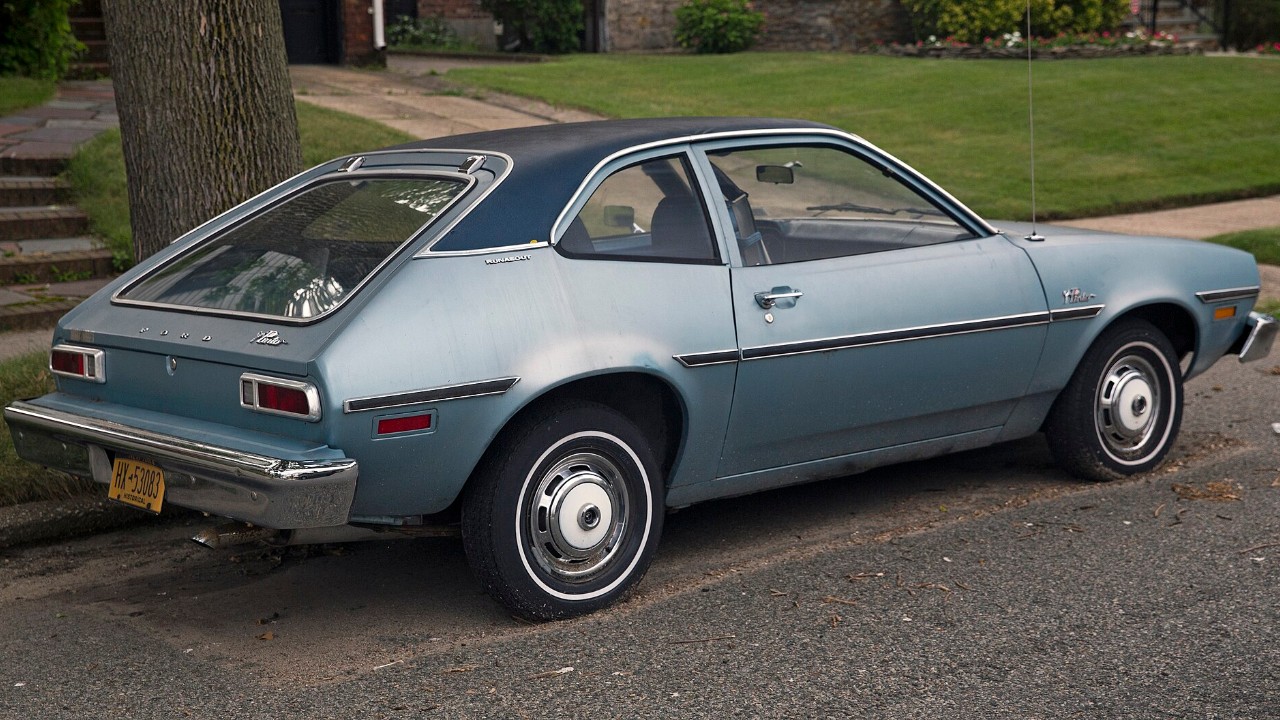
The Pinto was Ford’s first North American subcompact. Ford offered it as a fastback sedan, a three-door hatchback and a wagon. The hatchback, called the Runabout, debuted at the Chicago Auto Show on February 20, 1971. It went on sale days later at $2,062.
For 1975, Ford added a German-built 2.8-liter Cologne V6 to the option list. Its rating was 97 horsepower and 139 lb-ft of torque. That may sound modest now. Even so, it gave the little Runabout a smooth six that set it apart from four-cylinder rivals. The V6 then stayed available through 1979.
Our take: the Pinto carries plenty of baggage, and we won’t pretend otherwise. However, a clean V6 Runabout with its long, sloping hatch is now an unusual sight at any car show. Most Pintos were used up as cheap transportation. If you find a survivor with the V6 and a tidy body, we think it is worth saving before the rest disappear.
4. 1975 Chevrolet Monza 2+2
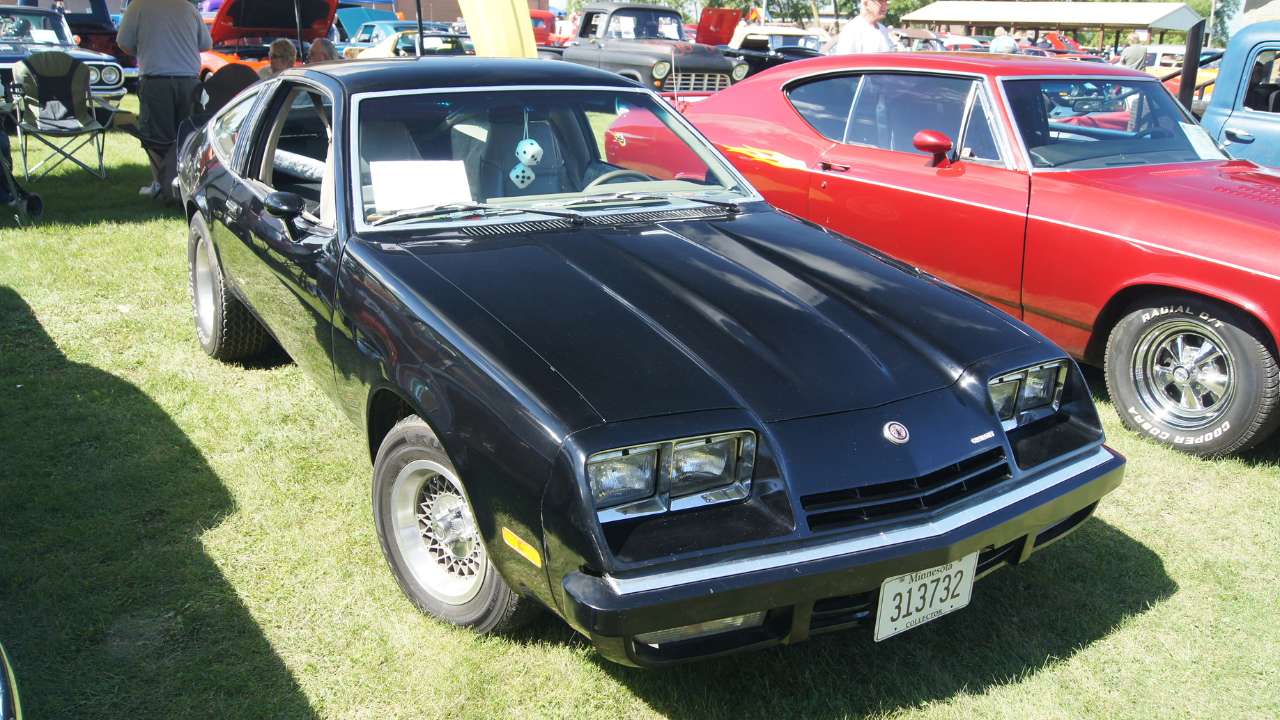
GM designed the Monza around its Wankel rotary engine, licensed from NSU. Then fuel economy and emissions problems sank the rotary, and Chevrolet postponed it on September 24, 1974. As a result, the Monza 2+2 reached buyers for 1975 with piston engines instead.
The V8 options tell the story of the era. A 262-cubic-inch V8 with a two-barrel carburetor made 110 horsepower. For 1975 only, buyers in California and high-altitude areas could get a 350 V8 rated at 125 horsepower. The styling did the heavy lifting. John DeLorean reportedly called the car the “Italian Vega” for its likeness to the Ferrari 365 GTC/4. Motor Trend also named the Monza 2+2 its 1975 Car of the Year.
Chevrolet built 731,504 Monzas over six model years, so the cars were everywhere once. Today, though, a first-year 2+2 with a V8 is a rare find. Our take: it’s the closest thing to a baby Ferrari roofline that Chevrolet ever sold, and we think that design will keep winning new fans.
5. 1970 Plymouth Valiant Duster 340
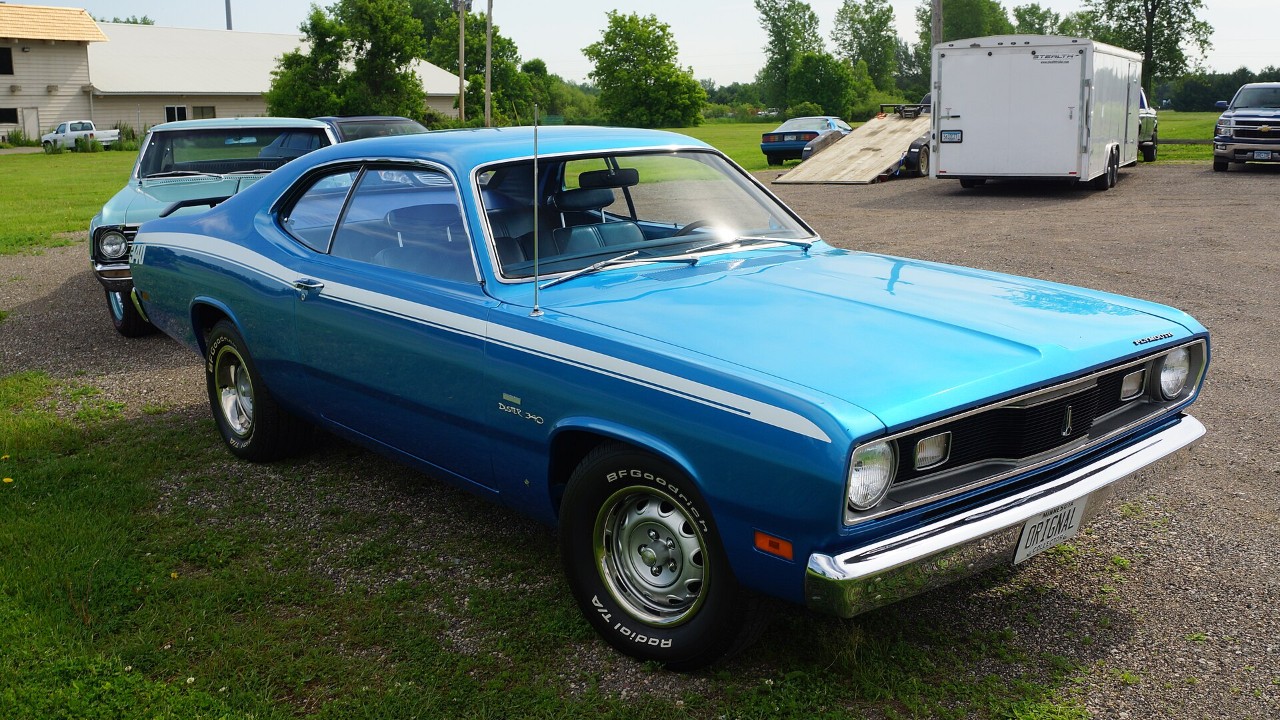
Plymouth built the Duster on the Valiant platform and kept the Valiant’s front sheet metal. From the cowl back, though, the body was new. It had a semi-fastback roof, a steeper windshield and its own rear valance. Together, they turned a sensible compact into something with real attitude.
The 340 version was the performance model for 1970. Its LA-series V8 carried a rating of 275 horsepower in SAE gross terms, or 235 net, for both 1970 and 1971. The car sold well, too. In 1971, Plymouth built 186,478 Dusters, but only 12,886 of them had the 340.
That small share is the reason we like it. A light compact with a high-revving small-block was a recipe that worked, and the Duster 340 delivered it without big-block weight up front. We’ve written before about how the 1970 Duster 340 delivered more than buyers expected. Buyer advice: check the fender tag and the VIN code, since many slant-six Dusters now wear 340 badges.
6. 1969 Ford Torino GT 351 SportsRoof
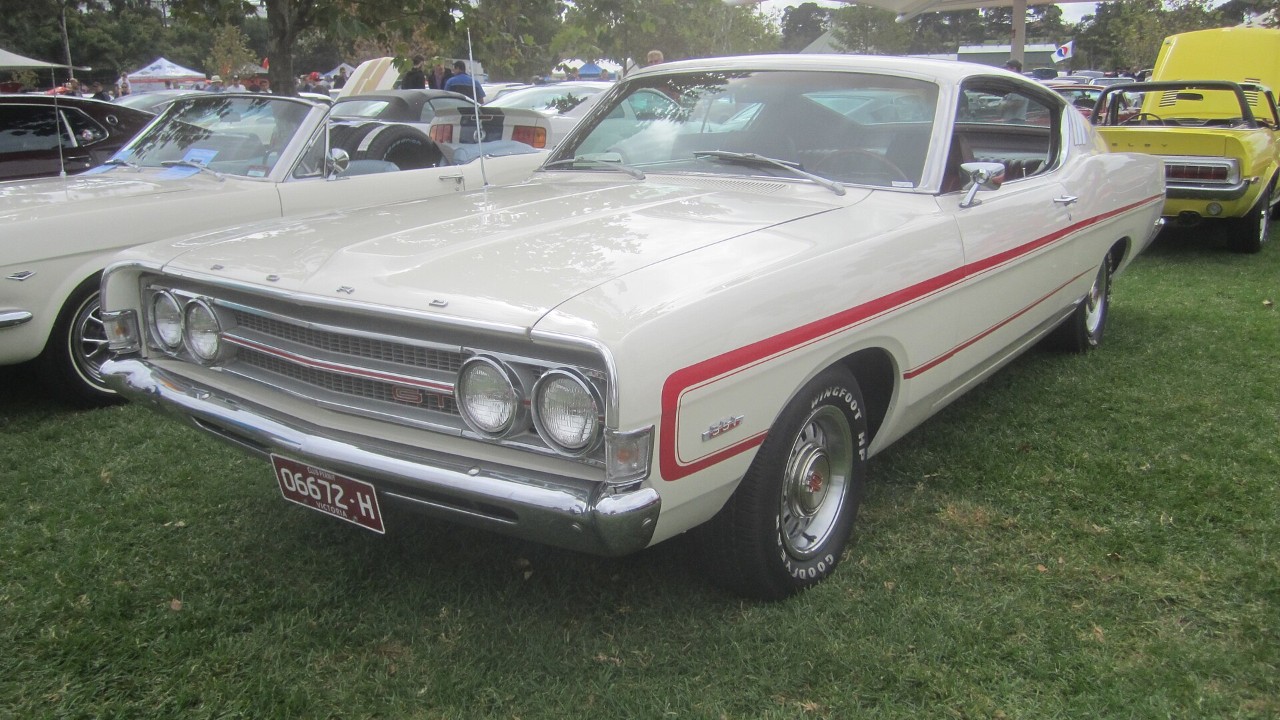
The Torino started as the upscale version of Ford’s intermediate Fairlane. For 1968 and 1969, the Fairlane name covered the lower trims, while the Torino sat on top. Ford added the two-door SportsRoof fastback for 1968, and the GT came as a hardtop, a fastback or a convertible.
For 1969, Ford introduced the 351 Windsor V8 in two-barrel and four-barrel forms. That engine slotted between the base 302 and the big-block 390 and 428 Cobra Jet. Meanwhile, the slippery 1968–1969 fastback roofline helped Ford’s racers dominate NASCAR’s superspeedways. That track record led to the long-nose Talladega. We covered how Ford rushed the Torino Talladega into production in a separate story.
Our take: a 351 Torino GT gives you the same fastback shape as the race cars without the Cobra Jet price of entry. It’s also a better daily driver than a big-block car, with less weight over the nose. In our view, these mid-level GTs are the ones flying under the radar.
7. 1977 Toyota Celica LT liftback
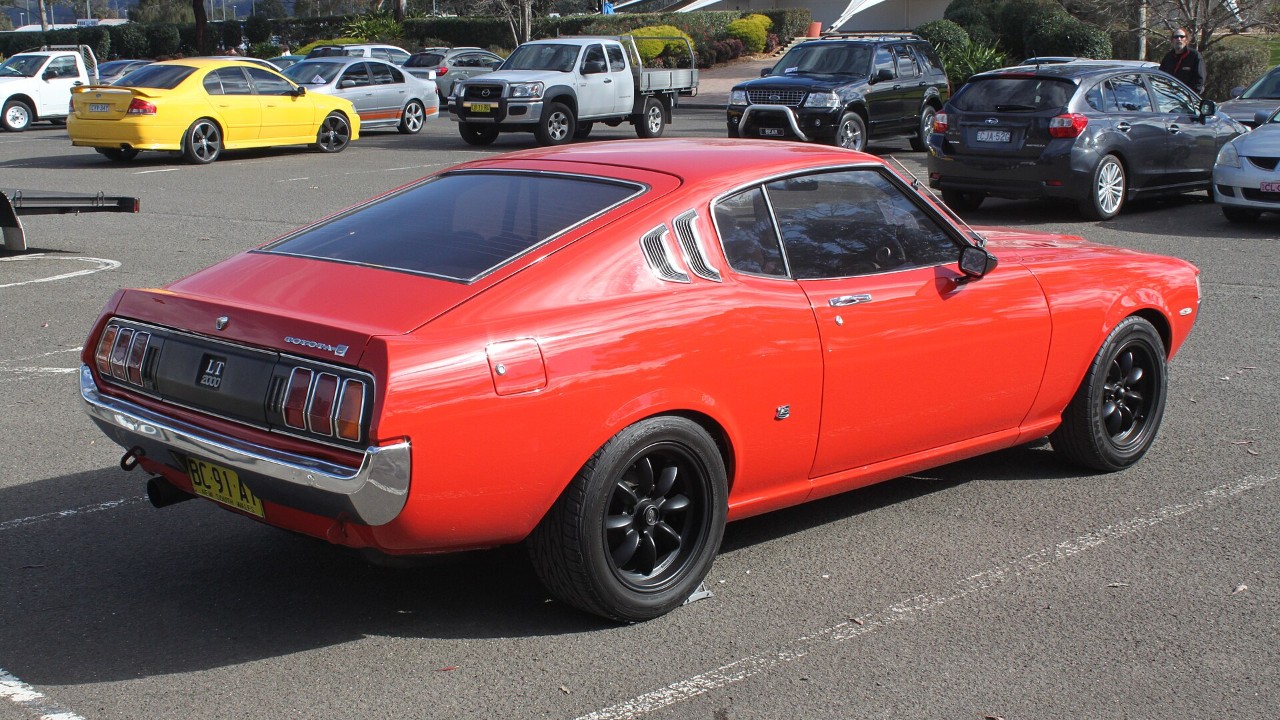
Toyota sold the Celica Liftback in Japan for nearly three years before it reached export markets for 1976. At that point, the Liftback arrived with a sloping rear hatch and a three-light taillamp. That design drew complaints that it copied the Mustang. One history even says the 1976 tail made it look more like a 1969 Mustang.
The export cars used the 20R four-cylinder, which displaced 2,189 cc. Buyers in the U.S. got the Liftback only in GT form, so the LT trim belongs to other markets. Australia, for example, sold a 2000LT Liftback coded RA28 for a single model year. According to Ate Up With Motor’s history of the first Celica, Toyota sold 264,152 Celicas in the U.S. across the 1976 and 1977 model years.
That’s a lot of cars. Even so, rust and hard use took most of them, and a tidy first-generation Liftback is now hard to find. Our take: this pony-car-shaped Toyota has the looks to win over a new generation of buyers. Buyer advice: inspect the rear wheel arches and the hatch floor before anything else.
8. 1984 Mazda RX-7 GSL-SE
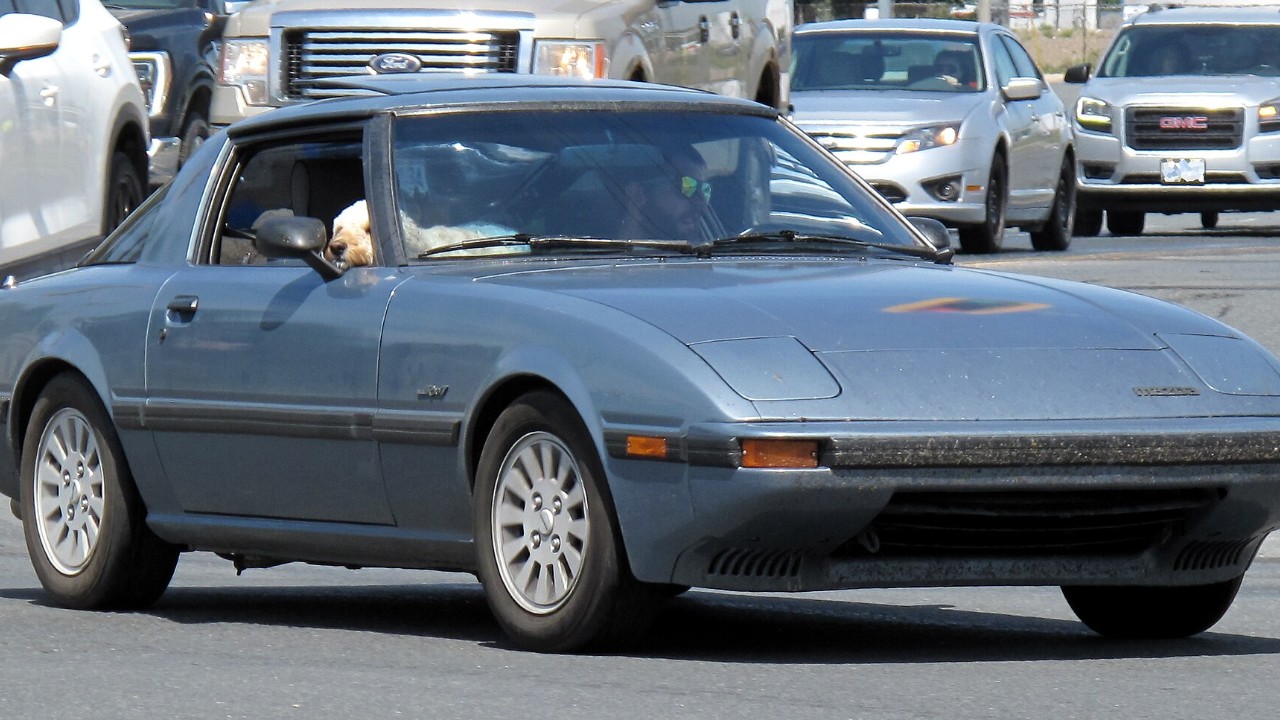
Mazda gave the first-generation RX-7 a two-seat coupe body with a rear hatch, and it built 471,018 of them. The 1984 GSL-SE was the one that changed the formula. It was the first RX-7 with the larger 13B rotary. With fuel injection, it was rated at 135 horsepower and 133 lb-ft of torque.
The upgrades went beyond the engine. Grassroots Motorsports’ RX-7 buyer’s guide notes the GSL-SE’s larger brakes, anti-roll bars and limited-slip differential. It also says zero-to-60 times dropped below eight seconds for the first time. Mazda sold the GSL-SE for 1984 and 1985, the last two years of the first generation.
Our take: the GSL-SE is the fastest and best-equipped early RX-7, and it ended its run after two model years. Many first-generation cars became race cars or engine-swap projects, so an unmodified 13B car is getting scarce. Buyer advice: a compression test of the rotary is worth every penny before you buy.
More from Fast Lane Only