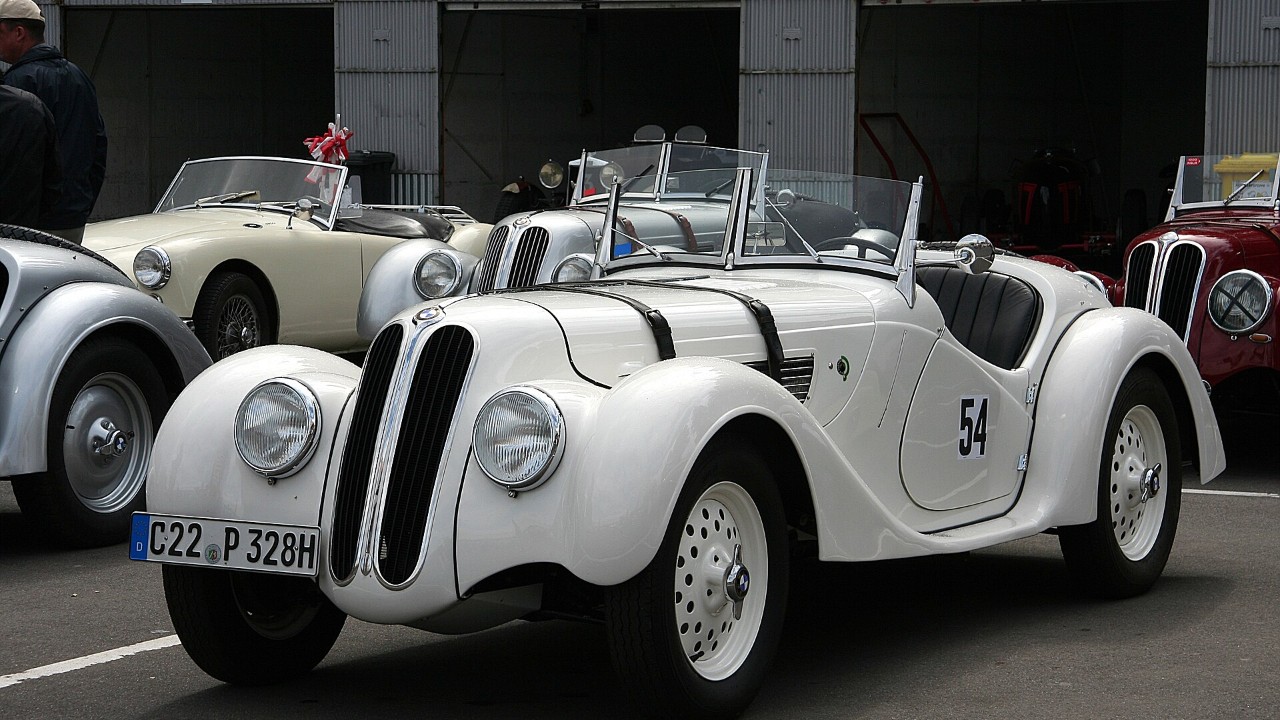
BMW built just 464 examples of the 328 between 1936 and 1940, and the BMW 328 Roadster still sets the template for a German driver’s car. It was light, it revved, and it won races on the roads people actually drove. Many German cars since then have chased that same balance.
Not every one of them was exotic, though. Some were hatchbacks for commuters. Others were family sedans with a firmer chassis and a stronger engine than they needed. A few were homologation specials built to make a rally car legal.
These are our picks, 12 German cars we think were pure driving machines. The verdict is our opinion. However, the production figures, engines and power ratings behind each one come from factory data, period reviews and reference histories.
1. Volkswagen Golf GTI 16V Mk2
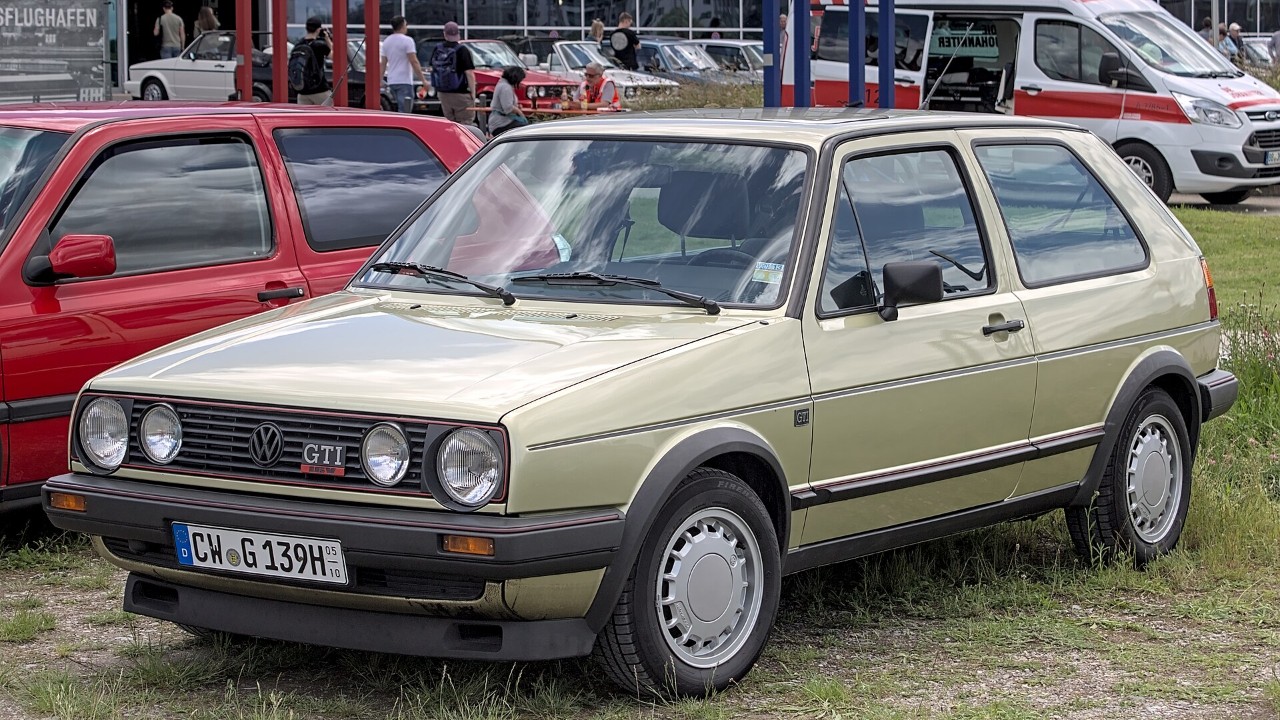
Volkswagen added a second camshaft to the hot hatch in 1986, when the Golf GTI 16V arrived in Europe. North America followed in 1987. The new 1,781 cc four had 16 valves, and that head changed the character of the whole car.
Without a catalytic converter, the engine made 139 PS at 6,100 rpm. Catalyst versions were rated at 129 PS, so buyers in stricter markets gave up a little punch. Even so, the 16V pulled hardest near the top of the tachometer, where the eight-valve car started to run out of breath.
The Mk2 Golf sold in enormous numbers. Volkswagen built about 6.3 million of them between September 1983 and 1992. That volume is the reason a clean GTI 16V feels special now, since most of its siblings became daily drivers and then scrap. We traced how this generation grew up in our look at the 1988 Golf GTI.
Our take: the 16V is the version that rewards a driver who keeps the revs up. It feels eager rather than fast, and that is exactly the point.
2. Opel Kadett C GT/E
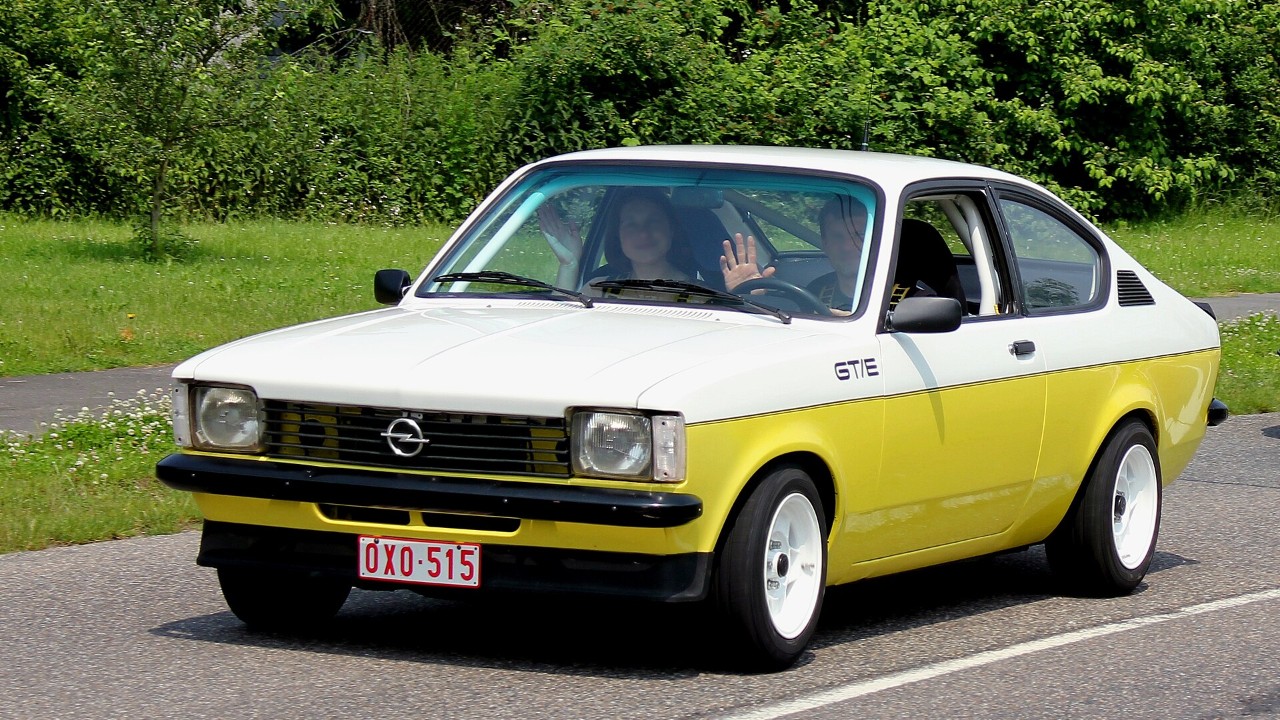
The Kadett C ran from August 1973 to July 1979 at Opel’s Bochum plant. It was also the last small Opel with rear-wheel drive. That layout made the sporty GT/E version far more interesting than its humble family roots suggest.
The GT/E used a 1.9-liter fuel-injected engine with 105 hp. According to Zwischengas, it reached 180 km/h and hit 100 km/h in 10.5 seconds. Power went to a rigid rear axle through a cardan shaft. Most famously, the coupe wore a two-tone yellow-and-black paint scheme that nobody could mistake for a shopping car.
Opel sold the car with the slogan “The rally specialist for all days.” Walter Röhrl drove Kadetts in rallying before he moved on to Fiat, Lancia and Audi. Meanwhile, Opel built 1,701,076 Kadett Cs in total, so the GT/E was a small, bright spark in a very large run.
In our view, the GT/E is the purest small Opel ever offered. It is simple, light and tail-happy, which is all a back-road car needs.
3. 1968 BMW 1600 GT
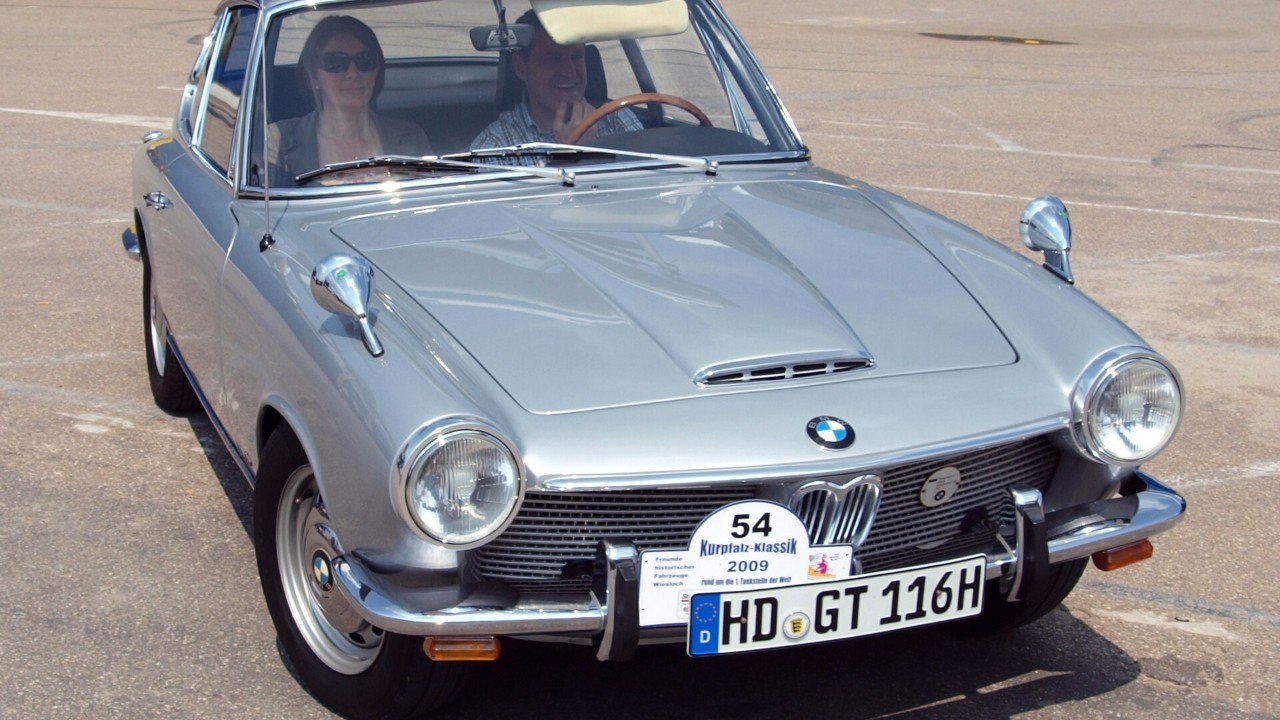
The 1600 GT began life as somebody else’s car. Hans Glas GmbH of Dingolfing sold it as the Glas GT, with a body styled by Pietro Frua. Maggiora built the shells, while Glas handled final assembly.
When BMW took over Glas, it reworked the coupe rather than killing it. Out went the Glas engine, and in went the 1,573 cc four from the BMW 1600, rated at 105 PS. BMW also swapped the rigid axle and leaf springs for its own semi-trailing arm rear suspension with coil springs. Then it added round taillights from the 1600-2 and a twin-kidney grille up front.
BMW built 1,259 of these cars between June 1967 and August 1968. That short run explains why so few people recognize one at a show. Most visitors walk right past it, assuming it is an Italian coupe.
Our take: the 1600 GT is a pretty Italian-styled body with a proper BMW chassis underneath. It is a strange family tree, but the result drives like a small, sweet grand tourer.
4. 1937 BMW 328 Roadster
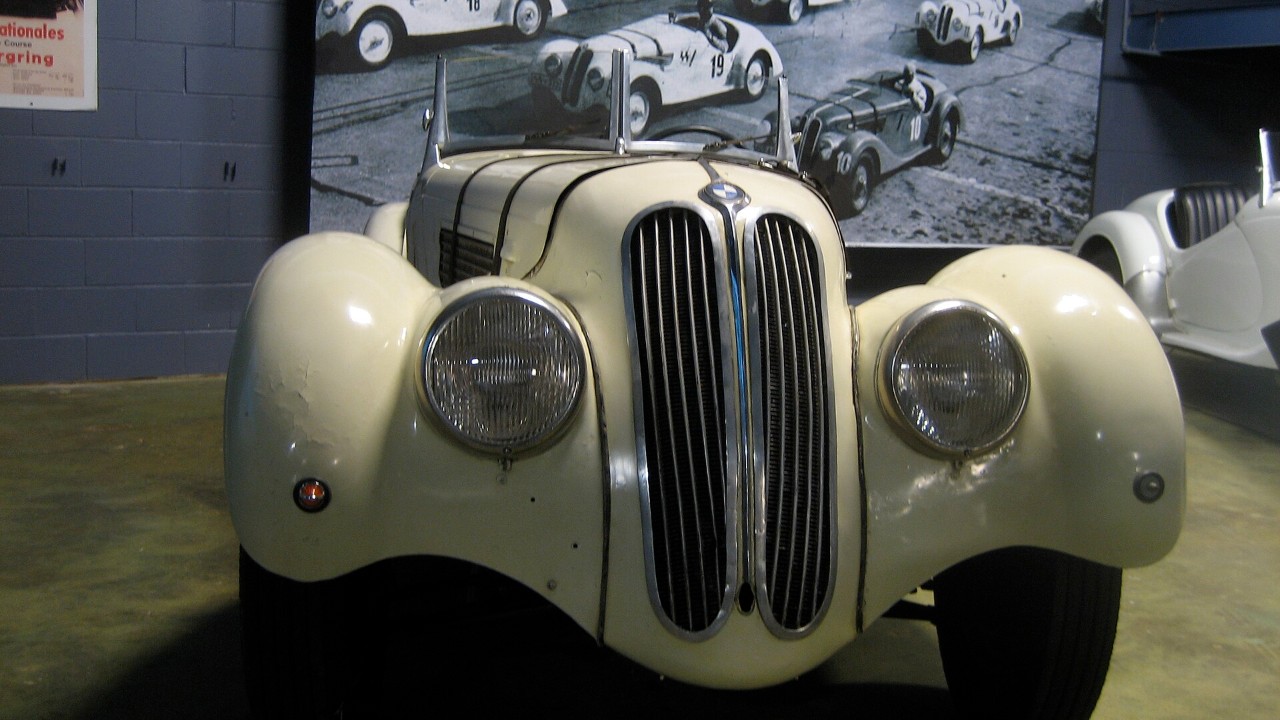
BMW assembled the 328 in Eisenach, and its numbers still look modern for a prewar car. The roadster weighed 830 kg, roughly 1,830 pounds. Its 1,971 cc straight-six made 80 PS at 5,000 rpm, enough for a top speed of 150 km/h.
Peter Szymanowski gets credit for the body, while Fritz Fiedler led the technical design. The BMW 328 Roadster then went racing almost at once. A 328 finished fifth overall and first in class at Le Mans in 1939. It also won the 1939 RAC Rally, and a 328 Touring Coupé won the 1940 Mille Miglia at an average of 166.7 km/h.
Decades later, a worldwide jury of automotive journalists still remembered it. In 1999, the 328 made the list of 25 finalists for Car of the Century. That is rare company for a two-liter sports car built before the war.
In our view, the BMW 328 Roadster is the root of every German driver’s car on this list. Light weight came first, and the power followed.
5. Audi S2 Coupe

The S2 started a family. It was the first car in Audi’s S series, built from 1991 to 1995 on the Audi 80 platform. Under the hood sat a 2,226 cc turbocharged five-cylinder with 20 valves.
Early cars carried the 3B engine with 220 PS and a five-speed gearbox. From October 1992, the ABY engine raised output to 230 PS and came with a six-speed. Either way, quattro permanent all-wheel drive was standard. Both versions topped out at 246 km/h.
Audi built 7,370 S2 coupes. That is a small number for a car that shares so much with the everyday Audi 80. As a result, many people walk past one without realizing what the five-cylinder under the hood can do.
Our take: the S2 is a turbo grand tourer that happens to look like a sensible coupe. The warbling five and the all-weather grip make it a car you can drive hard in January, too.
6. Porsche 911 SC 3.0 coupe

Porsche almost let the 911 die during the SC years. In 1979, the company planned to replace it with the front-engined 928. Strong 911 sales changed that plan, so the rear-engined car stayed in production.
The SC arrived for model year 1978 with a 2,994 cc flat-six. Launch output was 180 PS. Non-US cars then rose to 188 PS for 1980 and later to 204 PS, while American cars kept 180 PS throughout. Porsche built 58,914 SCs before the 3.2 Carrera replaced it for model year 1984.
That production total matters to buyers today. Because so many survive, the SC remains one of the more approachable ways into an air-cooled 911. It also has a reputation as a solid, unfussy version of the car.
In our view, the SC is the 911 that saved the 911. It feels honest and mechanical, and nearly every input comes back through the steering wheel.
7. 1994 BMW 318is E36 coupe
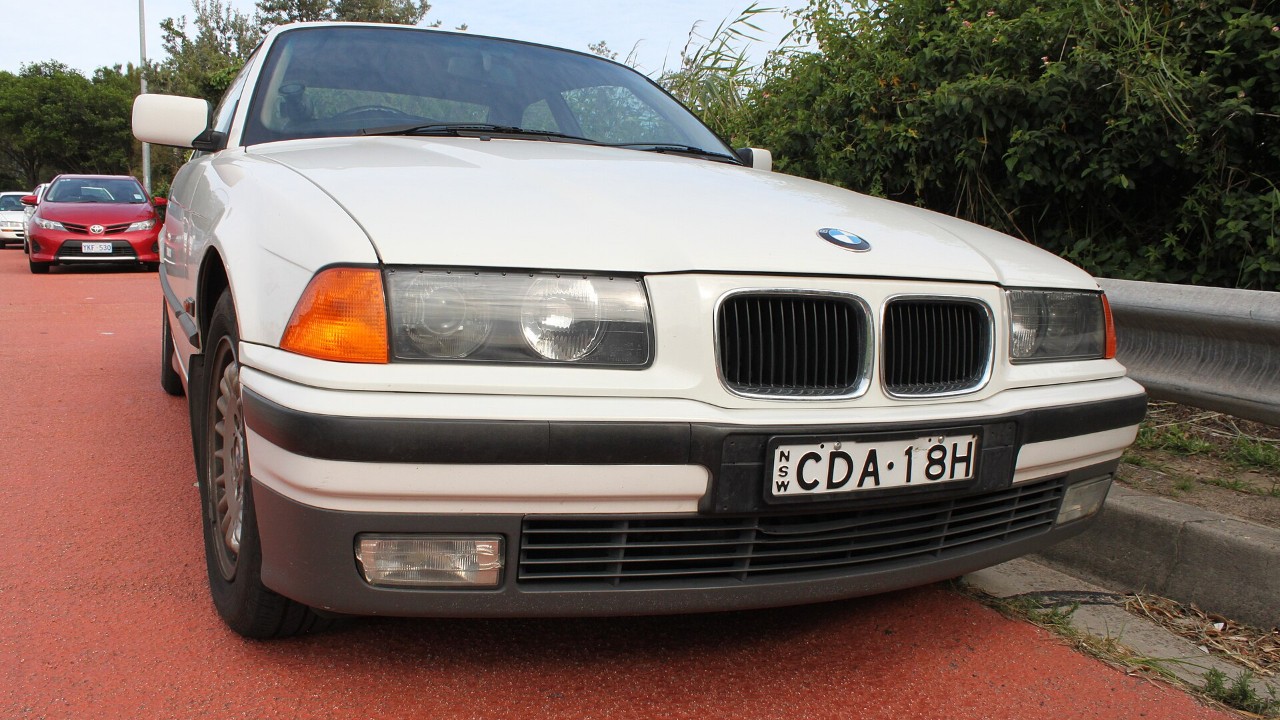
The E36 3 Series brought a big chassis upgrade in 1990. BMW used its “Z-axle” multilink rear suspension, first proven in the 1989 Z1 roadster. The E36 hatchback kept an older semi-trailing arm setup, but the coupe got the good stuff.
In the 318is coupe, that chassis met a small, free-revving four. From 1992 to 1995, it used the 1.8-liter M42 engine, rated at 140 hp at 6,000 rpm. Later cars switched to a 1.9-liter M44 with the same rating. North American buyers could order the 318is coupe from 1992 to 1997.
The appeal lies in balance rather than speed. A four-cylinder nose is lighter than a six, so the front end turns in eagerly. Meanwhile, the multilink rear keeps the car settled when the road gets rough.
Our take: the 318is is the thinking driver’s E36. It never wins a drag race, yet it rewards smooth inputs on a winding road like few cars at its price.
8. 1981 Opel Manta 400
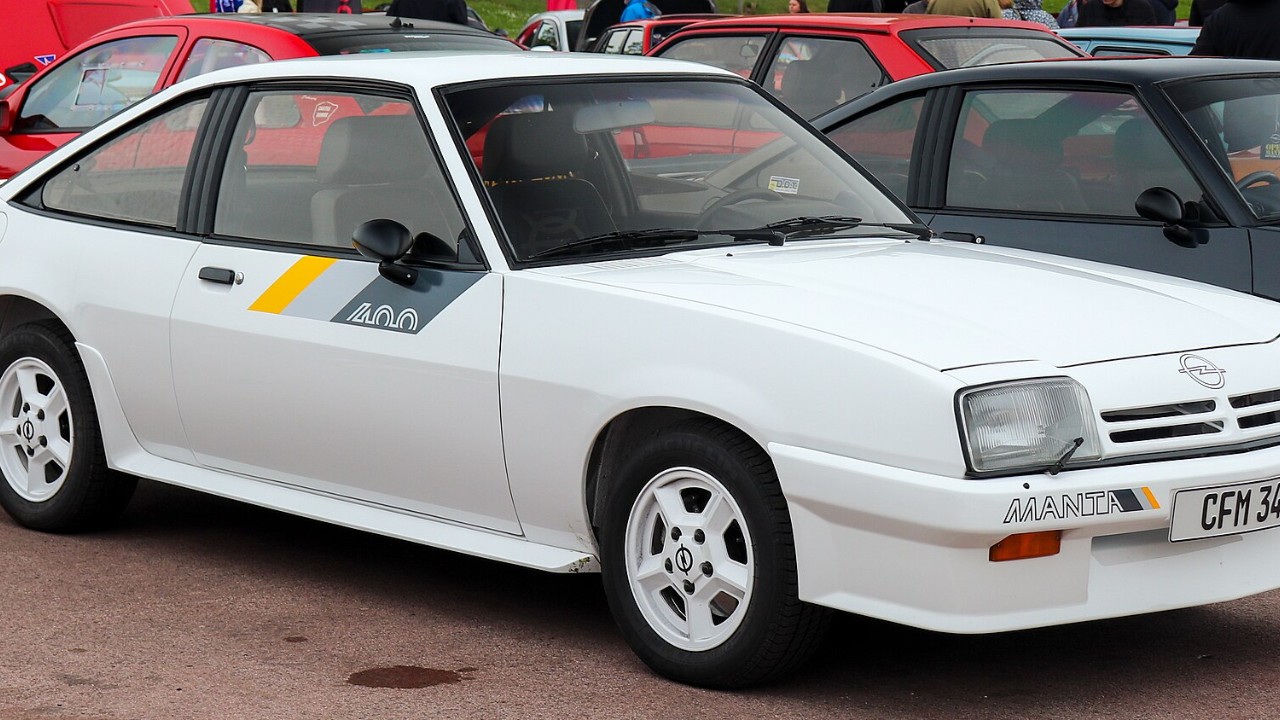
The Manta was a rear-drive coupe based on the Ascona family car. Opel built it in two generations from 1970 to 1988. Then, in 1979, Opel began work on a rally version with tuner Irmscher.
Cosworth in Britain developed a 16-valve, twin-cam head for Opel’s CIH engine block. Because the heads already existed, Opel used a forged crankshaft with an 85 mm stroke and ended up with a 2.4-liter engine. Opel delivered the first 23 cars in 1981. Street versions made 144 PS, while Evolution cars made 230 PS.
In total, Opel built 245 Manta 400s to meet FISA homologation rules. That small run turned an everyday coupe into a genuine competition special. We covered the earlier, gentler Manta in our story on the 1975 Opel Manta.
In our view, the Manta 400 is the most serious car Opel ever sold to the public. It shows what a plain family platform can do when engineers get a free hand.
9. 1992 Volkswagen Polo G40
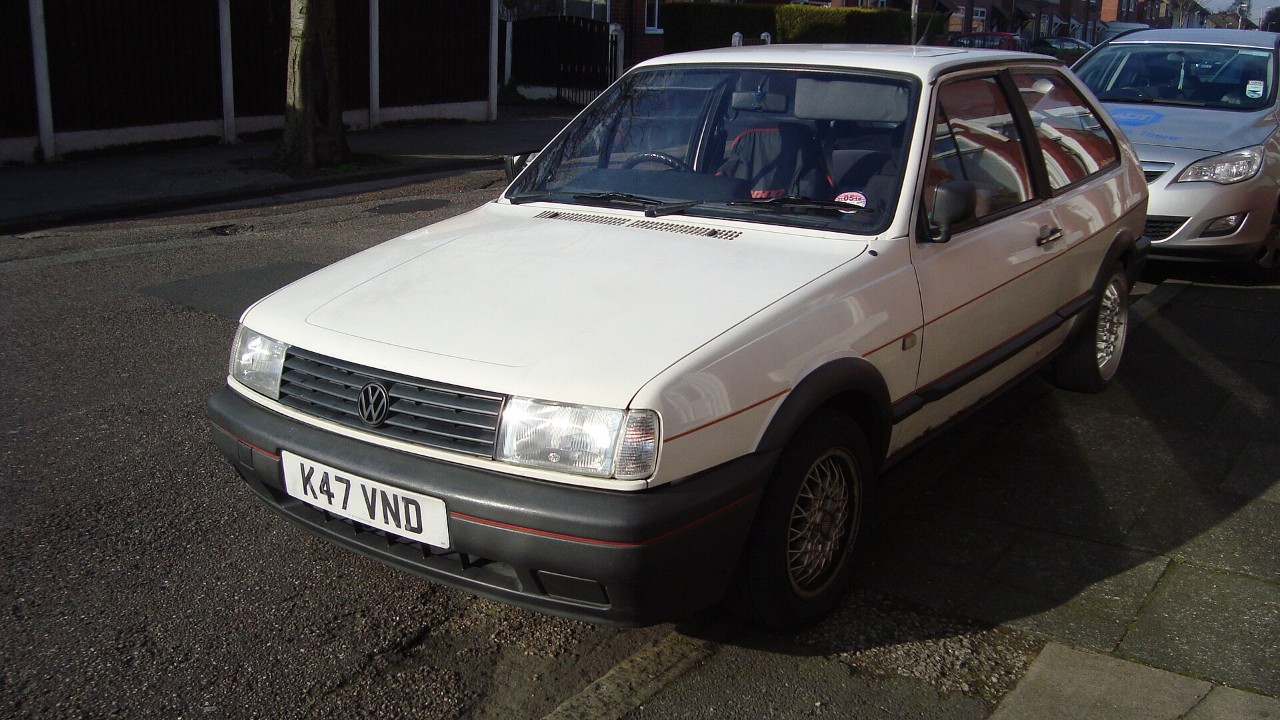
The Polo G40 took a small car and gave it a supercharger. Volkswagen fitted its 1,272 cc four with a G-Lader supercharger. The result was 113 PS at 6,000 rpm and a top speed of 196 km/h.
The first G40 appeared in 1987 as a limited batch of about 500 cars. Most went to Volkswagen workers. That early version reached 100 km/h in 8.1 seconds. Later, Volkswagen offered a full production G40 after the Mk2F facelift for the 1991 model year, and it needed 8.6 seconds for the same sprint.
Those numbers look modest now. Still, in a car the size of a Polo, they add up to a lively, playful little machine. Volkswagen also used the Mk2 Polo to set world endurance speed records in the 1300 cc class.
Our take: the G40 is a hot hatch in miniature. The whine of the supercharger alone makes a short drive feel like an event.
10. Porsche 968 Club Sport
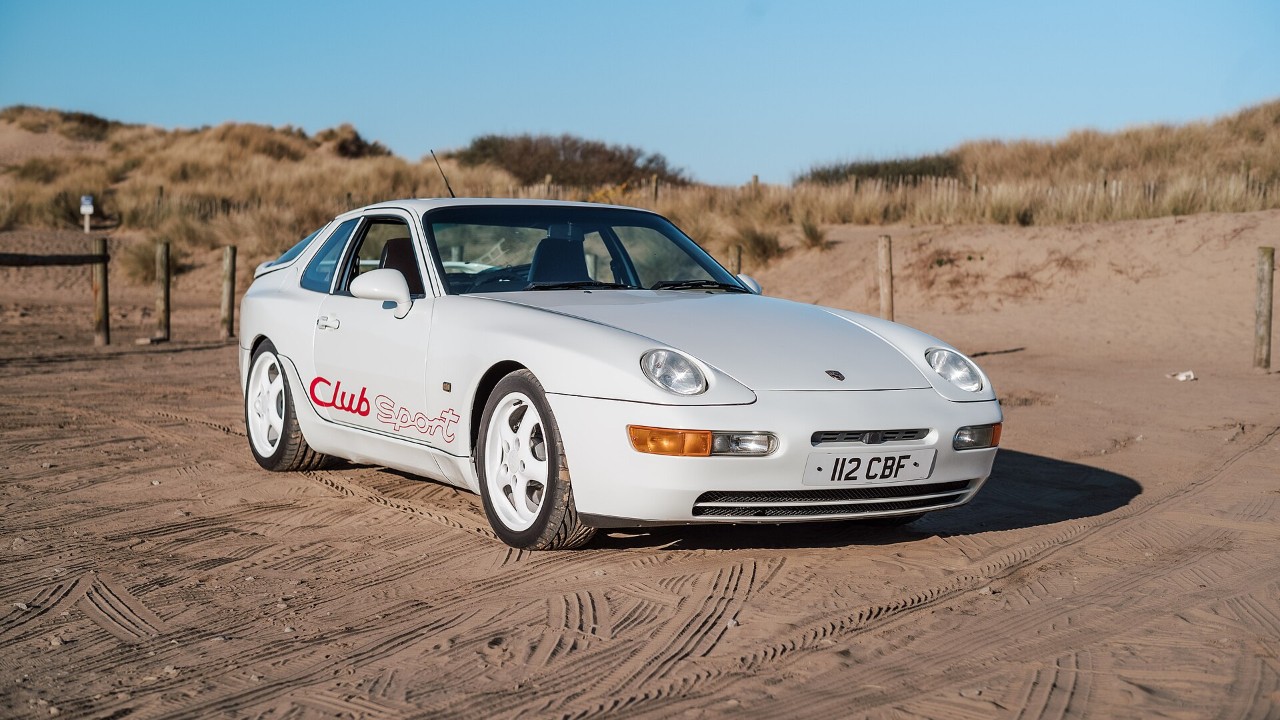
Porsche unveiled the 968 Club Sport at the Paris Motor Show in October 1992. It went on sale in 1993 and stayed in production until the 968 range ended in 1995. Every one came from Porsche’s Zuffenhausen headquarters.
The idea was subtraction. According to Porsche’s own guide to the Club Sport, engineers removed the rear seats, sound insulation, electric windows, radio, central locking and air conditioning. The car weighed about 100 kg less than a standard 968. Its 3.0-liter four with Variocam still made 240 PS, so it reached 100 km/h in roughly 6.3 seconds.
The Porsche Club of North America believes Porsche built 1,538 of them. Porsche never officially sold the Club Sport in the United States, yet one with 15,334 miles sold there in late 2024 for $80,000. Fixed-back Recaro buckets and color-matched 17-inch Cup wheels finished the look.
In our view, the 968 Club Sport is the best-balanced front-engined Porsche of its time. It is the kind of car you take the long way home in.
11. 1988 Volkswagen Scirocco GTX-16V
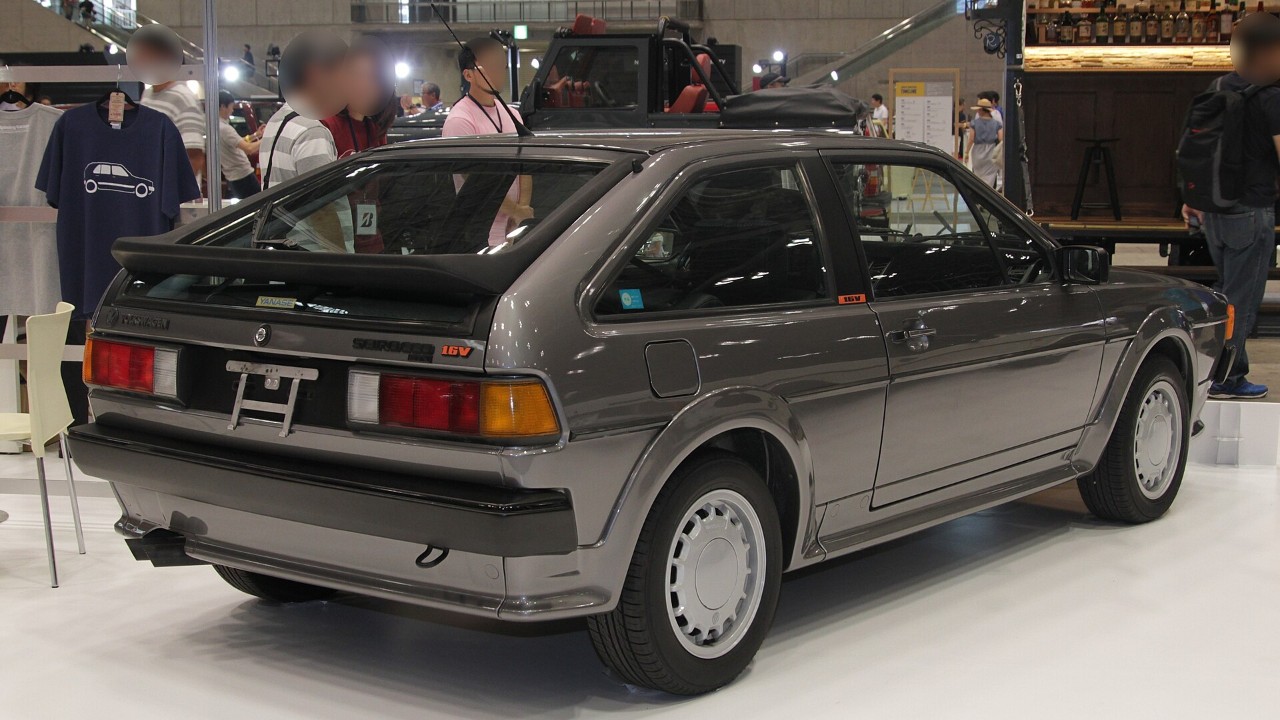
The second-generation Scirocco debuted at the 1981 Geneva Motor Show. Volkswagen’s own design team styled it, while Karmann built it in Osnabrück. Karmann went on to build 291,497 of them.
The 16-valve version took longer to arrive. Tuner Oettinger developed a 16-valve head in 1981, and Volkswagen showed a multi-valve Scirocco at the 1983 Frankfurt show. Sales began in Germany in July 1985. The 16-valve engines made either 129 PS or 139 PS, depending on whether the car had a catalyst.
American and Canadian buyers got their 16V in mid-1986. Those cars wore a full body skirt, a larger rear spoiler and teardrop-shaped wheel slots. However, US sales ended in 1988, so the late 16V cars mark the end of the line there. Our earlier piece on the 1981 Scirocco’s styling covers how the second generation began.
Our take: the Scirocco 16V is a Golf GTI in a sharper suit. It sits lower, looks meaner and feels a touch more planted.
12. BMW M535i E28
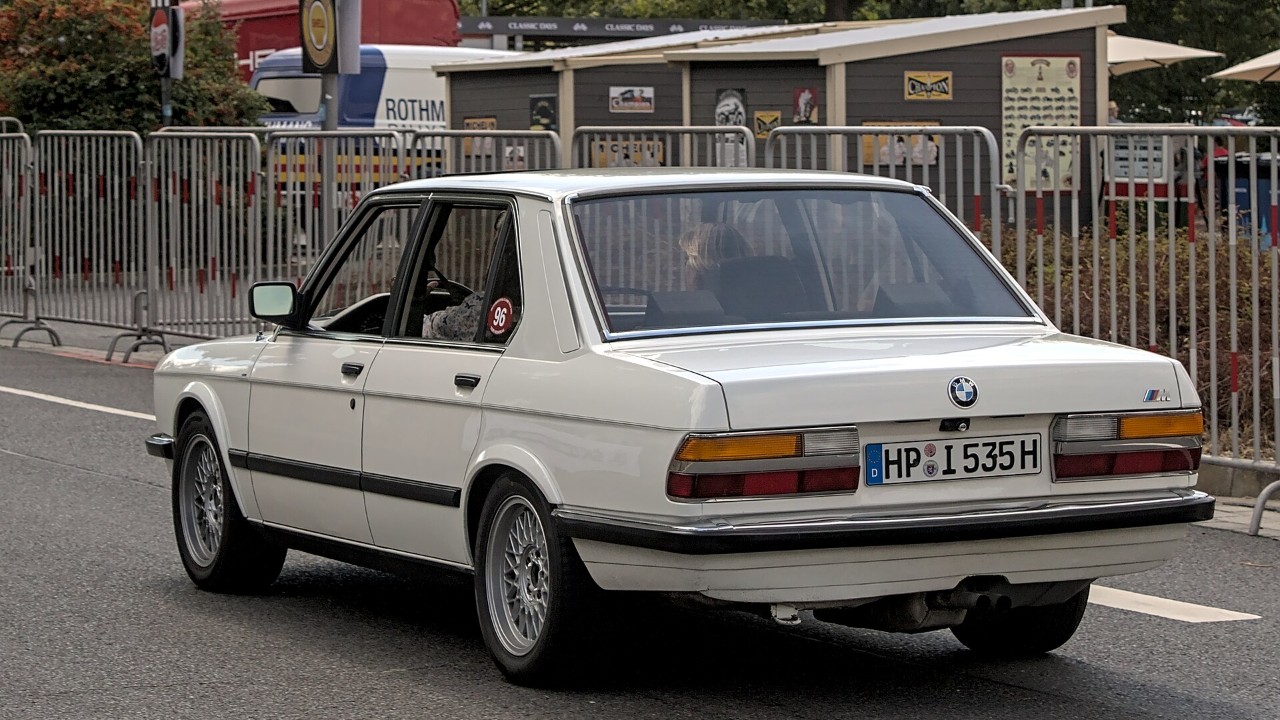
BMW built the E28 5 Series from July 1981 to December 1987. In that time, it made 722,328 of them. At the top of the regular range sat the M535i, a sedan with a tougher look and a firmer chassis.
It used the 3,430 cc M30 straight-six from the 535i. European cars made 218 PS at 5,500 rpm, while US versions were rated at 182 hp. The M535i added M-Technic suspension, plus wheels and body panels that no other E28 used. Even so, it came off the standard assembly lines in Dingolfing and Rosslyn rather than a special workshop.
The full-house E28 M5 later took the spotlight with a 286 PS M88 engine. Still, the M535i offered much of the same feel for less money. It also looks the part with its unique body kit.
Our take: the M535i is the everyday sports sedan of the 1980s. It hauls a family on Monday and carves a mountain road on Saturday, and BMW built 722,328 E28s to prove the recipe worked.
More from Fast Lane Only