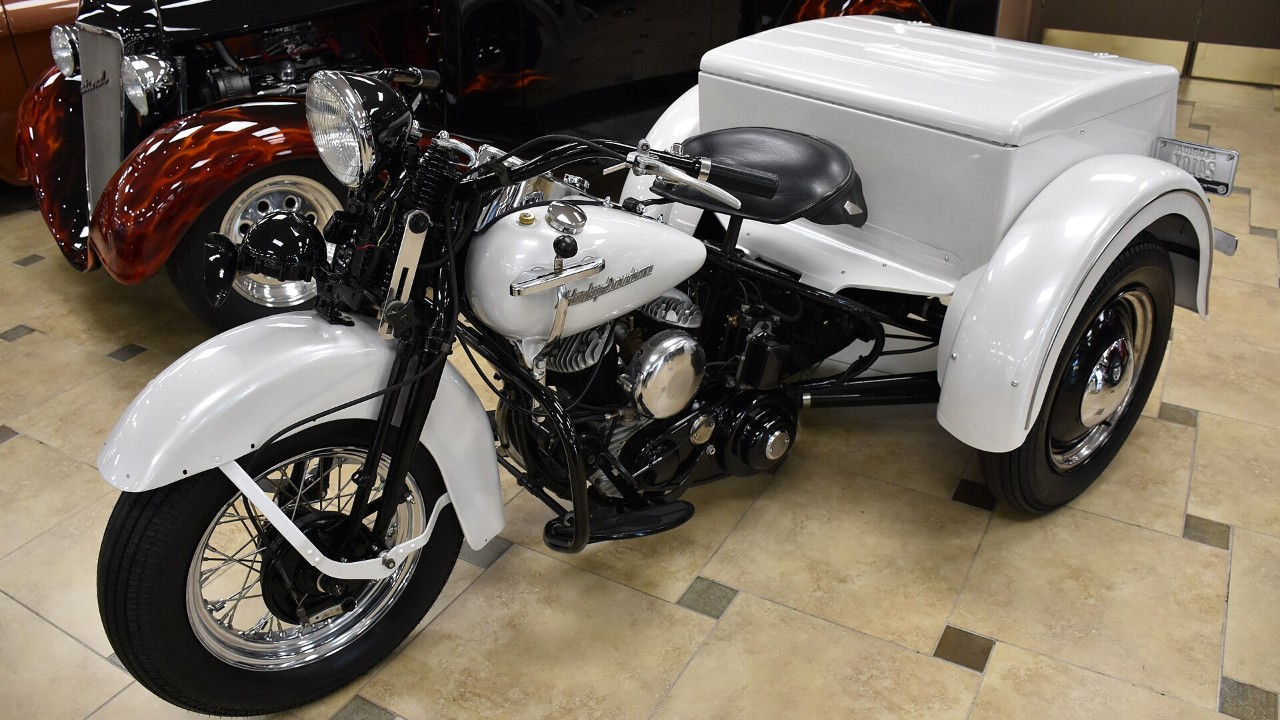
Harley-Davidson has a habit of keeping a good idea in production long after rivals move on. One three-wheeler stayed in the catalog for 41 years. The Sportster name arrived in 1957, and the bike carried an evolving version of the same basic idea for decades.
That staying power is not luck. Simple engines, parts that fit across generations and owners who fix things at the roadside all play a part. On the other hand, not every model with the bar-and-shield badge earned that reputation, and some lasted mainly on looks.
These are our picks: seven Harley-Davidsons that, in our view, never seemed to quit. Some of them earned it with a long production run and others with a simple, sturdy design. Each item names the exact bike in our photo, the facts behind it and our take on why it belongs here.
1. 1971 Harley-Davidson GE Servi-Car
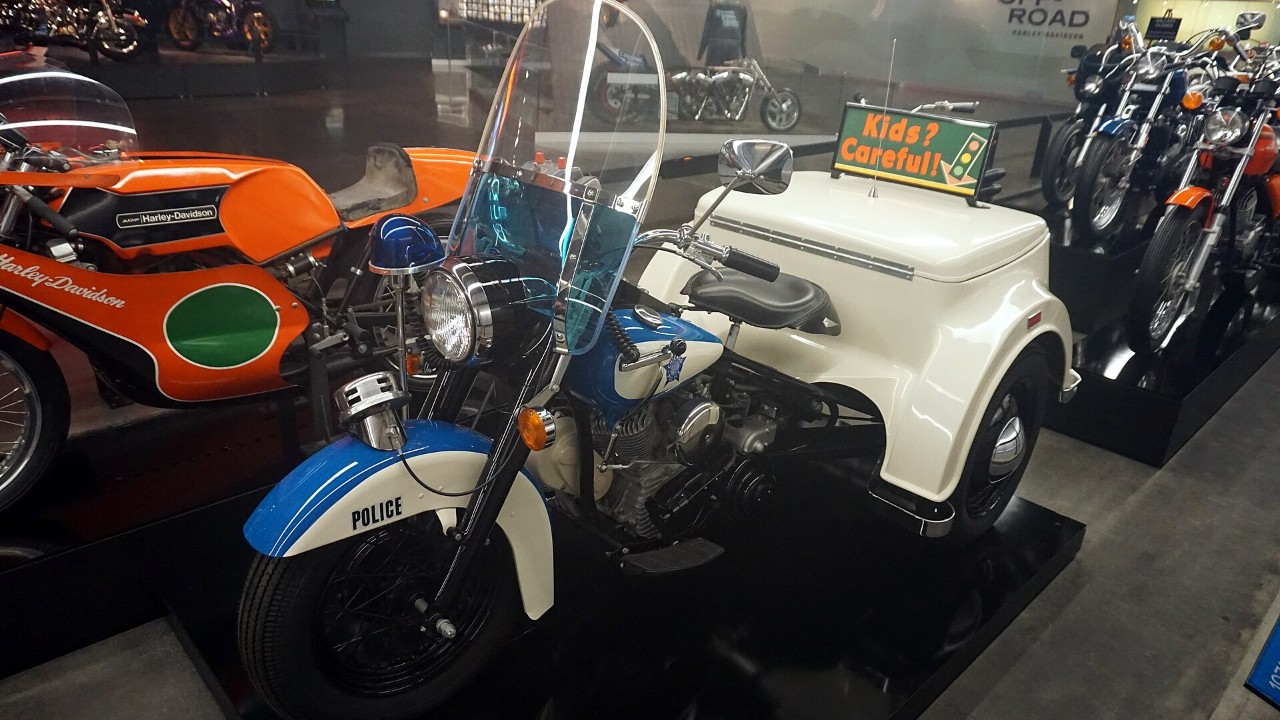
The Servi-Car is the most patient motorcycle Harley ever built. It went on sale in 1932 and stayed in production until 1973. According to SlashGear’s history of the model, that 41-year run was the longest of any Harley-Davidson up to that time.
For power, it relied on a 45-cubic-inch (740cc) flathead V-twin that never changed during production. Garages used the trike to deliver repaired cars to customers. A mechanic would hook the Servi-Car to a car’s bumper with its front tow bar, drive the car out and ride back alone. Police departments, meanwhile, used them for traffic and parking duty, and some forces kept them running into the 1990s.
The Servi-Car also got electric start in 1964. That made it Harley’s first civilian model with one, a year before the Electra Glide. By the end, the last bikes built late in 1973 had disc brakes on all three wheels. Our take: a utility vehicle that outlasted four decades of change earns its place at the top. The 1971 police bike in our photo sits in the Harley-Davidson Museum in Milwaukee.
2. 1960 Harley-Davidson XLCH Sportster
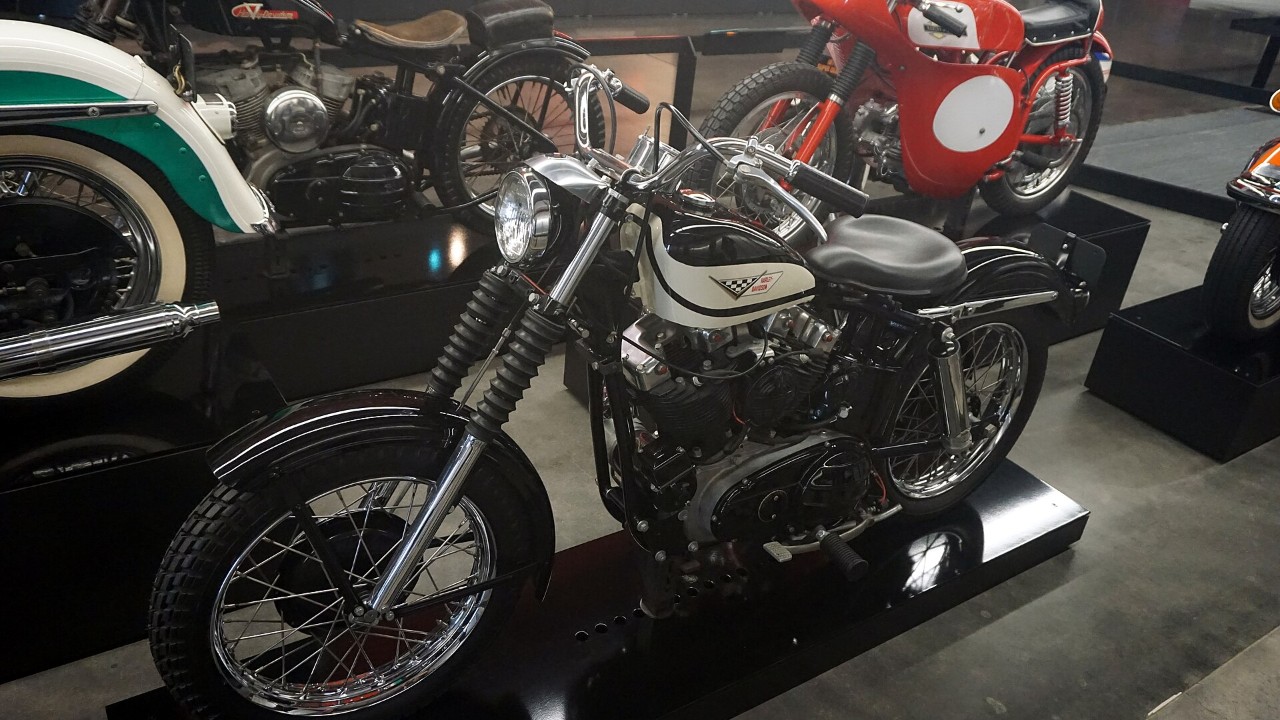
The XLCH was the Sportster with the fat trimmed off. Harley introduced it in 1958, based on the XLH but set up for off-road competition. Motorcycle Classics describes a bike with lights and mufflers removed, bobbed fenders and the small “peanut” fuel tank.
Under that lean bodywork sat an 883cc overhead-valve V-twin with a magneto carried over from the XLR racer. In fact, the same report puts output at around 55 hp for a good 1959 bike. The price new was about $1,265. At first, Harley sold only 239 XLCHs in 1958. A year later, the XLCH sold 1,059 units, which made it the most popular XL that season.
That early success set the tone for a model family that would not stop. We followed that thread in our look at Harleys that never stopped attracting fans. Our take: the XLCH is the root of the Sportster’s tough reputation, a bike you could race on Sunday and ride to work on Monday. If you want one now, the magazine warns that a correct peanut tank is among the hardest parts to find. The bike in our photo is a 1960 example from the Harley-Davidson Museum.
3. Harley-Davidson FLHR Road King
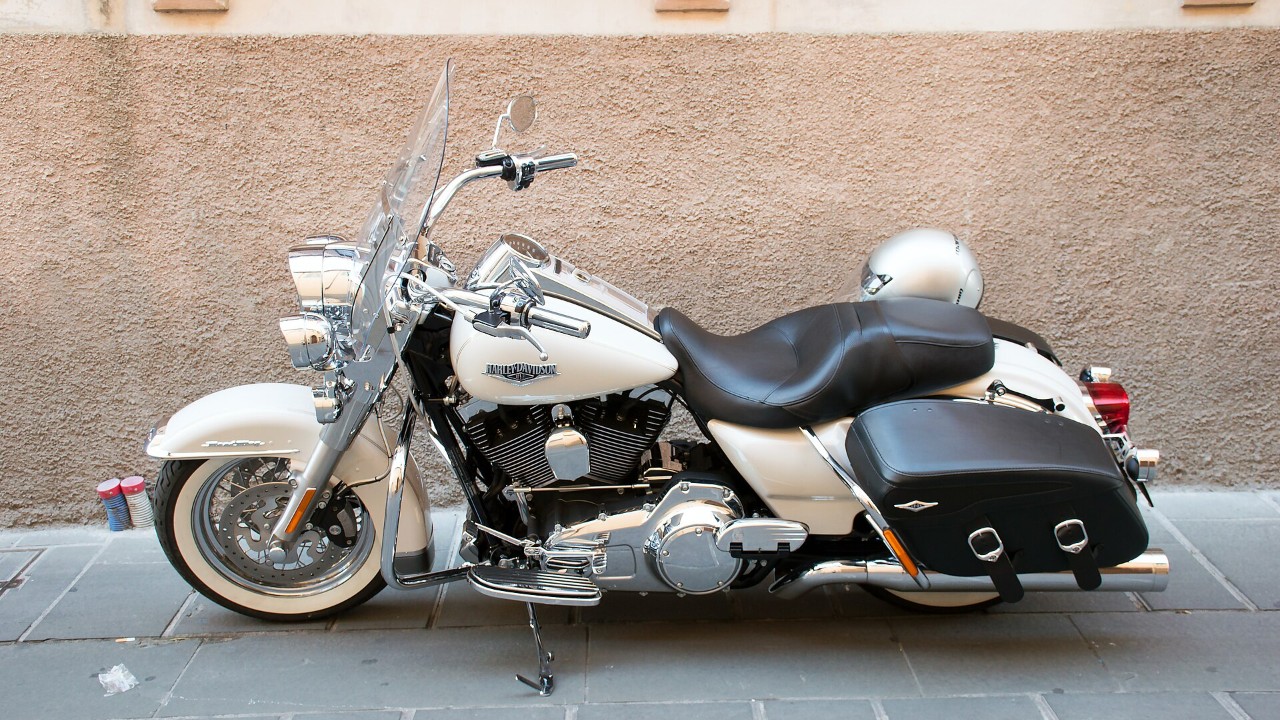
The Road King took the classic Harley touring formula and stripped it back to the essentials. There is no fairing full of speakers, just a windshield, a big headlight and saddlebags. Harley’s own Electra Glide history notes that the Road King’s saddlebags and removable windshield recall the 1965 Electra Glide.
So how has it held up? Motorcycle News lists the Road King from 1993 onward. Owners in its survey give the bike a reliability score of 4.4 out of 5. However, the magazine’s own build-quality rating is a more cautious 3 out of 5, so there is room for debate.
The same review also lists a weight of 332 kg (732 lb) and a low 27.3-inch seat. That is a heavy bike, yet the low seat makes it easy to manage at walking pace. Our take: the Road King’s strength is its simplicity. With fewer gadgets to fail, it is the kind of Harley-Davidson that racks up miles without fuss. If you shop for one, we’d favor a bike with a clear service history over a low-mileage garage queen. Our photo shows the classic side view, bags and screen in place.
4. Harley-Davidson FXDX Dyna Super Glide Sport
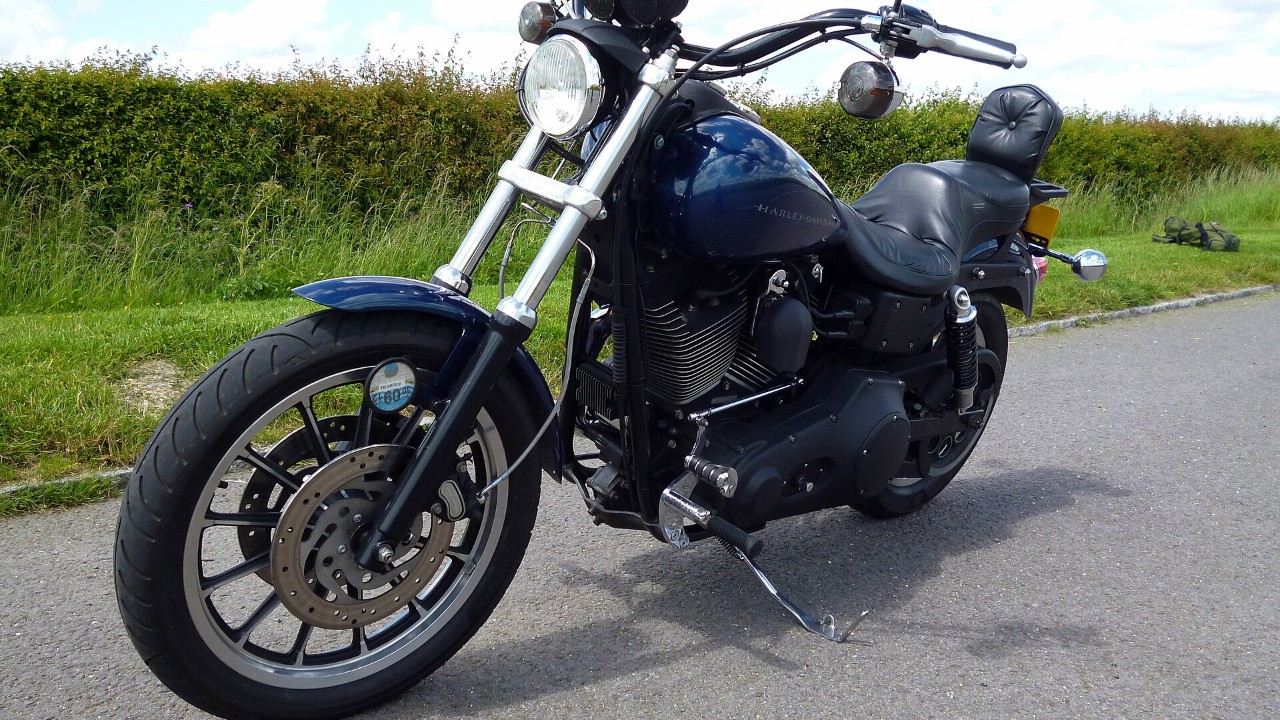
The Dyna family arrived in 1991, starting with the limited-run FXDB Sturgis. Harley later used that chassis for the FXDX Super Glide Sport, which launched in 1999. It was the first blacked-out Dyna, and it came with dual front disc brakes and a higher rear end.
Then, for 2000, Harley gave the Sport fully adjustable suspension front and rear. That gave riders a Dyna they could tune to the road and the load. The FXDX stayed in the range until 2006, when Harley introduced a new Dyna chassis and a six-speed gearbox.
The Dyna line itself ended with the 2018 model year, when a redesigned Softail chassis replaced it. As a result, we think the Super Glide Sport is worth seeking out if you want a Big Twin that handles a little better than most. Our take: the FXDX is a working rider’s Harley. Its adjustable suspension lets you set it up for a passenger or a long trip, and that flexibility helps explain why so many stay on the road. The photo shows an owner’s own FXDX, which seems right for a bike built to be ridden.
5. Harley-Davidson Electra Glide Ultra Classic
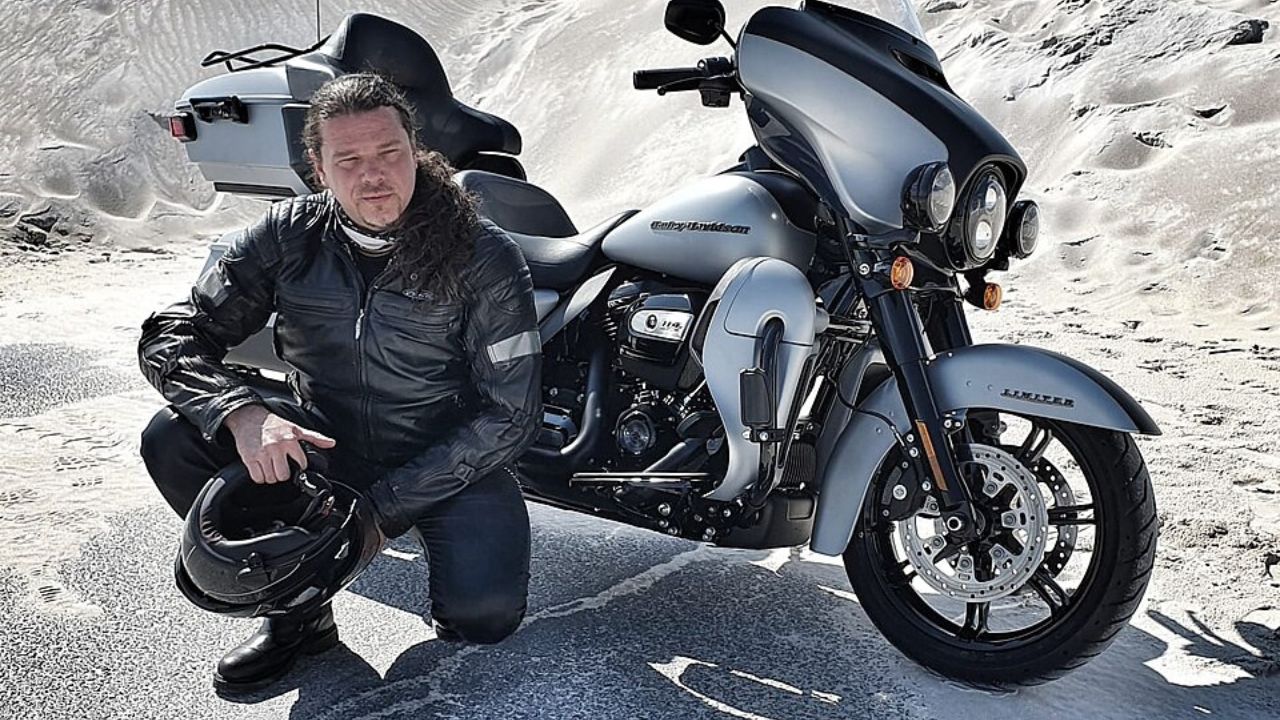
Every big Harley tourer traces back to one moment in 1965. That year, the Electra Glide debuted with an electric starter. Harley’s own history quotes the 1965 brochure: “We’ve taken a few of the kicks away, but none we thought you would miss.”
The bloodline goes back further, though. The Hydra Glide of 1949 brought a telescopic fork, and the 1958 Duo Glide added rear suspension. We covered that early family in our feature on Harleys that became icons. Later, Harley first listed the “Batwing” fairing kit in 1969 and made it standard in 1971.
The Ultra Classic is the fully loaded end of that line, with the Batwing fairing and a top box over the saddlebags. Harley’s history adds that disc brakes and electronic fuel injection both reached its touring models first. Our take: the Electra Glide name has survived more than half a century because each generation built on the last rather than starting over. The model is not perfect, and an older one deserves a careful inspection before you buy. Even so, few touring lines have run this long.
6. 1989 Harley-Davidson FXSTS Softail Springer
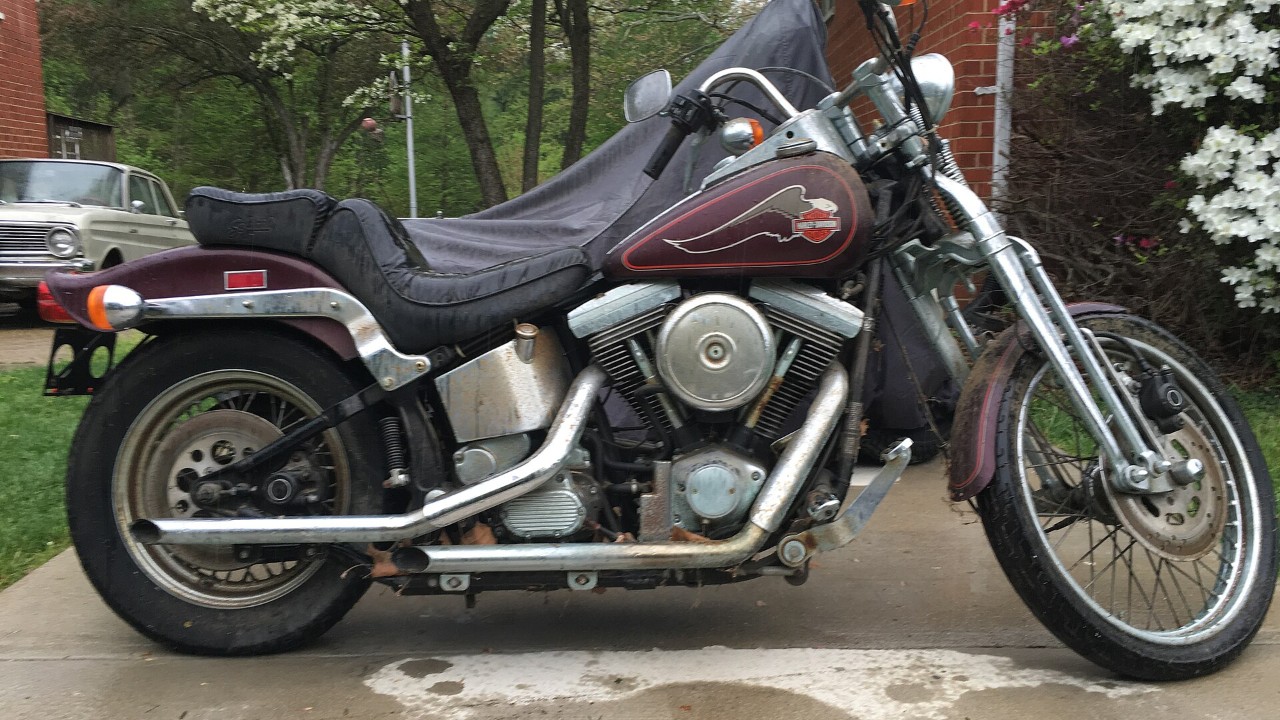
The Springer Softail looks like a 1940s bike, and that was the point. Harley introduced the springer front end on the 1988 Springer Softail. According to Cycle World’s 1989 road test, Harley had last used a springer fork on a production bike in 1949.
The new fork was a near-copy of the old unit, but with better materials and design changes. Cycle World found that it soaked up small bumps well and resisted diving under braking. On the other hand, it bottomed with a loud bang over big hits. The test bike used the Evolution V-twin and cost $10,759.
There was also one more quirk. Unlike other Evolution Harleys, the Softail had no rubber engine mounts, so vibration became noticeable above about 70 mph. Our take: the Springer Softail is proof that Harley could sell nostalgia without giving up function. Its simple, exposed fork is easy to understand and service, which suits a bike meant to last. Cycle World summed it up well: the fork is “as interesting to watch as it is to use.” The 1989 bike in our photo shows that chrome front end clearly.
7. Harley-Davidson Sportster 883
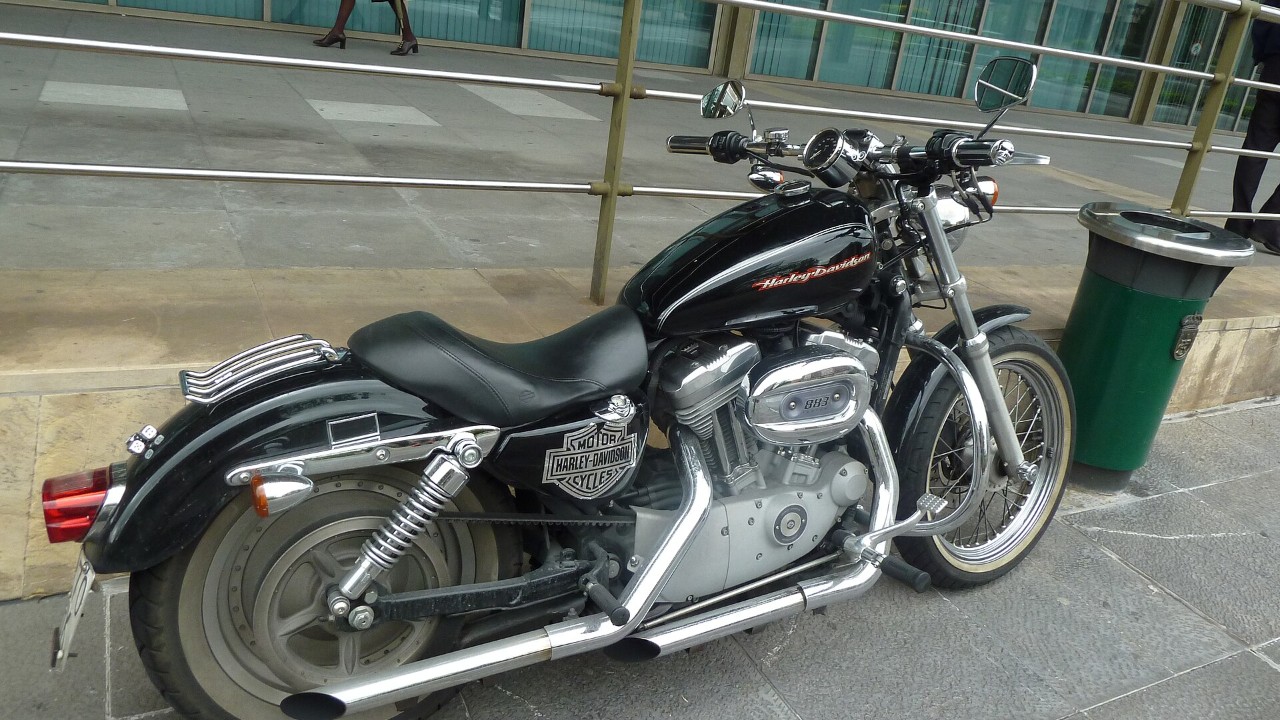
The Evolution Sportster 883 was the bike that put a new Harley within reach of almost anyone. According to Cycle World’s buyer’s guide, the 1986 base model listed for $3,995. That first Evo, the XLX, was stripped down, with a solo seat, black paint, one front disc and no tachometer.
In fact, it sold so well that the factory sold all it could make. Later, in the early 1990s, the 883 gained belt drive and a five-speed gearbox in place of the old four-speed. The guide also makes the case for its durability in plain terms. With fewer parts, there are fewer things to fail. Many breakdowns can be fixed at the roadside with hand tools.
That is why we think the 883 earns the last word here. It is a simple, air-cooled bike that a careful owner can keep going for years. If you buy one, we’d look for a well-kept rigid-mount Evo with records. The model’s story finally closed on November 18, 2022, when Harley-Davidson built its last Evolution Sportster, a Gunship Gray 883.
More from Fast Lane Only