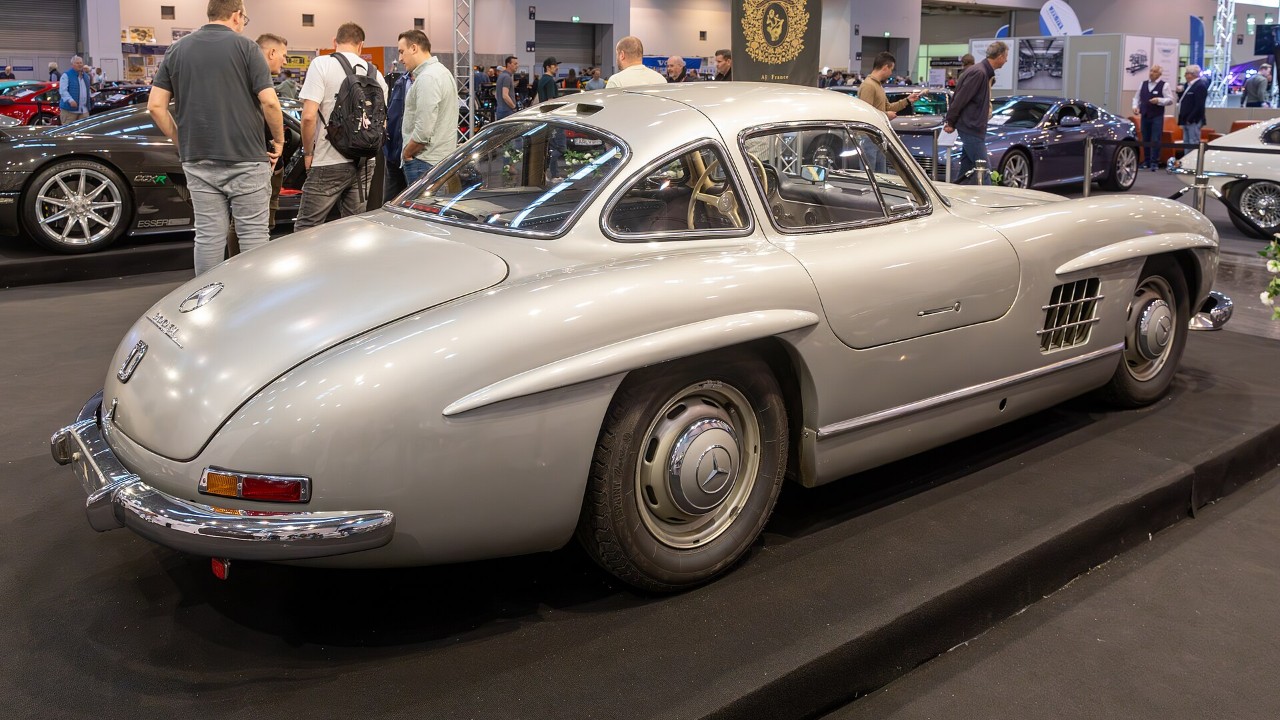
The Mercedes-Benz 300 SL Gullwing made its debut in February 1954 with doors that opened toward the sky. It was a bold way to open a car door. Seventy years later, the shape looks like it came from somewhere ahead of its time.
That is the magic of a car that looks like the future. The best ones did not just add fins or chrome to an old idea. Instead, they changed where the engine sat, how the doors opened or what a road car could do. Some of those ideas spread across the industry, while others stayed exotic.
These are our picks for 11 sports cars that looked like the future when new, from the 1950s to the 1990s. Which ones belong is our call. However, the dates, engines and production figures come from the makers’ own histories, period tests and marque records.
1. 1954 Mercedes-Benz 300 SL Gullwing coupe
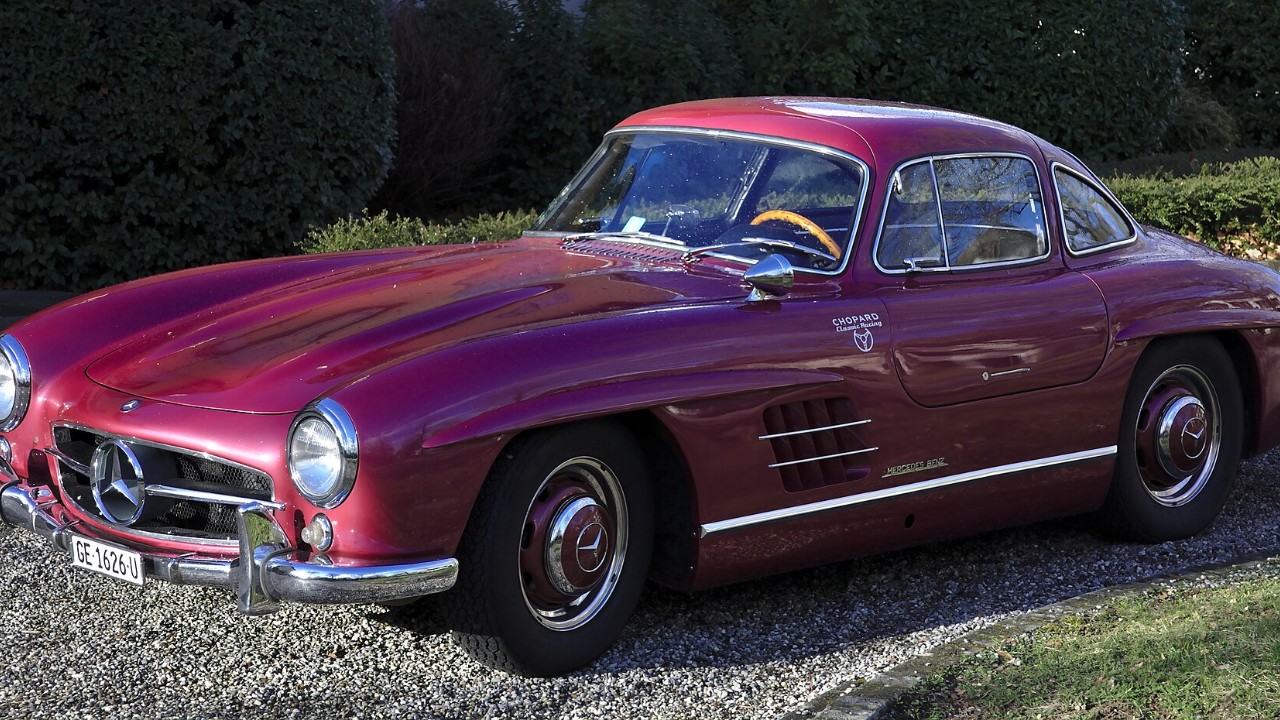
Mercedes-Benz approved a production 300 SL in September 1953. Then, in February 1954, it showed the car at the International Motor Sports Show in New York instead of a European show. The U.S. importer, Max Hoffman, had pushed for a fast sports car for American buyers. He backed that up with an order for 1,000 cars.
The doors were not a styling trick. The car rode on a tubular spaceframe with high, deep sills, so normal doors would not work. As a result, the doors hinged at the roof. According to Mercedes-Benz’s own history of the car, it was the world’s first four-stroke production passenger car with direct fuel injection. The company lists 215 horsepower and a top speed of up to 250 km/h, depending on the final drive.
Mercedes built 1,400 coupes from 1954 to 1957 before the roadster took over. In our view, the 300 SL Gullwing is the template for every car on this list. It took race-car engineering and wrapped it in a body that made the future feel real. Even its fuel system pointed to what most engines would use decades later.
2. 1961 Jaguar E-Type Series 1 3.8

Jaguar launched the E-Type on 15 March 1961. Its triple-SU 3.8-liter XK six made 265 bhp, and Jaguar claimed a top speed of 150 mph. Even so, the shape got most of the attention.
Meanwhile, under that long hood, the engineering was just as advanced. The body was largely unitary, with a front subframe bolted to the central tub instead of a separate ladder frame. Out back, it had independent coil-spring rear suspension. It also stopped with four-wheel disc brakes, and the rear units sat inboard to cut unsprung weight. In our view, that mix of ideas is what made the car feel a decade ahead. You got race-bred hardware in a car you could drive to work.
The design world agreed with the public. In 1996, the Museum of Modern Art added a blue Series 1 roadster to its permanent design collection. It was one of only six automobiles to earn that honor at the time. Our take: the early 3.8 is the purest version of the shape. Like the 300 SL Gullwing, it showed that a sports car could be both a technical leap and a piece of sculpture.
3. 1967 Alfa Romeo 33 Stradale
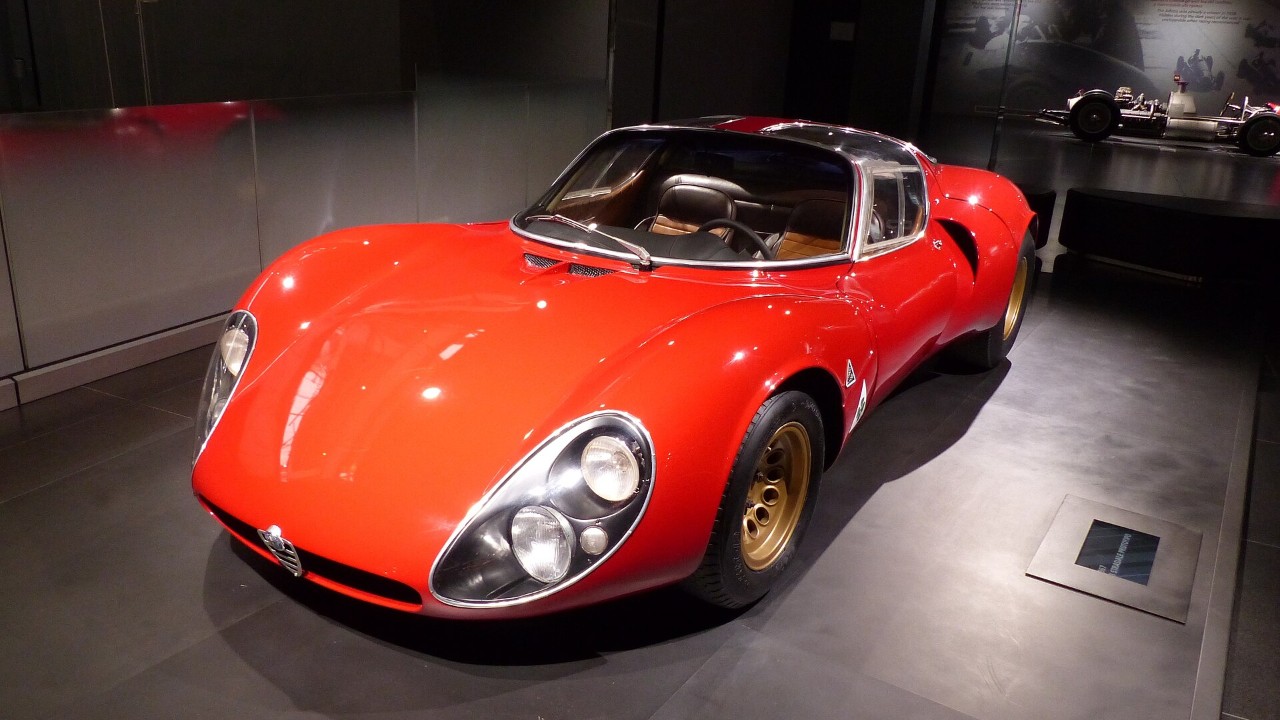
Alfa Romeo built the 33 Stradale as a road version of its Tipo 33 race car. Franco Scaglione drew the body, and the doors opened forward and upward. Those doors hinged at the base and at the top of the windshield frame.
According to Hagerty, the prototype made its debut at Monza on August 30, 1967. Its 1,995cc V8 made 230 horsepower at 8,800 rpm, and a six-speed manual sent the power to the rear wheels. The price was £6,100 at launch, about 20 percent more than a Lamborghini Miura. Because of that, Hagerty calls it a hard sell.
Production ended in 1969 after just 18 cars. That total includes two pre-production prototypes and five chassis that went to design houses for show cars. So only 11 were true production vehicles, and each one differs slightly. In our opinion, no car on this list looks more like a concept that escaped into the real world. The curves are soft, yet the proportions are pure race car. It is the rare design that makes people stop talking when they first see it.
4. 1969 Lamborghini Miura P400 S

The Miura started as a rolling chassis at the 1965 Turin Salon. The finished prototype then appeared at the 1966 Geneva show. Marcello Gandini styled it at Bertone, and the layout was a break from earlier Lamborghinis. Its V12 sat crosswise behind the cabin.
That transverse mid-engine layout is why the Miura looked like nothing else on the road. The cabin sat far forward, and the body could stay low and short. Later, the P400 S improved on the original. Built from December 1968 to March 1971, it made 370 PS, or 365 horsepower, at 7,700 rpm. About 338 left the factory.
The S also added comfort that the first cars lacked. It gained power windows, chrome trim around the windows and headlights, and a locking glovebox. In addition, Lamborghini fitted bigger intake manifolds and revised camshafts. Air conditioning became an option, too, which made the car easier to use on a hot day. Our take: the P400 S is the sweet spot for anyone who wants the original look with a little more polish. In our view, the Miura set the template for where a supercar’s engine belongs.
5. 1974 Lancia Stratos HF
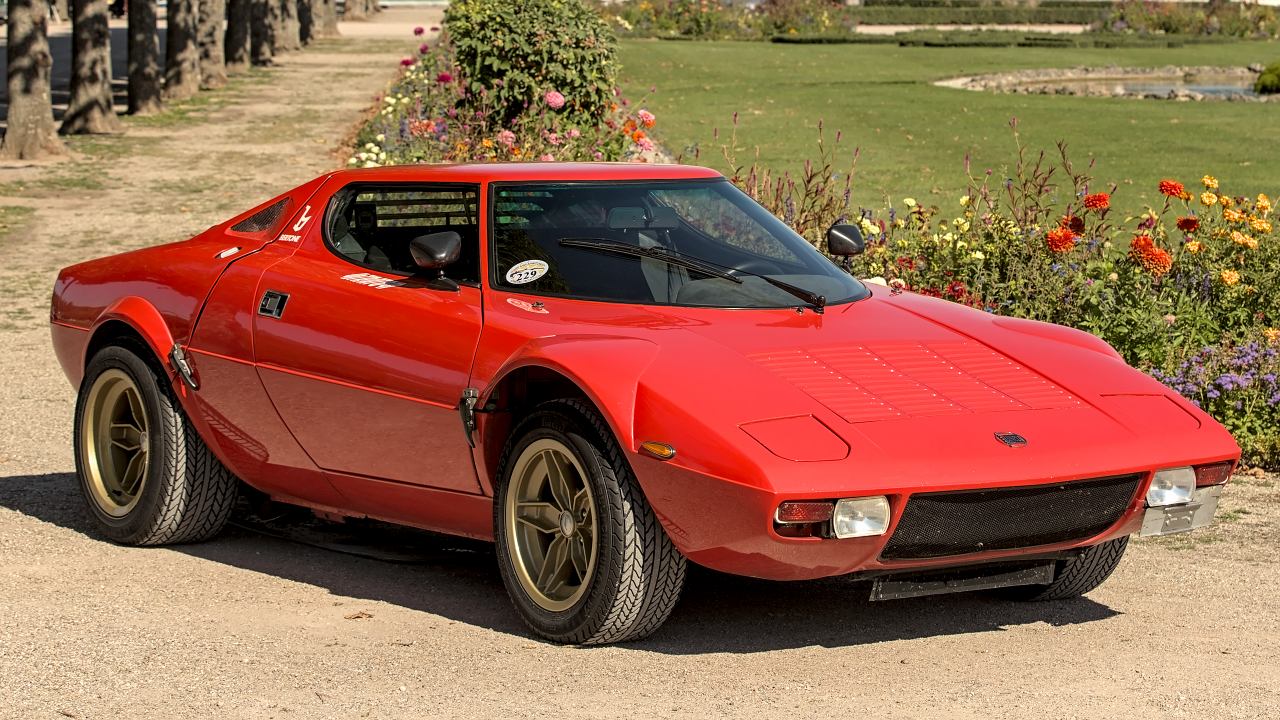
The Stratos story began with a show car. Bertone’s wedge-shaped Stratos Zero appeared at the 1970 Turin Motor Show, a year before the HF prototype. Marcello Gandini designed both. The road-going HF that followed was just as radical, with a wheelbase of only 2,180 mm, or 85.8 inches.
That short wheelbase was a purpose, not a quirk. Lancia built the Stratos to win rallies, and it needed 500 road cars for Group 4 homologation. Production started in 1973, and the car qualified for the 1974 World Rally Championship season. The figure believed correct at the time was 492 cars. Behind the seats sat Ferrari’s Dino 2.4-liter V6, rated at 190 PS in road trim.
The results justified the strange shape. In fact, three straight titles made the odd shape look like genius. The Stratos won the 1974, 1975 and 1976 championship titles with drivers including Sandro Munari and Björn Waldegård. In our view, it looked like the future because Lancia shaped it around one job. That focus shows in every line. To us, the Stratos is a spaceship built to go sideways on gravel.
6. 1973 Ferrari 365 GT4 BB
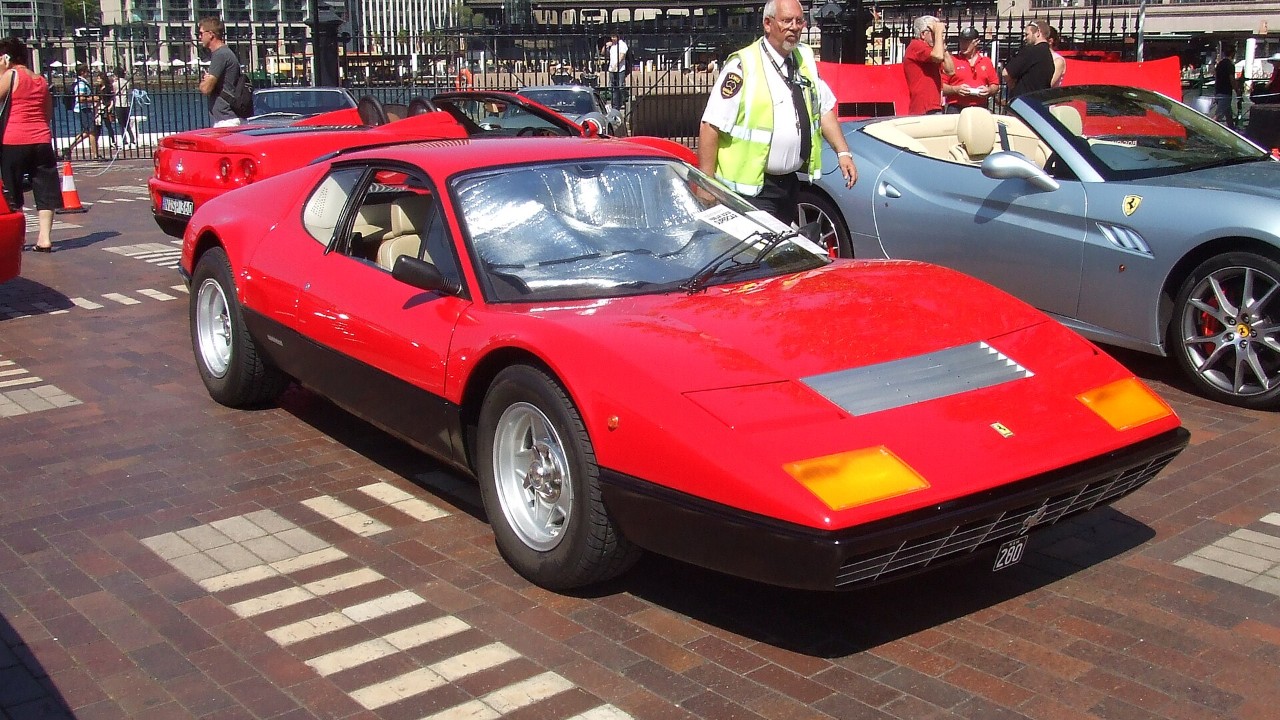
Ferrari showed the first Berlinetta Boxer prototype at the 1971 Turin Motor Show. The production version arrived at the 1973 Paris Motor Show. According to Ferrari’s own model history, it was the first Ferrari road car with a flat-12 engine.
Pininfarina styled the body under the supervision of Leonardo Fioravanti. The engine was a 4,390cc flat-12 with twin overhead camshafts per bank. Ferrari sources give different power figures, so we will skip the number. Meanwhile, the workshop manual quoted a top speed of 302 km/h, or 188 mph. Road & Track measured 175 mph in its own test.
Ferrari built only 387 examples of the 365 GT4 BB from 1973 to 1976. After that, the larger BB 512 took over. The low, wide shape made the car look like it was moving even when parked. In our opinion, the first Boxer is the moment Ferrari admitted the future belonged behind the driver. If you love 1970s Ferraris, this is the one with the strongest claim to being a turning point. Like the 300 SL Gullwing two decades earlier, it moved a famous maker in a new direction.
7. 1971 De Tomaso Pantera
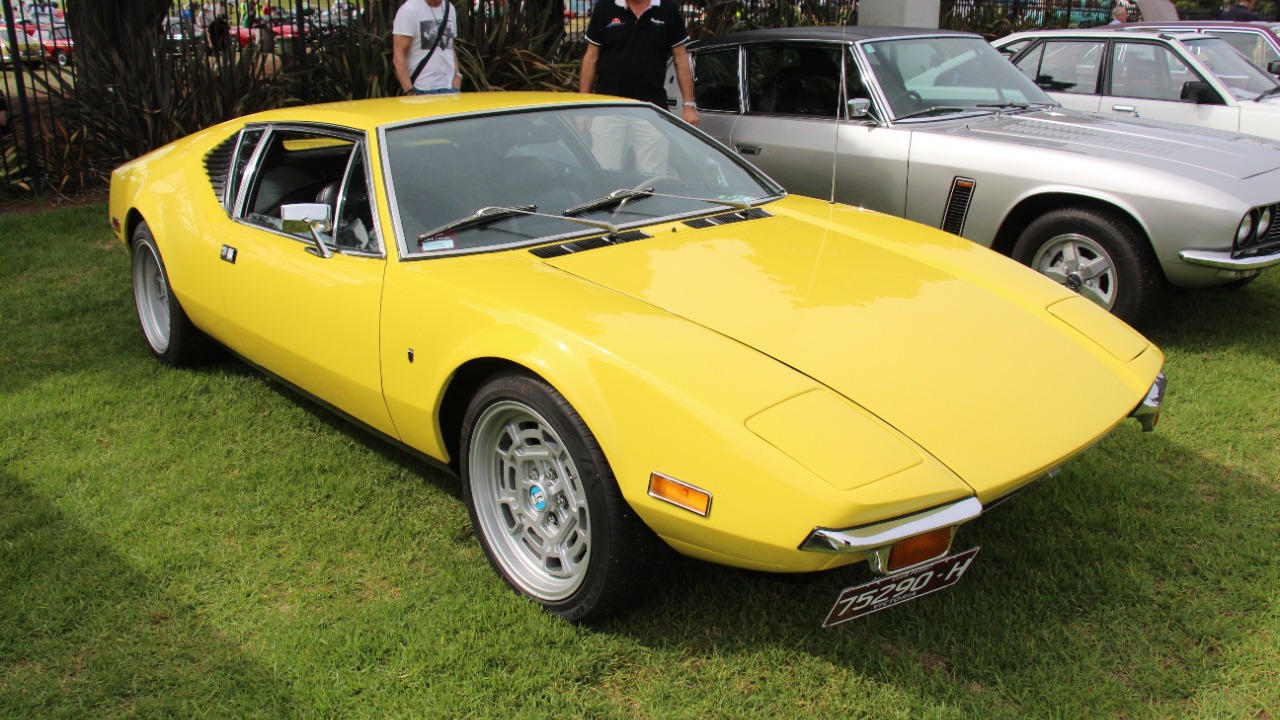
De Tomaso showed the Pantera in Modena in March 1970. A few weeks later, it appeared at the New York Motor Show. Tom Tjaarda, the American-born designer at Carrozzeria Ghia, drew the sharp body. Ford then signed on to sell the car through its Lincoln-Mercury dealers.
That deal made the Pantera unusual. It paired an Italian mid-engine supercar with a Ford 351 Cleveland V8. The 1971 cars made 330 horsepower, so they had real performance. Even so, the bigger story was that a mid-engined exotic was now sitting in American showrooms next to Lincolns and Mercurys. Our story on how the 1971 De Tomaso Pantera became Ford’s wildest partnership covers how that deal came together.
Ford stopped importing the Pantera in 1975 after selling around 5,500 cars. Yet De Tomaso kept building it in Italy until the early 1990s, for about 7,260 cars in total. In our view, the early Pantera looked like the future of affordable exotics. The shape was crisp and modern, and the American V8 made it easier to live with than most Italian rivals. Few cars on this list stayed in production for two decades.
8. 1982 Lamborghini Countach LP500 S
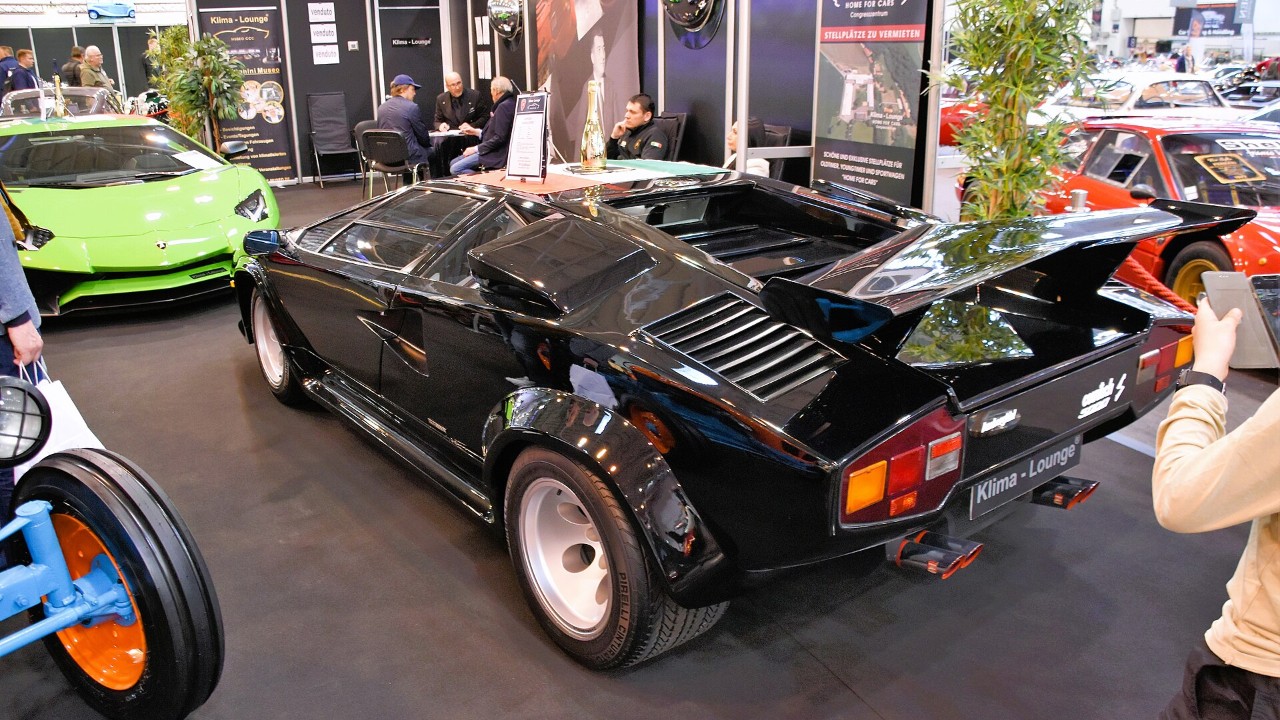
The Countach first appeared as the LP500 prototype at the 1971 Geneva Motor Show. Marcello Gandini styled that crisp wedge at Bertone. It also carried scissor doors, an idea that first showed up on his 1968 Alfa Romeo Carabo concept.
As for the name, it came from an exclamation of astonishment in Piedmontese. Gandini said people used it the way an English speaker might say “goodness.” That fits a car that, in our view, looks astonishing from any angle. Our earlier story on how the 1974 Lamborghini Countach LP400 redefined what extreme felt like covers the first production cars.
By 1982, the LP500 S had arrived. Its V12 grew to 4,754cc and made 375 PS, or 370 horsepower, at 7,000 rpm. Lamborghini built 321 of them before the 5000 QV took over in 1985. Our take: the LP500 S is the Countach many of us pictured on a bedroom wall. It keeps the original wedge but adds more power. Even next to the 300 SL Gullwing, few shapes have aged into such a clear symbol of the future as people imagined it.
9. 1985 Porsche 928 S
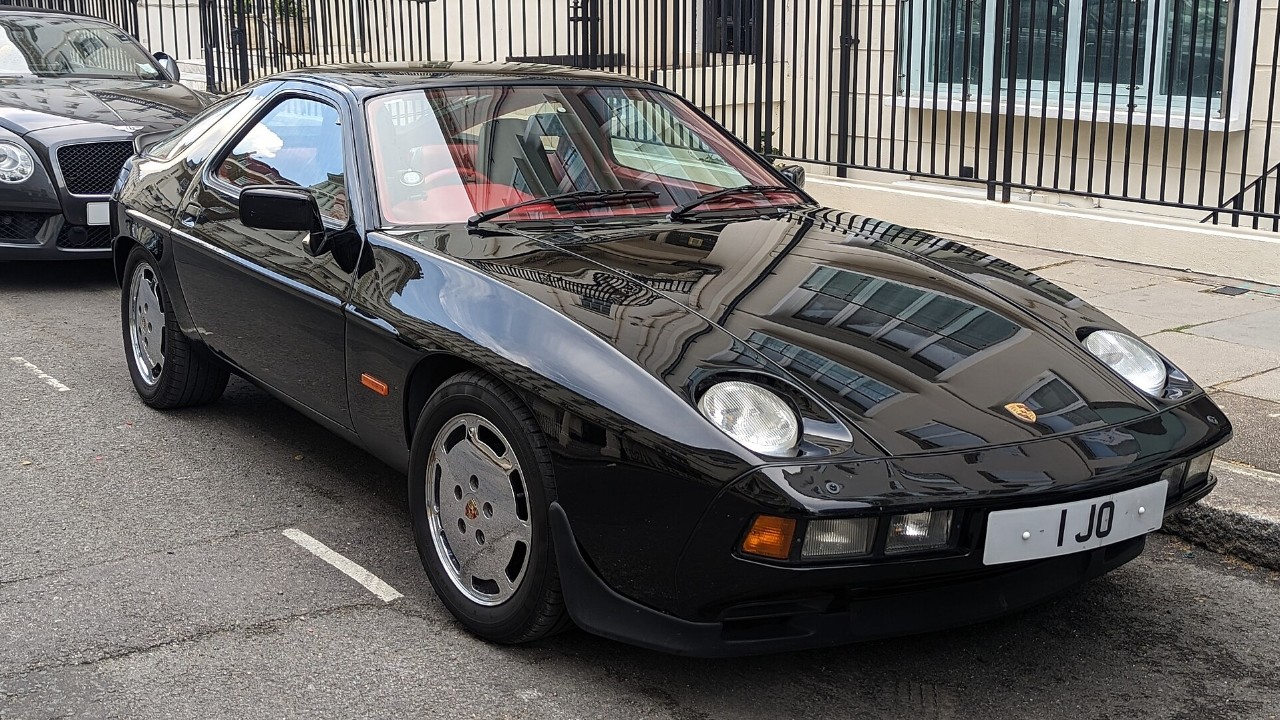
Porsche planned the 928 as a possible replacement for the 911 at the top of its range. It moved the engine to the front and the gearbox to the rear. That transaxle layout gave the car nearly even weight distribution front to rear. The water-cooled V8 was also a clear break from the air-cooled flat-six.
Its details were just as forward-looking. The Weissach axle was a passive rear-steer system that helped keep the car stable under braking and in corners. Wolfgang Möbius styled the body under Anatole Lapine. In 1978, the 928 won Car of the Year. According to the Porsche Newsroom, it is the only sports car ever so honored.
In North America, the 1985 928 S switched to a 5.0-liter V8 with dual overhead cams and four valves per cylinder. Porsche rated it at 288 horsepower. In our opinion, the 928 is the most underrated future car on this list. It looked smooth and rounded at a time when the Countach and Boxer were sharp wedges. Buyers should budget for upkeep, because a big, complex V8 grand tourer is never cheap to maintain.
10. 1987 Porsche 959
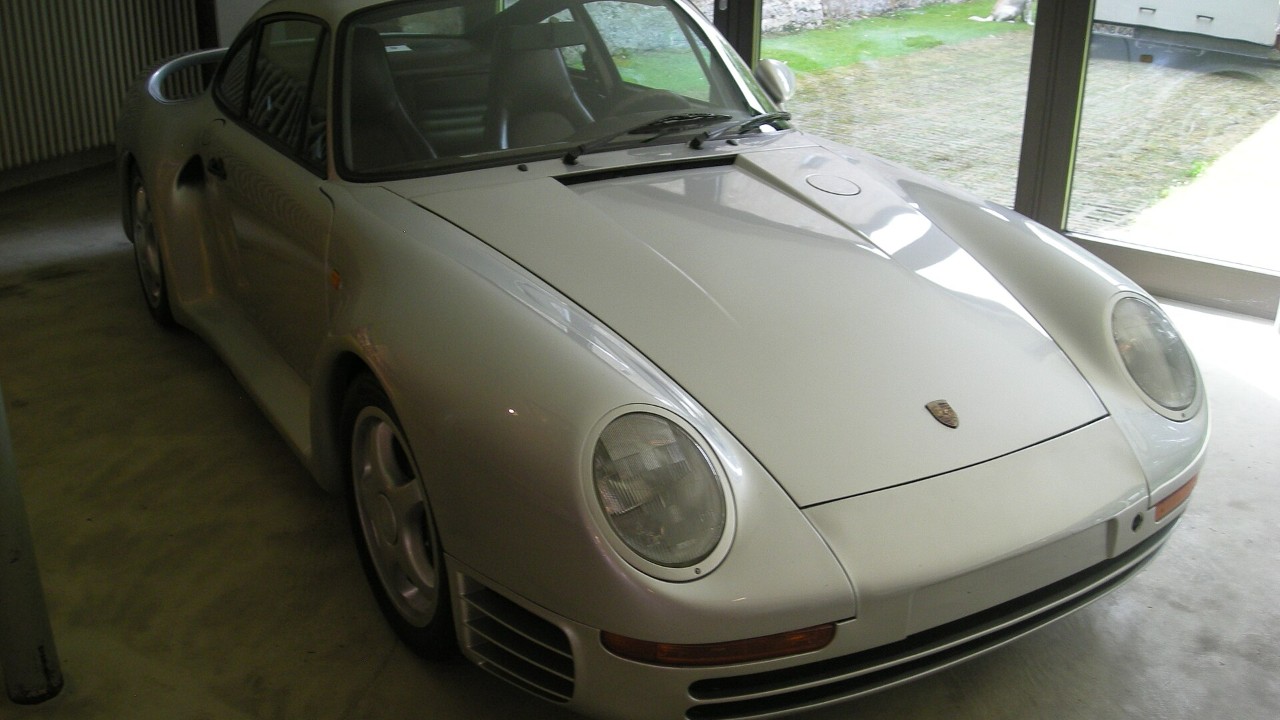
Porsche first showed its “Group B” study at the Frankfurt IAA in autumn 1983. The finished 959 had its world premiere at the same show two years later. According to the Porsche Newsroom, it had a 2.85-liter flat-six with twin turbochargers and 450 PS. It also used electronically controlled all-wheel drive.
The rest of the car read like a list of future features. It had an adaptive chassis, a rear wing built into the body and a fully covered underbody. Its drag coefficient was 0.31, and Porsche says it made no lift even at high speeds. Top speed was 315 km/h. Porsche also delivered the first customer cars in 1987 and built 292 units through 1988.
The car also proved itself off-road. In 1986, two 959s took the first two places at the Paris-Dakar Rally. Porsche’s development chief, Helmuth Bott, called it “the most expensive promotional gift Porsche has ever given its customers.” In our view, that is exactly why it belongs here. Much of its technology later reached the 911 Turbo. For more on the drivetrain, see our story on how the Porsche 959 changed how supercars handled.
11. 1993 Mazda RX-7
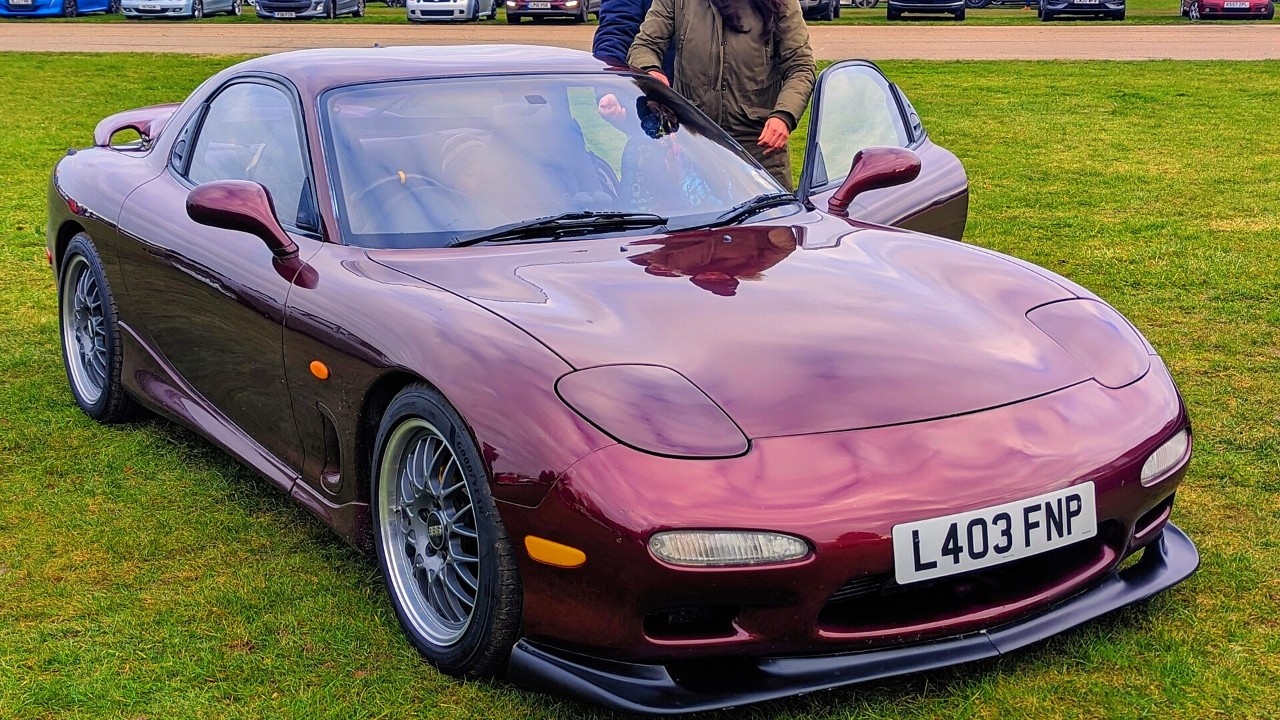
The third-generation RX-7 looked like nothing else in a 1990s showroom. Wu-huang Chin drew the winning design at Mazda’s studio in Irvine, California. Chief designer Yoichi Sato then refined it for production. The result was a low, curvy coupe with almost no straight lines.
Under the hood sat the 13B-REW twin-rotor engine. It used a sequential twin-turbo system. The first turbo handled low-speed boost, and the second joined in near 4,500 rpm. At launch in 1992, Mazda rated the engine at 255 PS, or 252 horsepower. The system was complex, however, so maintenance matters more than on most sports cars.
Mazda sold this RX-7 in the United States and Canada only from 1993 to 1995. Slow sales ended the North American run, though Japanese production went on until 2002. In our opinion, the 1993 RX-7 is the best-looking Japanese car of its decade. It also proved that the future did not have to come from Italy or Germany. If you shop for one, buy the best-kept car you can find, with records for the engine and turbos. That way, you get to enjoy the shape rather than the repair bills.
More from Fast Lane Only