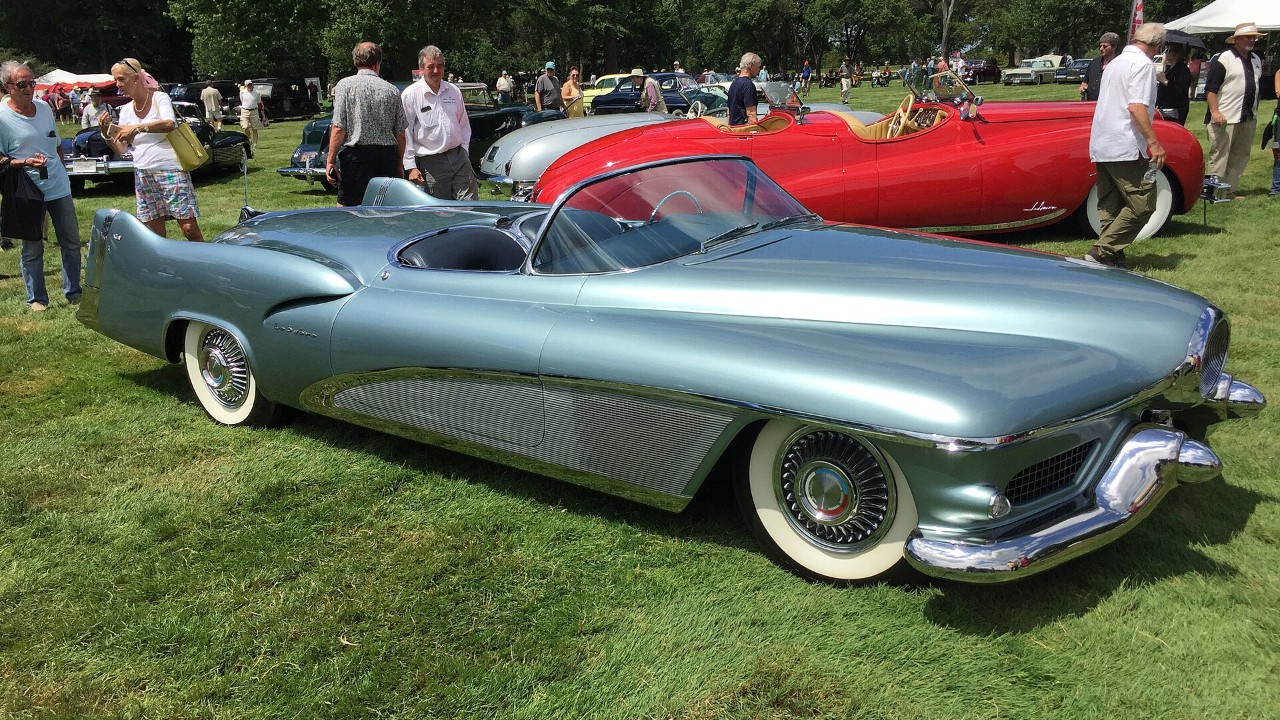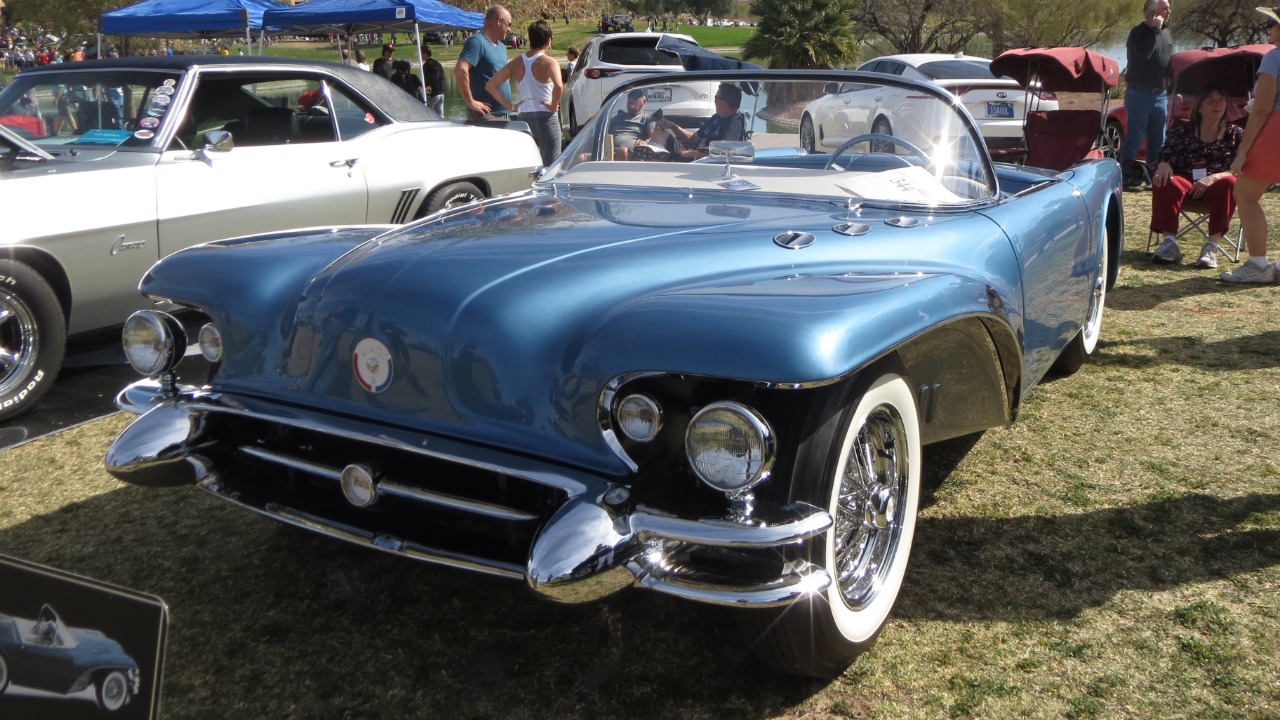
In 1951, Buick’s engineering chief reportedly took the XP-300 to 140 mph at GM’s Milford Proving Ground. That Buick concept ran a supercharged aluminum V8 that could burn gasoline or methanol. It’s a good reminder that Buick has often been braver than its reputation suggests.
Still, most people picture Buick as the comfortable middle of the GM family. That image isn’t wrong, but it leaves out a lot. The brand built the car that helped launch General Motors, and it filled Motorama stages with fiberglass dream cars. Later, it even sold one of GM’s first crossovers, long before every driveway had one.
These are our picks, and the verdict is our opinion. We think each of these 12 forgotten Buicks had an idea that was years ahead of the competition, from a brass-era tourer to a plug-in wagon built for China. The specs and dates come from museum records, period reporting and model histories. So the facts are solid, even if you’d rank the ideas differently.
1. 1951 Buick XP-300
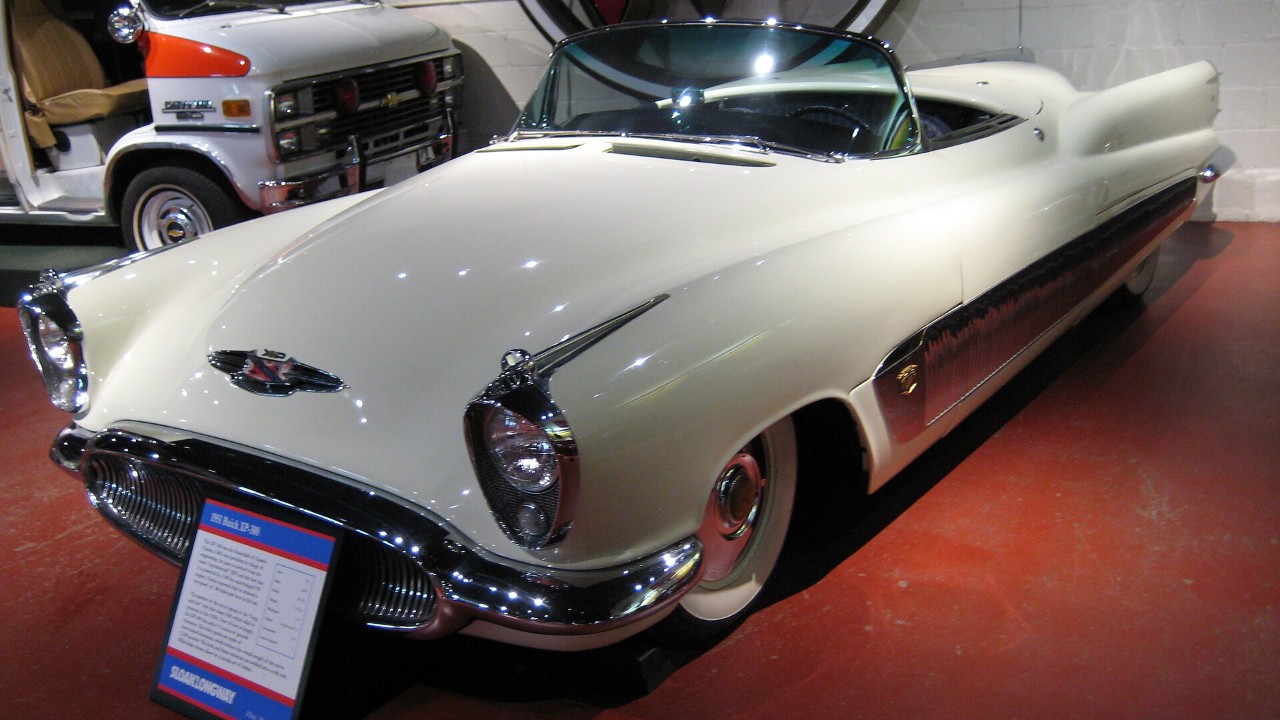
The XP-300 began life as GM’s XP-9, an “experimental laboratory on wheels” from the days before anyone used the term concept car. Engineering chief Charles Chayne led it, while Harley Earl’s studio built its sibling, the LeSabre. Its 215.69-cubic-inch aluminum V8 had hemispherical combustion chambers and a Roots supercharger. Buick claimed 335 horsepower, according to Mac’s Motor City Garage’s history of the XP-300.
The chassis was just as serious. It used a chrome-moly box-tube frame, torsion-bar independent front suspension and a De Dion rear axle. On top of that, heat-treated aluminum panels covered a steel tube structure. Meanwhile, a tandem fuel system let it run on gasoline or methanol, with a separate tank and carburetor for each.
Our take: the XP-300 was a working road car, not a styling buck. It covered more than 10,000 miles, and its wraparound windshield and headlamp bezels later showed up on production GM cars. In our view, it’s also the most important Buick concept most fans have never heard of. GM restored it and donated it to the Sloan Museum in Flint, Michigan, in 1966, where it remains on display.
2. 1954 Buick Wildcat II
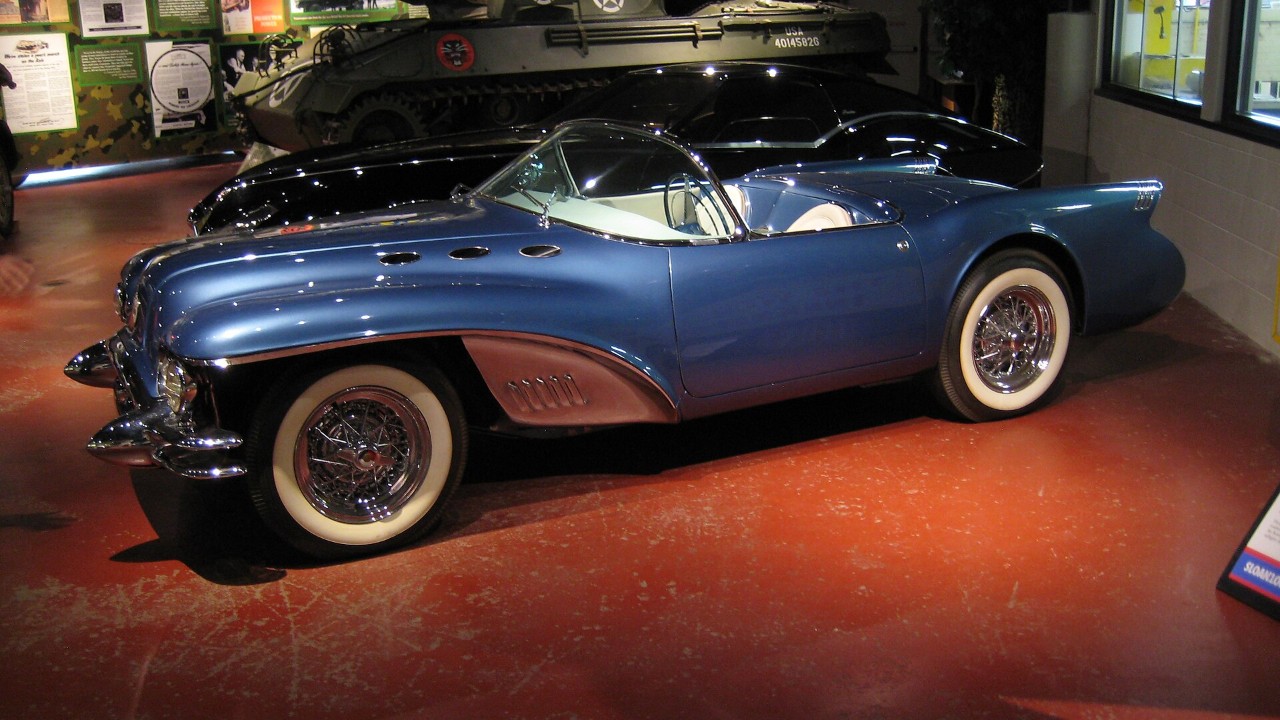
The Wildcat II was a two-seat sports car with a fiberglass body, and it rode on a Corvette chassis. It appeared at the 1954 GM Motorama with a supercharged Buick V8, according to Hagerty’s history of the Buick Wildcats. Because of that, it was an odd and exciting thing for a Buick stand.
The styling was even bolder. Instead of conventional front fenders, it used a full-width clamshell hood that covered the front wheels when closed. “Floating” driving lights sat on the chrome bumper. As a result, it looked half race car and half jet fighter. It was the second of three Wildcat dream cars, between the 1953 Wildcat I and the 1955 Wildcat III. Hagerty notes that Ken Mitson of Phoenix even built a clone of it.
Our take: Buick showed a supercharged fiberglass two-seater, which looked nothing like the sedans in its showrooms. In our view, that’s a brand testing what performance could mean for it. For more on how the Wildcat name came and went, see our story on why the Buick Wildcat disappeared for decades. The original Wildcat II survives in the Sloan Museum’s Buick Gallery in Flint.
3. 1956 Buick Centurion concept
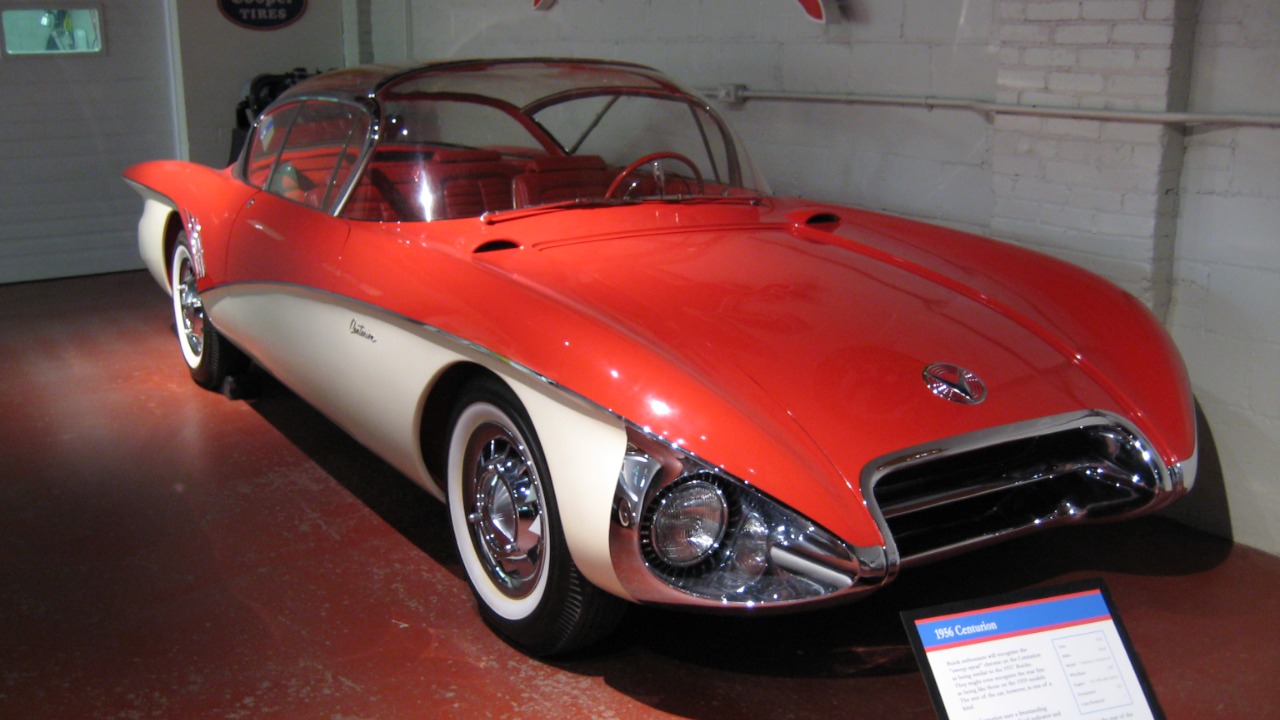
The Centurion, also known as XP-301, was a 1956 Motorama dream car with a clear plastic roof. At GM, designer Chuck Jordan led it. Instead of a rear-view mirror, it had a TV camera in the tail, according to Curbside Classic’s look at the Centurion. In other words, a Buick show car carried a backup camera decades before they became common.
Meanwhile, the rest of the car matched the theme. The fiberglass body had a red-and-white finish and an airplane-like cabin with four bucket seats and retractable headrests. At the same time, it carried a 322-cubic-inch Nailhead V8 with four Carter side-draft carburetors. However, the car was a “pusher,” so nobody could actually drive it. Curbside Classic also questions the reported 325-horsepower rating.
Our take: few concept cars predicted a single feature as precisely as this one. A camera replacing the mirror is now ordinary, but in 1956 it was pure science fiction. Fortunately, GM spared the Centurion from the scrapping that met many Motorama cars. Today it usually sits on display at the Sloan Museum in Flint, and it has apparently never been restored.
4. 1985 Buick Wildcat concept
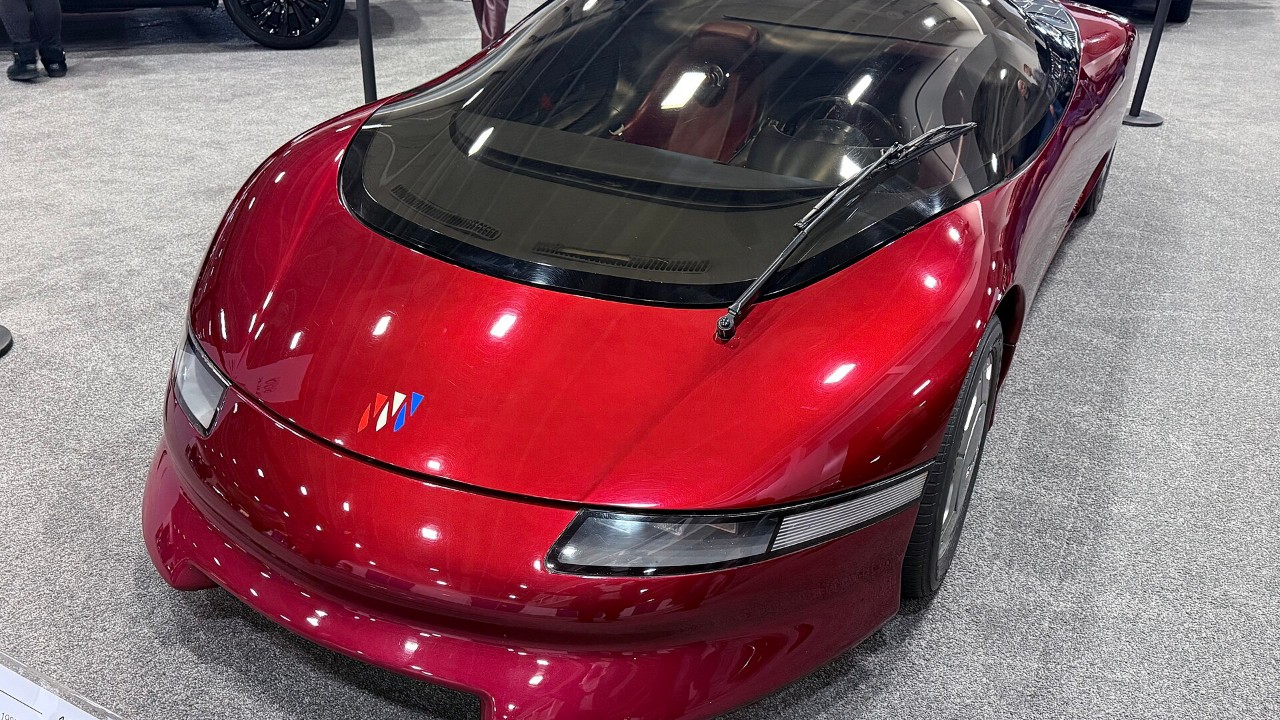
Buick revived the Wildcat name in 1985 for a mid-engine, all-wheel-drive Buick concept with a carbon-fiber and fiberglass body. Its 3.8-liter V6 came from McLaren Engines as a dual-overhead-cam, 24-valve unit. A four-speed automatic fed a chain-driven transfer case. It sent about one-third of the power to the front wheels and two-thirds to the rear, according to the PPG Pace Car history of the Wildcat.
Getting in was part of the show. A full glass canopy covered the two-seat cabin, and the steering wheel rose with it. Inside, a heads-up speedometer projected onto the windshield. Meanwhile, a flat video screen showed oil temperature, torque, tire slip and g-forces. Power figures vary by source, so we’ll skip the number. Buick engineered it for 180 mph, but a limiter held it to 70 mph.
Our take: head-up displays, digital screens and torque-split AWD are now everyday features. Yet Buick had them in one car in 1985. GM built two, and the working one toured the CART Indy Car circuit with the PPG Pace Car Team. After it retired, GM bought it for $1, and it now lives at the GM Heritage Center.
5. 2015 Buick Avenir concept
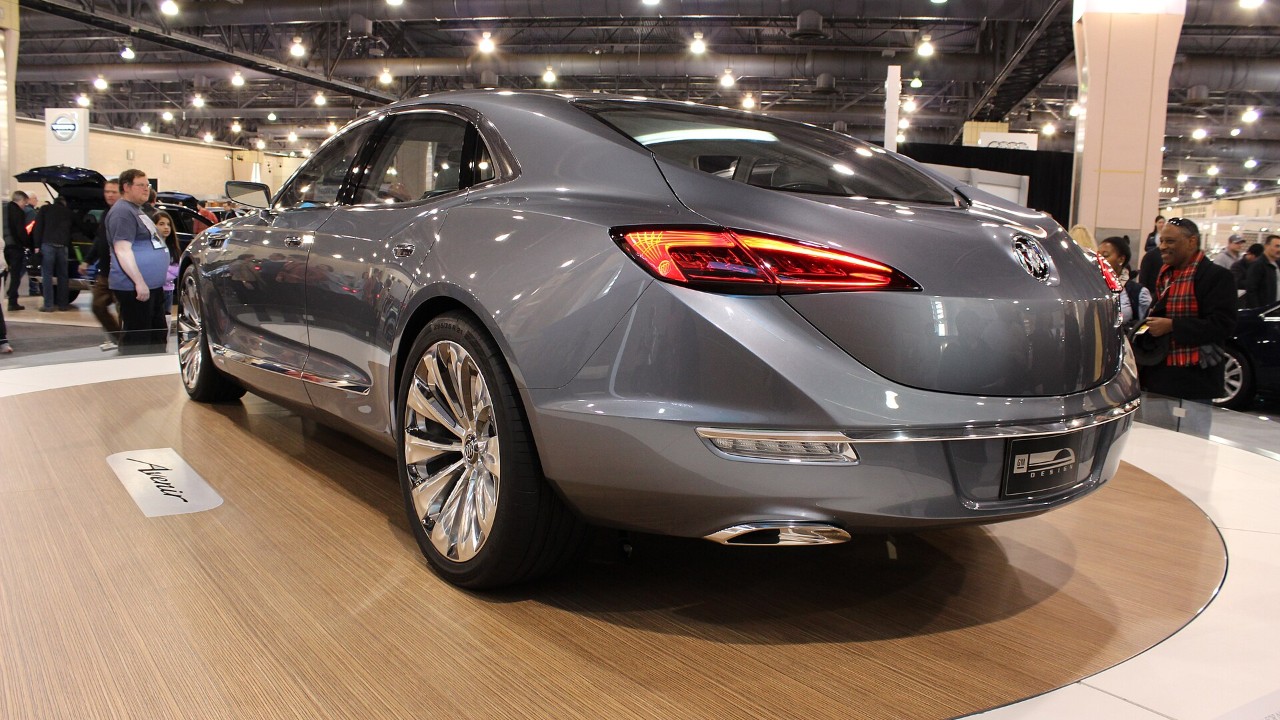
The Avenir was a four-seat sedan concept that Buick unveiled at the Detroit Auto Show in January 2015. It used a direct-injected V6 with cylinder deactivation and stop/start. A nine-speed automatic with paddle shifters and twin-clutch all-wheel drive completed the drivetrain, according to Digital Trends’ report on the Avenir.
The judges also liked it. The Avenir won the EyesOn Design award for Best Designed Concept Vehicle at the show, along with an award for innovative use of color, graphics and materials, as GM Authority reported. Inside, it had a 12-inch touchscreen, driver recognition that synced infotainment settings, wireless phone charging and a 4G LTE Wi-Fi hotspot. Outside, it rode on 21-inch wheels with LED lighting. It also offered driver-selectable suspension damping and ionic cabin air filtration.
Our take: in early 2015, that list of connected features was unusual in a luxury sedan. Since then, many of them have become standard. The Avenir also showed that Buick could design a big, elegant car without looking old-fashioned. In our view, it’s a forgotten Buick concept that deserved its own production car.
6. 2003 Buick Rendezvous CX

The Rendezvous and its Pontiac Aztek twin were GM’s first entries into the crossover SUV segment. Buick sold it for the 2002 through 2007 model years. It rode on GM’s U platform and shared a 112-inch wheelbase with the short-wheelbase Chevrolet Venture and Pontiac Montana minivans.
The base CX could seat up to seven, with a 3.4-liter V6 driving the front wheels through a four-speed automatic, according to Auto123’s used-car guide to the Rendezvous. Later in the run, Versatrak all-wheel drive came on the top trims. Auto123 adds that Ultra-trim options included touch-screen navigation, OnStar and a DVD entertainment system. In fact, Buick sold 72,643 of them in the U.S. in 2003, its best year. Then sales tapered off before the Enclave replaced it.
Our take: people laugh at the Rendezvous, mostly because of its Aztek sibling. Yet it did exactly what millions of buyers now want. It offered car-like driving, a raised seat, three rows and available all-wheel drive in one package. In our view, Buick was simply early. GM built it at its Ramos Arizpe plant in Mexico, on the same line as the Aztek.
7. 1908 Buick Model 10
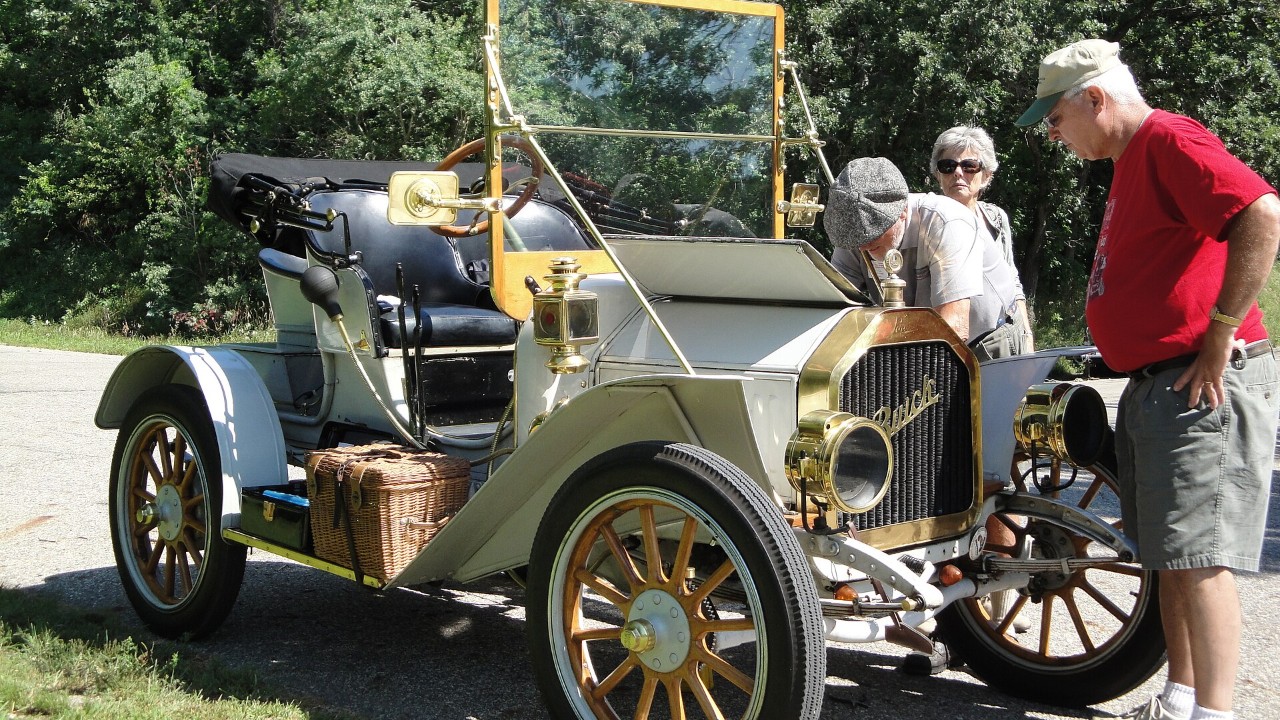
The Model 10 arrived in November 1907 and became the car that made Buick a giant. It used an overhead-valve four-cylinder engine of 165 cubic inches, which Buick called “valve-in-head.” The cylinders were cast in pairs and bolted to an aluminum crankcase. It came in four body styles, and it sold for a little more than Ford’s $850 Model T, according to Mac’s Motor City Garage.
Sales soon followed. Buick built 4,002 Model 10s for 1908, making it the company’s most popular model that year. Over 1908 to 1910, Buick built about 23,100 of them. As a result, the Model 10 ranked second in U.S. sales, behind only the Model T.
Our take: the Model 10 matters far beyond Buick. William C. Durant founded General Motors on September 16, 1908, with Buick as its cornerstone. Then he used that strength to add Olds, Cadillac and Oakland. In our view, that valve-in-head design gave Buick a real edge, and its profits helped build GM. That’s quite a legacy for a small four-cylinder tourer.
8. 1908 Buick Model F
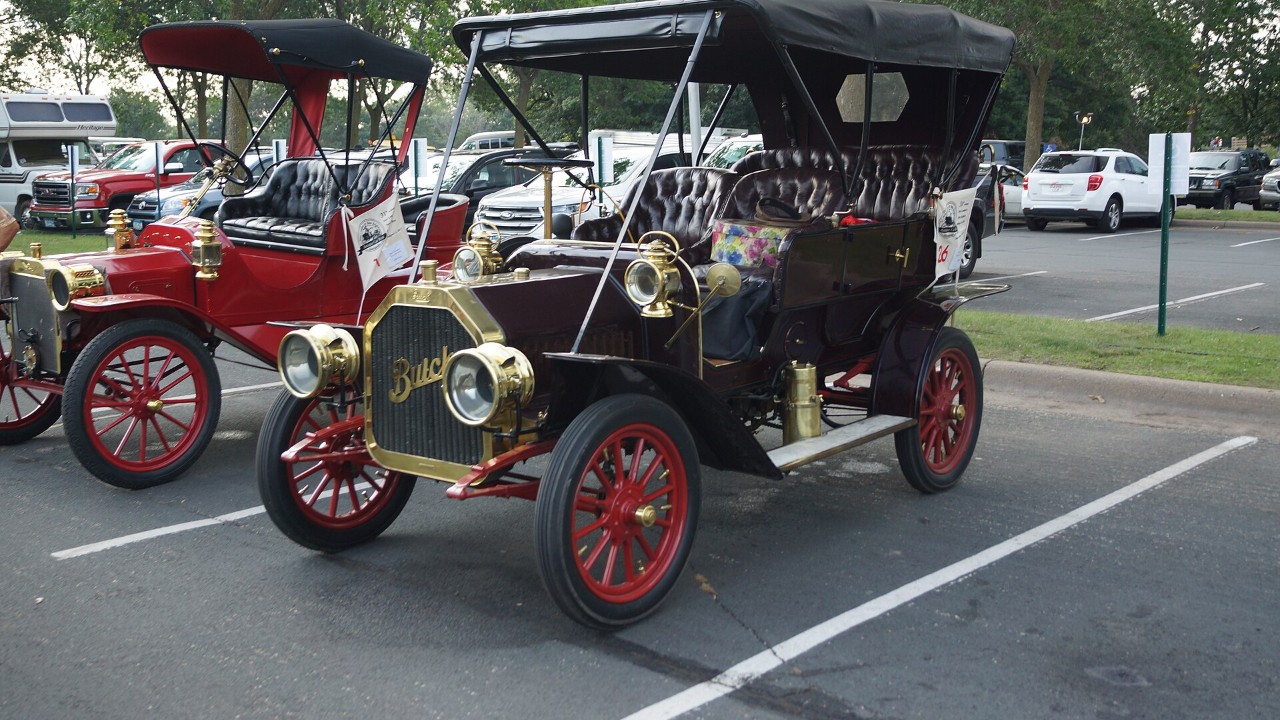
The Model F was the two-cylinder Buick that sold alongside the new Model 10. It used a 159-cubic-inch twin rated at 22 horsepower. A two-speed transmission with a cone clutch and chain drive sent power to the rear wheels, according to Old Cars Weekly’s feature on a 1908 Model F.
However, it wasn’t a cheap car. A four-door, five-passenger Model F touring car cost $1,250 in 1908. Buick built 3,281 of them that model year, and it offered the two-cylinder F and G models from 1908 through 1910. By comparison, the newer four-cylinder Model 10 sold 4,002 units that same year.
Our take: the Model F shows how fast Buick was moving in 1908. It sold a proven twin alongside a modern four, and both found buyers. Also, the owner of the family car in that Old Cars Weekly story says it still starts easily with the hand crank, “if it’s running right.” In our view, that’s a strong testimonial for a car built more than a century ago. It’s one of the most forgotten Buicks of all.
9. 1973 Buick Apollo
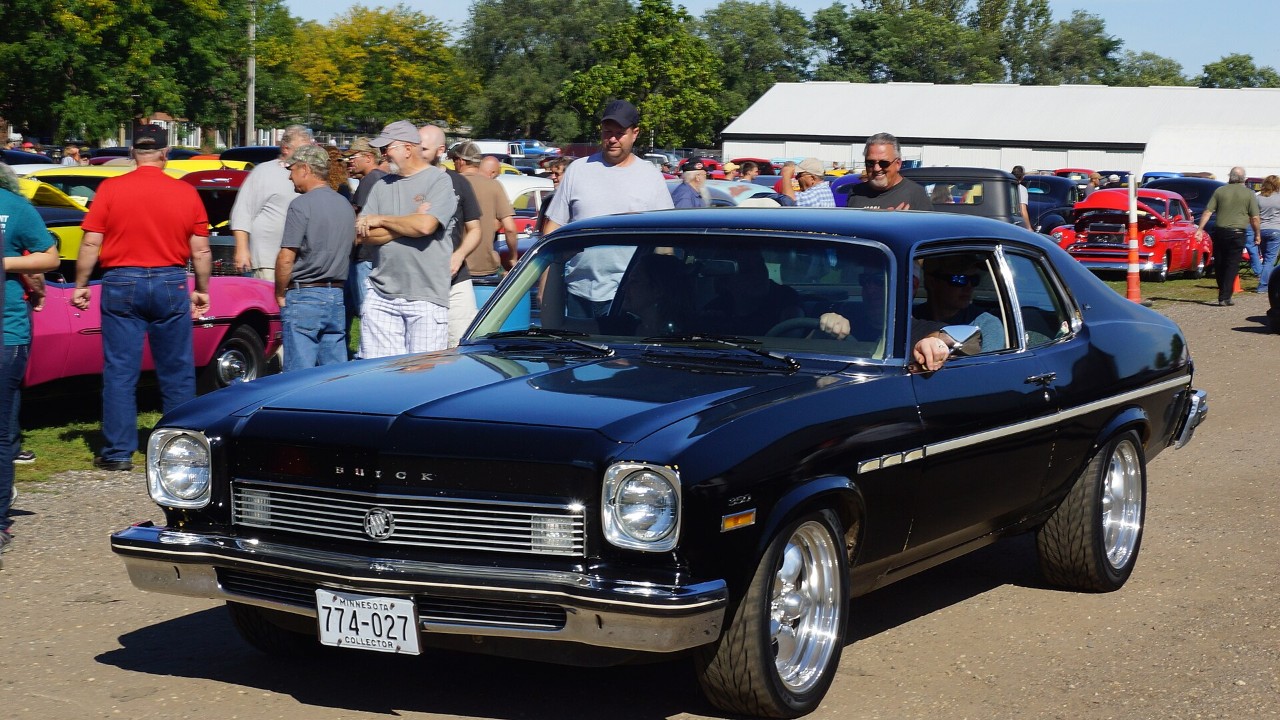
The Apollo marked Buick’s return to the Detroit compact class in 1973. In fact, it was a restyled, upgraded Chevrolet Nova on GM’s X-body. Buyers could choose a two-door coupe, a two-door hatchback coupe or a four-door sedan, according to Mac’s Motor City Garage’s history of the Apollo.
The base engine was Chevrolet’s 250-cubic-inch inline six. Meanwhile, the optional V8 was a 350-cubic-inch Buick engine with a two-barrel carburetor, rated at 150 SAE net horsepower. In its first year, the hatchback narrowly outsold the coupe. However, its volume quickly declined after that. For 1975, Buick renamed the two-door cars Skylark. Then, for 1976, the four-door became a Skylark too, and the Apollo name was gone.
Our take: Buick had a compact on sale in 1973, and that timing looks smart in hindsight. A Buick-badged hatchback was also an unusual thing for the brand. In our view, the Apollo showed that a premium brand could sell a smaller car without losing its identity. If you want one today, the 350 V8 cars are the ones to find.
10. Buick Somerset
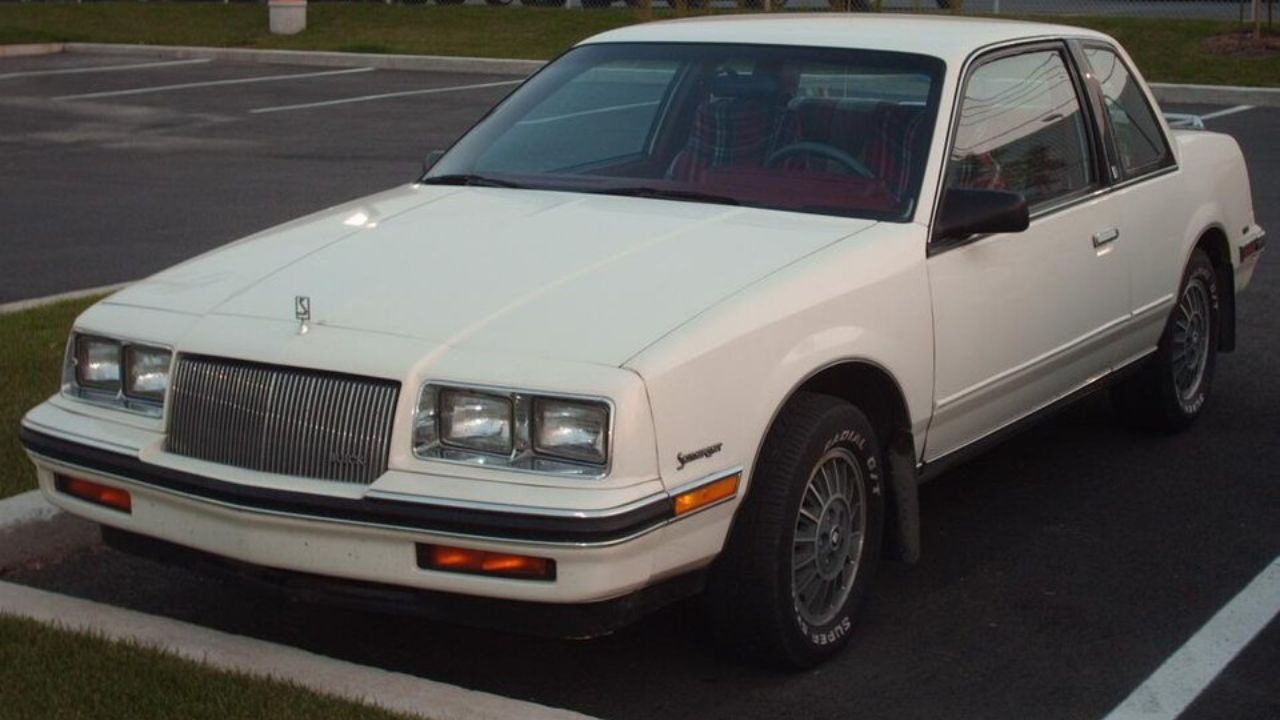
The Somerset Regal arrived for 1985 on GM’s N-body platform. It offered a fuel-injected Iron Duke four with about 92 horsepower or a 3.0-liter V6 with 125 horsepower. However, the V6 came only with an automatic. Jalopnik notes that the same N-body platform later carried cars like the Pontiac Grand Am and Oldsmobile Achieva. Its most distinctive feature was an all-digital dashboard, according to Jalopnik’s history of the Somerset.
The car didn’t last long under its first name. For 1986, Buick dropped “Regal” and called it simply the Somerset. Later, GM folded it into the Skylark name. A five-speed manual from Isuzu was available with the four-cylinder, but Jalopnik notes that few buyers chose it.
Our take: an all-digital dashboard in a mid-priced 1985 coupe was a bold move. Many brands now treat a screen-only instrument panel as a premium feature. Buick put one in a compact two-door four decades ago. In our view, that’s a forgotten bit of foresight. If you find one, check that the digital cluster works, because that’s the part that makes the car special.
11. 2013 Buick Riviera concept
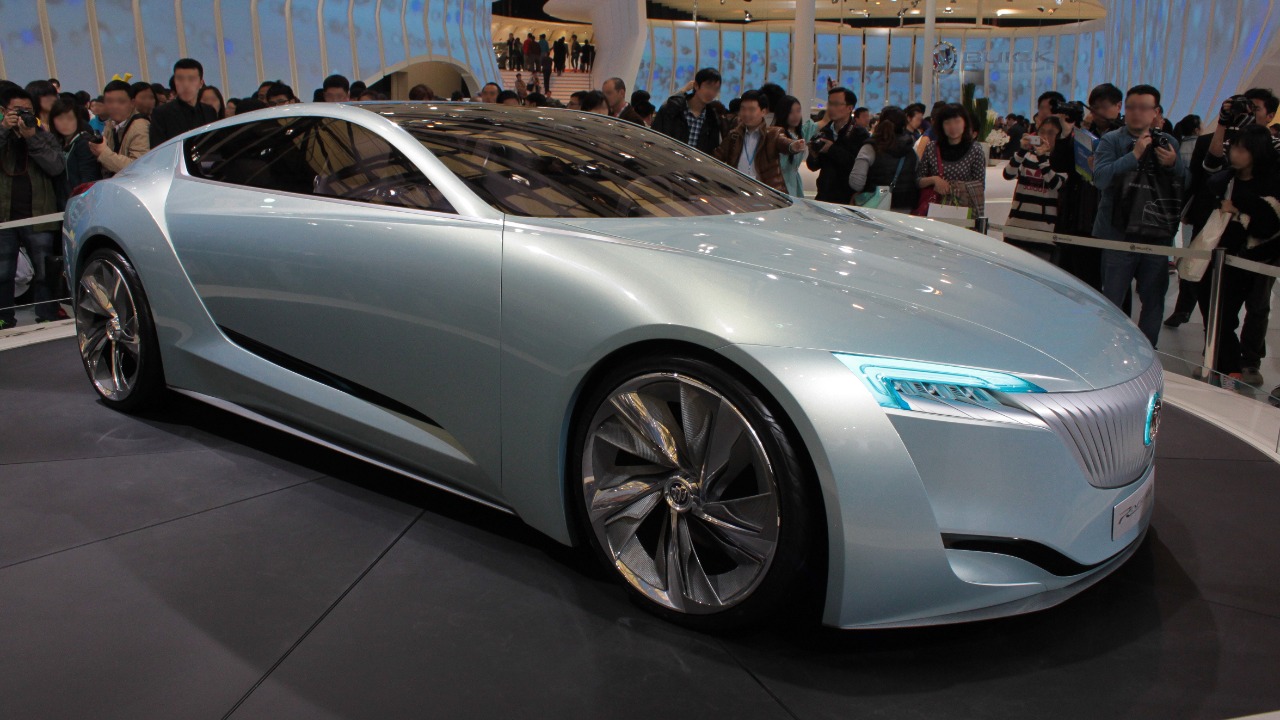
Buick brought the Riviera name back in Shanghai in 2013 on a concept developed by Shanghai GM and its Pan Asia Technical Automotive Center. It was the fourth global concept from that partnership. It used a dual-mode plug-in hybrid system with wireless inductive charging, according to GM Authority’s report from the show.
Then the tech list went on. The concept had active grille shutters, intelligent four-wheel steering, magnetic ride control and a holographic display on the windshield. On top of that, 10 high-resolution cameras and 18 micro sensors fed a driver-assist suite that included “transparent” A-pillars and lane departure warning. When a cord was needed, the charging port hid in Buick’s trademark porthole. Up front, wing-shaped LED lights tied it to production Buicks like the 2013 Enclave.
Our take: in 2013, wireless charging, camera-based driver aids and a head-up hologram sounded like a wish list. Today, versions of most of them are on sale. In our view, the Riviera concept read the next decade of car tech very well. For the production cars that wore the name, see our list of Rivieras that showed what Buick could build.
12. 2021 Buick Velite 6 PHEV

The Velite 6 is a compact wagon that Buick builds for China. Buick first showed a Velite 6 plug-in hybrid at Auto China 2018 in Beijing, inspired by the Velite concept of November 2016, according to Guide Auto’s report from the show. The plug-in uses a 1.5-liter gasoline engine, electric motors and an electronically controlled continuously variable transmission.
For the plug-in shown in 2018, Buick claimed a combined 1.4 L/100 km and a total range of 700 km, Guide Auto reported. Buick also sold the Velite 6 as a full EV. Meanwhile, SAIC-GM builds it in Wuhan, Hubei. Guide Auto reported that there were no plans to bring the plug-in or the EV to North America. So American buyers never saw the car at all.
Our take: a Buick plug-in wagon sounds unlikely to U.S. ears. Even so, it shows how far GM’s China arm moved on electrified family cars. In our view, it’s a glimpse of a Buick most Americans will never drive. In 2023, Buick sold 7,413 Velite 6 plug-in hybrids in China, alongside 35,312 of the EV version.
More from Fast Lane Only