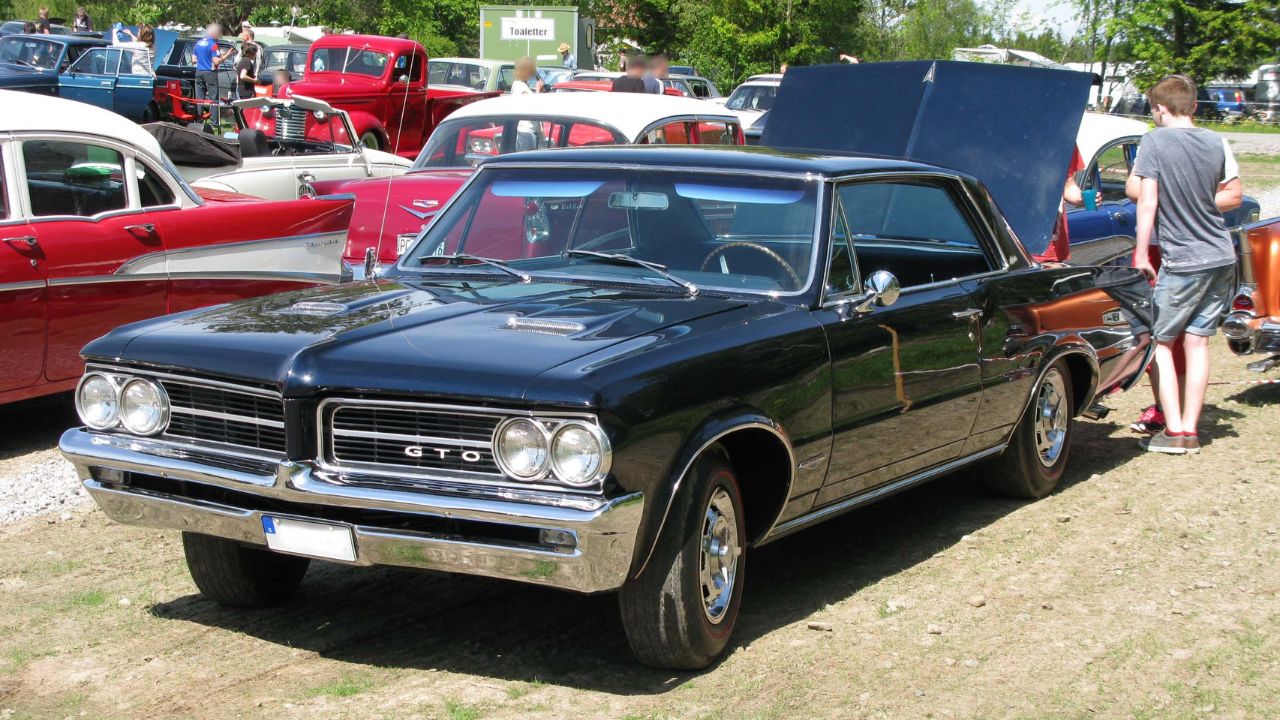
The 1964 Tempest LeMans GTO started the muscle-car boom as a $295 option package on a mid-size Pontiac. Within a few years, every Detroit brand had its own answer. Some were drag-strip specials, and some were big cruisers with huge engines.
A few, however, felt different from behind the wheel. They had the right blend of power, weight and gearing, so they rewarded the person driving rather than the person reading the spec sheet. Those cars were not always the fastest of their day. Instead, they were the ones you wanted to take the long way home in.
These are our picks for 12 cars from the muscle-car era that were pure driving machines. The verdicts are our opinion. Still, the engines, ratings, prices and production figures come from period road tests, factory records and marque histories.
1. 1964 Pontiac Tempest LeMans GTO
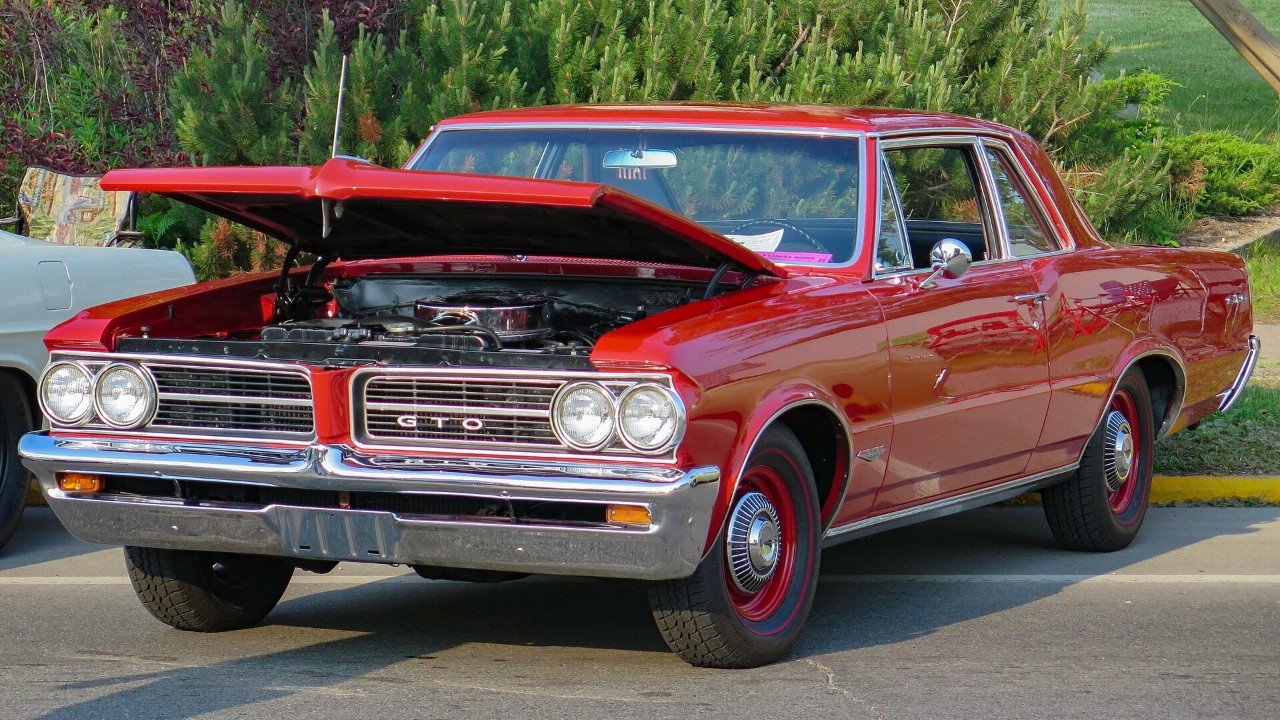
Pontiac sold the first GTO as an option on the Tempest LeMans, not as its own model. For $295, buyers got a 389-cubic-inch V8 rated at 325 horsepower with a single four-barrel carburetor. The optional Tri-Power setup used three two-barrel carburetors, and Pontiac rated that version at 348 horsepower.
That recipe was simple. Pontiac took a big engine from its full-size cars and dropped it into a lighter intermediate body. As a result, the LeMans GTO had a power-to-weight ratio its big-car cousins could not touch. Buyers noticed fast, because total sales for 1964 reached 32,450 units.
In our view, the first-year LeMans GTO is the purest driving machine of the whole era because nothing about it was overthought. It was a regular coupe with too much engine, and that is exactly why it felt alive. If you want the full backstory, our look at why Pontiac risked everything to build the original GTO covers how the package got past GM’s rules. For a driver, though, the Tri-Power car with a four-speed is the one we would hunt down.
2. 1965 Chevrolet Malibu SS
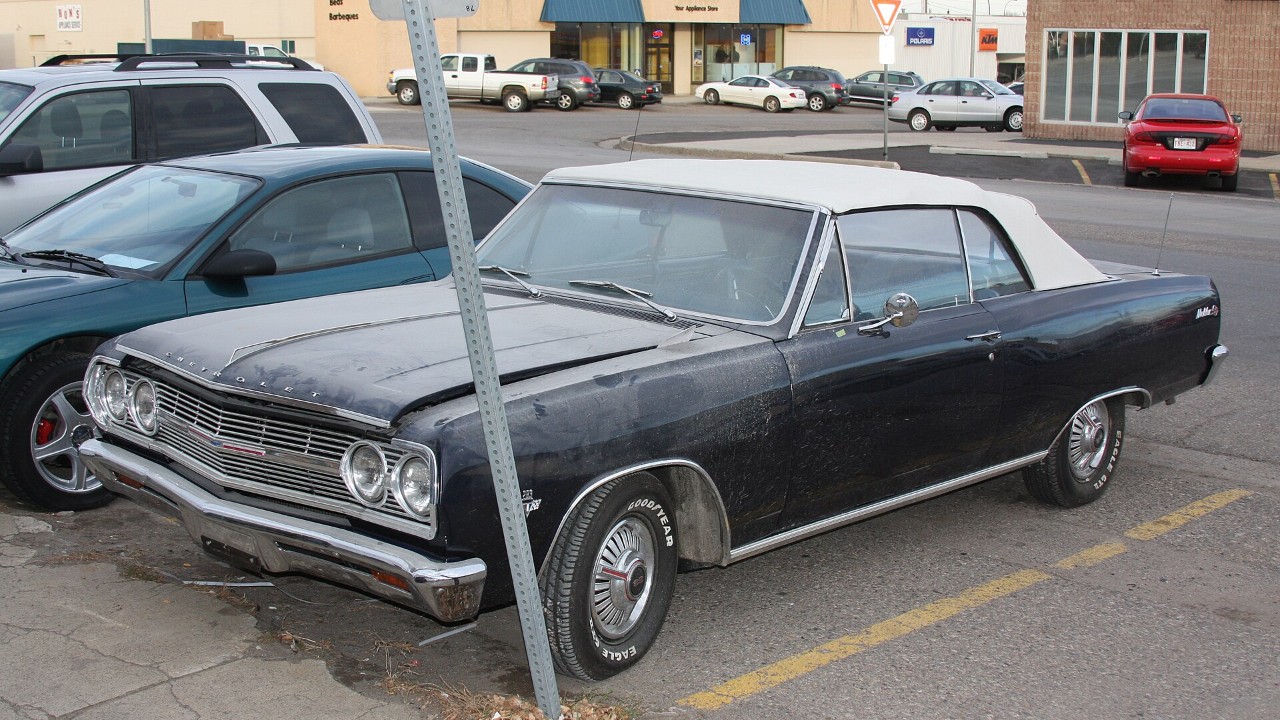
Chevrolet’s answer to the LeMans GTO arrived in stages. The Super Sport package cost $162 and fit the upscale Malibu two-door hardtop and convertible. Then, for 1965, Chevrolet added a 327 V8 rated at 350 horsepower as Regular Production Option L79.
That small-block is the reason the 1965 Malibu SS lands on this list. A 327 weighs far less than a big-block. So the front end of an L79 Malibu stays light, and the car turns in better than heavier rivals. Chevrolet did build a big-block version that year, too. However, only 200 regular-production Z16 SS 396 cars left the Kansas City plant, so almost nobody got one.
Our take: the L79 Malibu SS is the smart enthusiast’s Chevelle. It has enough power to embarrass most cars of its day, yet it never feels like the engine is in charge. You also get the clean 1965 body, which we think is the best-looking early Chevelle. Look for documentation, though, because a 327 is easy to swap into a lesser car. A real L79 is worth the extra paperwork, because it is the version that makes this car special.
3. 1966 Dodge Coronet 500 426 Hemi
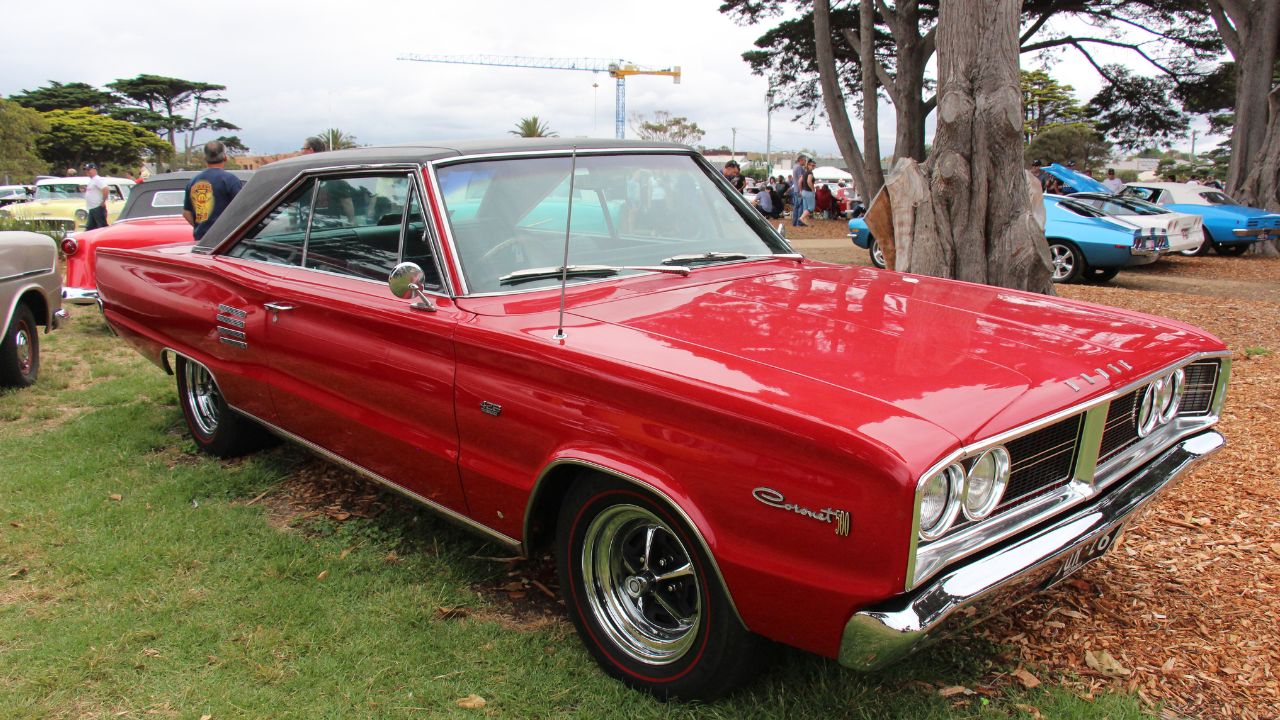
Chrysler first offered the 426 Street Hemi to the public for the 1966 model year. Buyers could order it from the factory starting in mid-1965. Chrysler rated the engine at 425 horsepower and 490 lb-ft of torque. The same rating is widely believed to be conservative.
The Coronet was one of the first places that engine landed. According to Street Muscle Magazine, citing Hagerty, Dodge built only 732 Hemi Coronets for 1966. The same report puts a Hemi Coronet’s quarter-mile time at 14.5 seconds. It also lists a 0-60 run of 6.1 seconds.
Those numbers alone would earn it a spot. Even so, the Coronet 500 adds something the stripped-down drag cars lacked. It was the upscale trim of the line. That makes it a Hemi you could drive to dinner and then take to the strip on Saturday. In our opinion, the 1966 Hemi Coronet 500 is proof that the era’s wildest engine could live in a civilized car. Finding one is the hard part, with so few built. However, if you ever get the chance to ride in one, take it, because nothing else from 1966 sounds quite the same.
4. 1966 Pontiac 2+2
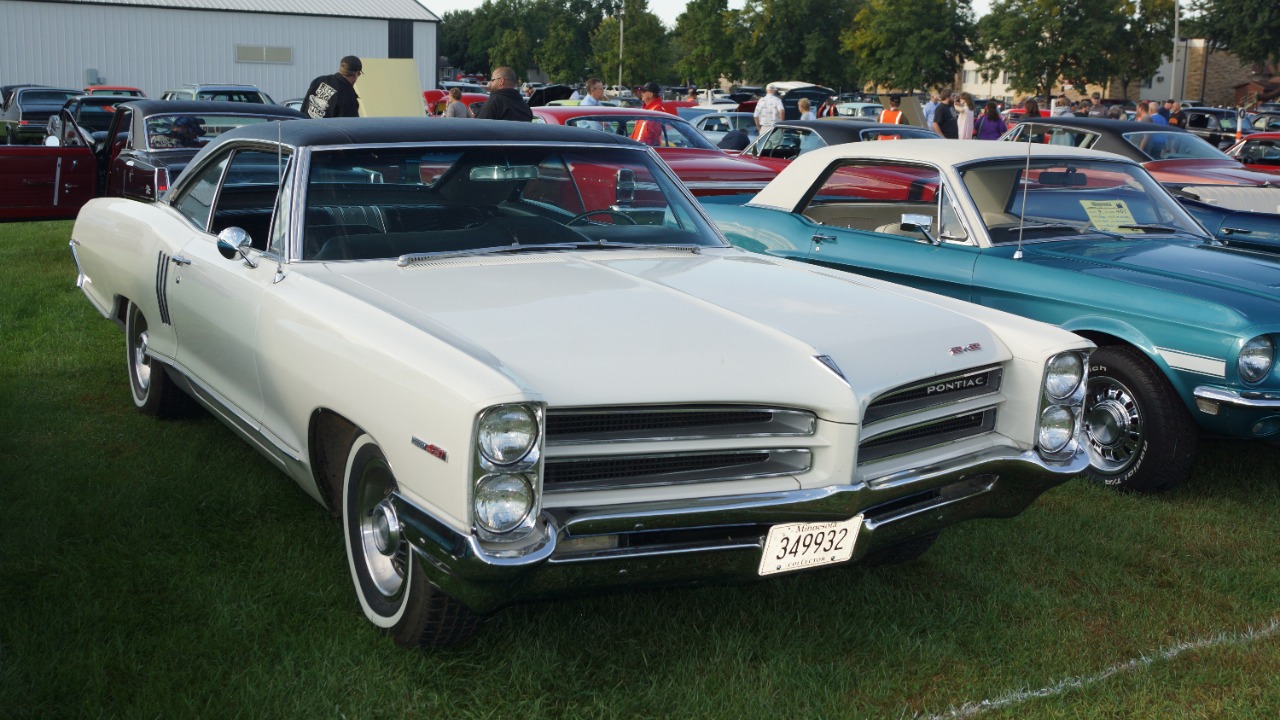
For 1965, the 2+2 was an option on the full-size Catalina. Then for the 1966 model year it became a separate Pontiac series. Pontiac offered it only as a hardtop coupe or a convertible, and every one carried a 421-cubic-inch V8.
Buyers could pick from three versions of that 421. The four-barrel engine made 338 horsepower. The Tri-Power setup brought 356 horsepower. At the top sat the HO, also on three two-barrel carburetors, rated at 376 horsepower.
A big Pontiac might seem like an odd fit for a list about driving machines. Yet the 2+2 earns its place because it was built for fast, long-distance runs rather than quick launches. It stays planted at speed in a way that a short-wheelbase intermediate rarely does. In our view, a 1966 2+2 with the 376-horsepower HO is one of the best highway muscle cars ever sold. It feels like a GTO that went to finishing school. The catch is that it shares much of its trim with the Catalina, so check the paperwork before you pay a 2+2 price.
5. 1966 Oldsmobile 442
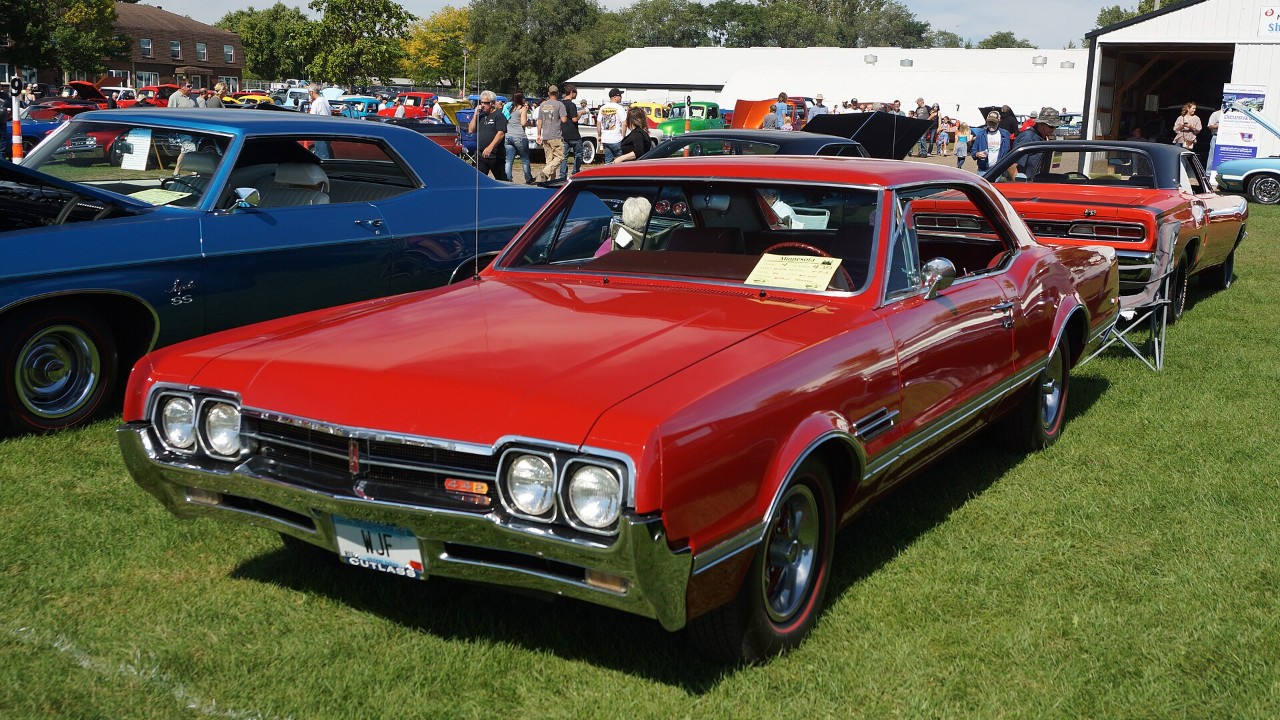
By 1966, the 442 name had a clear meaning. Oldsmobile’s brochures said it stood for a 400-cubic-inch engine, a four-barrel carburetor and dual exhausts. The standard L78 version of that 400 made 350 horsepower and 440 lb-ft of torque.
The rare option that year was the L69. It used three Rochester two-barrel carburetors on a progressive linkage and cost $264.54. Oldsmobile rated it at 360 horsepower. Beyond that came the W-30, with outside-air induction and a hotter camshaft. Only 54 left the factory that way, plus 97 dealer installations. Overall 442 production slipped to 21,997 in 1966.
Here is why we would pick a 1966 car with the L69. Those three carburetors add a sharp throttle response without the fuss of a race engine. Like the LeMans GTO, the 442 also pairs a big engine with a mid-size body, so it never feels heavy. In our opinion, that combination makes it a more rewarding car on a winding road than many cars with bigger numbers. If you find one, confirm the L69 equipment, because the original three-carb setup is easy to fake with parts.
6. 1969 Chevrolet Camaro COPO 9560 ZL1
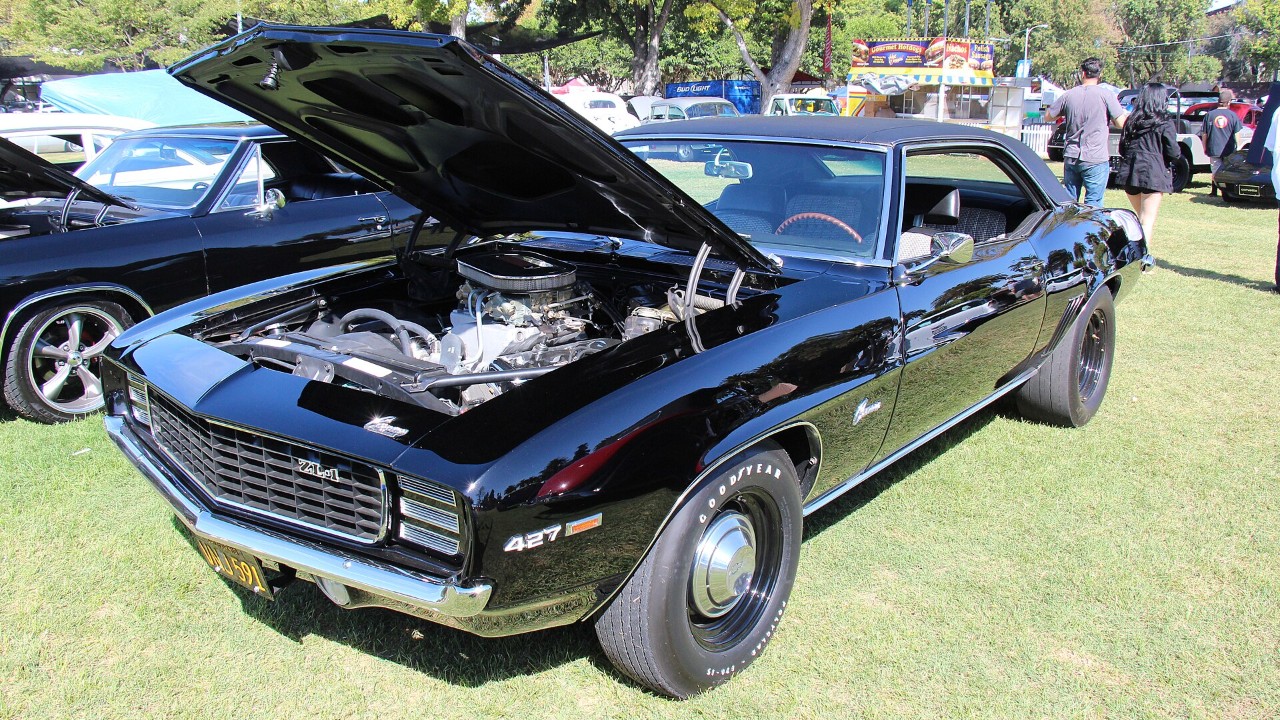
The ZL1 Camaro began with a dealer, not a Chevrolet product planner. In late summer 1968, Fred Gibb of Gibb Chevrolet in La Harpe, Illinois, contacted Vince Piggins. Piggins ran Chevrolet’s product performance group and had final approval over Central Office Production Orders. He agreed to COPO 9560 on one condition: the dealer had to order at least 50 cars.
Each car got an all-aluminum 427 V8 developed mainly for racing. According to Jalopnik’s history of the car, the first two ZL1s carried sticker prices over $7,200. That was far more than an iron-block 427 COPO car. In the end, a total of 69 ZL1 Camaros left the factory.
This is the most extreme car on our list, and it is here for a reason. Gibb and drag racer Dick Harrell expected the ZL1 to dominate on the street and at the track during the 1969 NHRA season. That aluminum block also saved weight over the nose. In our view, the ZL1 is a pure driving machine in the most literal sense. Chevrolet built it to do one job and skipped almost everything else.
7. 1969 Oldsmobile Cutlass W-31
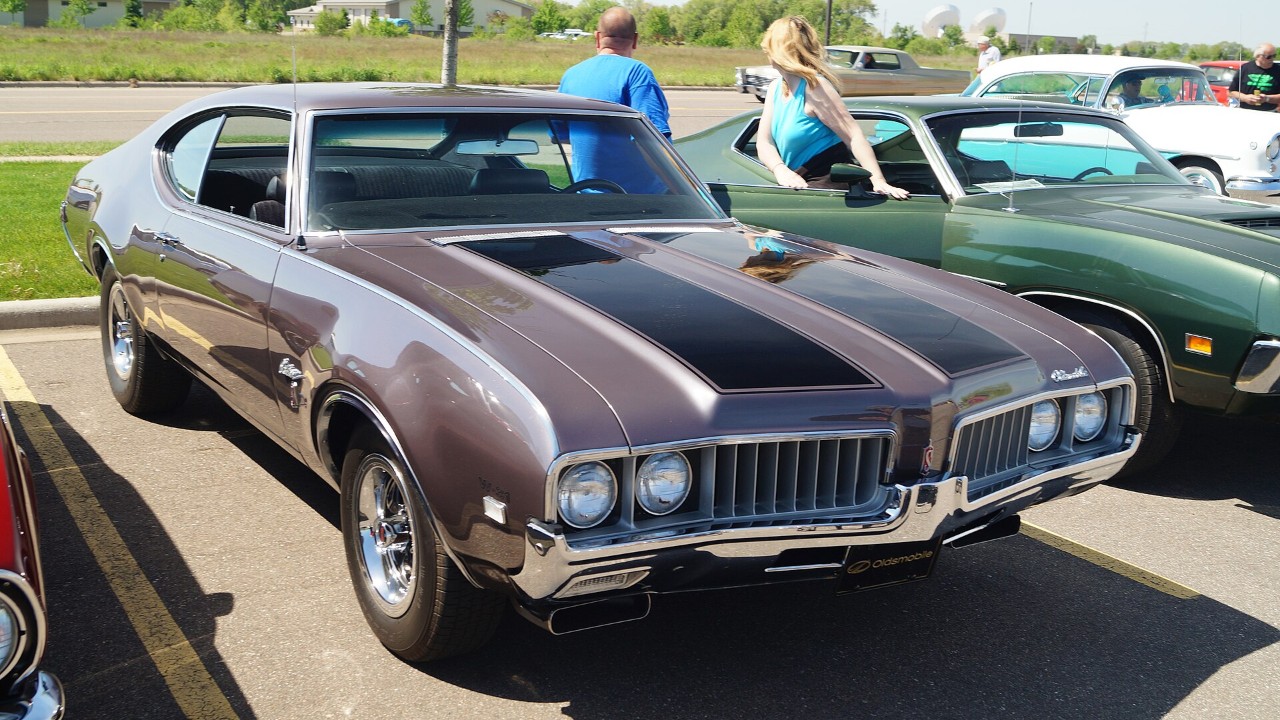
The W-31 was Oldsmobile’s small-block hot rod. It used a 350-cubic-inch Ram Rod V8 with Force-Air cold-air induction. Oldsmobile claimed 325 gross horsepower. The camshaft alone told you what it was for, with 308 degrees of duration and 0.474 inches of lift.
When Car and Driver tested a 1969 Cutlass S W-31, it ran 0-60 mph in 6 seconds. The quarter-mile took 14.5 seconds at 97.2 mph. According to a Curbside Classic look back at that test, the magazine praised the chassis balance, with 56.5 percent of the weight on the front wheels. The verdict was memorable. The car had “complete soul, all the difference between transportation and a trip.”
Oldsmobile even sold it as the sensible choice. The 1969 brochure said the package helped make insurance cheaper and easier to get. Even so, only 913 W-31 cars left the factory that year. In our opinion, this is the most underrated driver’s car of the late 1960s. It needs revs to come alive, but that is part of the fun. For that reason, we would choose a four-speed car, so you can keep the engine on the boil.
8. 1969 Chevrolet Nova SS
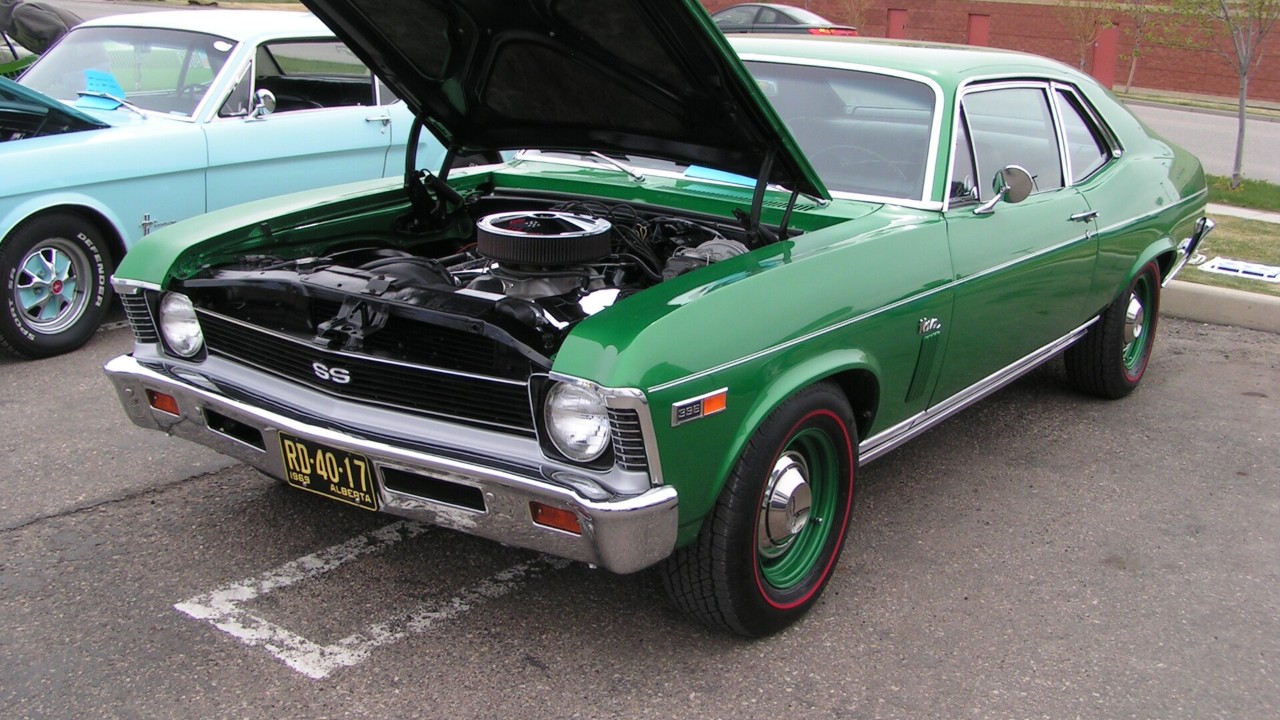
For 1969, the Nova SS came standard with a 350-cubic-inch V8 and a four-barrel carburetor. Chevrolet rated it at 300 horsepower, 5 more than the year before. The SS option cost $312.
That is a modest number next to the big-block cars on this list. But the Nova was a compact, and its light body changed the math. A 350 in a small car gives you a sharp, eager feel, and you never have to manage a nose-heavy chassis. As a result, a Nova SS with the standard 350 is the kind of car you can drive hard on a back road without feeling like you are wrestling it.
The Nova was also a plain-looking car, which adds to the appeal. In our view, it is one of the great sleepers of the period. Most people saw an economy car, while the person behind the wheel knew better. Today, an SS with the standard 350 is a smart buy for anyone who wants real muscle-car feel without big-block prices. Check that the SS equipment is original, because many base Novas have picked up SS badges over the years.
9. 1970 Buick Skylark GS 455 Stage 1
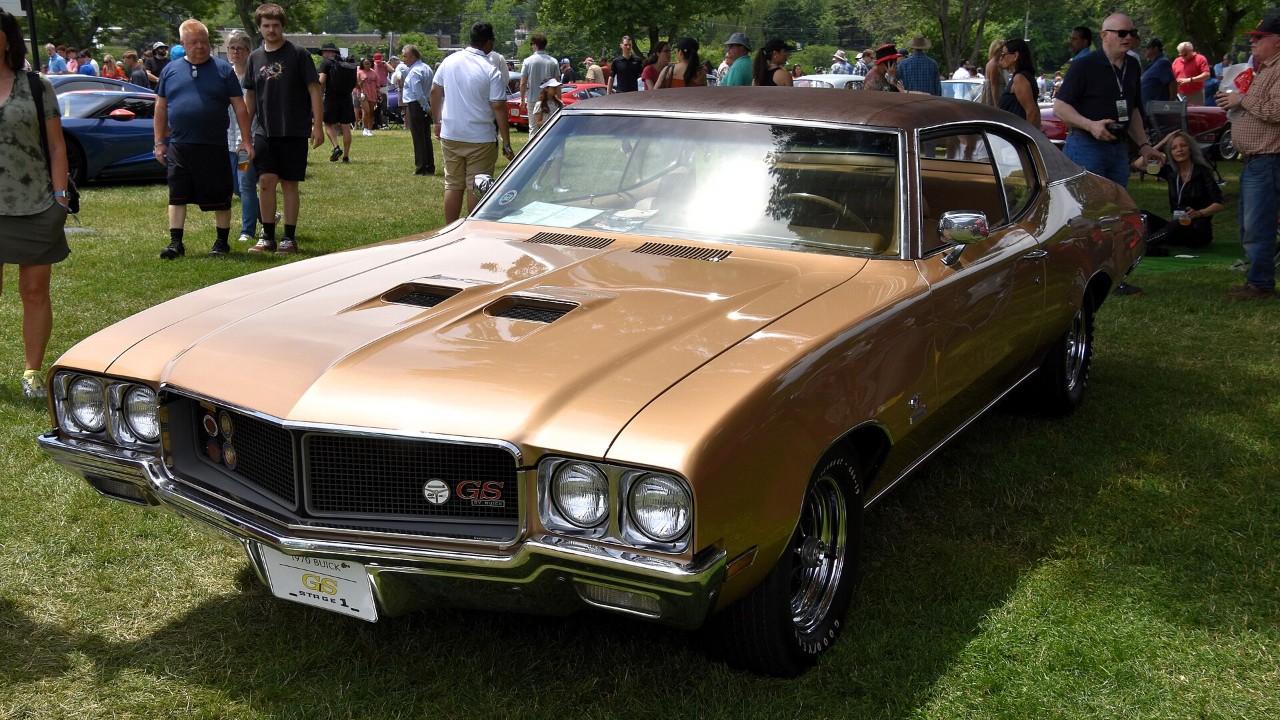
Buick introduced its Stage 1 option for 1969 on the 400-cubic-inch engine. Then for 1970 the bigger 455 took over. In Stage 1 form, Buick rated it at 360 gross horsepower at 4,600 rpm. The torque figure was the real headline, at 510 lb-ft at just 2,800 rpm.
That much low-end torque made the GS 455 Stage 1 effortless. Motor Trend ran a 3,810-pound GS Stage 1 coupe through the quarter-mile in 13.38 seconds at 105.5 mph. That was a very quick time for a car that also rode like a Buick. Total 1970 GS 455 two-door production came to 10,148 cars, and only some of those carried the Stage 1 hardware.
Our take: the Stage 1 is the gentleman’s bruiser of the era. It does not scream or demand constant shifting. Instead, it gathers speed in one long push, which makes it a joy to drive at any pace. Buyers should confirm the Stage 1 equipment with a build sheet or other paperwork, because the 455 was common and the Stage 1 upgrades are easy to copy.
10. 1970 Dodge Coronet Super Bee
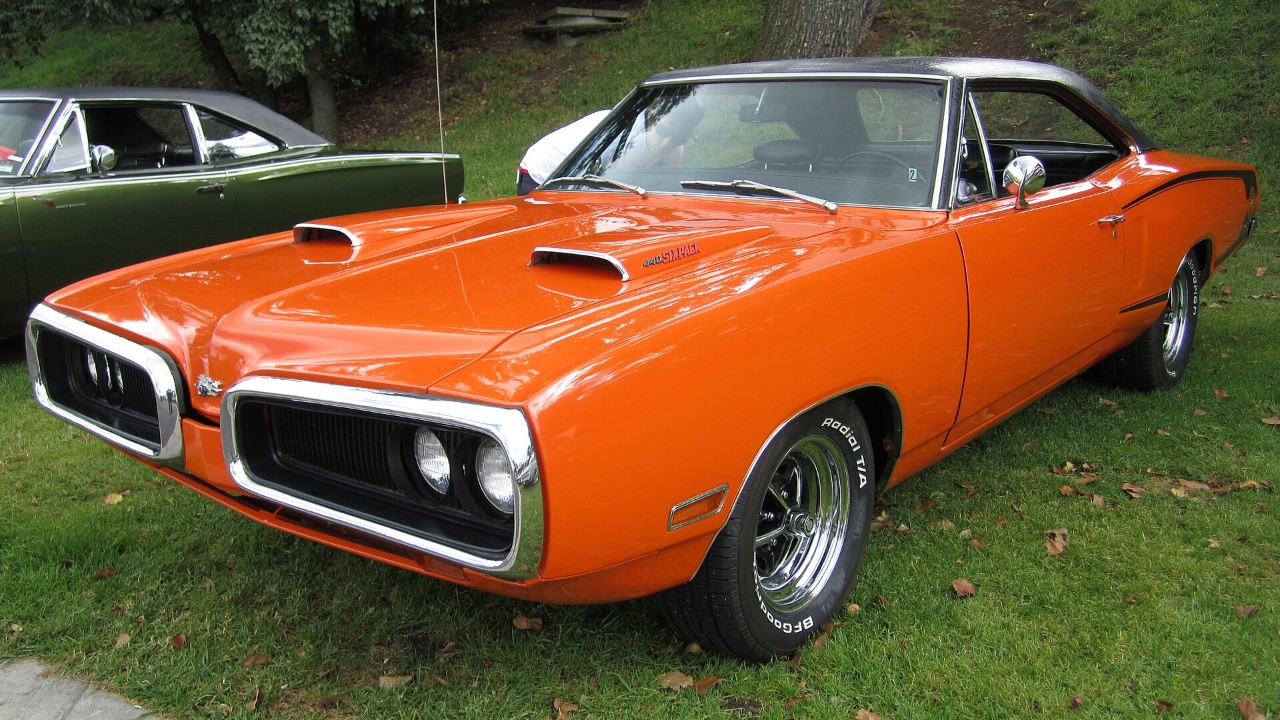
The 1970 Super Bee is easy to spot. Its front end had a twin-loop bumper that Dodge’s own publicity called “bumble bee wings.” Under the hood, the standard engine was a 383 Magnum rated at 335 horsepower and 425 lb-ft.
Buyers who wanted more could step up to the 440 Six Pack, rated at 390 horsepower, or the 426 Hemi at 425. Four-speed cars got a pistol-grip Hurst shifter, and the Ramcharger twin-scoop hood carried over from 1969. Dodge built 15,506 Super Bees for 1970.
We like the 383 car best for driving. It has plenty of torque, it is lighter over the nose than a Hemi, and it never feels fragile. The Super Bee was also a budget car, so it skipped the heavy extras that slowed down plusher models. If you want to know why the 1970 car divided opinion, our story on the strange story behind the 1970 Dodge Super Bee covers it. For us, the face is part of the charm. A 383 four-speed car is the best value in the Super Bee family today.
11. 1971 Plymouth Road Runner 340
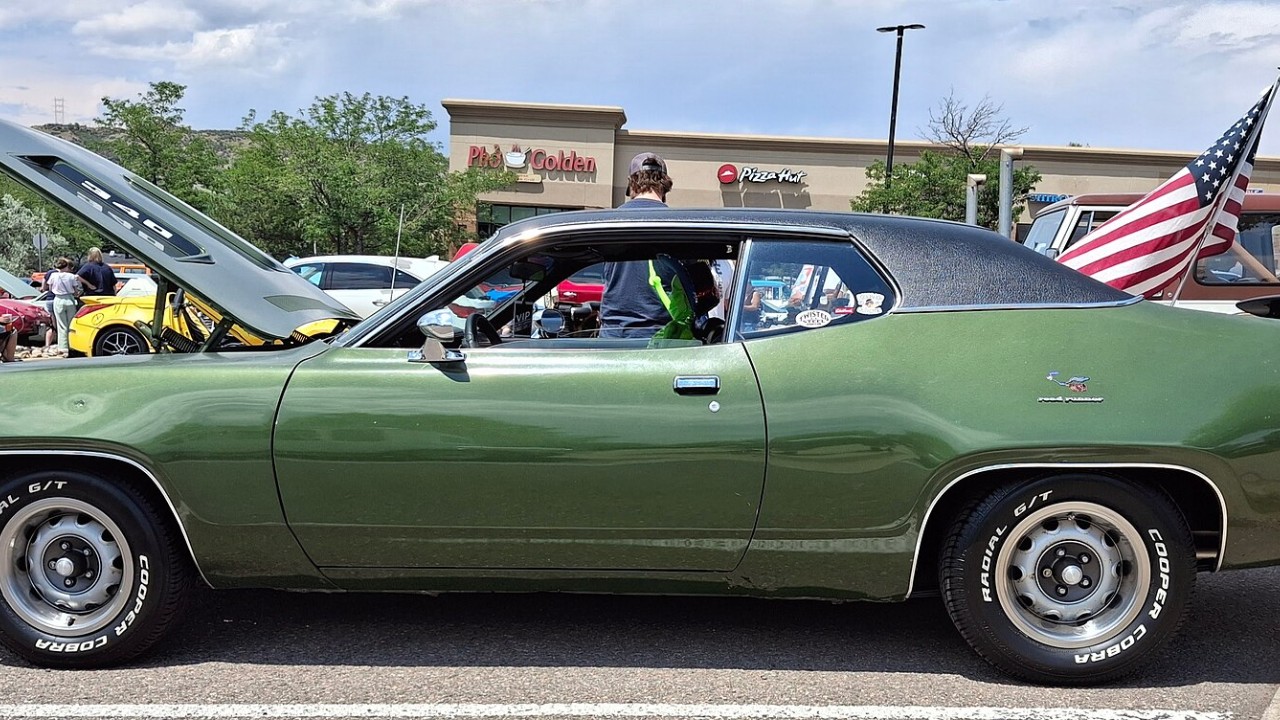
For 1971, Plymouth gave the Road Runner a new, rounded “fuselage” body. That same year brought a new engine choice, the 340 four-barrel small-block. According to Barn Finds, the 340 made 275 horsepower that year.
Few buyers picked it. Barn Finds reports that just 1,681 Road Runners got the 340 in 1971, about 12 percent of the year’s total. Total Road Runner production fell to 14,218 units that year. Meanwhile, the 440 Six Barrel and 426 Hemi stayed on the order form for one last season. As a result, the small-block car tends to get overlooked next to its big-block siblings.
The 340 is the one we would want for driving. It is a high-revving small-block that weighs less than the big engines, so the car feels quicker on its feet. The Road Runner was always about value, as our look at why the Plymouth Road Runner became an instant performance bargain explains. In our view, the 1971 Road Runner 340 is that idea at its best. It pairs a light, eager engine with one of the most striking bodies Chrysler ever drew.
12. 1972 Chevrolet Chevelle Heavy Chevy
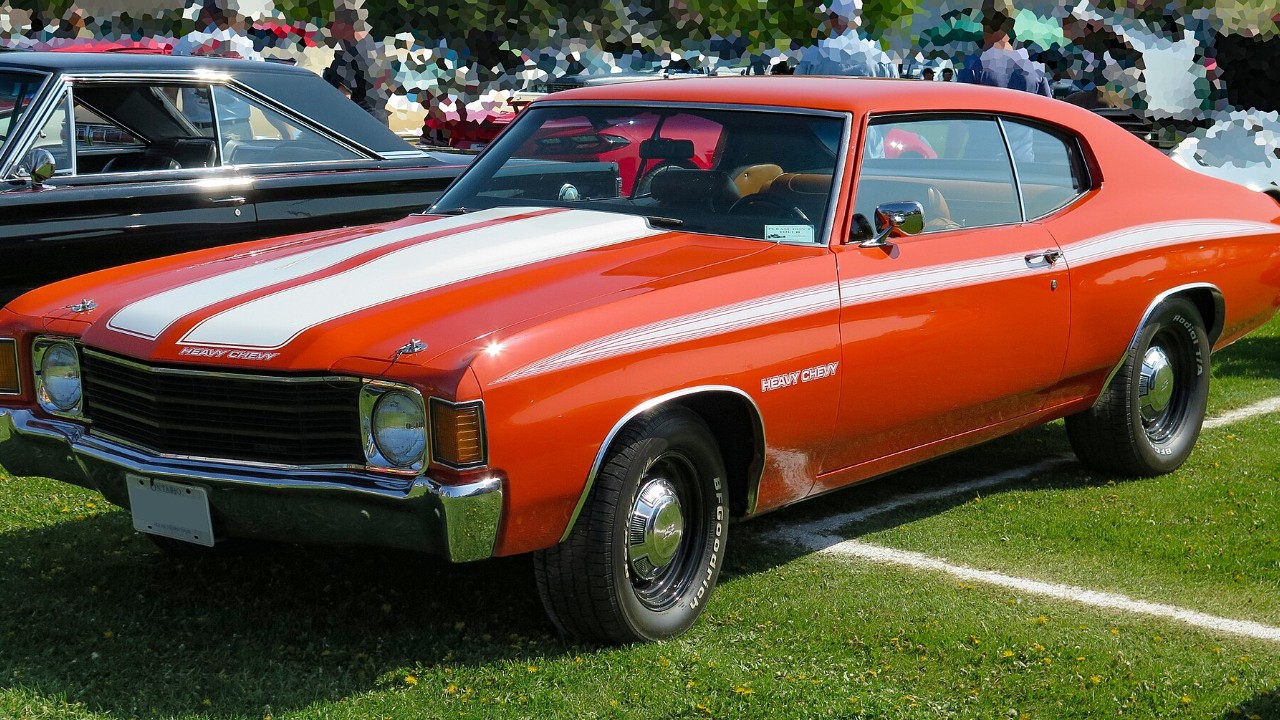
Chevrolet introduced the Heavy Chevy as a midyear package in 1971 under Regular Production Option YF3. It was mainly an appearance package for the base Chevelle. Buyers could order it with any V8 except the 454, which stayed exclusive to the SS.
According to Motorious, the Heavy Chevy was basically the economy version of the SS. The 1972 engine list included 350-cubic-inch V8s and the 402 big-block. Options were limited to those offered on the standard Chevelle sport coupe, so the car stayed simple.
That simplicity is the point. Much like the LeMans GTO seven years earlier, the Heavy Chevy put a strong V8 in a plain intermediate and let the driver sort out the rest. In our opinion, the Heavy Chevy is the last great budget Chevelle for people who wanted to drive rather than pose. It looked the part, and it skipped the heavy extras. A 402 car with a four-speed is the one to find. In addition, check the cowl tag and build records, since stripes are easy to add to any base Chevelle. Buyers clearly liked the formula, because Motorious puts 1972 Heavy Chevy production at 9,508 units.
More from Fast Lane Only