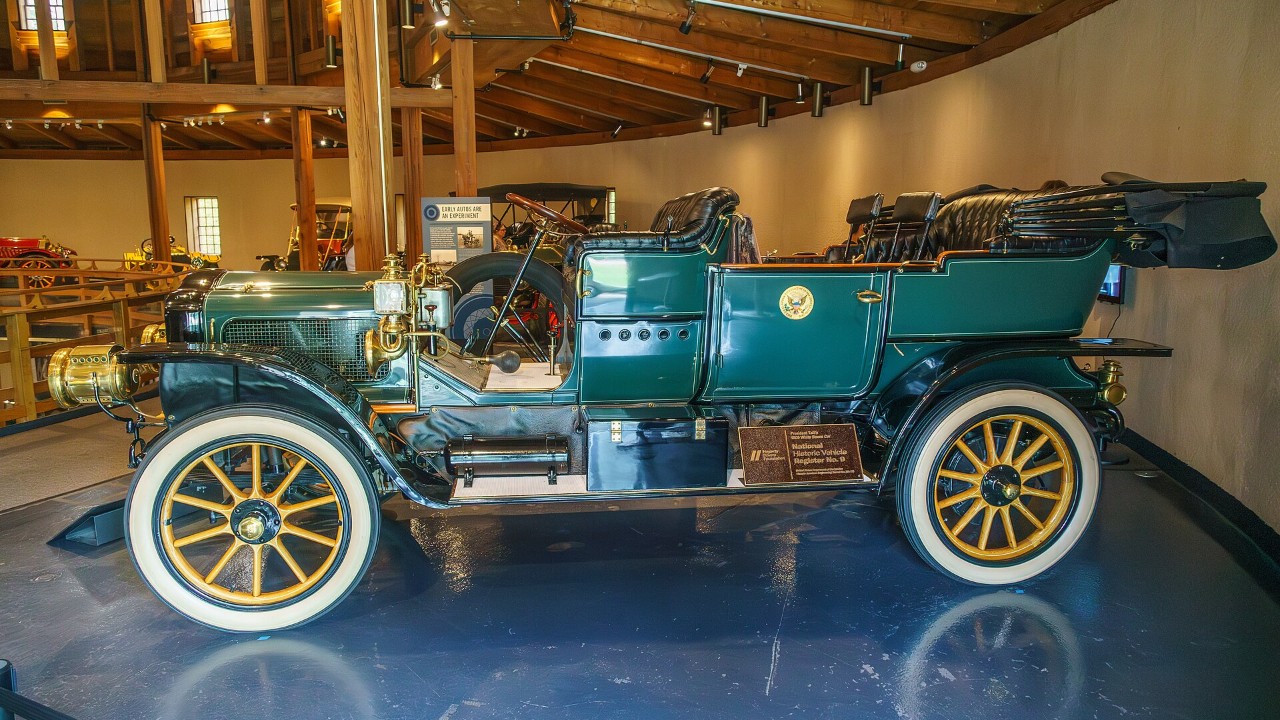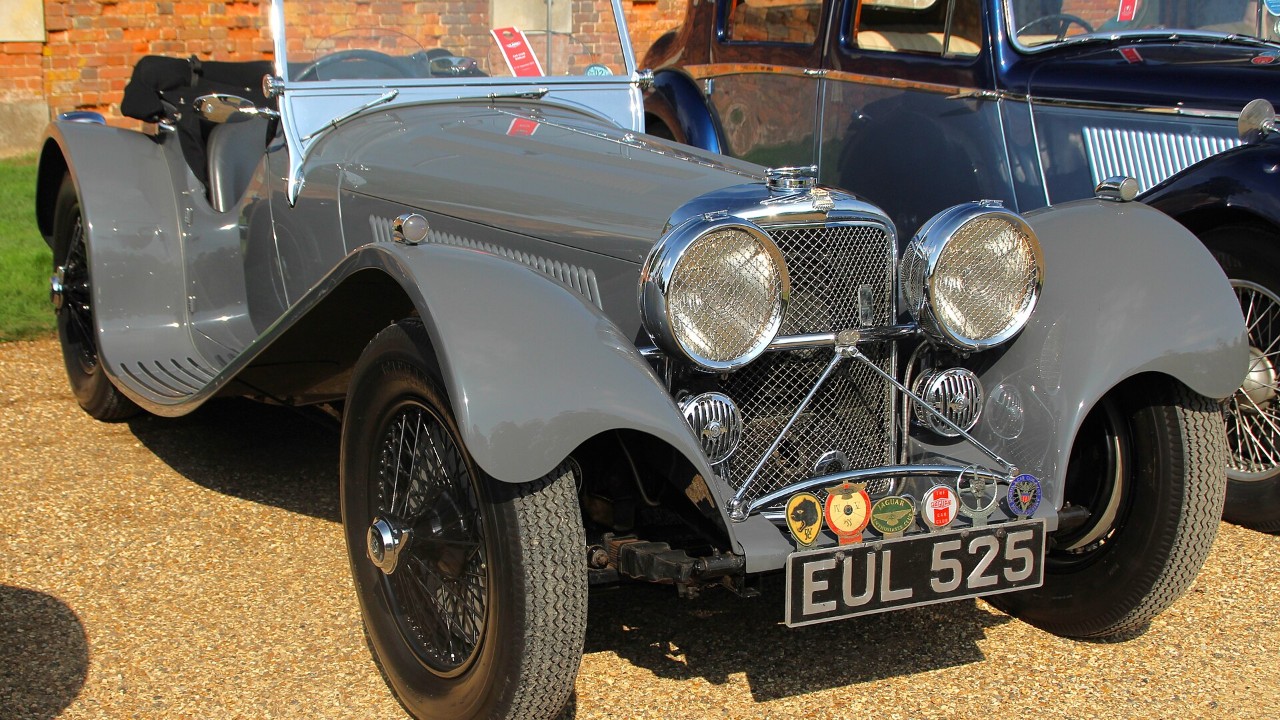
When Jaguar launched the Mark X in 1961, it had the largest unitary body of any car built in Britain at the time. That was typical of the company. For decades, Jaguar kept building cars that felt bigger, faster or more lavish than their price suggested.
Some of those cars won Le Mans. Others were big luxury saloons, and a few shared engines with the racers. Along the way, Jaguar’s engineers handed down ideas from one model to the next, from independent rear suspension to the long-running XK six.
These are our picks, twelve Jaguars that prove they don’t build them like this anymore. That verdict is our own opinion. The facts behind each choice come from production records, auction results and period specifications, and we note what makes each one special if you go looking.
1. 1938 SS 100 Jaguar 3.5 Litre
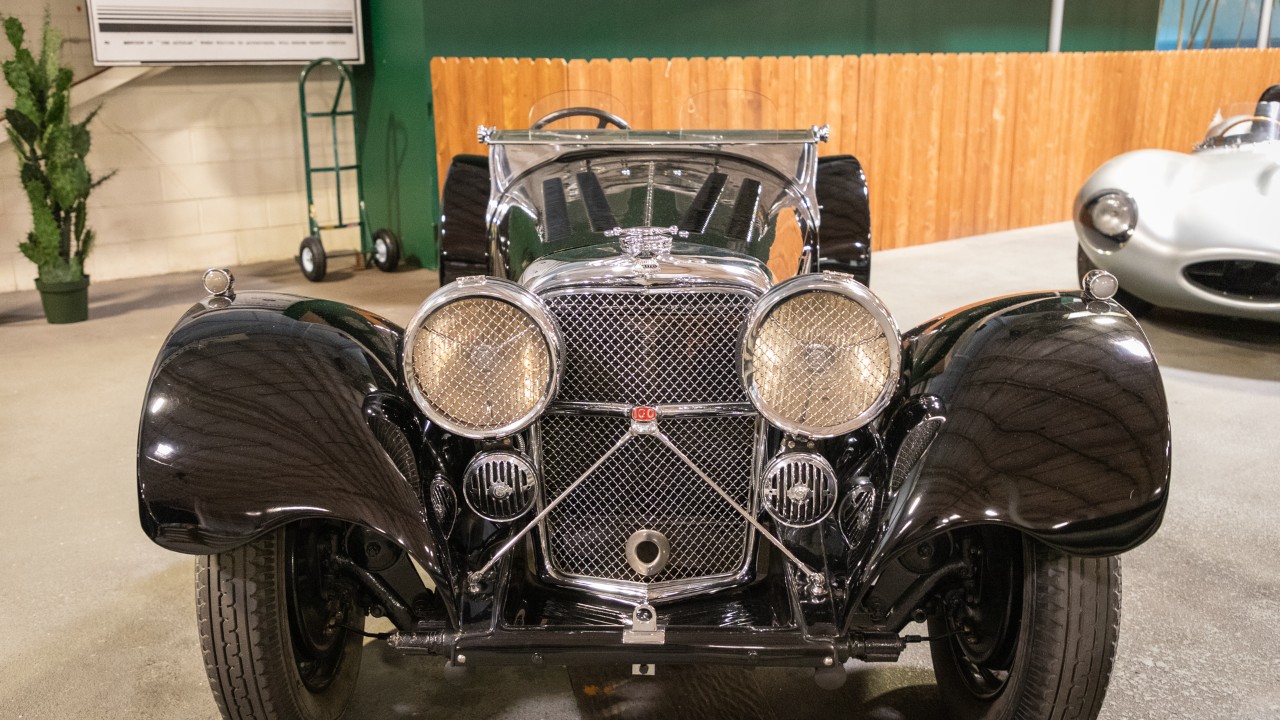
Before Jaguar was a company, it was a model name. SS Cars gave the name to a new saloon in 1935, and it soon spread across the range. The SS 100 roadster took its number from a theoretical 100 mph top speed.
For 1938, the engine grew to 3,485 cc and power rose to 125 bhp. That was a big jump from the original 2.5-litre car, and the bigger engine made the “100” a realistic promise. The 3.5-litre cost £445 that year.
Very few were built. Depending on the source, SS built only about 116 to 118 of the 3.5-litre cars. Sports Car Market profiled one, chassis 39030, which left for a dealer in Ripon in January 1938 painted lavender with blue trim. It sold for $183,381 at a Monaco sale in 2000, and it has competed in the Liège-Rome-Liège rally.
Our take: the SS 100 is where Jaguar’s sporting story starts. Nobody today builds a low, cut-down roadster with a long bonnet and flowing wings like this. As a result, any 3.5-litre car with its history intact is a true prize.
2. 1951 Jaguar Mark V drophead coupe
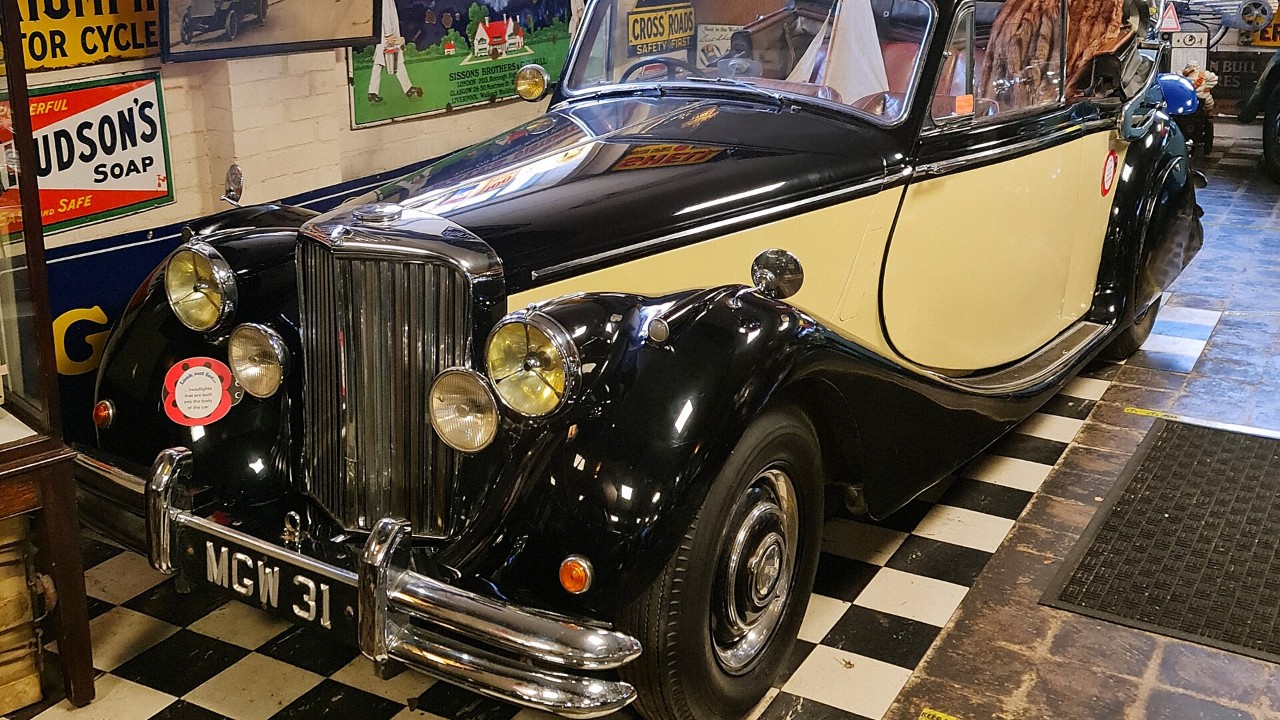
The Mark V was a bridge between two eras. Built from 1948 to 1951 in Coventry, it was the first Jaguar with independent front suspension and hydraulic brakes. It was also the last Jaguar to use the old pushrod six-cylinder engines.
Buyers could order the drophead coupé with either six. Most chose the 3,485 cc engine, and that version reached 685 cars. However, the smaller 2,664 cc six, rated at a claimed 102 bhp, went into only 29 dropheads, 17 with right-hand drive and 12 with left-hand drive.
The Mark V also proved how much money Jaguar made from saloons. It outsold the XK120 sports car, launched at the same 1948 London Motor Show, by roughly 5,000 cars a year.
Our take: a late drophead like this 1951 car is the Mark V we would want. Few modern convertibles carry four people in such an upright, coachbuilt style. It also links straight back to the pre-war SS cars, so a good one is hard to replace. If you find one, ask which engine it carries, because the rare 2.5-litre dropheads deserve a careful look at the records.
3. 1964 Jaguar Mark X
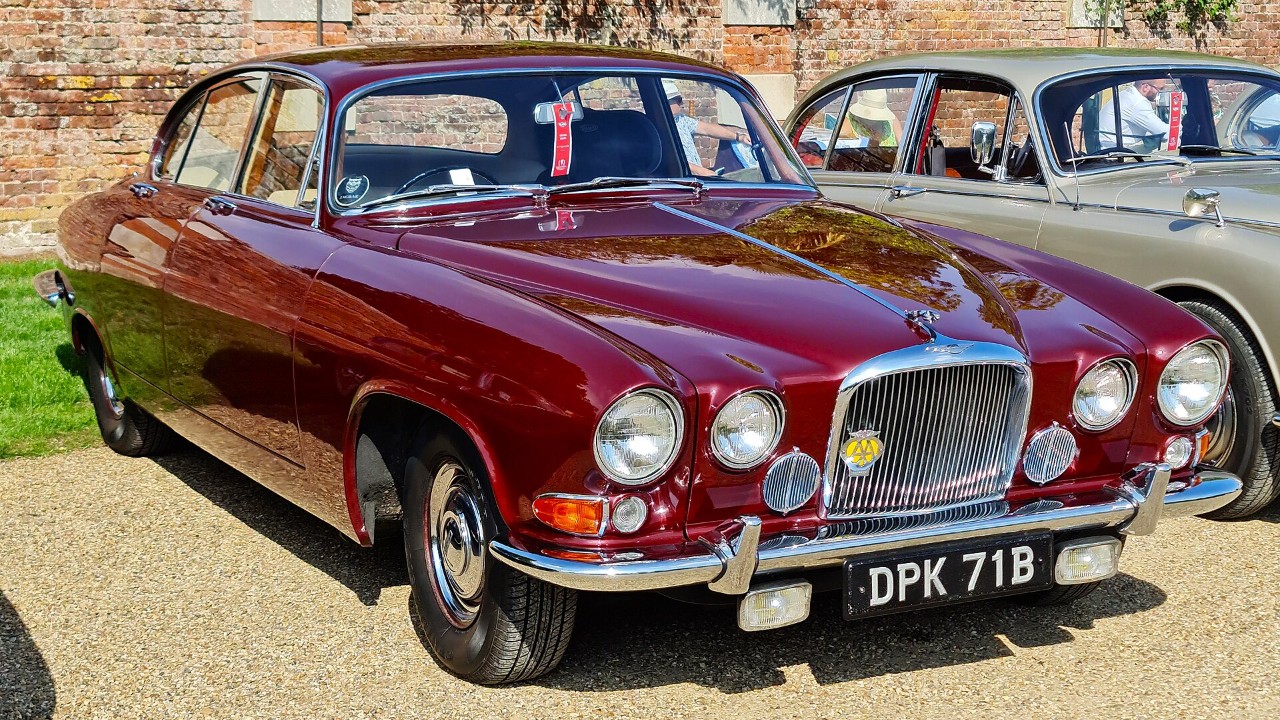
The Jaguar Mark X was a statement car. It ran from 1961 to 1970, and its unitary body was the largest in Britain at the time. At 76.3 inches wide, it ranked among the widest production Jaguars until 1992.
It also carried serious engineering. The Jaguar Mark X was the company’s first saloon with independent rear suspension, designed by William Heynes. A 1964 car sat right on a changeover. The 3,781 cc XK six powered early cars, and the 4,235 cc engine arrived from October 1964.
Buyers responded. Jaguar built 13,382 of the 3.8-litre cars and 5,137 with the 4.2. For more on the company’s engineering in the same era, read our look at when the 1953 Jaguar XK120 ruled the autobahn.
Our take: the Mark X is the kind of car modern makers no longer attempt. It is huge, low and wrapped in chrome, yet it drives on a sophisticated chassis. Few modern luxury sedans look this grand standing still. If you shop for one, decide early whether you want the 3.8 or the 4.2, since a 1964 car could have either.
4. 1967 Jaguar 420G
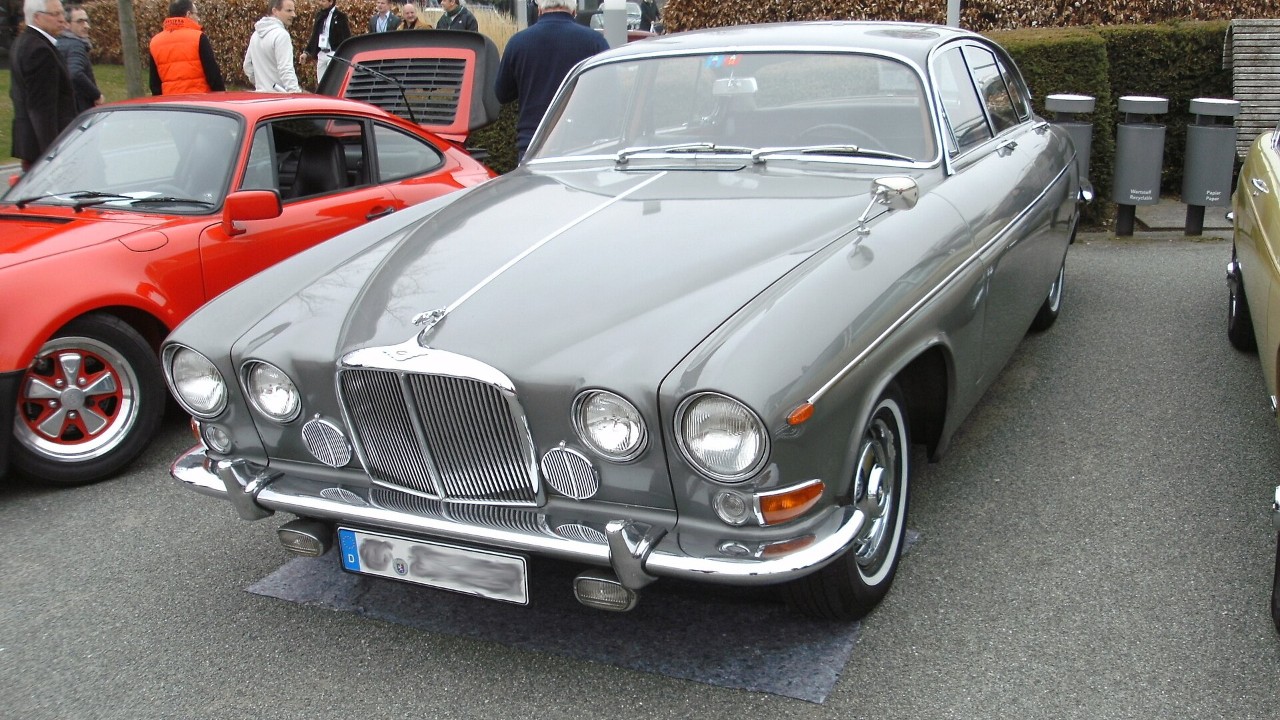
In 1966, Jaguar renamed the Mark X as the 420G. The basic car stayed the same, but the details changed. A vertical bar now split the grille, and indicator repeaters appeared on the front wings. In addition, a chrome strip ran along the wings and doors, though buyers could choose two-tone paint without it.
The renamed car stayed in production until 1970. Over that run, Jaguar built 5,763 of them. That means the 420G lasted about as long as the Mark X but sold in less than a third of the numbers.
That makes the 420G the rarer face of the same big saloon. It also arrived as tastes were shifting. Within two years, the new XJ6 had changed what a Jaguar saloon looked like.
Our take: the 420G is the last of the giant Jaguars built in the old way, and its grille bar and chrome strip give it a little extra dignity. Because so few were sold, a clean one stands out at any British car show. We would buy one for the presence alone. If you are shopping, check that the chrome strip or two-tone paint matches how the car left the factory.
5. 1967 Jaguar 420
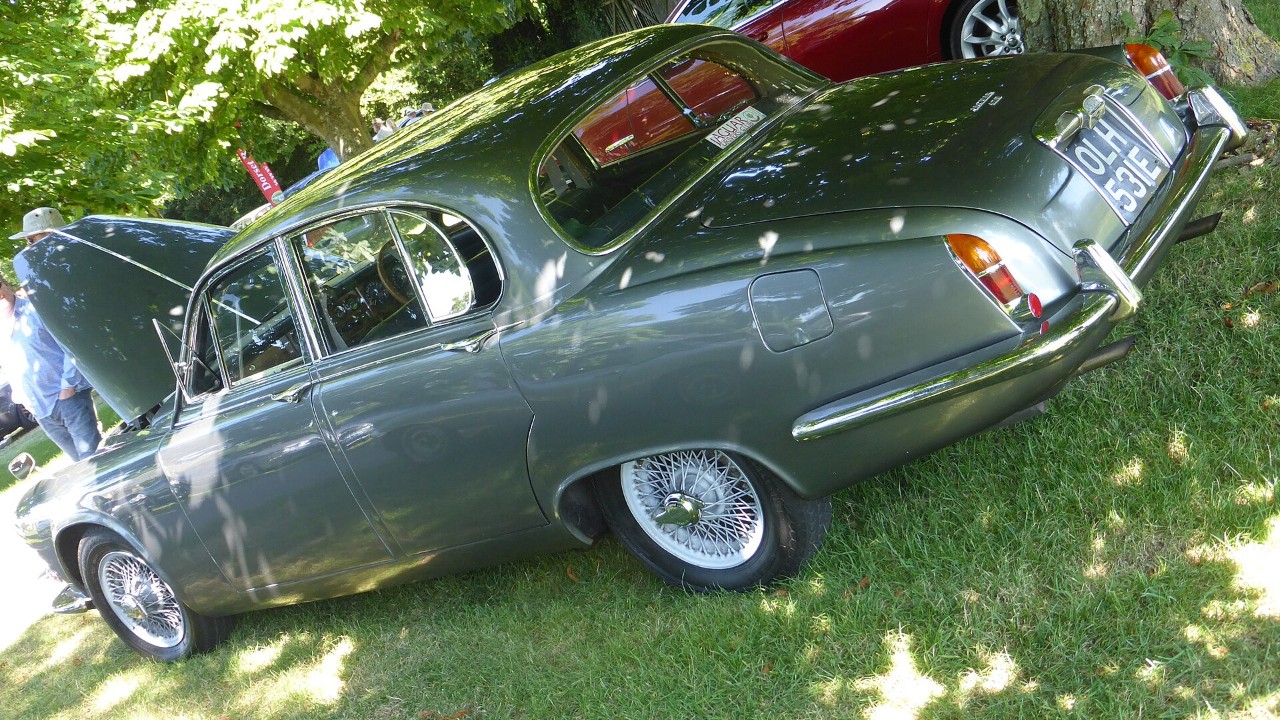
The 420 is easy to confuse with the 420G, but it was a smaller car. Jaguar developed it from the S-Type and showed it at the October 1966 London Motor Show. It kept the S-Type’s independent rear suspension and added a four-headlamp nose.
Under the hood sat the 4.2-litre XK six. Two 2-inch SU HD8 carburettors fed it, and Jaguar rated it at 245 bhp gross at 5,500 rpm. That figure followed the older SAE gross standard, so it reads high by modern measures.
The 420 had a short life. Jaguar built 10,236, and production ended in September 1968. Meanwhile, Daimler sold 5,824 of its twin, the Sovereign. Then the XJ6 arrived and swept the 420 from the range.
Our take: the 420 is often overlooked. It pairs the S-Type’s body and independent rear end with the bigger 4.2-litre six. That combination is why we think it shows how Jaguar engineered cars in the 1960s. Look for one with original carburettors and a documented service history.
6. 1968 Jaguar 340
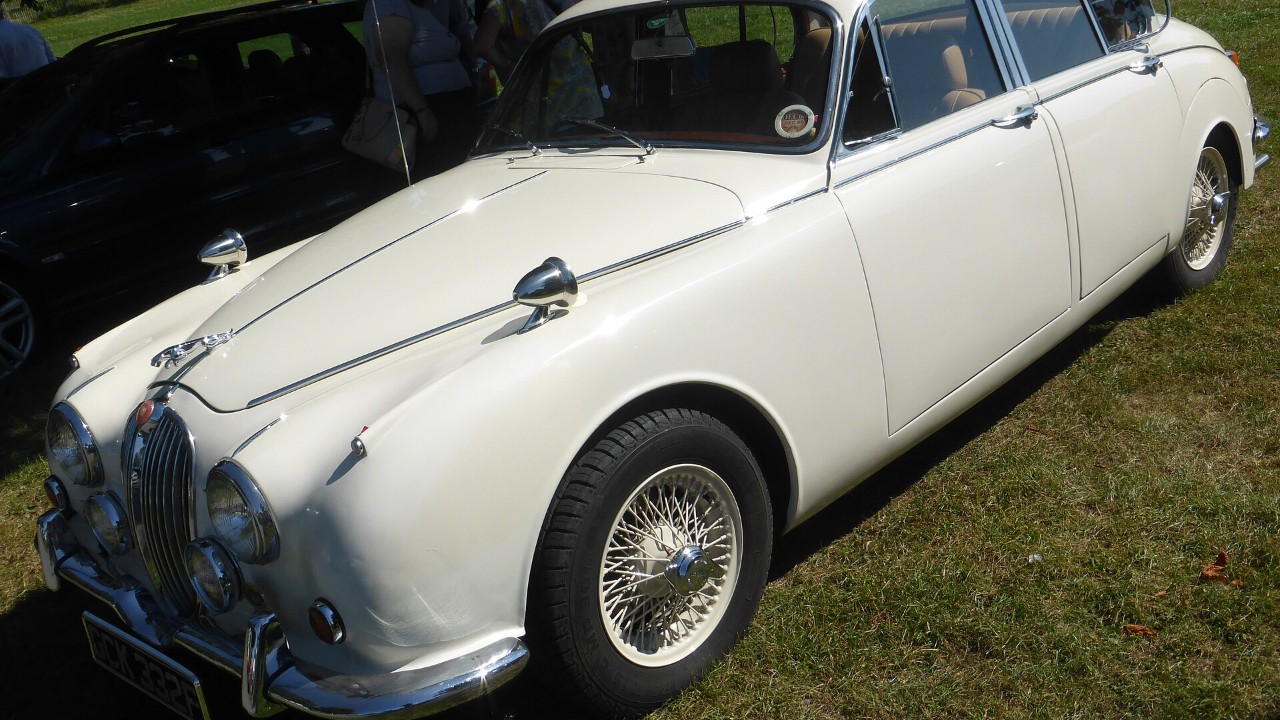
The 340 was a gap-filler, and it shows how Jaguar kept a classic alive a little longer. Around September 1967, Jaguar renamed the 3.4-litre Mark 2 as the 340. The car got a slight rear reshape and slimmer bumpers with over-riders.
It also lost some luxury. Ambla, a leather-like synthetic material, replaced the standard leather, and tufted carpet covered the floor. On the other hand, buyers could now order Marles Varamatic power steering. The 3,442 cc XK six made a claimed 210 bhp gross.
Production was brief. Jaguar built 2,788 of the 340 before it ended in September 1968, when the XJ6 arrived. By comparison, the smaller 240 lasted until April 1969 to use up leftover parts.
Our take: the 340 is the last version of the Mark 2 shape with the bigger six. It may have had cheaper trim, but it kept the curves and the twin-cam engine that made the Mark 2 famous. That is why we find it more appealing than its sales suggest. If you buy one, budget for leather if you want the trim the earlier cars had.
7. Jaguar XJ-C 4.2
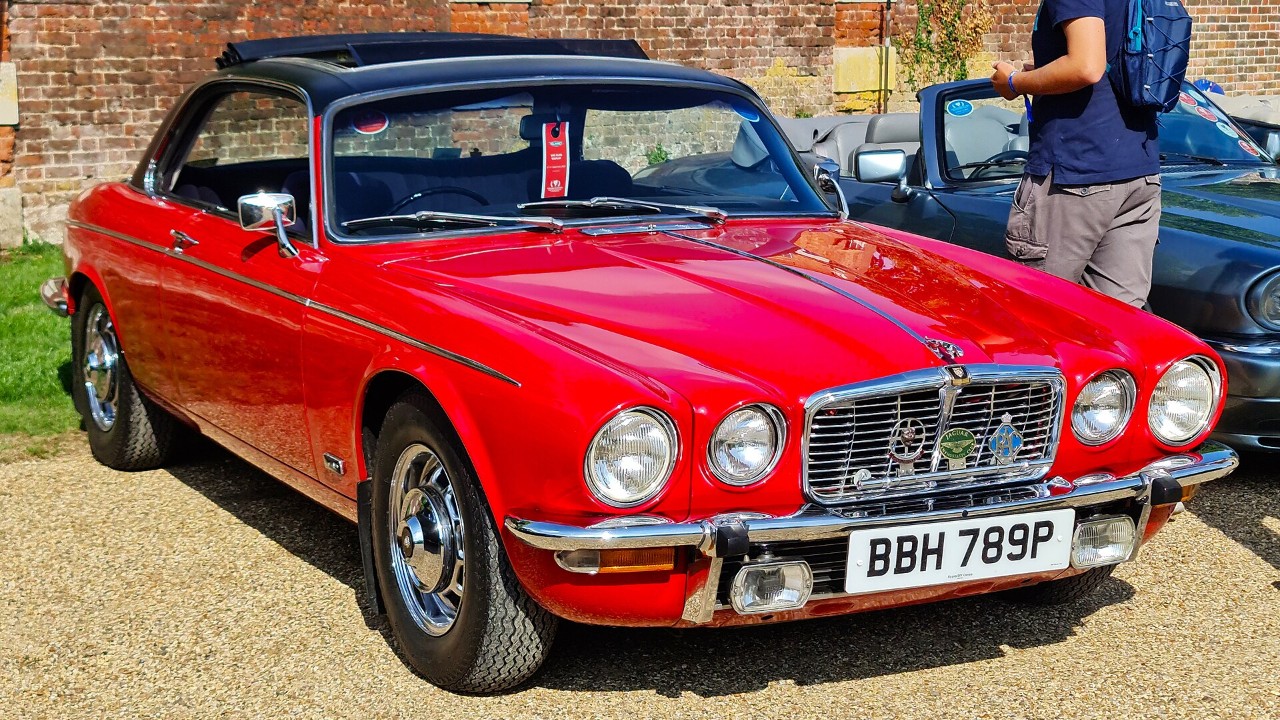
The XJ-C was Jaguar’s two-door version of the short-wheelbase XJ. The company first showed it at the October 1973 London Motor Show, but it was not ready for production. Building only started in 1975.
The coupé had a pillarless hardtop, so the side windows dropped away with no post between them. A vinyl roof came as standard. Notably, it helped hide cracking in the paint along the roof seams. Production records list 6,487 coupés with the 4.2-litre six and 1,855 with the 5.3-litre V12, plus Daimler-badged versions.
The run did not last long. Jaguar ended production in November 1977, and only a handful of coupés appear in the records for 1978.
Our take: a pillarless two-door saloon of this size simply does not exist today. We cannot picture a maker attempting one now, and that gives the XJ-C a profile nothing modern can copy. For more on the saloon it came from, read our look at why the 1973 Jaguar XJ6 defines a certain kind of luxury. Check the roof and window seals closely, because the pillarless design depends on them.
8. 1976 Jaguar XJ12C Broadspeed
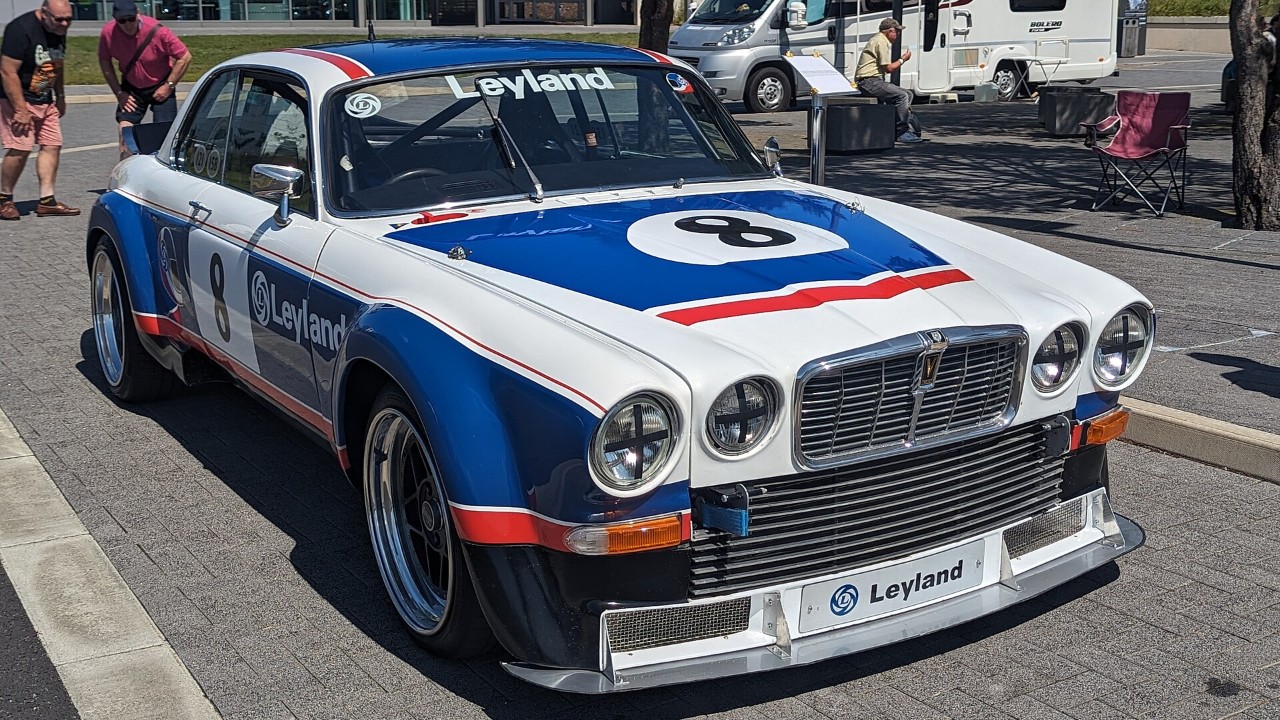
The Broadspeed XJ12C turned a luxury coupé into a touring car racer. Ralph Broad’s Broadspeed team developed it for the European Touring Car Championship, with Derek Bell among the drivers.
Its start was promising. The big coupé briefly led its debut race, the RAC Tourist Trophy at Silverstone, in September 1976. However, the program never matched that early flash. Its best result came in 1977 with a second place at the Nürburgring. British Leyland then cancelled the effort before the 1977 season ended.
That short record is part of the appeal. A V12 luxury coupé fighting for touring car wins is the kind of gamble few makers would try today. Even the road car was rare, because the production records list only 1,855 Jaguar-badged V12 coupés.
Our take: the Broadspeed XJ12C is a reminder of when a car company would take its most comfortable coupé racing just to see what happened. It did not win, but it led on day one, and that is a story worth telling. A genuine Broadspeed car needs documented history, because provenance is everything with a race car.
9. 1956 Jaguar Mark VIII
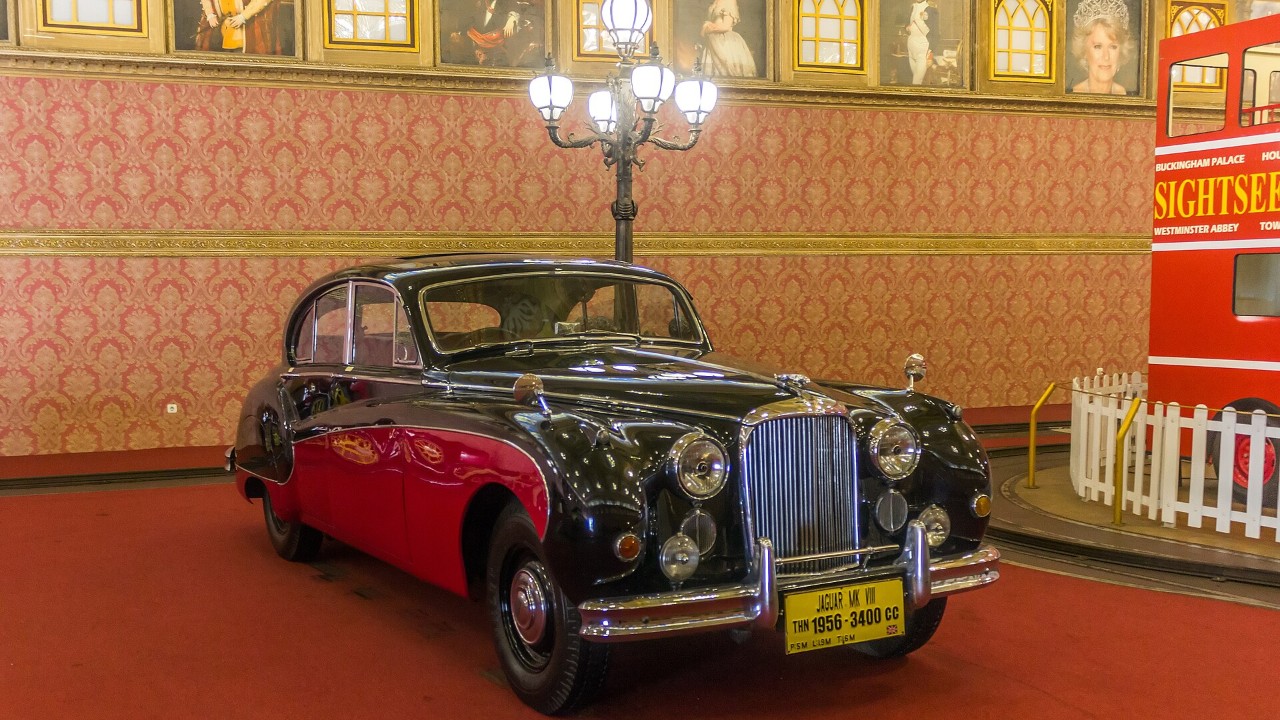
The Mark VIII made its debut at the 1956 London Motor Show. It updated the Mark VII M with a curved, one-piece windscreen, which was the clearest visual change. Jaguar also added a curved chrome strip below the waistline so it could offer several two-tone paint schemes.
Other changes were subtle. The rear spats were cut back to show more of the wheels, and the interior gained more luxurious fittings. Under the hood, the 3,442 cc six gained the “B” cylinder head and an advertised 190 bhp. Buyers could also choose a Borg Warner three-speed automatic instead of the standard four-speed manual.
The Mark VIII stayed in production for about two years. In that time, Jaguar built 6,227 of them before the Mark IX replaced it in late 1958.
Our take: the Mark VIII is a big, upright saloon with a twin-cam XK six, and that pairing feels almost unthinkable now. Two-tone paint on a car this formal is a bonus. We would choose one in its original colors over any modern executive car. When you look at one, check the chrome trim strip, since it is what made the two-tone schemes possible.
10. 1952 Jaguar C-Type
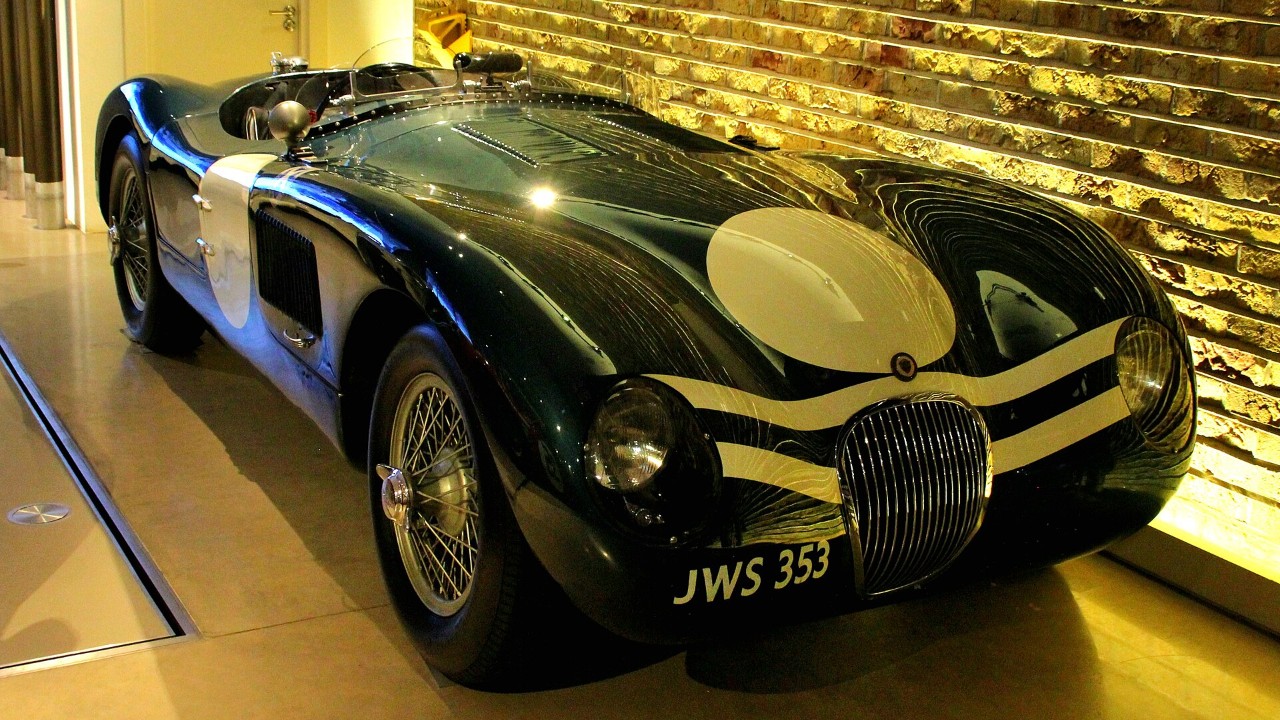
The C-Type was a race car, and it won Le Mans at its first attempt in 1951. It won again in 1953. By then, the later cars carried disc brakes on all four wheels.
Jaguar built the C-Type around a lightweight, triangulated tubular frame designed by William Heynes. Heynes, Bob Knight and later Malcolm Sayer shaped the body. The 3,442 cc XK twin-cam six first ran at about 205 bhp, and 1953 updates raised that to 220 bhp. The 1953 Le Mans winners averaged 105.85 mph.
Jaguar built 53 C-Types, and 43 went to private owners, mostly in the United States. That small number explains why so few appear in public.
Our take: the C-Type is Jaguar at its most direct. The company took the engine from its road car and built a winning Le Mans racer around it. We cannot imagine a major maker doing that the same way today. Any genuine car needs a clear chassis history, because a car this valuable demands proof.
11. 1965 Jaguar S-Type
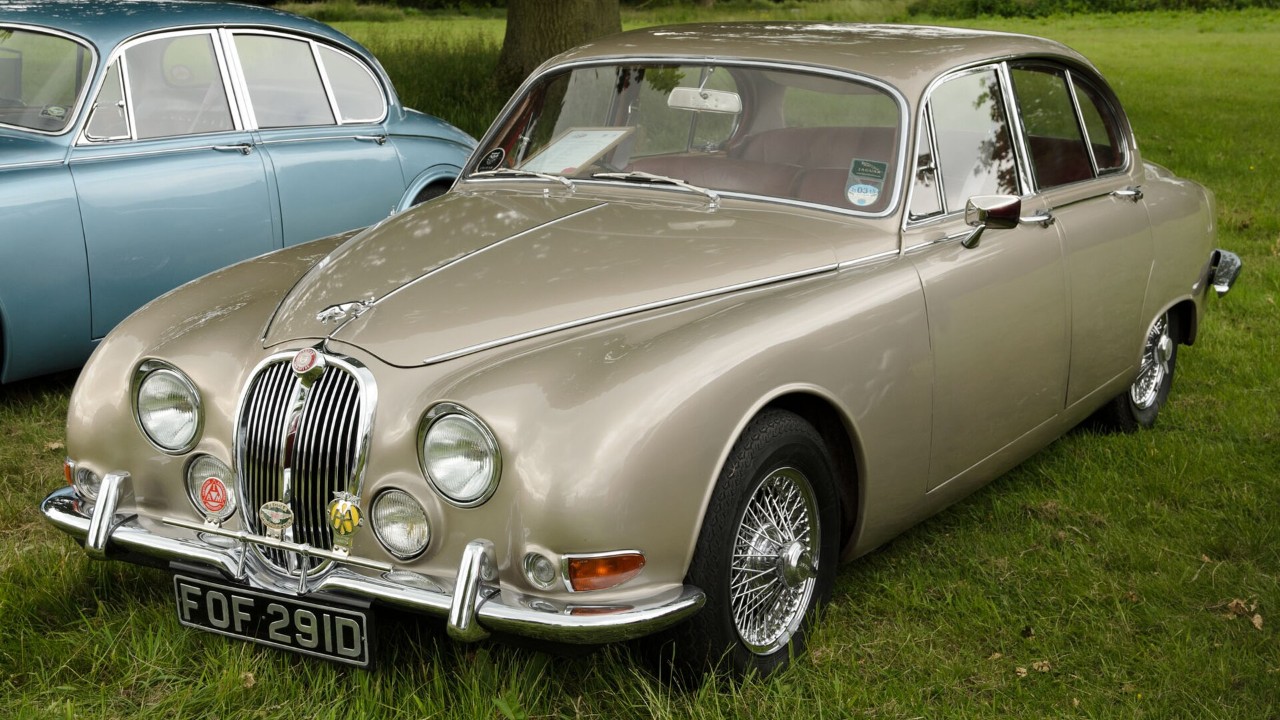
Jaguar announced the S-Type on September 30, 1963. It was a more sophisticated development of the Mark 2. Above all, it replaced the Mark 2’s live rear axle with a mid-scale version of the Mark X’s independent rear suspension.
The car also gained longer rear bodywork and a much bigger boot. Buyers could choose a 3.4-litre or 3.8-litre XK six with twin carburettors, though American cars came only with the 3.8.
The year 1965 was the S-Type’s best. Jaguar built 9,741 that year, the peak of a run that totaled about 24,993 cars. Then sales fell quickly as the 420 arrived, and the XJ6 replaced the S-Type in 1968.
Our take: the S-Type is the clever middle child of Jaguar’s 1960s range. It takes the Mark 2’s size and adds the bigger car’s suspension. In our view, that makes it one of the best-engineered compact saloons of its day. Look for solid rear bodywork and a well-kept independent rear end, since those define the car.
12. 1991 Jaguar XJR-15
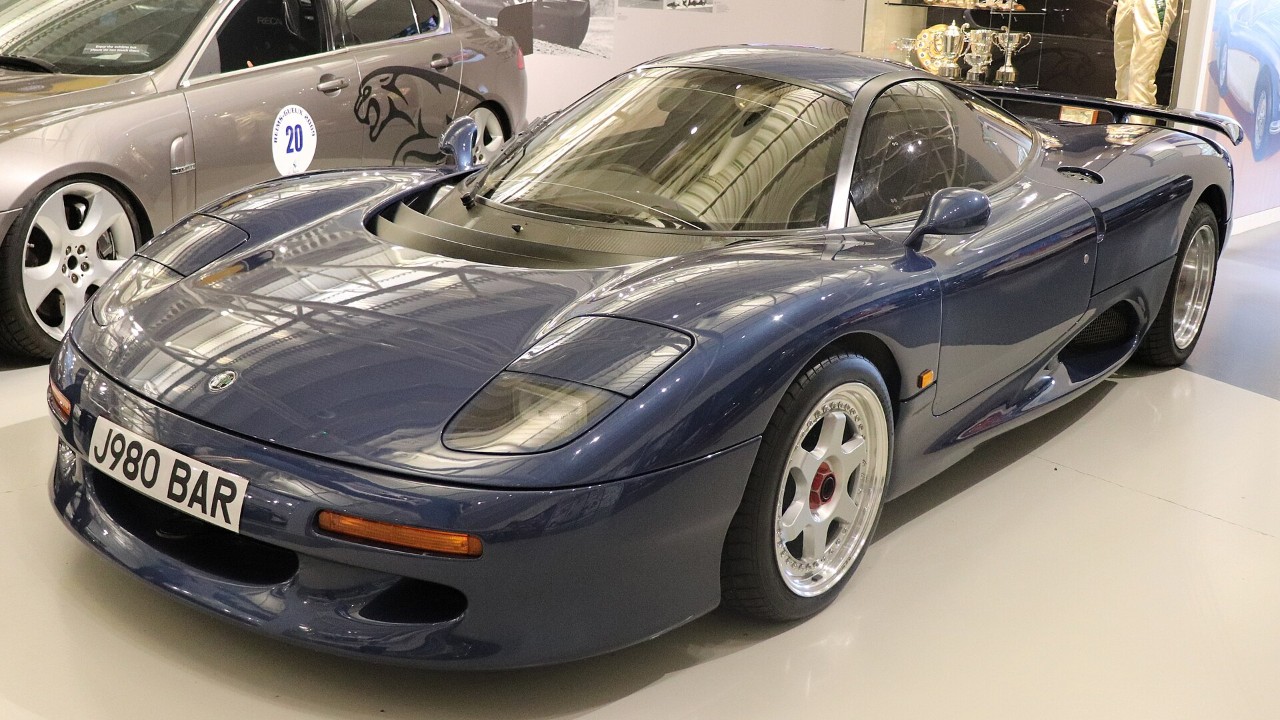
The XJR-15 came from JaguarSport, a joint venture between Jaguar and TWR. Its chassis drew on the Le Mans-winning XJR-9, and Peter Stevens designed the body. According to RM Sotheby’s, it was the world’s first roadgoing car to use carbon fiber for both body and tub.
A 6.0-liter V12 made 450 hp, and the car weighed 2,315 pounds. JaguarSport built a reported 53, and only 27 were road-spec cars. The cars also raced in the 1991 Jaguar Intercontinental Challenge, a three-race series at Monaco, Silverstone and Spa with a $1 million winner’s prize.
Chassis 042 shows how special these cars were to their owners. It was bought from TWR-JaguarSport in January 1991 for £620,000 and sent to a collector in Asia. The car then sat in storage with almost no use. In 2023, it sold at RM Sotheby’s Amelia Island auction for $1,270,000 with 153 miles from new. For another TWR Jaguar story, see how Tiff Needell pushed TWR’s £500,000 Jaguar XJS.
Our take: the XJR-15 is a race car with number plates, and nobody builds them like this anymore. If you are bidding, insist on a full chassis history, because road and race cars differ.
More from Fast Lane Only