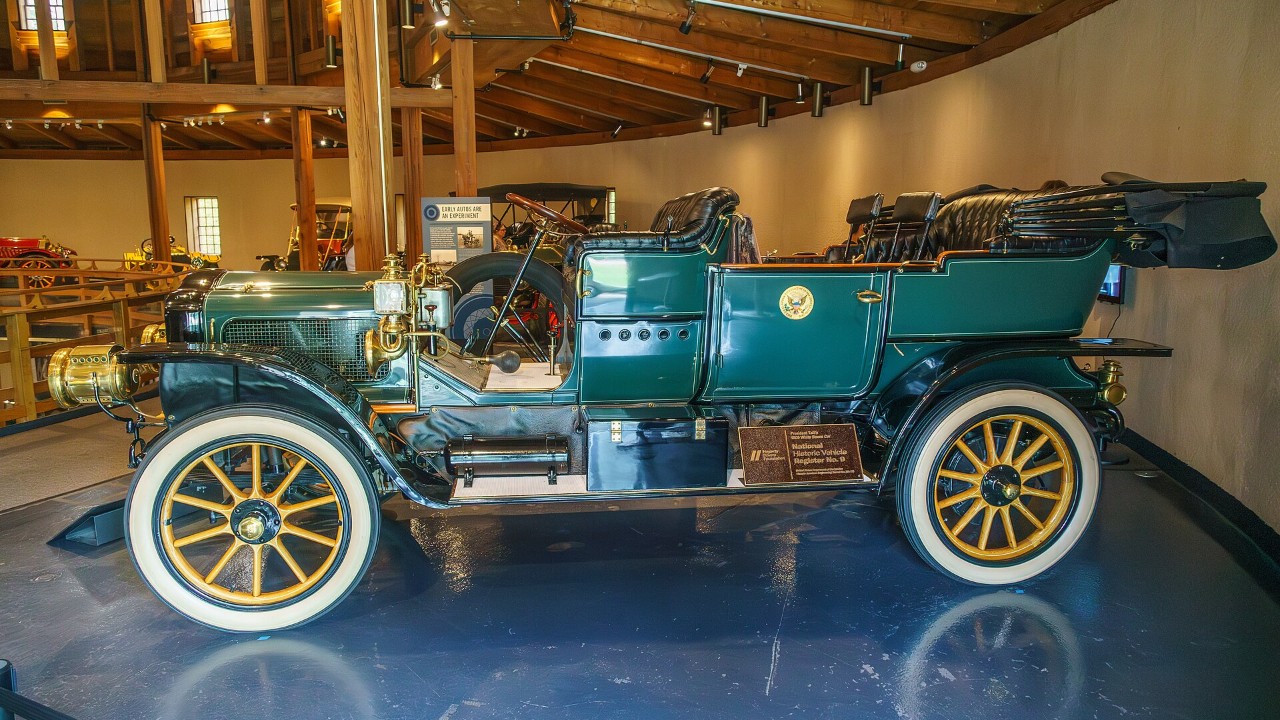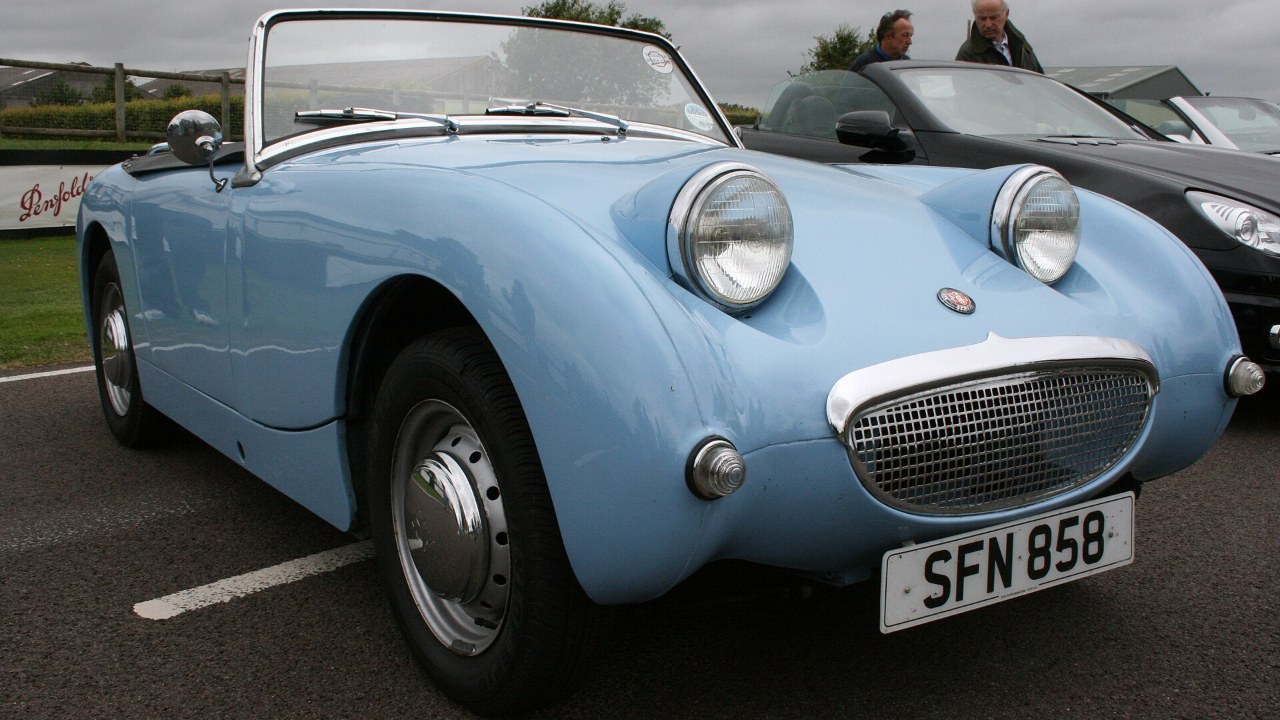
The Frogeye Sprite went on sale in 1958 at £669, and it had no boot lid and no exterior door handles. Nobody cared. It was cheap, light and open to the sky, and that was enough to make an entire generation fall for roadsters.
Open-air driving has never been about lap times. Instead, it is about hearing the exhaust bounce off a stone wall, smelling cut grass on a back road and feeling the car move under you at sane speeds. A few small sports cars got that recipe so right that every roadster since has borrowed from them.
These are our picks for seven sports cars that defined open-air enjoyment, from the Frogeye Sprite’s British basics to Italian twin-cams and the Japanese car that brought the formula back. The picks are our opinion. The years, engines and figures come from auction records, buyer guides and period histories.
1. 1959 Austin-Healey Sprite Mk I Frogeye
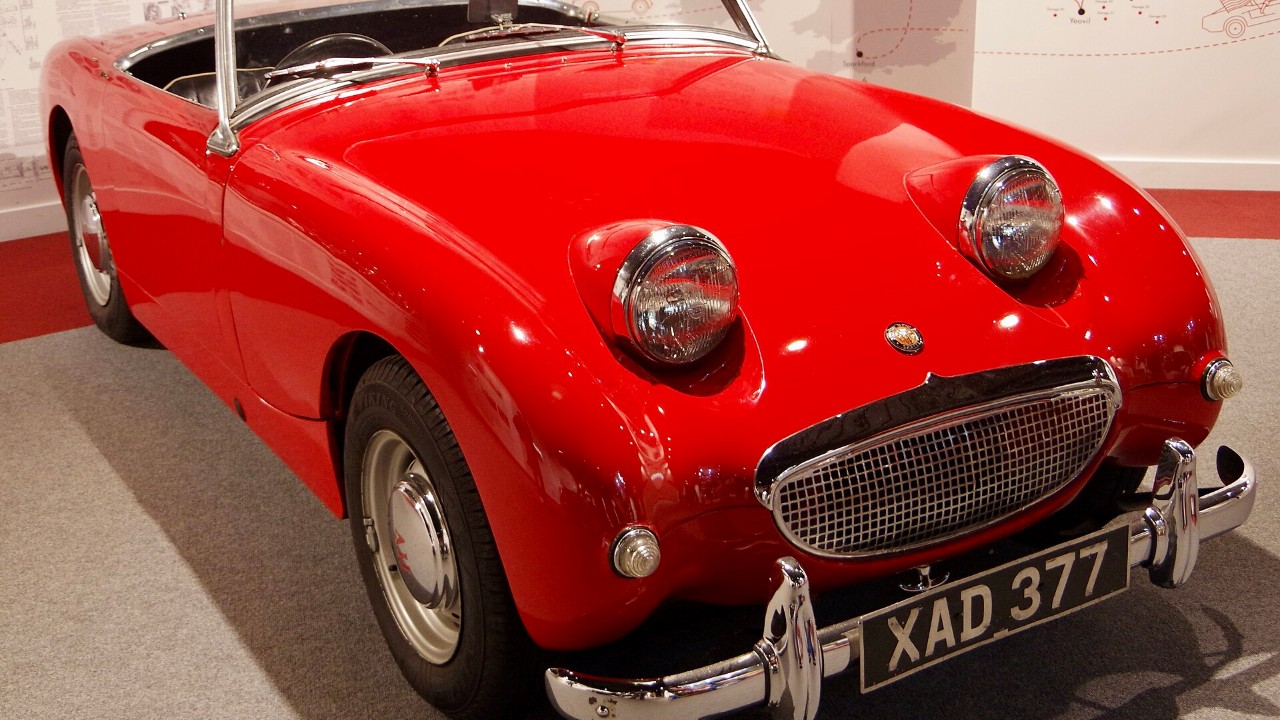
BMC announced the Sprite to the press in Monte Carlo on May 20, 1958, just before the Monaco Grand Prix. The Donald Healey Motor Company designed it and took a royalty on every car. Power came from a mildly tuned 948cc A-Series four with twin SU carburettors and 43bhp, according to Iconic Auctioneers’ lot history.
That famous face was an accident of cost-cutting. The designers had planned headlights that flipped up and faced the sky when not in use. However, BMC dropped the mechanism, so the lamps simply sat on top of the bonnet. Luggage went in through the tilting seat-backs, since the tail had no boot lid at all.
We think the Frogeye Sprite is the purest expression of the small roadster. It has almost nothing you do not need, and every mile feels like an event at legal speeds. If you buy one, budget for a good hood and tonneau, because you will want to drive it in every kind of weather.
2. 1958 MGA 1500 roadster
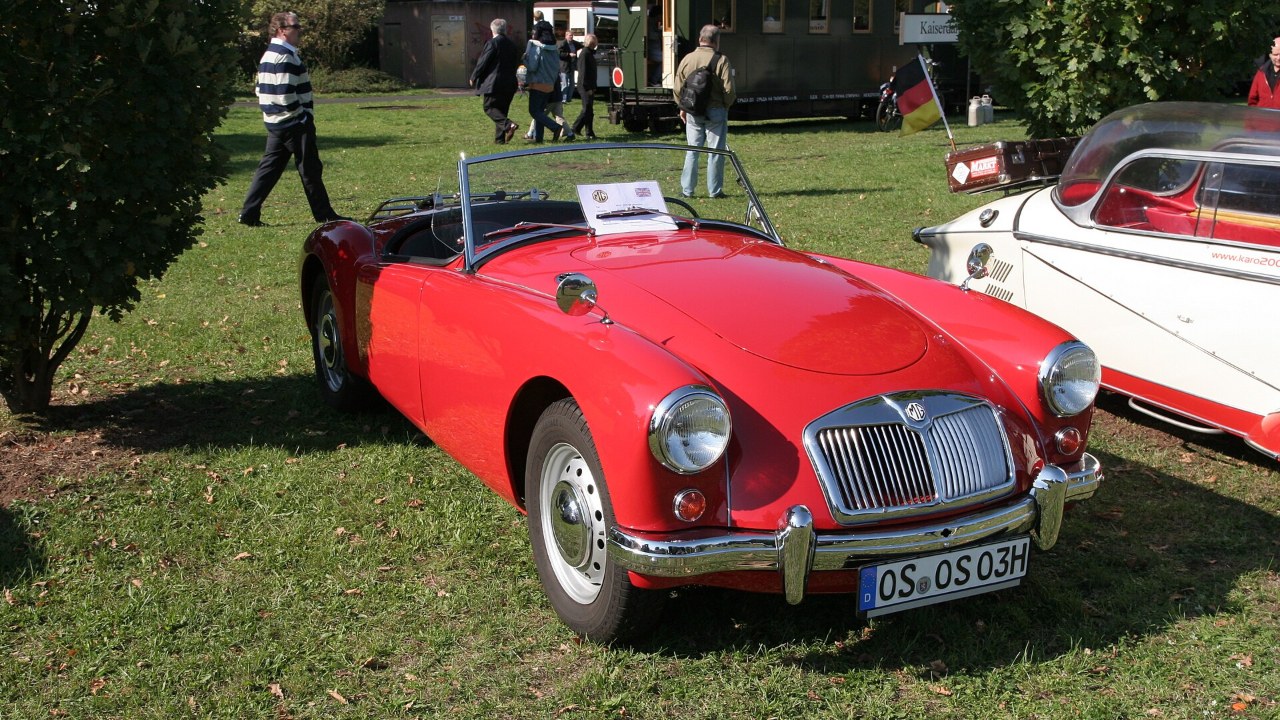
MG introduced the MGA in 1955, and buyers took 13,000 in the first year alone. By July 1962, MG had built 101,081 of them. The 1500 used a 1,489cc four with twin SUs and a four-speed manual, making 68bhp at first and later 72bhp. Those figures come from RM Sotheby’s catalog for a 1958 roadster.
The weight was the secret. At just over 900kg, the MGA needed little power to feel eager. Its low, flowing body also made the upright T-series MGs before it look old. As a result, the MGA looked modern in a way that its predecessors never did.
In our view, the MGA is the most elegant British roadster of the 1950s that a working person could afford. Prices are fair today, too. The RM Sotheby’s car, a U.S.-delivery example, sold for €24,200 in February 2021. For more of that breed, see our list of British roadsters that deliver pure driving joy.
3. 1963 Triumph Spitfire Mk1
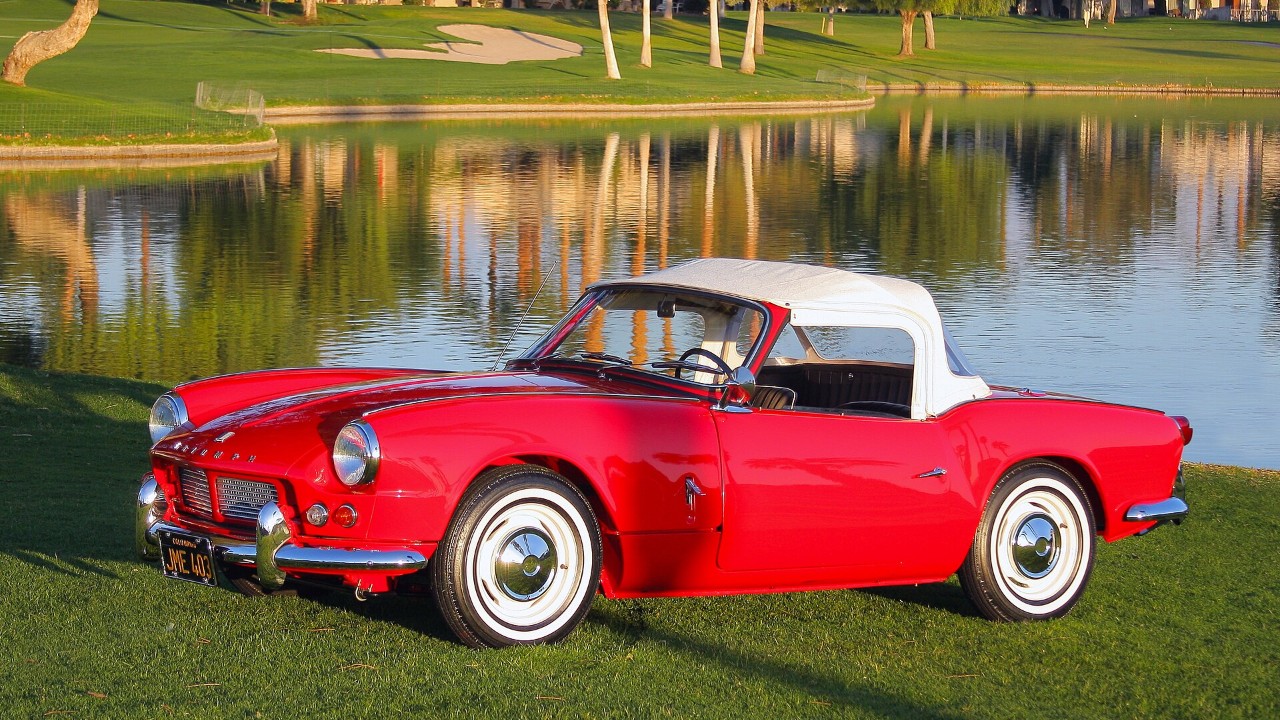
Triumph launched the Spitfire at the 1962 London Motor Show. It was possible only because the Herald saloon had a separate chassis. That let Giovanni Michelotti draw a new body over existing running gear, as Hagerty UK’s buying guide explains. Triumph called the first car the Spitfire 4.
The recipe worked for a long time. By the end of production in 1980, Triumph had built 314,000 Spitfires. The early cars had one quirk you should know about. On pre-1970 cars with the round tail, the swing-axle rear lacks lower wishbones, so the inner wheel can tuck under during hard cornering or braking.
Our take: the Mk1 is the prettiest Spitfire, with a slim, uncluttered nose and dainty bumpers. It is also an easy car to live with, because the mechanical parts are simple. According to the Hagerty Price Guide, the very best Mk1s can fetch up to £24,400, while decent usable cars sit around £13,000. Check the sills carefully, because they carry much of the car’s strength.
4. 1964 Alfa Romeo Giulia Spider
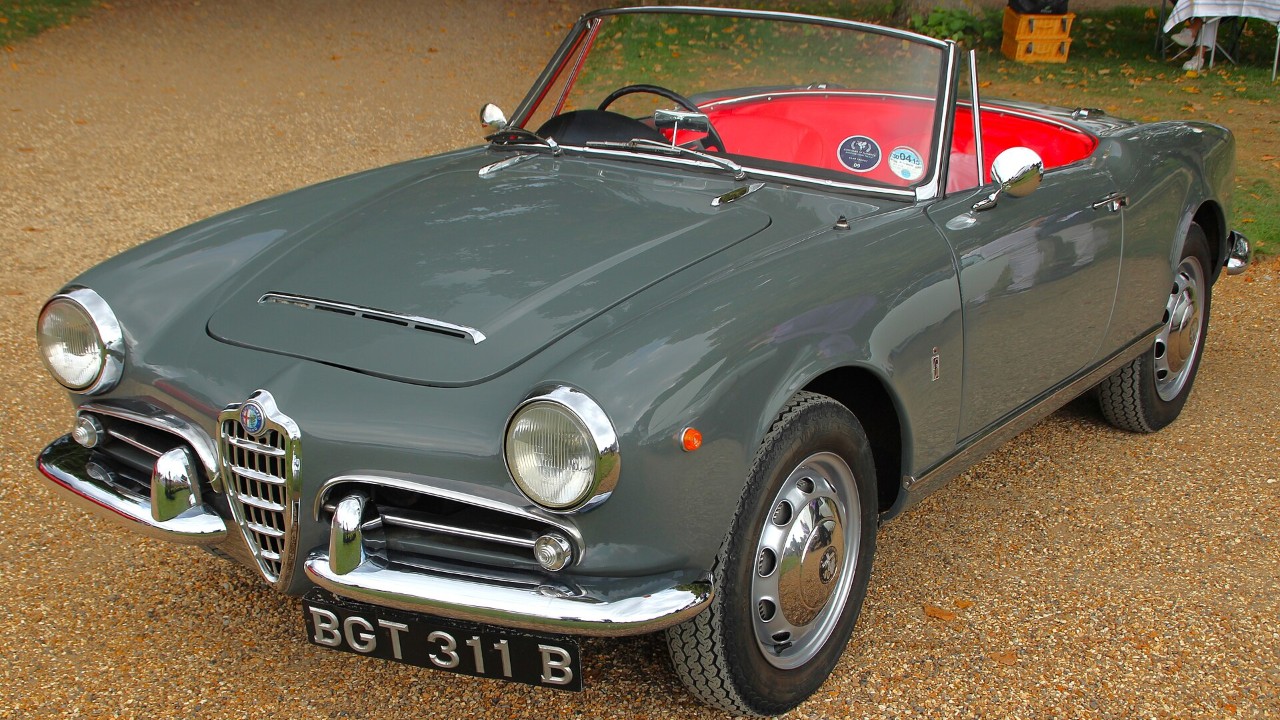
Alfa Romeo built the Giulia Spider from 1962 to 1965 as the successor to the Giulietta Spider. Pininfarina designed and built the body, keeping the Giulietta’s proportions. However, the Giulia needed a bulge in the bonnet to clear its taller engine block, according to Carrozzieri Italiani’s history.
That engine was the attraction. It was a 1,570cc twin-cam four making about 92 hp at 6,000 rpm, with a five-speed manual at a time when the MGA made do with four. Then, in 1964, Alfa added the Spider Veloce with twin Weber carburetors and 112 hp. The same source counts about 6,324 standard Giulia Spiders.
We think the Giulia Spider is the moment open-air driving got sophisticated. A twin-cam that loves to rev, a gearbox with an extra ratio and a Pininfarina body made the British cars look agricultural. For a car to drive rather than polish, a standard Spider gives you nearly all of the joy for less money than a Veloce.
5. 1965 Datsun 1600 Sports SPL311
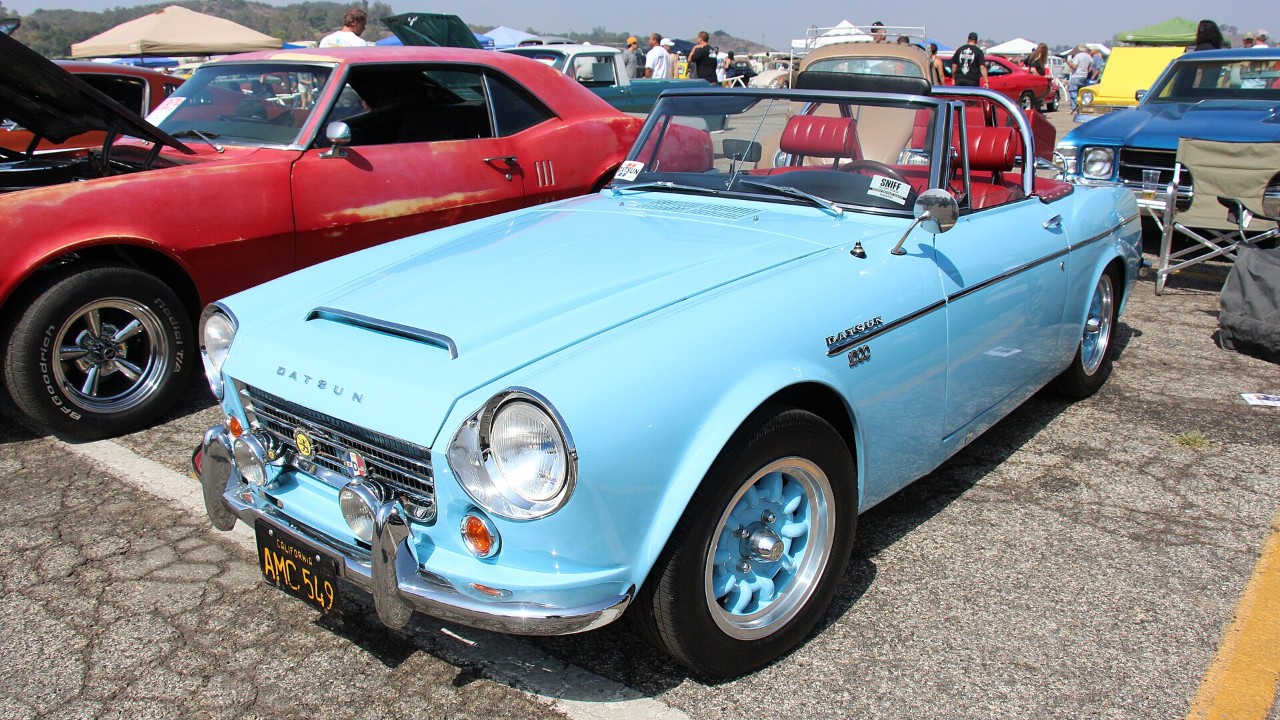
Datsun first showed the 1.6-liter Fairlady at the 1964 Tokyo Motor Show, then put it into production in March 1965. North American buyers knew it as the Datsun Sports 1600. Its R16 four made 96 PS, about 95 hp, and the car stayed in production alongside the later 2000 through April 1970.
The 1600 did more than look like a British roadster. It beat them. Together, the 1600 and 2000 won 10 national SCCA championships. That gave Datsun a real sporting name in America. A 1966 example on Hagerty’s marketplace carried twin SU-type carburetors and a four-speed synchromesh manual, and it sold for $14,017 in October 2023.
In our view, the SPL311 is the most underrated car here. It gives you the classic roadster experience with Japanese build quality and a fraction of the price of a comparable European car. If you want one, look for solid floors and original trim, since restored parts can take patience to find.
6. 1979 Fiat 124 Spider 2000
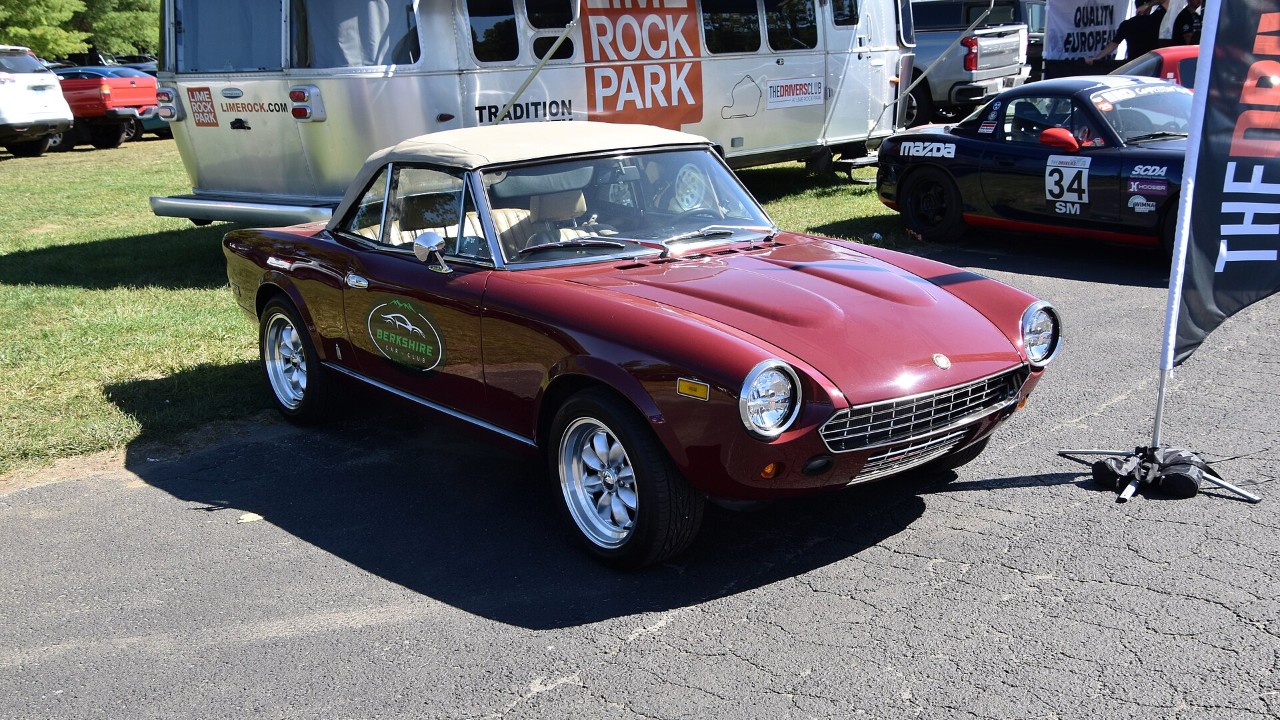
The 124 Spider debuted at the November 1966 Turin Auto Show with styling by Tom Tjaarda at Pininfarina and a twin-cam by ex-Ferrari engineer Aurelio Lampredi. For 1979, Fiat stretched the stroke to 90mm, making a 2.0-liter engine and renaming the car the Spider 2000.
The 1979 car had a tough job. Because of U.S. emissions rules, the carbureted engine made only 86 hp, according to this Fiat Spider history. Still, 1979 brought a new grille and hood, flush door handles, 14-inch wheels and electronic ignition. A five-speed manual and four-wheel disc brakes were standard. Then Bosch L-Jetronic injection arrived midway through 1980 and lifted output to 102 hp.
Our take: the 1979 Spider 2000 is the bargain way into the 124 story. It has the same pretty body and the bigger engine, and the emissions hardware can be sorted with patience. Before you buy, check the vacuum lines, because many were misrouted or plugged over the years. Pininfarina later took over the car, and from 1983 it reached America as the Spider Azzurra.
7. 1994 Mazda MX-5 Miata 1.8
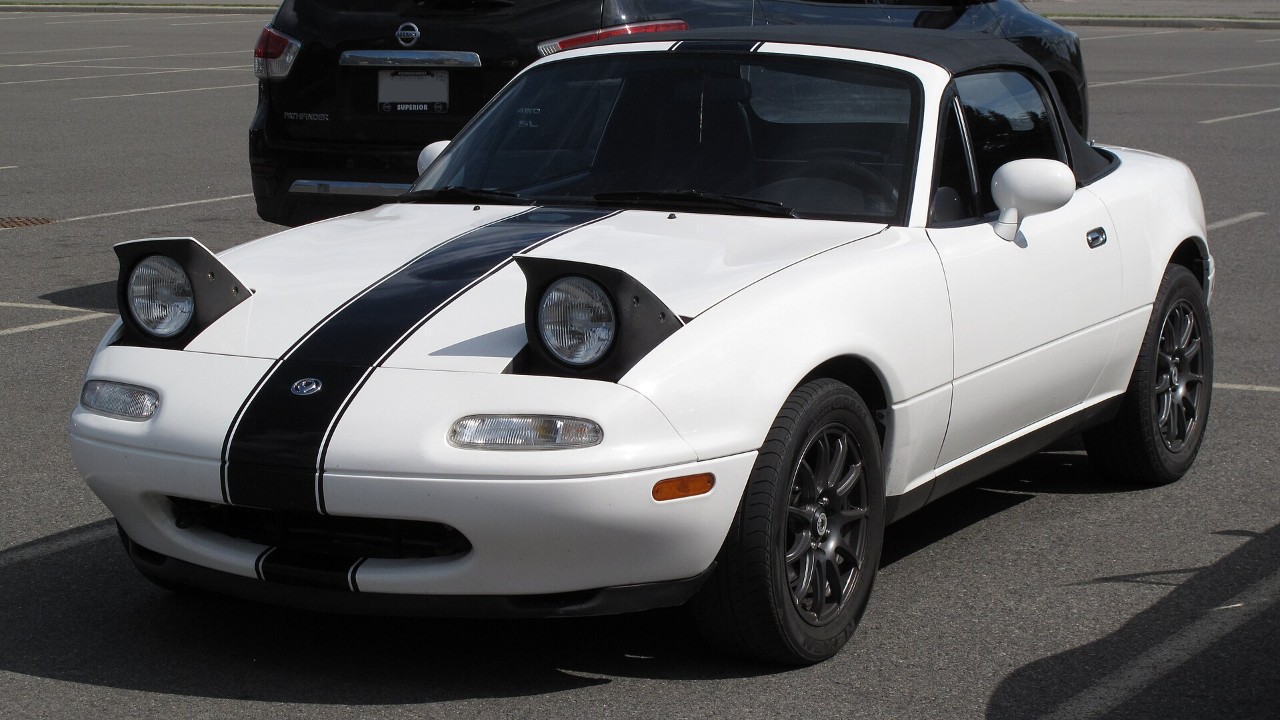
Mazda unveiled the MX-5 Miata at the Chicago Auto Show on February 10, 1989, with a price tag of $14,000. It took the formula of the cars above and added reliability. For 1994, Mazda fitted a bigger 1.8-liter BP-ZE engine.
The 1.8 was more than a bigger engine. Mazda also braced the chassis substantially to meet new side-impact standards, adding a bar between the seatbelt towers and bracing the front and rear subframes. At the same time, the cabin gained dual airbags in a redesigned dashboard. As a result, the 1994 car felt stiffer than the earlier NA without losing its light, chatty steering.
We think the 1994 Miata is the sweet spot of the first generation. It keeps the pop-up headlights and the tiny curb weight, yet the 1.8 brings more muscle to the party. In our view, it is the clearest heir to the Frogeye Sprite, MGA and Spitfire: light, open and rear-wheel drive. Its 1.8-liter BP-ZE made 110 lb-ft of torque at 5,500 rpm.
More from Fast Lane Only