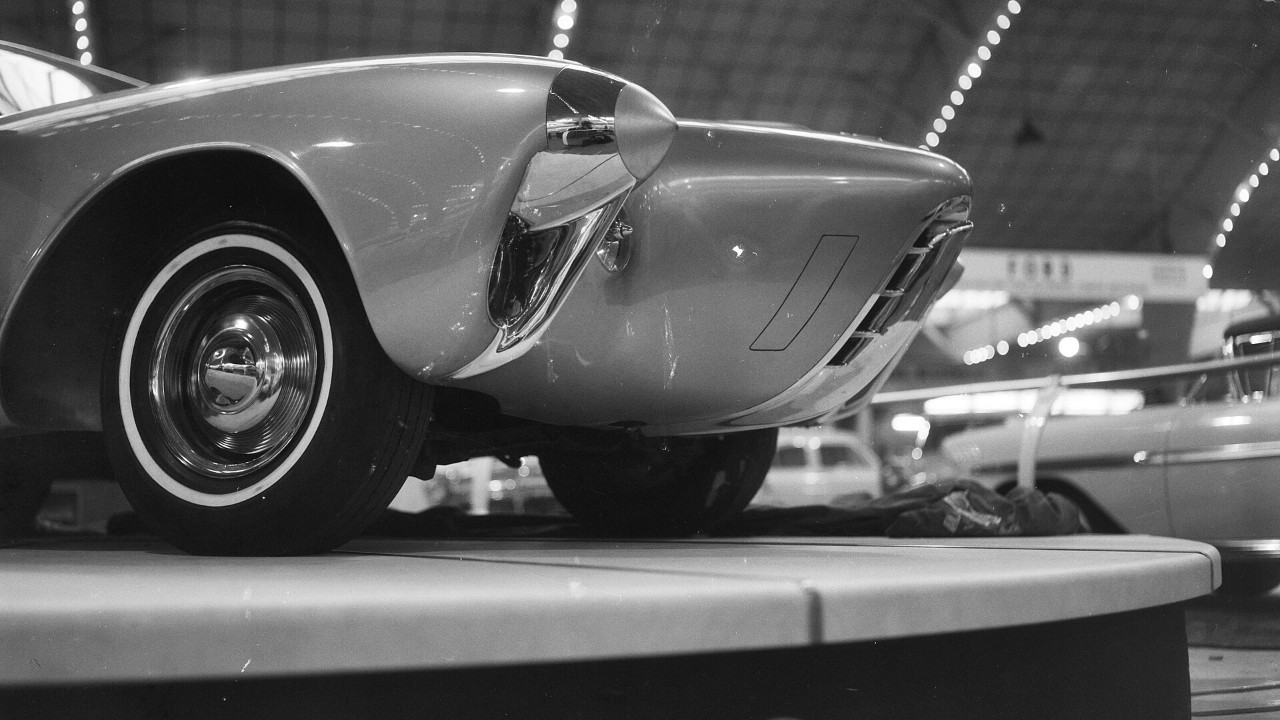
The 1956 Oldsmobile Golden Rocket toured as a fiberglass dream car and then vanished. Nobody has confirmed what happened to it. That fits a brand that spent more than a century building cars for regular families. Most Oldsmobiles were sensible sedans and wagons. People drove them until they wore out, so the odd ones slipped through the cracks.
Some of those odd ones were show cars and record cars that never reached a showroom. Others were real production models that sold in small numbers or simply rusted away while the Cutlass took the spotlight. Either way, you could go to car shows for years and never park next to one.
These are our picks for seven Oldsmobiles that almost no one has seen today. They run from a lost Motorama star to a wagon and a touchscreen coupe. The rarity calls are our opinion. However, the years, engines and figures come from period histories, club records and road tests.
1. 1956 Oldsmobile Golden Rocket
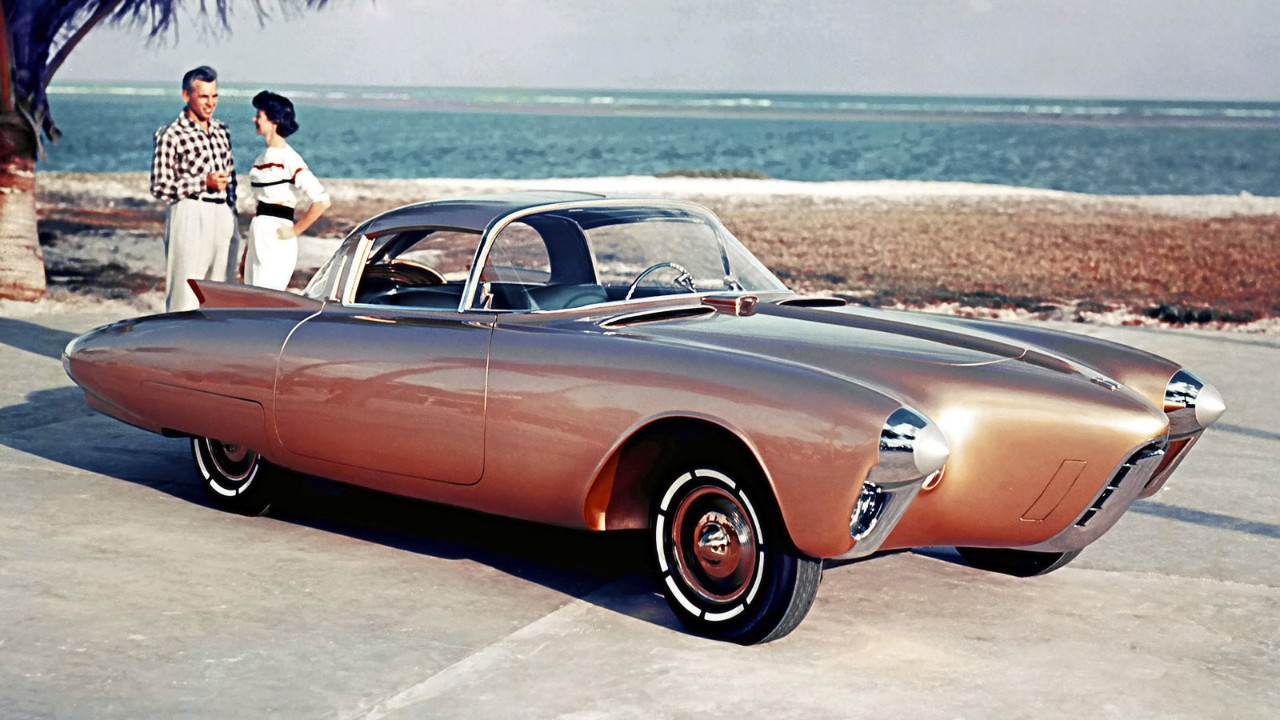
General Motors built one Golden Rocket for its 1956 Motorama. Later, the Oldsmobile Golden Rocket made the rounds again at the 1957 Paris Motor Show. Its body was lightweight fiberglass painted metallic bronze. Bullet-shaped chrome pieces sat in the front fenders where you would expect headlights. Out back, a split rear window crowned a fastback roof. Chevrolet put a similar idea on the 1963 Corvette years later.
Under the hood sat an upgraded 324-cubic-inch Rocket V8 rated at 275 horsepower. The cabin was even wilder. When a door opened, roof panels lifted out of the way. At the same time, the seats rose about 3 inches and swiveled 45 degrees to help you climb out. The steering wheel also tilted at the press of a button, an early take on a feature most cars got later. Inside, the cabin also borrowed from aircraft, with a jet-style center console and blue and gold leather.
Then the trail goes cold. Photos show the car existed as late as 1962. However, no record confirms whether GM crushed it, as it did with many show cars of the era. In our view, that makes it the purest entry on this list. Almost no one living has seen it, and we may never get the chance.
2. 1987 Oldsmobile Aerotech
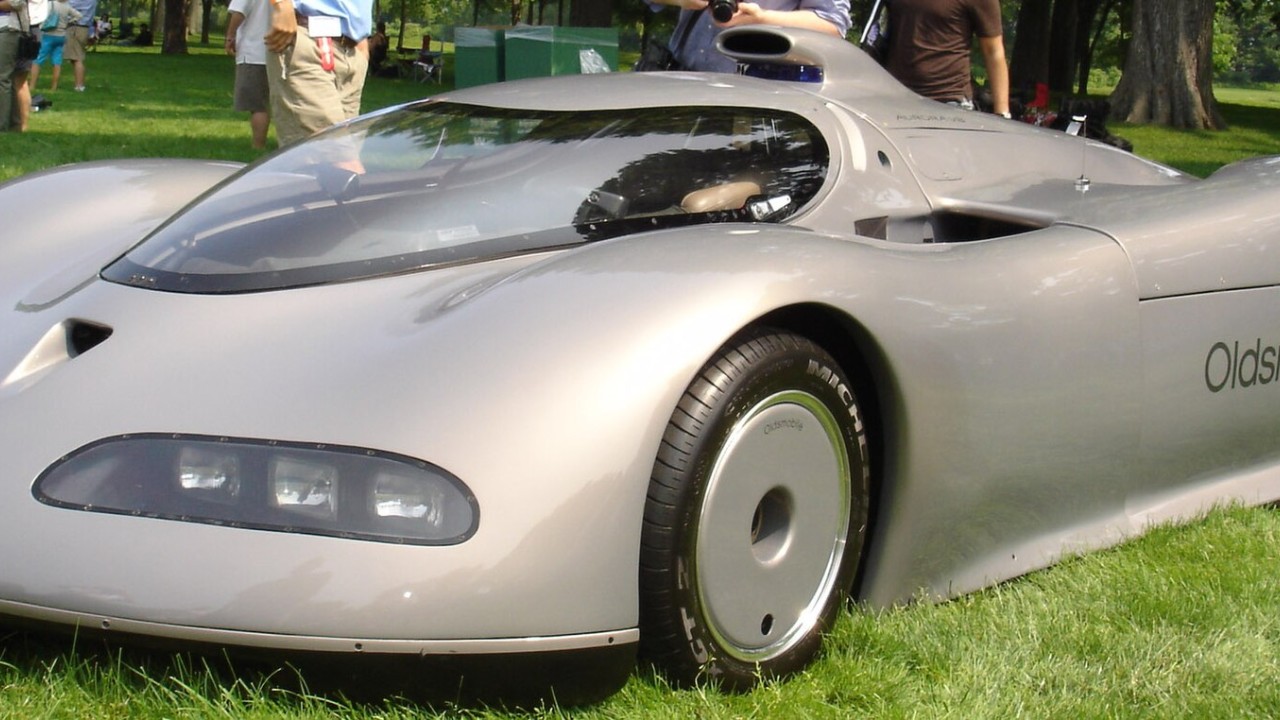
The Aerotech was a test bed with a job to do. Oldsmobile wanted to prove its new 2.3-liter Quad 4 four-cylinder could take serious punishment. So it built a low, long carbon-fiber racer around that engine. Ed Welburn, who later ran all of GM design, led the exterior work.
According to the club history at Outright Olds, the 1987 cars came in two shapes. The short-tail car used a single turbo from Batten Engineering and made about 900 horsepower. Some sources put it lower, at 750 to 800. Meanwhile, the long-tail car ran twin turbos from Feuling Engineering and made about 1,000 horsepower. A.J. Foyt drove the cars in 1987 at the Firestone test track near Fort Stockton, Texas. There, the Aerotechs posted record speeds of 257.123 mph and 267.399 mph.
Oldsmobile came back in 1992 with a third car and 4.0-liter Aurora V8 power. A team of drivers then ran around the clock for eight days, chasing endurance marks. In the end, the cars set 47 speed endurance records, according to one account. Our take: these cars set records in the Texas desert and then went back into storage. That makes them about as rarely seen as an Oldsmobile gets.
3. 1983 Hurst/Olds 15th Anniversary
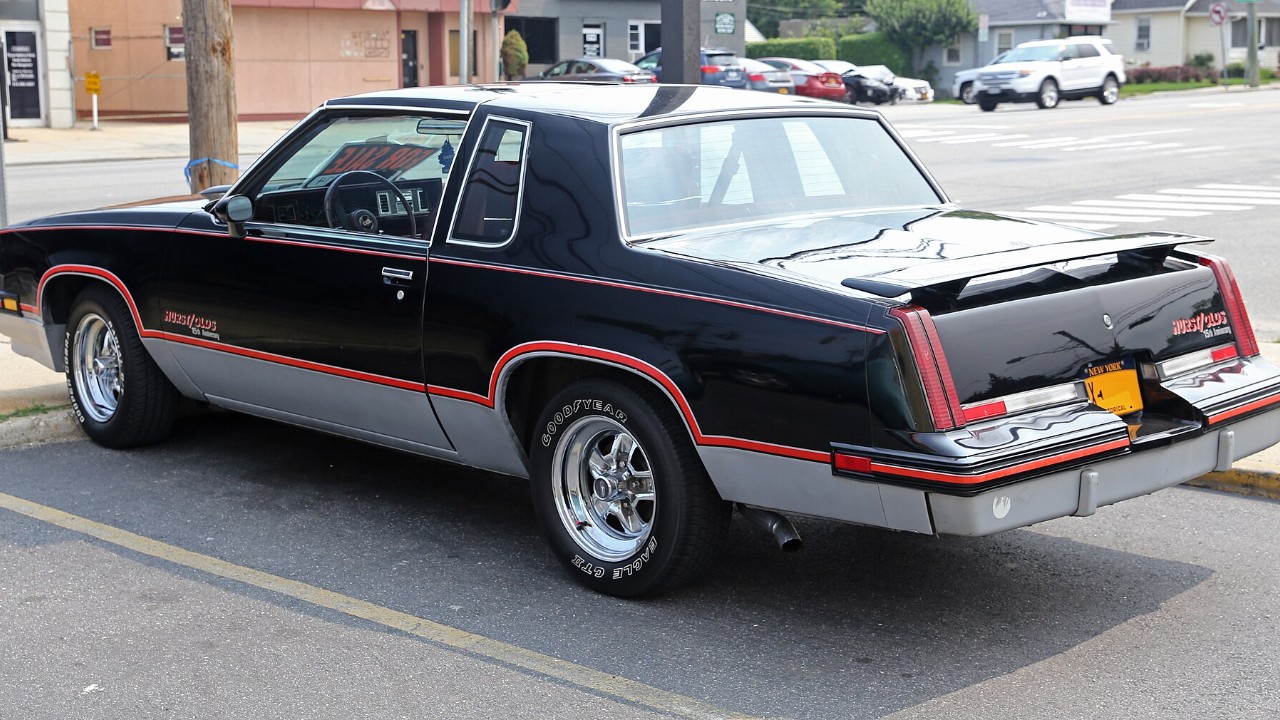
Fifteen years after the first Hurst/Olds, Oldsmobile and Hurst teamed up again on a Cutlass-based coupe. The 1983 car wore black paint over silver, and it carried a shifter that still starts conversations at car shows. Hurst called it the Lightning Rod, a cluster of three levers poking up from the console.
Underneath, the package was more modest than the looks suggested. A modified Olds 307 V8 made 180 net horsepower and 245 lb-ft of torque. It drove through a THM 200-4R four-speed automatic. According to a Curbside Classic profile, Oldsmobile planned 2,500 cars. Demand pushed the total to 3,001.
So why do so few turn up now? Coupes from the early 1980s rarely got the pampering that 1960s muscle cars did, so many simply wore out. If you like this era, our list of forgotten Oldsmobiles so rare even collectors rarely see them digs deeper. In our view, a clean, unmodified 1983 car with its original levers is a rare sight at any show.
4. 1958 Oldsmobile Fiesta 88 station wagon
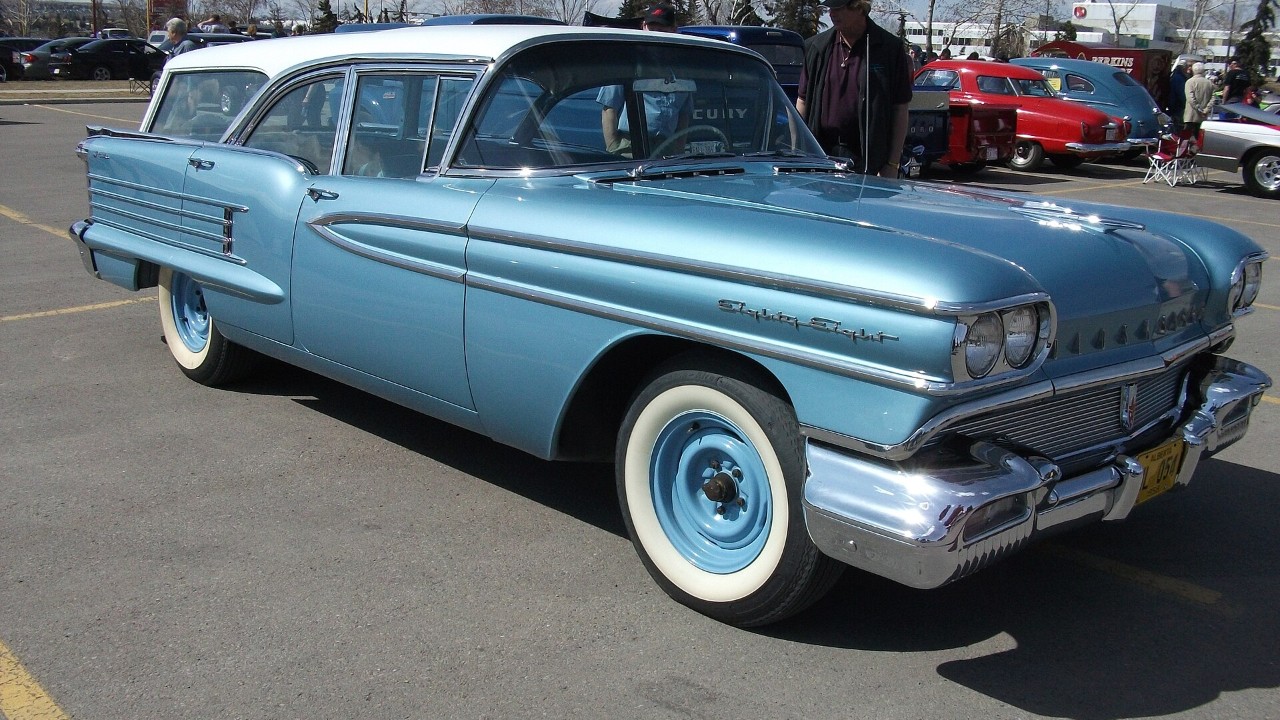
Oldsmobile skipped station wagons for most of the 1950s. The company returned to the market for 1957 after a break that dated back to 1950. It called its new wagons the Fiesta. For 1958, the name rode on the Dynamic 88, the entry-level full-size line.
According to Old Cars Weekly, the 1958 Dynamic 88 Fiesta used a slightly detuned 371 Rocket V8 with 265 horsepower. The base price was $3,395. By comparison, the 1957 hardtop Fiesta had listed at $3,017 before options. Buyers who wanted more could order the J-2 option. It added three two-barrel carburetors and lifted output to about 312 horsepower. That is a lot of muscle for a car built to haul groceries and kids.
The trouble came later. Wagons worked for a living, and few owners saved them once the paint faded and the chrome pitted. As a result, the long-roof Oldsmobiles of 1958 rarely survived the way hardtops and convertibles did. Our take: most Oldsmobile fans have only seen a Fiesta wagon in old brochures.
5. 1965 Oldsmobile Jetstar I
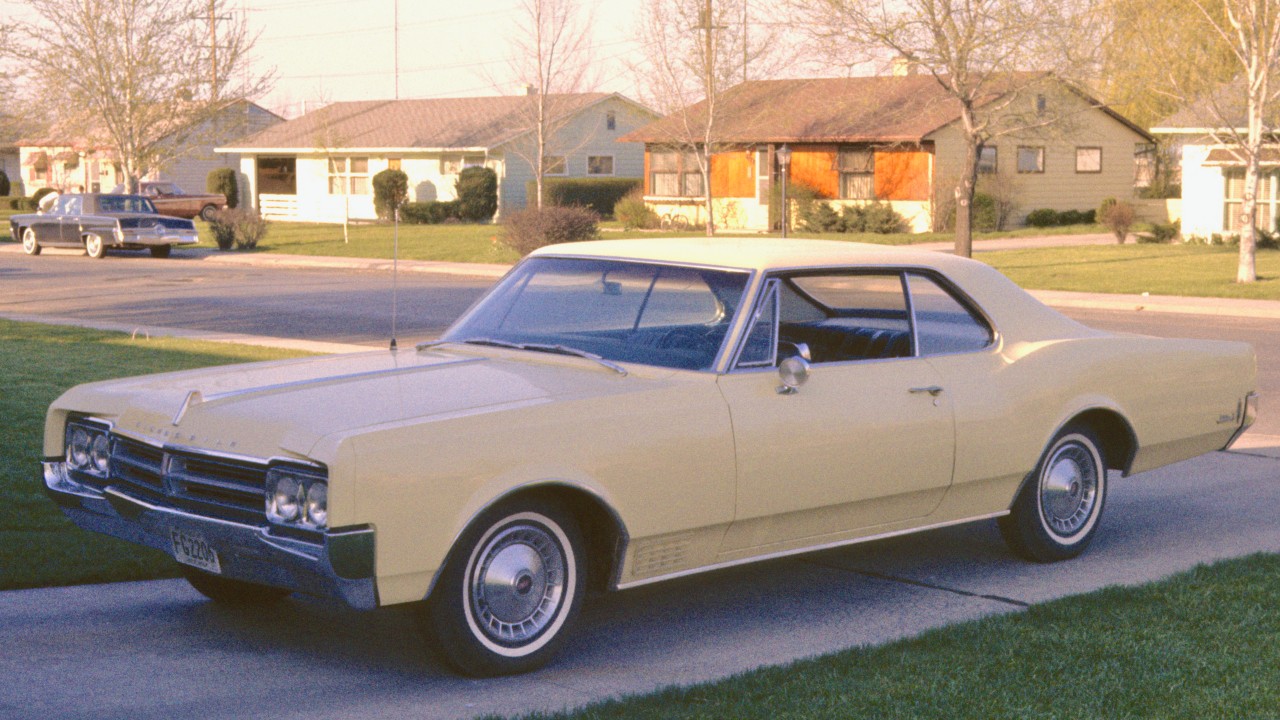
The Jetstar I was Oldsmobile’s answer to the Pontiac Grand Prix, a big two-door hardtop with a performance edge. It lasted only two model years, 1964 and 1965. For the second year, Oldsmobile gave it rounder bodywork and its strongest engine. That 425-cubic-inch V8 made 370 horsepower and 470 lb-ft of torque.
The 1965 car also got the new three-speed Turbo Hydra-matic. A four-speed Muncie manual was available too, though few buyers ticked that box. The base price was $3,602, and the 1965 car weighed 65 pounds less than the 1964 model. Even so, buyers stayed away. Oldsmobile built 6,552 Jetstar Is for 1965. Meanwhile, mid-size muscle cars such as the 4-4-2 stole the young buyers it needed. For comparison, the Pontiac Grand Prix sold about 63,000 cars in 1964 alone, roughly four times the Jetstar I’s output.
For 1966, a cheaper Starfire hardtop took its place. In our view, the Jetstar I deserved more attention than it got. A big Olds with that much torque should be a car-show regular. Instead, you can go a whole season without seeing one.
6. 1990 Oldsmobile Toronado Trofeo
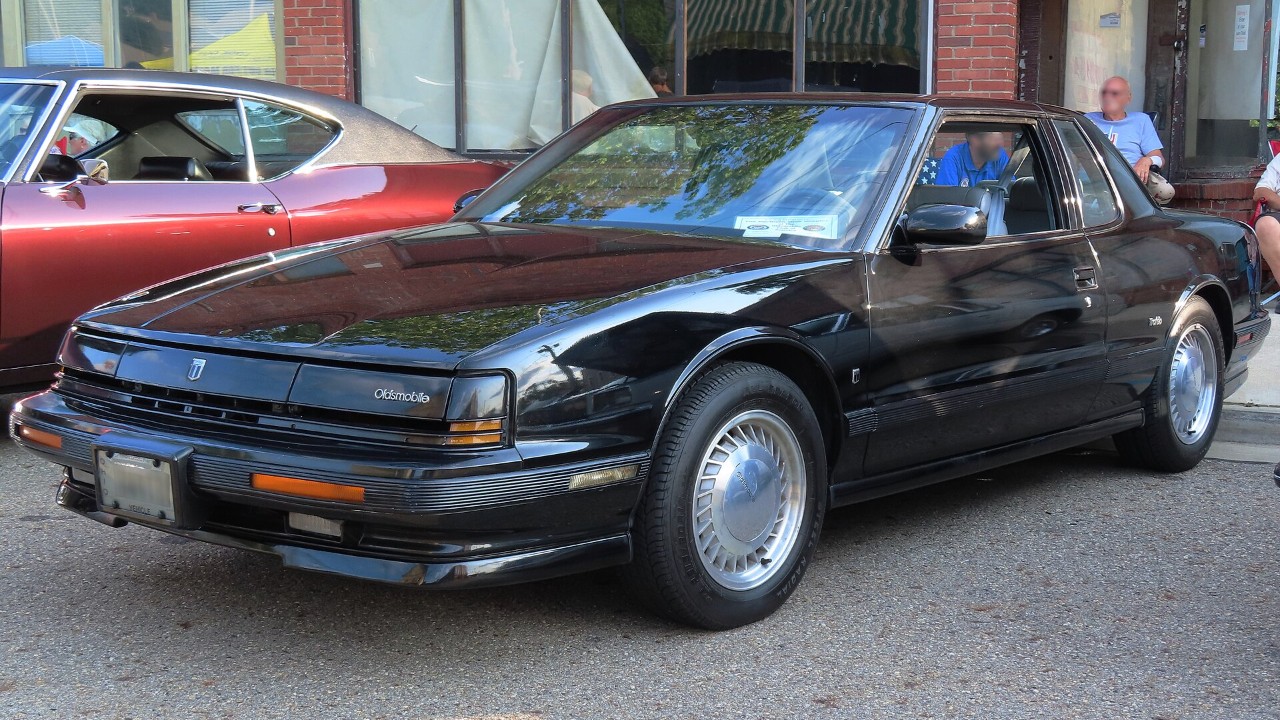
By 1990, the Toronado had a long history behind it, dating back to 1966. The fourth generation shrank for 1986 and switched to unibody construction. It also brought back hidden headlights, which no Toronado had used since 1969. Sales dropped hard, so Oldsmobile reworked the car again for 1990.
The 1990 redesign stretched the body about 12 inches, enlarged the trunk and made a driver airbag standard. Only the hood carried over. Power came from Buick’s 3.8-liter V6. The sporty Trofeo version, which first appeared in mid-1987, added leather bucket seats, sharper styling and a stiffer suspension. From 1989, Oldsmobile also offered the Visual Information Center. This dash-mounted touchscreen ran the climate controls, the radio and a trip computer.
Few people remember that a 1989 Oldsmobile could have a touchscreen. Even fewer have seen one working. In 1992, GM and Avis also tested the TravTek GPS navigation system in some Trofeo rental cars at Orlando International Airport. Our take: the Trofeo was a genuinely advanced luxury coupe, and a clean one is a rare find today. Oldsmobile built the last Toronado on May 28, 1992.
7. 1959 Oldsmobile Ninety-Eight Holiday SceniCoupe
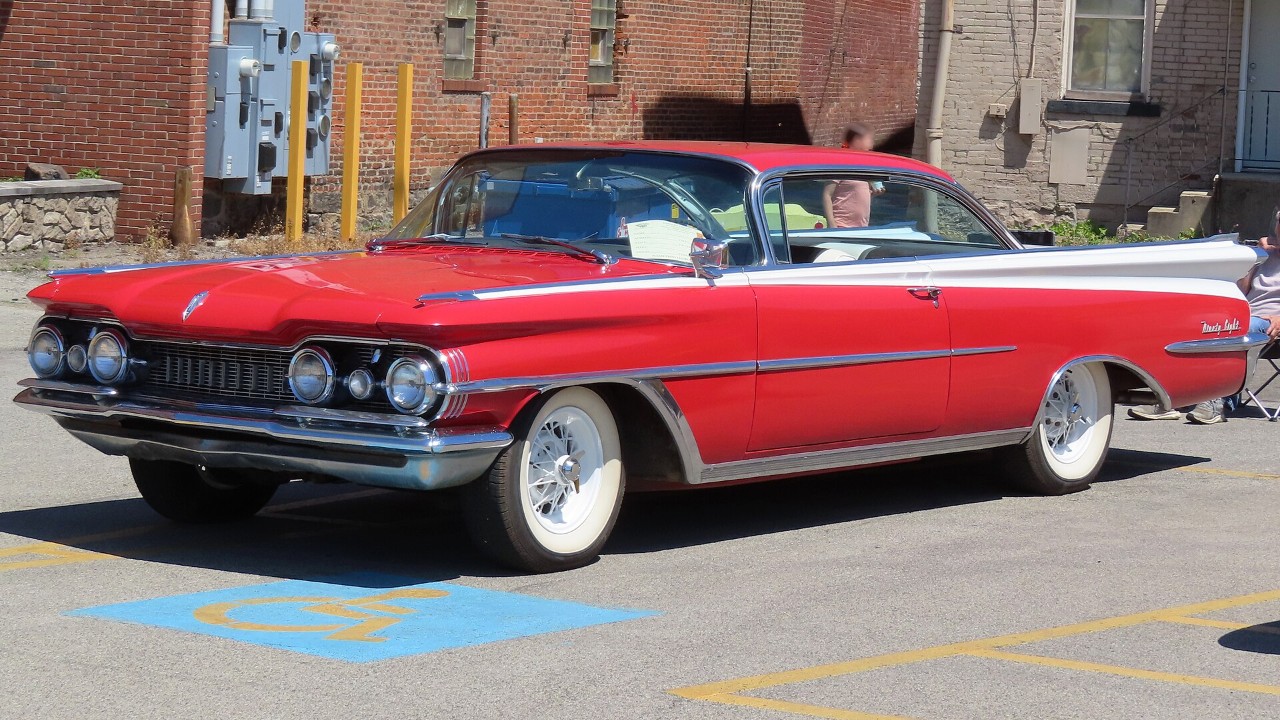
Oldsmobile called its 1959 styling the Linear Look, and the Ninety-Eight wore it best. The flagship stretched 223 inches long and 80.8 inches wide, which made it 4.6 inches longer than the Super 88. Oldsmobile named the slope-backed two-door hardtop body the Holiday SceniCoupe, a nod to its big, airy glass.
According to Mac’s Motor City Garage, the Super 88 and Ninety-Eight engines grew to 394 cubic inches and 315 horsepower. The new models went on sale on October 3, 1958. Oldsmobile hoped to sell 440,000 cars. Instead, volume reached almost 383,000, and the division slipped from fourth to fifth.
That miss helps explain why the SceniCoupe is so scarce now. These were heavy, thirsty cars, and many went to the crusher before collectors cared about 1959 styling. For more of the brand’s high points, see our list of Oldsmobiles that showed what the brand could really build. In our view, a SceniCoupe in good shape is one of the best-looking Oldsmobiles almost nobody gets to see. It rolled out on that October 1958 launch with a 394 V8 rated at 315 horsepower.
More from Fast Lane Only