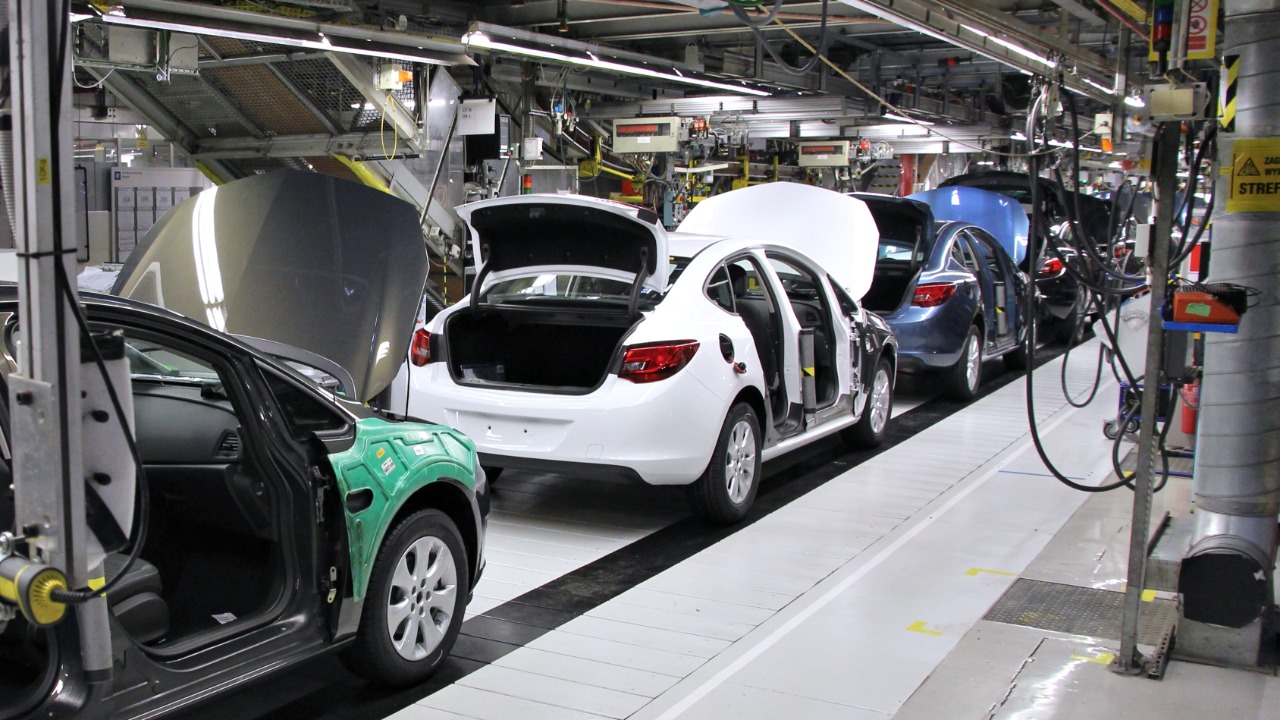
General Motors is pouring fresh capital into its U.S. assembly footprint to keep gasoline-powered vehicles rolling off the line even as it publicly champions an all-electric future. The new $550 million commitment is aimed at shoring up profitable internal combustion models that still dominate the company’s sales and cash flow while its electric vehicle strategy faces policy shifts, slower demand, and operational setbacks.
The move underscores a pragmatic recalibration: General Motors is not abandoning its pledge to eliminate tailpipe emissions from new light-duty vehicles by 2035, but it is buying time and stability in its core business as the transition proves more complicated than early forecasts suggested.
GM’s gasoline bet in an era of EV uncertainty
I see General Motors’ latest $550 million investment in U.S. gasoline vehicle production as a defensive play to protect its most reliable profit engine while the electric side of the business remains volatile. The company has already acknowledged that its electric vehicle production plans have become more uncertain, not primarily because of labor unrest but because it is “balancing production to demand,” a clear signal that consumer appetite has not matched earlier expectations and that management is adjusting output accordingly, as reflected in its comments on the financial impact of the recent UAW strike. Against that backdrop, doubling down on combustion platforms that still generate the bulk of revenue looks less like nostalgia and more like risk management.
The company’s own plant strategy reinforces that reading. General Motors has been investing billions of dollars to upgrade assembly plants that will mass-produce a wide range of vehicles, including internal combustion models that continue to account for 98 percent of its global sales, according to a detailed manufacturing profile. In that context, an additional $550 million aimed at U.S. gasoline production is less a strategic U-turn and more an incremental reinforcement of a business that still pays the bills while the company works through the growing pains of electrification.
How the UAW strike and EV headwinds shaped GM’s calculus
The financial shock from the United Auto Workers walkout sharpened the urgency for General Motors to stabilize its most dependable operations. The company has reported an $800 million impact from the strike so far, a hit that lands hardest when paired with the reality that its electric vehicle rollout is already under pressure from softer-than-expected demand, as it acknowledged when discussing how it is pacing EV production to match real-world orders in the wake of the walkout. In that light, channeling hundreds of millions of dollars into gasoline vehicle lines looks like a way to shore up near-term earnings and reassure investors that the core franchise remains intact.
Those headwinds are not unique to General Motors, but they are particularly visible in its recent decisions. Across the industry, automakers have been recalibrating electric plans as demand grows more slowly than projected, a reality highlighted in reporting on how major players, including Ford Motor, have adjusted their EV timelines and capital spending in response to a liquidity crunch at battery supplier Our Next Energy and broader market softness for electric models, as detailed in coverage of rebound plans in the battery sector. General Motors’ choice to reinforce gasoline production capacity fits squarely into that pattern of short-term caution layered on top of long-term electrification goals.
BrightDrop’s shutdown and the limits of GM’s early EV bets
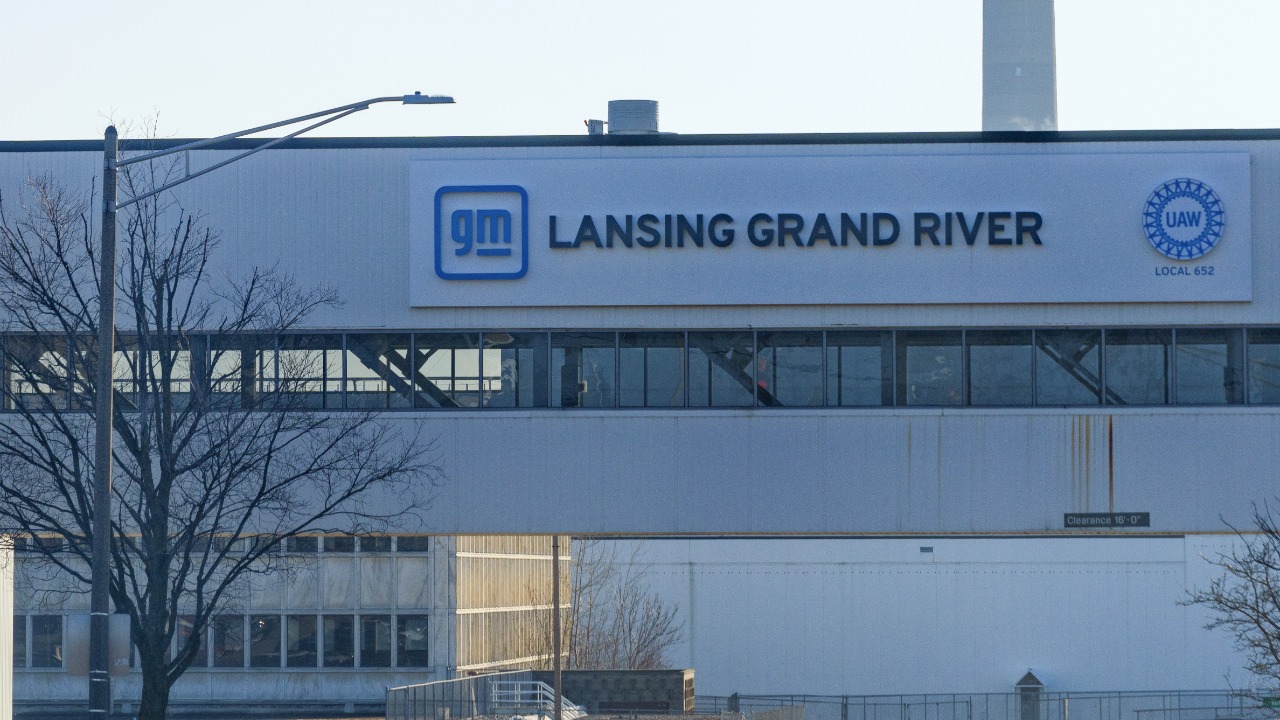
The abrupt halt to Production of General Motors’ BrightDrop electric delivery van program illustrates how fragile some of the company’s early EV bets have been. Production has been on pause since May 2025, and General Motors has now ended the line entirely, citing changes in EV incentives and regulations that created additional challenges for the BrightDrop business model, according to detailed reporting on the program’s shutdown. For a company that has positioned itself as a leader in commercial electrification, walking away from a flagship van underscores how quickly policy shifts and cost pressures can upend carefully crafted EV strategies.
That experience inevitably colors how General Motors allocates new capital. After seeing a high-profile electric initiative undermined by external policy changes and internal economics, it is rational for management to steer fresh investment toward gasoline platforms that are less exposed to regulatory whiplash and still enjoy robust demand. The decision to end BrightDrop, framed explicitly around evolving incentives and regulations, reinforces the logic of putting $550 million into U.S. combustion vehicle capacity while the company reassesses which electric programs can withstand the same kind of volatility that derailed its electric delivery van business.
Reconciling GM’s 2035 zero-emission pledge with new gasoline spending
On paper, General Motors’ new gasoline-focused investment sits awkwardly beside its public promise to eliminate tailpipe emissions from new light-duty vehicles by 2035. Chief executive Mary Barra has repeatedly framed that target as the company’s “ultimate goal,” a commitment she reiterated in a joint push with an environmental group urging the Environmental Protection Agency to adopt strong electric vehicle standards, as documented in coverage of the company’s advocacy. Yet the 2035 horizon leaves a decade of overlap in which gasoline vehicles will still be designed, built, and sold, and the latest $550 million appears aimed squarely at making that bridge period as profitable and operationally smooth as possible.
I read this as a classic “two-track” strategy rather than a contradiction. General Motors is continuing to invest heavily in EV platforms and battery technology, but it is also upgrading plants and tooling that support internal combustion models that remain central to its balance sheet, as shown in the company’s broader assembly upgrades. The 2035 pledge sets a destination, not a straight line, and the new gasoline investment reflects a judgment that the path will be uneven, with EV adoption shaped by policy, infrastructure, and consumer behavior that are all evolving more slowly than early projections suggested.
How GM’s move compares with Ford and other EV strategies
General Motors’ decision to reinforce gasoline production stands in contrast to Ford’s current approach, which leans harder into electric expansion even as the broader market cools. Ford is investing $5 billion to expand an EV plant and ramp up electric trucks, a strategy that explicitly diverges from competitors that have scaled back some of their electric plans amid concerns about profitability and consumer demand, as detailed in reporting on Ford’s EV expansion. Where Ford is choosing to absorb near-term margin pressure in pursuit of electric scale, General Motors is signaling that it will not let its combustion cash cow wither while the EV business finds its footing.
Other parts of the mobility ecosystem are also adjusting to this slower-than-expected transition, which helps explain why General Motors is hedging its bets. Battery startups have faced liquidity crises as automakers, including Ford Motor, recalibrate orders in response to more modest EV growth, a dynamic laid out in coverage of Our Next Energy. Even companies focused on alternative charging models, such as those developing battery swapping technology, are shifting resources to reflect evolving electrification demands and corporate priorities, as seen in reporting on battery swapping. In that environment, General Motors’ $550 million gasoline investment looks less like a retreat from EVs and more like a calculated move to keep its legacy business strong while the rest of the value chain catches up to the electric ambitions it has already laid out.